
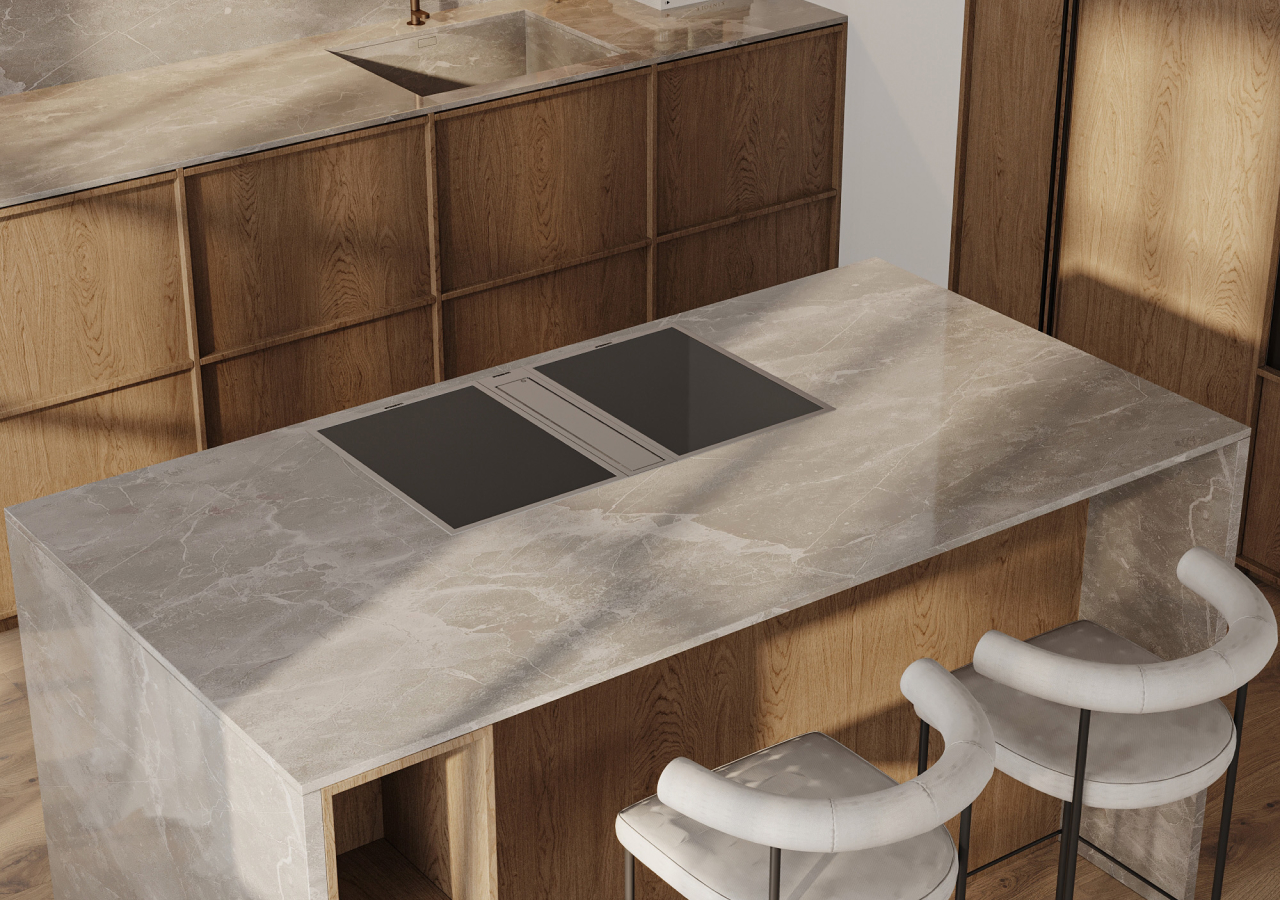
A kitchen renovation works best when practical rules are resolved early. Before materials, colors, or styling details, the layout needs to support safe cooking, comfortable movement, and everyday efficiency. That means protecting clearances, planning appliance placement carefully, and checking whether the kitchen still works when doors, drawers, and the dishwasher are open.
This guide brings the main kitchen renovation rules into one place. It covers cooktop clearances, island aisle widths, sink and dishwasher placement, countertop planning, and the layout checks that help prevent expensive mistakes later.
Kitchen Renovation Rules at a Glance
| Rule | Recommended minimum | Why it matters | Common mistake |
|---|---|---|---|
| Electric cooktop to window | 400 mm (16 in) | Reduces safety risks near glass, drafts, and window treatments | Placing the cooktop too close to curtains or operable windows |
| Gas cooktop to window | 500 mm (20 in) | Helps protect against flame disturbance and safety issues | Treating gas and electric clearances the same |
| Walkways around island | 36 in | Supports basic circulation | Sizing the island first and leaving too little room around it |
| Work aisles | 42 in for one cook, 48 in for two cooks | Makes prep, cooking, and passing easier | Confusing a walkway with a working aisle |
| Seating width per person | 28–30 in | Gives each person enough elbow room | Overcrowding stools along the island |
| Sink landing zones | 24 in on one side, 18 in on the other | Supports prep, cleanup, and dish handling | Centering the sink with no usable landing space |
| Doorway width | 32 in | Keeps access comfortable and reduces pinch points | Using a door swing that blocks cabinets or appliances |
| Passageways | 36 in minimum | Keeps circulation workable | Letting open-plan furniture pinch the kitchen path |
| Microwave base height | 900–1250 mm (36–49 in) above floor | Improves access and comfort | Mounting it too high or too low for daily use |
Practical Considerations for Kitchen Renovation

Renovating your kitchen involves a few rules that shape both safety and usability. These are the checks that matter before the cabinetry is finalized and before the room is judged only by appearance.
Cooktop Clearances
For a safe kitchen environment, pay close attention to clearances around the cooktop and nearby openings.
Electric Cooktops and Windows
Maintain a minimum distance of 400 mm (16 inches) between electric cooktops and windows.
This matters because windows can introduce drafts, nearby curtains, and practical safety concerns. A common mistake is placing the cooktop close to a beautiful window without considering how the sash opens or how window treatments behave around heat. The quick fix is to protect the clearance early and review the surrounding window details before the layout is locked.
Gas Cooktops
Gas cooktops should have a minimum clearance of 500 mm (20 inches) from windows. Always verify local regulations for additional requirements.
This matters even more with gas because flame and airflow should be treated carefully. A common mistake is assuming gas and electric cooktops can follow the same rule. The quick fix is to check local code early and size the surrounding cabinetry around the correct clearance from the start.
Oven Benchtop Set Down Space
Allow for at least 400 mm (16 inches) of space beside the oven. If that is not possible, provide a benchtop within 1200 mm (47 inches) that does not require crossing a major walkway.
This matters because hot dishes need a safe landing point immediately after removal from the oven. A common mistake is placing the oven in a tight location with no realistic set-down surface nearby. The quick fix is to plan a landing area as part of the oven zone, not as an afterthought.
Microwave Placement
The base of the microwave should be positioned between 900 mm (36 inches) and 1250 mm (49 inches) above the floor.
This matters because convenience depends on reach, visibility, and safety. A common mistake is mounting the microwave too high for comfortable daily use. The quick fix is to test the height against the primary users before the cabinetry is finalized.
Guidelines for Kitchen Islands

Before focusing on the island as a design feature, make sure it works as part of the overall kitchen.
Walkway Clearances
Maintain walkways around the island of at least 36 inches wide for comfortable movement.
This matters because the island should support circulation, not choke it. A common mistake is prioritizing a larger island over daily movement around it. The quick fix is to size the island only after the surrounding walkways are protected.
Integration with Work Triangle
Ensure the island does not disrupt the relationship between the sink, range, and refrigerator, but instead supports the way the kitchen functions.
In practice, that means the island should help with prep, storage, or seating without interrupting movement between key zones. A common mistake is inserting an island because the room technically fits one, even if it makes the kitchen harder to use.
Work Aisle Width
Aim for work aisles of at least 42 inches for a single-cook kitchen and 48 inches for a multiple-cook setup.
This matters because a work aisle is different from a general passageway. It needs to handle open drawers, appliance use, and actual cooking activity. A common mistake is measuring only the empty floor space and not considering what happens when doors are open.
Seating Area
Allocate a comfortable 28- to 30-inch-wide space per diner when incorporating seating into the island.
This matters because island seating looks generous in drawings but can feel cramped in real life. A common mistake is trying to fit one extra stool into a space that cannot support it. The quick fix is to reduce the seat count and preserve comfort.
For more detailed planning, link this section to your kitchen island size guide.
Countertop Design

Efficient countertop planning is about more than total length. The real question is whether the surfaces support prep, cooking, cleanup, and the way the household actually uses the kitchen.
Total Countertop Space
Designers often suggest a minimum of 158 total inches of usable countertop space, including islands, with a depth of at least 24 inches and a clearance of 15 inches above.
This matters because a kitchen can look fully equipped and still feel short on usable work surface. A common mistake is counting decorative or interrupted surfaces as practical countertop space. The quick fix is to focus on continuous, accessible work areas rather than total inches alone.
Prep Area
Next to the sink, allow for a 24-inch-wide countertop span for prep work.
This matters because the sink and prep zone usually need to work together. A common mistake is placing the sink in a location that leaves too little usable prep surface beside it. The quick fix is to protect that span early in the layout.
Material Selection
Choose a countertop material based on how you cook, how much maintenance you can tolerate, and the overall look you want in the kitchen.
If you regularly set down hot cookware, material choice matters. If you want a wipe-and-go surface, that matters too. Quartz, stone, laminate, Dekton, Fenix, and stainless steel all come with different tradeoffs in maintenance, heat tolerance, seams, and visual character. The best choice is not just the prettiest one. It is the one that fits your daily habits.
This section should link naturally to your countertop selection guide and deeper material pages.
Sink and Dishwasher Placement
.webp)
The sink and dishwasher should work as one cleanup zone, not as separate elements placed wherever they fit.
Sink Arrangement
Surround the sink with landing areas of at least 24 inches on one side and 18 inches on the other.
This matters because dishes, produce, and prep tools need a place to land naturally. A common mistake is centering the sink for symmetry and losing practical space around it. The quick fix is to treat sink placement as a workflow decision first.
Dishwasher Spacing
Maintain a distance of at least 21 inches between the dishwasher and adjacent appliances or obstacles.
This matters because the open dishwasher door changes how the whole kitchen functions. A common mistake is checking only the closed position. The quick fix is to review the layout with the dishwasher open and someone moving past it.
Water Filtration
Consider integrating a water filtration system at the sink for clean drinking water and easier daily use.
This is easiest to plan before the sink area is finalized. A common mistake is remembering it too late, after the faucet and sink setup have already been selected.
This section should also link well to your kitchen floor plan guide, especially where layout and workflow are discussed.
Kitchen Design and Layout

A strong kitchen layout protects both movement and usability. Many renovation mistakes happen because the layout is judged visually before it is tested practically.
Doorway Width
Ensure doorways into the kitchen are at least 32 inches wide, with door swings that do not obstruct appliances or cabinets. In smaller spaces, outward-swinging doors may work better.
This matters because access affects everything from grocery carrying to appliance clearance. A common mistake is ignoring the effect of door swing on nearby cabinets or fridge doors. The quick fix is to test the doorway in both open and closed positions.
Passageway Width
Passageways should be a minimum of 36 inches wide, with wider walkways in open-plan layouts. In work areas, aim for 42 inches for one cook and 48 inches for multiple cooks.
This matters because not every path in the kitchen serves the same purpose. A common mistake is applying one clearance number everywhere. The quick fix is to separate passageways from working aisles and plan each accordingly.
Storage Solutions
Incorporate enough storage through cabinets, drawers, and pantry space to keep the kitchen organized and the counters clear.
The most useful storage is the storage that supports the right zone. A common mistake is adding storage volume without thinking about what belongs where. The quick fix is to plan storage around prep, cooking, cleaning, and pantry use rather than treating it as one general category.
Lighting
Install adequate lighting fixtures, including overhead lights, under-cabinet lights, and pendants where appropriate, to illuminate work areas and improve the overall mood of the kitchen.
This matters because kitchens need both task lighting and ambient light. A common mistake is relying only on ceiling lighting. The quick fix is to layer light sources so prep areas, island surfaces, and darker corners are properly lit.
How to Sanity-Check Your Kitchen Renovation Plan
- Mark doors, windows, and the main traffic path. Start with the fixed elements and identify how people actually move through the kitchen.
- Lock the work aisles before choosing island size. Protect 42 inches for one cook or 48 inches for two cooks before finalizing the island.
- Confirm cooktop clearances to windows. Check required distances for electric and gas cooktops and review curtains, drafts, and local code.
- Place the sink and dishwasher together. Verify landing zones and make sure the dishwasher door will not create an awkward blockage.
- Confirm oven landing space. Make sure there is a safe place nearby for hot trays and cookware.
- Choose microwave location and height early. Decide whether it belongs in a tall unit, upper cabinet run, or another integrated location.
- Do a two-people test. Check what happens when the dishwasher is open and someone needs to pass through the space.
- Add layered lighting. Combine task lighting and ambient lighting so the kitchen works well for prep and everyday use.
Conclusion
A successful kitchen renovation is not only about choosing beautiful materials or modern appliances. The foundation of a functional kitchen is a layout that respects clearances, supports natural movement, and provides the right amount of workspace where it is actually needed. Details like cooktop distance from windows, aisle widths around an island, sink landing zones, and appliance door clearances may seem small during planning, but they have a major impact on how comfortable the kitchen feels every day.
By reviewing these practical rules early in the renovation process, you can avoid layout conflicts, improve safety, and ensure the kitchen works smoothly once it is installed. When clearances, appliance placement, lighting, and storage are planned carefully, the result is not only a kitchen that looks good on paper, but one that feels efficient, comfortable, and easy to live with for years to come.


