
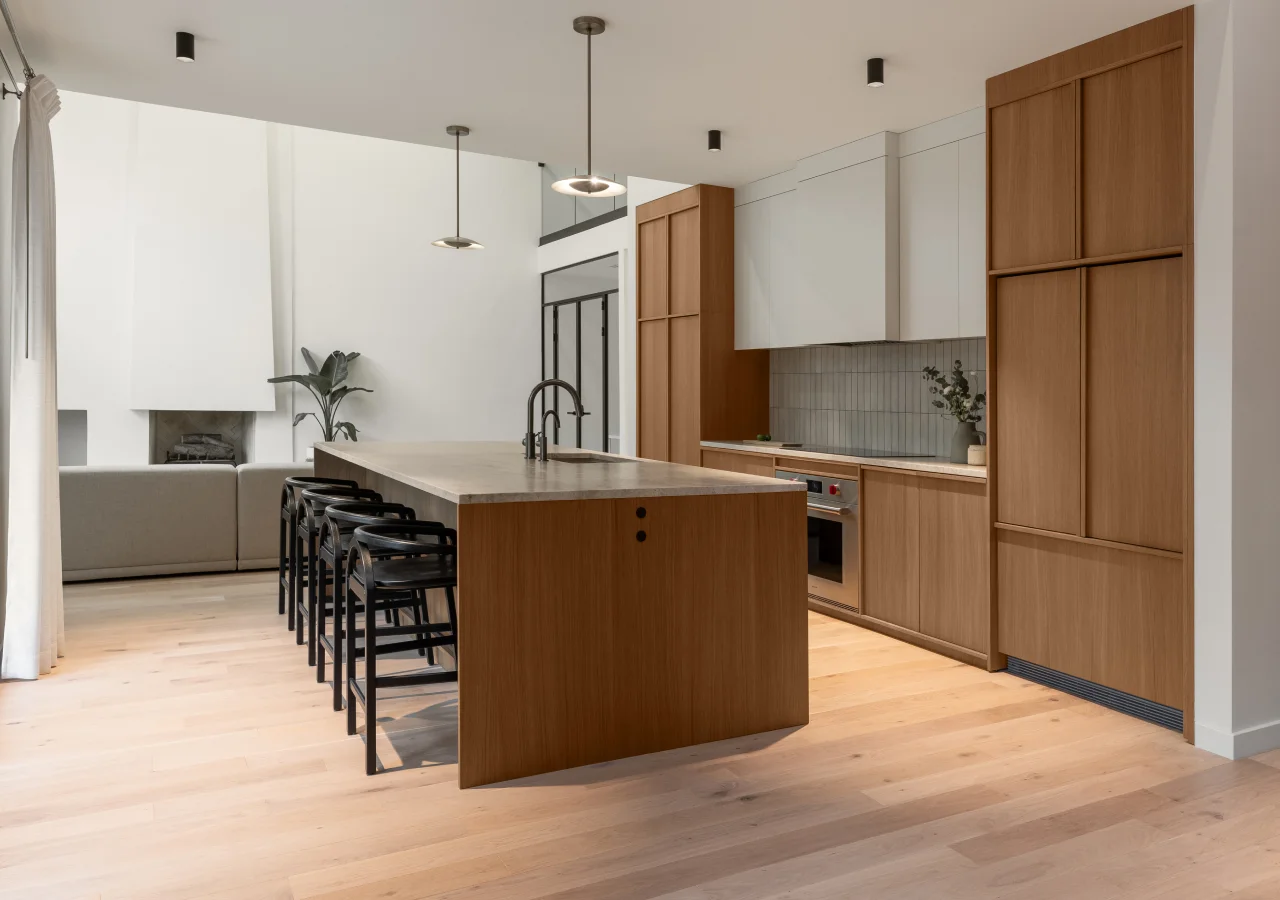
An island adds preparation space and storage; a dining table provides a dedicated place for meals. In an open-plan kitchen, the better choice depends on what the existing layout lacks, how your household eats, and whether there is enough room to use both comfortably.
Start With What Your Kitchen Is Missing
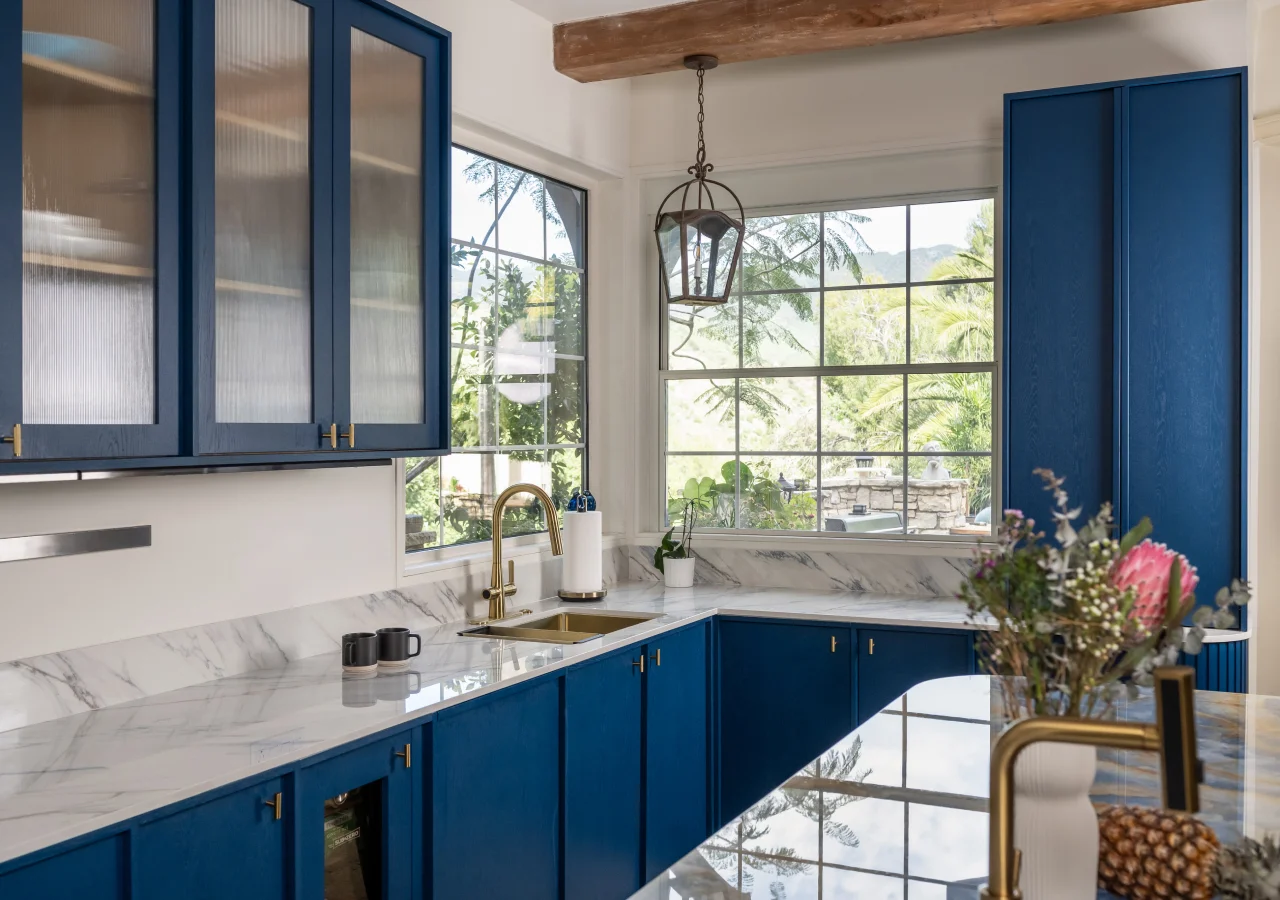
Before deciding between a kitchen island and a dining table, look at what your existing cabinetry already provides. If the main kitchen runs have sufficient countertop space, drawers, and pantry storage, another fixed work surface may be unnecessary. A dining table could offer something more valuable: a comfortable place for shared meals.
If preparation space is limited, an island can solve a different problem. It provides a dedicated worktop, often with drawers or cabinets underneath. A dining table can occasionally serve as an extra surface, but it does not offer the same integrated storage or working arrangement.
Test the Layout in Three Everyday Situations
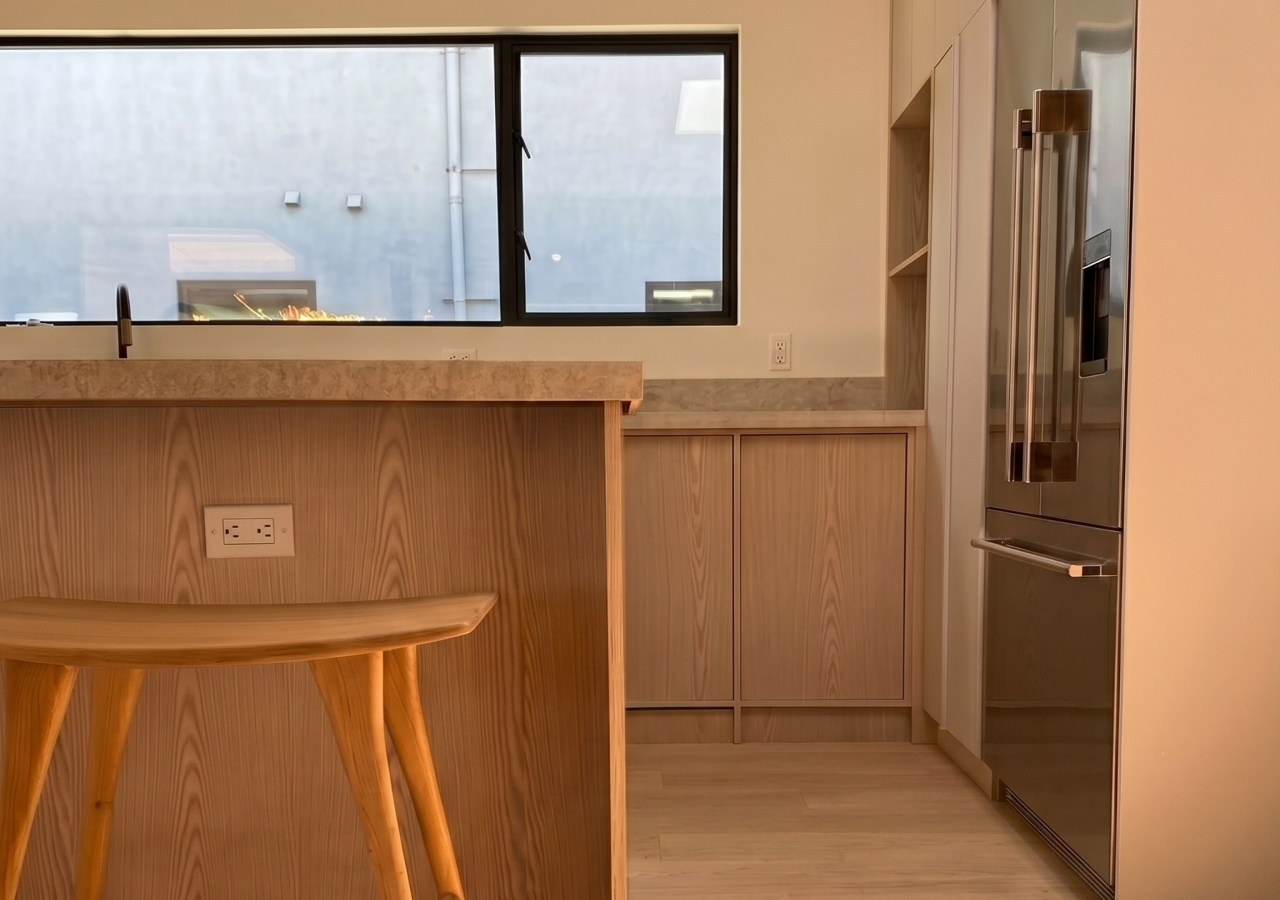
A floor plan can look spacious when stools are tucked away and appliances are closed. To understand whether an island, dining table, or both will work, test the room during everyday activities.
In a planning call for Santa Monica project, changes to the adjoining living and dining areas led the team to revisit the kitchen layout. Extending the cabinet run was considered alongside its effect on circulation. The discussion illustrates why kitchen furniture should be evaluated within the whole room.
For more detailed dimensions and appliance clearances, see the Kitchen Island Planning Guide.
Choose a Kitchen Island for Preparation, Storage, or Cooking
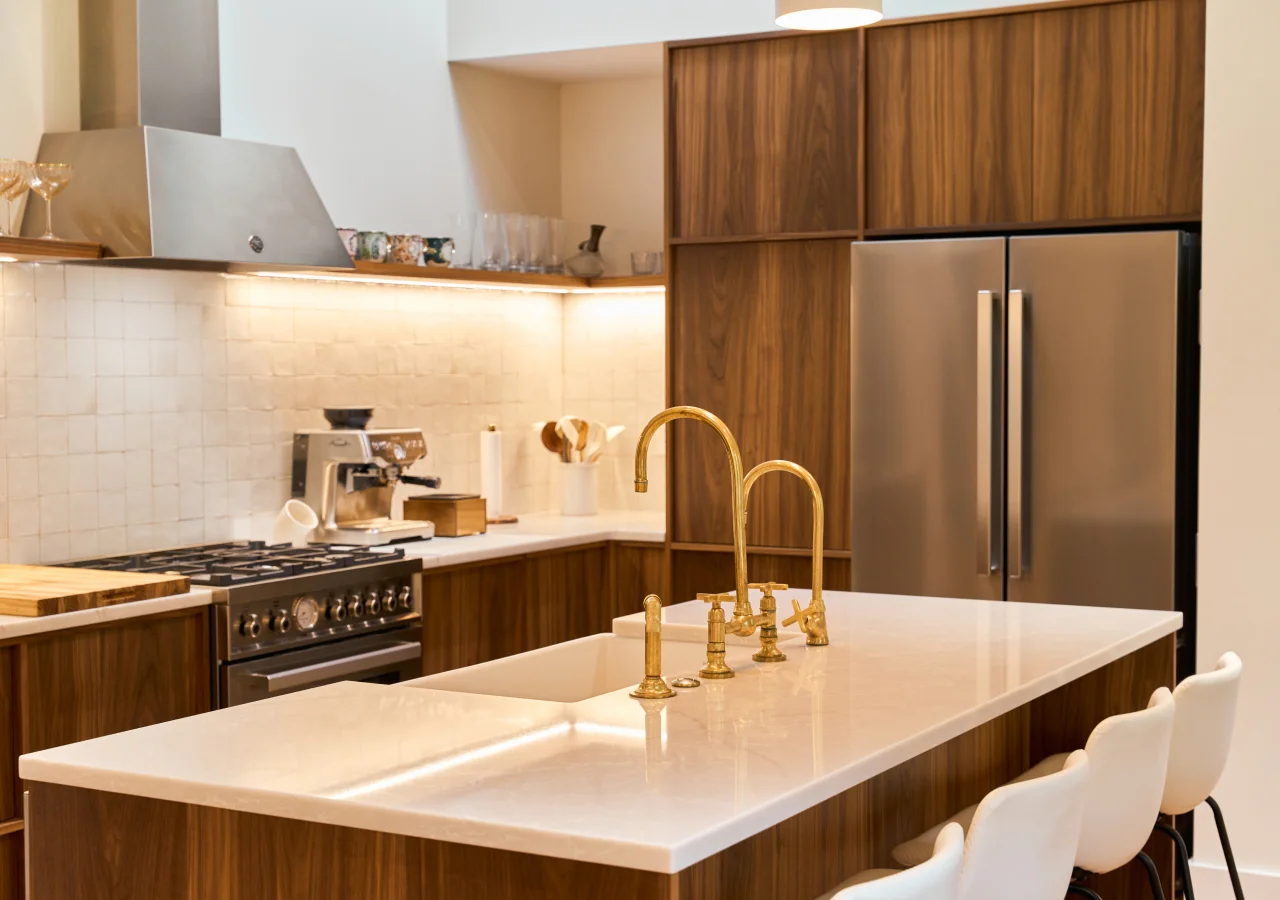
A kitchen island makes the most sense when it improves how the kitchen works. It can provide a central preparation area, additional drawers, and a convenient place to organize frequently used items. In an open-plan layout, it may also define the working kitchen without separating it completely from the living area.
The island's purpose should determine its design. If preparation is the priority, an uninterrupted countertop and accessible storage may be more useful than an integrated appliance. If the island accommodates a cooktop or sink, the remaining surface must still support the intended activities.
An island can combine cooking, preparation, and seating, but these functions need to be planned together. Adding stools does not automatically make it a comfortable alternative to a dining table.
Does Every Kitchen Island Need Seating?
An island does not need seating. Omitting stools can preserve space for preparation and, depending on the design, additional cabinetry while leaving more room for a separate dining table.
If seating is useful, plan for knee space, occupied stools, and the countertop area available during cooking. Choose the number of seats around daily use rather than the maximum that fits.
Choose a Dining Table for Comfortable Shared Meals
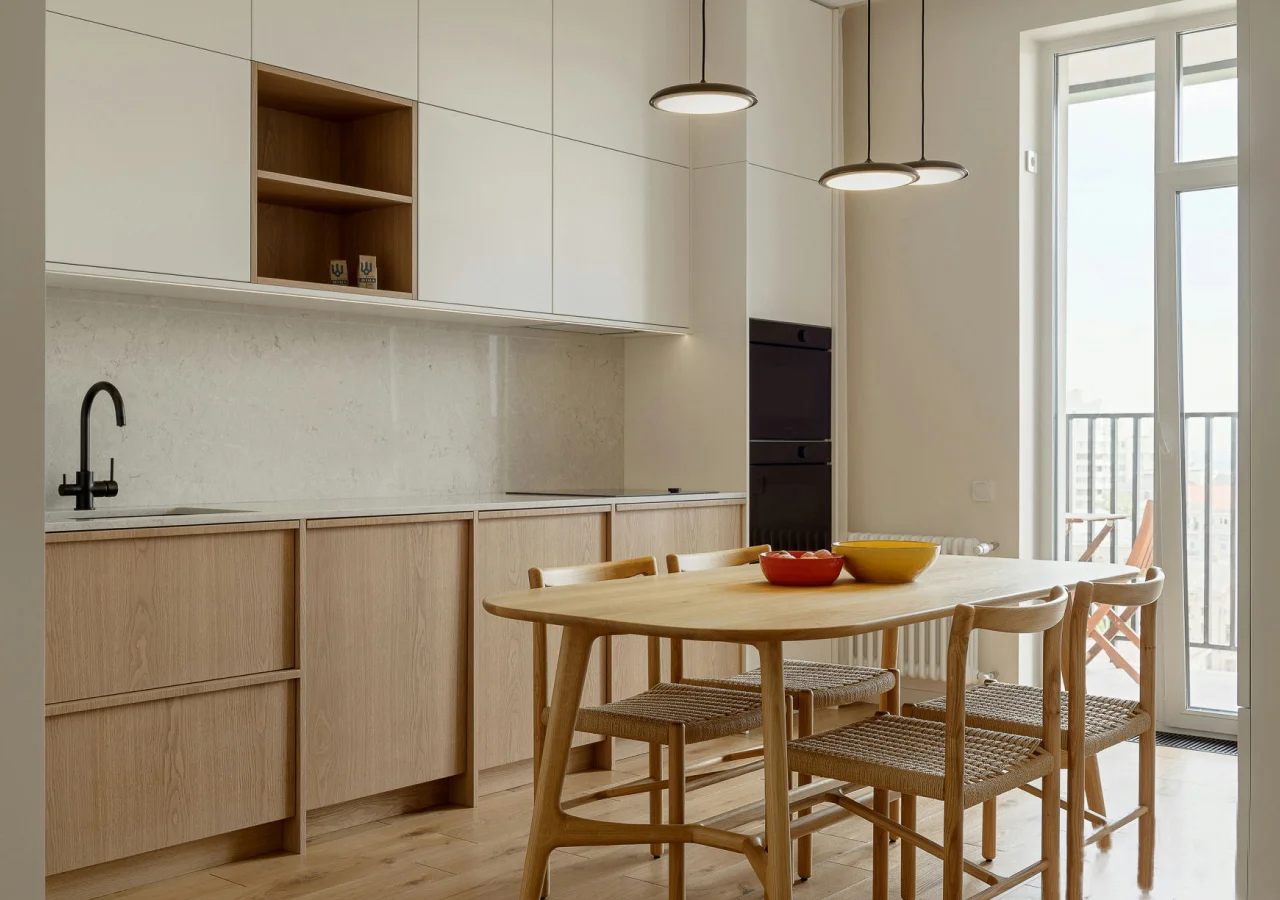
A dining table is often the better choice when meals are an important part of family life. Sitting around a table makes it easier to face one another, share dishes, and spend time together without turning toward someone seated along the same counter.
Seat height, back support, and ease of getting in and out matter more than the furniture label. Some people find dining-height chairs more comfortable than counter-height stools, especially for longer meals, homework, or working at the table.
A table offers flexibility beyond seating. Depending on its design, it can be repositioned or extended for guests. A built-in island, particularly one with electrical or plumbing connections, is much harder to change after installation. Choosing a table may also avoid the cabinetry, countertop fabrication, and utility work associated with a new island.
A Lighter Transition Between Kitchen and Living Room
A dining table can connect the kitchen and living area without adding another solid cabinet block. An oak or walnut table may relate to the cabinetry, while its open base creates a lighter visual impression.
That does not automatically make it more space-efficient. Check the table with chairs occupied and, if it extends, in its larger configuration.
When the Room Can Support Both
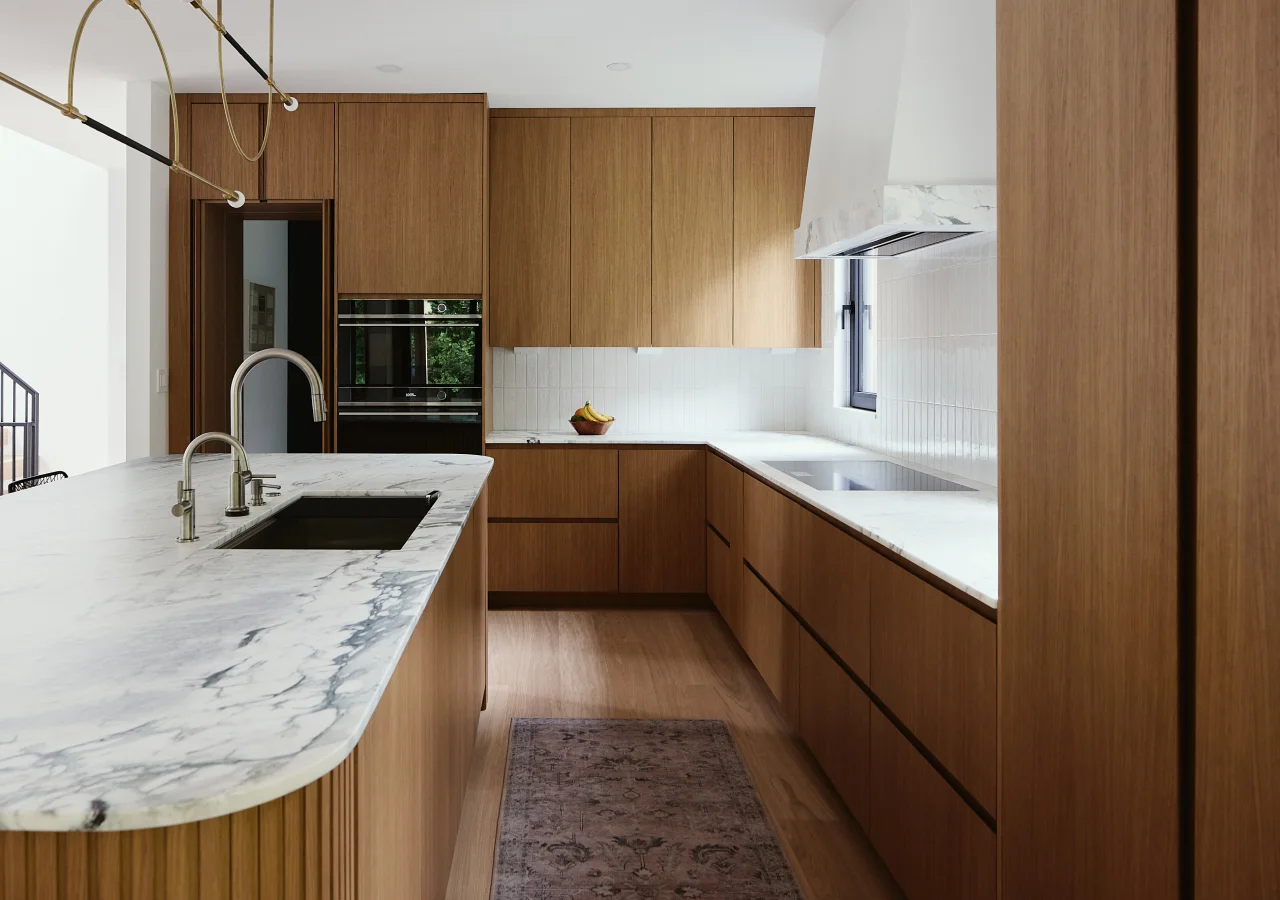
A kitchen island and dining table can work together when they serve different purposes. The island might be dedicated to preparation and storage, while the table accommodates meals, homework, and longer conversations. In this arrangement, neither needs to perform every function.
Both seating areas can also be useful when they support different routines. Children may eat breakfast at the island while the family uses the dining table for dinner. But if one seating area is rarely used, reducing the number of stools or choosing a smaller island may leave more room for circulation.
If the arrangement feels crowded, decide which function needs to stay. A smaller island without seating plus a full dining table may be more practical than two large dining surfaces competing for the same floor area. The Open-Concept Kitchen Ideas article explores the broader relationship between seating, circulation, and room zoning.
Conclusion
Choose an island when the kitchen needs more working space or storage, and a dining table when seated meals and flexibility are the priority. Keep both only if each earns its place without crowding daily movement.
Explore Corner Renovation's kitchen projects to see how different layouts balance cabinetry, dining, and shared living spaces.


