
.webp)
A kitchen island usually starts with base cabinets. These cabinets support the countertop, create storage, and give the island its main structure.
Part of our kitchen island planning guide. Related: island size, outlets on the island.
But an island should not be planned as just a row of cabinets placed in the middle of the kitchen. The best island layout depends on how you want to use it. Some islands are built for prep. Others are built for cleanup, seating, storage, appliances, or a mix of all four.
That means the cabinet types matter. Drawers, doors, sink bases, pull-out trash cabinets, appliance cabinets, open shelves, and finished panels all play different roles.
Start With Base Cabinets
.webp)
Base cabinets are the main building blocks for most kitchen islands. They sit on the floor, support the countertop, and create the structure for storage, appliances, seating, and finished panels.
A standard kitchen island can be made from several base cabinets placed together. In a custom kitchen, those cabinets can be adjusted for width, depth, drawer layout, appliance openings, seating overhang, and finished sides.
The most common island cabinets include drawer bases, door bases, sink bases, appliance cabinets, pull-out trash cabinets, and finished panels.
Best Cabinet Types for a Kitchen Island
| Cabinet type | Best for | Why it works |
|---|---|---|
| Drawer base cabinets | Pots, pans, dishes, utensils | Easier access than deep lower doors |
| Door base cabinets | Large or irregular items | Simple, flexible storage |
| Pull-out trash cabinet | Prep zones and cleanup | Keeps waste hidden and close to the work area |
| Sink base cabinet | Islands with a sink | Holds plumbing and cleaning supplies |
| Dishwasher area | Cleanup islands | Keeps dishes close to the sink |
| Appliance cabinet | Microwave drawer, wine fridge, warming drawer | Adds function without using wall space |
| Open shelf cabinet | Cookbooks, display, baskets | Softens the island visually |
| Finished backs and side panels | Exposed island sides | Makes the island look intentional from every angle |
| Seating panels | Stool side of the island | Creates a finished look while leaving knee space |
Drawers Are Usually the Best Choice
.webp)
For most kitchen islands, drawers are more useful than lower cabinet doors. They let you pull storage toward you instead of bending down and reaching into the back of a deep cabinet.
Deep drawers work well for pots, pans, bowls, plates, containers, small appliances, and pantry items. Smaller top drawers can hold utensils, knives, wraps, towels, or prep tools. Inner drawers can add another layer of storage while keeping the outside of the island simple.
Drawers are especially useful on the working side of the island. If the island is used for prep, cooking, or serving, drawer storage keeps the most-used items close and easy to reach.
When to Use Doors Instead of Drawers
.webp)
Door cabinets still make sense in certain island layouts. They are useful when you need open interior space for plumbing, large appliances, cleaning supplies, or items that do not fit neatly into drawers.
A sink base cabinet usually needs doors because it has to leave room for the sink bowl, plumbing, garbage disposal, water lines, and cleaning products. Door cabinets can also work for oversized serving pieces, tall vases, small step stools, or flexible storage.
The best island layouts often use both drawers and doors. Drawers handle everyday storage, while doors handle the areas where drawer divisions would get in the way.
Should an Island Include a Sink, Cooktop, or Dishwasher?
.webp)
A kitchen island can include a sink, cooktop, dishwasher, microwave drawer, wine fridge, or other appliance. But these choices need to be planned early because they affect plumbing, electrical work, ventilation, countertop seams, cabinet structure, and clearances.
A sink and dishwasher can make the island a strong cleanup zone. A cooktop can make the island a cooking zone, but it also requires ventilation and enough landing space around it. A microwave drawer or wine fridge can add useful function without taking up a wall cabinet.
The main question is not whether the appliance can fit. It is whether the appliance makes the island easier to use. Door swings, drawer access, seating, traffic flow, outlets, and countertop space all need to work together.
Pull-Out Trash and Recycling Cabinets
.webp)
A pull-out trash cabinet is one of the most useful island features. It works especially well when the island is used for prep, because scraps can go directly into the bin without crossing the kitchen.
Trash and recycling pull-outs can be placed near the sink, next to a prep drawer, or close to the dishwasher. In many kitchens, this small detail makes the island feel much more functional.
The size depends on the layout and household needs. Some islands use a single pull-out bin. Others use double bins for trash and recycling, or a wider setup with compost storage.
Open Shelves and Display Cabinets
.webp)
Open shelves can work well on an island, but they should be used carefully. They are best for cookbooks, baskets, serving pieces, or decorative objects, not for the main storage you rely on every day.
A small open shelf at the end of an island can make the design feel lighter. It can also break up a long block of cabinet fronts and add a softer detail to the room.
For everyday function, closed drawers and cabinets are usually better. Open shelves look best when they are limited, intentional, and easy to keep organized.
Finished Backs, Side Panels, and Seating Panels
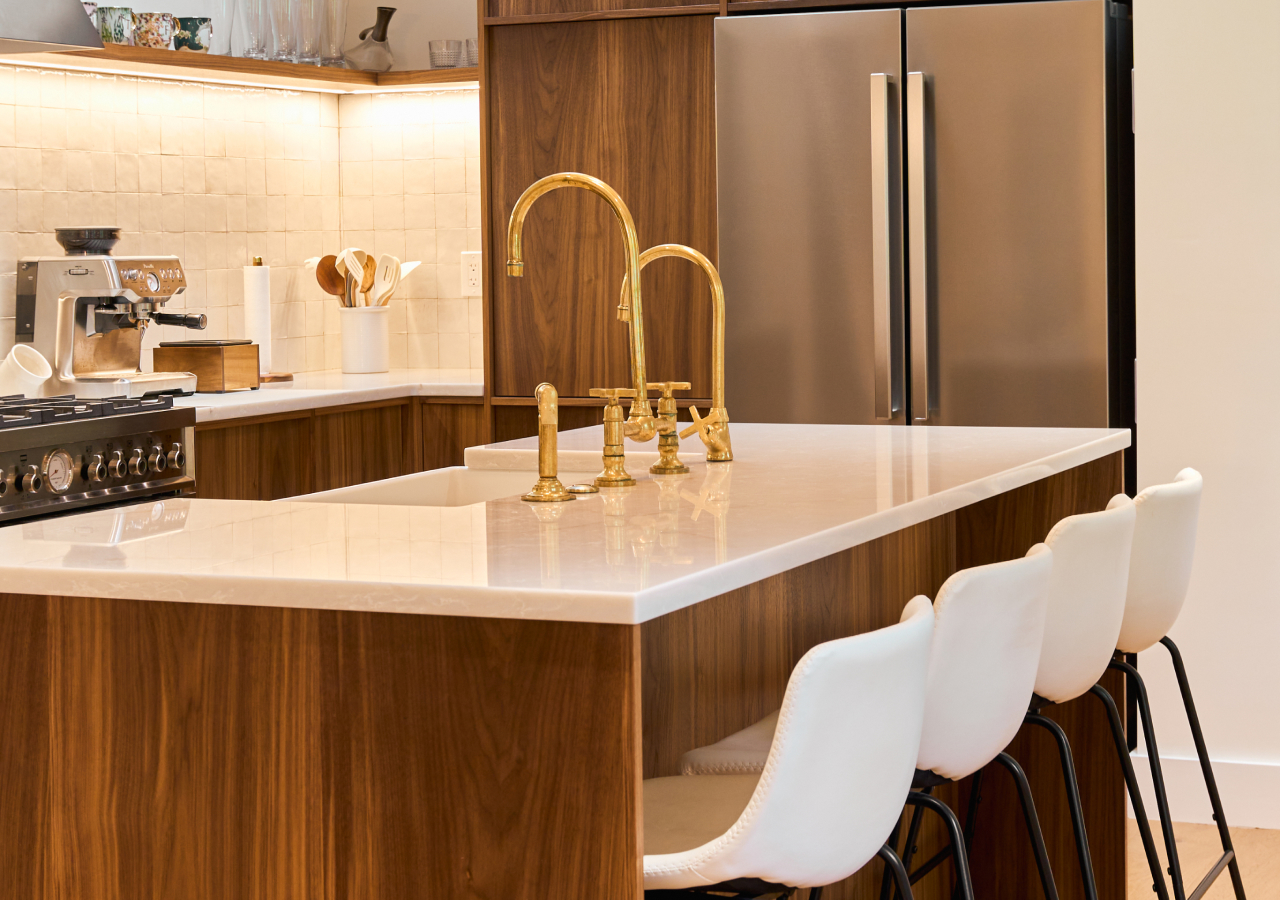
An island is visible from more than one side, so the back and sides matter as much as the working cabinets. Finished panels make the island look complete from the dining area, living area, or entry view.
These panels can match the cabinet fronts, use a contrasting material, or continue the countertop down the side as a waterfall panel. On the seating side, recessed panels can create knee space while keeping the island finished.
Toe kicks, side panels, end panels, back panels, and seating supports should all be planned before production. These details are what make an island look built-in rather than assembled from leftover cabinet boxes.
Do Island Cabinets Have to Match the Rest of the Kitchen?
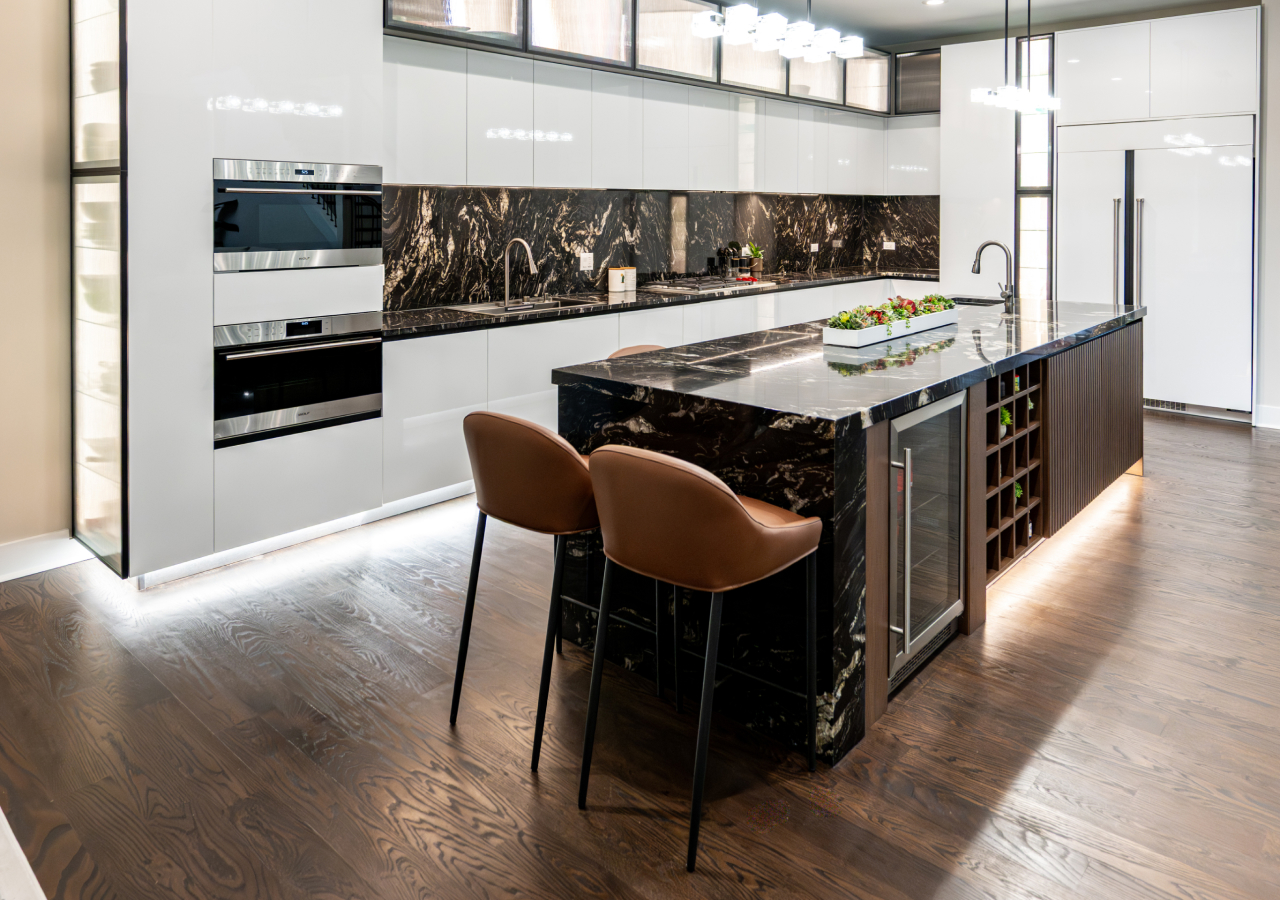
Island cabinets do not always need to match the perimeter cabinets exactly. They should, however, feel connected to the rest of the kitchen.
In minimalist, Scandinavian, and Japandi kitchens, the island usually works best when it shares something with the main cabinetry: wood tone, color family, hardware style, countertop material, or proportions. The connection can be subtle.
For example, a walnut island can work with warm white perimeter cabinets if the tones feel balanced. A matte black island can work with oak cabinets if the rest of the room has enough warmth. The island can stand out, but it should not feel like it belongs to a different kitchen.
Can You Build a Kitchen Island From Stock Cabinets?
.webp)
Yes, you can build a kitchen island from stock cabinets. This can work for simple layouts, especially when the island is mostly for storage and does not include custom appliance openings, unusual depths, curved ends, or detailed seating panels.
The limits usually show up in the finish details. Stock cabinets may not give you the exact island size, clean finished back, panel alignment, seating recess, appliance fit, or countertop support you want.
Custom cabinetry gives more control over dimensions, drawer layout, finished sides, reveal lines, seating panels, and appliance integration. That matters more when the island is large, highly visible, or central to the kitchen design.
Kitchen Island Cabinet Layout Examples
| Island type | Cabinet layout | Best for |
|---|---|---|
| Prep island | Drawer base + pull-out trash + open shelf | Chopping, serving, and daily prep |
| Cleanup island | Sink base + dishwasher + trash pull-out | Washing dishes and clearing meals |
| Storage island | Deep drawers + inner drawers + finished back panels | Pots, dishes, pantry items, and small appliances |
| Seating island | Drawers on the working side + recessed panels on the stool side | Casual dining and open-plan kitchens |
| Appliance island | Microwave drawer or wine fridge + drawers + side panels | Adding function without using wall space |
How to Choose Cabinets for a Kitchen Island
Start with the island’s main job. A prep island needs drawers and a trash pull-out. A cleanup island needs a sink base, dishwasher space, and storage for cleaning items. A seating island needs finished panels and enough room for stools.
- Decide how the island will be used most often. Define whether the island is mainly for prep, cleanup, seating, storage, entertaining, or a mix of functions.
- Choose drawers for everyday storage. Drawers usually work better than deep shelves for pots, dishes, utensils, and prep tools because they improve access and organization.
- Use doors where open space is needed. Door cabinets work well for plumbing, appliances, oversized items, or flexible storage areas.
- Plan trash and recycling close to the working zones. Pull-out waste storage should sit near prep or cleanup areas so daily use feels natural.
- Add finished panels on all visible sides. Exposed island sides should look intentional from every angle, especially in open-plan kitchens.
- Check clearances and movement. Confirm appliance doors, drawer openings, seating space, and walking paths before finalizing the layout.
- Confirm countertop support early. Stone countertops, waterfall panels, and long seating overhangs may require extra structural support.
A good island cabinet layout should feel simple from the outside and useful on the inside.
Conclusion
Most kitchen islands are built from base cabinets, but the best island layouts go beyond basic storage. Drawers, pull-out trash bins, sink bases, appliance cabinets, open shelves, seating panels, and finished backs all help the island work better.
The right cabinet mix depends on how the island will be used. A prep island, cleanup island, storage island, and seating island all need different cabinet planning.
Discover Corner’s kitchen collections to see how custom island cabinetry can combine clean design, practical storage, and a layout that works from every side.


