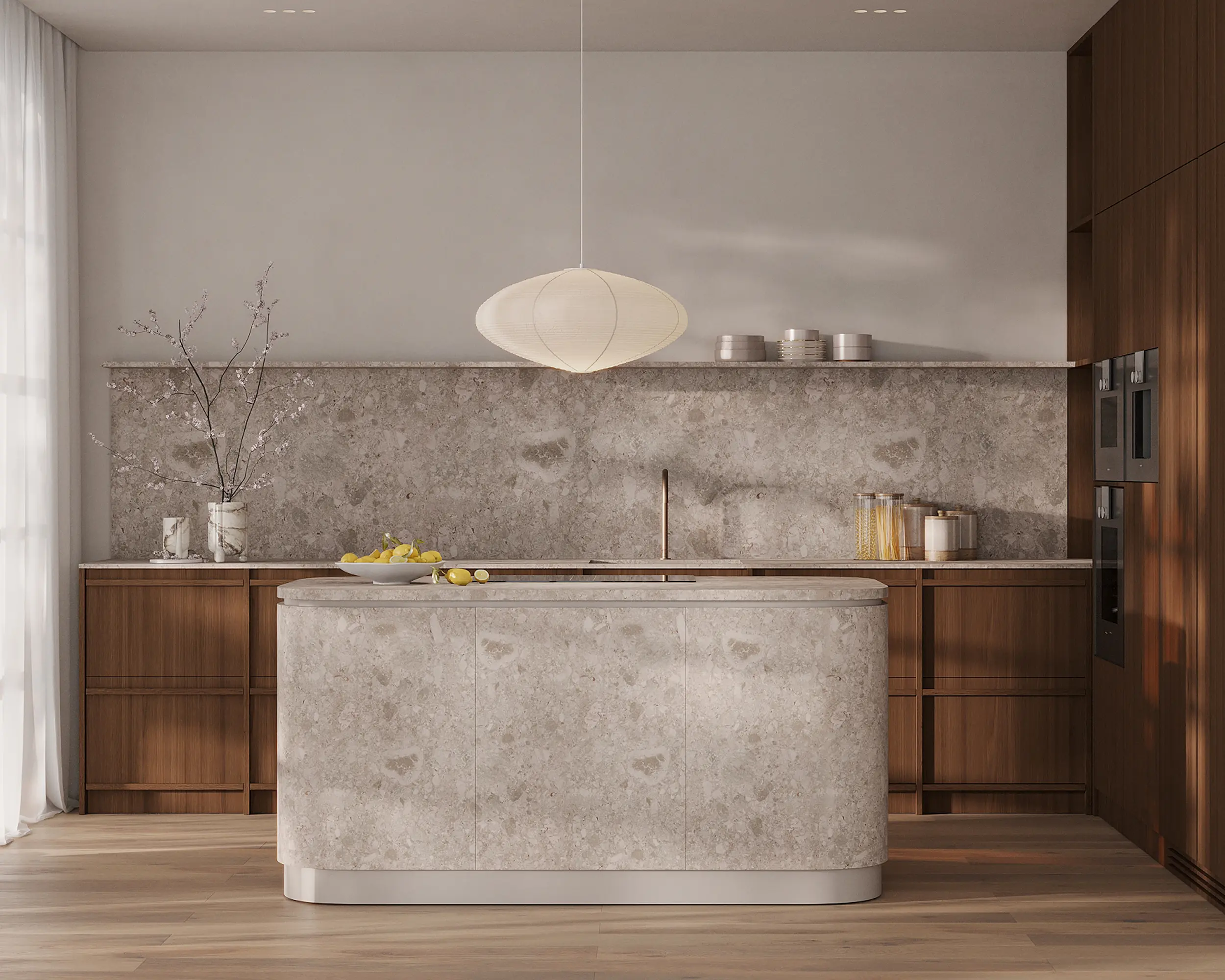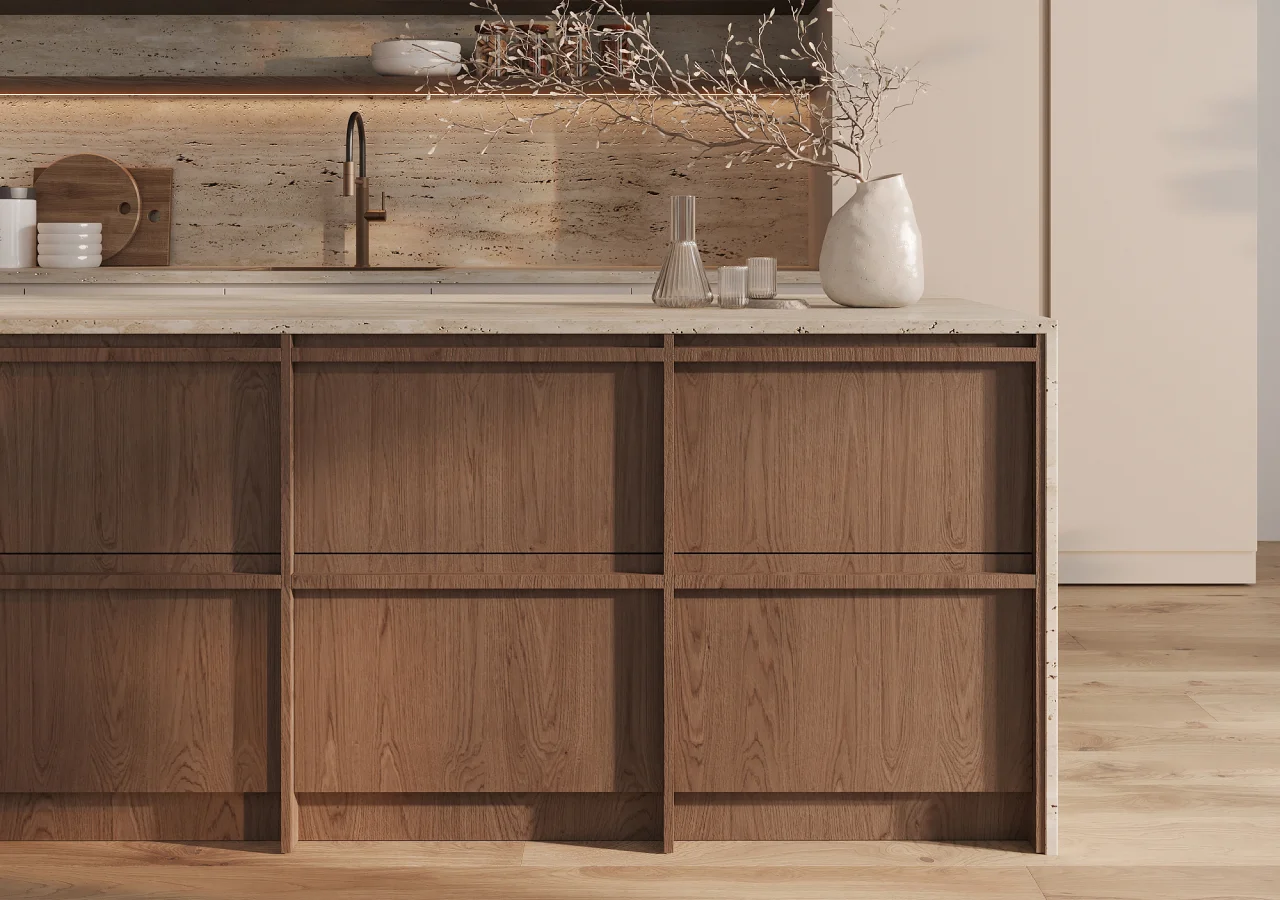
Japandi kitchens often look simple because the cabinet composition feels controlled. Tall units, lower drawers, and wood surfaces read as a few clear forms instead of many competing pieces. That calm does not come from a fixed ratio or from making every front as large as possible. It comes from judging how each cabinet group relates to the room.
Storage still has to work behind that composition. The question is not whether a Japandi kitchen should have large fronts, but whether the size and number of fronts create the right visual mass without making storage less useful.
Judge the Cabinet Group, Not a Single Door
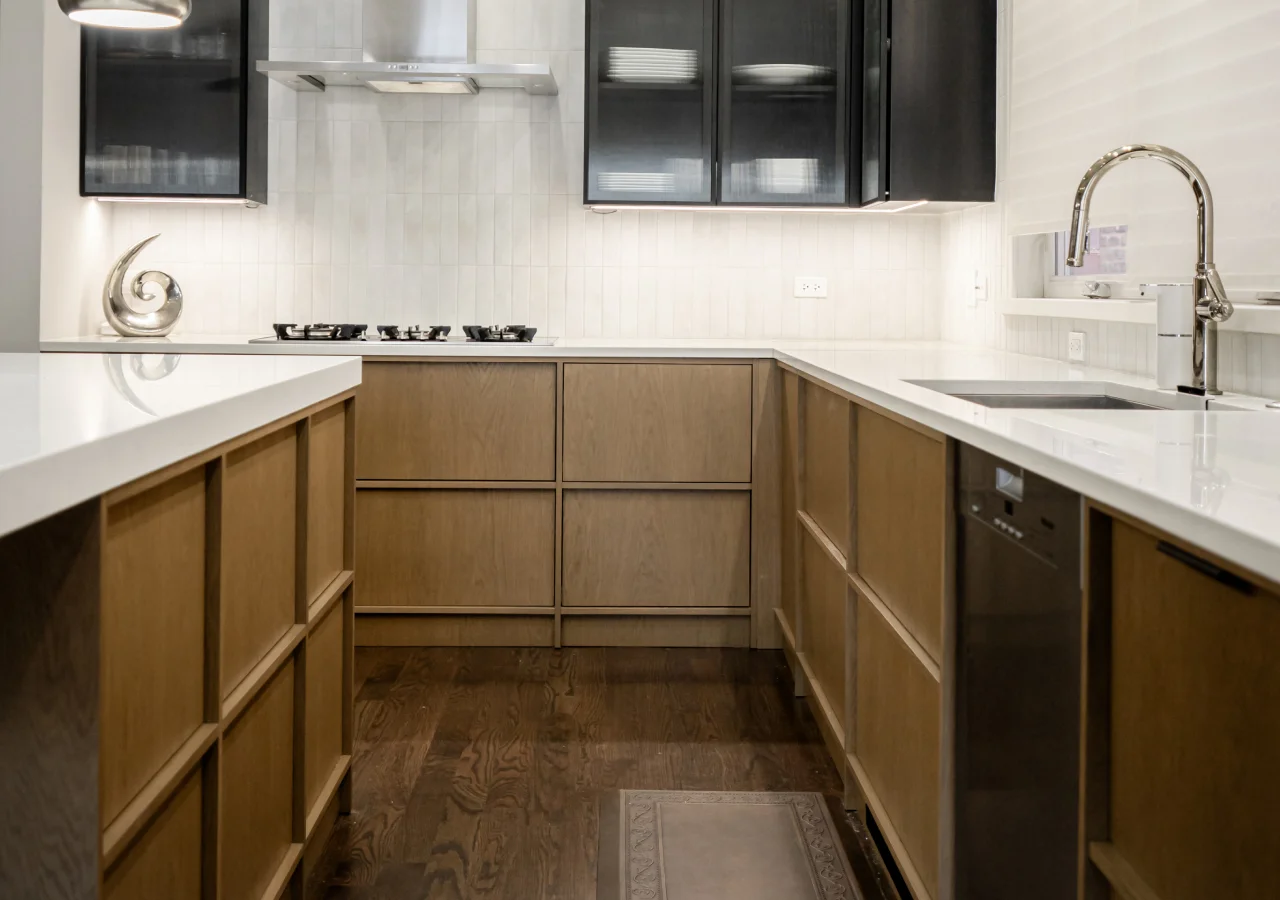
A single door sample does not show how a full cabinet wall will feel. The same front can look quiet on one tall unit and much heavier when repeated across a larger group. When reviewing Japandi cabinet proportions, look at three scales at once: the individual front, the complete cabinet group, and the group in relation to the room.
Room height, windows, sloped ceilings, and open wall areas all change how cabinetry is perceived. In one Corner design discussion, two cabinet heights were compared near a sloped ceiling: one stopped lower, while another extended farther upward. The takeaway is that cabinet height should be reviewed against the architecture around it, not as an isolated elevation.
This is also where proportion differs from cabinet alignment. Alignment deals with where lines, joints, appliances, and grain directions meet. Proportion is about visual mass and scale. A wall can be perfectly aligned and still feel too dense or too dominant for the room.
Balance Tall Fronts With Lower Drawer Runs
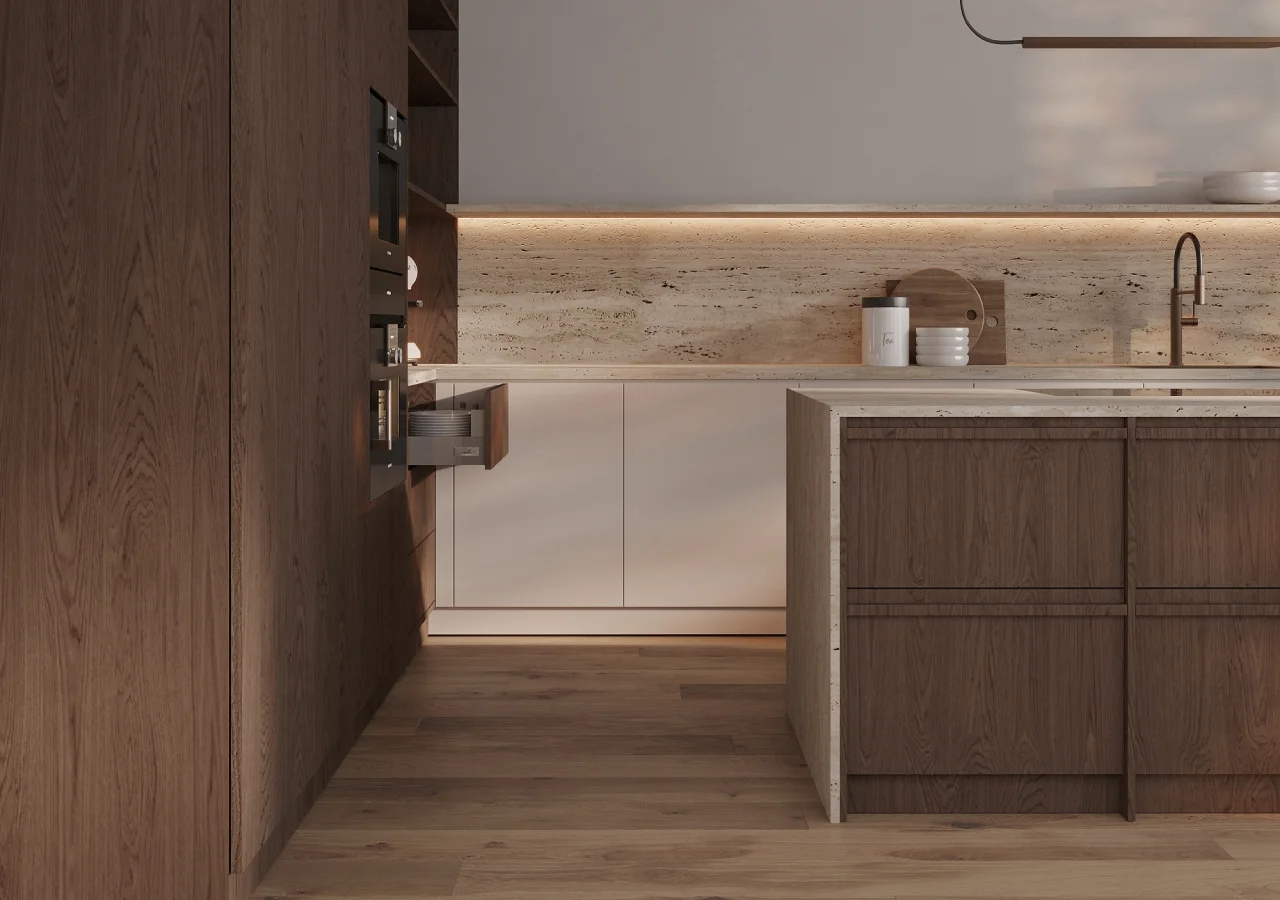
Tall fronts create large vertical planes, while drawer runs create a stronger horizontal rhythm. A Japandi kitchen can feel balanced when those two directions support each other. A tall storage wall may provide visual weight at one end, while wider lower drawers make the working area feel lower and more continuous.
That does not mean every tall cabinet needs one uninterrupted door or every base cabinet should be as wide as possible. Larger fronts reduce visible divisions, but they still need to suit the room and the storage behind them. More divisions can be appropriate when they make the cabinet group fit the kitchen's scale better.
Keep technical coordination separate from the visual decision. Front size can depend on the cabinet system, material, hardware, and integrated appliances. Before approving unusually large doors or drawers, confirm the feasible dimensions with the cabinet manufacturer and check any pricing impact in the quote. For detailed guidance on matching lines and appliance fronts, see Corner's Kitchen Cabinet Alignment.
Decide How Much Wood the Composition Needs
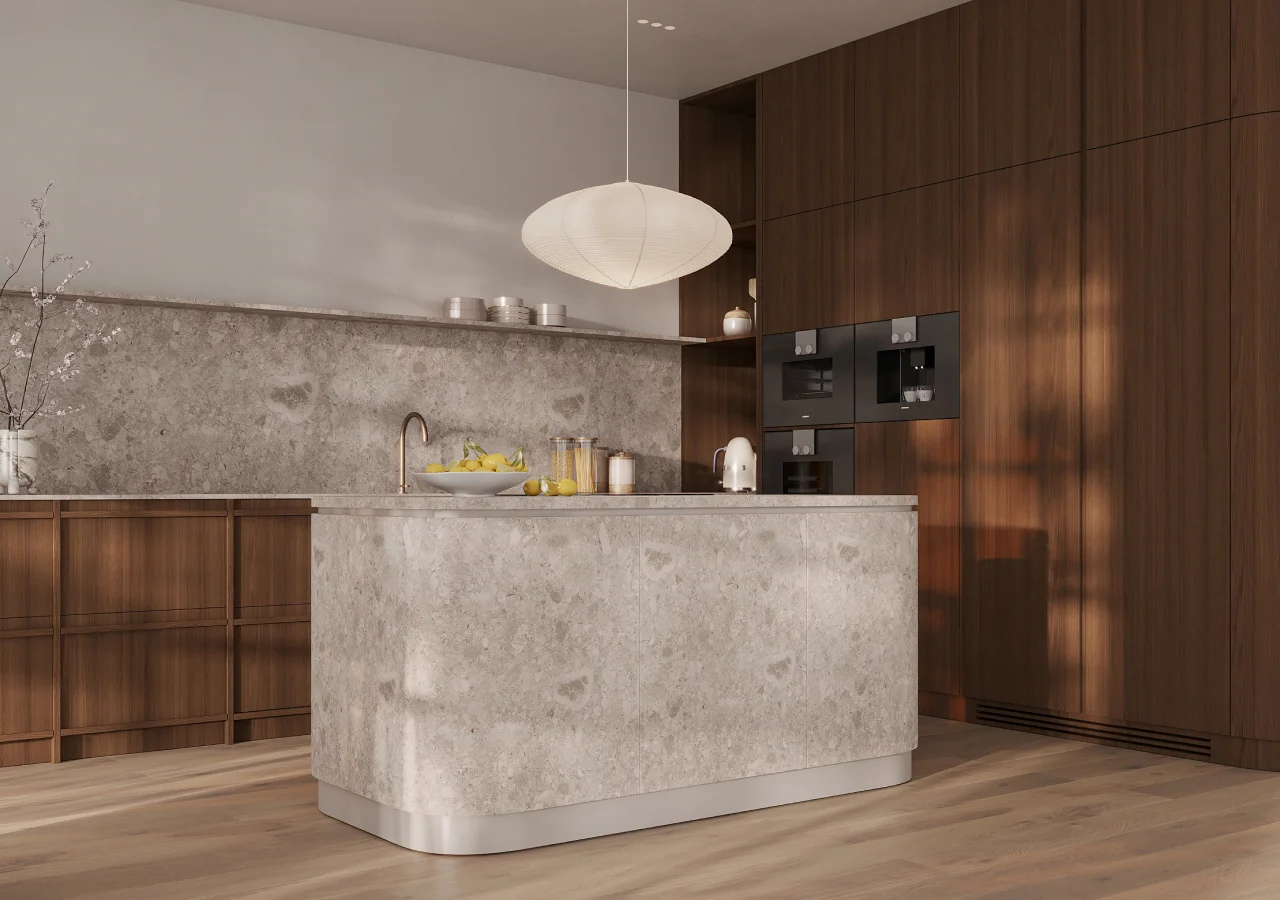
The size of a cabinet front changes how strongly its material is perceived. A narrow oak panel adds warmth. A full wall of tall oak doors becomes one of the largest visual surfaces in the room. Cabinet proportion and material distribution should therefore be reviewed together, even though they are separate decisions.
The same layout can feel different in painted cabinetry, a quiet veneer, or a more active wood grain. If tall cabinets, lower drawers, and an island all use the same wood, the room may read as one continuous material field. That can be intentional, but it should still be compared with alternatives.
In one Corner design discussion, a fully concrete island surface was compared with a version that introduced wood. The concrete option was considered partly as a counterbalance to the amount of wood elsewhere. The broader lesson is that when a composition feels visually heavy, the better adjustment may be to redistribute materials rather than divide the cabinetry into more fronts.
Compare the preferred cabinet proportions in two material versions. Keep the front divisions the same and change only where wood appears. This helps reveal whether the issue is scale or simply the amount of visible wood.
Conclusion
Japandi cabinet proportions are not about finding one ideal door width or a universal ratio between tall cabinets and drawers. They are about controlling visual mass. Tall doors, wide drawers, and wood surfaces should be judged as parts of a larger composition that includes the room, the architecture, and the storage behind the fronts.
The most useful approach is to compare two versions of the same kitchen under the same conditions, first changing front divisions and then material distribution. This keeps proportion separate from alignment, pantry planning, and hardware constraints. When refining a Japandi kitchen, compare the alternatives in your own layout before approving the cabinetry.