
.webp)
Black Scandinavian kitchens offer a darker version of a style usually associated with pale wood and white walls. Done well, they feel restrained, practical, and inviting rather than dramatic or heavy. Dark cabinetry needs support from natural light, warm wood, quiet stone, and a carefully planned layout.
Storage matters just as much as color. Clear surfaces, simple cabinet lines, and well-organized work zones help a darker kitchen retain the calm character of Scandinavian design. The result is not simply a black kitchen with Nordic finishes. It is a functional space in which every material and detail has a clear purpose.
What Makes a Black Scandinavian Kitchen Work
What Defines a Black Scandinavian Kitchen?
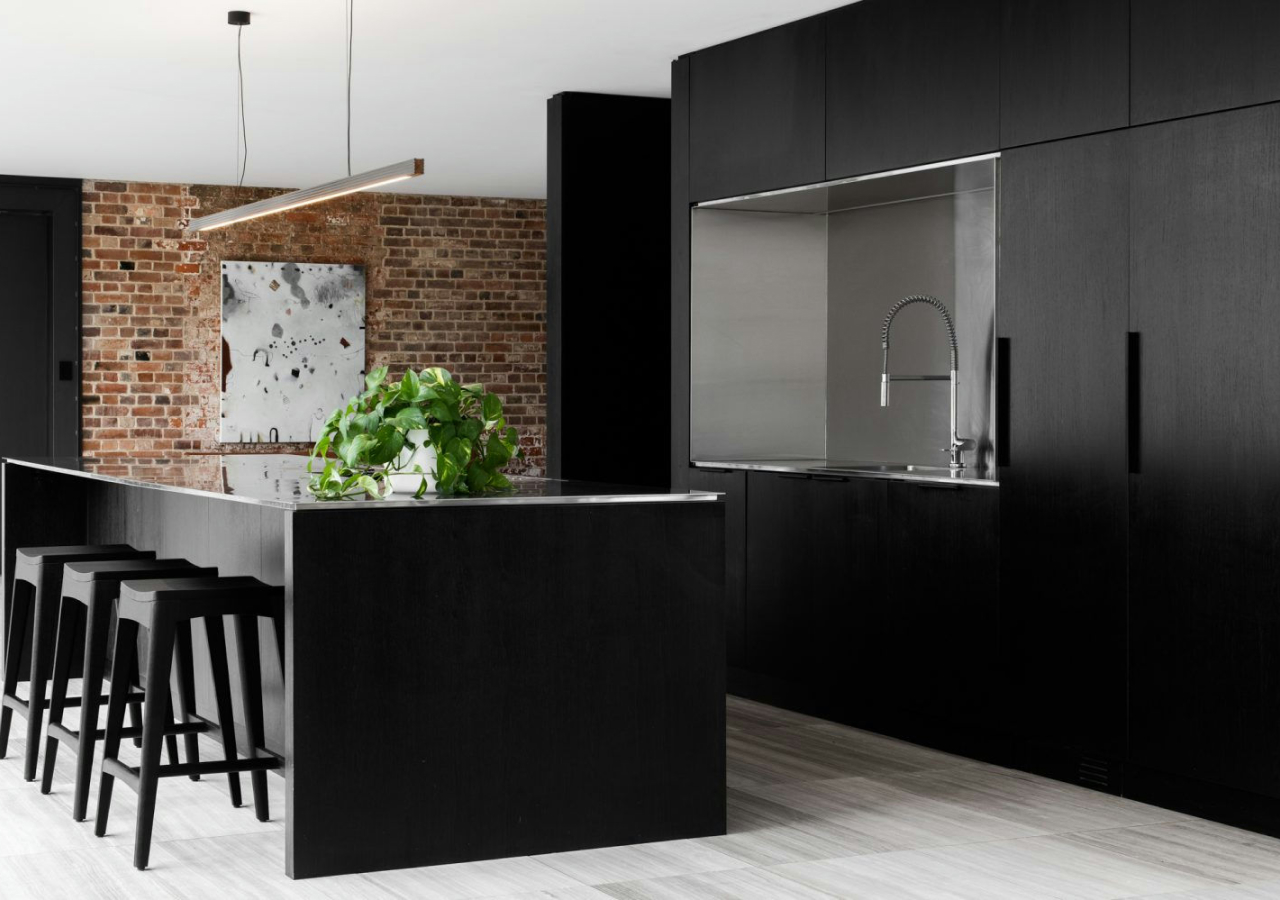
A black Scandinavian kitchen combines dark cabinetry with the main principles of Scandinavian design: simplicity, natural materials, and practical planning. It is built around clean lines, limited contrast, and an efficient layout.
The look usually starts with black or charcoal flat-front cabinets. Wood, understated stone, and lighter surrounding surfaces are then used to soften the palette. Instead of adding many decorative finishes, the design repeats a small number of materials so the room feels consistent.
Strong storage planning is also essential. Drawers, integrated appliances, tall cabinets, and concealed solutions such as appliance garages help keep everyday items out of sight. Clutter is often more noticeable against dark cabinetry, so the quiet appearance depends on how well the kitchen works behind the fronts.
Why Black Works in Scandinavian Design
.webp)
Scandinavian design is not defined by white kitchens alone. Its deeper principles are clarity, restraint, natural materials, and practical use. Black can support those ideas when it is used with care.
Dark cabinetry gives a kitchen more structure and can help define it within an open-plan room. It also creates a strong background for natural wood and muted stone. The contrast should remain controlled, however. Highly polished surfaces, dramatic veining, or too many competing finishes can move the design away from its Scandinavian character.
This is what separates a black Scandinavian kitchen from other dark styles. Industrial kitchens often use exposed metal and harder contrasts. Luxury black kitchens may rely on glossy fronts or statement stone. A Scandinavian approach is quieter, with simpler forms, softer finishes, and fewer decorative details.
How to Keep a Black Scandinavian Kitchen From Feeling Too Dark
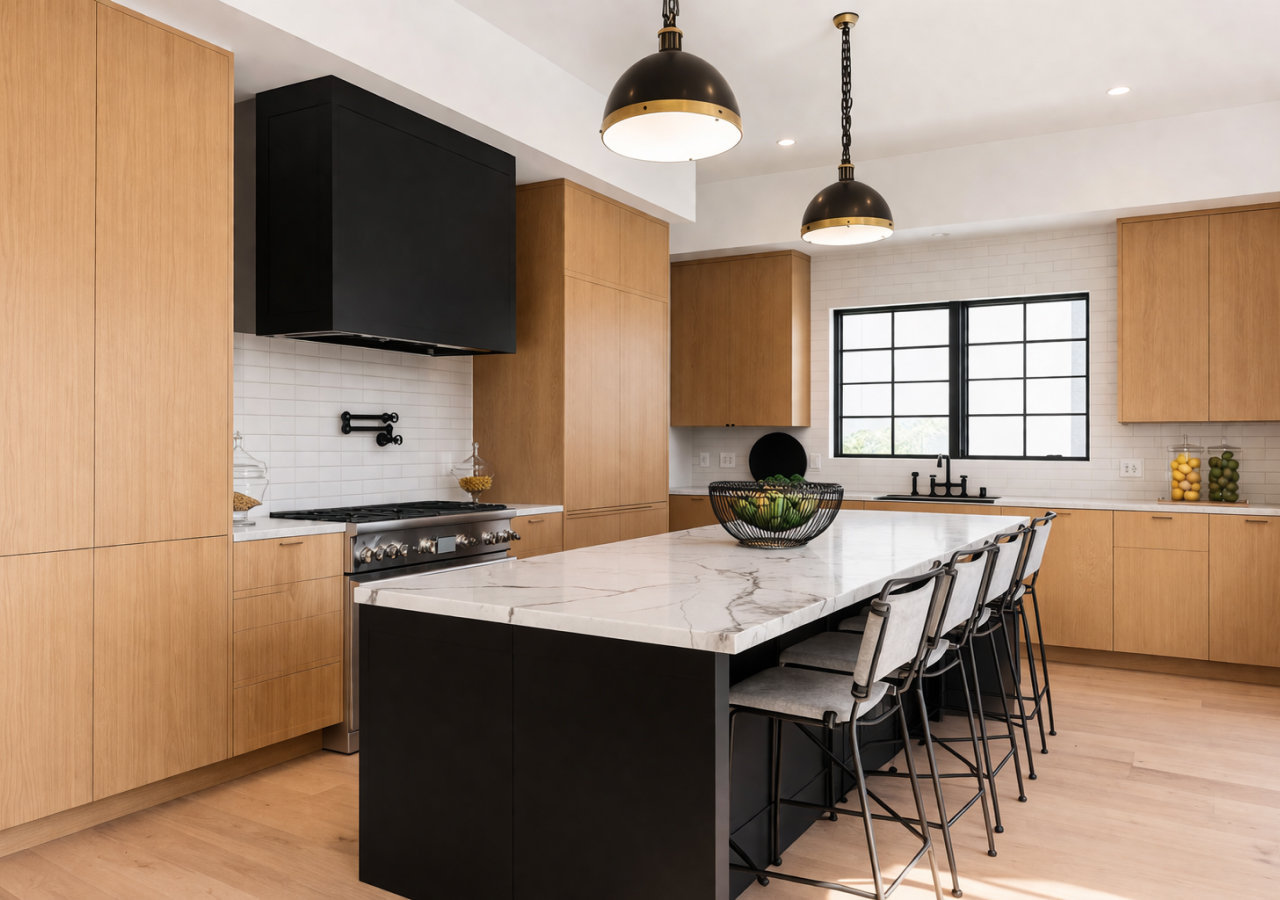
Black can make a kitchen feel dense when it covers too many surfaces without enough visual relief. The amount and placement of dark cabinetry should therefore respond to the room’s size, windows, flooring, and connection to surrounding spaces.
A full black kitchen can work in a bright room with generous natural light. In smaller or darker spaces, it may be better to use black on the lower cabinets, island, or tall cabinet wall. Lighter walls, oak flooring, or wood upper cabinets can then keep the room more open.
Wood is especially important. Oak and ash add warmth without bringing too much additional visual weight. Walnut can also work, but it is naturally deeper and usually benefits from pale floors, walls, or countertops.
Lighting needs to be planned early. Under-cabinet lights improve task areas, while ceiling and decorative lighting help the room feel comfortable after dark. A warm, layered lighting plan is usually more effective than relying on one bright overhead fixture.
The more black the kitchen contains, the more carefully the surrounding light and materials need to be considered.
Materials and Finishes That Support the Look
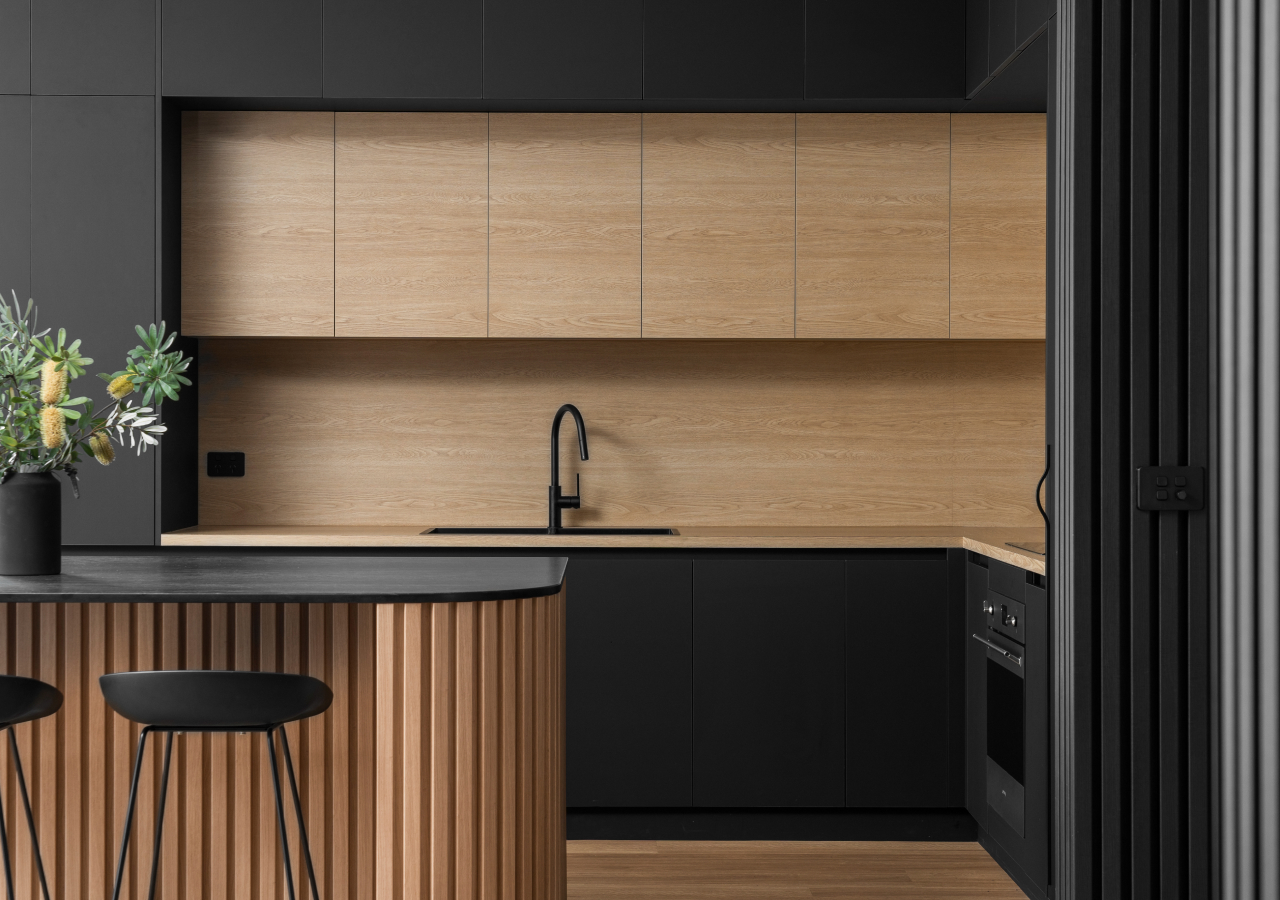
The success of a black Scandinavian kitchen depends on the surfaces around the cabinetry. In a limited palette, finish, texture, and material variation become more noticeable.
Matte fronts, natural wood, subtle stone, and simple detailing usually create the most convincing result. The aim is not to maximize contrast, but to prevent the dark cabinetry from feeling flat or severe.
Key Material Decisions
Matte black generally feels softer than a reflective finish and is easier to integrate into a restrained material scheme. The exact surface should still be tested, since some very flat black finishes show fingerprints, dust, or marks more readily than textured options.
Light oak is one of the easiest pairings because it creates contrast without making the room feel busier. Walnut gives the kitchen a richer appearance, but it should be introduced selectively when the room already contains several dark elements.
Countertops and backsplashes usually work best when they remain understated. Soft veining, warm gray tones, and subtle textures provide depth without turning the surface into the main visual feature.
Pros and Cons of a Black Scandinavian Kitchen
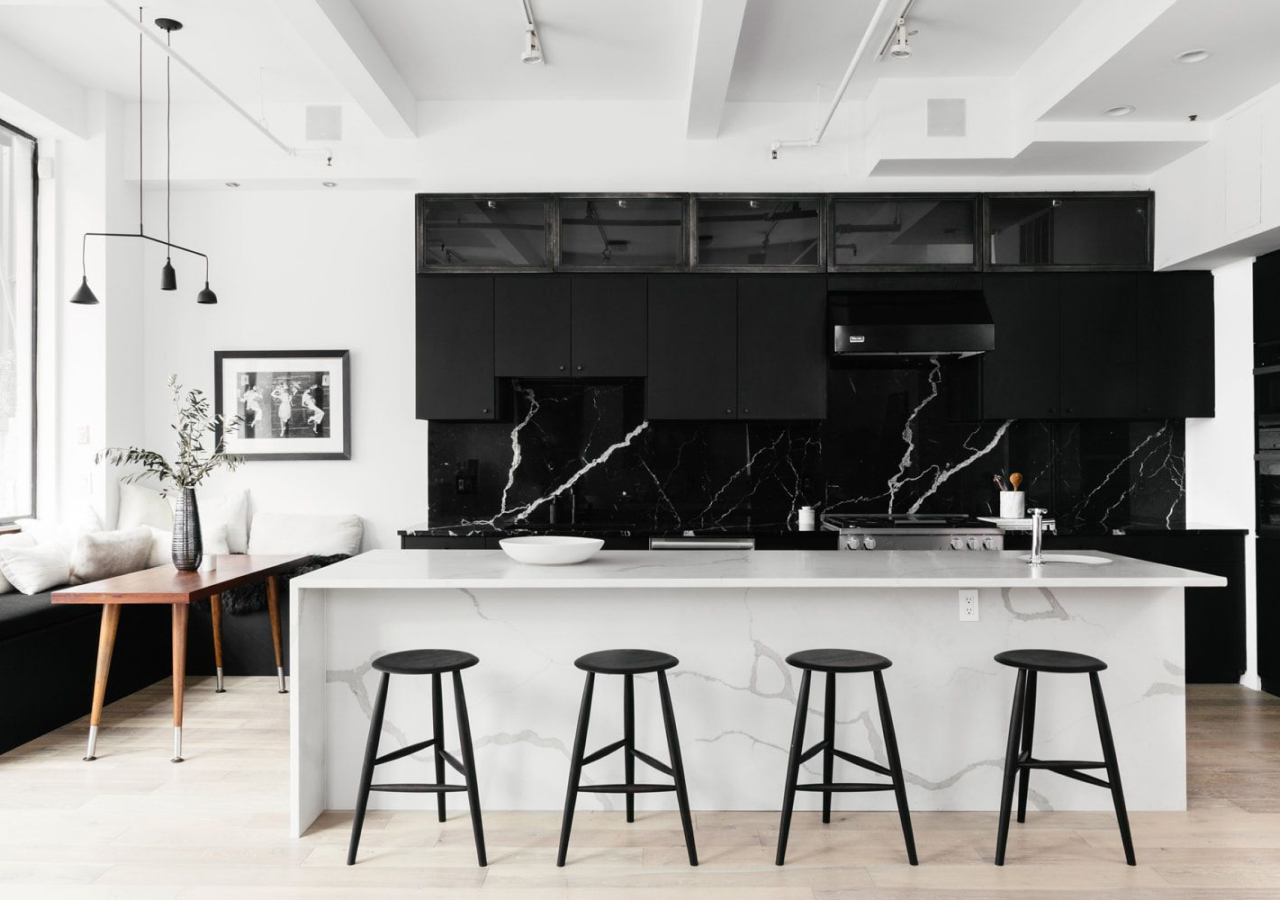
A black Scandinavian kitchen has a clear visual identity. It can feel more grounded and architectural than a pale Scandinavian kitchen while still maintaining simple lines and natural materials. Dark cabinets also work especially well with warm wood, integrated appliances, and open-plan interiors.
However, the style requires more careful planning in rooms with limited daylight. Dark fronts can make a small kitchen feel more enclosed when they are combined with dark floors, heavy countertops, or insufficient lighting.
Maintenance also depends on the selected finish. Some black surfaces show fingerprints, dust, grease, and water marks more clearly than lighter cabinetry. Samples should be viewed and touched before the cabinet finish is approved.
The style is not necessarily impractical. It simply requires more careful lighting, storage, and material planning. When those decisions are resolved early, the kitchen can remain comfortable and easy to use.
Conclusion
A black Scandinavian kitchen can feel calm and livable, but the cabinet color cannot do all the work. Dark fronts need to be supported by natural wood, understated stone, clear storage, and a lighting plan that reduces shadows.
The result combines the simplicity of Scandinavian design with a deeper and more structured appearance. Explore Corner Renovation’s collections or book a consultation to plan a dark Scandinavian kitchen around your layout, materials, and storage needs.


