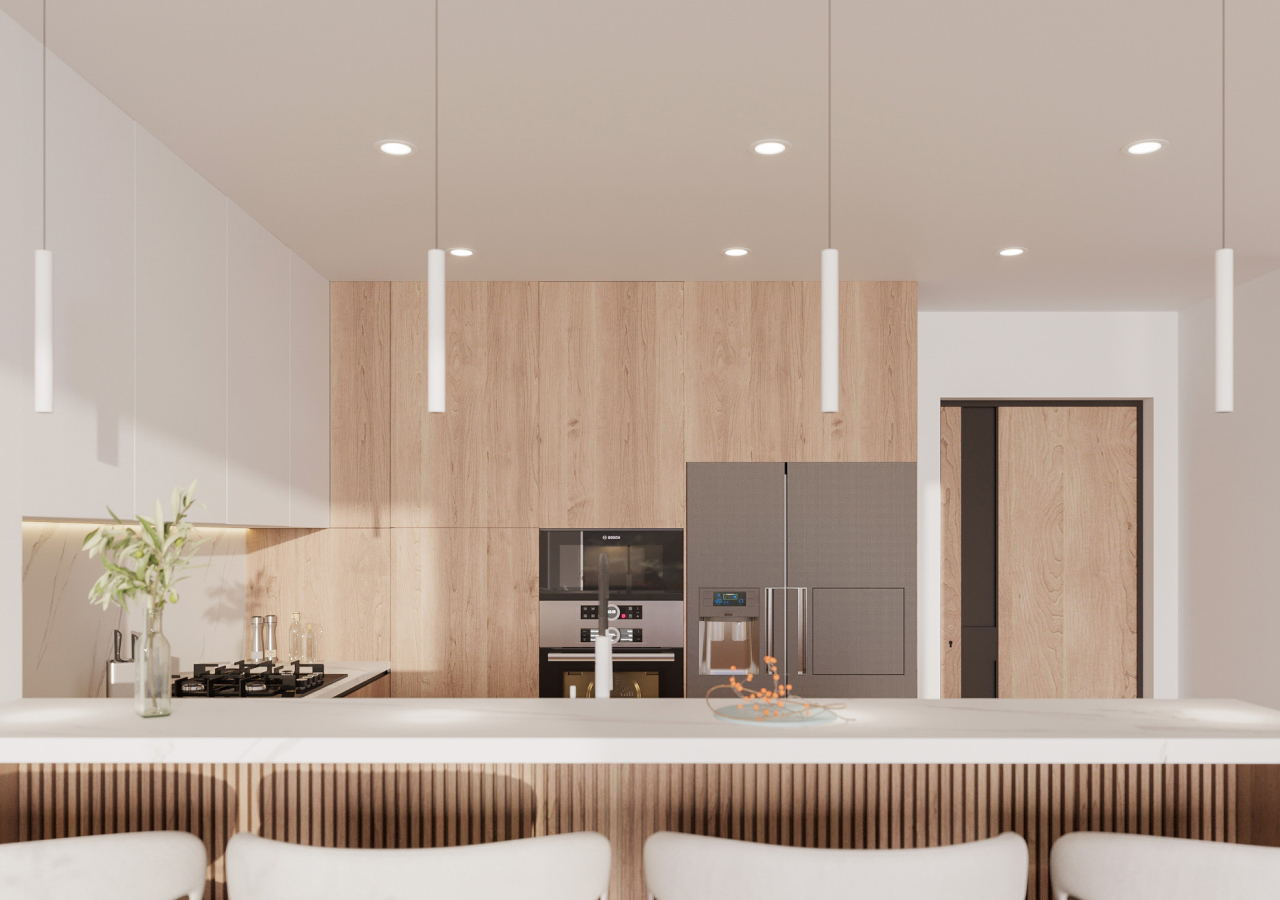
Scandinavian Kitchen Lighting: Pendants, Spots & Soft Glow

A Scandinavian kitchen looks calm because daily life has a place to land. That calm starts with organization: drawers that hold categories, a sink zone that stays contained, and storage that keeps counters from becoming a staging area. In open layouts, this matters even more because the kitchen is always visible from the living room. Lighting becomes the second system that keeps the room feeling soft and balanced instead of harsh.

Scandinavian kitchen lighting works best as a layered plan. You want shadow-free light where you prep and clean, an even base layer that fills the room, and a gentle glow that adds warmth without clutter. Done well, the kitchen stays functional during the day and relaxed at night, while still remaining clean from the living room.

What Makes Lighting Feel Scandinavian

Scandinavian kitchen lighting is warm, diffused, and low-contrast. The goal is simple: shadow-free task light on counters, an even ambient base, and a softer accent glow that makes wood and matte finishes look natural. Bright-white bulbs and a ceiling overloaded with fixtures are what push the room into “clinical.”

This style has a specific character: warm, restrained, and easy on the eyes. Bright-white bulbs and a ceiling full of fixtures can make a kitchen feel sharp and visually busy. Warm light keeps wood grain and matte fronts flattering, and a restrained layout keeps the ceiling quiet.

Placement matters more than fixture count. A dense grid of downlights can draw attention upward and create harsh pools of light. Scandinavian kitchens tend to use fewer ceiling fixtures placed with intention, supported by integrated cabinet lighting that does the real work on counters.

Area / Layer Best fixture What it solves Settings to aim for
Counters + sink (Task) Under-cabinet LED strip in diffused channel Shadow-free prep + clean backsplash 2700–3000K, continuous line, on its own dimmer
Whole room (Ambient) Ceiling spots (downlights) or quiet flush mount Even coverage, no dark corners Dimmable, avoid tight beams, align with zones
Island / table (Dining) 1–3 simple pendants or linear pendant Defines the zone without clutter Diffused shade (opal/covered), glare-free, dimmable
Mood + depth (Accent) Shelf wash, toe-kick, cabinet interior Soft glow + better visibility in storage Warm + low output, gentle wash, dimmable

A Layered Scandinavian Lighting Plan

The simplest way to design Scandinavian kitchen lighting it is by hierarchy: task light on work surfaces, ambient light for the room, then accent glow for depth. That structure fits Scandinavian atyle because it leans on calm lines and material texture rather than ornament.

Layer 1: Task lighting where shadows matter

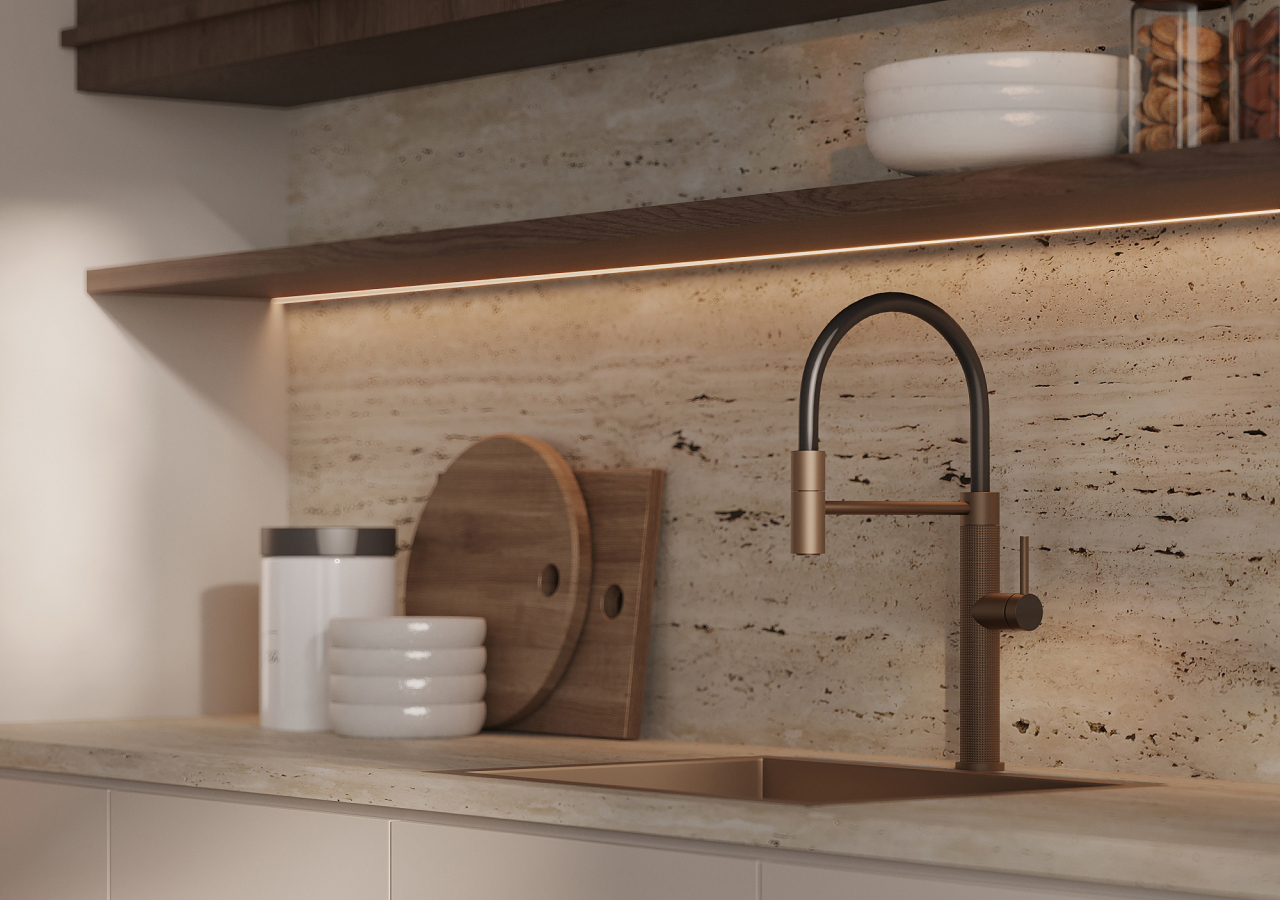
Task lighting should keep prep and cleanup shadow-free without making the whole kitchen feel fully on. In most Scandinavian kitchens, continuous under-cabinet LED strips do the heavy lifting because they light counters evenly and keep the ceiling visually quiet.

Aim for consistent coverage across prep runs, then add support near the sink if that spot reads dim. Put task lighting on its own switch or dimmer so cooking mode and evening mode can live on different settings.

Keep it calm with a few details:

  • Prefer continuous LED strips over spaced puck lights.
  • Use diffusers to prevent visible dots and harsh reflections on glossy tile or polished stone.
  • Keep placement consistent across runs so the kitchen reads disciplined.

Layer 2: Ambient lighting as the room’s base light

Ambient lighting prevents dark corners and makes circulation comfortable. In Scandinavian kitchens, the best ambient solutions stay understated: ceiling spots (downlights), a clean flush mount, or restrained track.

Treat ambient light as background coverage. Spread it across the full footprint, including corners, and use dimming so the base can drop down at night while task lighting stays useful. Avoid overly tight beams that create bright circles on the floor and make the room feel spotty.

Layer 3: Accent light for texture and soft glow

Accent lighting adds depth and a warmer evening feel without needing more overhead brightness. A gentle shelf wash, a subtle wall wash, toe-kick glow, or cabinet interior lighting can make the kitchen feel layered, especially in open-plan homes where the room is visible from the sofa.

Accent lighting also solves practical annoyances in deep storage zones like tall pantries and appliance areas. Keep it warm and dimmable, and use gentle washes rather than tight beams so it reads as atmosphere, not a display case.

Pendants Over Islands and Key Zones

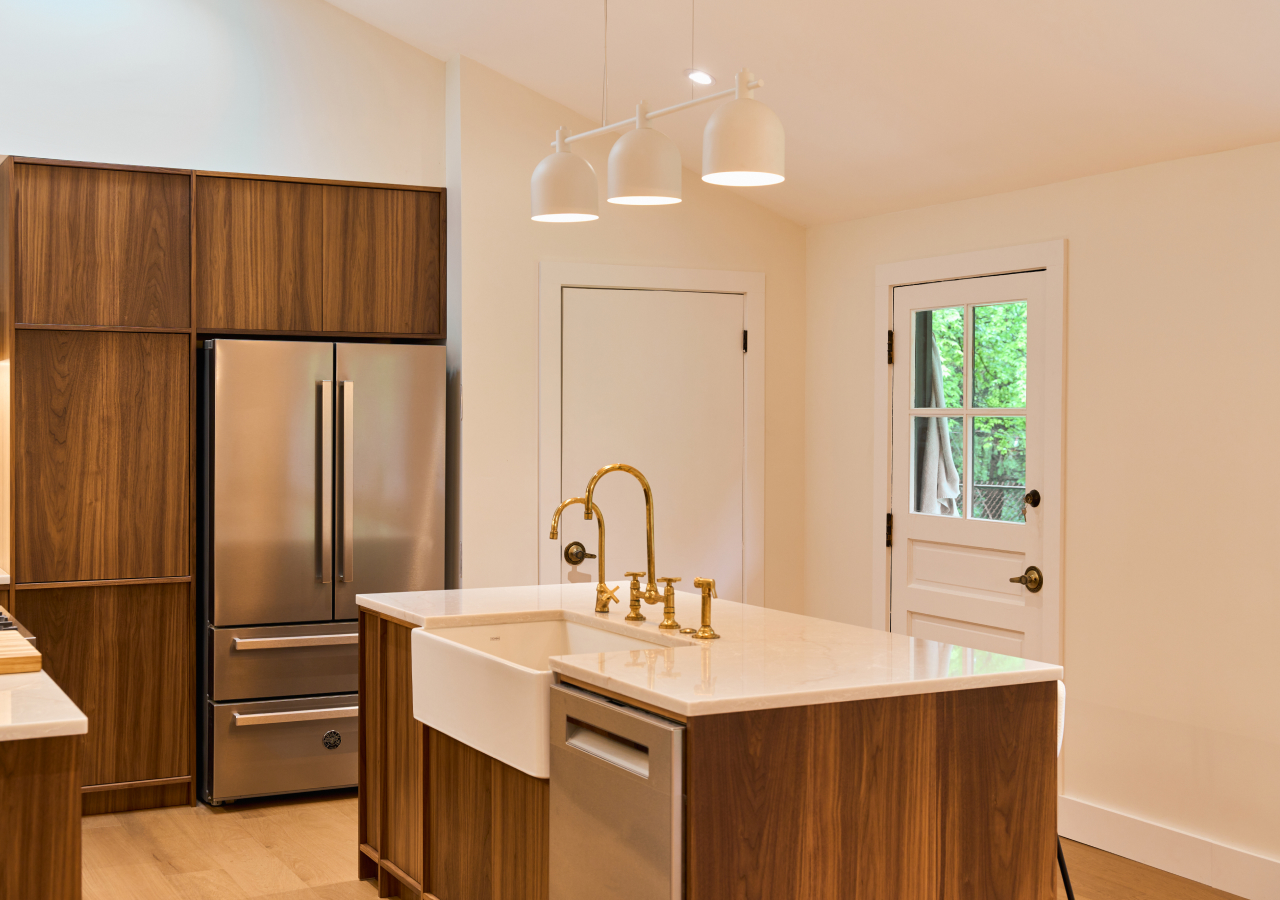
Island pendants sit at eye level, so they affect both mood and sightlines in open-plan layouts. Scandinavian pendants work best when they are simple in shape, proportionate in size, and dimmable, with diffused light that avoids glare.

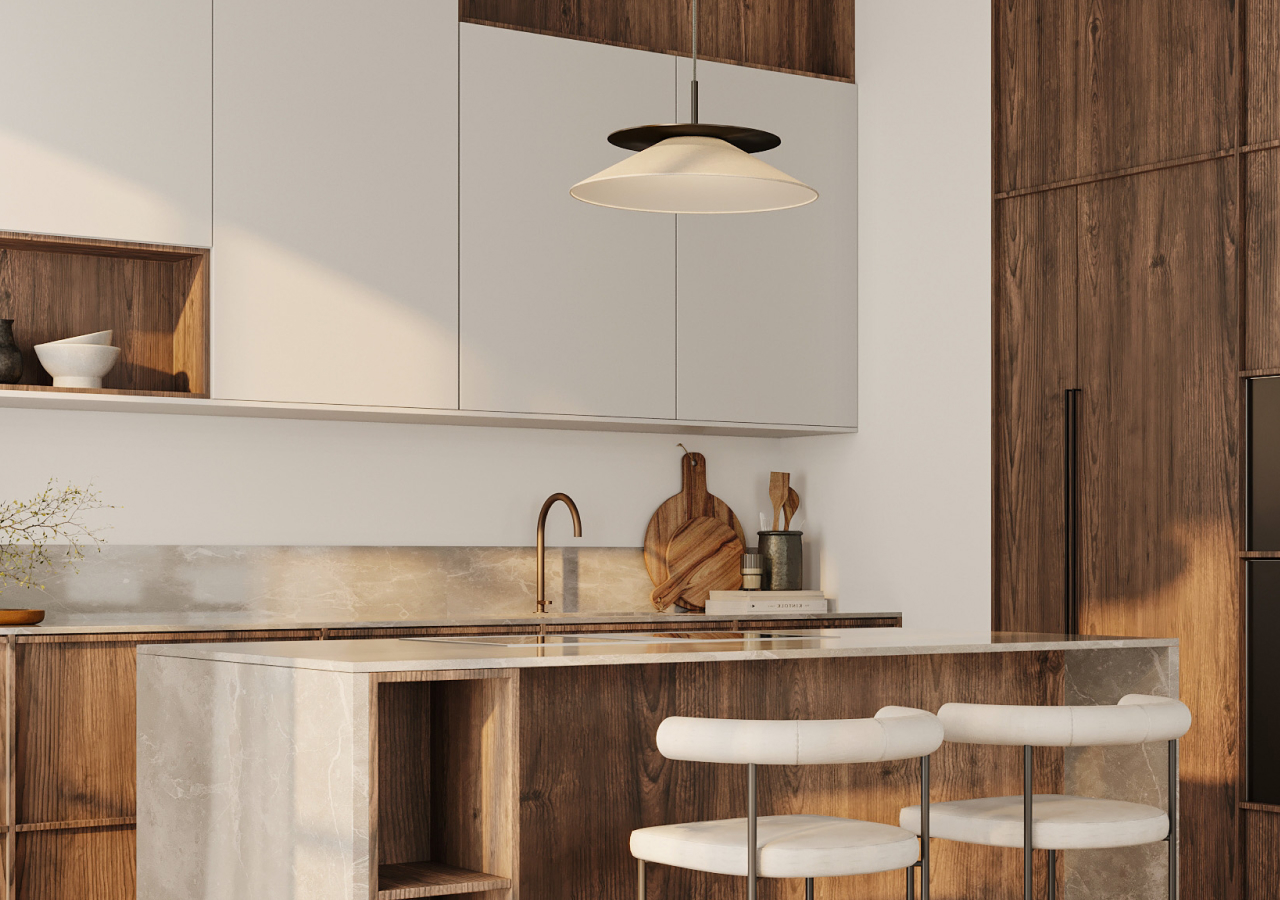
Pendants define a zone without adding clutter when they’re chosen with restraint. A Scandinavian kitchen pendant should feel simple in shape, proportionate in scale, and soft in output. Used well, pendants bring a cozy pool of light that reads calm from the living room.

Calm pendant shapes that suit Scandinavian kitchens

Timeless silhouettes work best: cones, domes, globes, and clean cylinders. These forms sit comfortably next to flat-front cabinetry and wood-forward palettes. Skip ornate shapes and heavy detailing, especially in open kitchens where the fixture becomes part of the everyday composition.

A practical pairing rule holds up in real rooms: quiet cabinets look best with quiet fixtures. Handleless fronts and calm lines usually pair well with simple, low-drama pendants.

One pendant vs two or three

Use proportion, coverage, and sightlines to decide. One pendant can look calmer when task and ambient lighting already cover the functional work. Two or three pendants can spread light more evenly over a longer island, but only if the shapes stay simple and the scale stays modest.

Filter the choice through the living-room view. If multiple pendants become visual clutter, scale down, simplify, or choose fewer fixtures. A useful checkpoint is this: if the pendants are the first thing you notice from the sofa, they are doing too much.

Height, spacing, and glare

Pendant height affects comfort. Hung too low, pendants block sightlines and interrupt the room’s composition. Hung too high, they lose their ability to define a cozy pool of light.

Aim for clear views across the kitchen and avoid glare from exposed bulbs. Keep spacing consistent so the arrangement feels intentional. Scandinavian interiors tend to look best with a disciplined rhythm rather than scattered placement.

Shade choices for soft glow

Shade material shapes the mood as much as the fixture form.

Opal glass diffuses the bulb and reduces glare, which supports soft glow. Clear glass adds sparkle and shows the bulb, which can read more decorative and makes bulb choice more obvious. Metal shades keep light directional and look clean when paired with warm bulbs and dimmers.

If your goal is calm, diffusion usually wins.

Quiet Ceiling Lighting: Spots, Track, and Flush Mounts

Ceiling lighting matters most in small kitchens, low ceilings, narrow galleys, or open layouts where hanging fixtures would crowd the view. Done well, it keeps the room even without turning the ceiling into the focal point.

When spots beat pendants

Ceiling spots often work better when the ceiling is low, the kitchen is narrow, or the room is highly visible from the living area and benefits from restraint. They also give flexibility: keep the ambient base steady and shift mood through dimming and accent layers.

Beam control that avoids harsh pools

Poorly planned spots create bright circles and awkward shadows. Better results come from broader coverage for ambient fill, plus strong under-cabinet task lighting so ceiling lights do not have to work as hard.

Pairing spots with pendants

Spots provide base coverage; pendants define a zone. Separate switching lets you keep the kitchen functional without pushing every light to full brightness, which matters in open-plan homes.

Under-Cabinet and Shelf Lighting: The Scandinavian Upgrade

Integrated cabinet lighting improves function immediately and adds a clean, architectural glow that suits minimalist cabinetry. In many Scandinavian kitchens, this becomes the detail that makes the whole room feel designed, even when finishes are simple.

Continuous LED strips vs puck lights

Continuous strips read calmer than pucks. Pucks can create a dotted look and uneven brightness across a backsplash, while strips create a clean line and provide consistent task illumination across long prep runs. Use a diffused channel to keep the glow smooth and reduce glare on reflective materials.

Warm temperature and diffusers

Warm light supports wood and matte finishes. Diffusers prevent visible dots and reduce harsh reflections on glossy tile, polished stone, or glass. This matters in real kitchens because counters and backsplashes often exaggerate poor lighting choices.

Open shelves without the “display case” effect

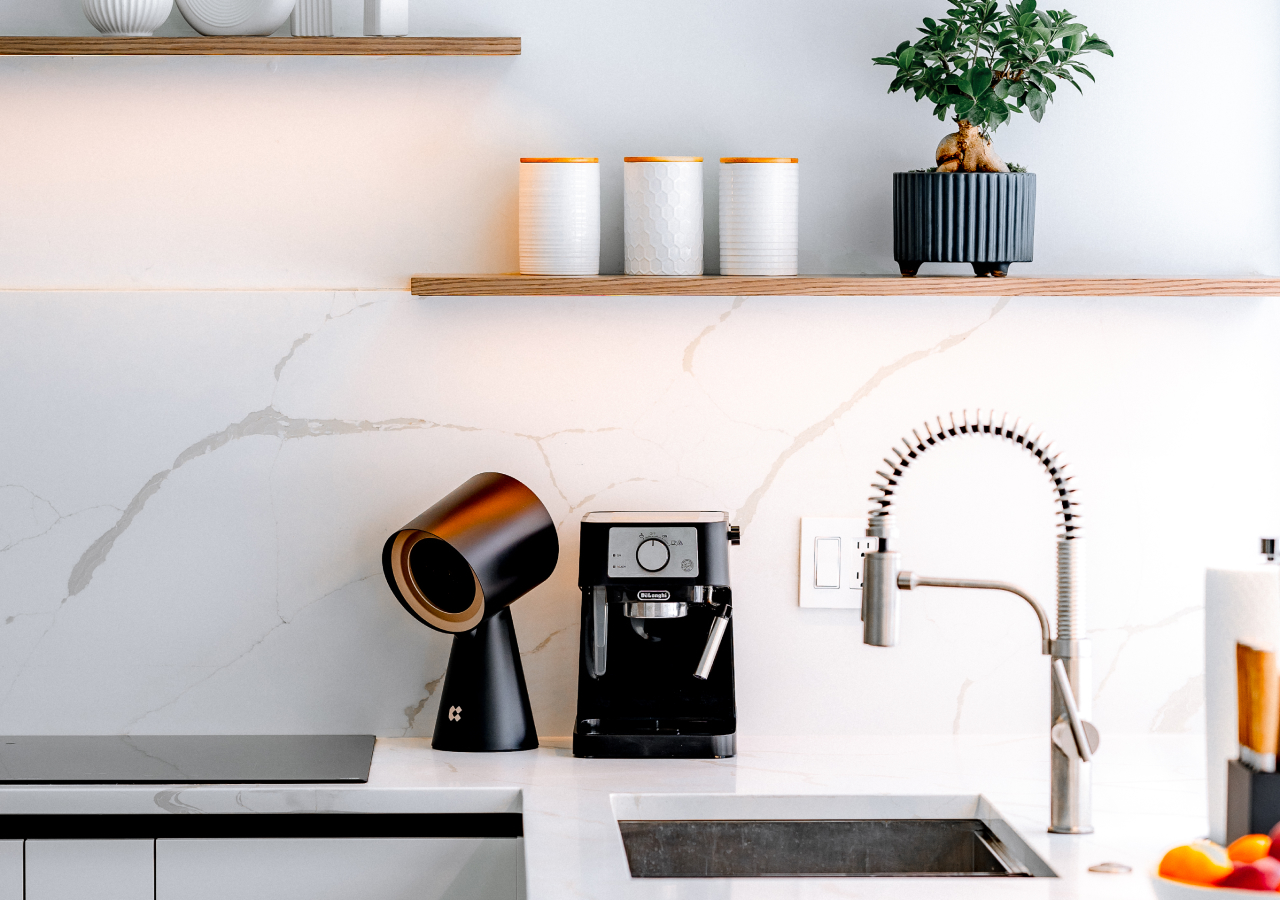
Open shelves can look great in Scandinavian kitchens, but aggressive lighting can make them feel staged. A gentle wash adds depth and warmth without turning everyday items into a showroom. Keep shelf lighting subtle, warm, and tied to a dimmer so it can act as evening glow.

Materials, Finishes, and Bulbs: The Scandinavian Shortlist

Scandinavian lighting looks best when it echoes the kitchen palette: wood, soft neutrals, matte surfaces, restrained metal. Oak and ash pair naturally with white, matte black, and soft metallics. Darker woods can still feel Scandinavian when the lighting stays warm and low contrast, especially in open-plan kitchens where the room should read calm from a distance.

Finish choices can stay simple. Matte black adds crisp definition and works well with minimalist cabinets. White visually disappears, which supports a quieter ceiling. Chrome reads sharper and more modern. Soft neutrals add warmth and help the kitchen blend with Scandinavian living room ideas.

Shade and bulb choices matter, too. Opal glass supports glow and reduces glare. Clear glass emphasizes the bulb and adds sparkle, so bulb quality becomes more visible. Smoked glass adds mood, but it works best when task and ambient layers already cover function.

For most homes, 2700–3000K delivers warm, livable light that still feels clean. Add dimmers wherever possible, and separate circuits so you can keep counters bright during prep while keeping the overall room softer.

Layer Best fixture type Color temp Beam / diffusion Control
Task (counters/sink) Under-cabinet LED strip in diffused channel 2700–3000K Diffuser to hide dots Separate dimmer/switch
Ambient (room base) Ceiling spots or flush mount 2700–3000K Prefer wider beams for even fill Dimmable
Accent (glow/depth) Shelf wash, cabinet interior, toe-kick, wall wash 2200–2700K optional, or match 2700K Gentle wash, no tight beams Dimmable, often on its own circuit
Island/dining 1–3 pendants or linear pendant 2700K Opal glass or shaded bulb Separate dimmer

Common Scandinavian Lighting Mistakes and Quick Fixes

These are the quick mistakes that quietly ruin a Scandinavian lighting mood, even when the kitchen layout and finishes are right.

Too-cool bulbs can make wood look dull and the room feel sharp at night, especially in open-plan kitchens where light spills into the living area. A warmer range around 2700–3000K keeps materials looking natural, and a dimmer lets you soften the room after dinner without losing usability.

Oversized pendants or fixtures hung too low create a different problem: they block sightlines, interrupt conversation, and can overwhelm a minimalist composition. A smaller, simpler silhouette hung for clear views across the island or table keeps the kitchen feeling calm and proportionate.

Relying on one ceiling light for everything usually leads to counter shadows and a flat, all-or-nothing ambience. A layered plan works better: under-cabinet task lighting for work zones, a quiet ambient ceiling layer for even coverage, and a controlled accent or dining layer for mood.

Finally, statement fixtures can add visual noise in a restrained Scandinavian space. Keep forms simple and let cabinetry lines, materials, and the quality of the glow do the styling.

How to Plan Scandinavian Kitchen Lighting (7 steps)

  1. Map your work zones. List your prep run, sink, cooktop, coffee or appliance zone, and dining edge.
  2. Plan task lighting first. Use continuous under-cabinet strips for every main prep counter.
  3. Add sink support. Add a brighter segment or a secondary task source if the sink area is shadowed.
  4. Set your ambient base. Use ceiling spots or a flush mount to cover the full footprint, including corners.
  5. Choose pendants only where they help. Usually island or dining, not everywhere.
  6. Add accent glow last. Use shelf wash or cabinet interior lighting for depth and easy visibility.
  7. Separate controls. At minimum, split task, ambient, and pendants or accent, and add dimmers.

Conclusion

A Scandinavian kitchen lighting plan works best when it supports real life: clear counters, predictable zones, and layered light that shifts with the day. Use under-cabinet lighting to keep prep surfaces shadow-free, add a quiet ambient layer for even coverage, and build soft glow with restrained pendants and subtle accent lighting. Warm bulbs and dimmers help the room feel comfortable at night, especially in open layouts where the kitchen reads from the living room.

Explore Corner Renovation’s collections to see these ideas in real kitchens, or book a consultation to plan lighting and cabinetry together so the space stays calm in motion, not just in photos.

FAQ: Scandinavian Kitchen Lighting

What is Scandinavian lighting?

Scandinavian lighting uses warm, diffused light and a layered plan. Most kitchens benefit from task light on counters, quiet ambient ceiling light, and softer accent glow for evening warmth.

What are common kitchen lighting mistakes?

Common mistakes include relying on one ceiling light, choosing bulbs that feel too cool, hanging pendants too low, and picking statement fixtures that add visual noise. A layered plan with dimming and separate switching solves most of these quickly.

Which color temperature works best in a Scandinavian kitchen?

A warm range around 2700–3000K works well because it keeps wood and matte finishes looking natural and keeps the kitchen comfortable at night. Dimmers help fine-tune the mood.

How many pendants suit a kitchen island?

Shorter islands often look calm with one simple pendant. Longer islands can support two or three smaller pendants, or a linear fixture, to spread light evenly while keeping shapes simple.

Are both spots and pendants necessary in a Scandinavian kitchen?

Not always. Many kitchens use ceiling spots or flush mounts as the ambient base and add pendants only where they help, often over an island. Layering and control matter more than fixture count.

February 17, 2026
-
6 min read
Get started

Upgrade your kitchen, book a consultation

Get a free design consultation