
.webp)
A minimalist white kitchen looks effortless when the calm is built into the plan. White reflects light and visually simplifies a room, which is why modern homeowners continue to gravitate toward it. However, the downside is real: the same brightness can feel clinical, and the same simplicity can make clutter stand out more quickly.
The fix isn’t “more decor.” It’s better decisions where they count: layout, storage, undertones, texture, and lighting, so the kitchen stays calm on a Tuesday night, not only after a deep clean. Think of this as the counterpart to warm minimalism: how to do white (and white + wood) with softness, not sterility.
What Is a White Minimalist Kitchen (Warm, Not Sterile)
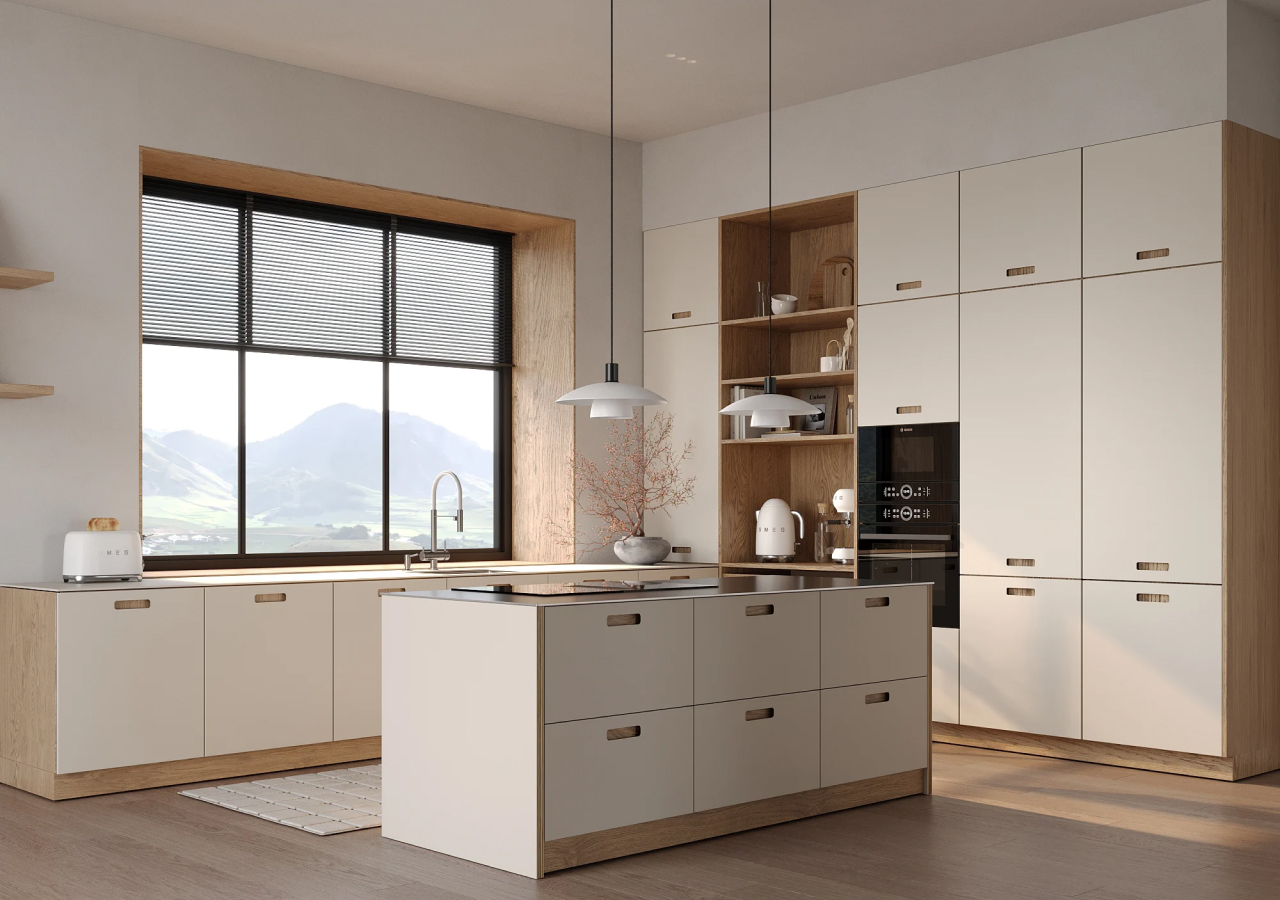
A minimalist white kitchen isn’t just a clearly-white kitchen. It’s a kitchen with fewer visual interruptions and fewer decisions happening on the countertop. The “minimal” part comes from clean cabinet planes, consistent materials, and a layout that hides the messy parts of daily life.
This is where a lot of white minimalist kitchens go wrong: they chase purity and end up with harsh whites, glossy finishes, and flat overhead light. In real life, that combination can read cold. A warmer approach keeps the architecture simple but gives the room depth: matte or low-sheen finishes, wood grain that adds movement without pattern noise, and a layered light plan so white feels soft, not sharp.
The simplest guiding idea is this: minimalism should reduce effort. When your storage is doing the work, white can stay calm without you constantly “resetting” the kitchen.
Choosing the Right White: Undertones That Don’t Turn Clinical
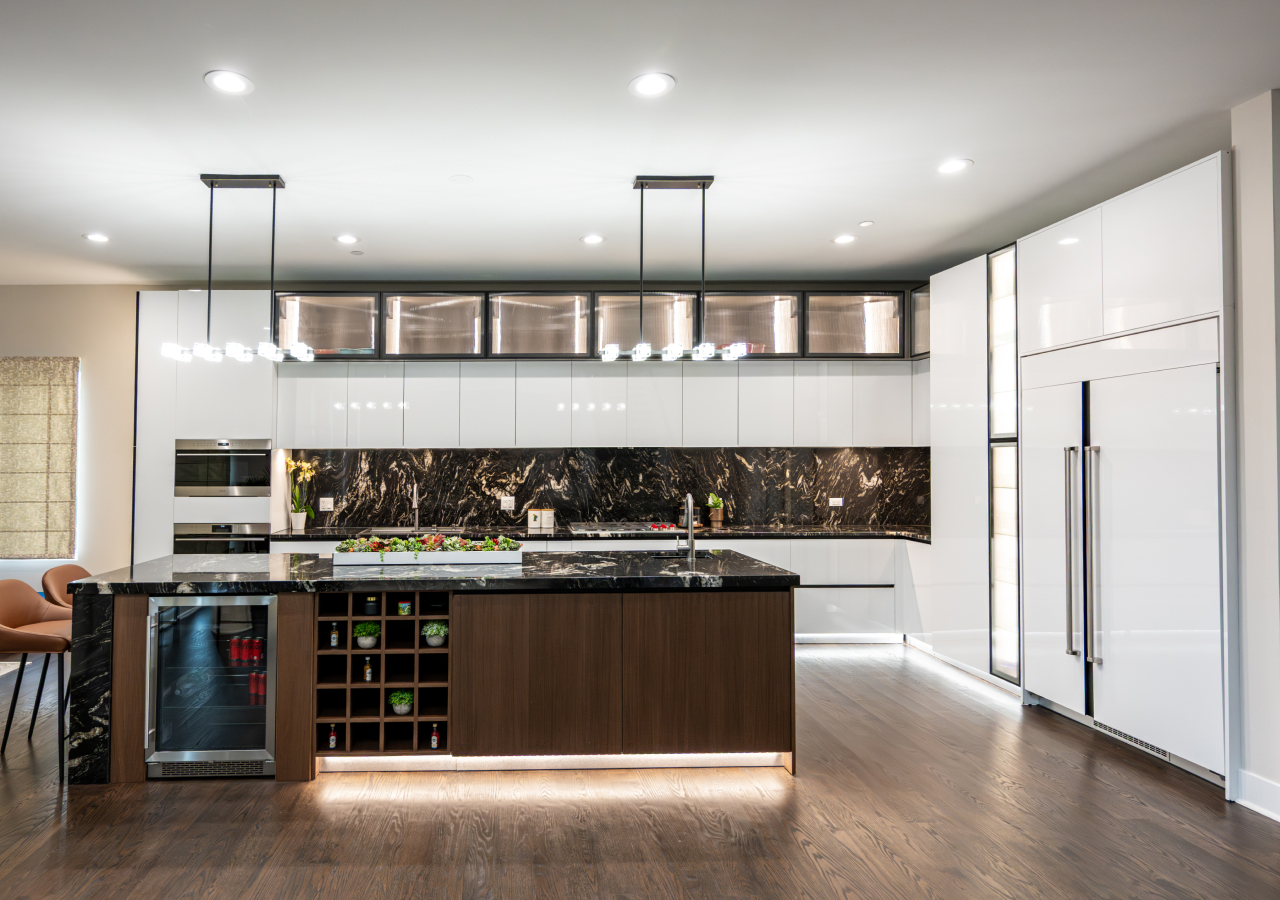
The biggest driver of “sterile white” is usually undertone, not the fact that the kitchen is white. A white kitchen minimalist scheme looks warmer when the cabinet white has a slightly warm or balanced undertone that works under both daylight and evening light.
If you want a practical way to choose, decide based on your lighting reality. North-facing rooms and cool LEDs can push whites colder. Warm-dim lighting and wood elements can soften whites that might otherwise read sharp.
Quick Undertone Guide
| Your kitchen lighting situation | Whites that usually feel best | Whites that often feel risky |
|---|---|---|
| Lots of cool daylight (north-facing) | Warm white, soft neutral white | Blue-leaning “crisp” whites |
| Warm evening lighting (2700–3000K) | Warm white, balanced neutral | Very bright “paper whites” |
| Mixed daylight + evening (most homes) | Soft neutral whites | Stark cool whites + glossy finishes |
This doesn’t replace sampling, but it keeps you from making the classic mistake: picking a “clean” white that turns icy once the sun goes down.
The Palette Formula: White, Wood, and Soft Neutrals
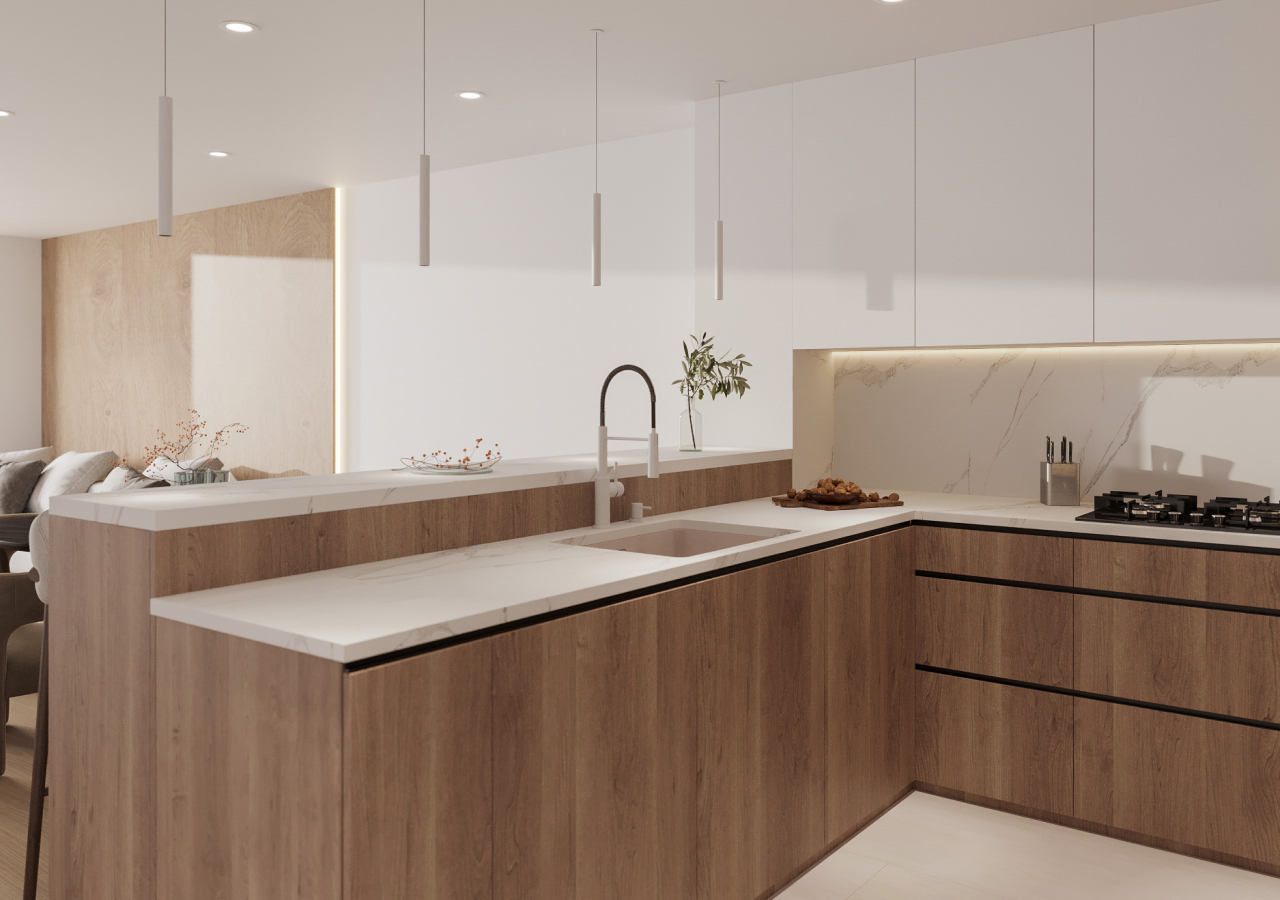
The most reliable minimalist white and wood kitchen follows a simple formula. White acts as the quiet background. Wood adds warmth and a human feel. Then a soft neutral surface, usually your countertop and backsplash, bridges them so the palette doesn’t feel chopped up.
This is why Corner’s minimalist kitchens work so well: the white stays clean and bright, while wood keeps the room grounded and warm. Berlin, in particular, shows how “minimalist” is as much about integration as color: built-ins, storage, and appliance planning that keep the room reading as one calm volume.
An all minimalist white kitchen idea can be beautiful, but it needs intention. If cabinets, counters, and backsplash all sit in one white family, you’ll need depth from finish (matte vs satin), shadow lines, and lighting, otherwise the space can feel flat. If you’re unsure, white + wood is the safer, timeless move because wood gives you softness automatically.
White + Wood + Neutral Pairing Cheat Sheet
| Design goal | Cabinet white (undertone) | Wood tone direction | Countertop + backsplash neutral | Why it works |
|---|---|---|---|---|
| Soft + airy | Warm white (no blue cast) | Light oak / light ash | Warm white / greige | Bright without reading cold |
| Calm + grounded | Soft neutral white | Medium oak / walnut | Greige / light beige | Wood warms, surfaces bridge transitions |
| Clean + modern | Balanced neutral white | Minimal wood accents | Light gray / warm gray | Crisp without harsh contrast |
| All-white, not flat | One white family | Minimal or no wood | Same family, different finish | Depth from sheen, shadows, lighting, texture |
Minimalist White Kitchen Cabinets: Simple Profiles That Don’t Date
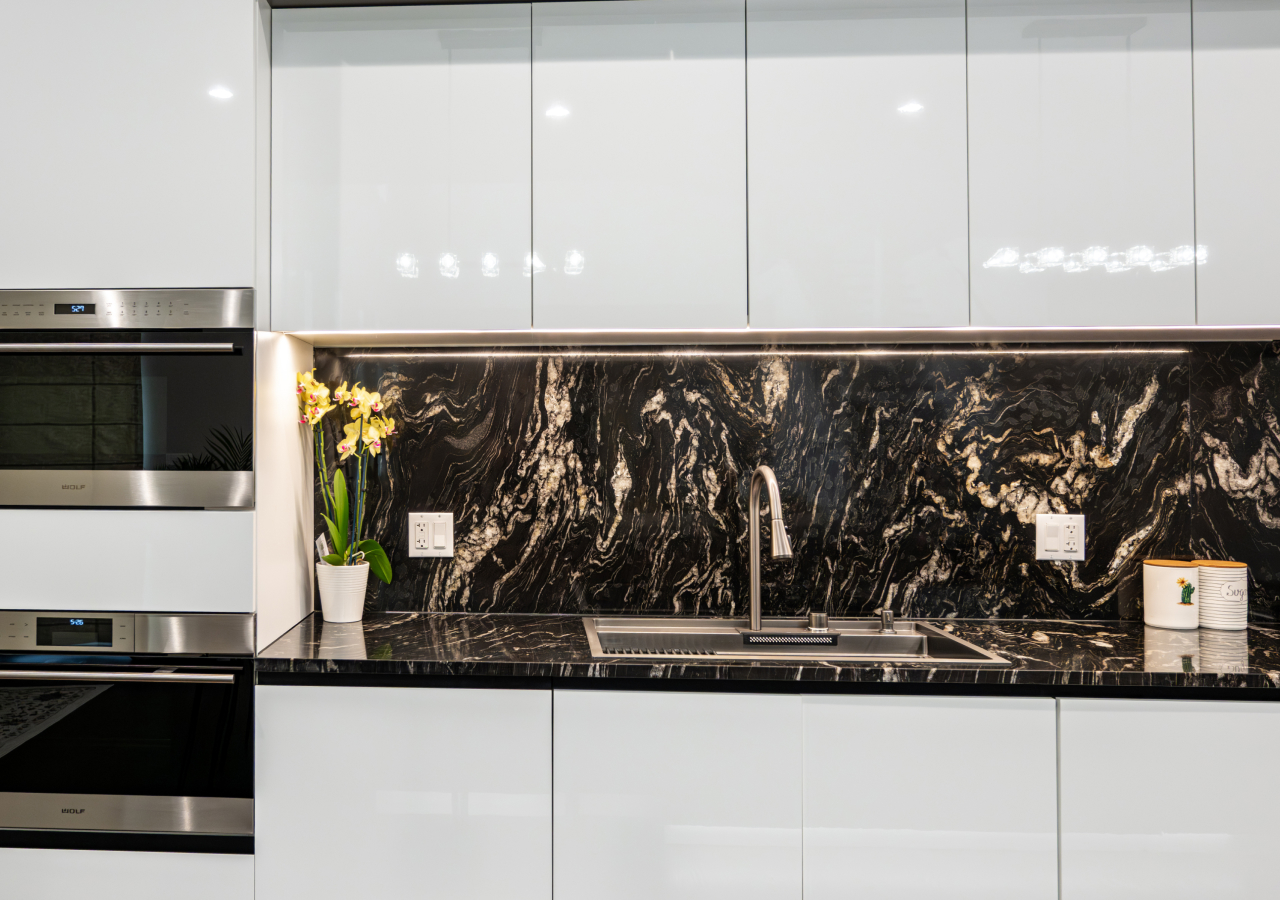
Cabinetry is the largest surface area in the room, so it decides whether your white kitchen minimalist feels architectural or busy. The most timeless choice is a simple, flat or lightly detailed front with consistent spacing and a repeatable rhythm. When the door style is calm, your eye reads the kitchen as one clean plane, which is exactly what minimalism is trying to achieve.
The next decision is how you “open” the kitchen visually: handleless systems or discreet hardware. Handleless designs can be especially effective for minimalist white kitchen cabinets because they reduce visual breaks across long runs. The goal isn’t to make the kitchen look fancy. It’s to keep the room from turning into a grid of little points and lines.
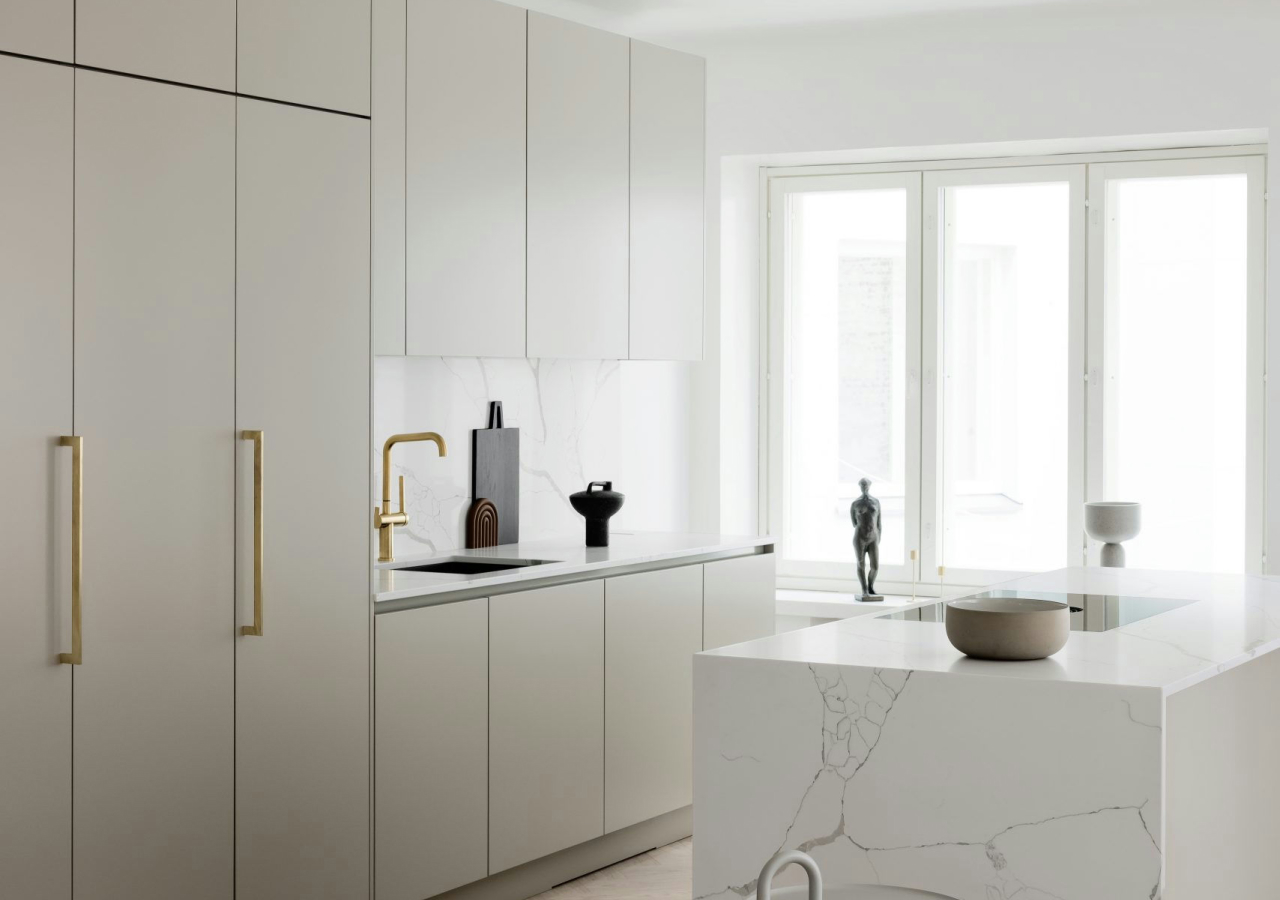
If you do use pulls or knobs, keep them consistent and quiet. White shows every interruption. A few strong moves repeated well will look more minimalist than many small choices that compete.
This is also the moment to think function-first. Minimalist white kitchen cabinets only stay minimalist if your storage strategy matches how you live. If the cabinet plan forces you to keep appliances and pantry items on the counter, the look breaks immediately.
Handleless vs Discreet Hardware in White Minimalist Kitchens
| Choice | Best for | Watch-outs | Make it age well by |
|---|---|---|---|
| Handleless (gola / integrated pulls) | Long clean runs, ultra-minimal look | Fingerprints, alignment tolerance, ergonomics | Matte finishes, consistent reveals, strong lighting plan |
| Discreet hardware (quiet pulls/knobs) | Warm minimalism, more tactile feel | Too many styles create visual noise | One finish, one shape, repeated consistently |
Wood Elements: Where to Add Warmth Without Overdoing It
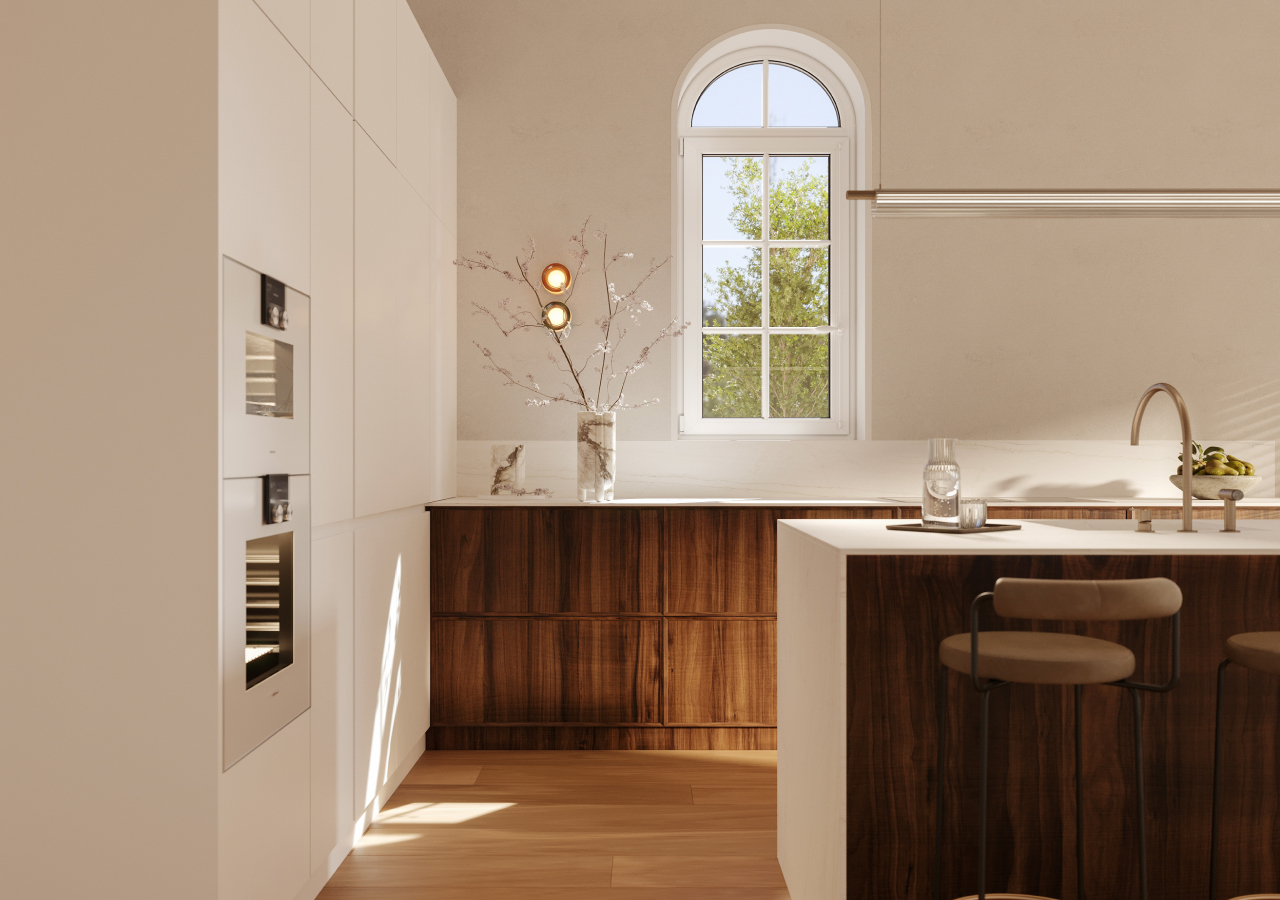
Wood is the fastest way to make a white minimalist kitchen feel livable. It adds warmth without adding clutter, and it adds texture without relying on decorative objects. The key is placement. If wood is everywhere, it stops behaving like an accent and starts competing with white. If it’s too minimal, the kitchen can slide back into sterile territory.
The most timeless placements are the ones that feel structural rather than decorative. A wood island can act like the grounding element of the room. A tall wood unit bank or pantry wall can add warmth while keeping the plan clean. Open shelving in wood can work too, as long as it’s treated as a deliberate zone with limits, not a storage overflow.
In white minimalist kitchens, wood functions like a warm frame around the white: present enough to soften the light, restrained enough to keep the room airy. Berlin shows the same principle through a more integrated lens: warmth comes from material balance and built-in order, not from a lot of visible objects.
Countertops and Backsplash for a White Minimalist Kitchen
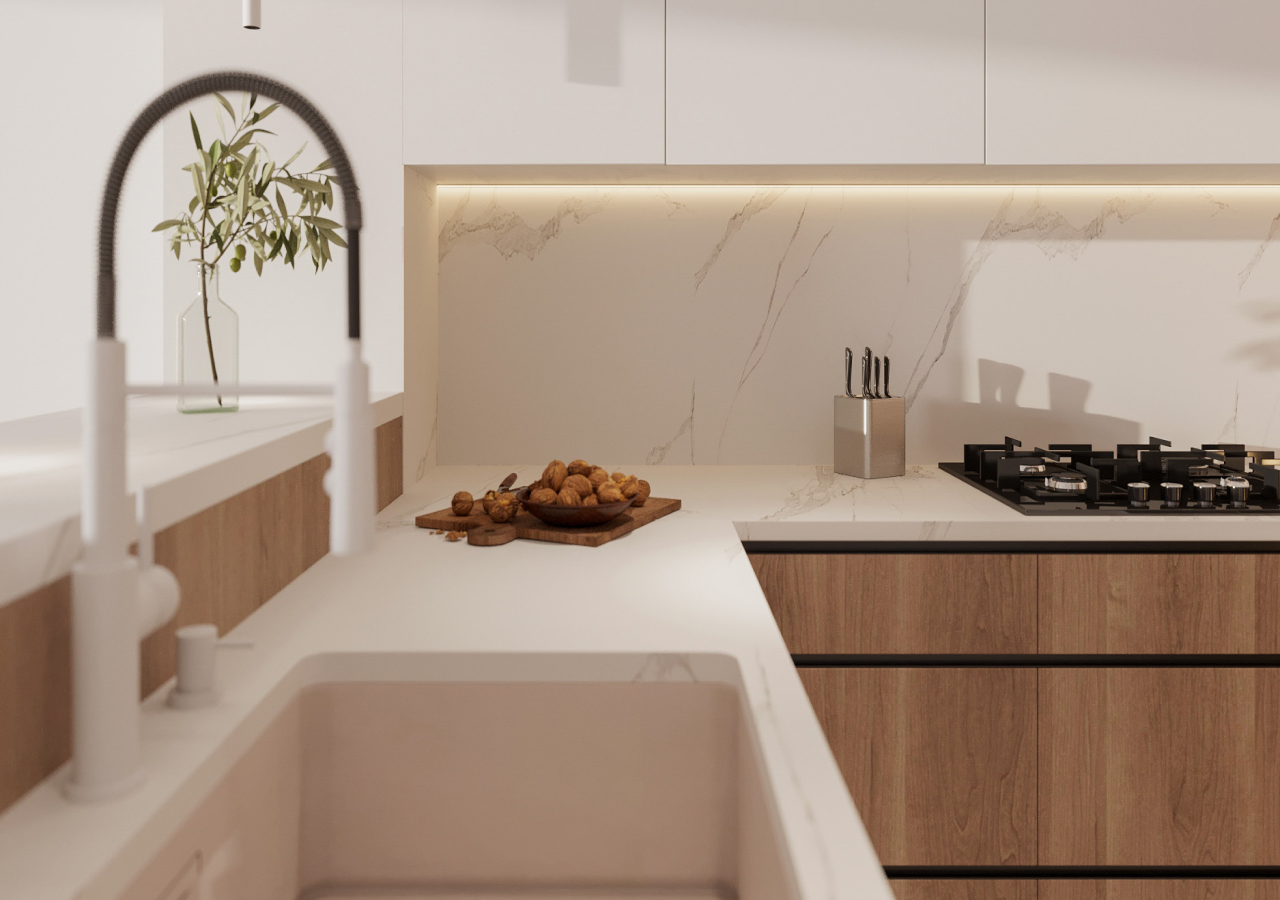
In a white minimalist kitchen, countertops and backsplash should support quiet, not compete with it. Loud veining, busy patterns, and high contrast can look striking, but they pull attention away from the calm plane effect that makes a minimalist kitchen feel good to be in.
If you want the kitchen to age well, aim for surfaces that read consistent at a distance and interesting up close. A soft neutral countertop, warm white, greige, gentle beige, or light gray, often works better than pure bright white because it bridges white cabinetry and wood without creating a hard edge.
For the backsplash, fewer breaks usually looks more minimalist: a slab-style approach, a simple tile with quiet grout, or a continuation of the counter material can all work. The best option is the one that reduces visual noise in your layout.
The hidden benefit is practical. Quieter surfaces are easier to live with. They don’t amplify every fingerprint the way glossy finishes do, and they keep the kitchen visually calm even when it’s in use.
Texture Over Decor: Keeping White Kitchens Interesting
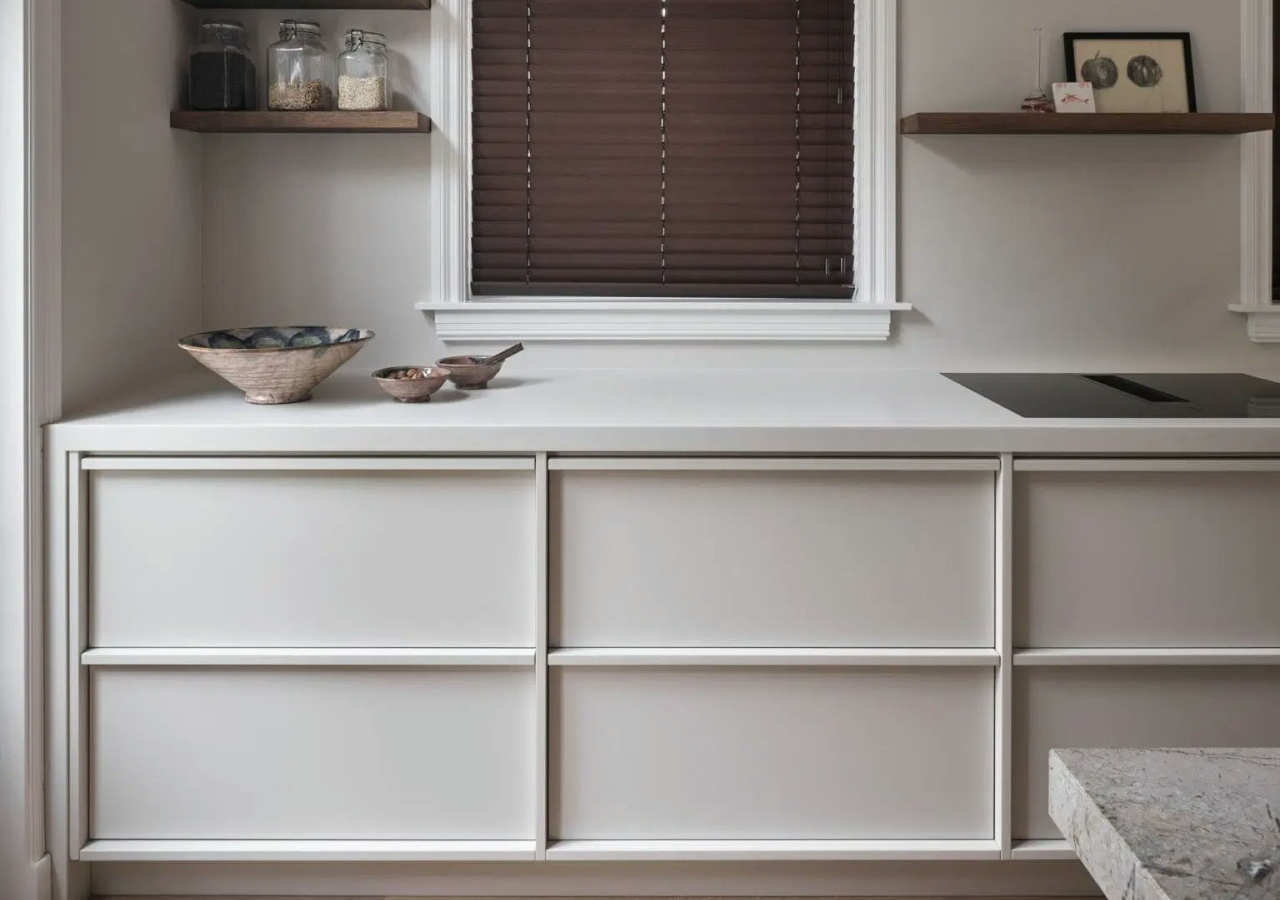
If you’re wondering how to keep a minimalist white kitchen from feeling boring, the answer is rarely “add more stuff.” It’s texture. White looks best when it has depth: matte cabinetry, wood grain, subtle stone movement, and glass used sparingly.
Texture also helps white feel warm. A slightly softened cabinet finish, a wood element you touch daily, and a backsplash with gentle variation can make the room feel inviting while staying clean. The goal is to let the materials do the talking, not countertop objects.
Layout and Storage That Keep White Kitchens Minimal
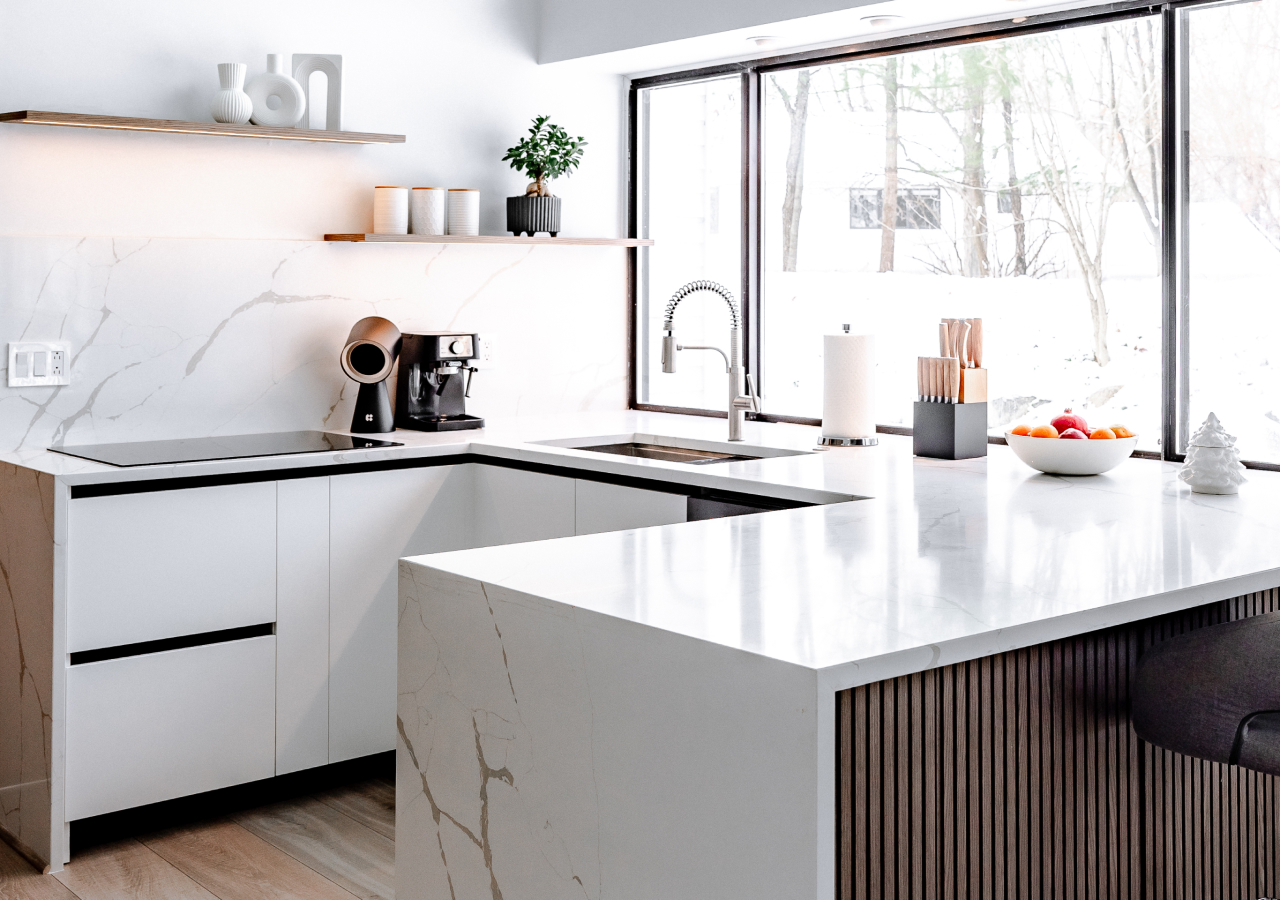
A minimalist look is fragile if it depends on you cleaning all day. The fix is building “anti-clutter” into the plan. When zones and storage are planned properly, daily items naturally disappear into the kitchen, and counters stay clearer without effort.
This is where function creates beauty. Deep drawers near prep keep tools and cookware accessible but hidden. Waste pull-outs near the sink and prep zones prevent trash from living on the counter. Under-sink organization reduces the messiest cabinet in the house. Pantry planning keeps food visible without turning shelves into visual chaos.
If you want a white minimalist kitchen that stays calm, treat storage as a design feature, not an afterthought. It’s the difference between a kitchen that photographs well and a kitchen that lives well.
Lighting: A Layered Plan That Flatters Whites and Woods
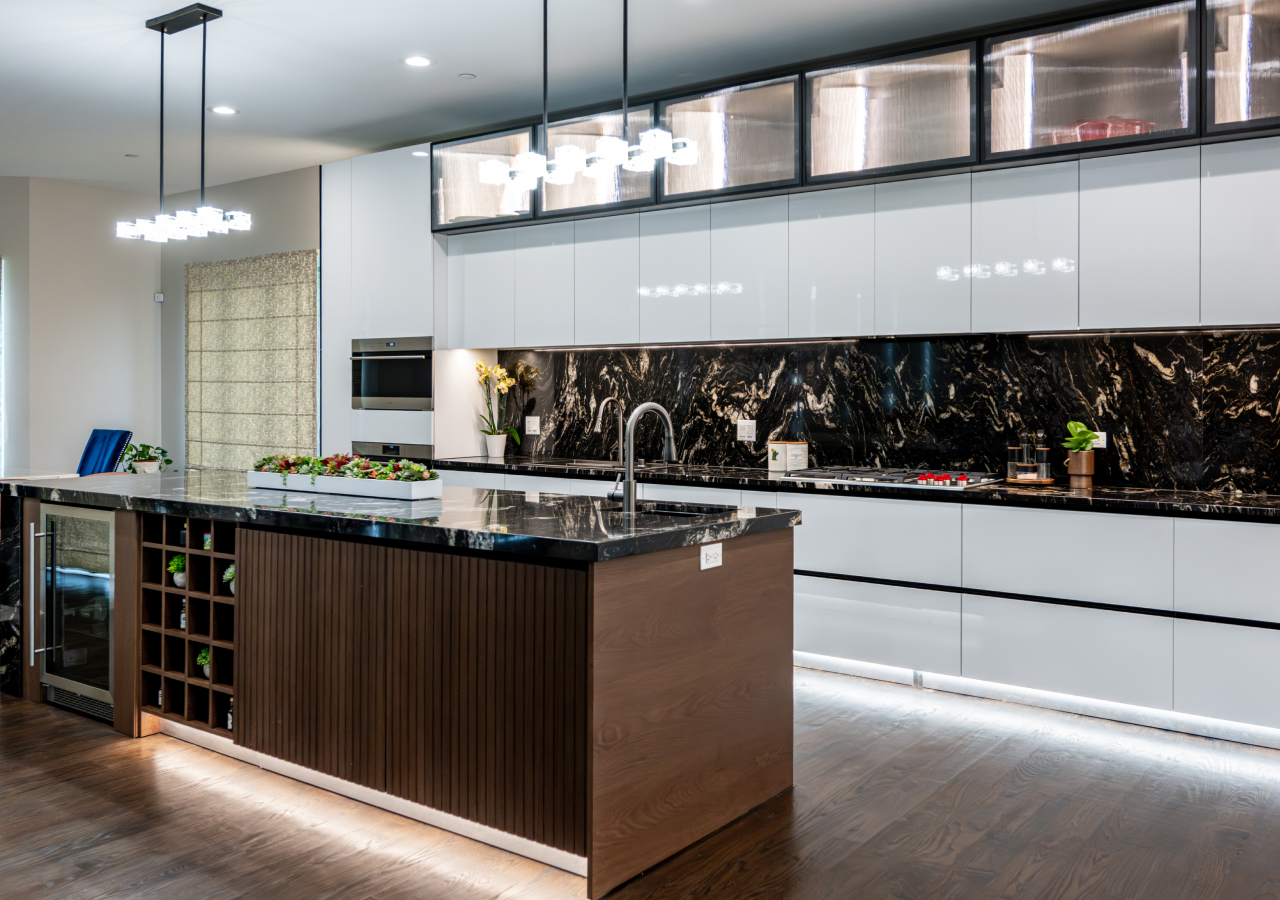
White is a light amplifier, so lighting decisions show up immediately. Sterile minimalism often comes from relying on one flat overhead source. At night, whites can look harsh, and wood can lose its warmth.
A layered plan fixes that. Ambient light fills the room, task lighting supports real cooking, and accent lighting adds depth so the room feels dimensional. Under-cabinet lighting is especially important in a white kitchen minimalist scheme because it reduces shadows on work surfaces and gives the room a softer glow.
If you can dim and separate circuits, even better. Being able to shift from “bright work mode” to “calm evening mode” makes white feel warm and intentional.
Common Mistakes to Avoid in Minimalist White Kitchens
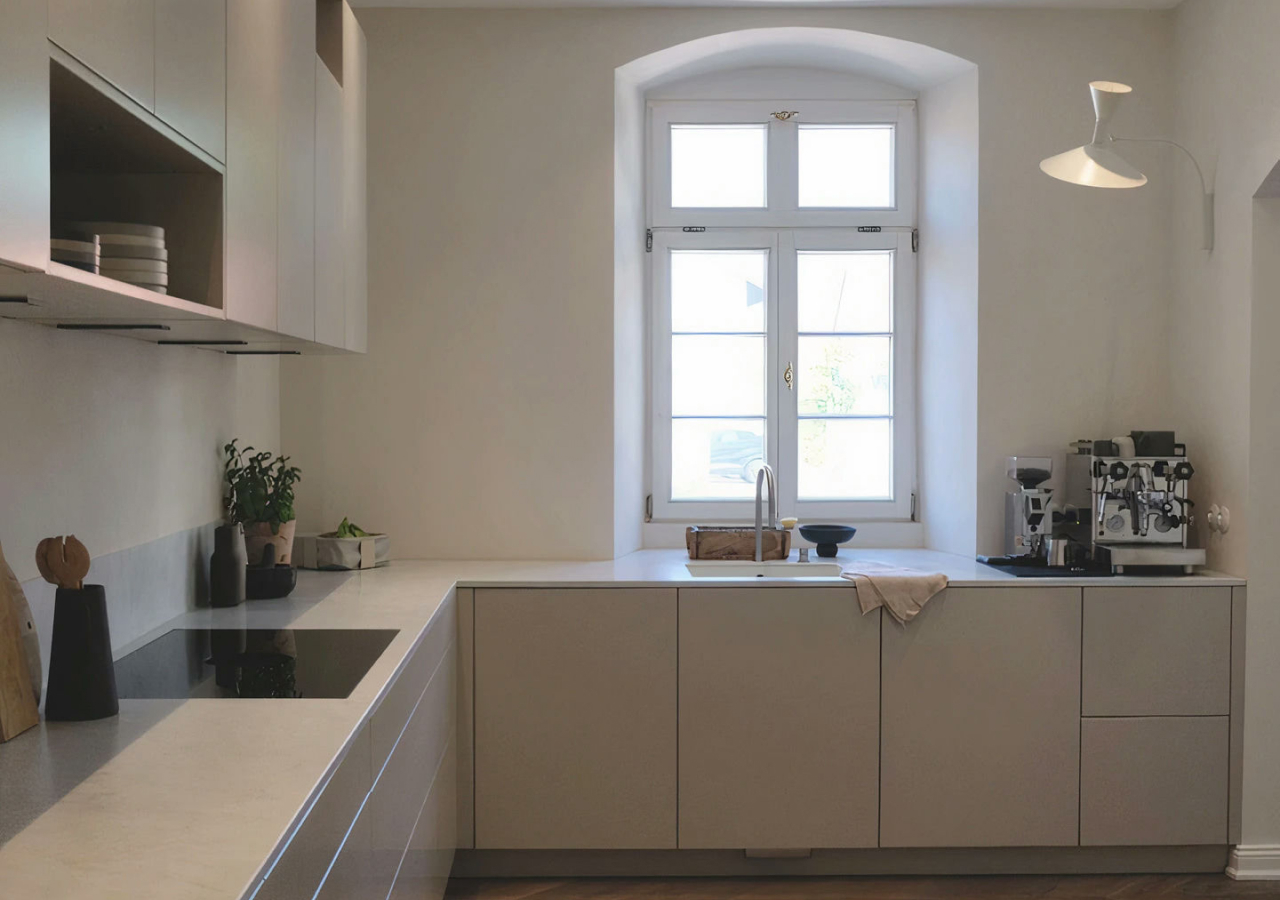
The biggest mistake is choosing the wrong white. Blue-leaning whites can make the whole room colder, especially under evening lighting. Warmer whites tend to age better and feel more livable. Another common issue is over-mixing. Multiple wood tones, multiple cabinet styles, and too many surface changes create visual noise fast. Minimalism needs repetition and restraint.
High contrast can also backfire. Sharp black-and-white lines may look crisp online, but they can feel harsh day-to-day. If you want definition, use shadow lines, subtle transitions, and texture instead of hard contrast. Finally, clutter is the real enemy. If your layout doesn’t protect the countertop, white will highlight the mess. A white minimalist kitchen stays minimalist when the storage plan matches real habits.
How to Plan a White Minimalist Kitchen That Stays Calm
- Choose the right white first. Test your white in both natural daylight and evening light so it stays calm all day.
- Lock the palette. Commit to white cabinetry, one wood tone, and one soft neutral for countertop and backsplash.
- Keep cabinet fronts simple. Use flat or lightly detailed fronts, with consistent spacing and reveals for a quieter look.
- Protect the countertop with storage. Use deep drawers and dedicated zones so daily items don’t live on the counter.
- Put waste where work happens. Add a pull-out near the sink and prep area to avoid crossing the kitchen mid-task.
- Use texture instead of decor. Rely on matte finishes, wood grain, and subtle surface movement to add depth without clutter.
- Layer lighting with dimming. Combine ambient + task lighting and dim at night so whites stay soft, not harsh.
Conclusion
A white minimalist kitchen only feels clinical when white is forced to carry the whole room alone. The version that ages well is more deliberate: start with a slightly warm, low-sheen white as the calm base, add wood for texture and comfort, and choose soft neutral surfaces that bridge the palette without adding noise. Then protect the look with real function: zones, deep drawers, and storage that keeps everyday clutter off the counter.
If you’re exploring directions, browse Corner Renovation’s collections and projects for white-and-wood references like Loft Light Oak, Berlin, and Evoke. And if you’d like help translating these principles into a layout that fits your home, you can book a consultation and we’ll map out a plan that stays calm in real life, not just in photos.
FAQ: White Minimalist Kitchens


