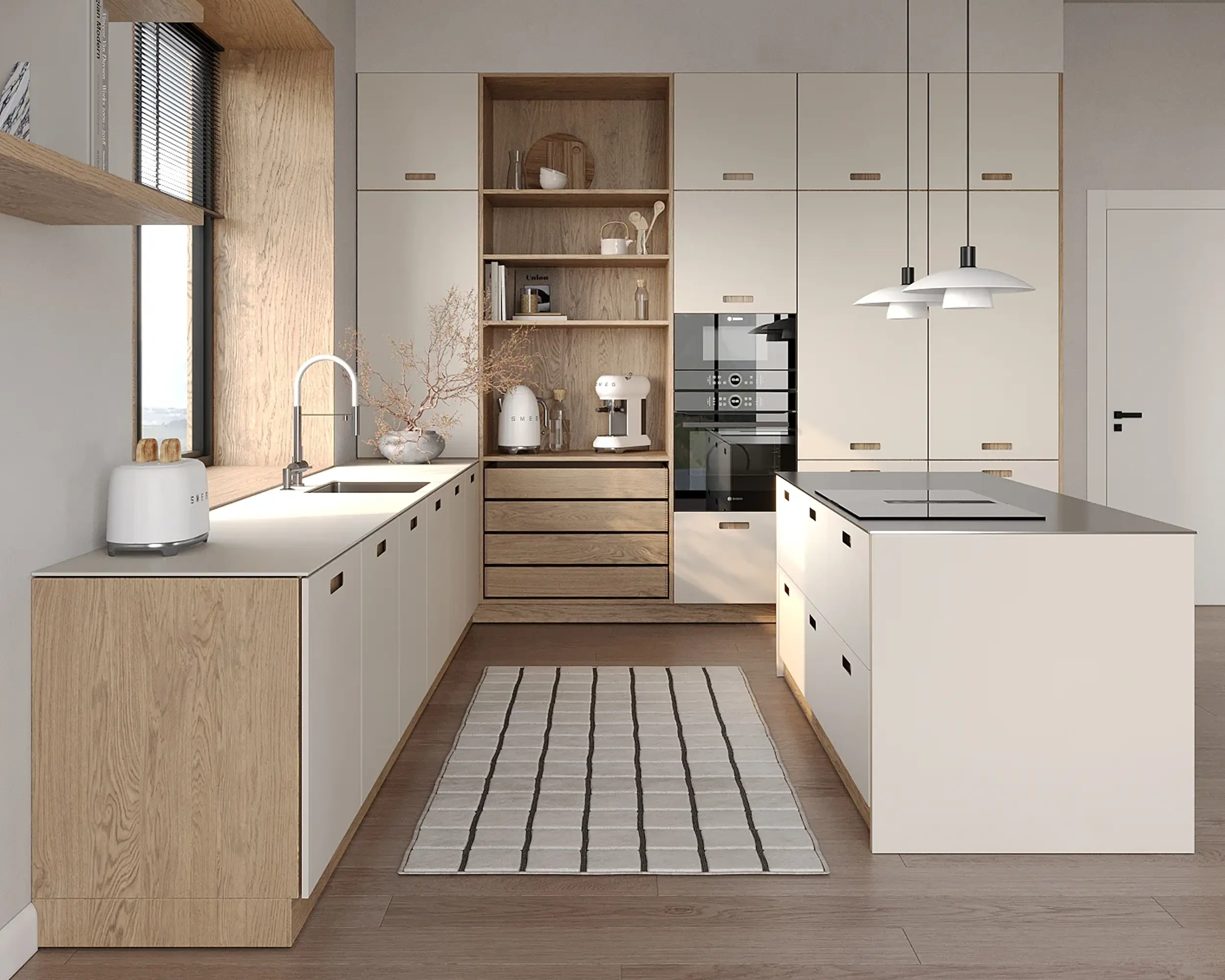
Warm white and soft gray are two understated choices for Scandinavian kitchens. Both can create a calm, light interior, but they respond differently to wood, countertops, surrounding whites, and changing light. A finish that looks balanced in a showroom may feel noticeably warmer or cooler once installed at home.
Because cabinetry occupies so much visual space, even a subtle difference between these neutrals can change the kitchen. One creates a continuous palette with pale surroundings, while the other gives cabinet fronts more definition.
The best choice is the one that works with your existing materials, creates the contrast you want, and looks balanced throughout the day.
Warm White or Soft Gray: What Changes Visually?
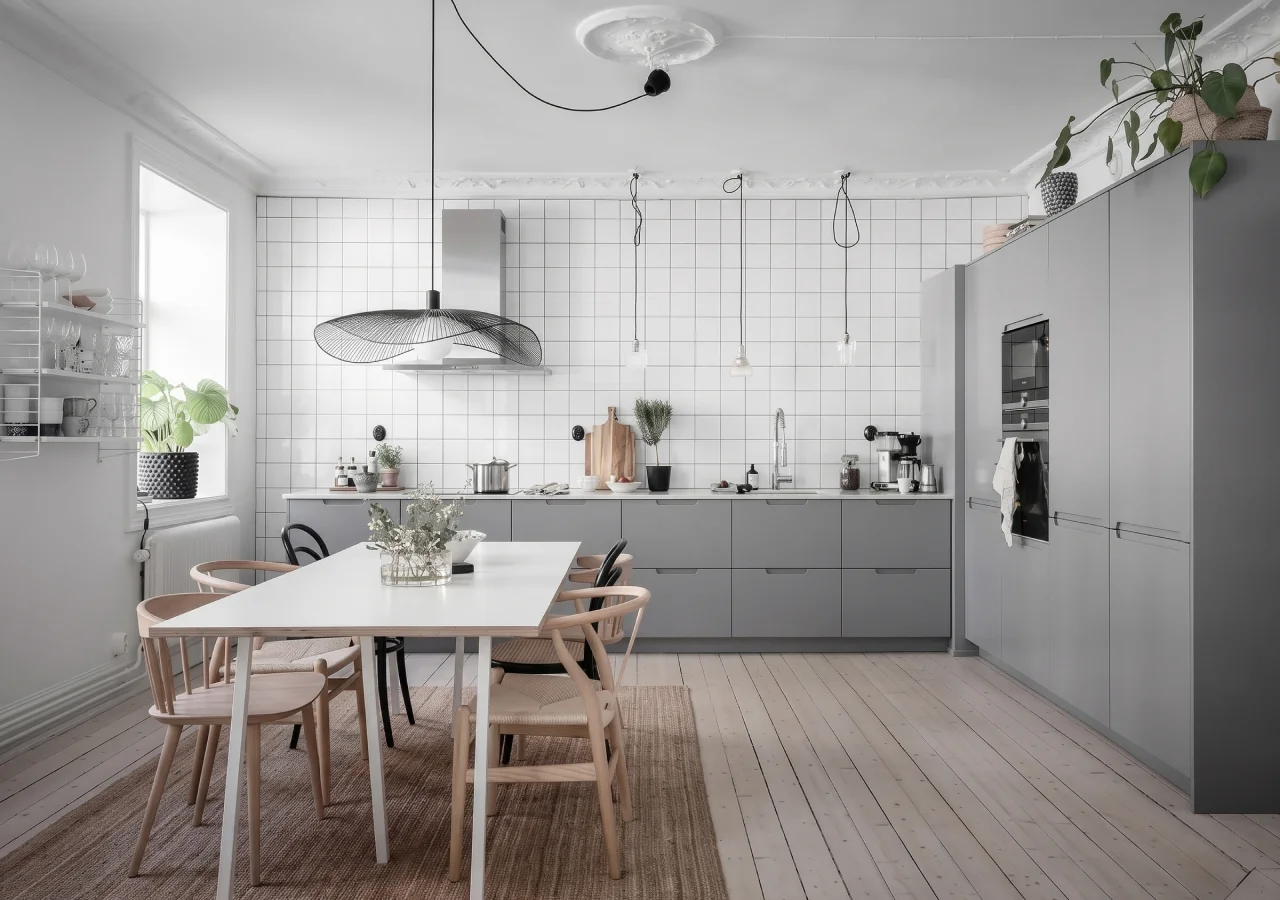
Warm white Scandinavian kitchen cabinets create a near-white composition with a softer appearance than crisp white. Depending on the finish, the color may have creamy, yellow, or beige undertones. Soft gray introduces more separation from pale walls and countertops, although its appearance depends on the specific shade.
Neither term describes one exact color. Some soft grays lean warm, while others reveal blue, green, or violet undertones. Soft gray is also not necessarily greige, which combines gray and beige.
Both options can suit a Scandinavian kitchen when the cabinet profiles and surrounding materials remain restrained.
Start With the Countertop, Floor, and Existing Whites

Before choosing a cabinet color, identify what will remain in the kitchen. Flooring, countertops, backsplash tiles, walls, and window frames can influence the result more than the preferred shade. A warm-toned cabinet sample might look neutral alone but noticeably creamy beside a cooler white wall or backsplash.
The countertop deserves particular attention because it meets the cabinet fronts directly. Cool white quartz with gray veining may emphasize the warmth of creamy cabinetry. Beige stone can create a softer transition with warm white, while soft gray may provide more contrast. Neither combination is automatically better. The relationship between the actual undertones matters.
Mixed materials are common in renovations. If your floor is warm oak but your countertop is cooler stone, compare both cabinet neutrals against them simultaneously. Look for a finish that connects the surfaces without making either appear out of place. Different whites can also work together, provided the contrast looks intentional rather than like an unsuccessful match.
Compare Both Colors With Your Wood Finish
Wood changes how painted cabinetry is perceived. Golden oak creates a different backdrop from pale washed oak, while walnut introduces deeper brown tones and greater contrast. Stain, grain, and sheen all affect the result, as explored in oak Scandinavian Kitchens guide.
In one Corner design consultation, sand-beige lacquer was considered alongside light oak veneer. The next stage involved reviewing physical wood and painted-finish samples, with attention to the floor and countertop. This was not a choice between warm white and soft gray, but it shows why a neutral cabinet color should be approved together with its surrounding materials.
Test the Cabinet Samples in Daylight and Evening Light

Lighting also changes how these cabinet finishes appear. Natural light varies with window orientation, weather, and time of day, while artificial lighting introduces different conditions. Benjamin Moore also explains how white and off-white shades can change their appearance between morning and evening.
Warm white may appear creamier under warm evening lighting. Soft gray might look balanced near a window but cooler or darker deeper inside the room. Neither color should be recommended automatically for a north-facing or low-light kitchen. Both need to be tested in the actual space.
Use finished cabinet samples, positioned vertically as the fronts will be installed. Compare them beside the floor, countertop, backsplash, and existing whites. Check near the window, farther into the room, and with evening lighting switched on. Examine sheen and texture too: matte and satin coatings can reflect light differently. A wall-paint swatch or rendering cannot fully represent a finished cabinet front.
How to Choose the Right Neutral for Your Scandinavian Kitchen
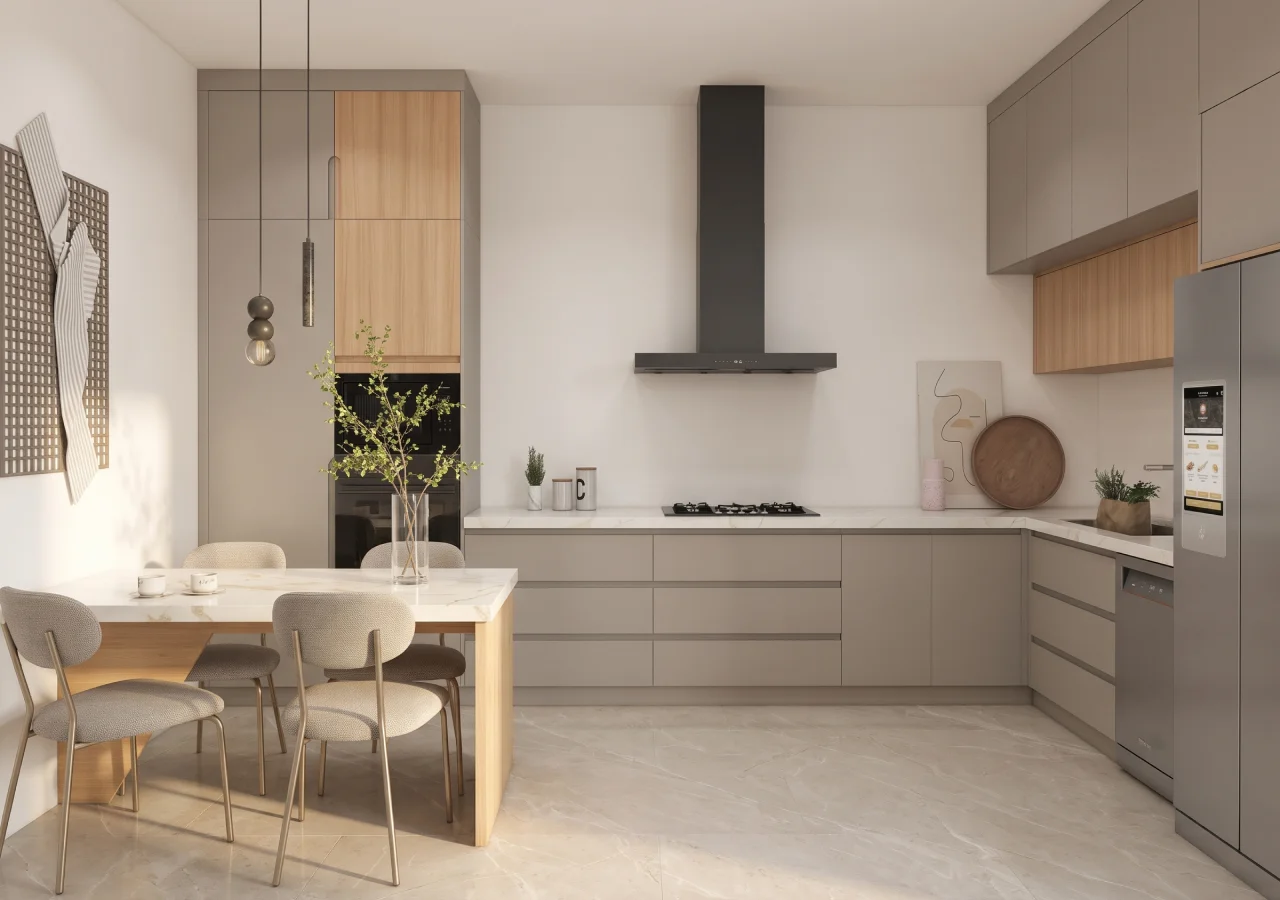
After comparing materials and lighting, the decision becomes more specific. Warm white is worth considering when you prefer cabinetry that blends into pale surroundings. Soft gray may be more suitable when you want an understated distinction between cabinets and white walls.
The important question is whether the exact sample creates that effect with your kitchen's materials. Do not choose gray simply because it seems more practical or white because it appears brighter in a photograph.
Do not assume gray cabinets will always hide fingerprints better or that warm white cabinets will inevitably yellow. The visibility of marks, durability, and changes over time depend on the surface material, coating, exposure, and cleaning conditions. Color alone does not establish which option is easier to maintain.
Conclusion
Both neutrals can work beautifully in a Scandinavian kitchen, but they create different relationships with surrounding materials. Warm white often supports a light, continuous palette, while gray can introduce more definition without making cabinetry visually dominant. Neither is universally better with oak, walnut, or pale stone. The exact undertones, finish, and lighting determine the result.
The most reliable choice comes from comparing physical samples beside the materials that will remain in your kitchen. Consider how much contrast you want, how the finishes look throughout the day, and whether they still feel balanced under evening lighting. For inspiration, explore Corner Renovation's completed kitchen projects to see how neutral cabinetry works with different wood tones, countertops, and layouts.