
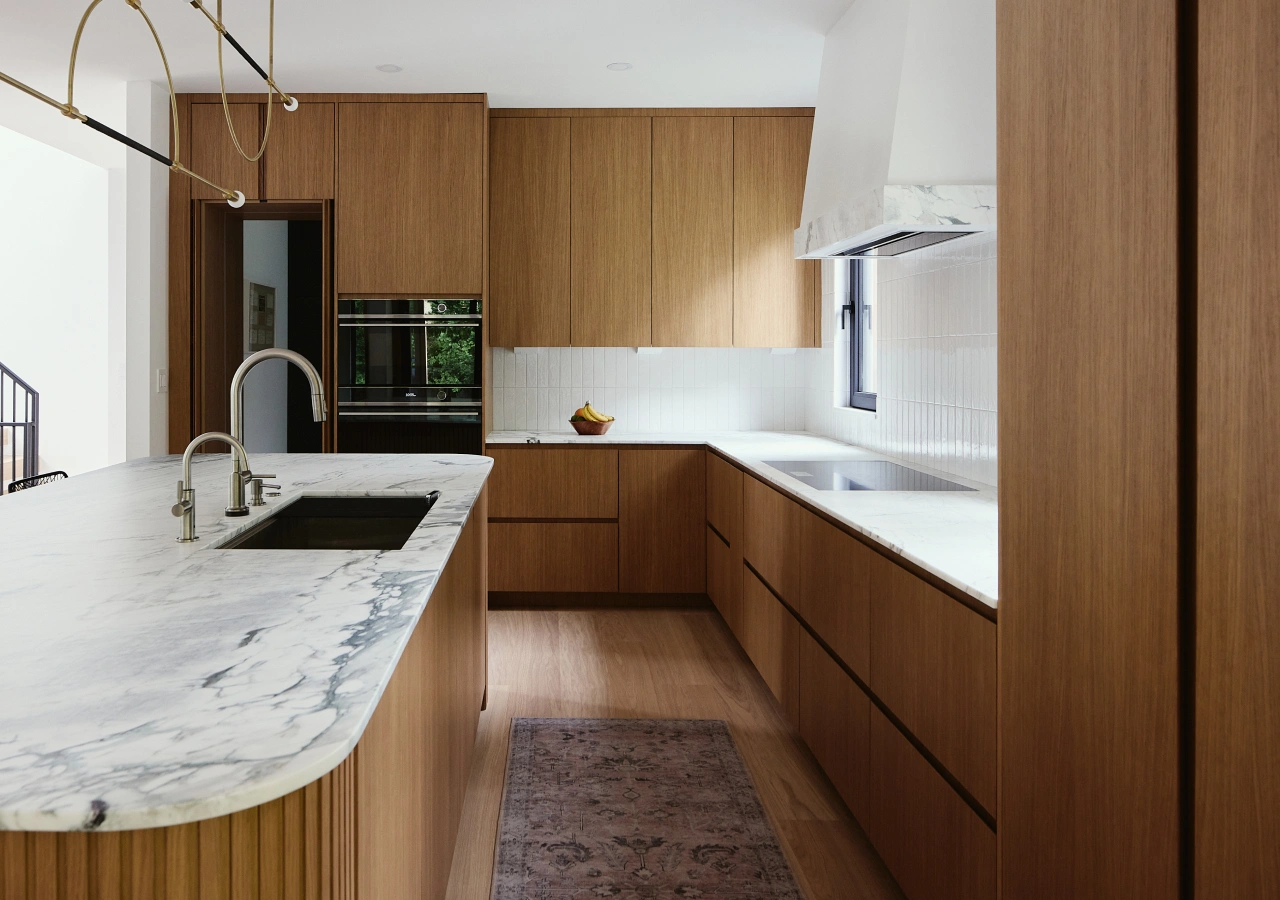
Oak is one of the most natural fits for a Scandinavian kitchen, but choosing “oak cabinets” is only the beginning. Light oak, natural oak, washed oak, warmer golden finishes, and stained oak can make the same room feel noticeably different. Grain direction and finish matter just as much as color.
The surrounding palette matters too. Flooring, countertops, wall color, hardware, and lighting can make oak appear warmer, cooler, more golden, or more subdued than expected. These questions come up often when homeowners compare oak samples, floors, countertops, and cabinet finishes. The goal is not to find one universally correct oak, but to choose a tone and grain that work with the complete room.
Why Oak Works So Well in Scandinavian Kitchens
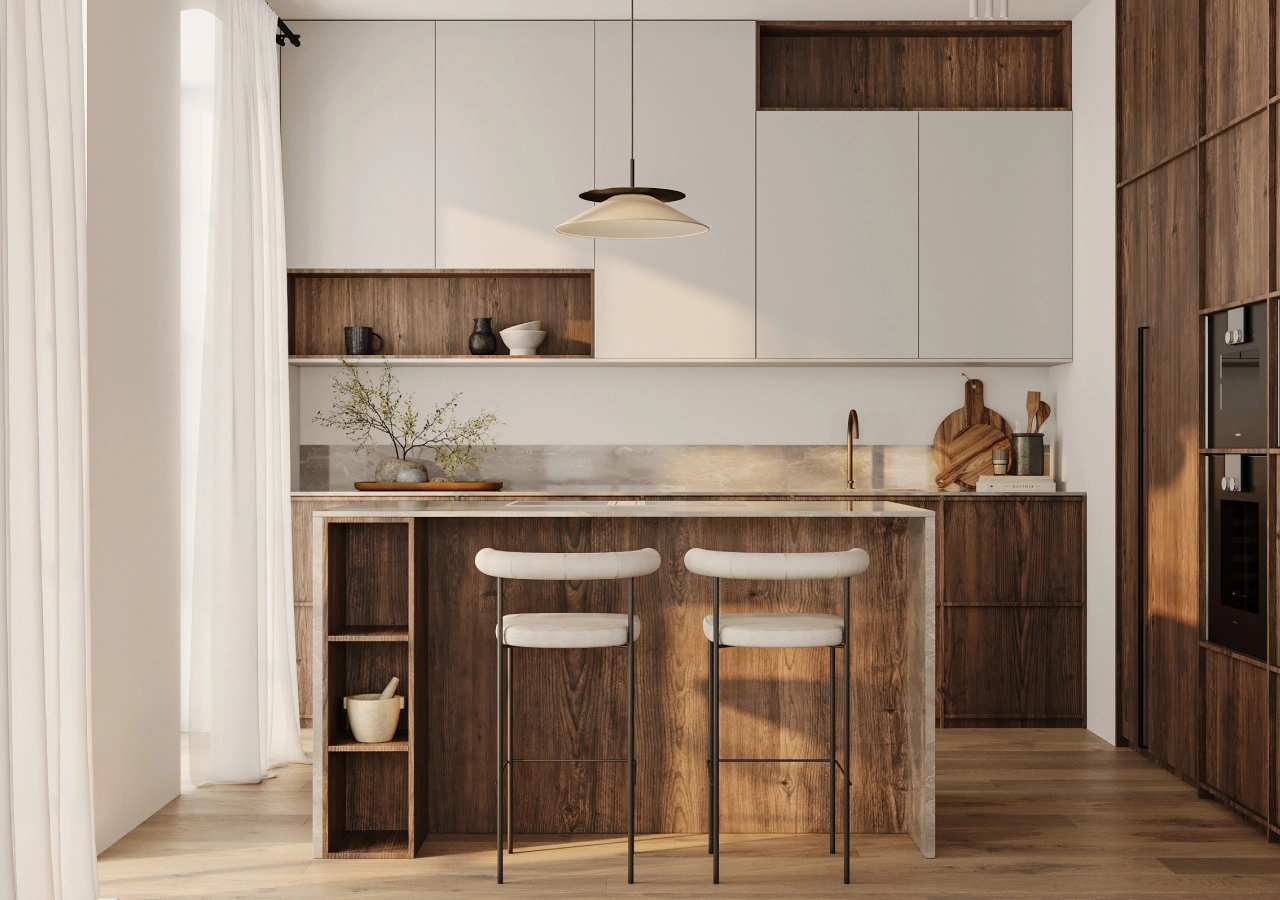
Oak brings natural variation into a kitchen without requiring complicated cabinet detailing. Its grain gives flat fronts depth, while pale and mid-tone finishes can keep large cabinet runs visually light. That combination makes oak especially suited to Scandinavian kitchens, where simple forms, matte surfaces, restrained hardware, and natural materials tend to take priority over ornament.
In many modern cabinet systems, the oak look may come from oak veneer or a finished wood surface rather than solid oak doors, so the exact construction should be confirmed in the quote. Corner’s material guides, for example, include oak veneer among the wood surfaces used for minimalist cabinetry.
The amount of oak matters as well. Light oak can extend across lower cabinets, an island, and tall storage without immediately making the room feel heavy. A deeper golden or stained oak creates more visual weight, so it often benefits from pale countertops, lighter upper cabinets, glass, or open wall space.
Light Oak, Natural Oak, Warm Oak, and Stained Oak
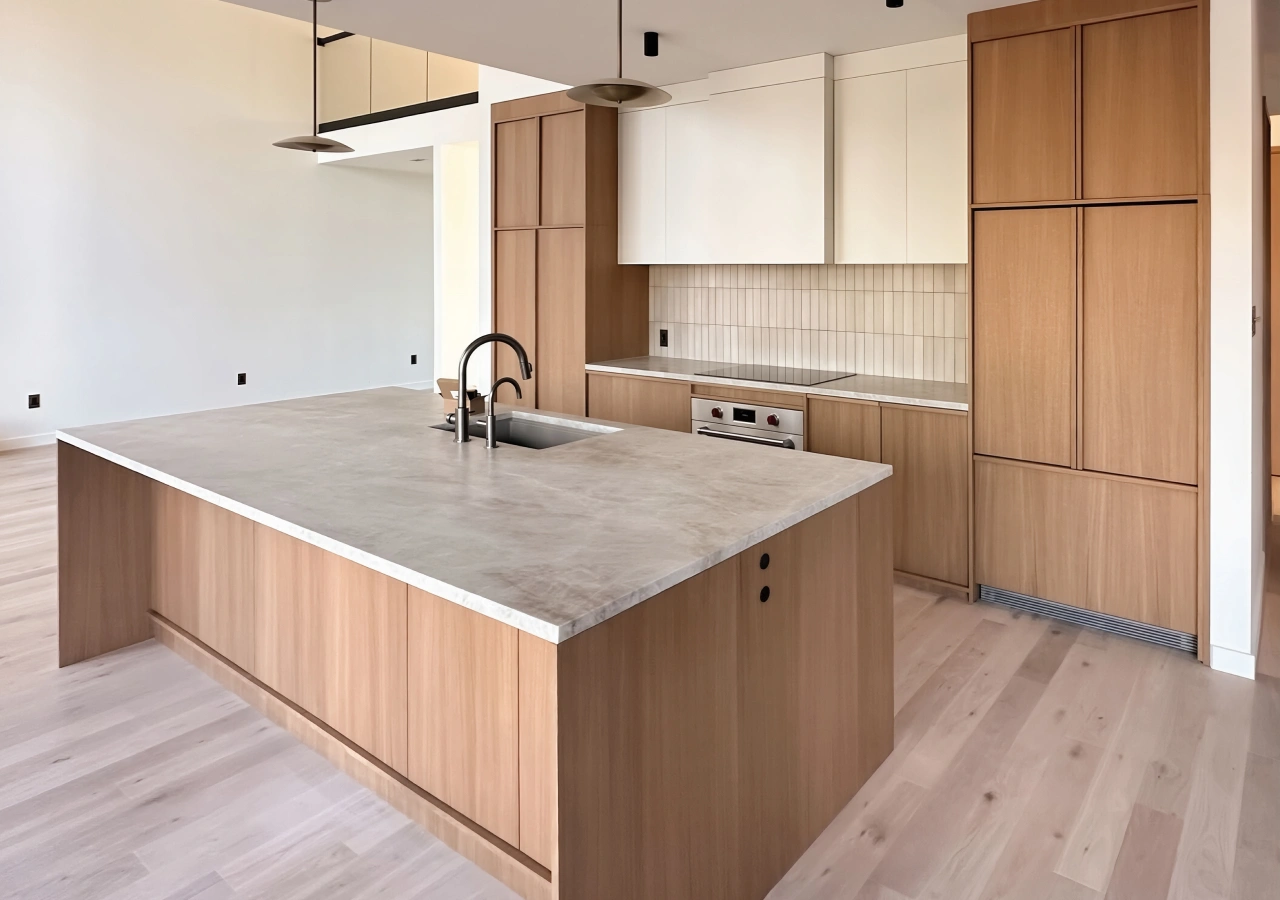
There is no single “Scandinavian oak” color. Terms such as light oak, natural oak, washed oak, and warm oak describe different visual directions. White oak is a wood species, while rift-cut describes how the wood is cut and how its grain appears. For homeowners, the name matters less than the undertone, grain, and final finish.
Washed oak can be useful when the goal is a paler and softer wood direction, while stained oak adds depth without losing the character of the grain. The distinction matters because washed oak describes an appearance rather than a specific wood species.
Grain Matters More Than Most Homeowners Expect
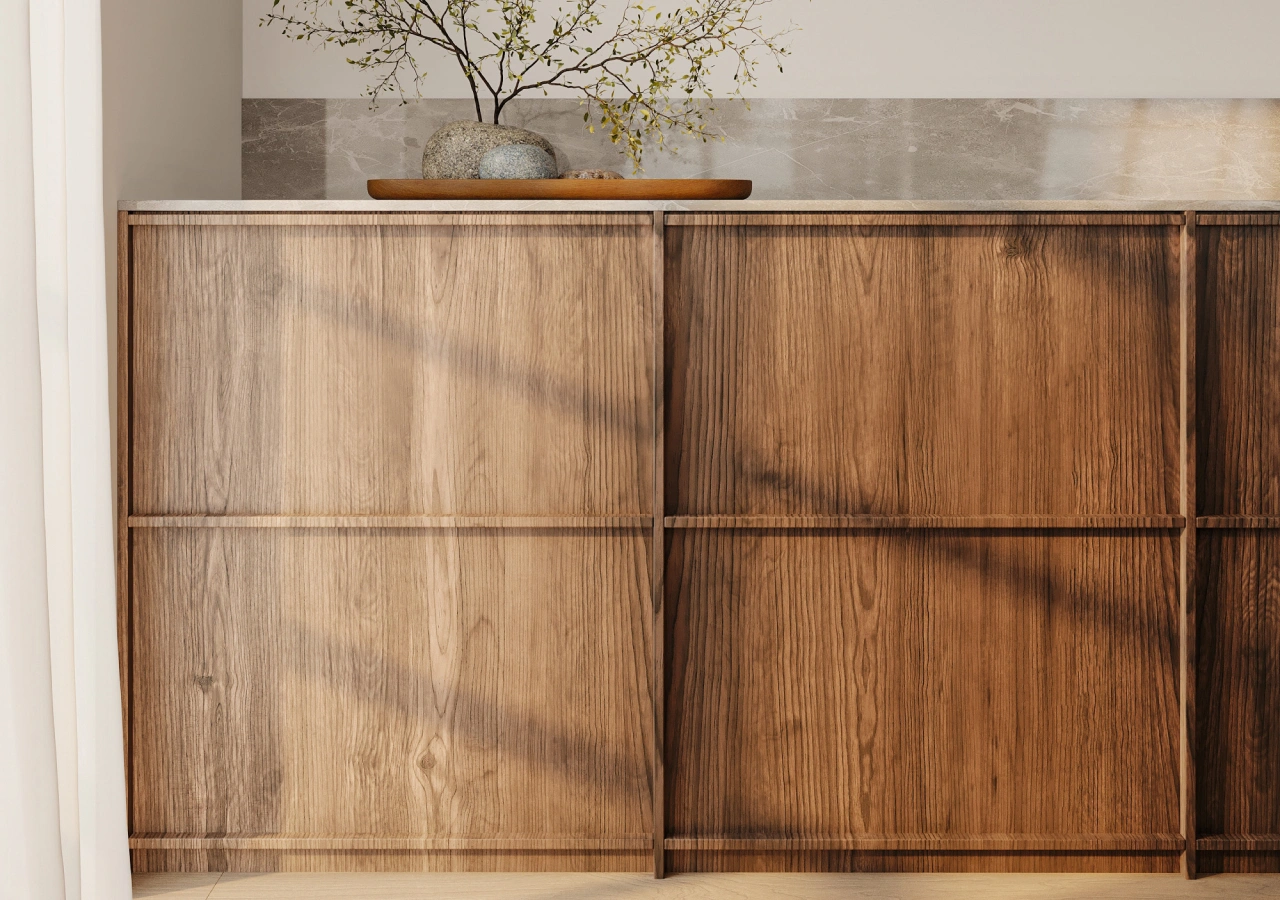
In a Scandinavian oak kitchen, grain becomes part of the architecture because the cabinet fronts are usually simple. Long slab doors, drawer banks, pantry fronts, and panel-ready appliances leave little decorative detail to distract from inconsistent grain or poorly aligned panels.
Rift-cut oak is useful when a straighter, quieter grain is the priority. On large slab surfaces, this can reinforce the vertical or horizontal lines of the cabinetry rather than introducing a lot of movement. Oak can therefore feel very different even when two samples are close in color.
Grain matching also deserves attention before production. On a tall pantry or appliance wall, adjacent panels should look intentional together. The same applies to wide drawer runs and islands. Vertical grain can emphasize cabinet height, while a consistent direction across neighboring fronts can make several doors read as one larger composition.
The goal is not perfect uniformity. Natural wood and veneer will have variation. What matters is making that variation feel controlled rather than ending up with a patchwork of unrelated panels.
How to Keep Oak From Looking Too Yellow or Too Flat
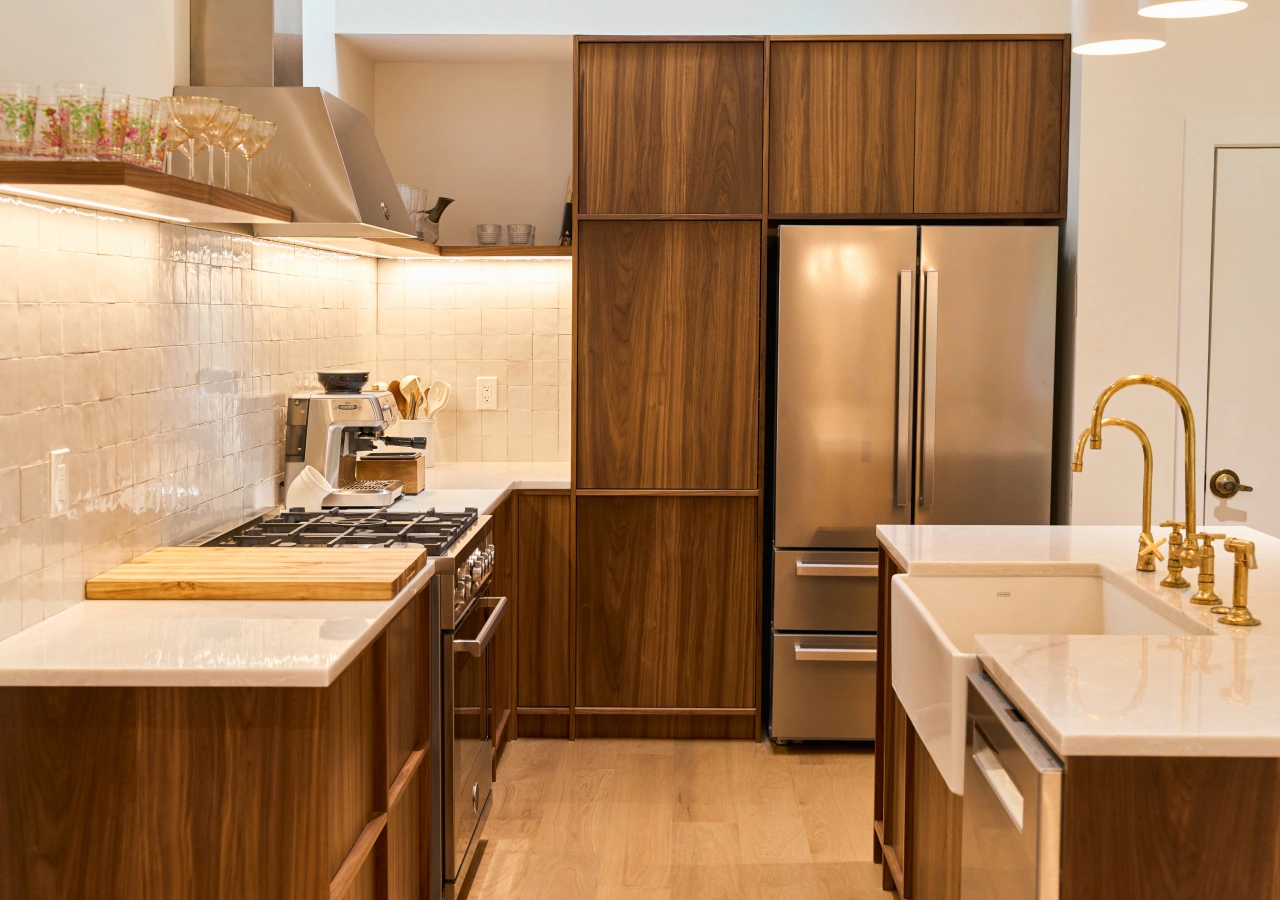
Oak color cannot be judged accurately on a screen or from a sample viewed in isolation. Flooring, countertop color, wall paint, sheen, and lighting can all change how warm or neutral the same wood appears. A sample that looks balanced in daylight may feel considerably more golden under warm artificial lighting.
The common “yellow oak” problem is often a palette problem rather than simply a wood problem. Warm oak beside honey-toned flooring, creamy walls, and another warm surface can amplify the same undertone several times. At the other extreme, very pale oak paired with cool gray materials can lose much of its warmth and begin to feel flat.
Review the cabinet sample beside the actual flooring, countertop or stone sample, wall color, and hardware whenever possible. Then look at the combination during the day and again with the kitchen lighting on. Matte and low-sheen finishes can also keep the wood feeling softer and reduce glare across large cabinet surfaces.
Corner Renovation’s Oak Japandi Kitchen in Dallas shows the value of looking at the material palette as a whole. Natural oak base cabinets are balanced by matte white uppers and pale stone, creating contrast without making the wood feel isolated from the rest of the room.
Tone-on-Tone Wood Pairings: Cabinets, Floors, and Accents
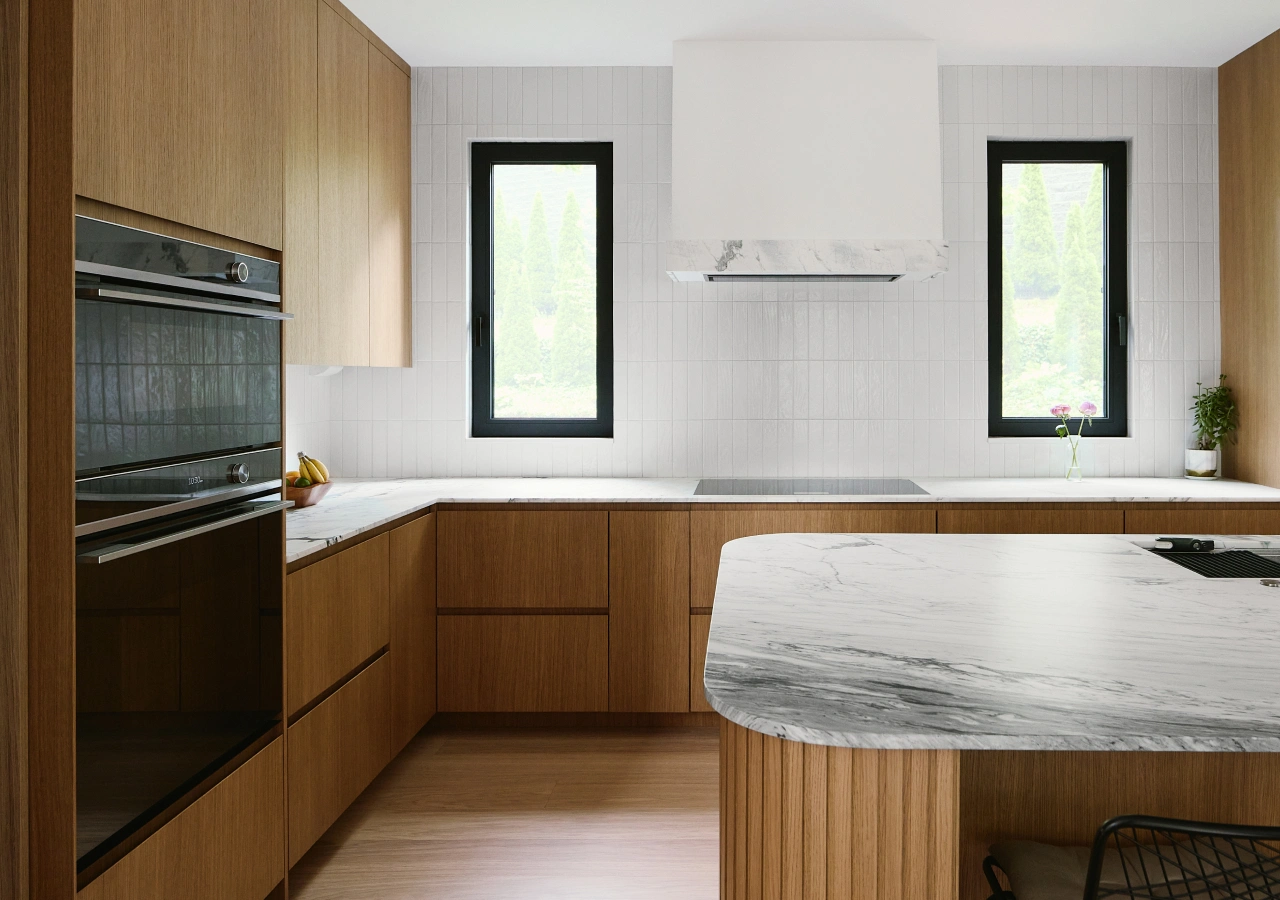
Oak cabinets and oak flooring do not have to match exactly. Trying to create a perfect 1:1 match between separately produced wood surfaces can make material selection harder than necessary. Coordinated undertones are more important.
For example, pale oak cabinetry can work comfortably with a slightly deeper oak floor when both lean in a similar warm-neutral direction. That small difference gives the cabinets definition instead of making the flooring and cabinetry merge into one continuous beige surface.
The same principle applies when introducing a second wood. Walnut stools, shelving, handles, furniture, or an existing slat wall can sit naturally beside oak when oak remains the dominant tone and walnut has a supporting role. Stained oak can also connect cabinetry with darker wood elements while still visibly reading as oak rather than trying to imitate walnut.
A useful rule is simple: coordinate undertones rather than chasing a perfect color match, and give every additional wood tone a clear reason to be there.
Best Materials and Colors to Pair With Oak
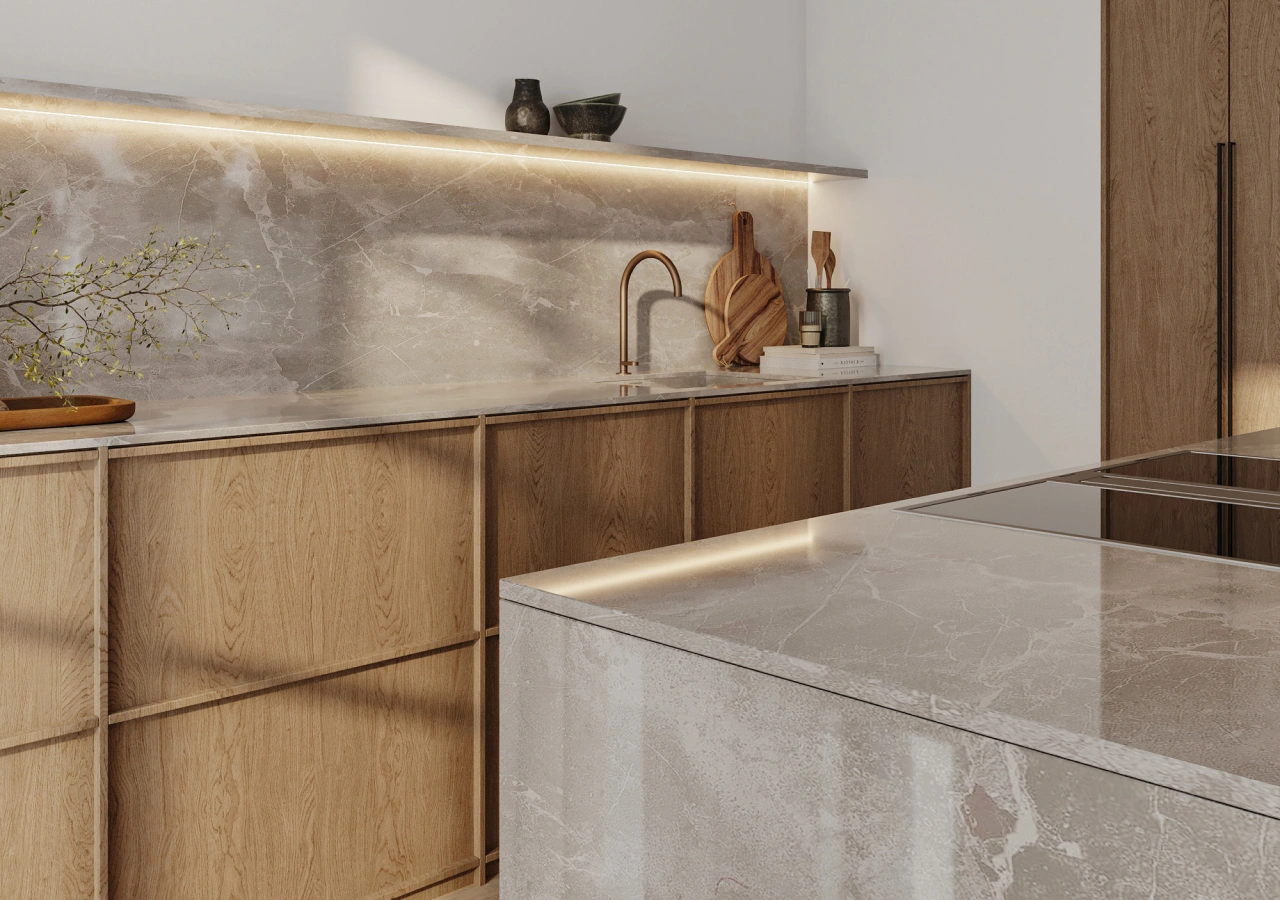
Oak works best when the surrounding materials let its grain remain visible without making the kitchen feel overly rustic. Warm whites, quiet stone, muted colors, and matte finishes can provide contrast while keeping the overall palette calm.
- Light oak + warm white creates one of the softest Scandinavian combinations. Warm white cabinetry, walls, or countertops keep the palette bright without creating the harder contrast of a cool pure white.
- Natural oak + soft stone keeps the kitchen neutral while adding enough material variation to avoid flatness. Pale quartz and stone-inspired surfaces work particularly well when the wood already provides most of the grain and movement.
- Warm oak + creamy countertops creates a richer and more grounded palette. Samples become especially important here because several warm finishes can quickly push the room toward yellow or amber.
- Rift-cut oak + minimalist slab fronts puts the emphasis on grain direction and proportion. Straighter grain can make large drawers, islands, and tall cabinets feel more architectural and controlled.
- Oak + muted green brings in color while maintaining a natural palette. Oak can also work with stainless steel for a cleaner contemporary contrast or matte black when the kitchen needs a little more definition.
- Fluted glass, simple integrated pulls, and restrained metal hardware can add detail without competing with the wood. The goal is usually to support the oak rather than introduce several other attention-grabbing finishes.
Where to Use Oak in a Scandinavian Kitchen
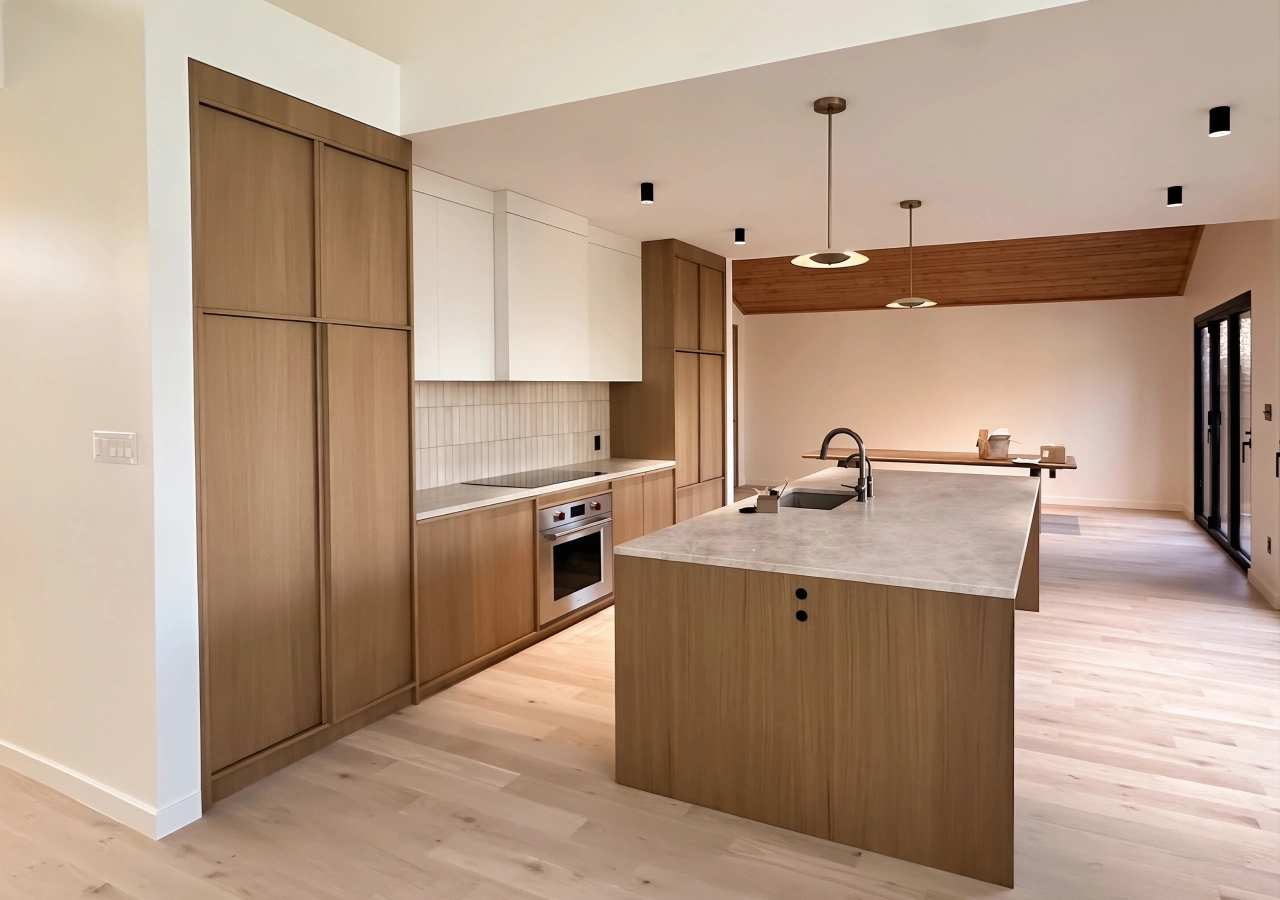
Oak does not need to cover every cabinet to establish the kitchen’s material direction. It can be used across the full kitchen or concentrated in one or two areas, depending on the room size, available light, and how much visual warmth you want.
A full light-oak kitchen can work well when there is enough daylight and the countertop remains relatively quiet. Oak lower cabinets with off-white uppers are useful when you want warmth without surrounding the entire room in wood. An oak island can act as the warmer, furniture-like element in an otherwise neutral kitchen.
An oak pantry or appliance wall can make tall storage and integrated appliances read as one architectural element. Tall oak cabinetry needs more care, however, because it creates a larger block of wood tone. The darker the finish and the lower the natural light, the more important it becomes to balance that cabinetry with pale surfaces or visual breaks.
Oak can also appear selectively in an appliance garage, open shelving, handles, or smaller interior details. This approach works well when another cabinet finish already dominates the room but the kitchen still needs some natural warmth.
Conclusion
An oak Scandinavian kitchen works best when the wood is chosen as part of the complete palette. Tone establishes the mood, grain controls how calm or expressive large cabinet surfaces feel, and flooring, stone, paint, hardware, and lighting determine how the oak reads in the finished room.
Exact wood matching is rarely necessary. Coordinated undertones and controlled contrast usually create a more natural result, especially when oak floors, walnut accents, or several wood surfaces share the space.
Before making the final choice, compare physical samples together and review them in the room’s actual light. To see how light oak, natural oak, and stained oak work in finished kitchens, explore Corner Renovation’s kitchen collections and completed projects.


