
.webp)
American walnut is a dark hardwood used in kitchens to add warmth, depth, and visible natural grain. Compared with lighter woods like oak, it creates a more grounded and architectural look. In minimalist kitchens, it works best with light surfaces, controlled contrast, and simple cabinetry details.
Walnut can look rich and calm, but it needs balance. Too much dark wood or too many competing finishes can make a kitchen feel heavy. The strongest walnut kitchens give the material a clear role and keep the rest of the palette restrained.
Best Ways to Use American Walnut in a Kitchen
What Makes American Walnut Different?

American walnut is darker, richer, and more visually pronounced than oak. Oak usually feels lighter and more casual, while walnut feels deeper and more refined. That difference changes the mood of a kitchen quickly.
Walnut also carries more visual weight. It usually looks best with quieter stone, lighter surrounding finishes, and cleaner detailing. That is one reason walnut works so well in Japandi kitchens, where natural materials and controlled contrast are used in a more restrained way.
When those elements are in place, walnut adds warmth and depth without making the kitchen feel busy. It brings stronger contrast than lighter woods, but still feels calm when the palette around it stays simple.
12 American Walnut Kitchen Ideas
1. Pair Walnut Cabinets with Light Countertops

Light countertops are one of the easiest ways to balance walnut cabinetry. Soft white, beige, and low-contrast stone keep the kitchen brighter and stop the darker wood from taking over. This becomes even more important in smaller kitchens or rooms with limited natural light.
A lighter countertop gives walnut contrast without adding extra noise. In most cases, quieter surfaces work better than heavily patterned stone.
2. Use Walnut Selectively Instead of Everywhere

Walnut does not need to cover the whole kitchen to be effective. A single run of cabinets, one feature wall, or a defined storage zone can bring in the same warmth with less visual weight. In many layouts, this creates a stronger result.
Selective use works especially well in kitchens that are not large or naturally bright. It gives walnut a clear purpose instead of turning it into background material everywhere.
3. Make the Island the Walnut Feature
.webp)
A walnut island gives the material a clear focal point. It adds warmth at the center of the layout and works especially well when the perimeter cabinetry stays lighter. In open-plan spaces, it also helps anchor the kitchen within the larger room.
This is one of the simplest ways to use walnut without darkening the whole kitchen. The island carries the contrast, while the rest of the room stays more open.
4. Try a Two-Tone Layout with Walnut on the Lower Half
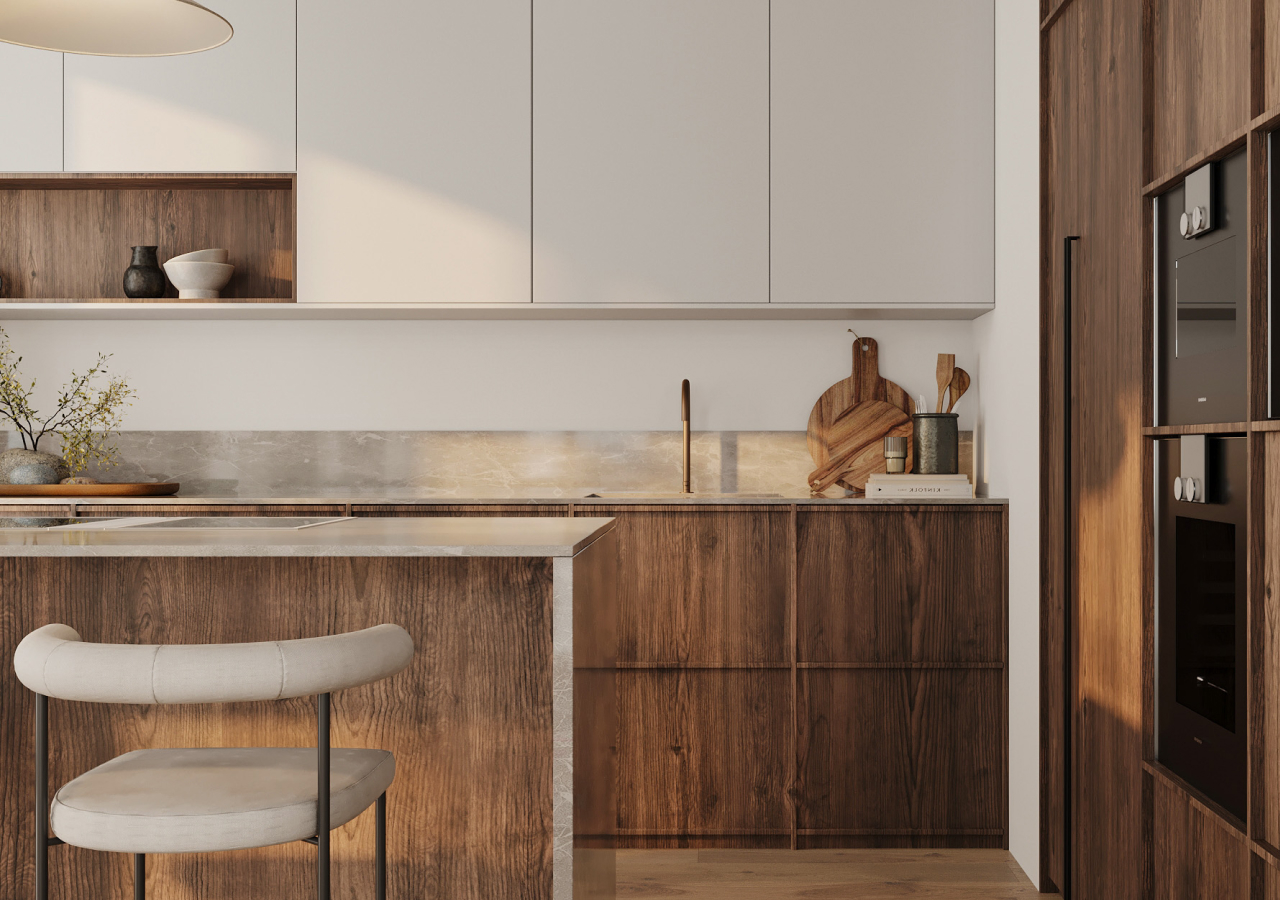
Walnut base cabinets with lighter upper cabinets are a practical way to keep the kitchen balanced. The walnut brings warmth lower in the room, while the lighter top half reduces visual weight at eye level. This is one of the most dependable walnut layouts for modern kitchens.
It works in both compact and larger spaces because the darker wood stays visually grounded. The kitchen still gets richness, but the room feels more open.
5. Use Full Walnut Cabinetry Only When the Room Can Support It
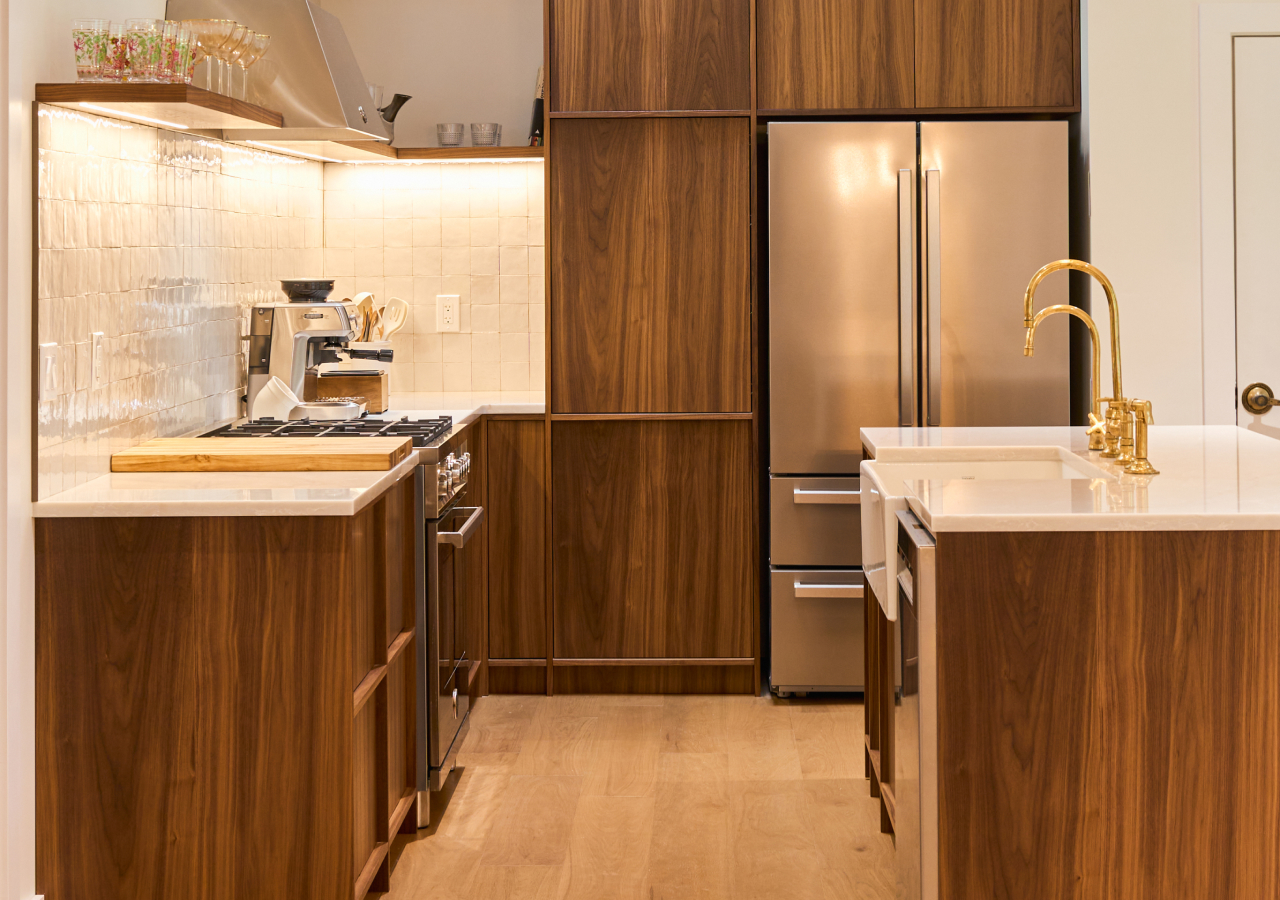
Full walnut cabinetry can look rich and seamless, but it is not right for every kitchen. It usually works best in larger rooms with strong daylight, fewer upper cabinets, and a restrained material palette. Without those conditions, the same idea can feel too dense.
This is less about trend and more about proportion. If the room is already dark or narrow, selective walnut usually gives a better result.
6. Keep Hardware Minimal or Go Handleless
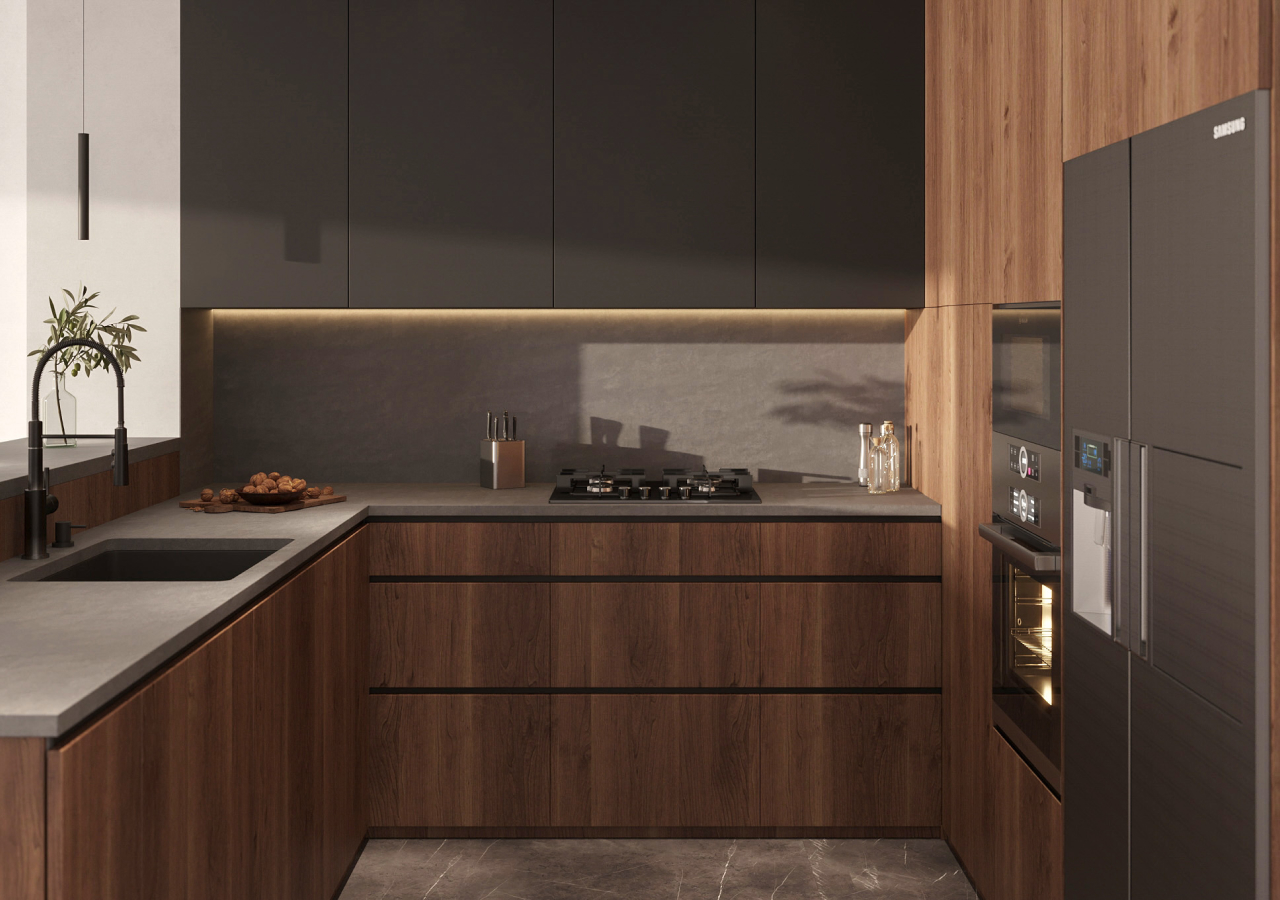
Walnut has enough texture on its own, so hardware should stay quiet. Slim pulls, recessed handles, or handleless systems keep the cabinetry cleaner and more architectural. That allows the grain to stay in focus.
Heavy or decorative hardware usually competes with walnut instead of improving it. Simpler detailing suits the material better, especially in minimalist kitchens.
7. Pair Walnut with Calm Stone

Walnut works best with stone that does not fight for attention. Low-contrast quartz, subtle marble-look surfaces, and quieter natural stone all help keep the kitchen controlled. Busy veining or sharp contrast can make the composition feel fragmented.
This applies to both countertops and backsplashes. Walnut already brings movement through the grain, so the stone does not need to do the same job.
8. Add Open Walnut Shelving Carefully
%20(1).webp)
Open walnut shelving can bring warmth into a kitchen without the weight of full upper cabinetry. It is a useful way to introduce wood in smaller amounts while keeping the room more open. This can work especially well when the rest of the kitchen stays light.
The key is restraint. Once open shelves become overloaded or heavily styled, they stop helping the kitchen feel calm.
9. Use Walnut in Tall Units, Pantry Walls, or Appliance Zones
.webp)
Walnut often works best when concentrated in one architectural block. Tall pantry cabinetry, appliance garages, and coffee stations are strong places to use it. This gives the kitchen depth without spreading darker wood across every surface.
It also makes the layout feel more deliberate. Instead of being everywhere, walnut becomes a defined design feature.
10. Let the Grain Do the Work in a Minimalist Layout
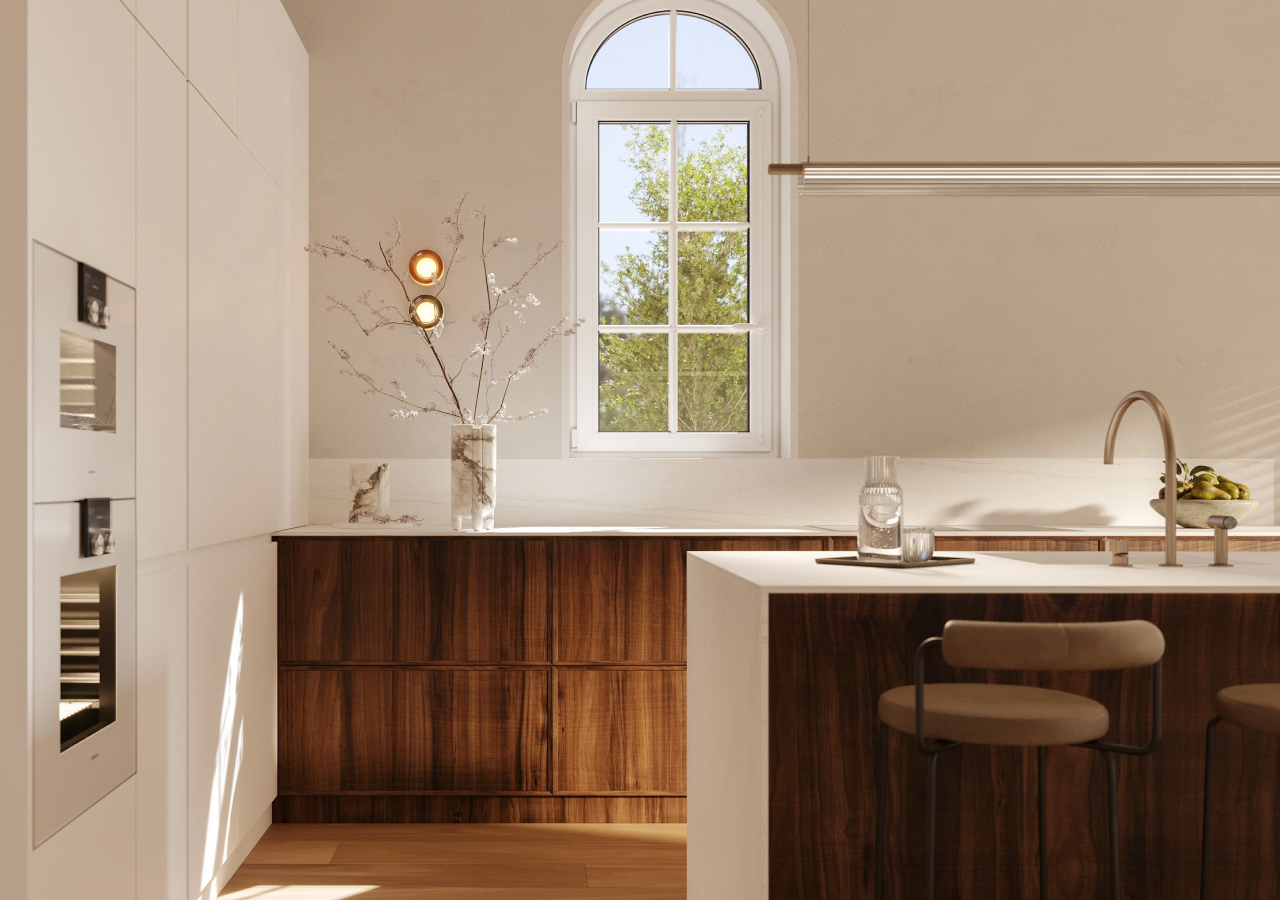
Walnut benefits from simple cabinetry and clean surroundings. Flat-panel fronts, integrated storage, and limited visual clutter allow the natural grain to stand out properly. In a busy layout, that detail gets lost.
This is one reason walnut suits minimalist kitchens so well. The material already has character, so it does not need much around it.
11. Balance Walnut with Light Walls and Flooring

Walnut needs lighter surfaces around it to stay in proportion. Pale walls, light flooring, and soft neutral finishes give the darker wood some room to breathe. The contrast does not need to be dramatic, but it does need to exist.
When the walls, floors, and cabinetry are all dark, the room can flatten out. Lighter surroundings keep the wood clearer and the kitchen more open.
12. Use Lighting to Bring Out Walnut Properly
.webp)
Lighting changes how walnut looks more than many homeowners expect. Daylight reveals variation in the grain, while warm layered lighting adds depth in the evening. Poor lighting can make walnut look flat or heavier than it really is.
That is why lighting should be part of the material decision, not an afterthought. The same walnut finish can feel either rich or dull depending on how the kitchen is lit.
American Walnut vs Oak for Kitchens

Walnut and oak suit different types of kitchens. Walnut creates more depth and contrast, while oak keeps a kitchen lighter and more relaxed. Neither is universally better, but they lead to different results.
If you want a kitchen that feels warmer and more defined, walnut is usually the stronger choice. If you want brightness and a lighter visual footprint, oak is often easier to use.
When American Walnut Works Best

American walnut works best in kitchens where there is enough light and enough contrast around it. Medium and larger layouts usually give it more room to breathe, especially when paired with lighter stone, neutral walls, and a restrained palette. In those conditions, walnut feels rich rather than overpowering.
It also works best when the layout is visually controlled. Integrated storage, simple lines, and limited material changes help walnut feel intentional. In smaller or darker kitchens, it is usually more effective when used selectively instead of across every cabinet front.
Conclusion
American walnut can make a kitchen feel warmer, deeper, and more resolved than lighter materials, but it needs balance. The strongest results usually come from pairing it with lighter surfaces, calm stone, simple cabinetry, and lighting that brings out the grain instead of flattening it.
In many kitchens, walnut works best when it has a clear role instead of covering every surface. A walnut island, a pantry wall, or a focused run of cabinetry often gives you enough warmth and contrast without making the room feel heavier. Walnut should not make the kitchen feel darker. It should make it feel more defined.
Looking at real layouts helps because the material itself is only part of the result. Proportion, light, and placement matter just as much as the finish.


