Scandinavian Kitchen Accessories & Styling: How to Decorate Without Clutter

A Scandinavian kitchen stays calm because the room is built for an easy reset: daily items have dedicated homes, so counters clear quickly after cooking. Surfaces feel light, materials feel honest, and the space holds up without constant re-styling. That effect comes from organization first, with Scandinavian kitchen decor acting as the final layer once the system is working.

Once the functional layer is doing its job, styling becomes easy because you are not decorating around clutter. In a Scandi kitchen, accessories should feel like a finishing touch, not a second job. This guide breaks the look into small styling recipes and simple rules so your kitchen reads styled, not busy, while still working like a real home.

What Makes a Kitchen Scandinavian

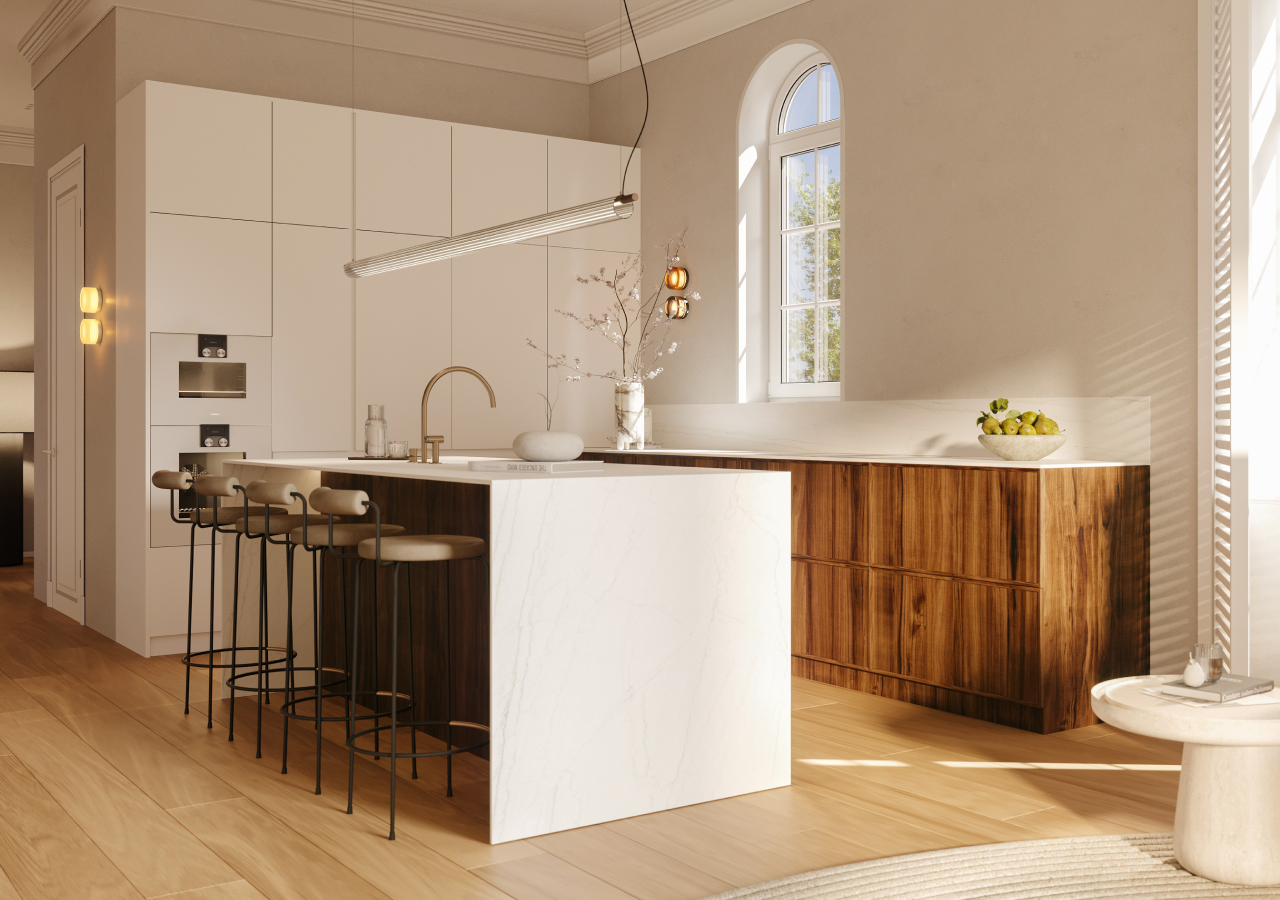
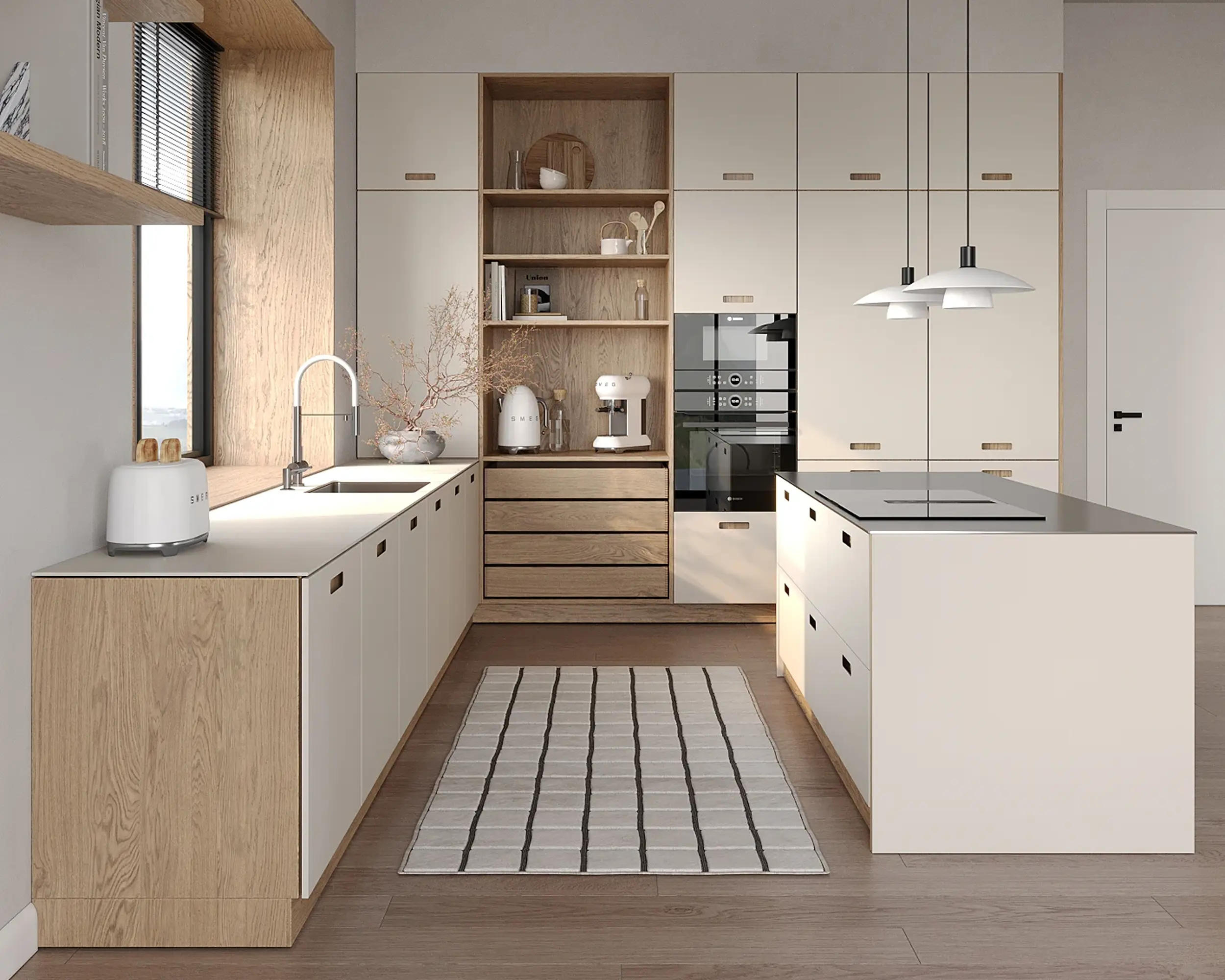
A Scandinavian kitchen is defined by restraint with warmth: clean cabinet geometry, a light or neutral palette, and natural materials like wood. The signature is the “easy reset” behavior: storage placed where cooking and cleaning happen, so mess doesn’t linger on the counter. That’s why these rooms feel minimal and comfortable at the same time: intentional, practical, and calm.

This matters for décor because Scandi style makes clutter more visible. When the backdrop is quiet, random objects read louder. The answer is not zero personality. It is tighter rules, fewer categories, and practical add-ons that keep your everyday items from becoming “decor by accident.”

The Golden Rule: Function First, Decor Second

Scandinavian kitchen styling holds up when friction is removed first. If coffee gear, oils, mail, and sink supplies live on the counter, the room reads busy within a day. Assign storage to the mess zones: put everyday tools in drawers where you actually use them, build a real under-sink setup, and plan a dedicated spot for small appliances so cords stop taking over the backsplash line.

Corner’s accessories library covers these quiet helpers—drawer dividers, lift-up appliance shelves, pull-out cutting boards, draining racks, and plate holders—tools that prevent surface sprawl. They are not decorative, but they make the room look designed because the clutter never reaches the countertop.

Start With a Calm Base

A calm base comes from continuity: low contrast, repeated tones, and surfaces with minimal pattern movement. Repeat one main wood tone, keep undertones aligned across Scandinavian-style cabinets and counters, and use lighting to bring warmth at night. When the base reads cohesive, you can use fewer objects and each one lands clearly.

The Scandi Accessory Capsule: Keep It to 10 to 12 Items

Build a small “accessory capsule” and keep it consistent, so the kitchen looks styled without constant editing. Aim for 10–12 visible pieces total across the whole room, chosen to do two jobs: add warmth and support daily use. Wood, ceramic, linen, glass, and a little green stay reliable because they add texture without loud color noise. For everything else, rely on internal organization; the best Scandinavian kitchen supplies are often the ones you don’t see.

The most reliable visible materials are wood, ceramic, linen, glass, and a little green. They feel natural, photograph well, and do not introduce loud color noise. The most reliable hidden items are organizers that stop the chain reaction that creates clutter: a messy drawer leads to counter piles.

Capsule category Examples (visible) Why it stays Scandi Rule
Wood board, bowl, pepper mill warmth without color noise keep to 1 wood tone
Ceramic mugs, small bowl simple silhouettes match 1 shape family
Linen towel, runner texture without clutter 1–2 textiles only
Glass jar set, carafe looks clean when repeated use sets of 2–3
Green one plant “punctuation,” not décor pile one plant rule

Countertops Without Clutter: The 3-Zone Method

A calm counter comes from roles, not emptiness. Use the 3-zone method to give every surface a job: a prep zone that stays mostly clear, a contained coffee/appliance zone, and a small landing zone near the fridge, entry, or island edge.

Feature Pocket doors / closed storage Open shelving
Visual calm Highest (closes the noise) Medium–low (shows everything)
Maintenance Low High (needs constant editing)
Best use coffee/appliance station, pantry 1–2 styled moments only
Failure mode “stuffed cabinet” “pantry on display”

Support the prep zone from below with drawers for boards, bowls, wraps, and daily tools; when everything is one step away, tools stop living on the counter. Contain the coffee zone with one tray or a cabinet-based setup, so daily gear can exist without spreading. Define the landing zone on purpose, otherwise the whole kitchen becomes one.

Once these zones exist, styling gets easier because you stop trying to decorate every surface. You protect the prep zone, contain the appliance zone, and limit the landing zone.

Four Styling Recipes That Always Look Intentional

Think of these as repeatable systems that read intentional because they reduce visual noise first. Each recipe uses practical Scandi kitchen accessories from Corner’s accessory library, so the calm holds up in daily use, not only in photos.

Recipe 1: The Clear Prep Counter

This recipe is for the person who wants a clean countertop without losing cooking speed. Instead of leaving boards and tools out, build a prep “kit” inside the base cabinet. A pull-out cutting board (wood) gives you a board that is always ready, and drawer dividers keep wraps, tools, and small prep items from collapsing into a pile. The benefit is immediate: your main prep surface stays visually quiet, and your workflow gets faster because you always know where the essentials live.

To implement it, pick your primary prep run and commit to it. Place the pull-out cutting board directly under that counter, then structure the nearest drawers with dividers so everything resets to the same layout every time. You are not chasing perfection. You are removing the reason clutter happens.

Recipe 2: The “Appliances Disappear” Coffee Zone

A Scandinavian kitchen can absolutely have a coffee ritual. It just should not look like a permanent appliance showroom. The practical fix is a lift-up appliance shelf inside a base cabinet, so the machine stays accessible without becoming permanent counter clutter. You store the machine, then lift it up when you need it.

Add well-placed kitchen outlets, especially if your coffee zone is near an island or a secondary counter, so cords are not draped across your backsplash and the setup feels intentional.

This recipe keeps the counter calm while still being convenient. Implementation is about placement: locate the coffee zone where you actually use it, then plan the lift-up shelf and outlets to match that routine. When power and storage align, the kitchen stops demanding countertop “parking” for appliances.

Recipe 3: The Calm Drawer Face (So Counters Stay Clear)

This is the most underrated styling recipe because it happens inside drawers, but it is what prevents visual clutter outside. A wooden cutlery tray organizer paired with a spice organizer (or a drawer with a spice divider) creates a stable home for the small things that usually end up on counters. Functionally, it reduces rummaging and doubles. Aesthetically, it removes the conditions that create countertop drift, especially in minimalist kitchens where every item is visible.

To implement it, give utensils and spices a dedicated top drawer near the prep and cook zone. Then size the organizers so each category has a fixed slot. The “Scandi look” is not about making it pretty once. It is about making it easy to reset every day.

Recipe 4: The Quiet Sink Setup

The sink area is where kitchens lose the Scandinavian look fastest. Wet items, refills, and “temporary” tools multiply. This recipe fixes that with practical additions: a draining rack for the daily wet cycle, non-slip mats to keep the zone tidy and stable, and a stainless steel shelf for controlled landing and organization.

The benefit is both cleanliness and calm. You stop storing sponges, refills, and random bottles on the counter because the sink zone finally has a system. To implement it, decide what is allowed to be visible, ideally just soap. Then move everything else into an organized sink setup supported by these accessories. The counter immediately looks cleaner because the sink stops being a clutter source.

Open Shelving the Scandinavian Way

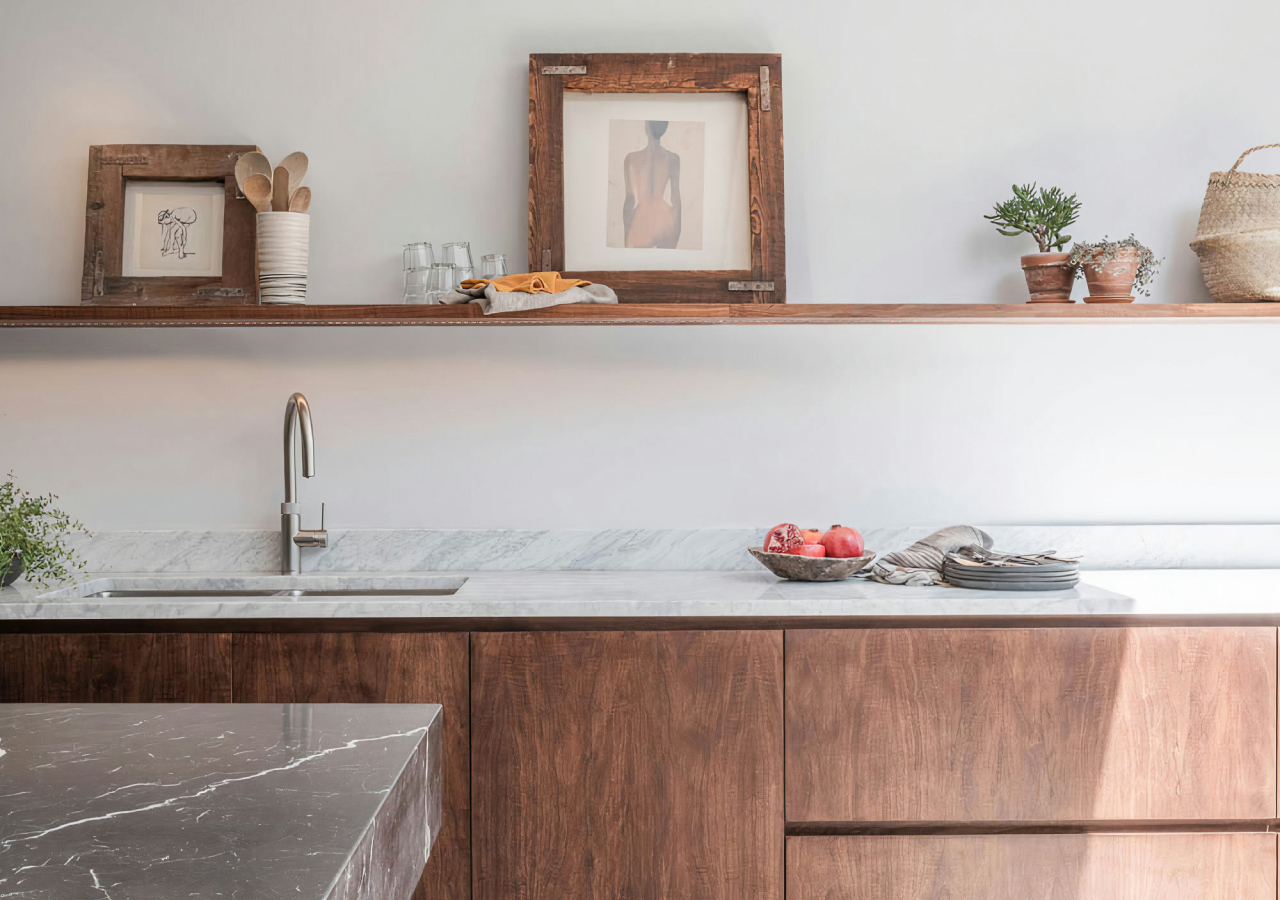
Open shelving works when it’s treated like a curated display, not overflow storage. Keep the count low, repeat shapes and materials, and leave negative space so the shelf reads calm. Use closed storage for bulk items, and let shelves carry only a small, stable composition.

Keep visible Hide inside storage The reason
1 soap dispenser refills, sponges, cleaners sink zone stays calm
1 tray (coffee) cords + extra gear contains the appliance zone
1 board + bowl extra tools adds warmth without sprawl

If you love the openness but want less maintenance, treat open shelving as a small design moment rather than a main storage plan. Use shelves for a limited display, and rely on closed storage for daily life. Corner’s accessory list includes open shelving options, which work best when they are part of an intentional composition rather than a catch-all.

Add Hygge Without Adding Stuff

Hygge comes from atmosphere more than objects: warm layered lighting, soft textiles, and natural materials that add texture without crowding surfaces. Linen or cotton adds softness with almost no visual noise, and wood brings warmth through tone and grain. When the room feels warm at night, you need fewer accessories overall.

If your kitchen feels cold, it is rarely solved by adding more items. It is usually solved by warmer light, calmer surfaces, and a better “reset” system so the room stays serene after dinner.

Common Mistakes That Create Instant Clutter

Most clutter comes from predictable patterns: too many small objects, open shelves used as bulk storage, and no home for the daily mess list near where it appears. Drawers without organizers create rummaging, which pushes items back onto counters. High-contrast surfaces also make every stray object look louder.

HowTo: Set up Scandinavian counters using the 3-zone method

  1. Choose one primary prep run and clear it completely. This becomes your “protected surface” for daily cooking and an easy visual reset.
  2. Assign a coffee/appliance zone. Use one short counter section or an inside-cabinet setup so equipment stays contained.
  3. Create one landing zone near the fridge/entry. Use a small tray or shallow bowl so the kitchen has a designated drop spot.
  4. Move tools below the zone where they’re used. Store boards and wraps under prep, and keep mugs and coffee tools near the coffee zone.
  5. Enforce a daily reset rule. If an item has no zone, it doesn’t live on the counter.

Conclusion

A Scandinavian kitchen feels calm because it is planned around an easy reset. Start with function and storage, then style lightly. Protect your countertops with the three-zone method so your prep area stays clear, your appliance area stays contained, and your landing area stays limited.

Choose a tight accessory capsule, then lean on practical add-ons like pull-out cutting boards, drawer dividers, lift-up appliance shelves, and sink-zone tools to keep the look stable.

If you want a Scandinavian kitchen that looks artistic and stays livable, explore Corner Renovation’s collections and accessories, or book a consultation. We will help you plan the calm base and storage logic first, then finish the space with accessories that feel intentional and effortless.

FAQ: Scandinavian Kitchen Accessories

What are the key elements of a Scandinavian kitchen?

The key elements are a light, restrained palette, natural materials like wood, clean cabinet lines, and a functional layout designed for an easy reset. The room should feel warm, not empty, with storage doing most of the work so surfaces stay calm.

What are the Scandinavian design trends in 2026?

In 2026, Scandinavian kitchens are trending warmer and softer: low contrast surfaces, matte finishes, wood forward details, and concealed function that reduces visual noise. The focus is less on stark minimalism and more on calm, livable simplicity with smart storage.

Can you mix Scandinavian style and Mid Century?

Yes. The clean lines and functional logic of Scandinavian design pair well with Mid Century warmth. Keep the Scandinavian base consistent, then use Mid Century as a controlled accent through lighting, stools, or one wood forward statement piece, rather than mixing many competing details.

What is a common feature of Scandinavian interior design?

A common feature is restraint with purpose. Spaces use simple forms, neutral tones, natural materials, and thoughtful organization so the room feels calm and practical. In kitchens, this often shows up as clear zones and minimal visual clutter.

What are some affordable Scandinavian kitchen ideas?

Start with editing and organization. Clear counters by assigning homes to daily items. Add internal organizers like cutlery trays and drawer dividers. Use one simple styling recipe with a board, ceramic, and linen. If you want open shelving, keep it short and curated with coordinated items.

What are the best countertops for a Scandinavian kitchen?

The best Scandinavian countertops are usually light to mid toned and low contrast, with a matte or soft finish. Quartz and durable engineered surfaces work well when pattern movement is minimal. The goal is a calm surface that supports the overall quiet palette.

How do I make my kitchen look Scandinavian?

Plan storage and zones first so counters stay clear. Use a calm base with a restrained palette, natural wood, and simple cabinet geometry. Then style with a small capsule of Scandinavian kitchen accessories, focusing on functional beauty and limiting visible items to what you actually use.

January 26, 2026
-
6 min read
Get started

Upgrade your kitchen, book a consultation

Get a free design consultation