
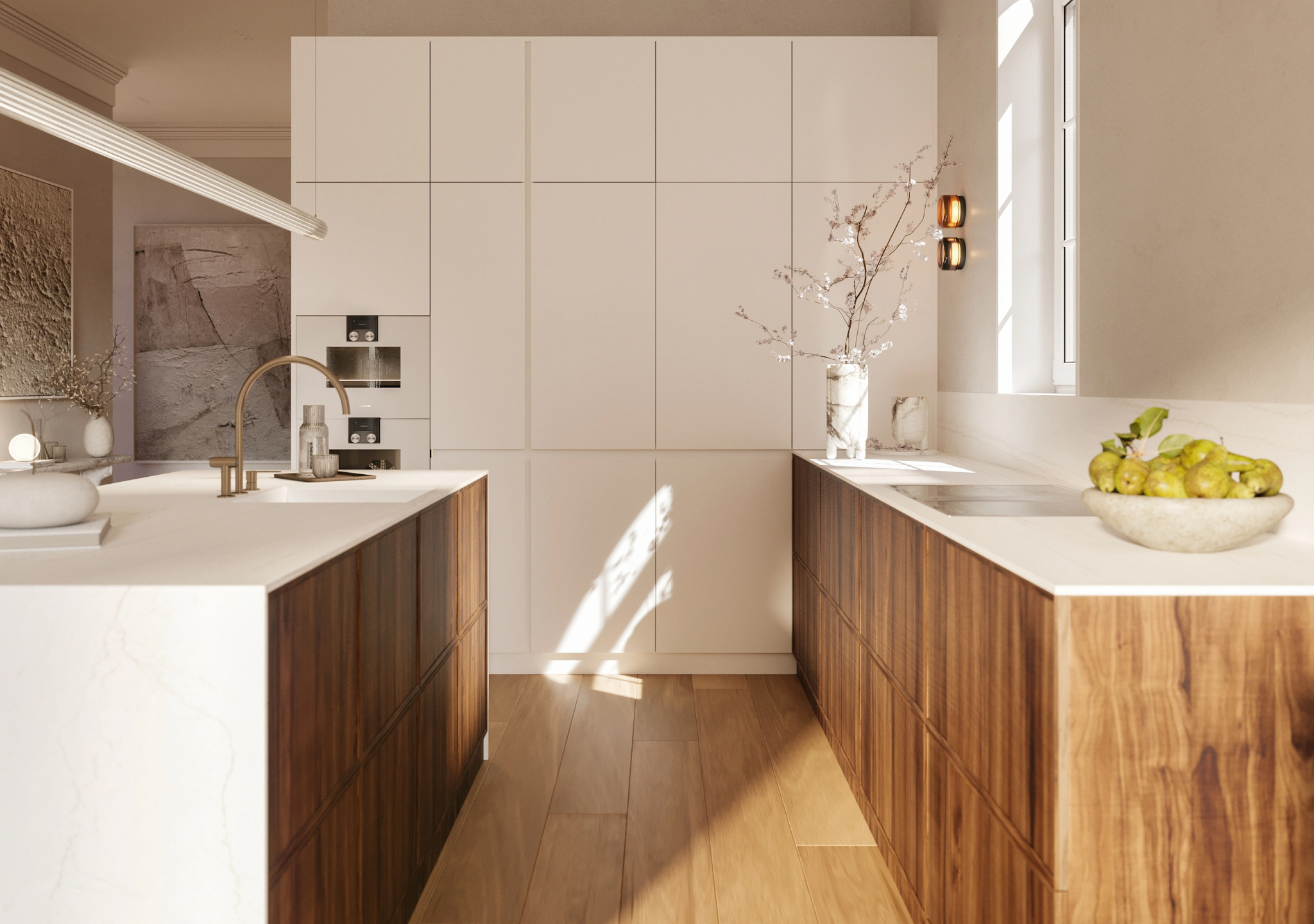
Small European kitchens have a way of feeling composed instead of cramped. The secret is not “tiny furniture” or a pile of space-saving gadgets. It’s a system: frameless, full-overlay cabinetry for cleaner sightlines, storage planned from the inside out, and layouts that protect circulation so the room can reset fast. That’s why a small European kitchen often feels calmer than a bigger kitchen that is visually busy.
In this guide, you’ll learn which layout suits a European small kitchen design (galley, L-shape, one-wall, micro-island vs peninsula) and the few storage moves that matter most: drawer-first bases, inner drawers, corner systems, and under-sink drawers that stop counters from becoming overflow storage.
Why Small European Kitchens Feel Bigger Than They Are
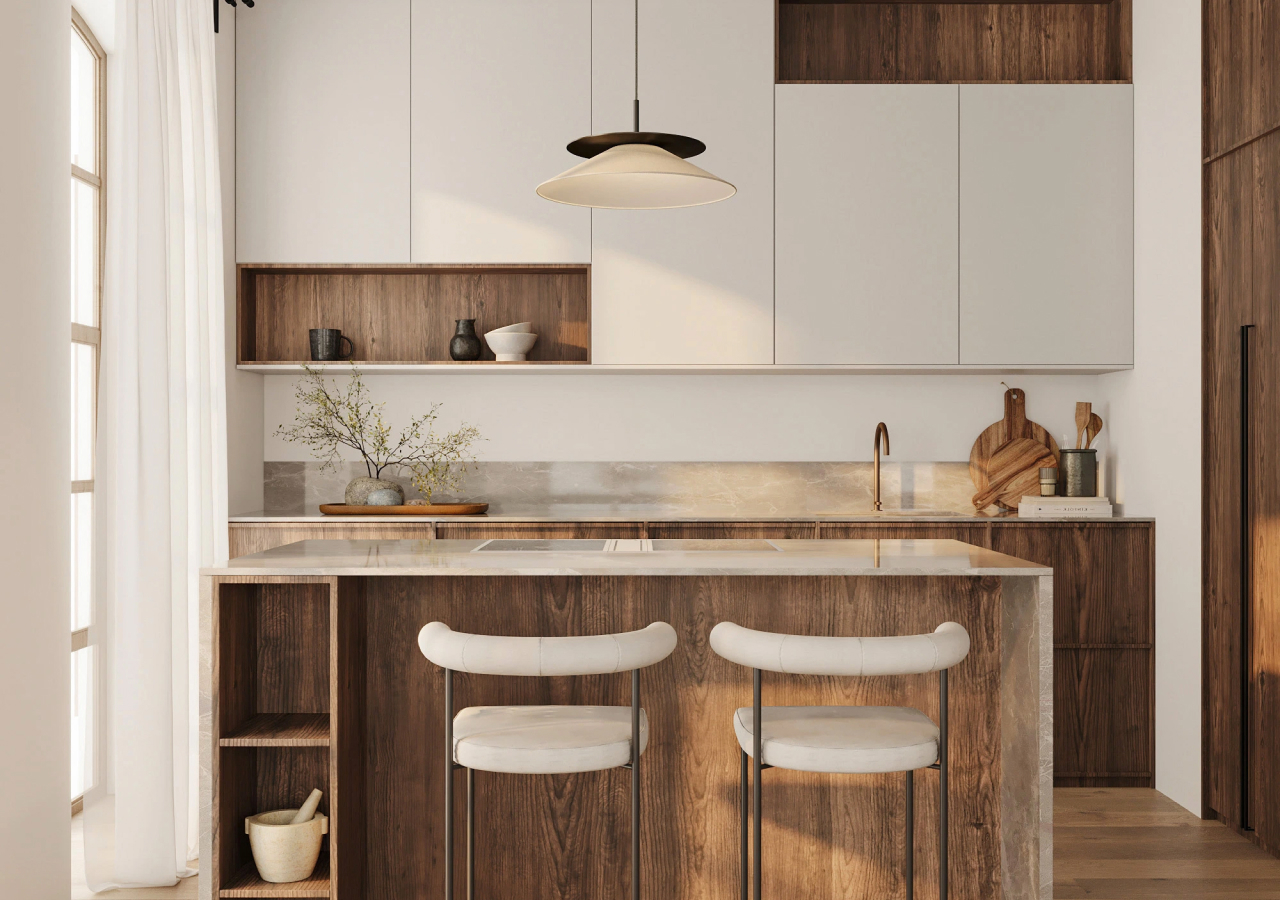
Small European kitchens feel bigger when the elevation reads as one calm system and storage is planned to keep counters clear. Fewer visual breaks plus stronger internal organization is what makes tight rooms feel lighter in daily use.
A lot of people ask: why are European kitchens usually small? In many European contexts, homes are shaped by urban living and older building footprints, so kitchens are often planned to be efficient rather than oversized. The practical result is a design culture that takes compact planning seriously: tighter layouts, more vertical storage, and fewer “decorative breaks” that chop up the space.
What makes them feel bigger is the visual discipline. European-style systems often rely on aligned cabinet runs, integrated or panel-ready appliances, and minimal hardware so the kitchen reads as one calm elevation. When the outside looks uninterrupted and the inside is highly organized, the room feels lighter even when you cook every day.
The European “Small, But Seriously Functional” Mindset
.webp)
A small kitchen works best when it’s planned around repeatable routines, not just appliance shopping lists. European small kitchen planning tends to start with daily paths (fridge → sink → prep → cooktop) and then assigns storage to those zones so the kitchen can stay tidy without constant effort.
The other part is calm. In compact rooms, “calm” is not styling, it’s fewer interruptions in the cabinet line and fewer objects that must live out in the open. That’s why drawer-first base cabinets, pull-outs, and hidden internal organization show up again and again in small European kitchens. They keep the exterior simple while making the interior do more work.
One Rule That Fixes Most Small Kitchens
Most tiny European kitchens improve quickly when you protect circulation and protect one continuous prep run. If doors collide or aisles pinch, the kitchen will feel smaller every day. If you always have a reset surface, the room can recover fast after real cooking.
| Planning item | Recommended minimum | Why it matters in small kitchens |
|---|---|---|
| Main walking lane (between runs or island) | 36" minimum, 42" ideal | Prevents pinching and door collisions |
| Clearance in front of dishwasher (open) | 36" minimum | Lets someone pass while loading |
| Clearance in front of oven (open) | 42" ideal | Avoids hard stops during cooking |
| Seating clearance behind stools | 36" minimum | Keeps circulation usable day to day |
| Landing zone next to sink or cooktop | 15–18" when possible | Prevents “parking lot” counters |
Protect two things:
- A clear walking lane that does not get pinched by appliance doors or island seating.
- One primary continuous countertop run for prep (even a modest one), so the kitchen always has a “reset surface” you can return to.
This is the fastest way to make tiny European kitchens feel usable, because it prevents bottlenecks and keeps your best work surface from turning into a parking lot.
Layouts That Work in Small European Kitchens
The best layout is the one that protects clearances first, then concentrates storage by zone. In most compact rooms, galley, L-shape, and one-wall layouts outperform “forced islands,” unless circulation stays clean with doors open.
Galley: the corridor cook space
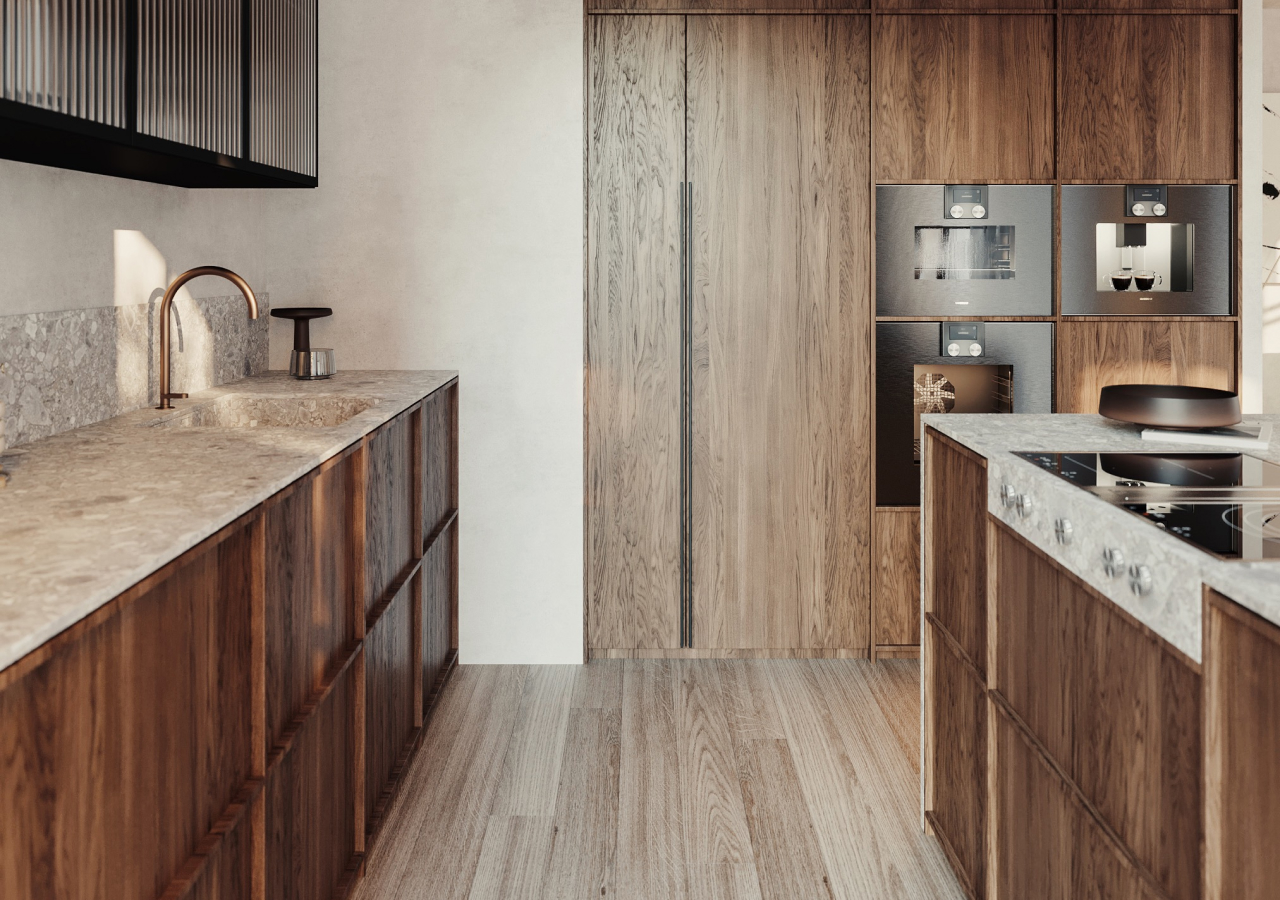
For narrow rooms, a galley is often the most space-efficient layout because it maximizes storage on two parallel runs while keeping workflow tight. The European version feels best when tall units are grouped at one end (or one “block”), rather than scattered as random towers that chop up the corridor. That grouping keeps sightlines cleaner and makes the galley feel intentional, not squeezed.
Implementation that pays off: keep the everyday zone (sink, trash, prep tools) on the same run so your movement stays short, and plan drawers so the items you use most are closest to where you use them.
L-shape: the corner workhorse
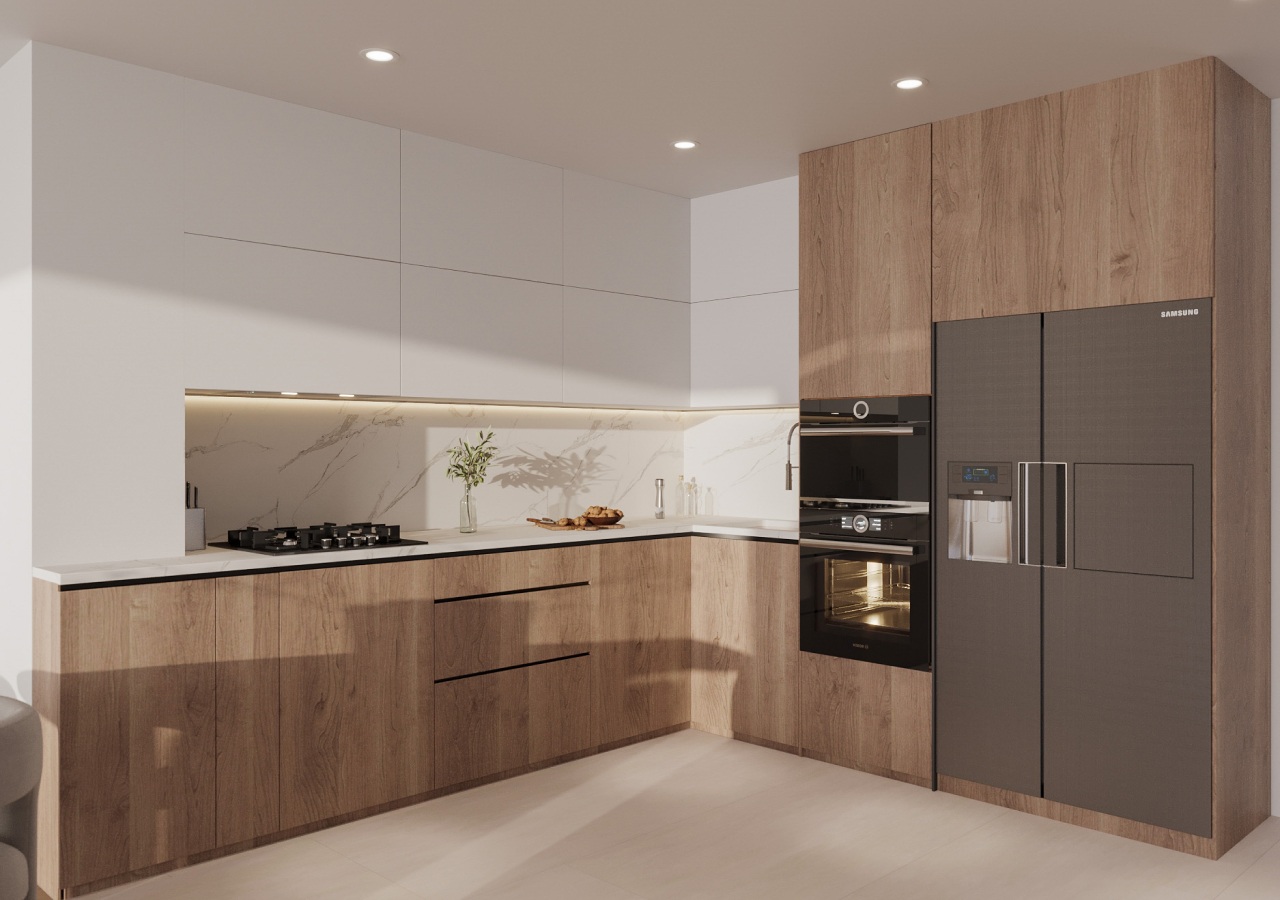
In small open plans, an L-shape can feel more social and less hallway-like than a galley. The key European move is to treat the corner as real storage, not dead space. A proper corner pull-out system turns the corner into one of the highest-capacity cabinets in the room, which is exactly what small kitchens need.
Implementation that pays off: keep one leg of the L as your continuous prep run, then use the other leg for cooking or cleanup, with drawers doing the heavy lifting so items do not disappear in the back.
One-wall: the composed system wall
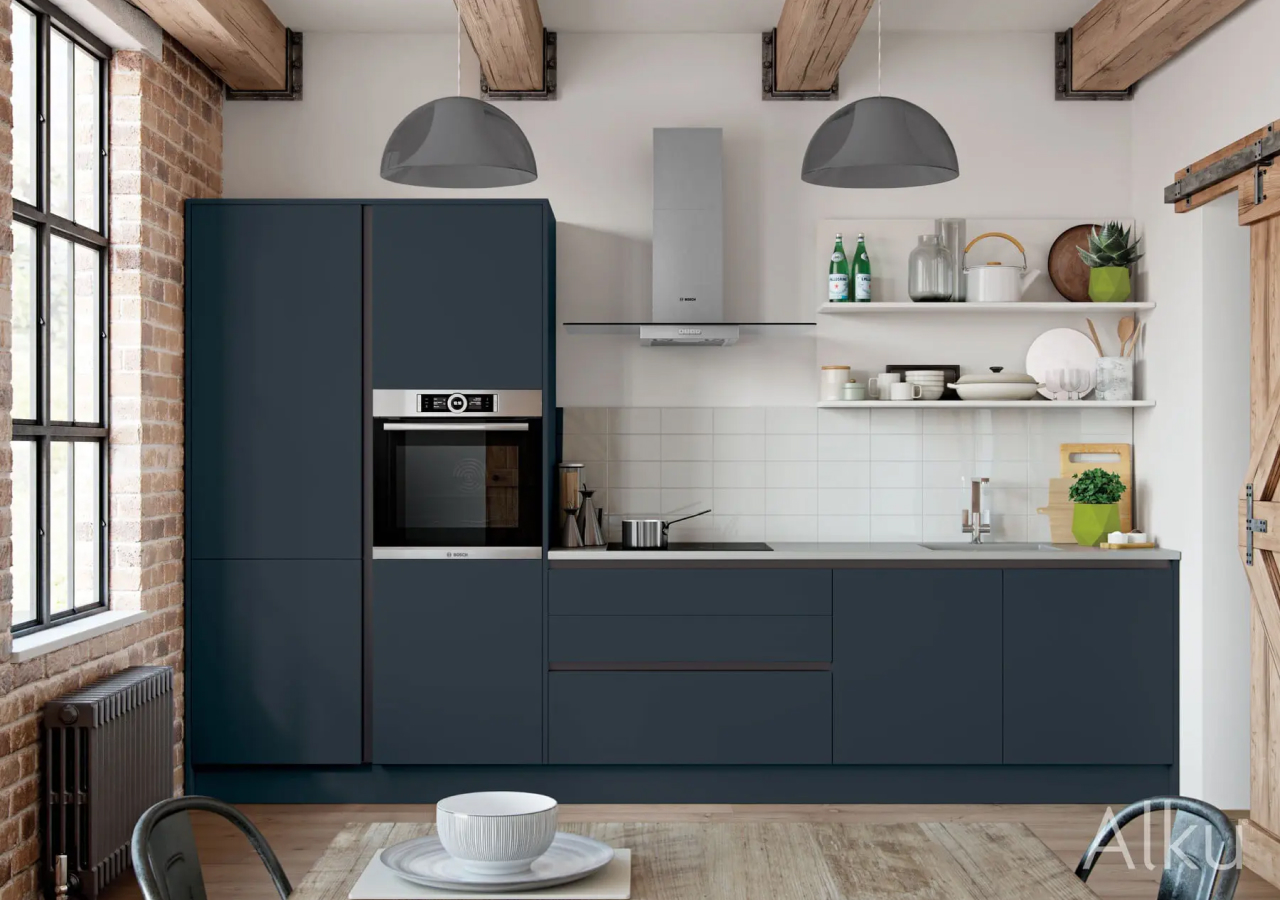
For studios and very compact footprints, a one-wall kitchen can still feel “European” if you treat it as a composed elevation: tall storage + a base run + a slim upper band (or a short shelf zone) that stays visually quiet. The benefit is simplicity. The risk is the “clutter wall” problem, where everything ends up on the counter because storage is too shallow or too vague.
Implementation that pays off: go drawer-first in the base run and add internal organization (inner drawers, dividers) so small items do not spread across the countertop.
Micro-island vs peninsula
.webp)
A tiny island can be great if it adds a real prep surface plus storage without blocking clearances. But in many small European kitchens, a peninsula or a narrow ledge is the smarter move because it preserves circulation while still adding function.
One non-negotiable: never block fridge, oven, dishwasher, or corner clearances. If doors collide or aisles pinch, the kitchen will feel smaller every day, no matter how pretty it looks.
| Feature | Micro-island | Peninsula |
|---|---|---|
| Best for | Adding prep + storage in open rooms | Tight rooms that need a landing zone |
| Circulation risk | Higher (can pinch aisles) | Lower (keeps one side open) |
| Storage value | High if it has drawers | Medium to high |
| Seating | Possible, often tight | Easier to do as a narrow ledge |
| When to choose | Only if clearances stay clean | Default choice for many compact plans |
Storage That Keeps Counters Clear, the European Way
The fastest way to make a small kitchen feel bigger is to stop counters from becoming storage. European planning does that with tall cabinets, drawer-first bases, and inner organization so daily categories have a real home.
Go tall and slim
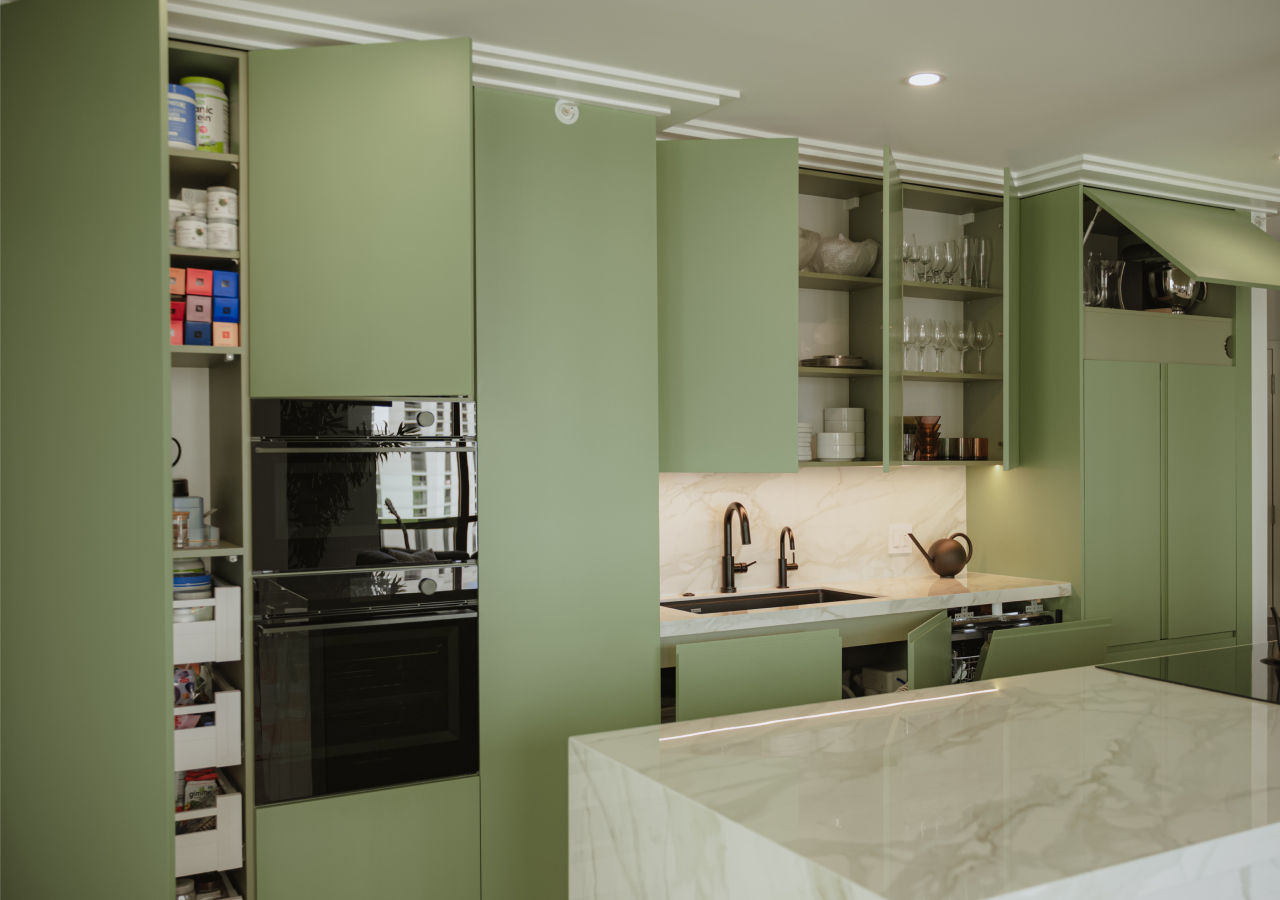
European planning leans on full-height tall cabinets because they carry pantry and utility storage without relying on a wall of uppers. In a compact room, it can look cleaner and actually store more. Where aisles are tight, shallow or slim storage can be a lifesaver because it adds capacity without stealing the walking lane.
Implementation idea: place tall units where they do not interrupt your best daylight or your main prep run, and group them so the room reads calmer.
Drawer-first bases and inner organization
.webp)
Drawers beat doors in small kitchens because you get full access and less “lost space” in the back. A drawer-first base also supports the European look because it encourages a clean counter: your daily tools are easy to put away.
Inner drawers (drawers within drawers) are one of the most effective upgrades for compact kitchens. They create layers without visual noise: a shallow top tier for small daily items, and a deeper tier below for bulkier tools. That keeps categories stable, speeds up cooking, and reduces the mess that spreads onto counters.
Use the airspace carefully
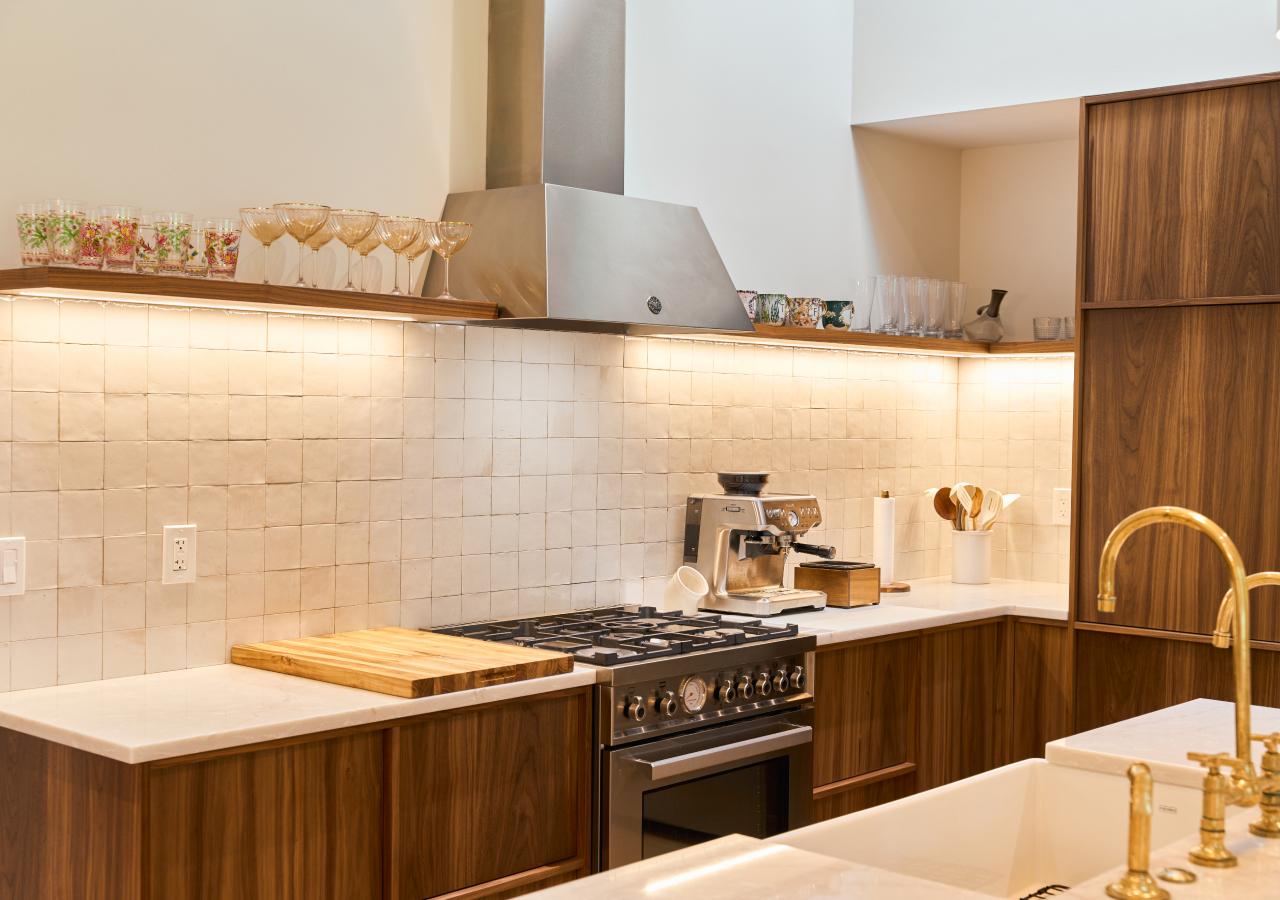
Open storage can help a small kitchen feel lighter, but too much open shelving becomes visual clutter fast. The European approach is controlled: one short rail, a small shelf band, or a limited glass section for daily pieces, while the bulk stays behind closed fronts.
A simple rule: if you cannot reset it in 60 seconds, it will not stay “styled” in real life.
Under-sink drawers and a real waste zone
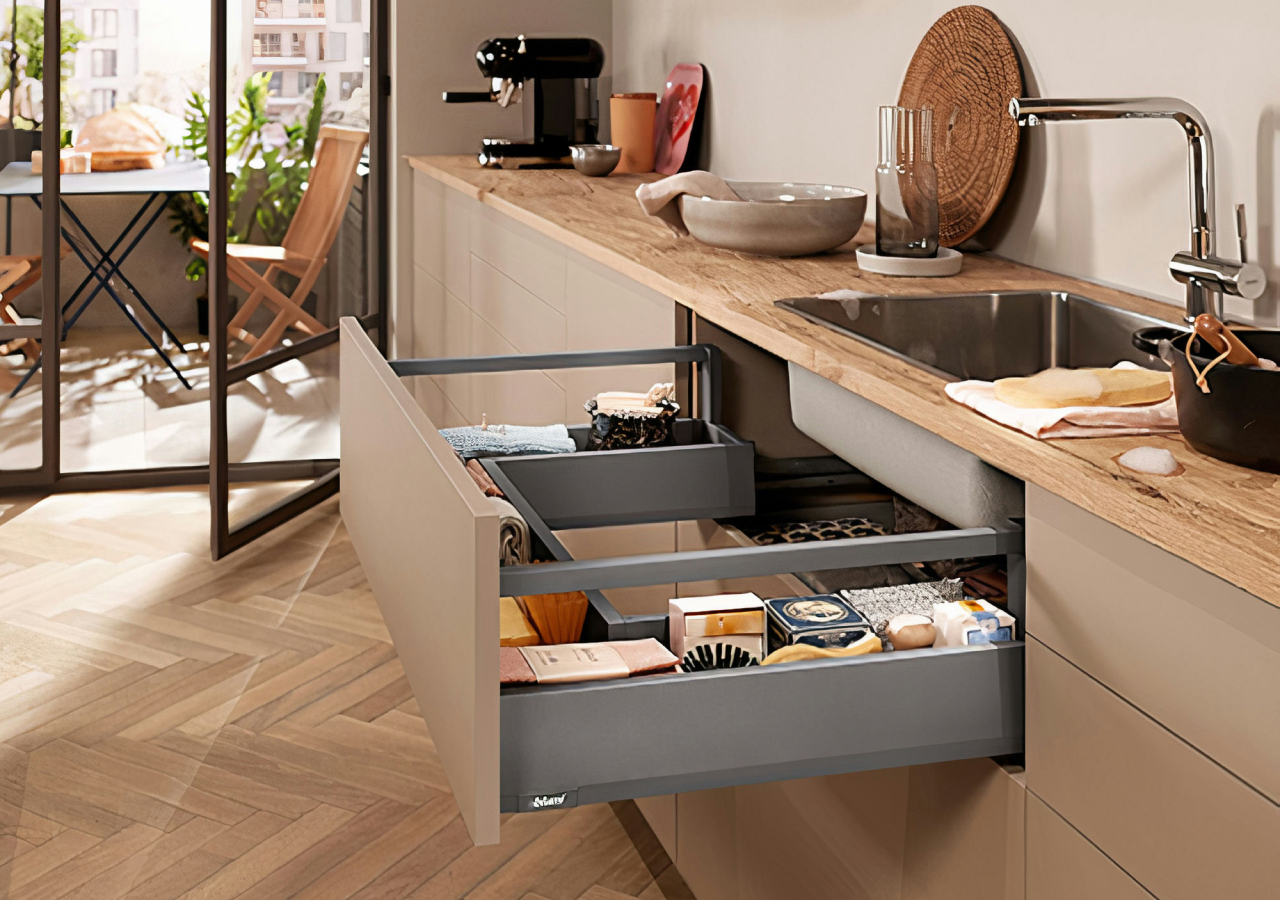
The sink zone is where small kitchens fall apart: sponges, cleaners, bins, compost, and backups spill onto counters because the storage is awkward. Under-sink drawers or pull-outs turn that “wasted” cavity into a controlled zone, and adding a pull-out waste setup near prep makes cleanup faster and less messy.
Implementation idea: use dividers and non-slip mats so bottles stand upright and everything has a fixed spot. If composting is part of your routine, plan it into the drawer instead of letting it float on the counter.
| Upgrade | Space impact | Cost/complexity | What it prevents |
|---|---|---|---|
| Drawer-first base cabinets | Very high | Medium | Lost space in back of cabinets |
| Inner drawers | High | Medium | Counter clutter from small items |
| Pull-out waste near prep | High | Medium | Messy sink zone and slow cleanup |
| Under-sink drawers/pull-outs | High | Medium | Cleaners and sponges living on counters |
| Corner pull-out system | Medium–high | Medium–high | Dead corner space |
The Seamless European Look in a Small Space
A small kitchen looks larger when the elevation reads continuous and low-contrast. The “European” feeling comes from aligned lines, minimal visual breaks, and organization that keeps daily objects off the counter.
Panel-ready and integrated appliances
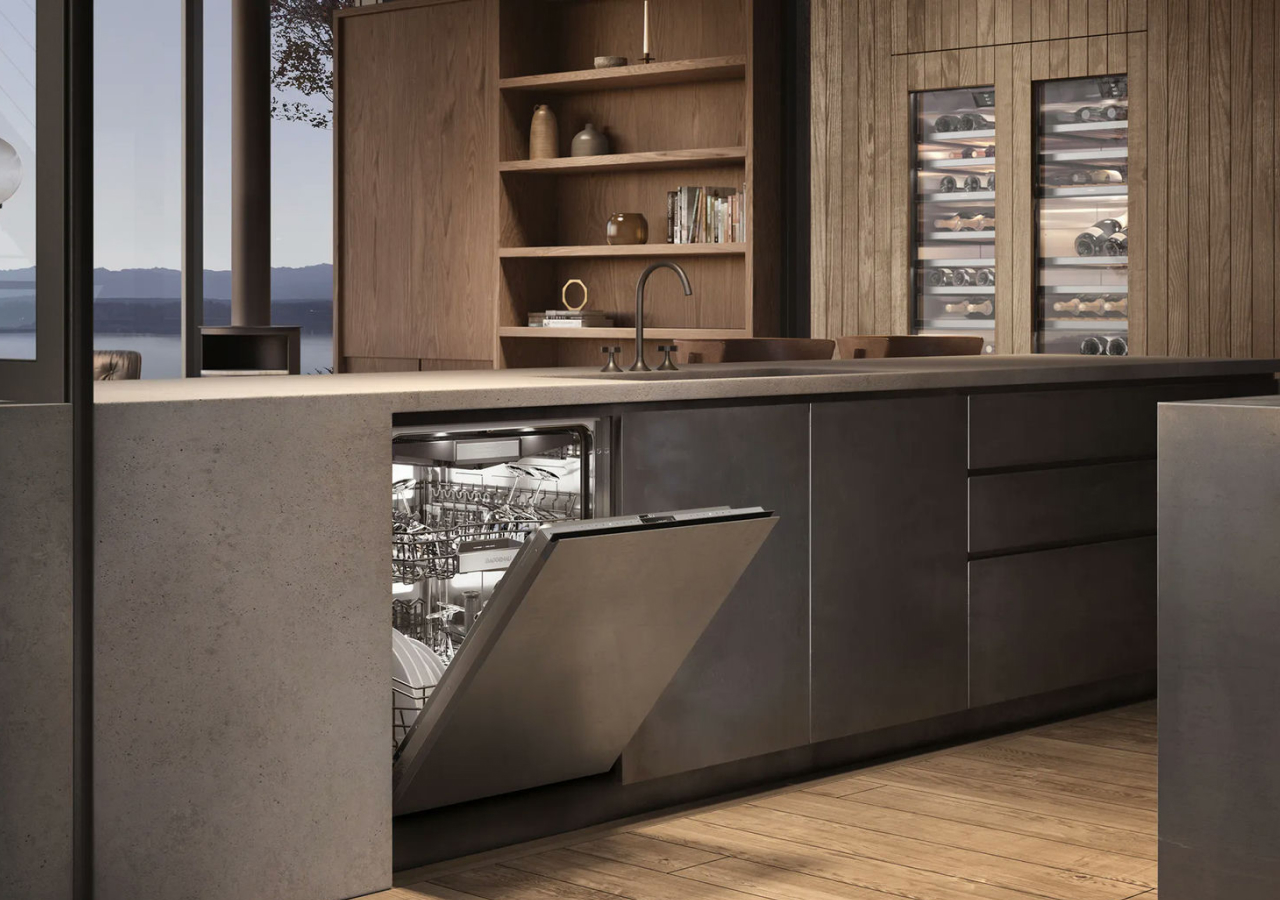
A small kitchen looks larger when the elevation looks continuous. Panel-ready fridge and dishwasher fronts reduce visual breaks and make the kitchen read like one system, not a collection of objects. In tight rooms, 24-inch appliance suites are a classic European move because they protect clearances while still delivering full function for many households.
Clean lines and a calm palette
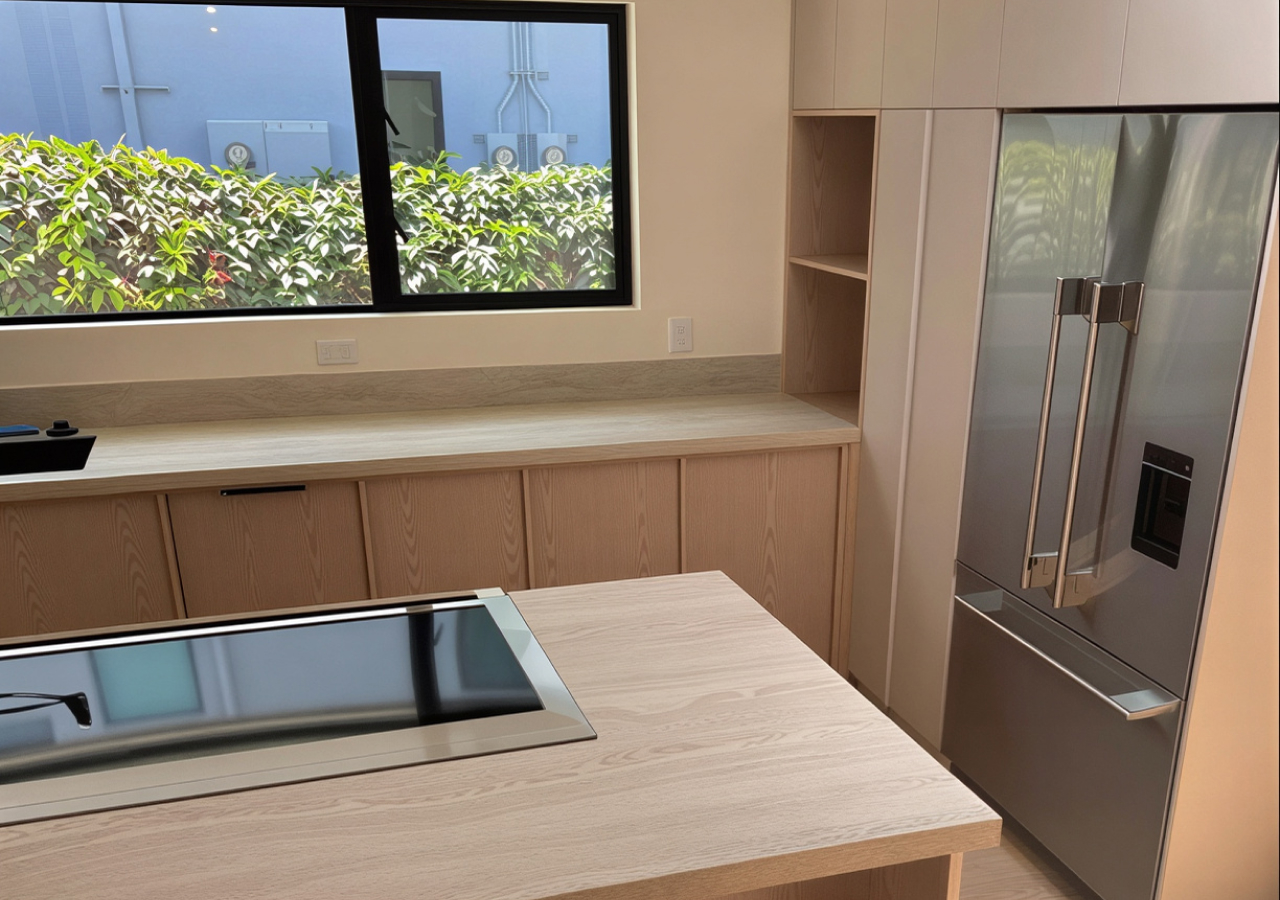
Full-height doors, minimal hardware, and one or two cabinet colors keep the space visually quiet. Low-contrast palettes can make compact kitchens feel larger because the eye is not constantly stopping at high-contrast edges.
Light and reflection
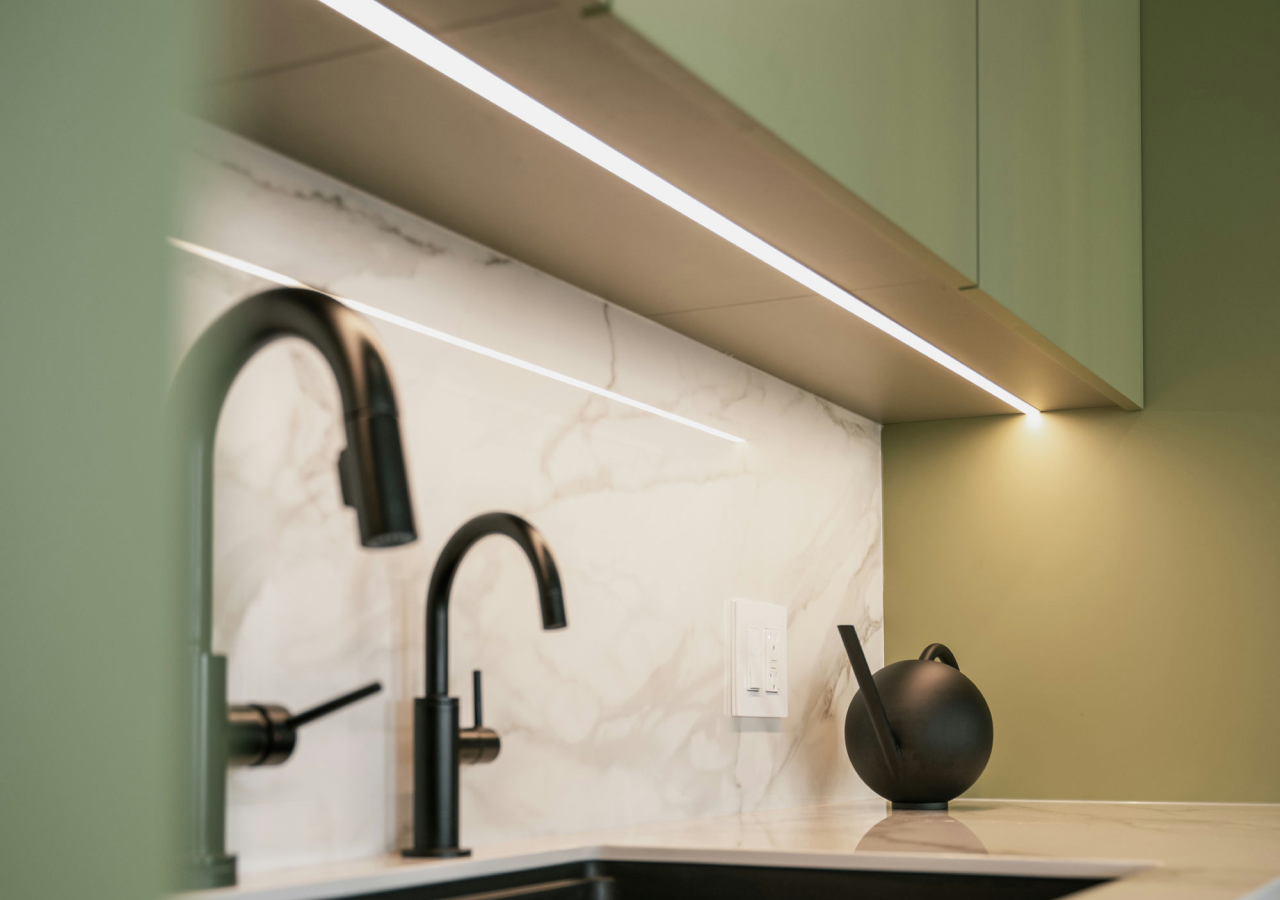
A reflective backsplash or slightly sheeny finish can bounce light around a small room, especially when paired with simple window treatments that do not block daylight. The goal is not “shiny everywhere,” just a few smart surfaces that help the room feel brighter and more open.
Warmth without clutter
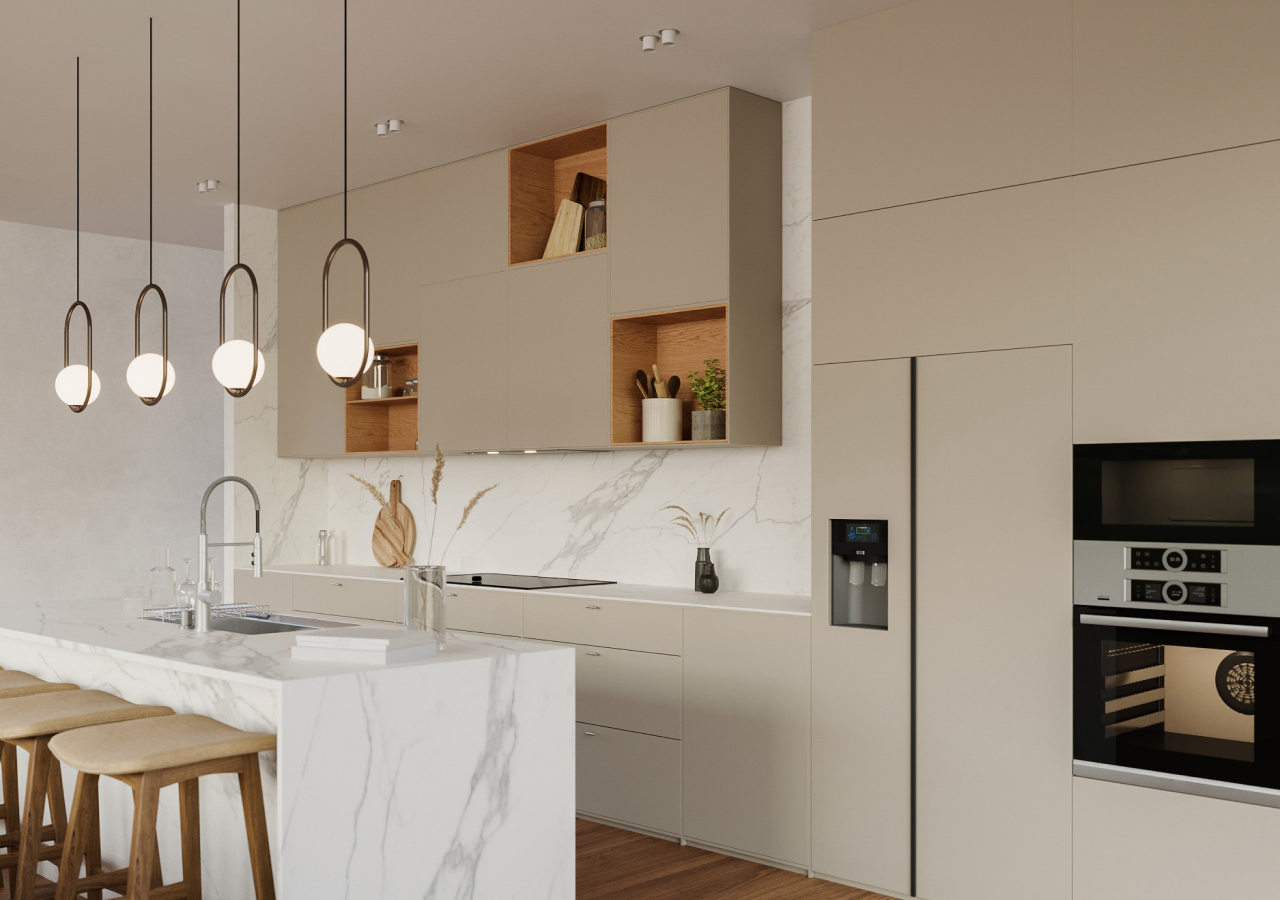
European minimalism does not need to feel sterile. Pick one character element and let it carry the personality: a vintage chair, one piece of art, or a special faucet or sink. Then use warm materials (wood + stone, or stone-look) to keep the space inviting without filling it with objects.
Small-Kitchen Mistakes That Shrink European Spaces
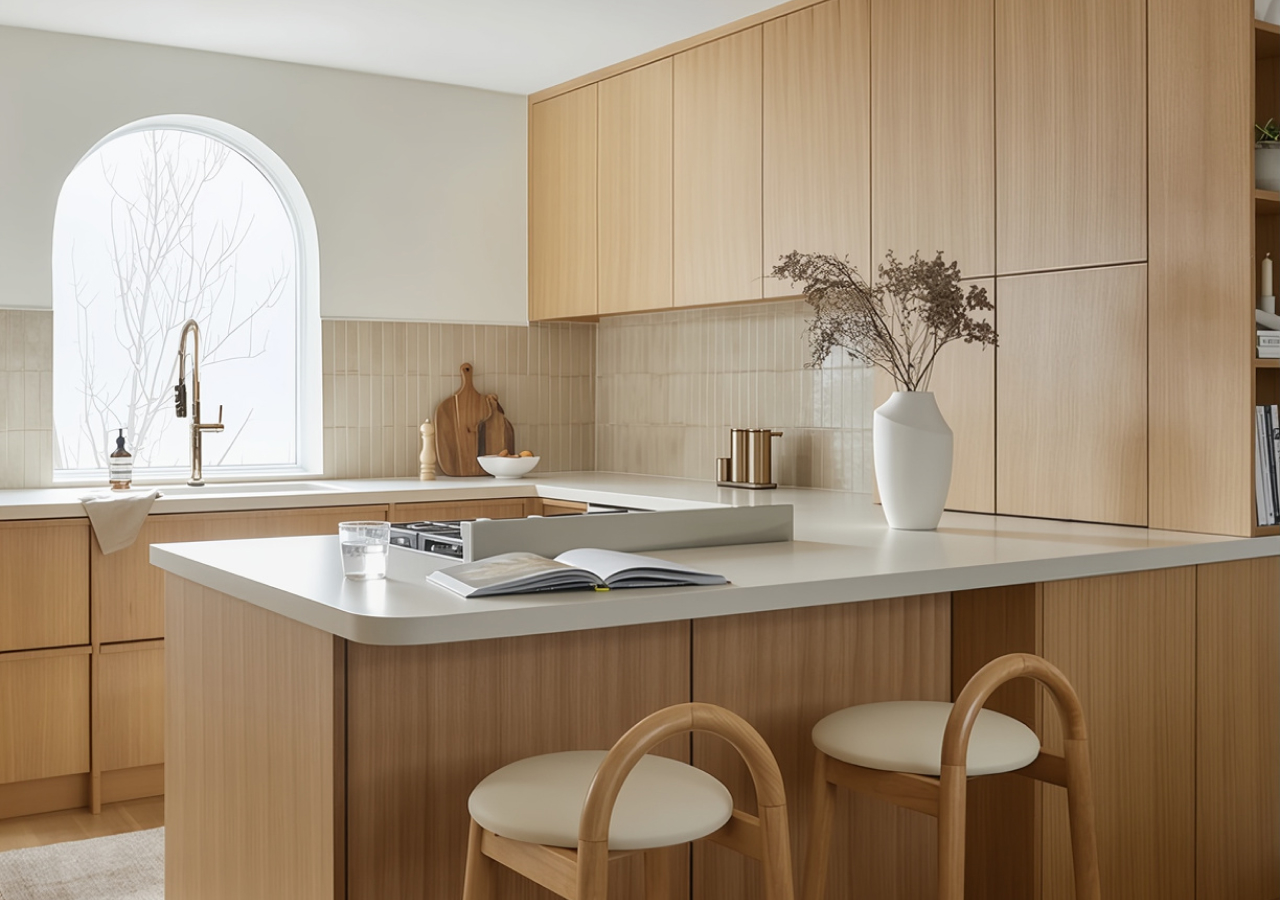
Small European kitchens shrink when the walls get crowded and the aisle gets pinched. Too many uppers can make the room feel heavy, and oversized islands create daily bottlenecks. The fix is usually internal: drawers, inner drawers, a real corner solution, and a sink/waste zone that contains the mess.
Small European kitchens shrink fast when the walls get crowded. Too many uppers can make the room feel heavy, so let one tall pantry do the storage work and keep the rest lighter with a short shelf band. Another common mistake is forcing an oversized island into a tight footprint. If it pinches the walking lane or blocks appliance doors, it is better to use a peninsula or a narrow ledge that adds a landing zone without choking circulation.
Counters turning into storage is the next space-killer. The fix is internal: drawer-first bases, inner drawers, and one hidden zone for small appliances so the counter can reset. Finally, do not waste the corner or the sink cabinet. A real corner system and under-sink drawers turn the two most awkward areas into your hardest-working storage.
30-Minute Planning Checklist for a Small European Kitchen
A small European kitchen plan gets easier when you decide layout constraints first, then assign storage by zone. In 30 minutes, you can identify your best prep run, flag clearance conflicts, and decide which cabinets must be drawers, not doors. This is the fastest way to prevent redraws and counter overflow later.
- Draw your room and mark openings. Note doors, windows, and the path through the kitchen.
- Choose your walking lane. Identify the main route and protect it from pinch points and appliance door collisions.
- Pick one continuous prep run. Even a modest run becomes the reset surface that keeps the kitchen usable.
- Place tall storage as one block. Group fridge, pantry, and utility so the room reads calmer and storage is concentrated.
- Assign the daily path zones. Map fridge → sink → prep → cooktop, then place storage for each zone in the nearest drawers.
- Fix the sink and waste zone. Plan pull-out waste near prep and under-sink organization so counters stay clear.
- Decide island vs peninsula last. Only add it if clearances still work with doors open.
Conclusion
Small European kitchens work because layout, storage, and the seamless look are planned together, so the room stays calm even when it’s busy. Start by choosing the layout that protects circulation and gives you one continuous prep run. Then make storage do the heavy lifting with drawer-first bases, inner drawers, a real corner solution, and an under-sink setup that contains the mess zone.
If you want a compact European-style plan that fits your room and your routines, explore Corner Renovation’s kitchen collections or book a short consult. A few good decisions early can make a small kitchen feel surprisingly easy to live with.

.webp)


