
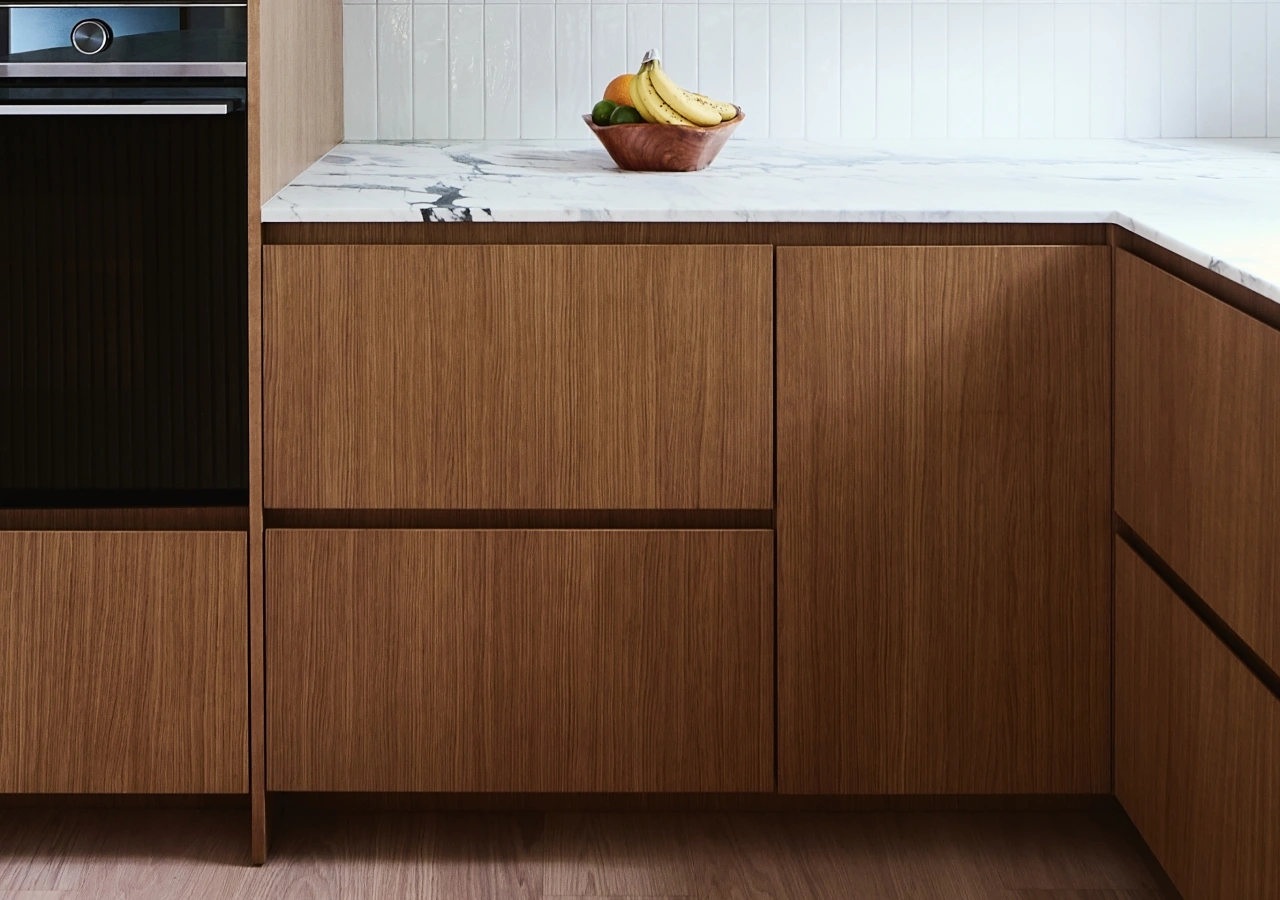
Scandinavian kitchen cabinets look simple because key decisions have been resolved before production. Door profile, wood tone, grain direction, opening system, and material combination all affect whether the kitchen feels calm, warm, and practical.
Most homeowners are not choosing between “Scandinavian” and “not Scandinavian.” They are choosing between flat or framed fronts, light or warmer wood, push-to-open or a real grip, veneer or laminate, and how much detail the kitchen can handle before it stops feeling calm.
For a broader overview of Scandinavian kitchen style, read Corner’s guide to Scandinavian kitchen cabinets. This article focuses on the cabinet decisions homeowners make before ordering.
Which Scandinavian Cabinet Door Style Fits Your Kitchen?
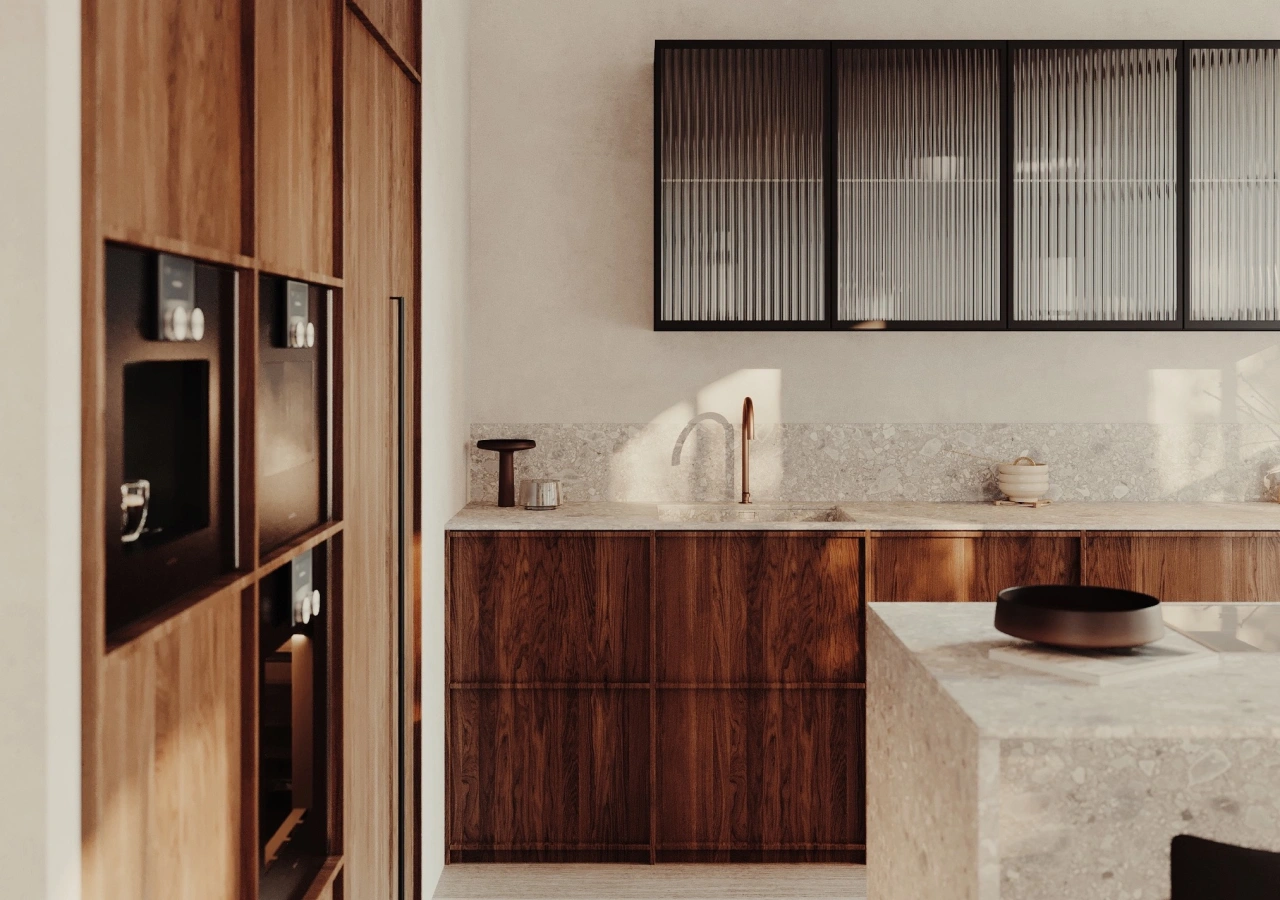
Choose the door style according to how much visual detail the room needs. Slab fronts create the quietest result, framed fronts add warmth, integrated pulls provide a grip without conventional handles, and glass works best as a limited accent.
Choose Slab Doors for the Cleanest Result
Slab fronts work well on islands, drawer banks, appliance panels, and pantry walls where grain or matte color should remain the main feature. Avoid using them only because they look minimal in a rendering. In a room with many plain surfaces, they can feel severe.
Precise alignment matters. Uneven reveals, misaligned drawers, and poor grain matching are easier to notice on uninterrupted fronts.
Choose Slim Shaker or Framed Fronts for More Warmth
Choose slim shaker or lightly framed fronts when slab cabinets feel too stark or the kitchen should relate to an older home. They work particularly well in warm or mid-tone wood.
Keep other details restrained. Framed fronts can compete with prominent handles, fluted panels, open shelves, and strongly patterned stone.
Choose Recessed or Integrated Pulls for Better Grip
Recessed and integrated-pull fronts suit homeowners who want a clean cabinet face without push-to-open hardware. They are especially useful on frequently opened drawers, pantry doors, and islands.
Test the grip before ordering. Its depth and edge affect comfort, and the detail should remain consistent across the run. Corner’s Recess collection shows how the grip can become part of the front.
Use Fluted or Glass Fronts Selectively
Smoky, tinted, or fluted glass is most effective on a bar, display cabinet, or small upper section. Limit it when you need concealed storage, since the interior, lighting, hinges, and stored items remain visible.
How to Choose the Right Wood Tone
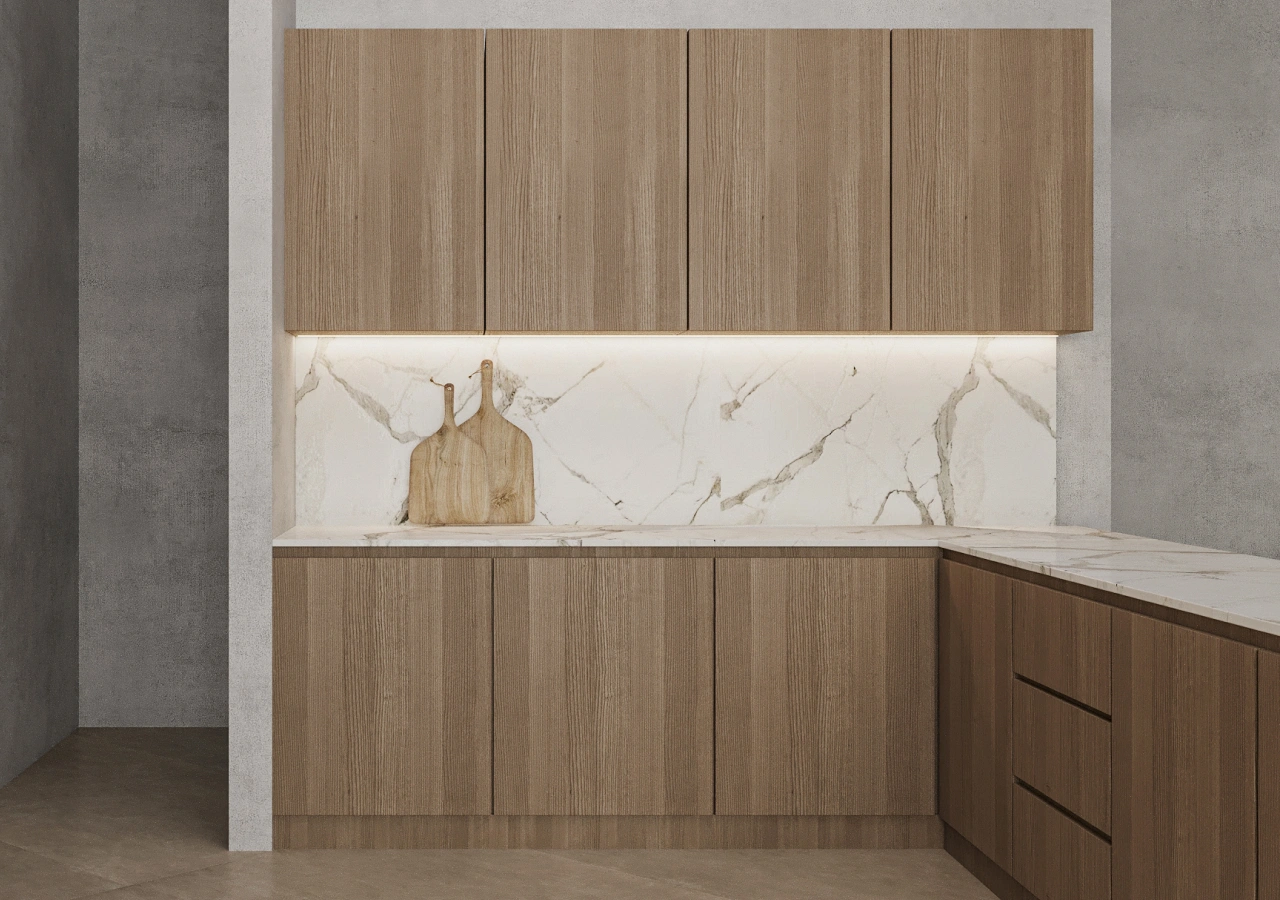
The right wood tone depends on room size, daylight, flooring, countertop color, and how much cabinetry will be wood. Review samples in the room because light and surrounding finishes can make the same veneer look cooler, warmer, or darker.
Pair light oak with warm white, off-white, beige, softly veined stone, or warmer metals to prevent a cold result. Warm oak works with creamy neutrals and muted colors, but the floor, walls, and lighting should not all repeat the same golden undertone.
Mid-tone and walnut-stained oak add depth. In smaller kitchens, use them on lower cabinets, an island, or one pantry wall and balance them with lighter surfaces or upper cabinets.
Why Grain Direction and Matching Matter
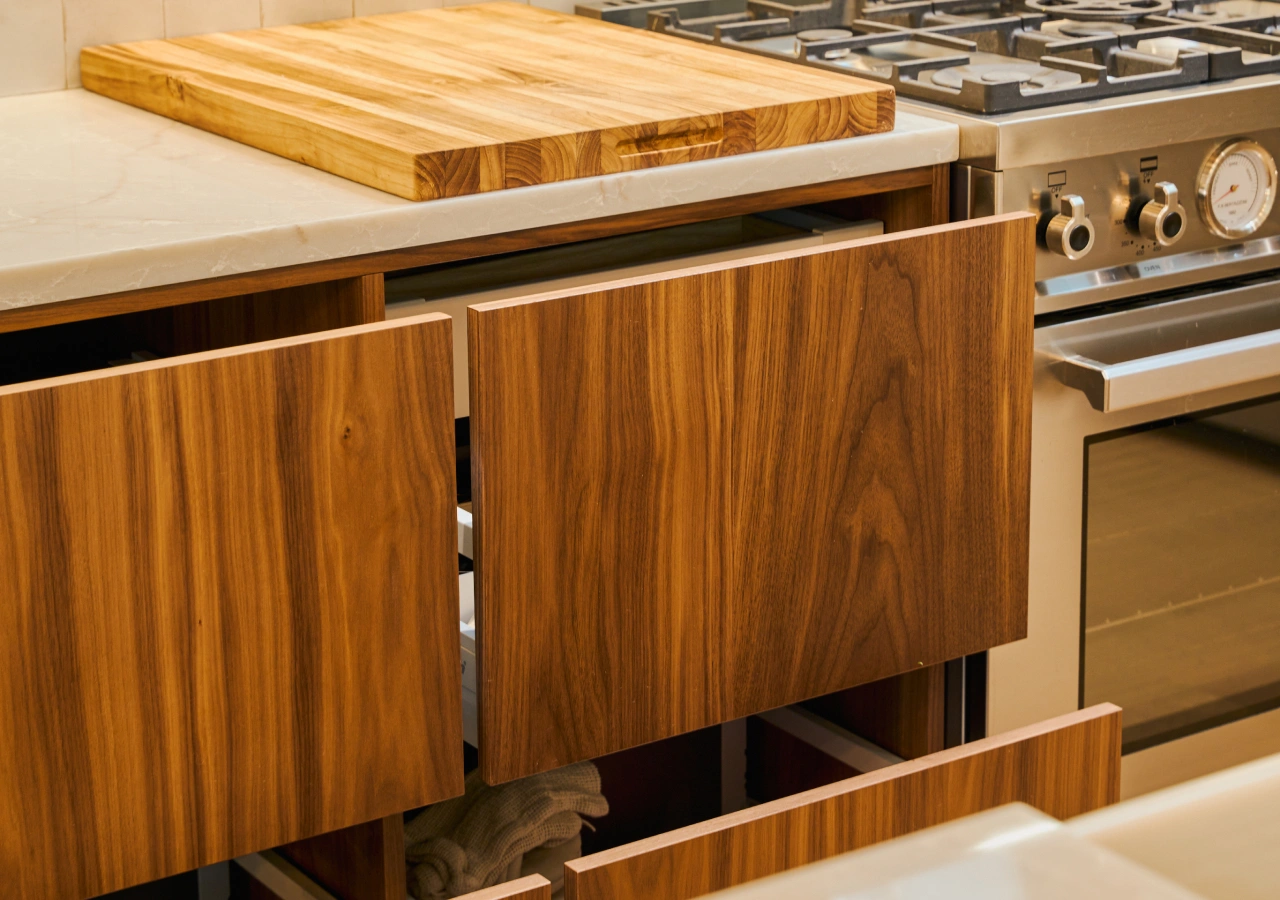
Grain direction changes how cabinet proportions are perceived. Horizontal grain emphasizes width, while vertical grain reinforces height. Grain matching determines whether neighboring fronts read as one composition or separate pieces.
Rift-cut oak has a straighter, more linear pattern than flat-cut oak and often suits minimalist kitchens. Flat-cut oak has more curved, cathedral-like movement and creates a more expressive surface.
Horizontal grain can make an island or drawer run appear longer, but it needs sequence matching to stay continuous. Vertical grain is often calmer on pantry doors and tall appliance panels. Before production, confirm the grain direction, matching requirements, transitions around appliances and corners, and acceptable natural color variation.
Push-to-Open, Integrated Pulls, or Wood Handles?
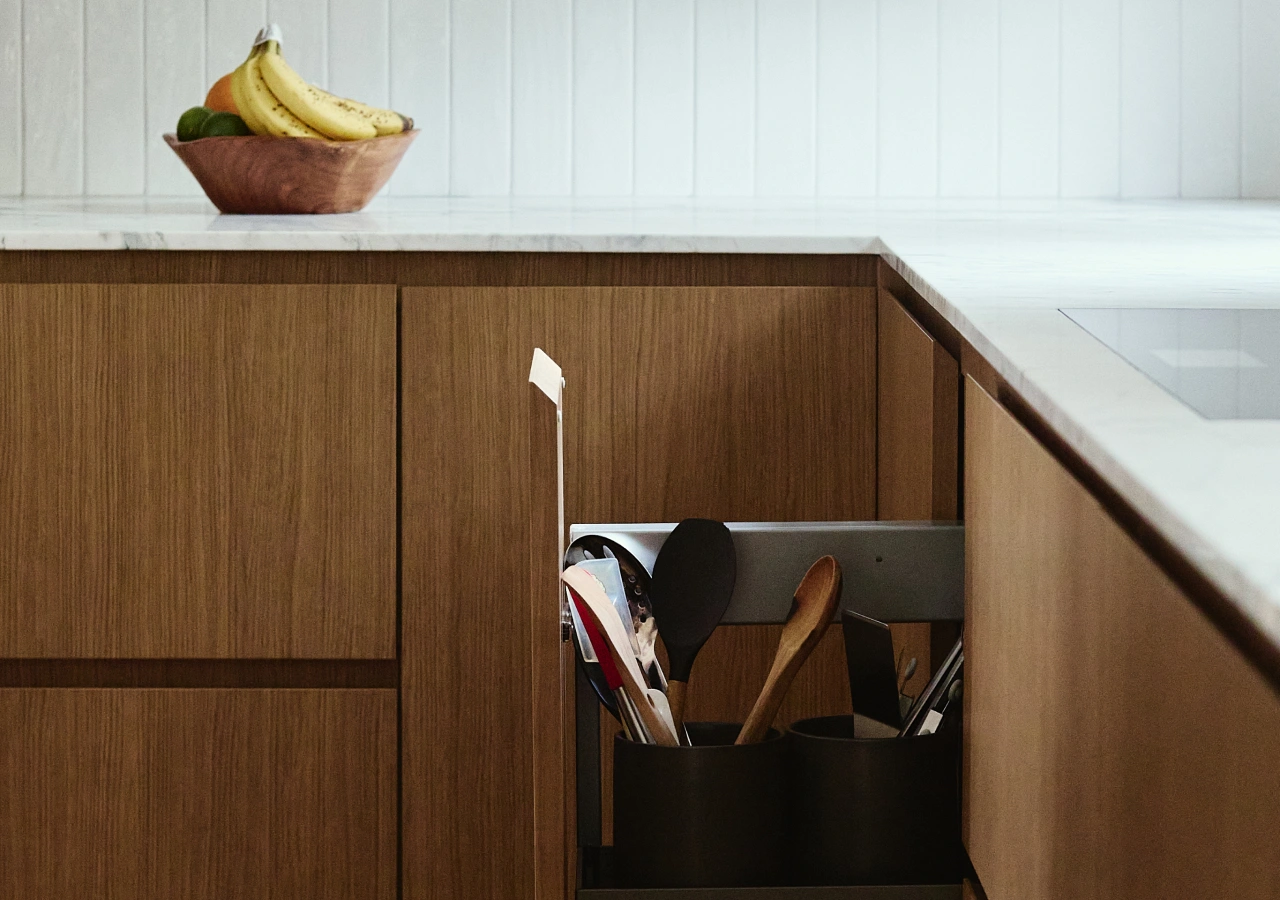
The opening system should reflect frequency of use, grip comfort, cleaning habits, and visual preference. A light upper cabinet and a heavy recycling drawer do not necessarily need the same hardware.
Push-to-open creates the most uninterrupted surface, but each opening requires touching the front. Fingerprints may be more visible, and some homeowners find the action less direct than a physical grip.
Integrated pulls, J-pulls, and Gola channels preserve a minimal appearance while providing a defined opening point. Test them on doors and loaded drawers before ordering. A narrow oak or walnut handle is another practical option that can soften matte fronts and repeat other wood details.
How to Compare Veneer, FENIX, Laminate, and Cabinet Cores
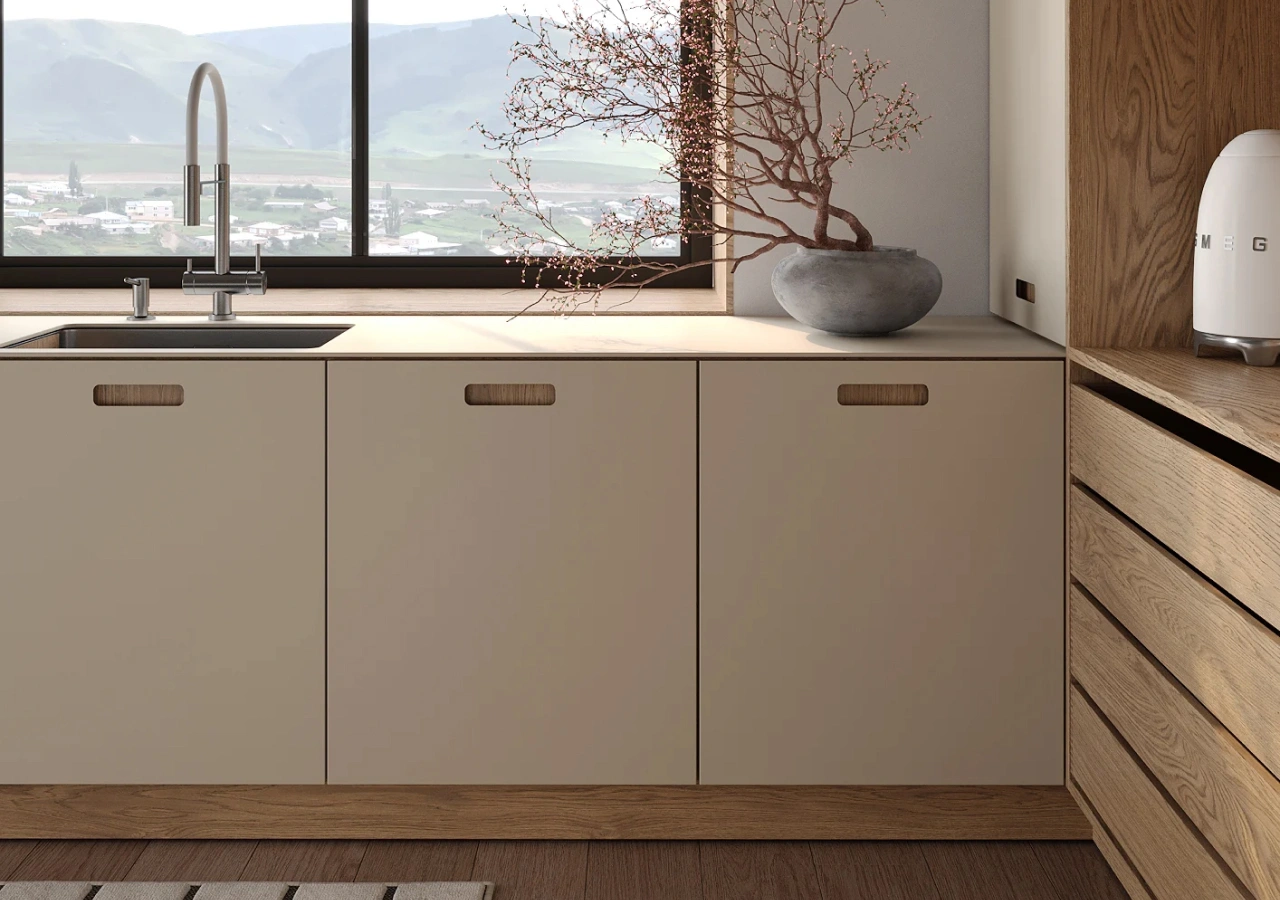
The visible surface and structural core are separate parts of a cabinet front. Homeowners should compare both rather than treating veneer, MDF, plywood, and laminate as interchangeable terms.
Wood veneer is real wood. A thin layer of oak, walnut, or another species is applied to a stable panel, allowing natural grain to continue across doors, panels, islands, and appliance fronts without making every component from solid wood.
Matte solid-color surfaces such as FENIX, as well as quality laminates, can be practical choices for Scandinavian kitchens. They provide consistent color and pair easily with veneer. FENIX has a soft-touch, low-reflective appearance, while standard laminate can offer a more budget-conscious alternative.
Laminate does not automatically look cheap. Color, texture, edge quality, and alignment have a greater effect on the result. MDF, plywood, and other engineered panels may form the structural core, while solid wood can be reserved for handles, frames, or shelves. Corner’s kitchen cabinet materials guide explains these layers in more detail.
Modern Details That Make Scandinavian Cabinets Feel Custom
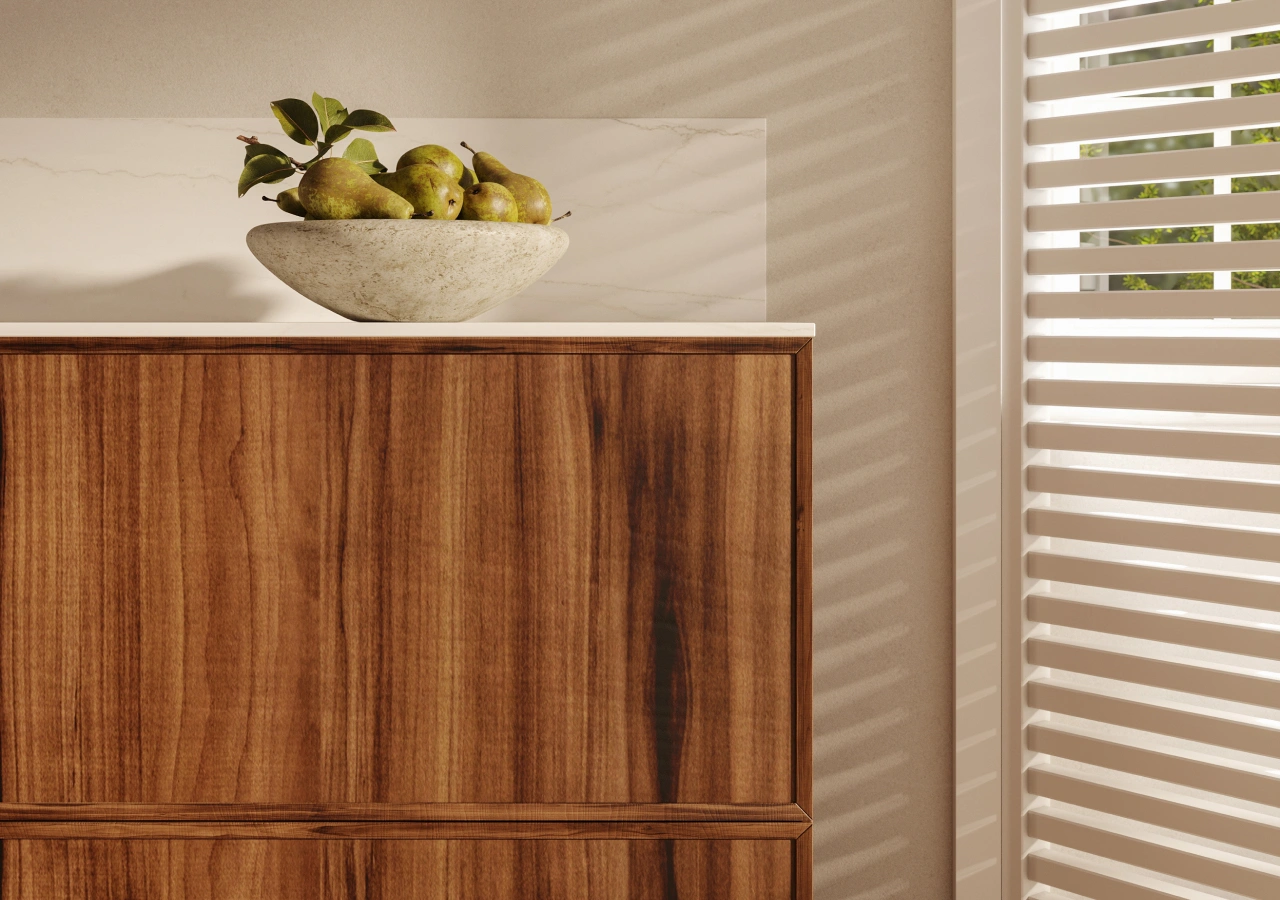
Custom Scandinavian cabinetry often feels refined because practical features are integrated into one composition. Panel-ready appliances, an appliance garage, a clean pantry wall, or a limited glass section can reduce visual interruption.
The quieter details matter just as much: equal reveals, aligned drawers, coordinated end panels, continuous grain, and correctly fitted appliance fronts. Use each feature only when it improves storage, usability, or visual balance.
Conclusion
Choosing Scandinavian kitchen cabinets is a practical design process, not a choice between one correct style and everything else. Slab fronts provide the cleanest result, while slim shaker and framed fronts add warmth. Integrated grips, J-pulls, Gola channels, and wood handles offer usable alternatives to push-to-open hardware.
Wood tone, grain direction, and material construction deserve the same attention as the door profile. Light oak can keep a room airy, while warmer and darker finishes add depth when used selectively. Veneer, matte solid-color surfaces, laminate, and solid wood details can all work when their roles are clear.
Explore Corner Renovation’s kitchen collections and completed kitchen projects to compare these decisions in complete rooms rather than isolated samples.


