

Scandinavian kitchens are popular for one simple reason: they make a space feel calm without feeling cold. The look is light, practical, and quietly detailed, with cabinets that stay visually simple while doing a lot of work behind the scenes.
In this guide, we’ll break down the cabinet styles that fit a Scandinavian kitchen, the materials that define the palette (including Scandinavian wood kitchen and Scandinavian oak kitchen finishes), and the storage features that keep countertops clear in real life. If you’re planning a Scandinavian kitchen storage cabinet setup, you’ll also find a clear way to think about pantry towers, integrated appliances, and daily-use zones so the kitchen stays organized long after installation.
Scandinavian Kitchen Design Features

Scandinavian kitchen design is cozy, practical, and visually quiet. It reduces visual noise so the room feels calm, but it stays warm through natural textures like oak, walnut, or light-toned veneers.
A Scandinavian kitchen also blends well with other styles because the “rules” are structural, not decorative: simple cabinet geometry, functional storage, and a limited palette. You can add personality through lighting, hardware, and a few intentional materials without breaking the overall look.
Cabinets matter early because they set the baseline rhythm of the whole kitchen: door style, proportions, and color determine whether the space reads as airy and restrained or busy and fragmented.
Types of Scandinavian Kitchen Cabinets
Each cabinet type below can work in a Scandinavian kitchen. The best choice depends on how modern you want the kitchen to feel and how much texture you want on the fronts.
Frameless Slab Cabinets
Frameless kitchen cabinets use flat, unadorned fronts to create a continuous plane. This is the most modern Scandinavian direction because it makes materials and proportions do the work instead of detailing.
Most slab fronts look best when paired with minimal hardware, handleless channels, or push-to-open systems. If you want a calm, gallery-like kitchen, slab is usually the cleanest path.
Lightly Framed Cabinets (Japandi-Leaning)

Lightly framed fronts can still read Scandinavian when the frame is subtle and the palette stays quiet. In many modern systems, the “frame” is not traditional face-frame construction, but a thin visible border that adds depth without becoming decorative.
This option works well if you want Scandinavian simplicity with a touch of Japanese restraint. It pairs naturally with wood veneer and muted tones.
Slim Shaker Cabinets

Slim shaker cabinets keep the familiar shaker outline but reduce the profile so it feels contemporary. This is a strong fit for homeowners who want Scandinavian calm without going fully minimalist.
Slim shaker fronts often look best with simple pulls and consistent spacing. The goal is still quiet geometry, not ornament.
Glass-Front Cabinets

Glass-front cabinets add visual lightness and depth. They work best as a small percentage of the kitchen, such as one upper run or a single display section, so the kitchen stays calm rather than busy.
Use clear, frosted, ribbed, or tinted glass depending on how “tidy” you want the shelves to look day to day.
Fluted Front Cabinets

Fluted fronts introduce texture without adding extra colors or patterns. The vertical rhythm can make cabinetry feel more furniture-like, which can be a beautiful Scandinavian move when used selectively.
Fluting is most effective as an accent, such as an island, a tall pantry wall, or a single bank of doors.
Scandinavian Kitchen Cabinet Materials and Finishes
Scandinavian style leans on materials that look honest and age well. This is where you should place the clearest material keywords and descriptions, because “Scandi” searches often include wood terms.
If you are building a Scandinavian wood kitchen, focus on light-toned veneers, matte finishes, and simple grain. If you want a more specific search match, a Scandinavian oak kitchen usually means light oak (or oak-look) fronts with a natural, low-sheen finish.
Wood Veneer Fronts

Wood veneer fronts support the Scandinavian balance of warmth and restraint. They bring real grain and natural variation, which keeps minimalist kitchens from feeling sterile.
Common Scandinavian-friendly veneers include light oak, stained oak for added depth, and American walnut for richer contrast. The most important detail is finish choice: lower-sheen, natural-looking coatings keep the wood calm and tactile.
Matte Painted or Matte Laminate Fronts
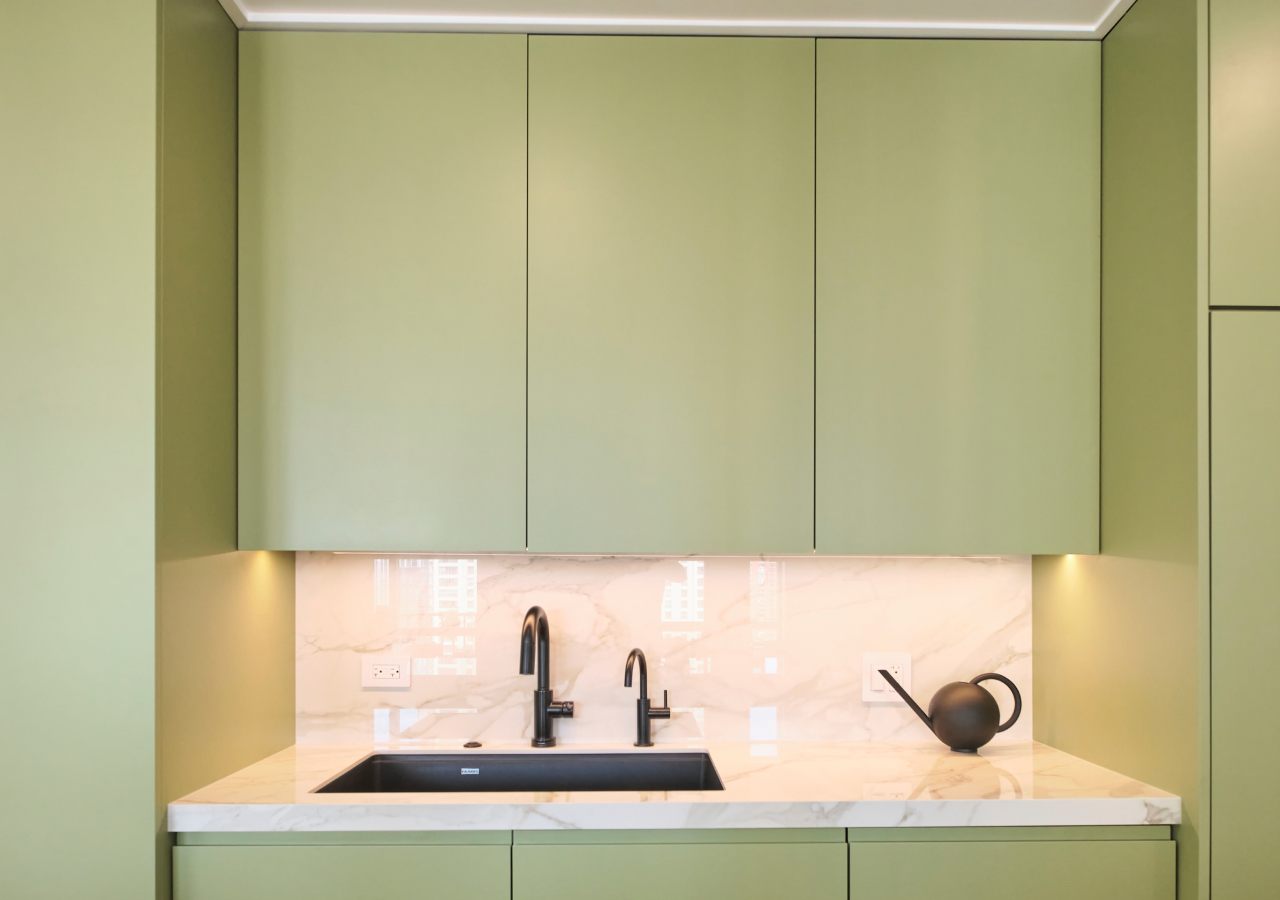
Matte light neutrals (white, warm gray, sand, greige) are a classic Scandinavian baseline. They work well when you want wood only in smaller moments, such as open shelving or a single accent run.
Matte surfaces also support the “quiet” look by avoiding glare and reflections.
Hardware and Opening Systems
Scandinavian kitchens look simple on the outside because the function is built into the system. Hardware choice should reduce visual noise while staying comfortable for daily use.
Handleless Fronts
.webp)
Handleless cabinet fronts support Scandinavian minimalism by keeping lines uninterrupted. They work especially well with slab fronts and integrated appliances, where the goal is a continuous built-in wall.
Push-to-Open vs Finger Pull vs Wooden Handles
.webp)
If you want a clean look, you’re usually choosing between true handleless (channel), push-to-open, finger pulls, or small solid wood pulls.
Storage and Layout Features That Make Scandinavian Cabinets Feel “Right”
Scandinavian style is not only about front design. It is also about the inside: storage that prevents countertop clutter and keeps daily tools close.
If you are searching for a Scandinavian kitchen storage cabinet, plan a tall pantry unit with adjustable shelves, inner drawers, and dedicated zones for food, appliances, and recycling.
(Keyword variant: a kitchen storage cabinet Scandinavian homeowners choose is usually a tall, organized pantry wall rather than one oversized base cabinet.)
Open Shelving

Open shelving adds breathing room and breaks up solid cabinet runs. It also creates a natural place for a few intentional objects, such as a ceramic set, a cutting board stack, or a plant.
Use shelving as an accent, not as the main storage strategy, so the kitchen stays easy to maintain.
Integrated Appliances
.jpeg)
Integrated appliances reduce visual fragmentation and support the Scandinavian preference for calm, built-in surfaces. A tall run that holds fridge, oven, pantry storage, and utility zones often makes the kitchen feel more ordered, even when it is compact.
Quality Benchmarks Homeowners Can Verify
Conclusion
Modern Scandinavian kitchen cabinets can be ultra-minimal (slab and handleless) or slightly softer (slim shaker, lightly framed, selective fluting). The common thread is not decoration. It is restraint, proportion, and storage that keeps the kitchen calm in real life.
If you want help choosing a cabinet type, defining a Scandinavian wood kitchen palette, or planning storage zones that actually stay tidy, Corner can help with cabinet design, material selection, and installation support.


