
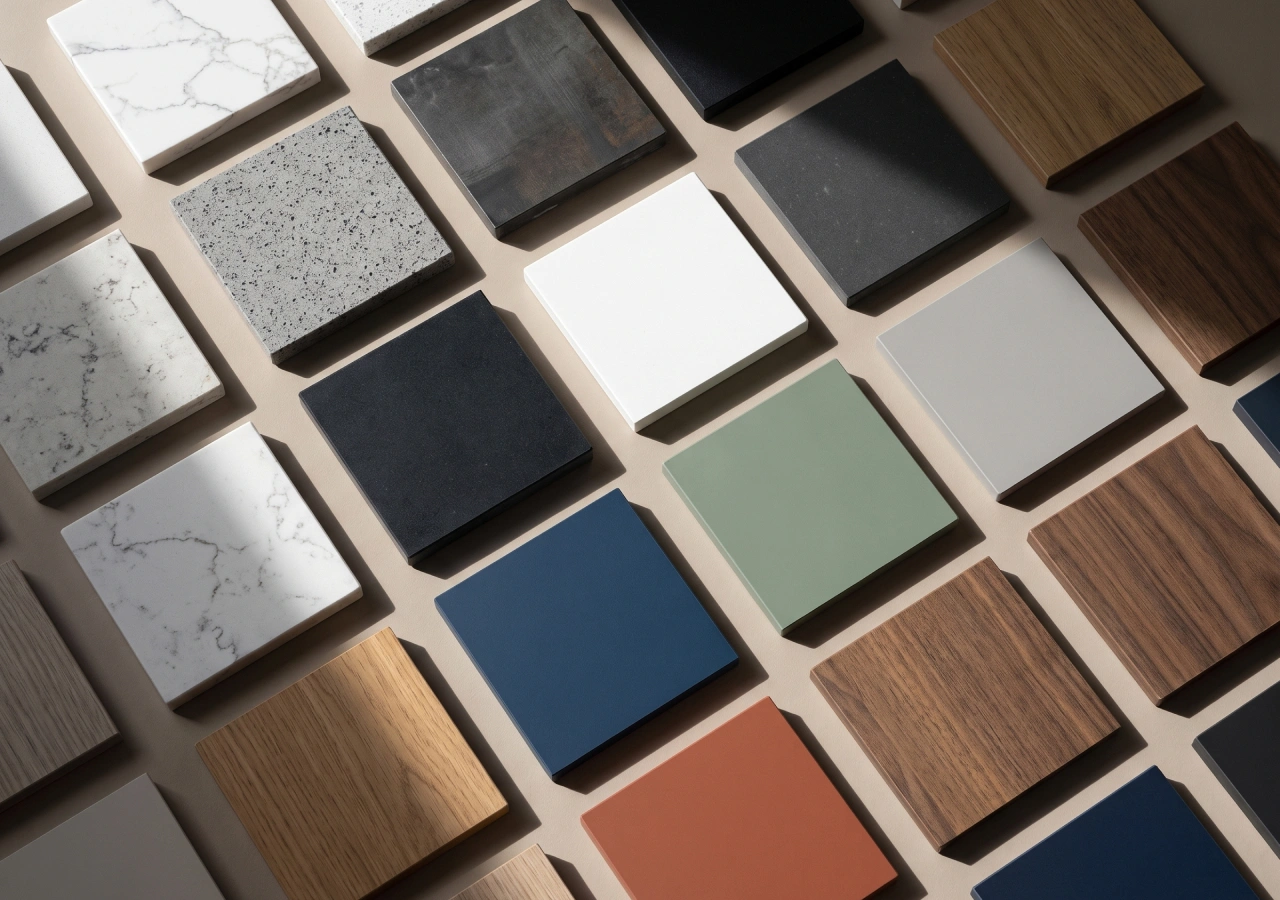
How this guide was prepared: This comparison is based on questions that arise during Corner kitchen planning, cabinet-layout coordination, and countertop discussions. It focuses on applications, fabrication, timing, support, and how countertops connect with cabinetry.
Kitchen countertops affect more than the look of a room. They influence fabrication, island support, installation timing, and how the kitchen performs in daily use.
Quartz, Silestone, Dekton, FENIX, and ARPA are not all direct equivalents. The right choice depends on where the material will be used, how it must be fabricated, and what the project allows in terms of budget, timing, and local availability.
Quick Answer: These Kitchen Countertop Materials Are Not the Same Category

Quartz, Silestone, and Dekton are commonly considered for fabricated countertops, islands, backsplashes, and waterfall sides. FENIX and ARPA are broader material directions that may be used for fronts, panels, bars, island cladding, and selected worktops.
The material should be chosen by application first, not by appearance or brand name alone.
Kitchen Countertop Comparison
Quartz and Silestone: Practical Mineral Countertop Directions
Quartz and Silestone are commonly considered for kitchen countertops, islands, backsplashes, and waterfall sides. They suit homeowners who want a controlled mineral or stone-like appearance in neutral, veined, or solid-color options. Creamy and low-contrast patterns often pair naturally with oak, walnut, matte cabinetry, and Japandi or Scandinavian palettes.
Quartz is a common choice for long countertops, waterfall islands, and peninsulas. For these details, the fabricator should confirm seams, pattern direction, edges, outlets, and how the countertop meets the cabinet panels. A large sample or full slab view is more useful than a small chip because it shows the true scale of the pattern and undertone.
Silestone is a branded mineral low-silica surface from Cosentino. Many homeowners compare it with quartz because it is used in similar countertop applications, but its current positioning, composition, colors, and care guidance should be confirmed through Cosentino or a local supplier. Corner’s guide to choosing a kitchen countertop provides more context on appearance, maintenance, and daily use.
Dekton: A Clean, Architectural Countertop Direction

Dekton is an ultracompact porcelain surface commonly considered for countertops and full-height backsplashes. It works well when the countertop should feel precise and architectural, particularly in minimalist kitchens, ADUs, handleless layouts, and designs where the countertop and backsplash should read as one continuous element.
Creamy Dekton can soften a warm concrete backsplash, while darker or more uniform finishes can support a sharper modern palette. The material is known for strong resistance to temperature, stains, water, and surface wear, but it should not be treated as impossible to damage.
Exposed edges, corners, seams, and sink or cooktop cutouts still require careful handling and experienced fabrication. Confirm the thickness, edge profile, cutout details, and seam locations with a fabricator who regularly works with the selected Dekton product.
FENIX and ARPA: Matte and Stone-Look Alternatives

FENIX and ARPA are not direct replacements for quartz, Silestone, or Dekton in every countertop application. Depending on the exact product, they may work better for cabinet fronts, panels, bars, appliance garages, island cladding, or selected work surfaces.
FENIX is known for its ultra-matte, low-reflective appearance, soft-touch feel, and anti-fingerprint properties. The brand also describes thermal healing of superficial micro-scratches for suitable products. In Scandinavian and minimalist kitchens, it can create continuity across slab fronts, tall cabinet walls, panels, and nearby work areas. Corner’s FENIX NTM kitchen guide explains this material direction in more detail.
.webp)
ARPA is positioned as a high-pressure laminate surface for interior and product design. Depending on the product, it may be used for fronts, panels, bars, furniture surfaces, or selected worktops. Both brands should be evaluated through the exact product specification, including thickness, substrate, edge construction, and suitability near heat, sinks, cooktops, and moisture.
Waterfall Countertops, Curves, and Special Details

Waterfall sides, curved islands, thick overhangs, and integrated backsplashes require early coordination. These details affect material yield, seams, support, fabrication time, and installation cost.
Quartz and Silestone are common waterfall-island choices, while Dekton can create a particularly crisp architectural effect. FENIX or ARPA may be used on the island face or curved cladding while a fabricated slab remains on top. This selective approach allows each material to perform the role it suits best.
Curves may require bending, postforming, segmented fabrication, or a custom substrate. Heavy slabs and wide overhangs may also need concealed support brackets. Confirm these details before cabinet production so the necessary blocking, panels, and clearances can be included in the drawings.
When Kitchen Countertop Decisions Are Finalized

Countertops are normally measured after the cabinets are installed, but many related decisions must be made earlier. Island dimensions, waterfall intent, overhangs, appliance positions, cutouts, and support requirements can all affect the cabinet drawings.
This sequence is one reason countertops are often separate from the cabinet quote. Corner’s guide to countertop coordination with a cabinet company explains how the cabinet and fabrication scopes connect.
How Corner Helps With Countertop Direction
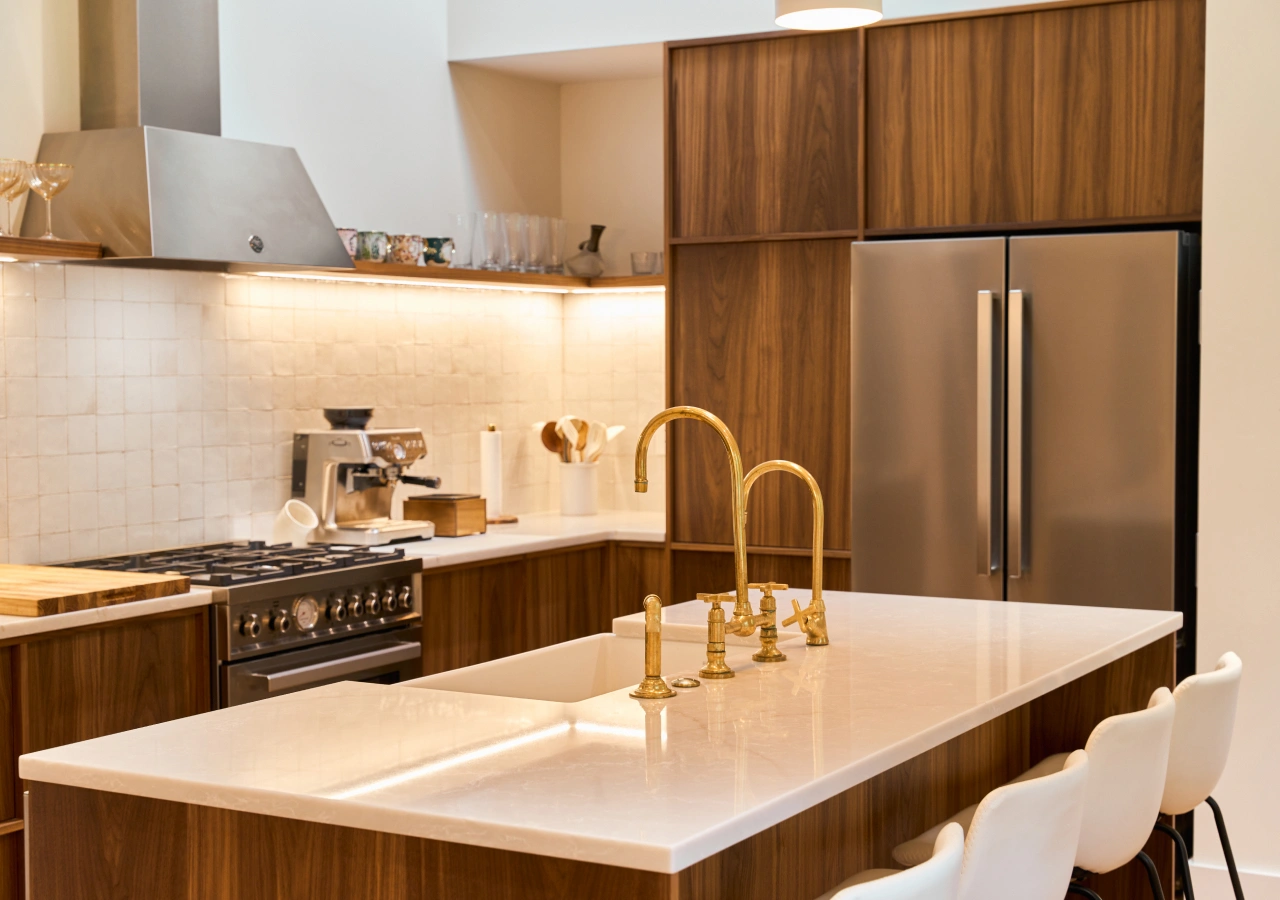
Corner can align the countertop direction with the cabinet layout before a local fabricator takes final measurements. This includes island dimensions, waterfall intent, sink and cooktop placement, overhangs, appliance positions, finished panels, and structural support.
Not included does not mean not coordinated.
Even when the countertop is purchased separately, the cabinet drawings should give the fabricator a clear starting point. Early coordination reduces last-minute changes and helps the countertop feel integrated into the kitchen.
Conclusion
There is no single best countertop for every kitchen. Quartz is a practical stone-look choice, while Silestone offers a branded mineral low-silica direction from Cosentino. Dekton suits clean architectural applications, and FENIX or ARPA can provide matte and decorative alternatives for selected worktops, panels, and cabinetry-related details.
The strongest result often comes from using each material where it performs best. Before making the final decision, consider daily use, the exact product specification, local fabrication, structural support, timing, and total installed cost.
Explore Corner Renovation’s kitchen collections and completed projects to see how different cabinet and countertop materials work together in real layouts.


