
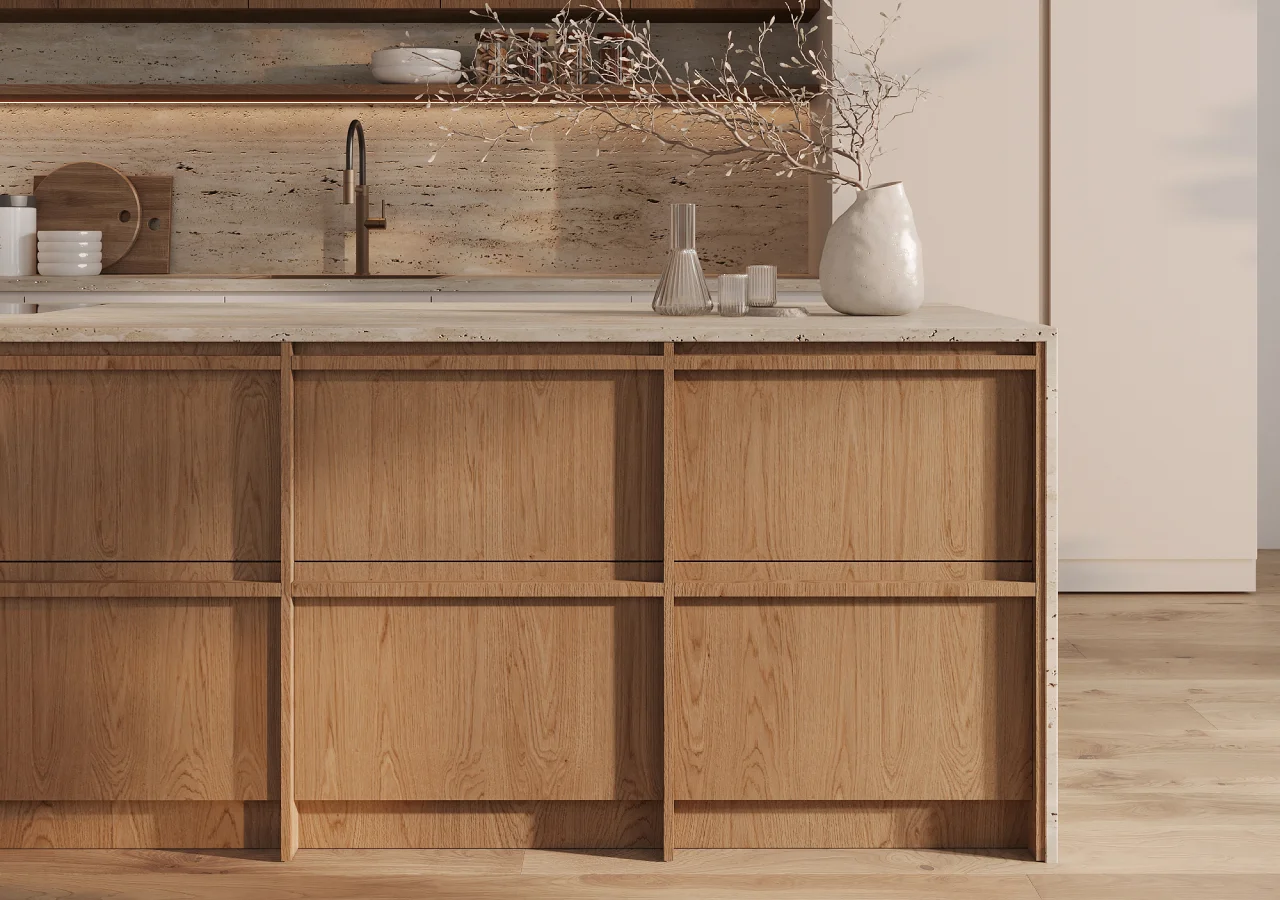
Japanese-inspired kitchen cabinets can have flat wood fronts, subtle framing, or decorative strips that outline individual doors and drawers. These details may look simple, but they involve different construction methods, materials, and opening systems.
When choosing cabinets, look beyond the finished image. The front design, wood surface, handle position, and storage behind each door should all work together. Here is what to check before approving your cabinet specifications.
1. Choose the Cabinet Front: Slab or Framed Appearance
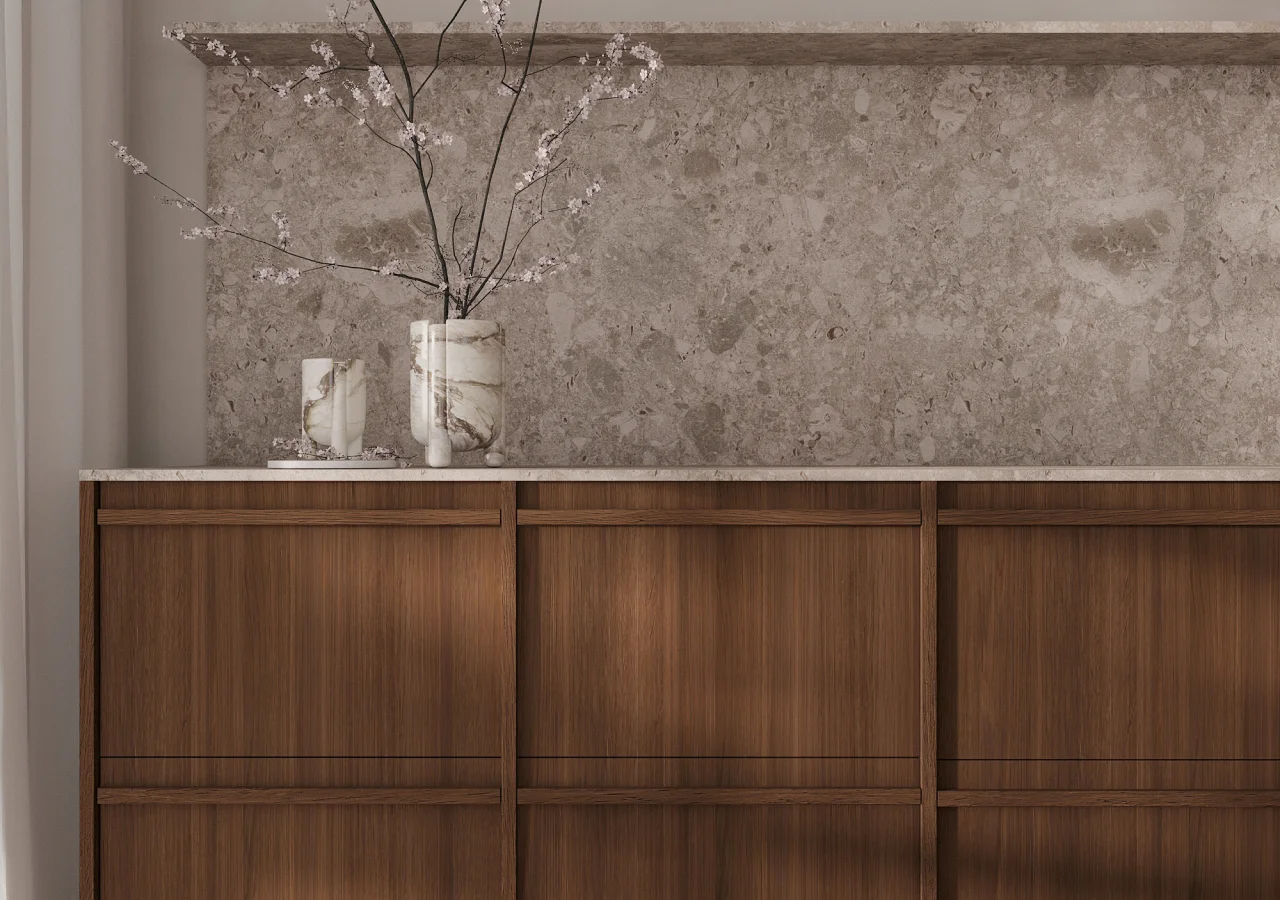
Slab doors are a straightforward option for Japanese-inspired cabinetry. Their flat surfaces allow the wood grain to become the main visual detail. They work particularly well across long lower cabinet runs, tall units, and uninterrupted wall cabinetry.
Framed designs introduce more definition, but a visible border does not necessarily mean the door itself uses traditional frame-and-panel construction. Separate decorative strips, surrounding panels, or the position of the door within the cabinet assembly can create a similar effect.
In one Corner consultation, a homeowner asked whether the border around a drawer belonged to the front or the surrounding cabinet. In that proposed design, separate veneered panels created the framed appearance while the drawer front remained independent.
These details can overlap: a slab front may sit within separate decorative framing.
Compare the Front Details
Check the Full Cabinet Elevation
Ask for elevations of each cabinet run, plus a plan view wherever cabinetry turns a corner. Follow the decorative border across adjacent doors and drawers. Do the border widths and gaps follow the intended design, and where does the framing stop or change direction?
At corners, check how the framing meets the next run and whether any filler interrupts the pattern. At exposed ends, confirm how the border terminates against the end panel.
Around an integrated refrigerator or dishwasher, review how the appliance panel relates to neighboring fronts, including any clearance needed for movement. Flag awkward joints or narrow leftover strips before approving the drawings.
2. Select the Wood Tone and Material Together
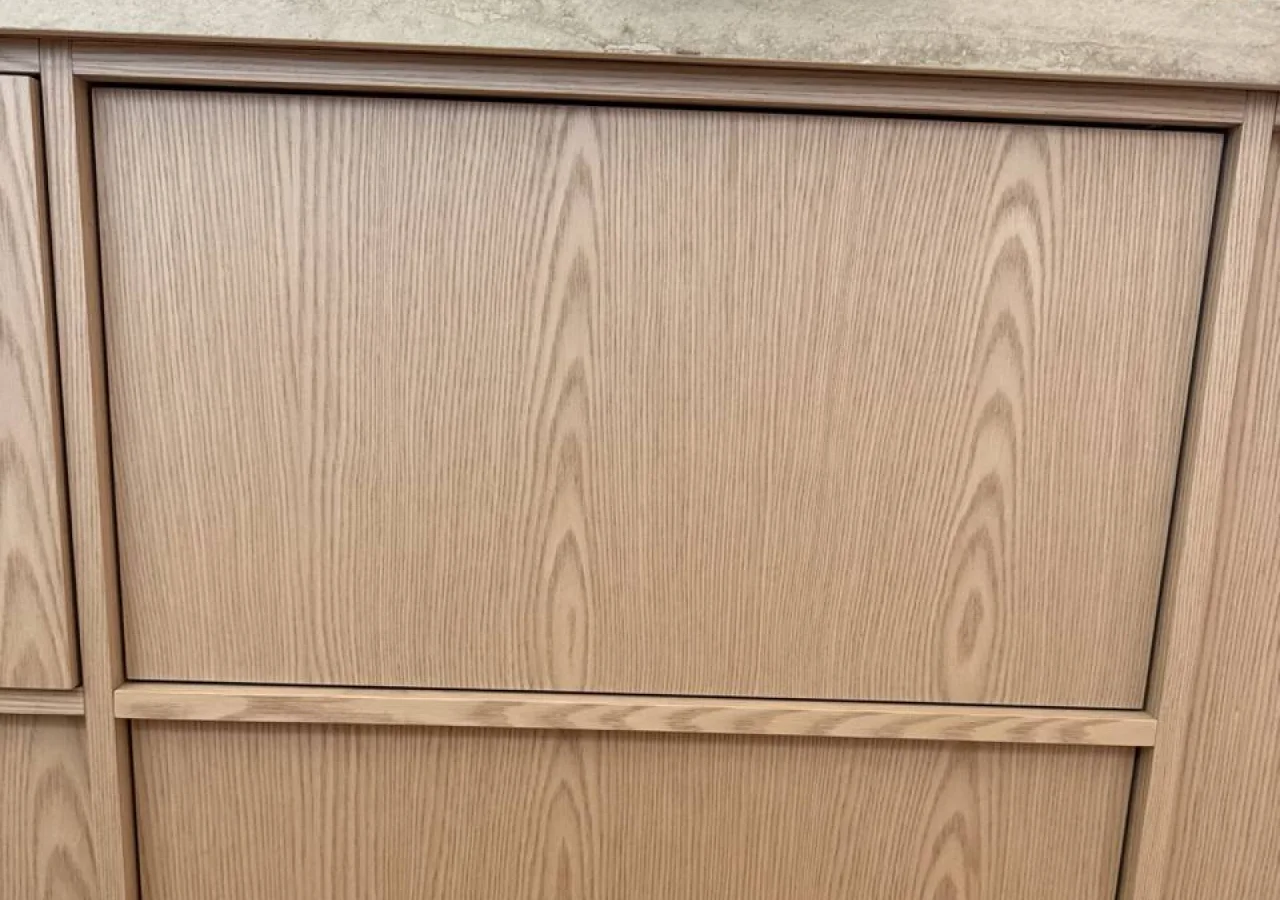
Japanese-inspired kitchen cabinets are not limited to light oak. Honey oak, walnut, darker stained wood, and painted or laminated surfaces can all work, depending on the cabinet proportions and surrounding finishes.
The visible wood effect and the construction underneath it are separate decisions. Wood veneer provides a real wood surface over a core material, while wood-look laminate uses a manufactured decorative layer. Solid wood may be specified for complete components or smaller details such as handles and trim.
In one Corner consultation, a homeowner liked walnut’s grain but wanted a lighter tone. The team discussed comparing physical samples under the home’s lighting and alongside the flooring.
Reviewing samples together is especially useful for framed designs, where fronts and decorative strips meet at visible edges. Look at how the grain direction, color, and sheen work across these pieces. A matte finish reduces reflections, but sheen alone does not indicate durability; check the specified coating and care instructions.
For a more detailed material and cost comparison, see Japandi Cabinet Fronts on a Budget.
3. Plan Opening Details and Storage Behind the Fronts
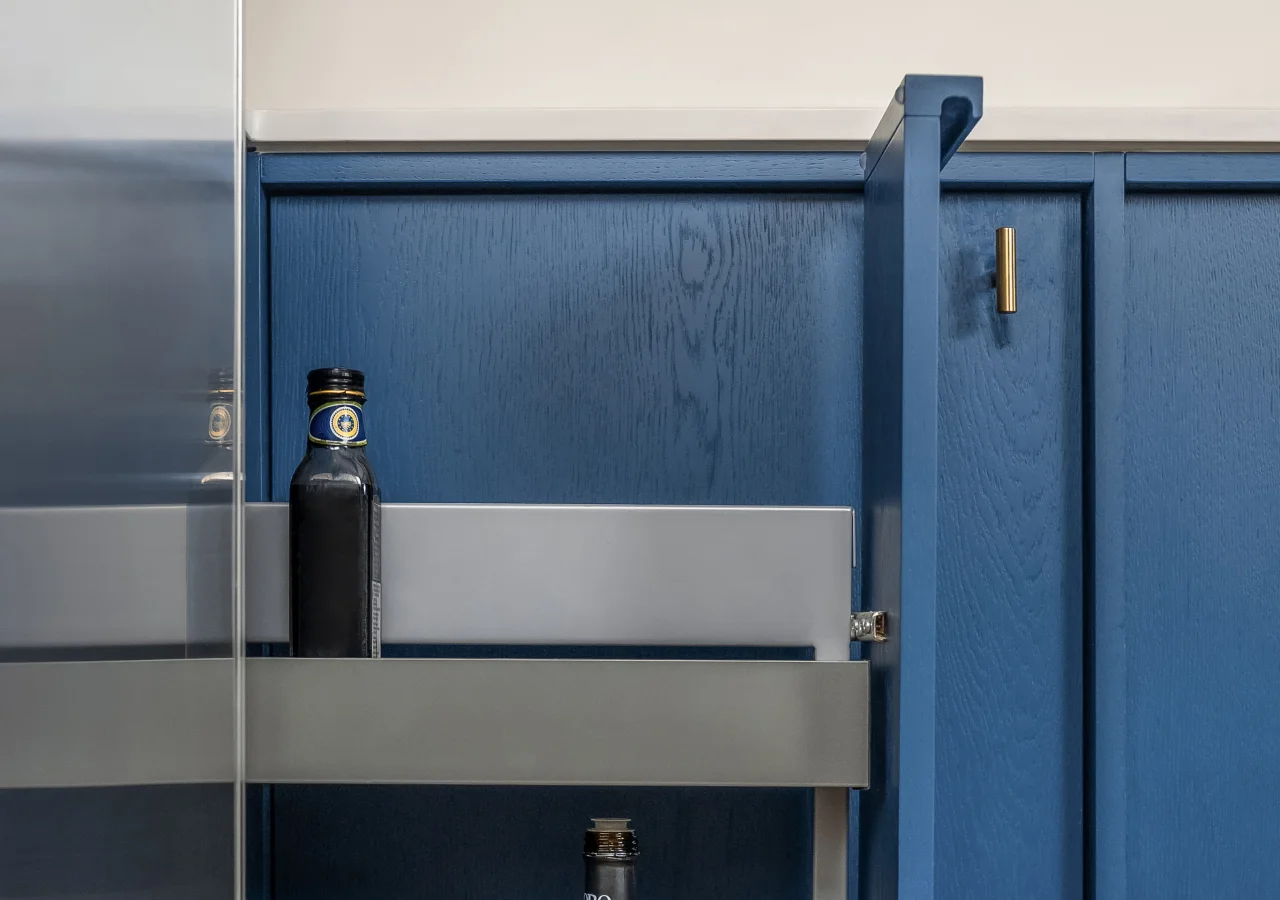
Decorative framing and cabinet opening mechanisms should be selected together. A wooden strip that visually outlines a cabinet may not provide a usable grip, while a recessed pull or separate handle needs sufficient clearance for fingers.
One proposed oak kitchen paired wooden handles on lower and tall cabinets with push-to-open upper doors. The design also included internal organizers and concealed storage.
Internal drawers can sit behind a cabinet door or a larger outer drawer front, keeping smaller storage compartments out of view. They can organize cutlery, utensils, food containers, and other small items. Check that the outer door or drawer opens far enough for access and that hinges, pull-outs, and organizers do not interfere with one another.
A dishwasher or refrigerator panel may need a different handle or opening arrangement from adjacent storage cabinets. Confirm the requirements of the selected appliance before matching its front to the surrounding cabinetry.
For a closer look at the available handle styles, read Corner's Japandi Kitchen Cabinet Hardware Guide.
Conclusion
Japanese-inspired cabinets do not need a single prescribed front style. Some kitchens use uninterrupted slab doors, while others add subtle borders or framing to define individual sections. What matters is how those details relate to one another across the kitchen, rather than how one sample door looks on its own.
A restrained exterior can still accommodate different opening systems and organized storage. Decorative strips can remain purely decorative, while handles and internal fittings are selected for the people who use the kitchen. When these choices are developed together, visual simplicity does not have to come at the expense of everyday function.
For design inspiration, explore Corner's Japanese-inspired kitchens. If you're considering new cabinetry, you can also request a personalized kitchen estimate.


