
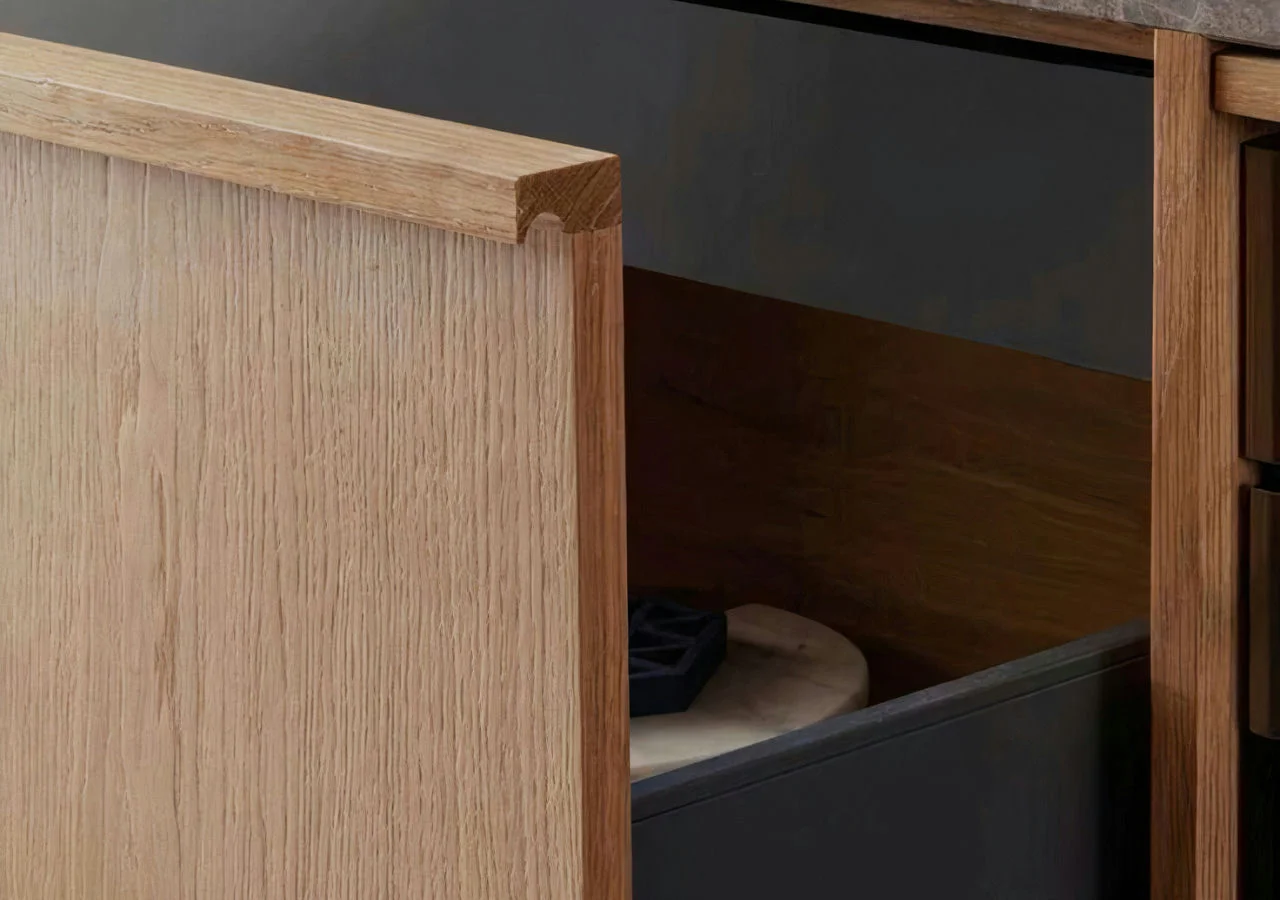
Japandi kitchens often rely on simple cabinet fronts, visible wood grain, and a restrained material palette. That makes cabinet hardware more noticeable than it might be in a busier kitchen. A handle can blend into the wood, create a thin metal accent, or become a small design detail of its own.
Hardware also needs to feel comfortable in use. Check the grip, the space behind the handle, and the finish where your fingers touch the wood. The best choice is not necessarily the least visible one. It is the option that works with the cabinet front, feels natural to use, and does not compete with the grain, color, or proportions of the cabinetry.
Decide How Visible the Hardware Should Be
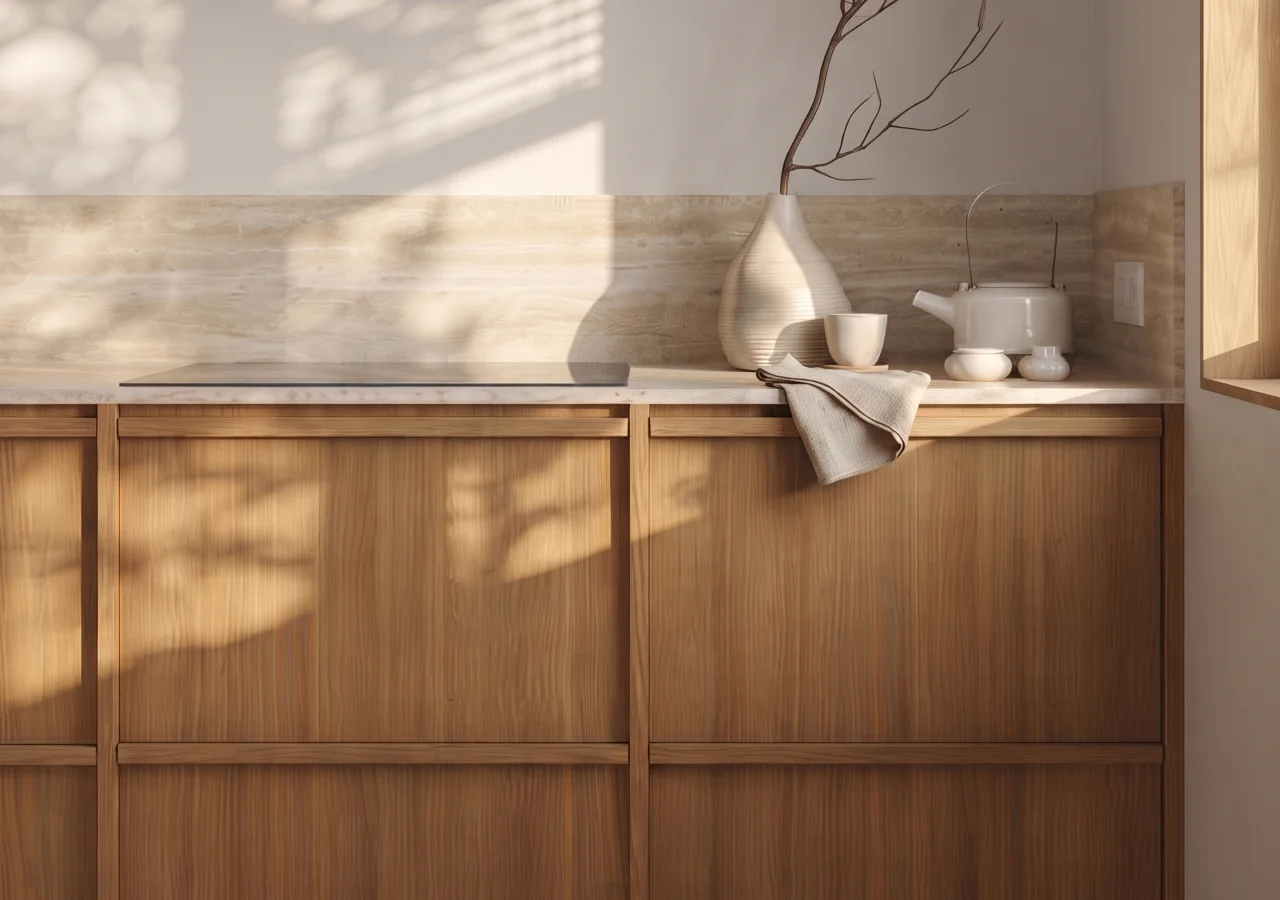
An integrated grip is built into the cabinet front as a recess, shaped edge, or cut-out. Corner’s Recess collection, for example, uses a rounded rectangular opening instead of a separate handle.
An edge pull attaches along the edge of the front. Its visibility depends on its length, projection, and finish: a matching tone can blend in, while darker metal creates a more defined line.
Wood or metal handles can suit a minimal kitchen, too. In Corner consultations, some homeowners planning oak Japandi kitchens preferred solid wood handles to push-to-open fronts. Small knobs offer a point accent rather than a continuous line and can work on lighter doors or smaller cabinets.
“Finger pull” can describe several constructions, from a recessed grip to separate edge-mounted hardware. Ask for a photo, sample, or section drawing to confirm what the supplier means.
Pair Japandi Cabinet Hardware With the Wood Front
.webp)
Choose hardware against the finished cabinet material. A similar wood tone can help a handle blend in, while a dark metal pull against light oak creates contrast. Neither material is inherently “more Japandi”; the choice depends on how visible you want the hardware to be.
A handle labeled “oak” may not match an oak front. Compare finished samples in daylight and evening lighting, checking undertone, grain, sheen, and handle shape.
On strongly grained slab fronts, simple hardware can leave the wood as the main feature. Decorative handles may add more detail than the front needs.
On framed fronts, check the handle’s size and position against the frame width. Review its placement on a drawing to make sure it does not crowd the frame or panel.
Mix Pulls and Knobs Without Making the Kitchen Busy
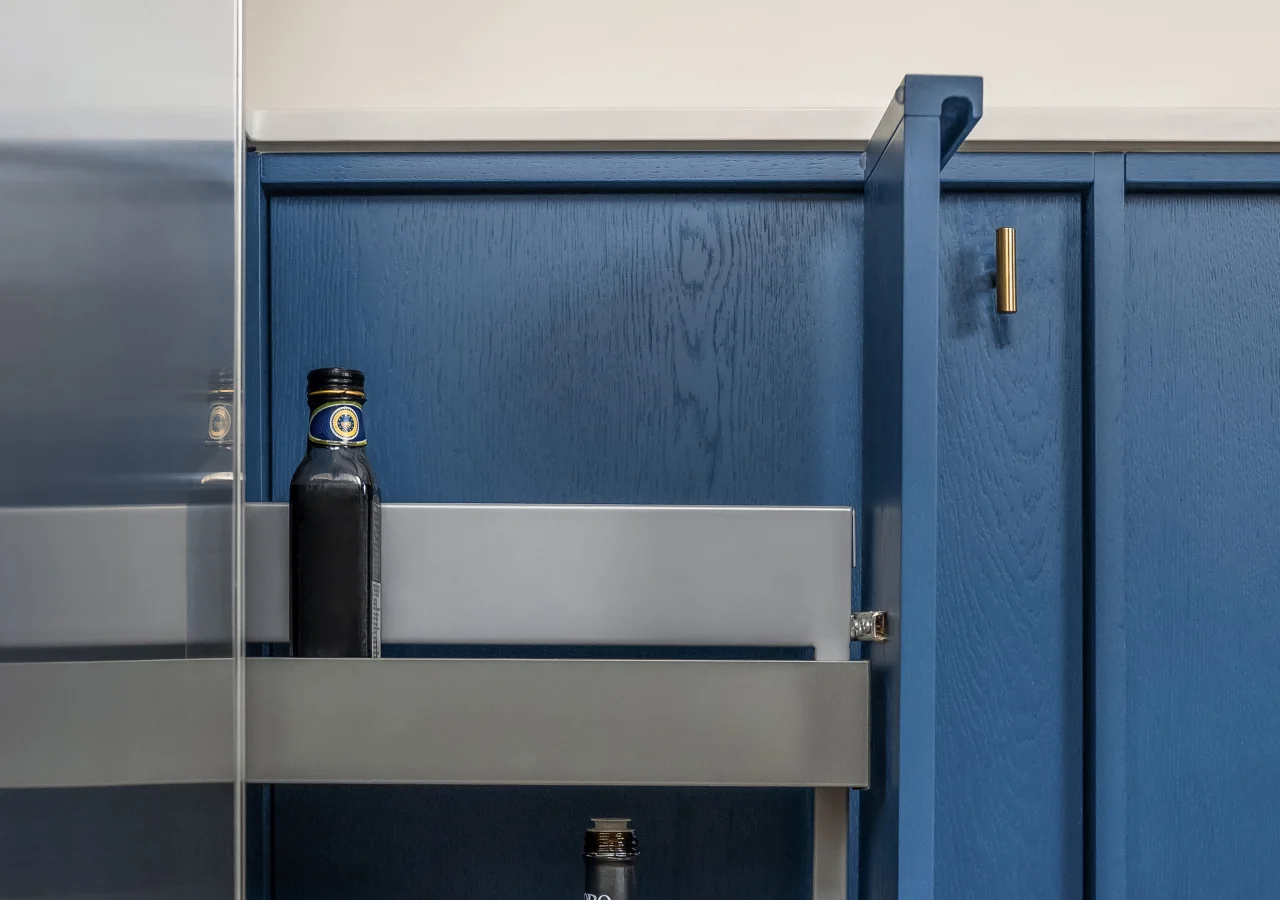
Japandi cabinet hardware does not have to be identical throughout the room.
You may want integrated grips on wide drawer banks, a visible handle on a tall cabinet, and a small knob on lighter doors. Keep the combination coordinated by repeating a finish, shape, or thickness and checking placement across the full cabinet elevation.
Proportion matters just as much as finish. A small pull may look undersized on a very wide drawer, while a long bar handle can dominate a narrow door. Review the hardware across the whole wall of cabinetry, not only on individual samples.
Avoid introducing a different shape or finish on every cabinet. Repeating one or two details can keep the mix coordinated.
Test the Grip Before Approving the Look
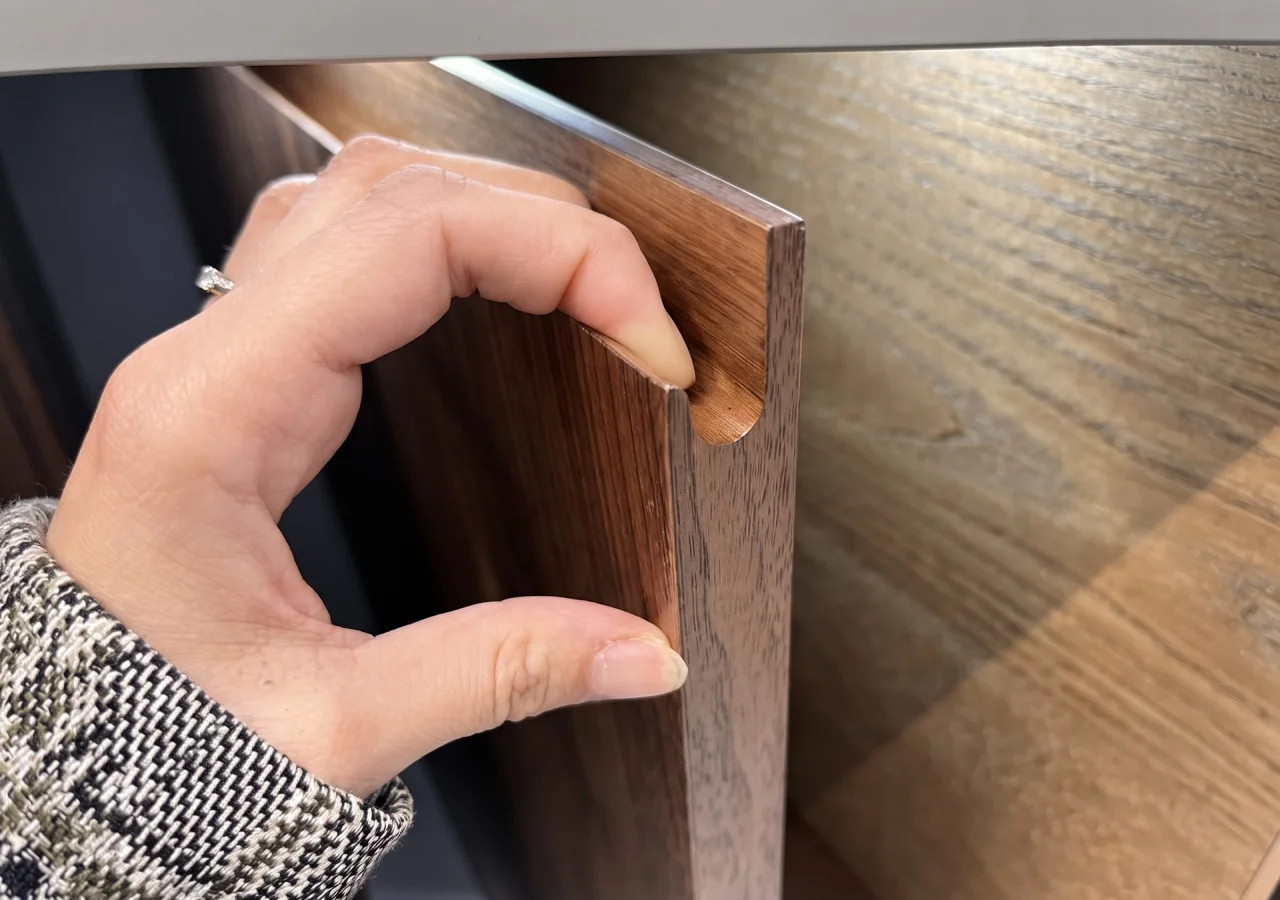
A hardware sample should be evaluated by touch as well as appearance.
If possible, try the hardware on a working door or drawer. A loose handle sample can show its shape and finish, but not how it feels when opening a loaded drawer.
Check whether there is enough room for your fingers and whether the grip feels comfortable from the angle you will actually use. Recessed details deserve the same attention. A narrow cut-out may look precise in a rendering but feel awkward if there is not enough depth for a comfortable grip.
Also inspect the area where your fingers will repeatedly touch the wood.
One homeowner asked whether repeated handling could leave stains around drawer grips and whether a protective coating was included. That is a useful question for any wood-front kitchen.
For a broader comparison of opening systems and where different hardware types are commonly used, see Corner Renovation’s Scandinavian kitchen hardware guide.
Conclusion
Choose hardware alongside the finished cabinet sample, not from a separate product photo. Compare color, sheen, and proportion, then test the grip on a working front where possible. Different opening methods can work together when their placement and appearance are coordinated.
Explore Corner’s kitchen projects to see how wood handles, integrated grips, and metal pulls look alongside oak and walnut fronts.
.webp)
.webp)


