.webp)
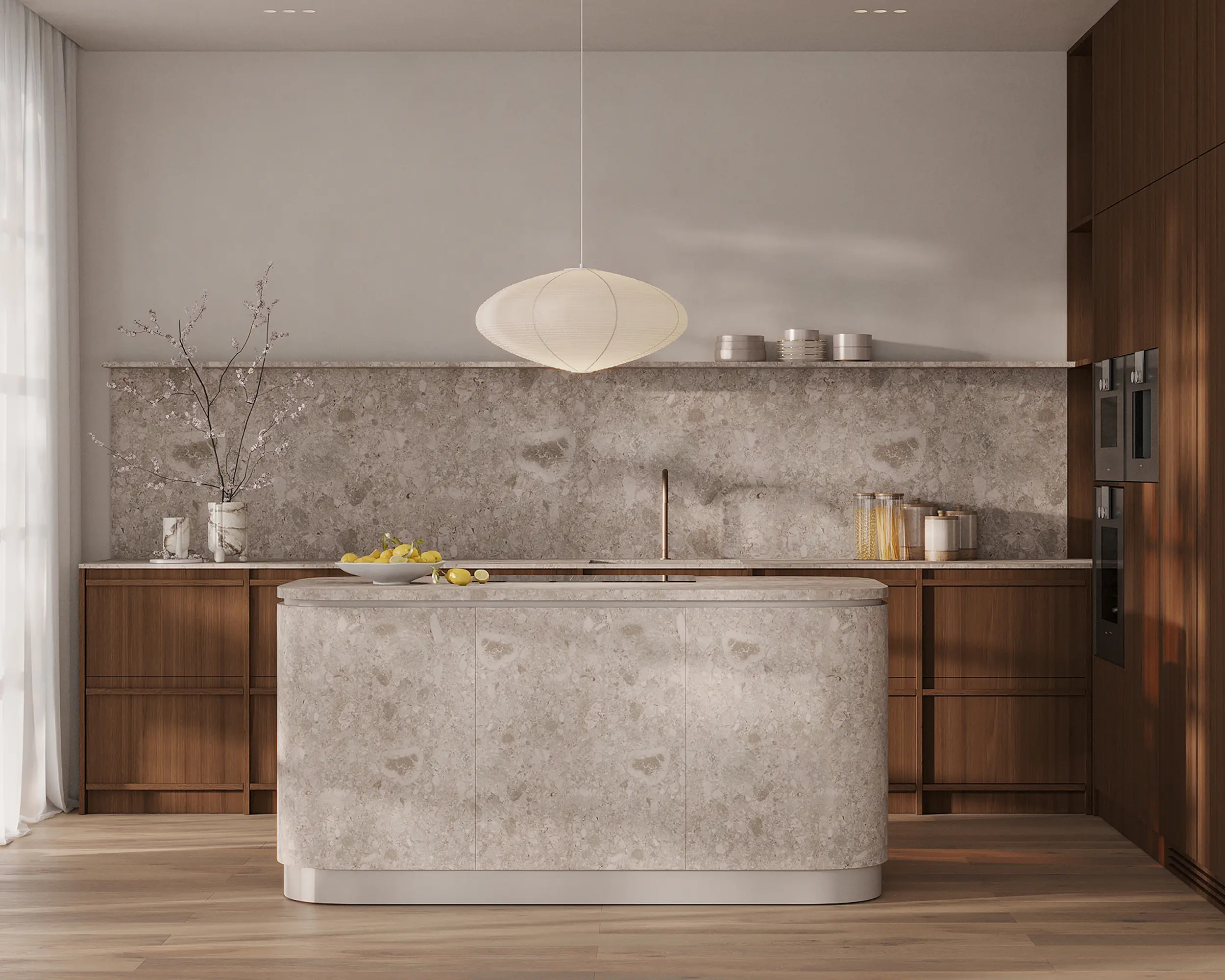
In a Japandi kitchen, lighting should be planned from the start, not added at the end. This style depends on balance, natural materials, and visual calm, so lighting does more than brighten the room. It shapes how wood tones read, how surfaces feel, and how comfortable the kitchen is to use throughout the day.
Good Japandi kitchen lighting is usually layered, warm, and visually quiet. Instead of relying on one strong ceiling fixture, it combines ambient, task, and accent lighting to support cooking, dining, and everyday movement while maintaining a soft, uncluttered atmosphere. When done well, lighting becomes part of the kitchen’s architecture rather than a separate decorative element.
Modern homeowners are often drawn to Japandi kitchens because they combine minimalist design with warmth. Natural oak, walnut veneer, matte finishes, stone surfaces, and simple cabinetry all benefit from thoughtful lighting. The right plan helps those materials feel richer and more tactile without making the room feel busy.
Why Lighting Defines a Japandi Kitchen
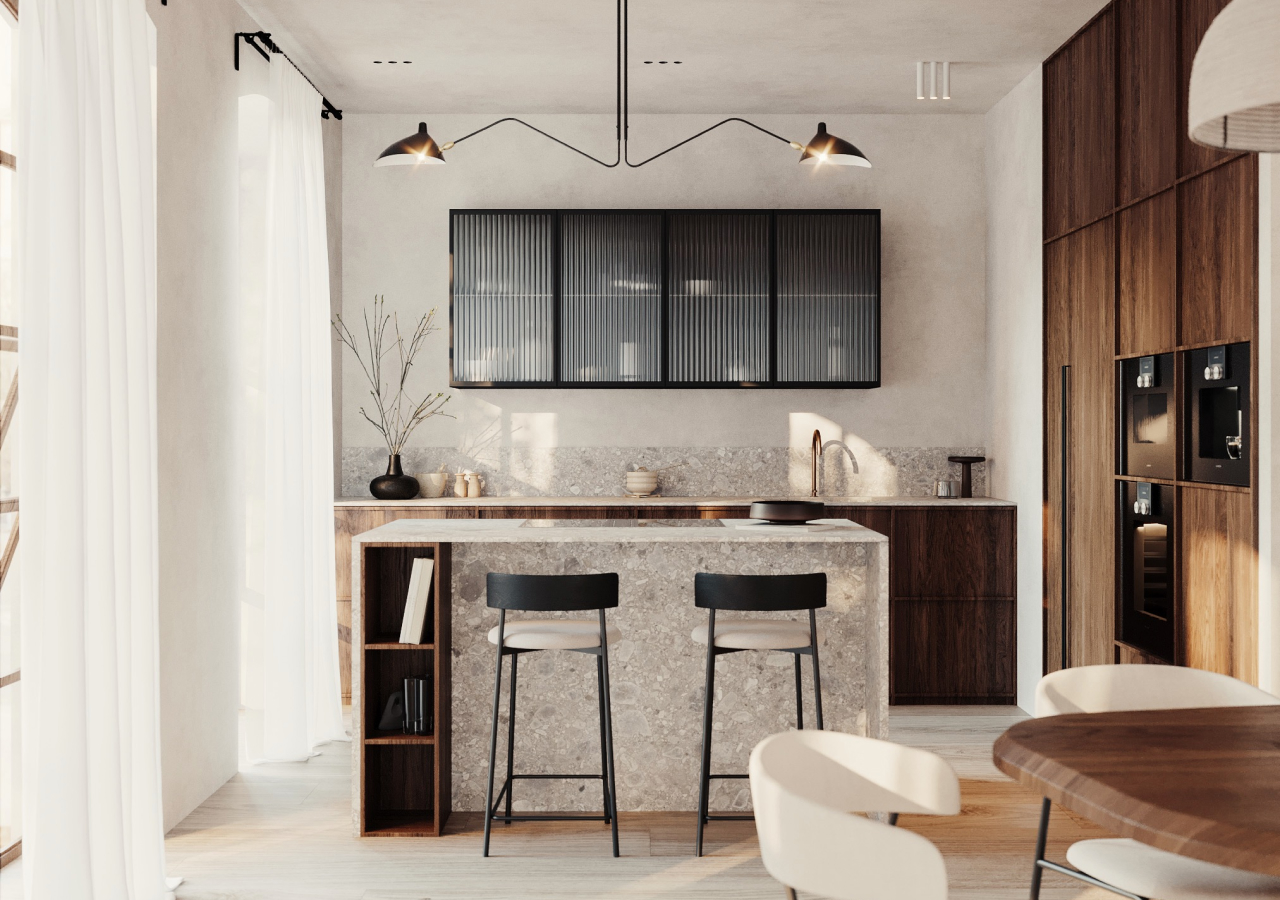
Japandi kitchens rely on subtle contrasts rather than dramatic ornament, which means lighting has a bigger role than it does in more decorative styles. When cabinetry is simple and surfaces are restrained, light becomes one of the main tools for creating depth, texture, and atmosphere.
That matters both visually and practically. A warm under-cabinet LED strip can make prep work easier while also bringing out the grain in natural wood cabinetry. A carefully chosen pendant over an island can define the center of the room without pulling attention away from the overall composition. In the evening, softer indirect light can make the kitchen feel calmer and more residential than a room lit only by bright ceiling spots.
This is why lighting should be considered alongside the kitchen layout, not after it. Cabinet runs, shelf placement, tall units, and island size all affect where light should go and how it should be controlled. In a Japandi kitchen, lighting works best when it is built into the planning process from the beginning.
Japandi Lighting Philosophy: Minimal but Intentional
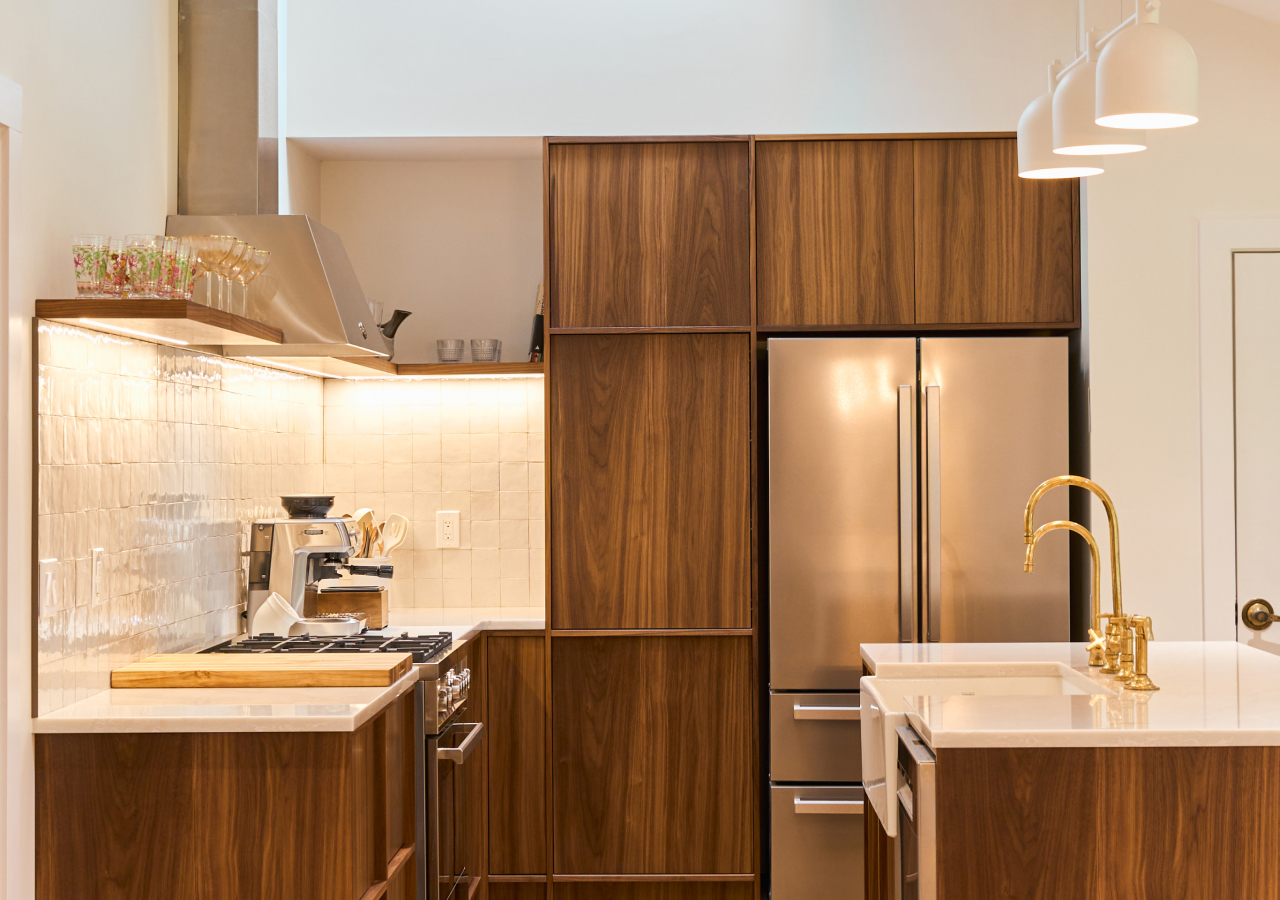
Japandi lighting follows the same principles as the rest of the style: simplicity, function, and restraint. The goal is not to add more fixtures, but to place the right fixtures where they matter most.
In practical terms, that usually means choosing lighting with quiet forms and clean materials. Soft glass, matte metal, simple wood detailing, and discreet integrated LEDs tend to work better than bold sculptural fixtures or highly decorative chandeliers. The lighting should support the room rather than dominate it.
This approach also helps the kitchen feel more spacious. When lighting is visually light and well placed, it complements handleless cabinetry, integrated appliances, and calm surfaces instead of interrupting them. That is especially important in open-plan kitchens, where visual clutter can spread beyond the kitchen itself and affect how the whole space feels.
A Japandi kitchen does not need many visible light sources to work well. It needs a small number of well-chosen layers that make the kitchen more functional, warm, and easy to live with.
Layered Lighting: The Foundation of a Japandi Kitchen
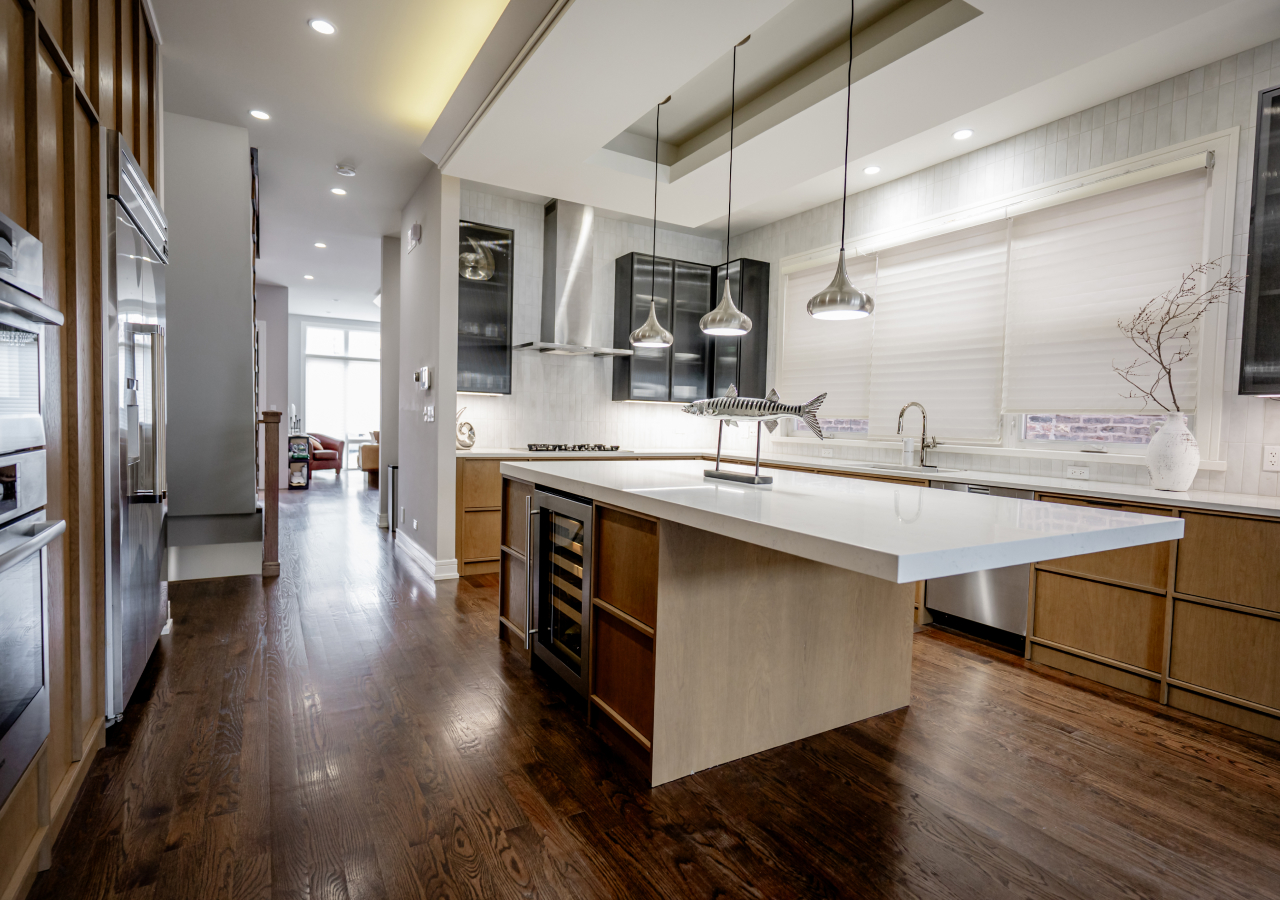
Layered lighting is one of the core principles of Japandi kitchen design. It allows the space to function well during food preparation, cleaning, dining, and quieter evening hours without feeling harsh or overlit.
A single ceiling fixture rarely does enough on its own. General ceiling light may brighten the room, but it often leaves shadows on countertops and does little to highlight the natural materials that make Japandi kitchens feel warm. A layered plan solves that by giving each type of light a clear role.
When these layers are balanced well, the kitchen stays flexible. It can feel bright and practical in the morning, then softer and more atmospheric in the evening. That flexibility is one of the reasons layered lighting suits Japandi design so well: it supports everyday use without losing the calm mood that defines the style.
Choosing the Right Japandi Light Fixtures
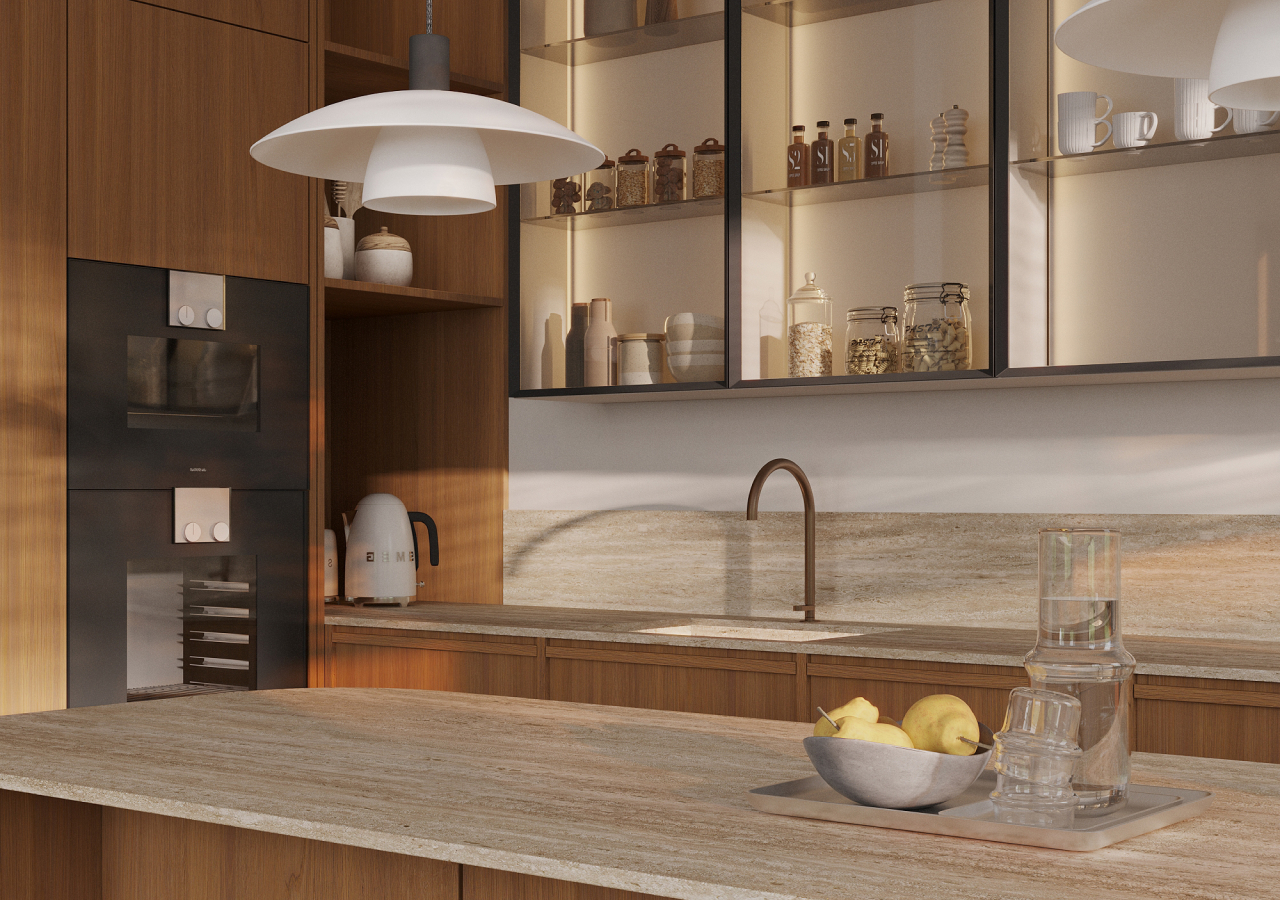
Japandi light fixtures should feel calm, balanced, and materially consistent with the rest of the kitchen. The best choices usually have simple silhouettes and understated finishes, allowing the cabinetry, stone, and wood textures to remain the visual focus.
Pendant lights are often the most visible fixtures in the room, especially above an island. In a Japandi kitchen, pendants tend to work best when they are modest in shape and warm in feel. Soft glass globes, matte shades, or simple forms with natural detailing can define the island without adding unnecessary drama.
Other fixtures should usually stay more discreet. Recessed downlights can provide background illumination without interrupting the architecture. Slim LED strips beneath upper cabinets or shelves keep countertops functional while preserving clean lines. In some kitchens, subtle wall lighting can help connect the cabinetry to the surrounding room and soften transitions in the evening.
A useful way to think about fixture selection is to compare visibility and function:
The most successful Japandi kitchens usually avoid mixing too many fixture styles. A more restrained selection keeps the room coherent and helps the materials do the work.
Light Quality: Warm Tones, Texture, and Natural Light
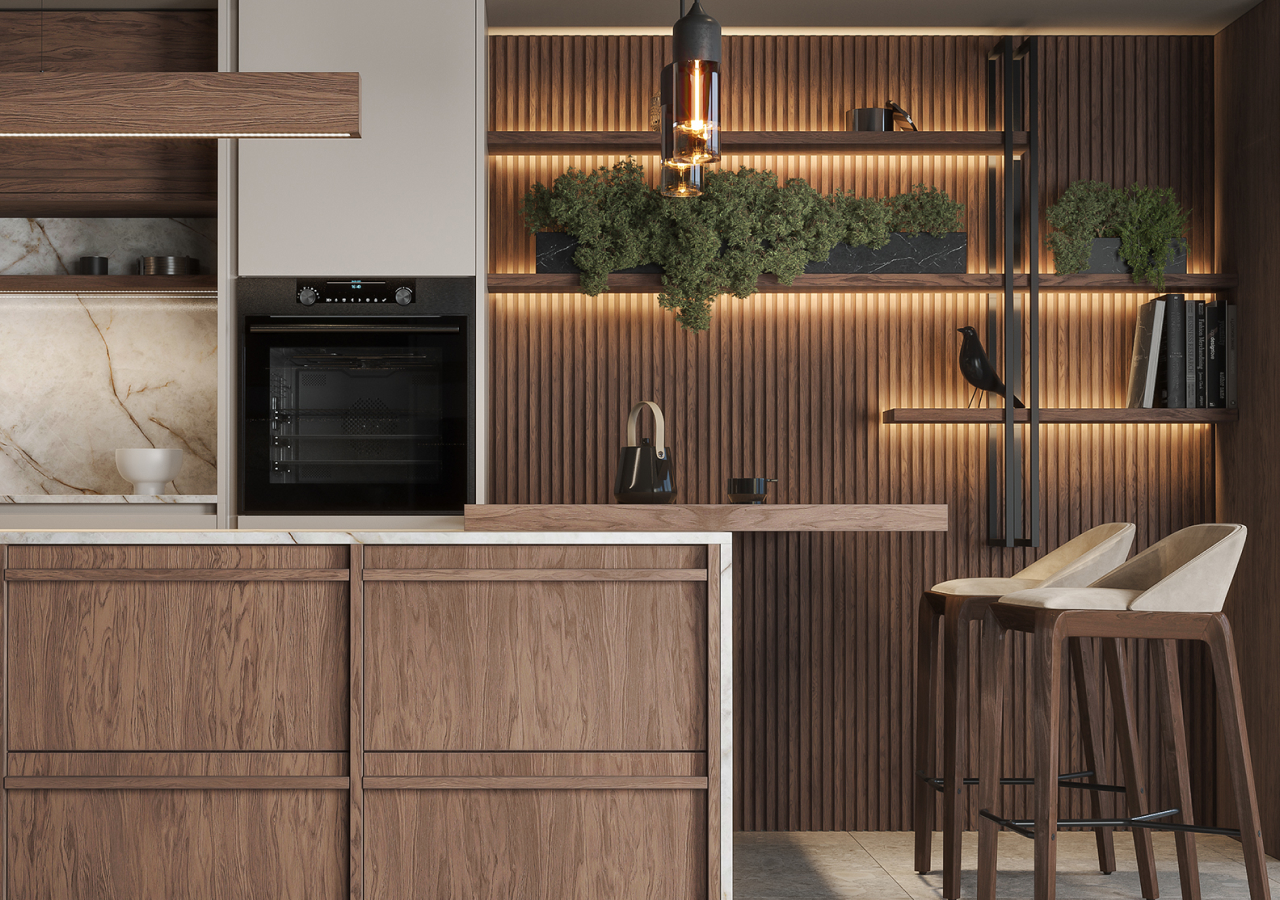
Light quality matters as much as fixture choice. Japandi kitchens generally look best under warm white lighting in the 2700K to 3000K range because it brings out the richness of natural wood, softens stone surfaces, and keeps the room feeling residential rather than clinical.
Cooler white light can flatten wood grain and make the room feel sharper than intended. In a style that depends on warmth and calm, that can shift the mood in the wrong direction. Warm light tends to work better with common Japandi materials such as natural oak, walnut veneer, beige or off-white fronts, and softly textured stone.
Natural light is equally important. Daylight helps a Japandi kitchen feel open and calm, especially when the palette is light and the finishes are matte. Windows, glazed doors, interior sightlines, and even restrained open shelving can all help daylight travel further into the room. Pale stone, light timber, and softly reflective finishes can also support daylight without making the kitchen feel glossy or cold.
Artificial lighting should complement that daylight rather than compete with it. In a well-balanced Japandi kitchen, the transition from day to evening feels smooth because the artificial light is soft enough to extend the mood already created by natural light.
Common Japandi Lighting Mistakes to Avoid

Japandi kitchens depend on quiet decisions adding up well, which means poor lighting choices tend to stand out quickly. A few common mistakes can make the room feel colder, busier, or less functional than intended.
MistakeWhy it causes problemsBetter approachRelying only on overhead lightingLeaves work surfaces shadowed and flattens the roomAdd task lighting where the kitchen is actually usedUsing cool white bulbsMakes wood and stone feel stark or washed outStay in the 2700K to 3000K rangeChoosing oversized decorative fixturesPulls attention away from the architectureUse simpler forms with softer presenceHanging pendants too low or too far apartDisrupts sightlines and creates uneven lightSpace and height should be planned with the island sizeSkipping dimmersReduces flexibility between day early evening useAdd dimmable controls to key lighting layers
One of the most common problems is treating lighting as a late-stage styling choice. In practice, lighting performs best when it is coordinated with cabinetry, shelving, appliance placement, and the overall kitchen layout. That early coordination helps avoid awkward shadows, cluttered ceilings, and fixtures that feel disconnected from the rest of the design.
Conclusion
Japandi kitchen lighting is less about decoration and more about balance, usability, and atmosphere. When the lighting plan is integrated into the kitchen from the start, it supports how the room works while strengthening the quiet visual language of the style.
Layered lighting makes the kitchen more flexible. Warm light tones make wood and stone feel richer. Simple fixtures help the room stay calm and uncluttered. Together, those choices create a kitchen that feels comfortable, functional, and quietly elegant from morning through evening.
If you are planning a Japandi kitchen renovation, it helps to think about lighting at the same time as cabinetry, layout, and material selection. A well-designed kitchen works best when all of those decisions support each other.