
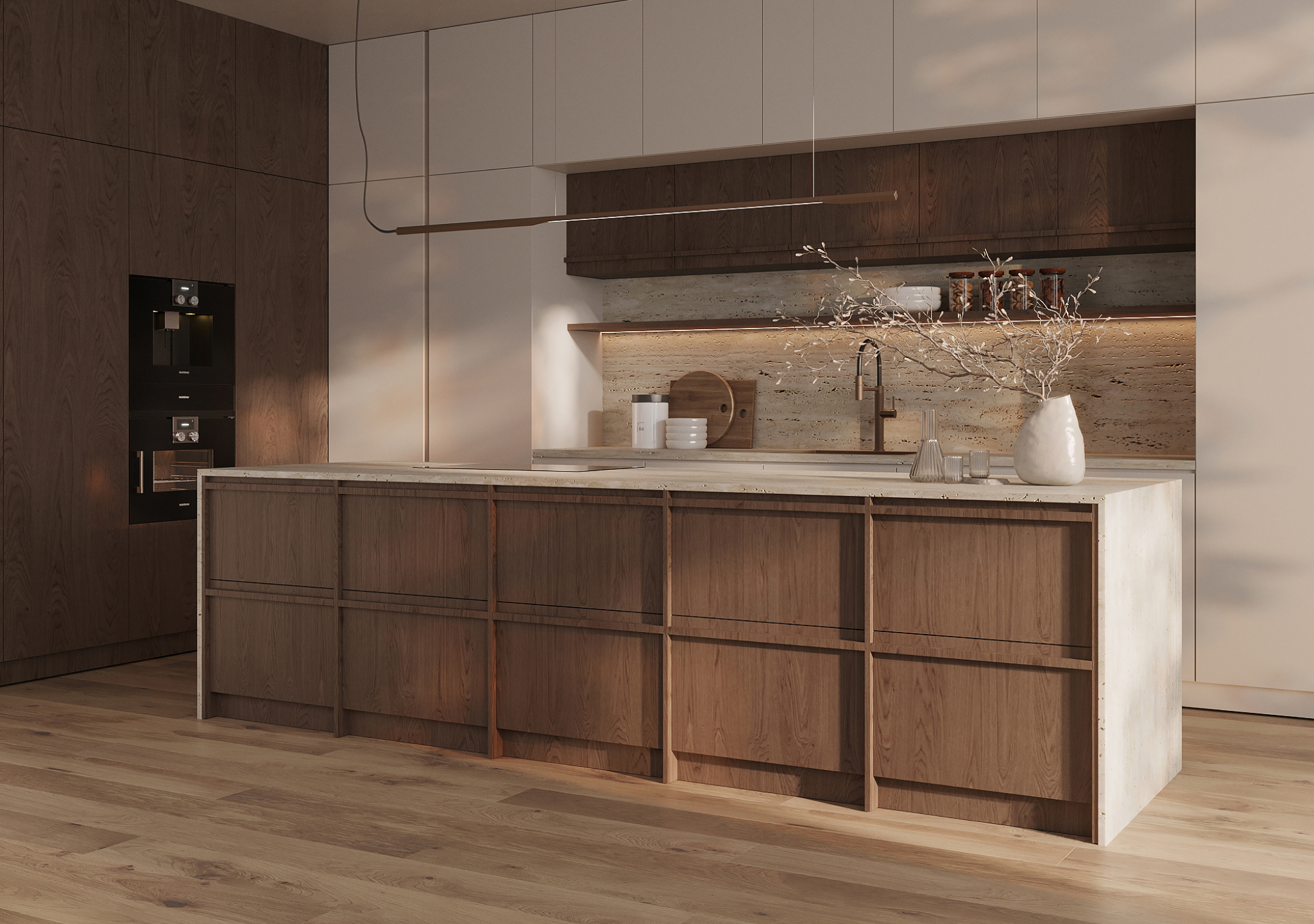
A Japandi kitchen island is a calm, functional centerpiece that adds extra prep space, smarter storage, and a visually quiet surface. Instead of just filling the room, it quietly organizes daily tools, trash, and small appliances so countertops stay clear in real life.
For modern homeowners, that’s the real appeal: the island becomes the place where cooking, gathering, and everyday clutter get managed without the room feeling “managed.” Japandi kitchens feel good when they stay visually clean, but that cleanliness is earned. When an island is planned around organization (deep drawers, a real home for trash, and a place for the tools you reach for daily), countertops stop becoming a dumping ground. The island doesn’t create calm by being empty; it creates calm by holding the right things in the right places.
What Japandi Means for a Kitchen Island
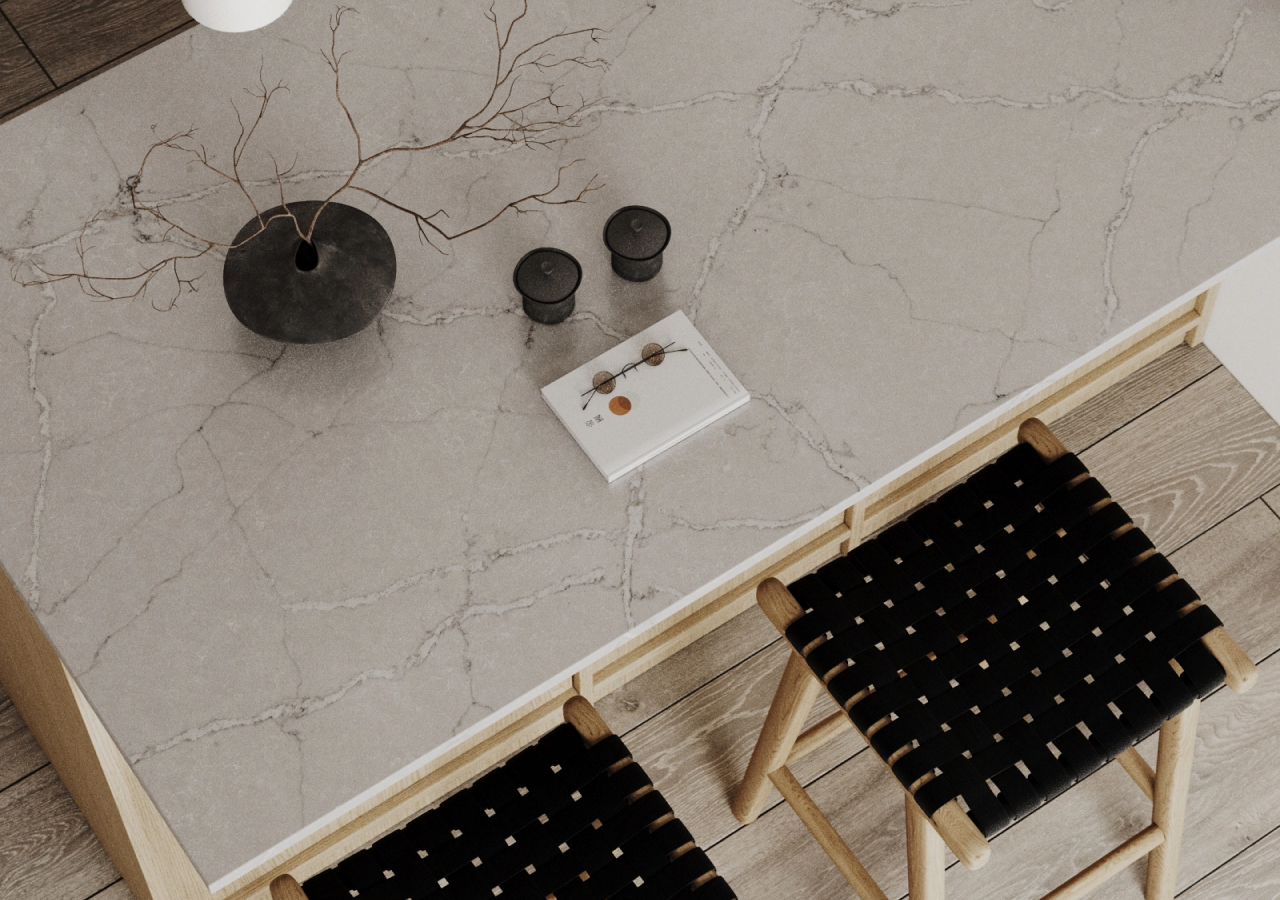
Japandi is often described as Japanese minimalism meets Scandinavian warmth. In island terms, that translates into one core idea: the island should read like a simple, intentional piece of furniture, rather than a feature stuffed with visual noise.
A Japanese kitchen island tends to lean into simplicity and restraint: clear surfaces, discreet details, and function that disappears behind closed fronts. Japandi keeps that discipline but softens it with warmer materials and a more “lived-in” comfort. The island is where this balance becomes most obvious, because it sits in the middle of the room and gets touched all day long. If the island feels fussy or clutter-prone, the whole kitchen starts to feel that way too.
The benefit of treating the island as a Japandi design element is more practical, than aesthetic. When the island is designed to hide the working parts of daily life, the kitchen stays calm without asking you to constantly reset it.
When an Island Works in Japandi Layouts (and When a Peninsula Is Better)
Not every kitchen should have an island, especially if you want Japandi calm. If circulation gets tight, an island quickly becomes a stress point: people bump past each other, stools block walkways, and the kitchen feels busy even when it’s not.
.webp)
In Japandi layouts, an island works best when you can protect comfortable movement around it and keep your main workflow (fridge → sink → cooktop) clean and direct. If adding an island forces you to squeeze clearances or create bottlenecks, a peninsula often gives you the same benefits with fewer compromises. It can still provide prep space, seating, and storage, but it’s anchored to a wall run, so it doesn’t interrupt circulation in the same way.
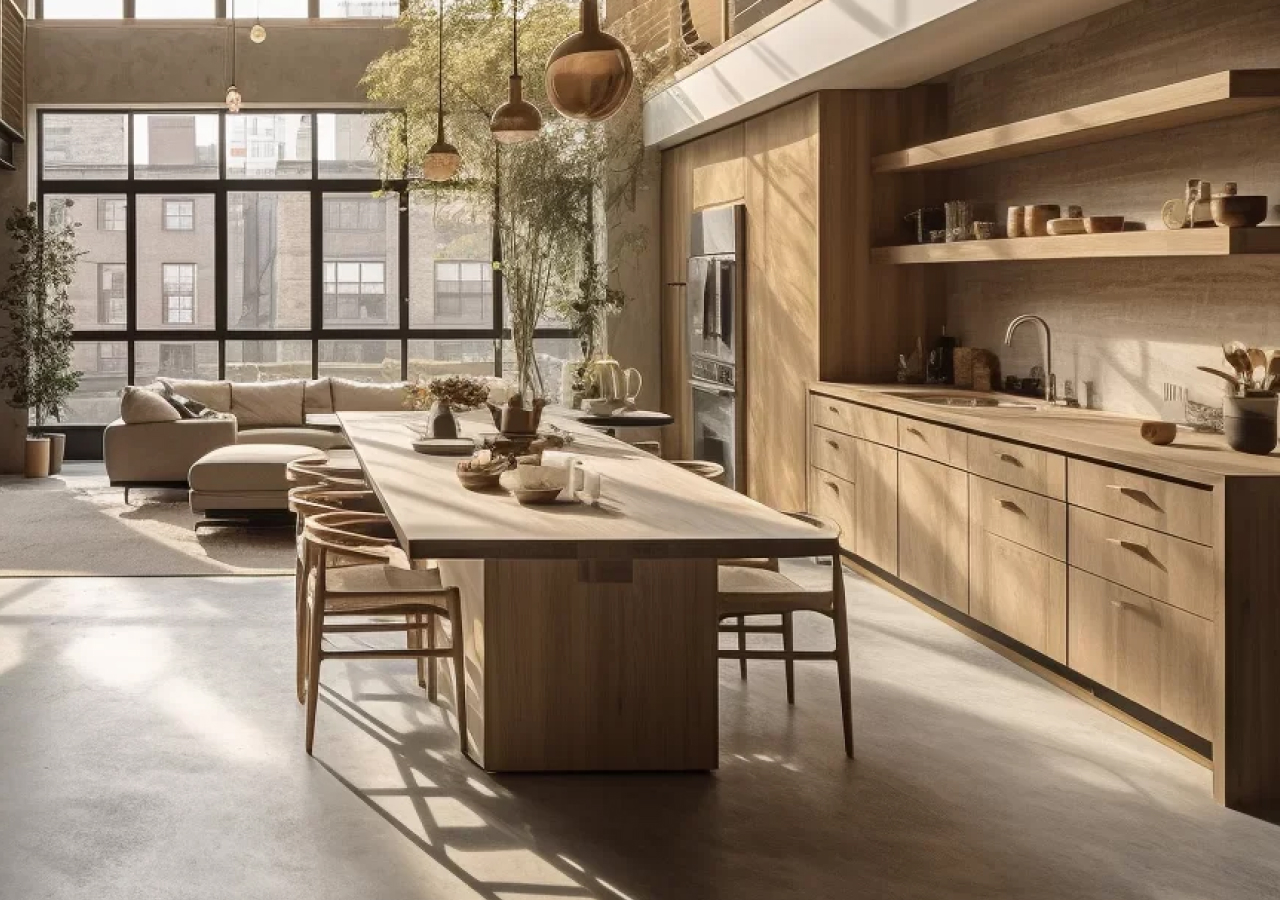
There’s also a very Japandi-friendly alternative that’s worth naming: the table-style “island.” If the room can’t support a full-volume block, a simpler, furniture-like form can preserve openness while still giving you a central surface for daily life. The key is staying honest about function. If you need serious storage and integrated zones, you want a true island or peninsula. If you mainly need a place to land and gather, a table-style solution can keep the room visually lighter.
Rounded vs Rectangular Islands: The “Soft” Decision That Changes Everything
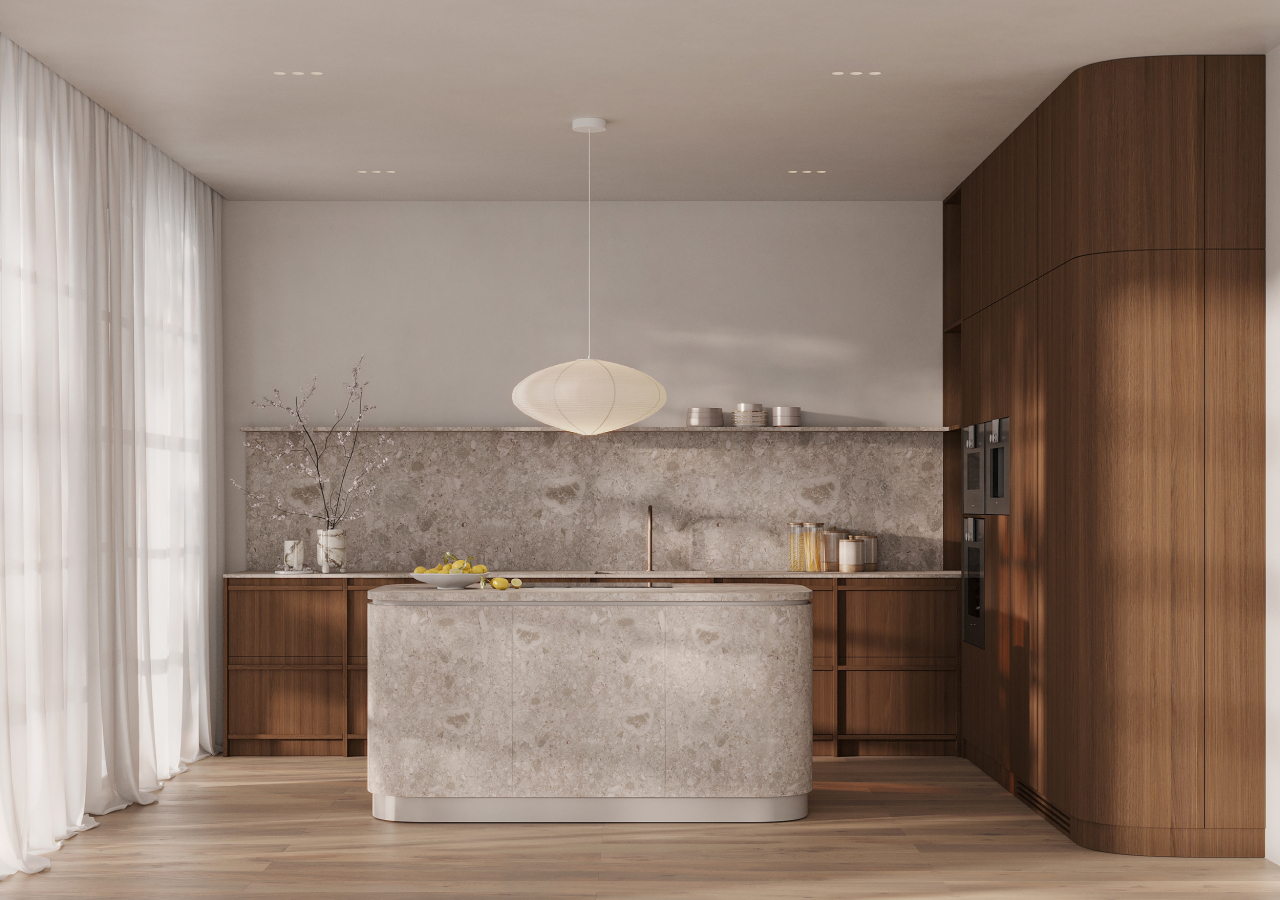
If Japandi has a signature island move, it’s softness. Rounded corners and curved ends are a quiet way to make the kitchen feel kinder and easier to move through. A rectangular island can absolutely be Japandi, especially in clean-lined, linear kitchens. But rounded forms often feel more natural in open-plan spaces where the island is a circulation hub.
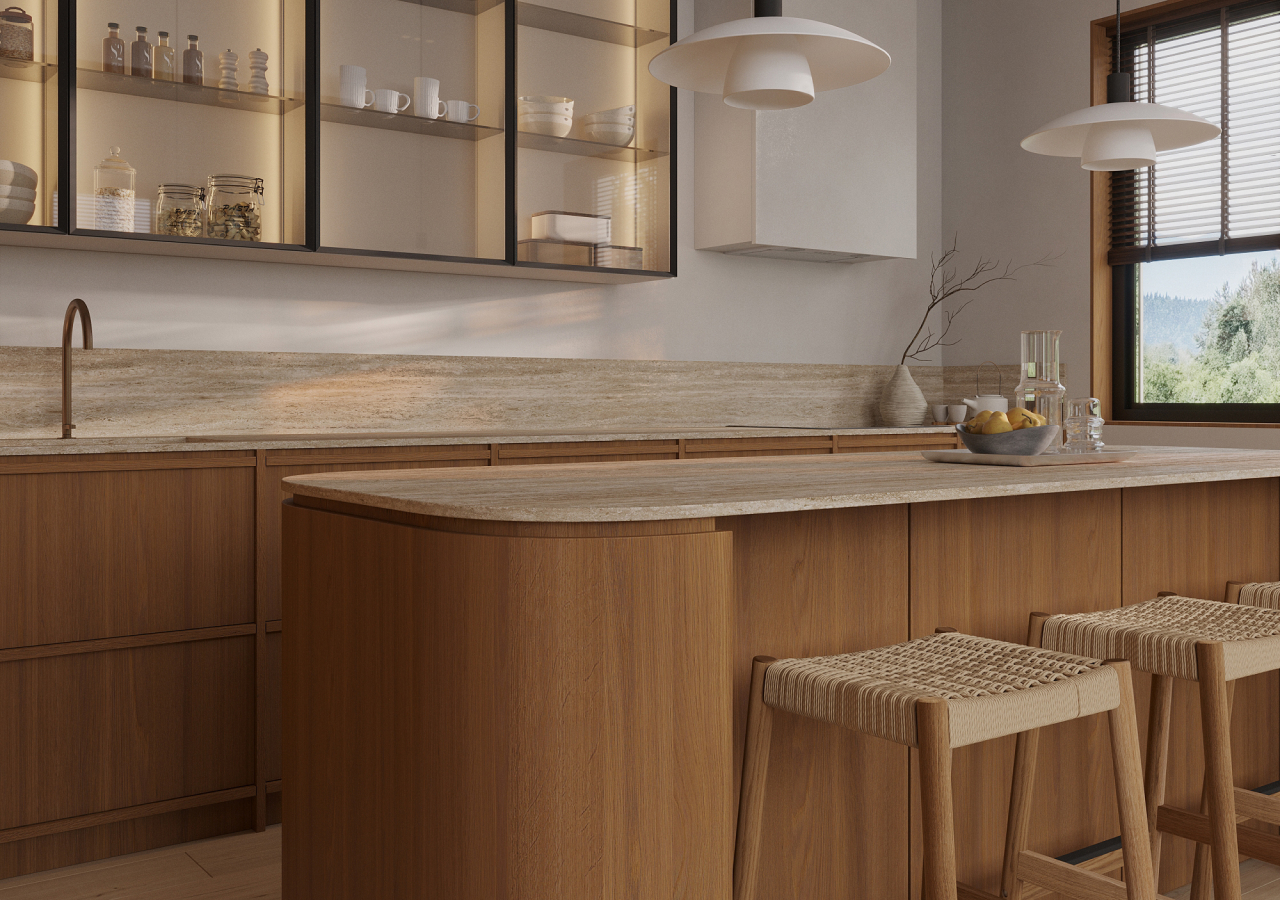
Curves help in three ways at once. They reduce the “block” feeling that islands can create, they make movement around corners feel smoother (no hip-bump moments), and they create a furniture-like presence that fits Japandi’s calm, crafted vibe. This is exactly why curved islands have become such a strong style cousin to Japandi—and why they pair so well with Corner’s Forma collection, where rounded geometry supports a softer, more sculptural minimalism.
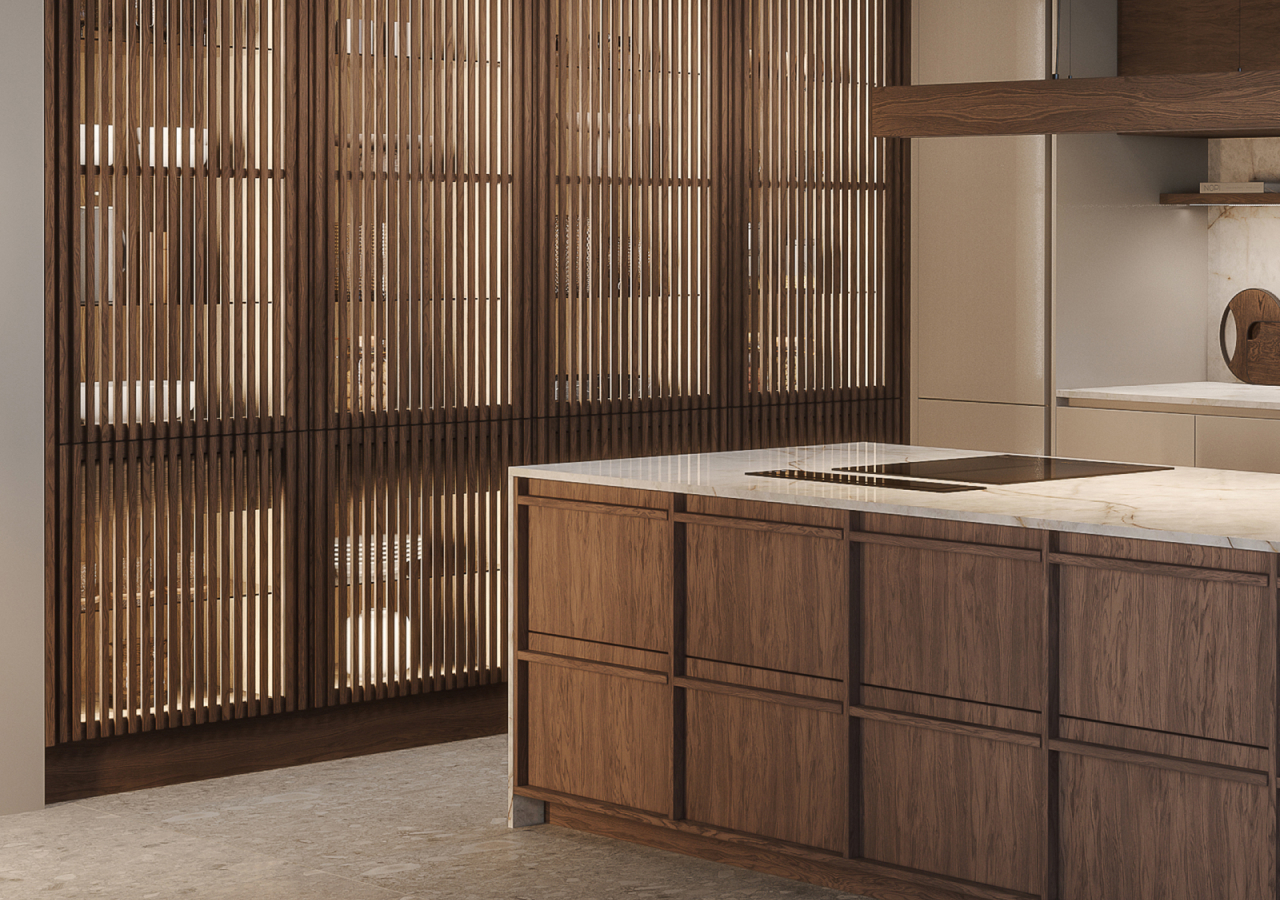
Rectangular islands still win when you need maximum functional length—long prep runs, multiple zones, or lots of seating in a straight line. The trick is to keep the edges clean and the detailing quiet, so the rectangle doesn’t turn into a heavy visual slab. If your kitchen is narrow or circulation is tight, a rounded end can be the best of both worlds: the function of a rectangle, with a softer “exit” where people pass most.
Rounded vs Rectangular Japandi Kitchen Islands
Layout and Dimensions: Make It Fit Your Life, Not Just Your Floor Plan
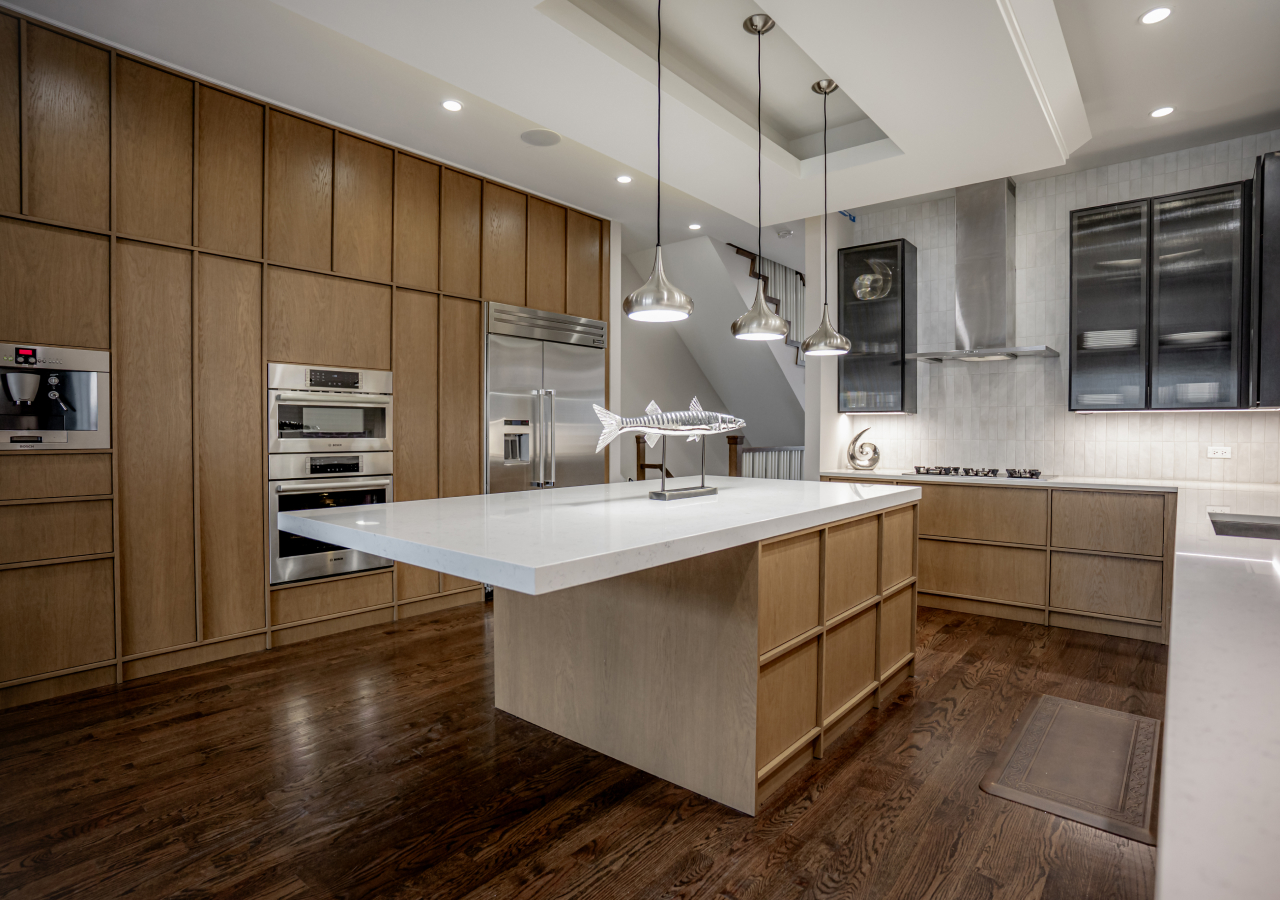
Japandi islands look effortless when they’re sized for how you live. That starts with clearances. If you’re always sidestepping around stools or squeezing past open appliance doors, the island becomes a daily friction point—and friction is the opposite of Japandi.
A well-proportioned island supports zones without feeling oversized. You want enough depth for prep and landing space, enough length to make the island useful, and enough room around it that you don’t feel trapped. Seating is where many islands fail in real life. In Japandi kitchens, seating should feel integrated and calm, not like an afterthought bolted onto the side. If you want stools, the overhang and spacing have to be comfortable, and the “behind the stools” clearance has to be real—otherwise the island becomes a parking lot that blocks movement.
One Japandi-specific note: avoid oversizing just because the room is large. Japandi relies on negative space and visual breathing room. A giant island can overwhelm the composition, making the kitchen feel heavier than intended. If you’re checking whether an island truly fits your space, kitchen island size guide walks through clearances, depth, and seating step by step, with real measurements you can map onto your floor plan.
Materials and Finishes: Wood + Stone, Contrast vs Tone-on-Tone
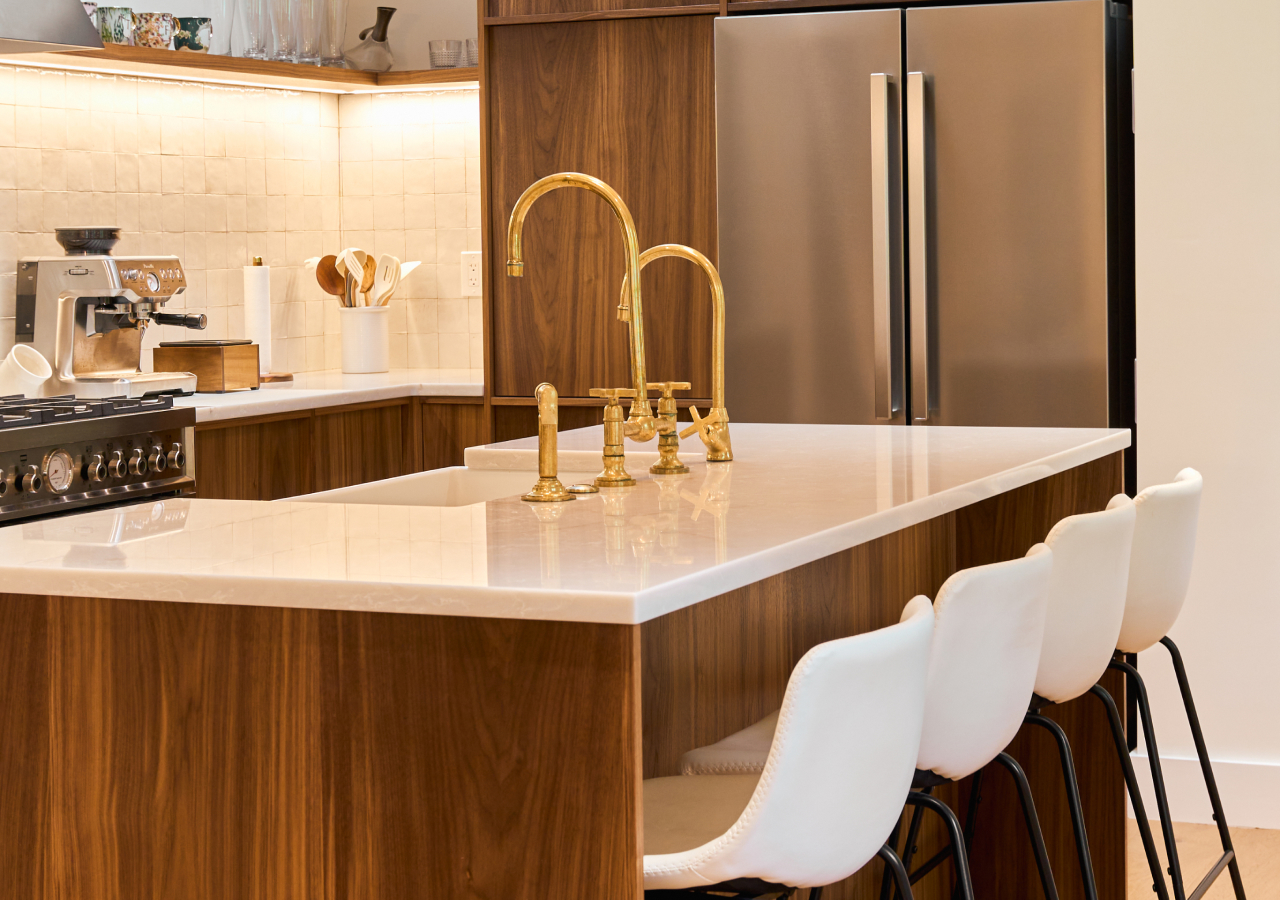
Japandi kitchen islands feel best when materials are calm, tactile, and honest. In practice, that usually means wood paired with a quiet stone. The wood brings warmth and texture; the stone brings durability and a grounded presence. The island is where this pairing matters most, because it’s the surface you see from every angle and the one you touch constantly.
Tone-on-Tone vs Contrast on a Japandi Island
Tone-on-tone is the easiest path to a calm island. Light oak with a soft, matte stone reads warm, bright, and composed. Walnut with a slightly deeper neutral stone can feel richer while still staying quiet. The point is not to flatten everything into sameness, but to keep the transitions gentle so the island feels like it belongs.
Contrast can work beautifully too, as long as it’s controlled. A darker wood base with a lighter stone top can make the island feel grounded and intentional—especially in a minimalist kitchen where the rest of the palette is restrained. What usually breaks Japandi is not contrast itself, but high visual noise: busy veining, glossy finishes, or too many competing textures. Japandi rewards a “one idea” approach. Let the grain be the texture, or let the stone be the texture—don’t make both shout.
For a deeper dive into wood species, finish feel, and stone options that suit Japandi kitchens, Japandi kitchen materials guide breaks down the most practical combinations.
Storage and Function: The Island’s Job Is to Hide the Work
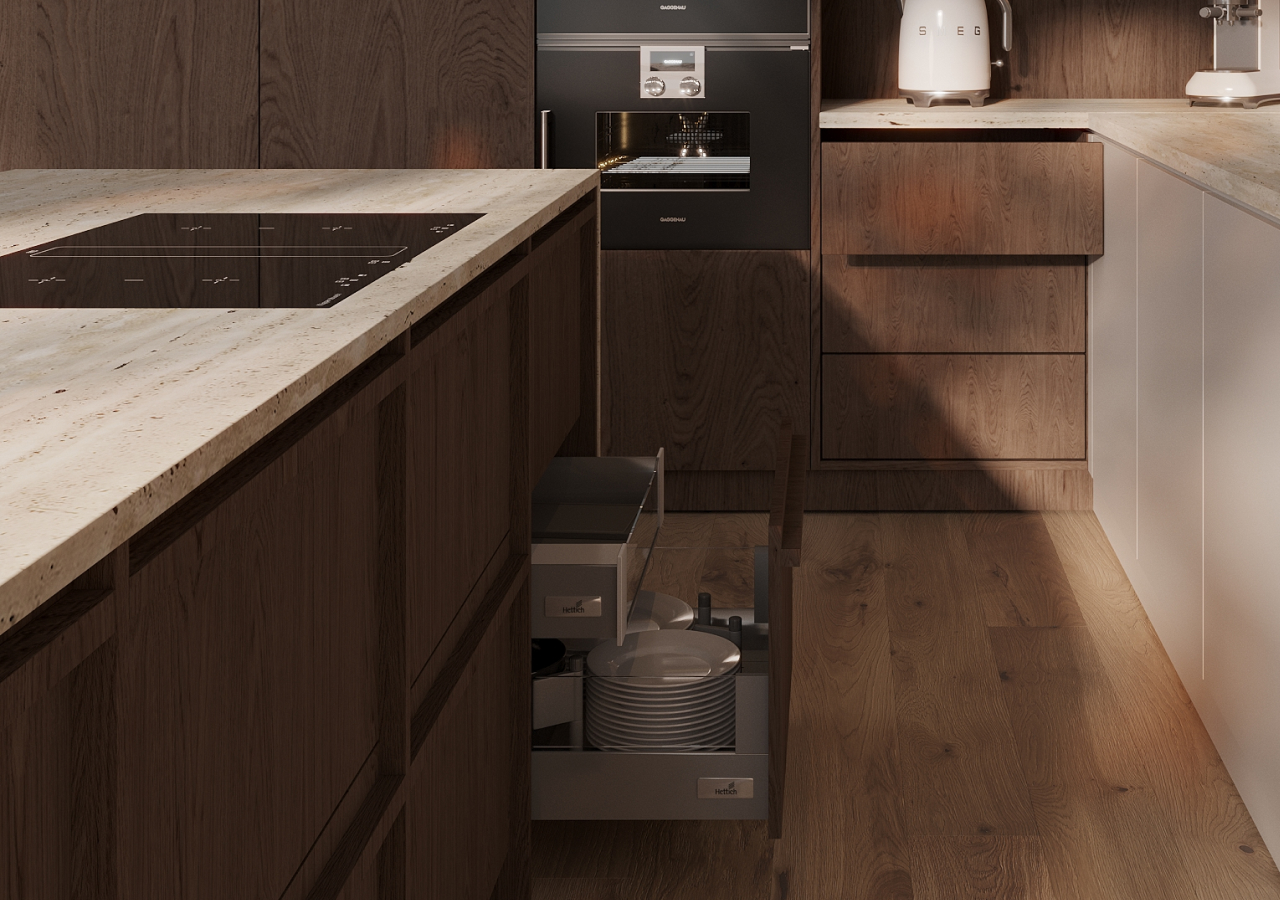
A minimalist kitchen island only stays minimalist if storage does the heavy lifting. That’s where Japandi islands really earn their keep. When drawers and organizers are planned properly, the island becomes the behind-the-scenes system that keeps counters clear.
Deep drawers are the foundation because they eliminate the “stacking problem.” Pots, pans, plates, and even small appliances can live in drawers close to where you use them, instead of migrating onto the countertop. Inner drawers (drawers inside drawers) are one of the most Japandi-friendly moves because they add organization without adding visual complexity. From the outside, everything looks clean. Inside, categories are separated, easy to access, and easy to maintain.
Trash and recycling are another difference-maker. If the waste system isn’t integrated into the island near the prep zone, you end up walking across the kitchen with scraps, or you keep a bin visible somewhere it doesn’t belong. A built-in pull-out keeps cleanup quick and invisible—exactly the kind of “function that disappears” Japandi is built on.
Finally, think in zones. The island often becomes the prep center, which means it should support prep. That can include a dedicated drawer for knives and boards, a drawer for mixing tools, a place for oils and spices that you actually use, and enough clearance on top that you’re not constantly pushing things aside. If you plan those zones intentionally, the island becomes a daily-life amplifier—not a daily-life magnet for clutter.
If you want one short checklist moment, make it this: drawers first, waste integrated, zones planned. Everything else is a refinement.
Lighting and Styling: How to Keep the Island Calm
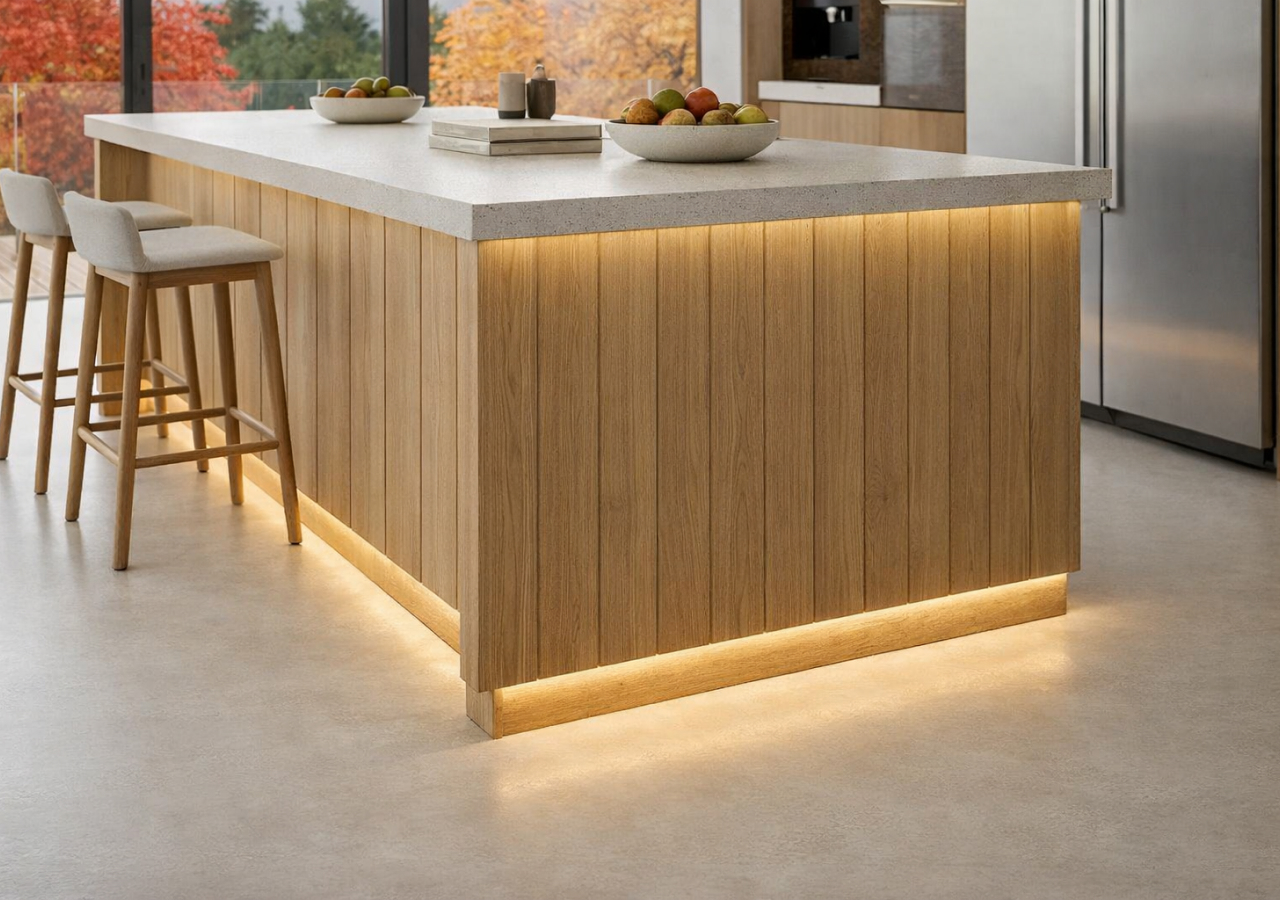
Lighting is part function and part atmosphere, and Japandi needs both. A warm, layered lighting plan makes wood look richer, stone look softer, and the whole kitchen feel more inviting at night.
Pendant lighting can work in Japandi—just keep the forms simple and the finish quiet, so it supports the room rather than becoming the room’s main event. Under-cabinet or under-shelf lighting is also important because it creates that gentle, practical glow that makes the kitchen feel calm and usable.
Power is a big practical question. Real kitchens need outlets, charging, and maybe small appliances; Japandi kitchens don’t want to see them. The solution is planning, not compromise. Discreet outlets on the island side, under the overhang, or inside cabinets keep power accessible without turning the island into a tech panel.
Styling follows the same principle: contain the visual moment. A Japandi island looks best when decor is minimal and purposeful, and when daily-use items don’t live out permanently. Instead of open-shelf displays and countertop collections, aim for one small, intentional arrangement—something that can stay even when you’re cooking. Everything else should go into drawers, where it belongs.
Mistakes to Avoid (That Break the Japandi Feeling Fast)

Most island errors are planning mistakes that become visual mistakes. The biggest one is forcing an island into a space that can’t support it. The second is oversizing—either because it “looks impressive” or because the room is big enough that nobody checked the balance. In Japandi, the kitchen should feel breathable. An oversized island can make the room feel heavy and crowded even when it’s spotless.
Another common issue is relying on open shelving for “storage.” Open shelves look great for a photo, but they demand constant editing and cleaning to stay calm. If you love one open niche for a curated moment, that can be fine. But if you need daily storage, drawers will always feel more Japandi in real life.
Lastly, be careful with surface noise. A countertop with intense patterning or shine can hijack the whole room, especially in a minimalist kitchen with an island where everything else is restrained. Japandi is about quiet confidence. Let one texture lead, and keep the rest supportive.
Conclusion
A Japandi kitchen island works best when it feels soft in presence and strong in function. Start with layout and clearances so movement stays easy, then choose a shape that suits your space: rectangular for long prep runs, rounded when you want gentler circulation and a more furniture-like feel.
Calm materials do the rest: warm wood, quiet stone, and low-glare finishes that look good in real light. Inside, deep drawers, inner organizers, and integrated waste keep the surface from turning into a clutter stage.
If you’re starting to plan a Japandi kitchen island, you don’t have to get every detail perfect at once. Begin with how you move, cook, and gather, then layer in shape, materials, and storage. And if you ever want a second pair of eyes, Corner is always happy to help think it through.


