
.webp)
If you’re searching for European kitchen ideas, you’re usually after two things: a cleaner look and a smarter daily workflow. European-style kitchens deliver that through calm, often-handleless surfaces, efficient storage, and zone-based planning, so the space stays easy to use even when it’s busy. In practice, European kitchen design prioritizes flush cabinetry, integrated storage, and consistent finishes (most often matte).
The biggest “European look” upgrades usually come from choosing the right cabinet/front system (frameless + full overlay), then replacing countertop clutter with drawers, pull-outs, and tall pantry units that keep everything organized but visually quiet.
What European Kitchen Design Means
.webp)
European kitchen design is less a single “style” (Tuscan, Nordic, etc.) and more a planning approach: clean, continuous cabinet lines on the outside, and highly organized storage on the inside. In most modern European kitchens, that translates to frameless, full-overlay cabinetry, integrated appliances, and minimal hardware so the room reads calm at a glance. The payoff is practical: when drawers, pull-outs, and tall pantry units are planned correctly, the counters stay clear and the kitchen stays easier to reset.
European Kitchen Ideas for Layout and Workflow
A European-style layout works best when it’s organized around zones rather than treating every countertop as general-purpose space. Start by assigning clear “homes” for pantry storage, prep, cooking, and cleanup, then place the most-used items where you naturally reach for them. When the zones are set, the kitchen feels faster, unloading the dishwasher, prepping dinner, and cleaning up take fewer steps, and multiple people can use the space without constantly overlapping.
1. Plan the Kitchen in Four Zones Instead of Only the Work Triangle
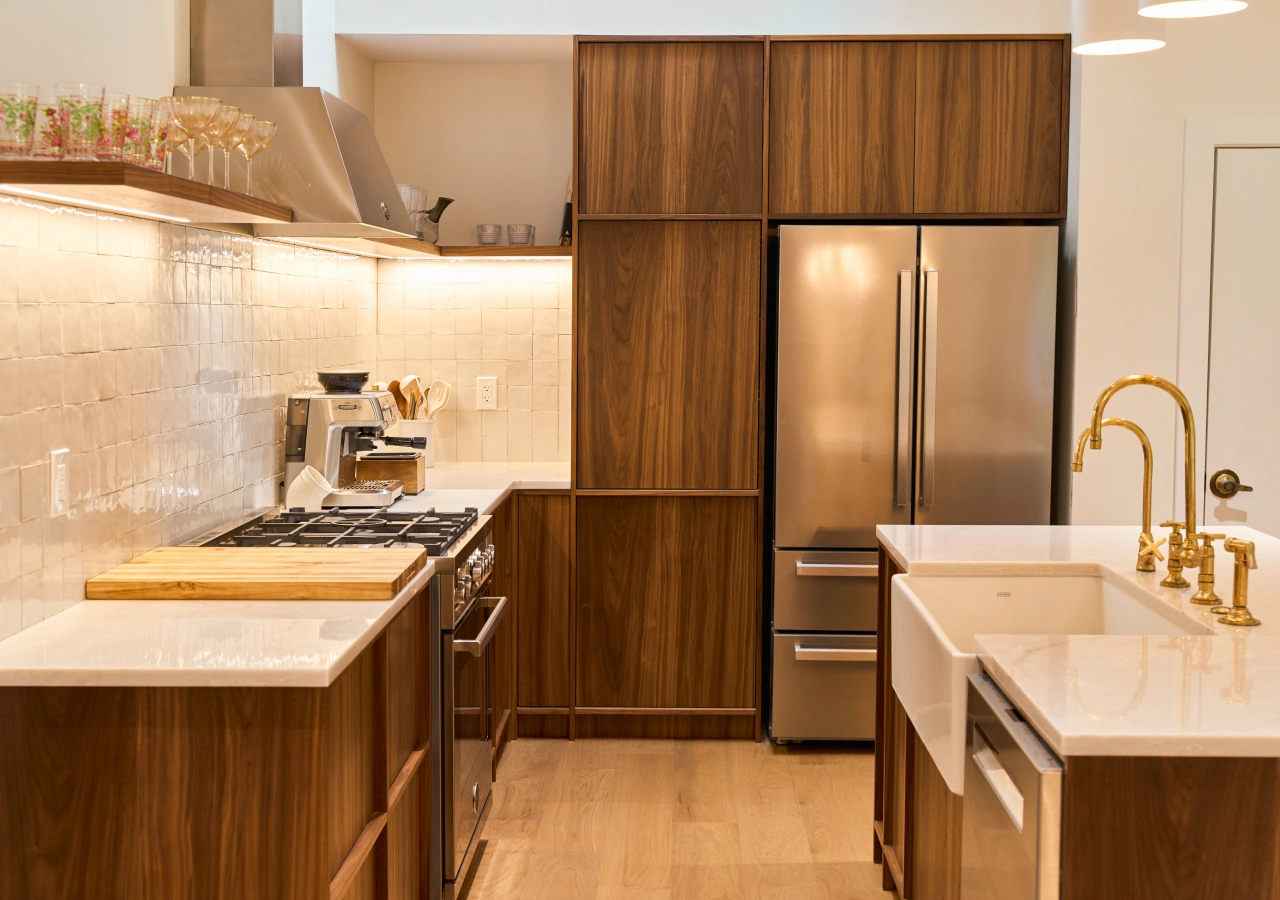
Think of zones as a practical upgrade to the classic triangle. You’re still keeping things efficient, but you’re organizing the space around real tasks. A typical zone plan places tall storage (pantry/fridge) where you naturally enter the kitchen, builds a generous prep surface near the sink, keeps cooking tools and landing space around the cooktop, and puts everyday dishes close to the dishwasher so unloading is quick. When the zones are right, the kitchen stays calm because the counters don’t become the “default storage.”
2. Use Clearance Targets That Actually Work Day-to-Day
.webp)
A European-style kitchen almost always feels more expensive when it’s comfortable to move in. That comes down to clearances, especially around islands, dishwashers, and main walkways. As a rule of thumb, designers often aim for about 42–48 inches around an island in busy kitchens so one person can pass while another is cooking or unloading. The exact number depends on your footprint, but the principle is consistent: make circulation predictable, and don’t let appliance doors block the main path.
3. Choose the Right European Layout for Your Space
.webp)
The “best” layout is the one that supports your zones without forcing awkward compromises. Galley kitchens can feel very European when they lean into efficiency: tall storage on one end, deep drawers on the other, and no wasted corners. L-shapes stay flexible and usually accept an island more easily. U-shapes can be extremely functional, but they need careful clearance planning so the room doesn’t feel tight. One-wall kitchens can look the most minimal, but they only work well when the tall-storage wall is strong enough to keep everyday items off the counters.
European Kitchen Cabinet and Front Ideas
The European look is mostly created by how the cabinet fronts line up and how little visual interruption there is across long runs. If the fronts, seams, and hardware feel consistent, the kitchen reads European even before you choose a countertop.
Frameless Cabinets and Full Overlay Doors for a Quiet Seam Look
.webp)
If you want that clean, continuous plane, frameless cabinetry with full-overlay doors is the most direct route. It supports tighter reveals and creates a more uniform face across the kitchen. It also tends to improve access inside the cabinet box, which is part of why it’s so common in modern European systems.
Handleless Cabinet Options: Gola vs Recessed vs J-Pull
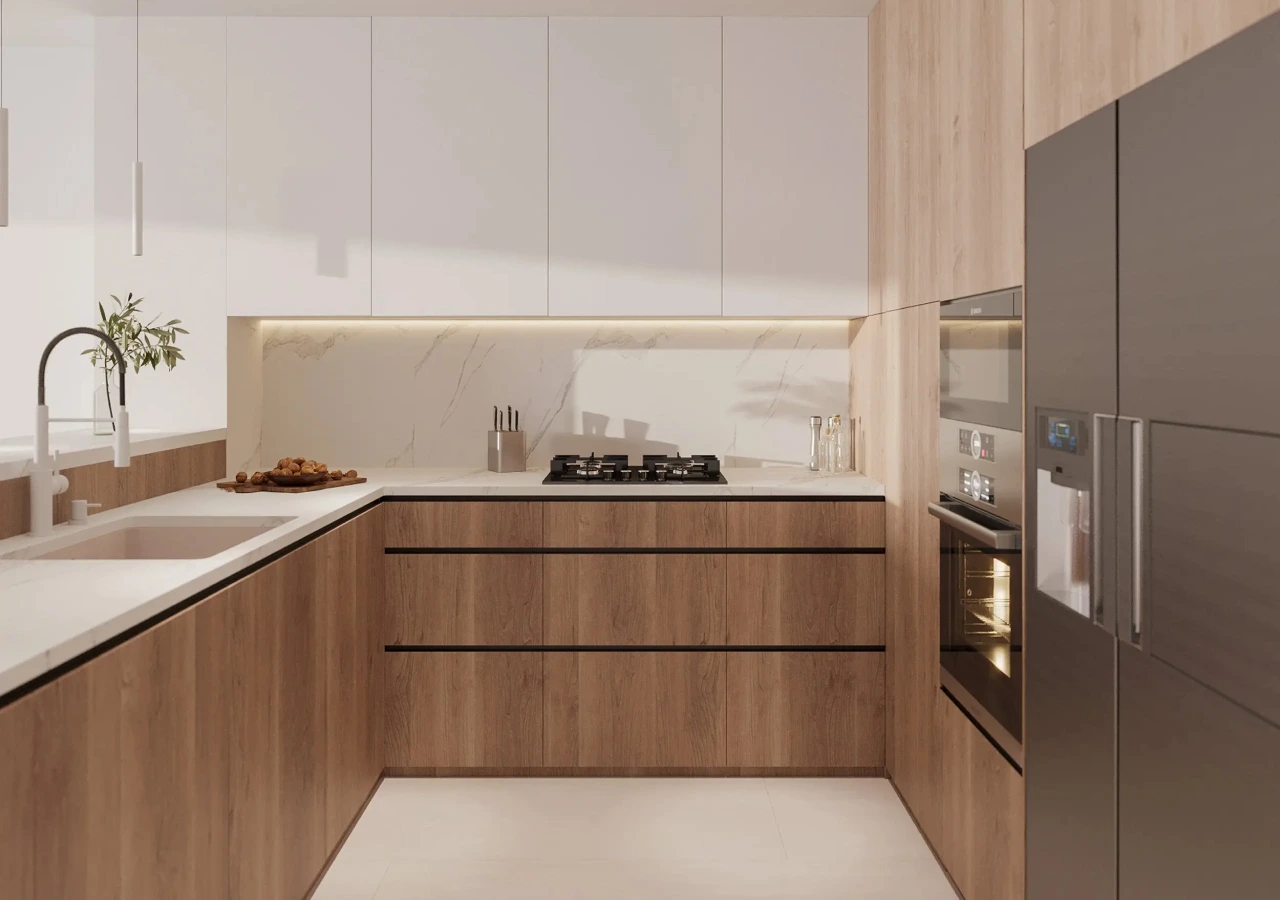
Handleless is a family of solutions that all try to reduce visual clutter. The right choice depends on the feel you want (and how your household uses the kitchen). These European style kitchen ideas work best when you commit to one handle approach across the whole kitchen so the lines stay consistent.
| Handle approach | Looks like | Best for | Watch-outs |
|---|---|---|---|
| Gola / rail profile | a clean line between fronts | ultra-minimal, very modern | rails can show fingerprints |
| Recessed/cutout pull | invisible hardware, carved grip | minimalist + easy wipe-down | comfort depends on the profile |
| Edge pull / J-pull | subtle lip | budget-friendly “handleless feel” | can feel sharper; check ergonomics |
Modern Cabinet Front Styles That Don’t Feel Cold
.webp)
Flat slab fronts are the classic modern-European baseline, but they don’t have to feel sterile. The warmth usually comes from finish and texture: a matte surface instead of gloss, wood veneer in the right places, or a subtle textured laminate that adds depth without introducing busy detail. If you prefer something softer than slab, a slim shaker can still read European as long as the proportions stay minimal and the overall grid remains clean.
European Kitchen Color and Finish Ideas
European palettes usually feel calm because they’re controlled: low sheen, limited contrast, and texture doing more work than color. Instead of chasing statement surfaces everywhere, the room gets its character from one or two intentional material moments.
A White European Kitchen That Doesn’t Feel Sterile
.webp)
A white European kitchen works best when the white is slightly warm and low-sheen, then balanced with elements that add softness: wood for warmth, a countertop finish that isn’t overly glossy, and lighting that makes the room feel good after dark. The goal is a bright base layer that still feels designed and lived-in.
Finish Pairings That Consistently Work
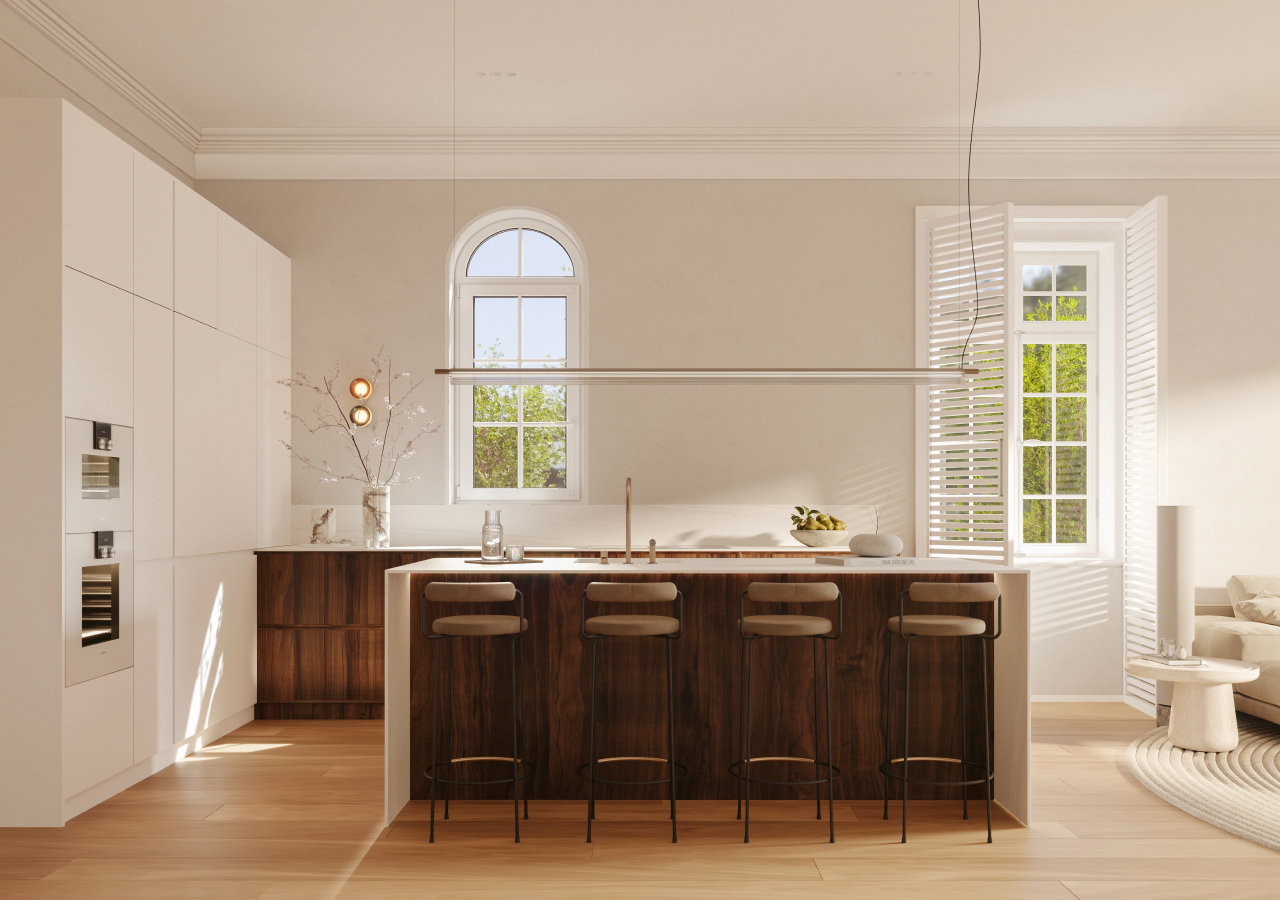
If you want combinations that stay modern for a long time, focus on one main neutral plus one warm material. Warm white with walnut and small black accents is a classic. Greige with light oak reads softer and more Scandinavian. Matte taupe with a limestone-look surface feels elevated without being loud. Soft gray paired with oak becomes richer when you add one textural element (like ribbed glass or a fluted panel used sparingly). If you want a deeper cabinet color, it can still feel European when the palette stays tight and the lighting is warm, use the strong color as a single decision, not five competing ones.
European Kitchen Storage Ideas That Feel Minimal in Real Life
European kitchens stay visually minimal because the storage is planned to prevent countertop clutter from happening in the first place. The biggest shift is moving from shelves and door cabinets to drawer-first, where items are easy to see, easy to reach, and easy to reset.
1. Go Drawer-First on Base Cabinets
.webp)
Deep drawers are usually the most useful storage in the whole kitchen because they turn stacks into something you can access without digging. When dishes, pots, and pantry items live in drawers, the kitchen gets faster, unloading, cooking, and cleaning take fewer steps, and the mess doesn’t spread across counters because everything already has a place.
2. Add Inner Drawers for Layered Storage
.webp)
Inner drawers are one of the most European-feeling upgrades because they keep the exterior seamless while adding a second layer inside. They’re especially good for small tools, cutlery, spices, and prep accessories—anything you want organized and visible, but not living out on the countertop.
3. Integrate Trash and Recycling from the Start
.webp)
If waste isn’t integrated, the kitchen won’t stay minimal. A built-in pull-out near the main prep area keeps the workflow clean: you’re not crossing the room with scraps, and you’re not parking a freestanding bin where it breaks the visual line of the cabinetry.
4. Build a Tall Pantry Zone for Counter-Free Storage
.webp)
Tall pantry units (often paired with fridge/ovens) are a major reason European kitchens look uncluttered. They concentrate everything that doesn’t belong on the counter into one vertical zone. Done well, that zone becomes the backbone of the whole layout, especially in one-wall kitchens that need serious storage to function.
European Kitchen Island Ideas
.webp)
An island reads European when it’s visually simple and purpose-driven: clean fronts, consistent seams, and storage that’s planned around how you actually use the space. If you add seating, the island should still function as a prep and landing area, not just a big object in the middle of the room.
| Feature | Island | Peninsula |
|---|---|---|
| Traffic flow | better circulation | can bottleneck |
| Seating | flexible | often easier in smaller rooms |
| Utilities | more complex | simpler runs |
| Best for | open plans | compact layouts |
European Kitchen Flooring and Backsplash Ideas
.webp)
Flooring and backsplash choices set the “noise level” of the room. A European look usually comes from calmer surfaces and fewer visual breaks: larger formats, minimal grout lines, and finishes that read soft rather than shiny. Large-format porcelain is popular for that reason, as are wood or wood-look floors that add warmth without pattern overload. For backsplashes, the cleanest results often come from extending one surface higher (sometimes full-height), keeping transitions minimal, and relying on lighting, not décor, to create depth.
European Kitchen Cost and Planning Benchmarks
.webp)
To make this section truly useful (and worth linking to), frame it as a reference: publish ranges, define what’s included, and update it regularly. If you don’t want to publish exact prices, use ranges and scope definitions (cabinets-only vs partial remodel vs full remodel), then add a one-paragraph methodology note explaining what those ranges reflect.
| Scope | What’s included | Typical range (your market) | Notes |
|---|---|---|---|
| Cabinet refresh | cabinets + hardware | $X–$Y | no layout changes |
| Partial remodel | cabinets + counters + some trades | $X–$Y | limited plumbing/electrical |
| Full remodel | layout + trades + finishes | $X–$Y | walls/floors/lighting included |
How to Plan a European-Style Kitchen (Fast)
- Pick your layout. Choose the basic footprint first: galley, L-shape, U-shape, or one-wall with an island so you know how traffic will move.
- Map the four core zones. Place pantry, prep, cook, and clean zones in a logical sequence so the workflow feels smooth and efficient.
- Lock appliance locations and door swings. Fix the positions of fridge, oven, cooktop, and dishwasher and confirm that doors can open without blocking paths.
- Set clearances. Check walkways and open-door space, especially around the island and dishwasher, to avoid bottlenecks.
- Choose the cabinet/front system. Decide on slab or slim shaker fronts and pick your handleless or hardware strategy so the whole room reads as one system.
- Design storage from the inside out. Plan drawers, inner drawers, pantries, and pull-outs around what you own so counters stay clear by default.
- Finalize finishes and lighting. Commit to a matte, calm material palette and layer warm general and task lighting to reinforce the European, lived-in feel.
Conclusion
European kitchen ideas work best when you treat the kitchen as a system: zone-based layout, consistent cabinet lines, and storage designed to keep surfaces calm. Start with workflow and clearances, commit to one cabinet/front language, then invest in internal organization that makes the minimalist look genuinely livable.
To see how these choices come together in real designs, browse our kitchen design catalog for materials, finishes, and layout examples. If you’d like help mapping these ideas to your space and budget, book a consultation and we’ll put together a clear plan and a more accurate estimate.
FAQ: European Kitchen Design


