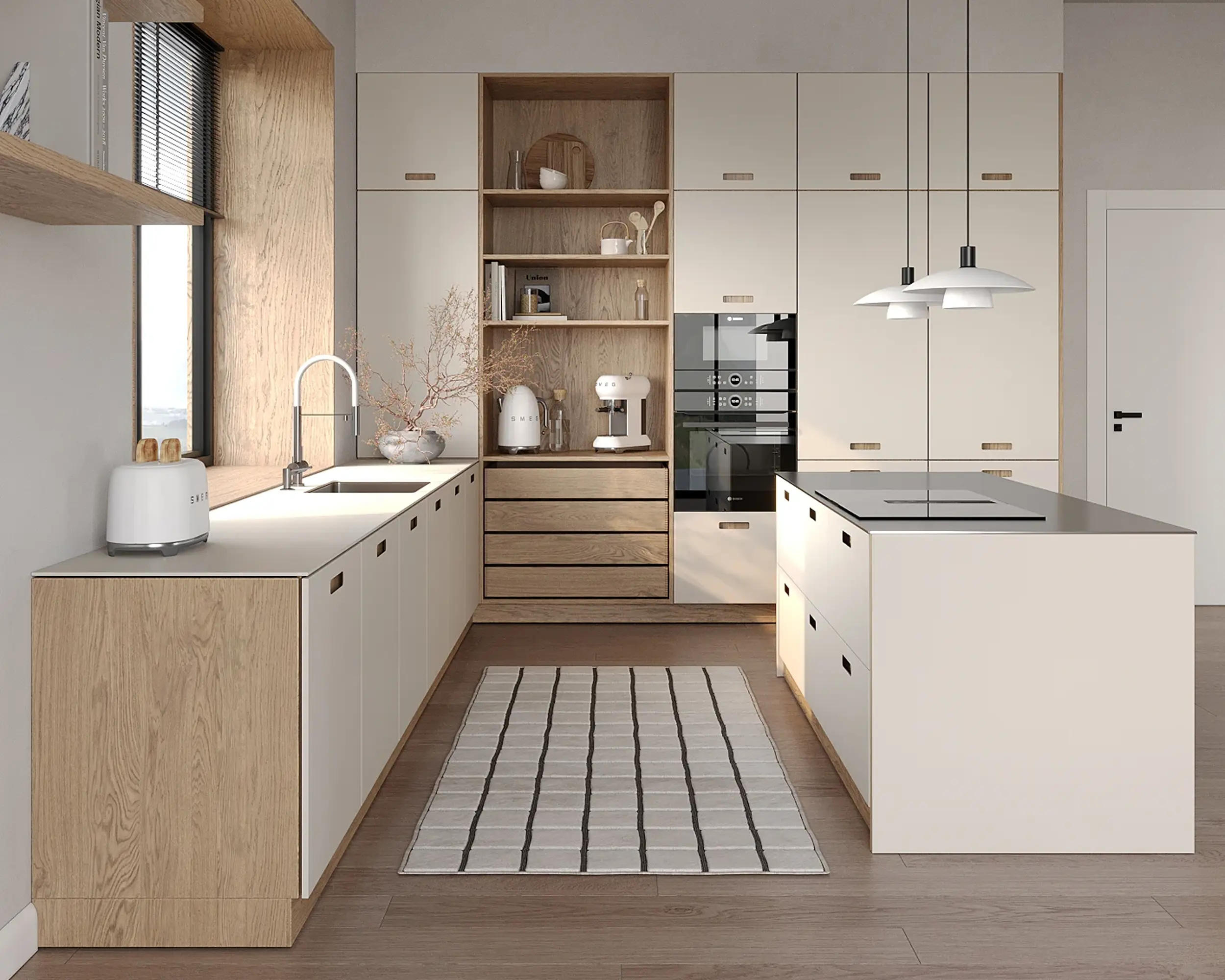
Choosing between FENIX NTM and stone countertops is less about picking a universally “better” material and more about deciding what role you want the countertop to play in a modern kitchen. FENIX NTM is engineered for an ultra-matte, low-reflective look that can blend quietly into the architecture, especially alongside handleless cabinetry, warm wood veneers, and minimalist layouts. Stone brings natural depth, movement, and material presence that can either soften a calm kitchen or become the visual centerpiece of the room.
This FENIX NTM vs stone countertop article compares the two options through real-life use: durability, maintenance, visual impact, cost considerations, and design compatibility with Japandi, Scandinavian, matte-front, and modern kitchen styles.
Quick Verdict
.png)
If you want a countertop that visually blends with handleless cabinets, reduces glare, and keeps the kitchen calm in bright open-plan spaces, FENIX NTM is often the more coherent modern choice. If you want the countertop to add natural complexity, warmth, and a stronger sense of material presence, stone is usually the better fit.
A helpful way to decide is to ask one question early: do you want your countertop to disappear into the architecture or lead the material story? FENIX is usually better for the first scenario. Stone is usually better for the second.
| Dimension | FENIX NTM | Stone | What This Means in Practice |
|---|---|---|---|
| Visual effect | Ultra-matte, low-glare | Polished, honed, leathered, or textured | FENIX supports quiet minimalism; stone can be subtle or expressive |
| Pattern | Consistent and uniform | Natural or engineered variation | FENIX keeps the architecture calm; stone adds character |
| Relationship with matte, handleless cabinets | Seamless and integrated | Depends on slab and finish | FENIX creates a single-language look faster |
| Day-to-day upkeep feel | Often straightforward | Varies significantly by type | Your exact stone choice matters more than the category label |
| Best role in the room | Background plane | Feature or layered accent | Decide whether you want continuity or contrast |
What FENIX NTM Is in Practical Terms
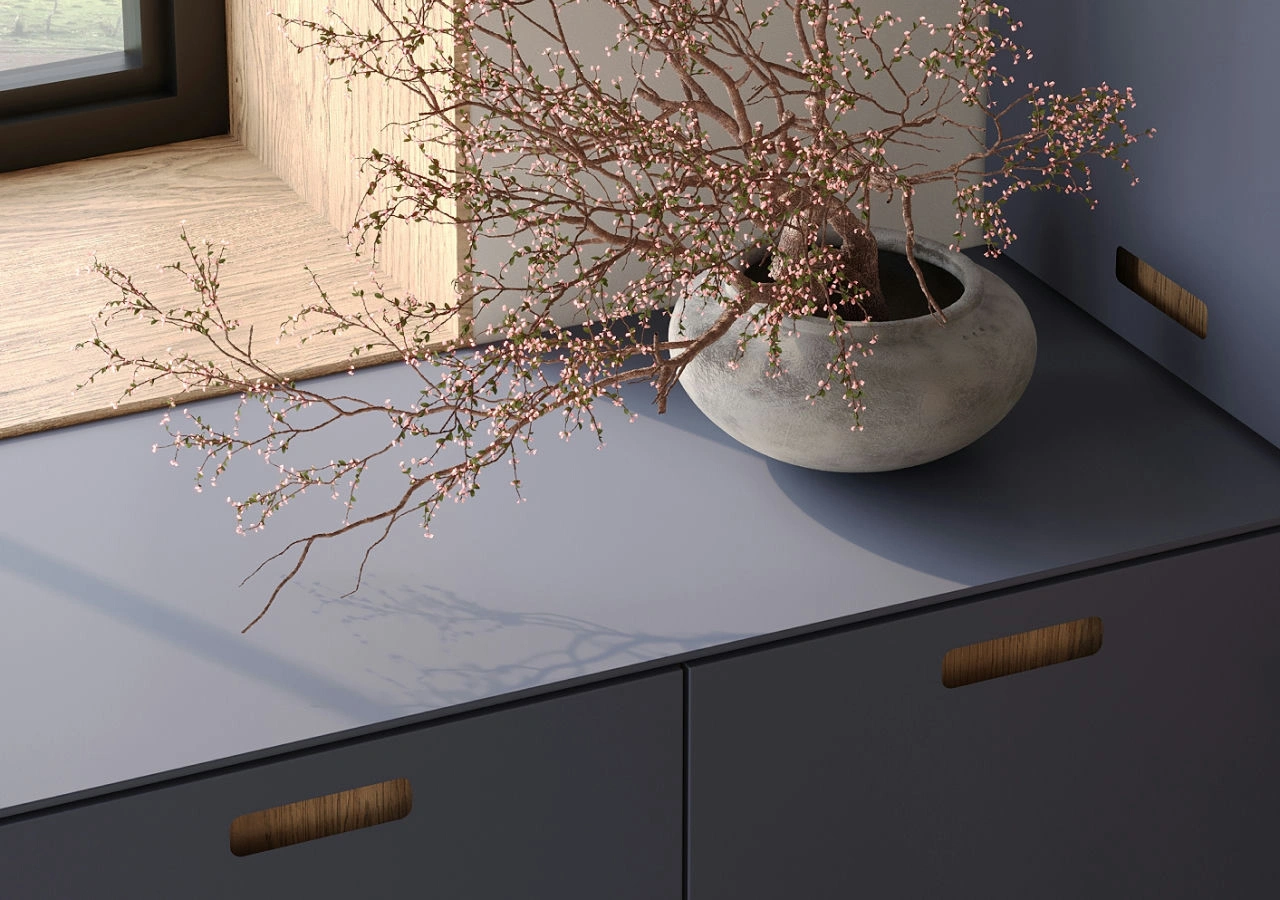
FENIX NTM is a super-matte surface designed to look and feel soft, refined, and contemporary. In modern kitchen design, it works less like a bold “material moment” and more like a controlled background plane.
As a countertop material, FENIX NTM is best understood as a matte architectural surface designed to stay visually quiet. That is why it pairs so well with handleless cabinetry and restrained palettes. It does not compete with wood tones, lighting, or clean cabinet lines.
For many homeowners, the biggest benefit is not one technical specification but the everyday experience. Its low reflectivity can make a kitchen feel calmer and more intentional, especially in homes with large windows, bright daylight, or open-plan layouts where glare can make surfaces feel busy.
What Stone Means in This Comparison

Stone is a broad category. It includes natural materials such as granite, marble, and quartzite, along with engineered options such as quartz and sintered stone surfaces. The key point is that stone performance and maintenance are not universal.
A durable, low-drama stone in a forgiving finish can feel practical and easy to live with. A more delicate or high-contrast slab can be beautiful but may need more attention around staining, etching, heat, sealing, or daily wear.
Because the category is so wide, it helps to narrow the comparison once you know the design direction. If you are weighing ultra-compact surfaces against natural slabs, a Dekton vs natural stone comparison is usually the next step. If you are drawn to warm creamy stone, Taj Mahal quartzite is another useful reference because it pairs well with both light oak and walnut kitchens.
FENIX NTM vs Stone Countertops: Best Use Cases
.webp)
FENIX NTM is usually the better fit when your kitchen is built around calm continuity. If your cabinetry is matte and handleless, your palette is warm and understated, and you want the wood grain or cabinet geometry to carry most of the emotion in the room, FENIX supports that intention well.
It helps create a unified, architectural look where the countertop does not distract from the lines of the design. This can be especially useful in small kitchens, open-plan spaces, and minimalist interiors where too much contrast can make the room feel visually fragmented.
Stone is usually the better fit when you want the countertop to add depth and layered material richness. This is especially true in kitchens where the cabinets are intentionally restrained: clean fronts, minimal hardware, softened geometry, and simple color blocking. In that kind of design, stone can keep the kitchen from feeling too flat.
Design Compatibility: Japandi, Scandinavian, Matte Fronts, and Stainless Styles
In Japandi and Scandinavian kitchens, the countertop should support the material direction already set by the cabinets, layout, lighting, and wood tone. The best choice is not only about durability. It is also about how much visual movement you want the surface to add.
Japandi Kitchens
.webp)
For Japandi kitchens, stone is often the more natural first pick. The style benefits from materials that feel grounded, organic, and quietly expressive. A warm, restrained stone can add depth without making the kitchen feel busy.
FENIX can also work in Japandi kitchens, especially in very minimal designs. It is a good fit when the countertop should stay quiet and let the wood, layout, and soft proportions lead the room.
Scandinavian Kitchens
.webp)
For Scandinavian kitchens, FENIX is often the cleaner default. Its ultra-matte, uniform surface supports an airy and uncluttered look, especially in small and medium kitchens.
Stone can also work in Scandinavian kitchens, but it usually looks best when the slab is soft, creamy, and low contrast. Too much pattern can make the space feel heavier than intended.
Matte Cabinet Fronts
.webp)
With matte cabinet fronts, the main design risk is flatness. FENIX pairs well with matte cabinets, but the kitchen still needs texture from wood grain, ribbed glass, lighting, open shelving, or flooring.
Stone can add that depth through natural variation. The slab should still be chosen with restraint so it does not compete with the clean cabinet geometry.
Stainless Steel Fronts
.webp)
With stainless steel fronts, FENIX often creates balance by keeping the surrounding surfaces calm and low-glare. This helps the stainless steel feel more residential and less commercial.
Stone can also work with stainless steel. Warm stone can soften the look, while cooler or darker slabs can push the kitchen in a more industrial direction.
Durability and Maintenance as Lived Experience
.webp)
In real homes, durability is not only about what a material can survive. It is also about what you are comfortable living with every day.
FENIX NTM can feel easier to live with if your main priority is a calm, uniform, low-glare surface. It is often chosen because it feels predictable in daily care and aligns well with modern minimalist kitchens.
Stone durability depends heavily on the exact material. Granite, quartzite, marble, quartz, and sintered stone all behave differently. Some are extremely durable and forgiving. Others need more care around staining, etching, sealing, heat exposure, or impact.
This is where your personal habits matter more than the category label. If your kitchen is high-traffic and you want a clean visual baseline without constantly managing the surface, FENIX may be the better fit. If you love natural character and are comfortable choosing and caring for a specific slab properly, stone can be a deeply satisfying long-term choice.
Cost and Value in a Modern Kitchen Renovation
Countertop cost rarely depends on the material alone. Layout complexity, edge profiles, cutouts, backsplash scope, island size, seams, and installation requirements can change the final price more than homeowners expect.
FENIX can be more predictable when the goal is a clean, uniform surface without complex fabrication details. Stone can range widely, especially when you choose premium slabs, waterfall edges, mitered details, integrated sinks, or full-height slab backsplashes.
The best way to compare value is to price both options using the same kitchen scenario. Use the same island size, edge profile, sink cutout, cooktop cutout, backsplash height, and installation scope. Otherwise, you may end up comparing two different projects rather than two different materials.
How to Choose Between FENIX NTM and Stone Countertops
Start by deciding what role the countertop should play in the kitchen. In modern minimalist interiors, the right choice is usually the one that supports your cabinet finish, wood tone, lighting, and daily habits.
-
Decide whether the countertop should recede or lead. If you want the surface to fade into calm matte architecture, lean toward FENIX NTM. If you want natural depth to lead the material story, lean toward stone.
-
Match the countertop to your cabinet mood. FENIX NTM pairs cleanly with matte, handleless Scandinavian kitchens. Warm, controlled stones often feel more at home in Japandi kitchens because they add natural depth and a grounded feeling.
-
Check the light conditions. Bright open-plan kitchens can benefit from FENIX NTM’s low-glare surface. Stone can still work beautifully, but its pattern and reflectivity will be more present throughout the day.
-
Be realistic about maintenance. Choose the option whose daily care matches your actual routine, not your ideal routine. The best countertop is the one you can live with comfortably every day.
-
Compare costs using the same layout. Island size, seam locations, cutouts, edge profile, backsplash scope, and installation details all need to be included before the comparison is useful.
FENIX NTM is usually strongest when you want quiet continuity. Stone is usually stronger when you want depth, movement, and a more expressive material feature.
What to Check Before Choosing
.webp)
Before choosing between FENIX NTM and stone, confirm the practical details that will affect cost, installation, and daily use.
Review the exact countertop material and finish, not just the broad category. Confirm the edge profile, island size, and possible seam locations. Check the sink and cooktop cutouts, especially if you are using an undermount sink, integrated cooktop, or special appliance layout.
Decide whether the backsplash will be a short backsplash, tile backsplash, or full-height slab backsplash. Clarify heat, scratch, stain, and cleaning expectations before ordering. Also confirm installation and support requirements, especially for long spans, waterfall sides, overhangs, and heavy stone slabs.
A good countertop decision should also make sense with the cabinet system, appliance locations, fabrication method, and how the kitchen will be used every day.
Conclusion
There is no universal winner between FENIX NTM and stone. FENIX works best when you want a calm, matte, low-glare surface that blends into a modern cabinet system. Stone works best when you want natural depth, movement, and a stronger material presence.
The right choice depends on how much visual contrast, maintenance, and material character you want in daily use.
If you are comparing countertop options for a modern kitchen, Corner can help you review materials, cabinet finishes, appliance locations, and layout details together before final decisions are made.