
.webp)
A microwave is one of the harder appliances to place in a minimalist kitchen. Most homeowners still want one, but they do not want it sitting on the counter, breaking up a clean cabinet wall, or making a Japandi kitchen feel cluttered.
So the real question is simple: where can the microwave go without making the kitchen harder to use?
The right location depends on how often you use it, who uses it most, what type of microwave you choose, and how the cabinetry is planned around it. Ventilation, outlet access, cabinet depth, trim details, door movement, and safe reach height all matter. A microwave can disappear visually, but it still needs to work well every day.
Choose by Use, Not Just Appearance
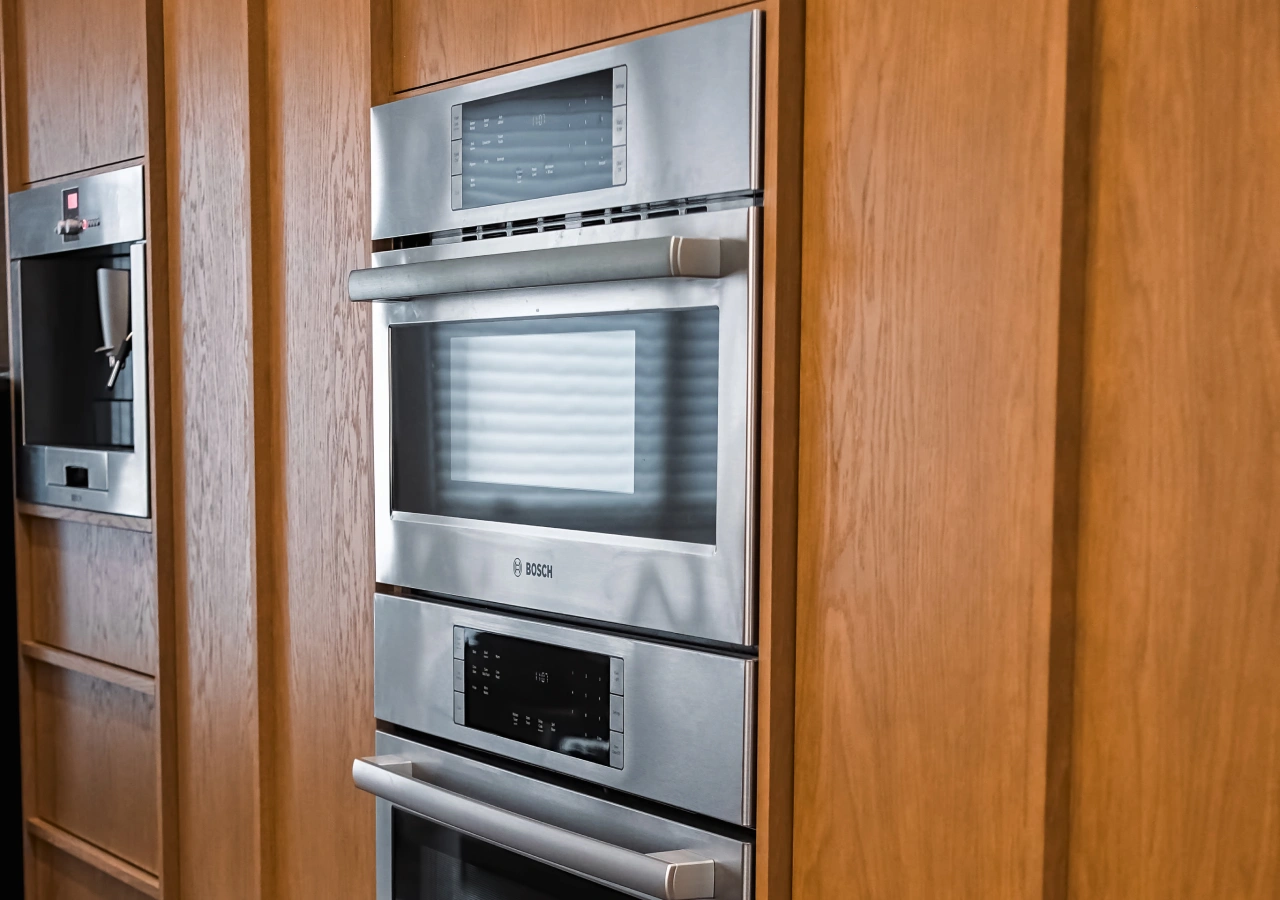
The best microwave location is not always the most hidden one. It is the one that fits how you actually use the kitchen.
A microwave drawer works well when you want the appliance below eye level. An appliance garage makes sense when the microwave belongs near a coffee, breakfast, or pantry zone. A wall cabinet or tall appliance wall can also work well when the microwave is part of a larger built-in appliance layout.
The key is to choose the microwave type and location before cabinet drawings are finalized.
Microwave Drawer
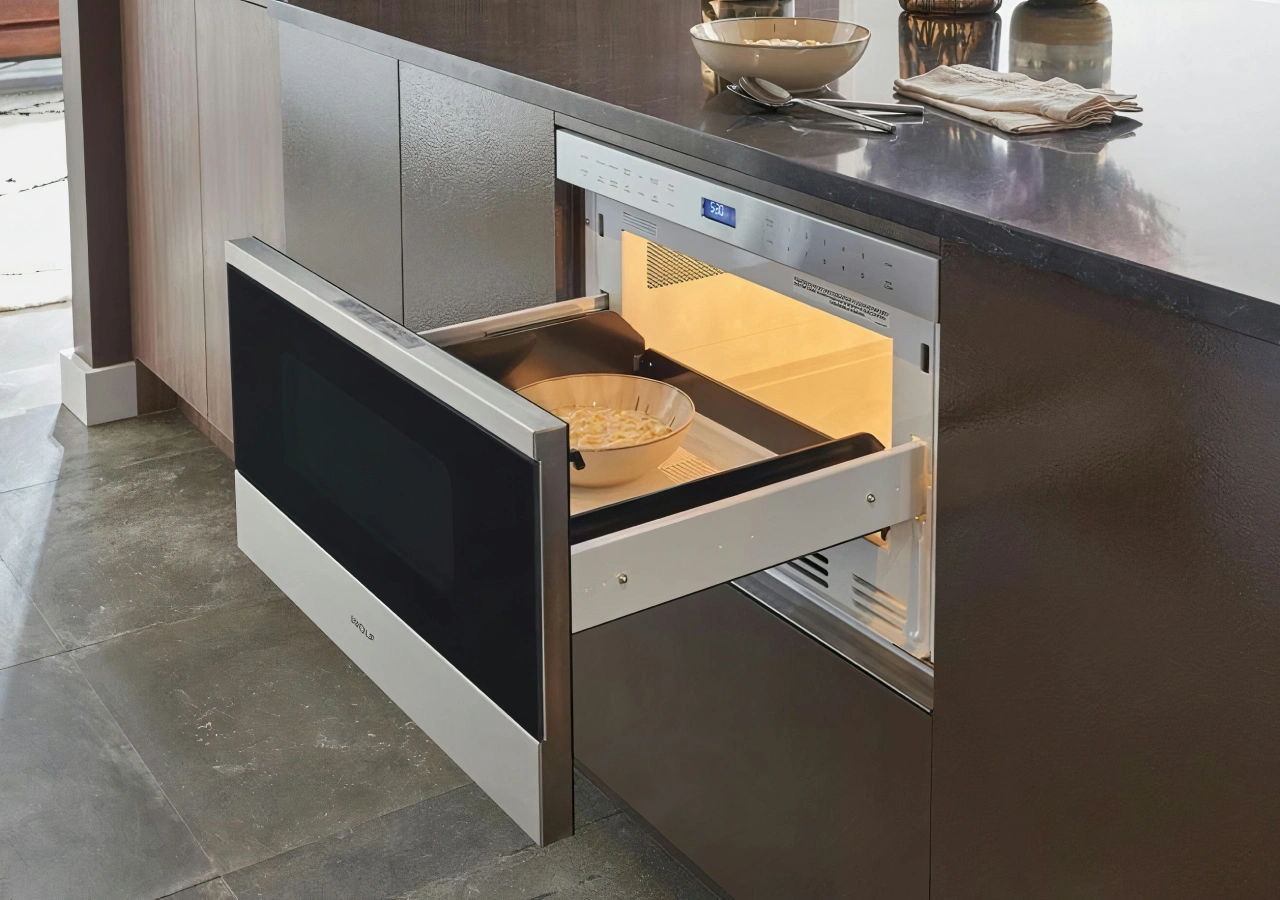
A microwave drawer is often the best option when you want the microwave out of the main sightline without hiding it behind cabinet doors. It sits below the counter, usually in an island or base cabinet run, so the upper half of the kitchen can stay focused on cabinets, stone, shelves, or lighting.
Where it works best
A drawer works well near an island, snack area, or secondary prep zone. Since the drawer pulls out, you load and remove food from above rather than reaching into a front-swing door.
This can feel more natural for bowls, mugs, and plates, especially when the microwave is used often but does not need to sit at eye level.
What to plan
The tradeoff is cost and precision. A microwave drawer needs the correct cabinet opening, support, electrical location, and surrounding storage plan. It should be selected before the drawings are finished, not added after the cabinet layout is already set.
Choose this option if you want the microwave below the main sightline and do not want a tall appliance wall interrupted by a visible microwave face.
Appliance Garage
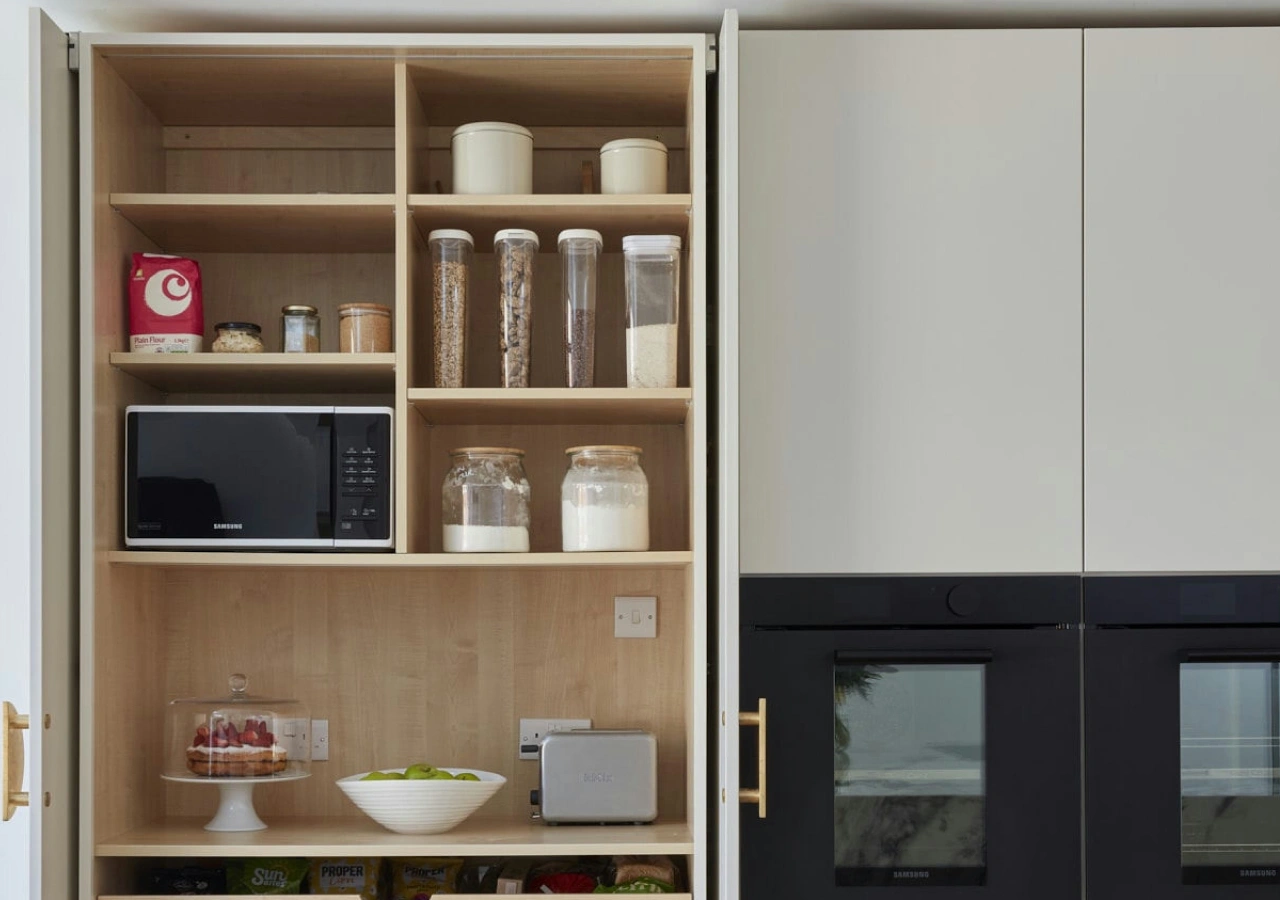
An appliance garage is a dedicated cabinet zone for small appliances like a coffee maker, toaster, blender, kettle, or microwave. It works best when it is planned around a real daily routine, not just used as a place to hide clutter.
Where it makes sense
For a microwave, an appliance garage works well in a pantry wall, breakfast station, or coffee zone. The microwave can sit close to the items used with it: mugs, plates, coffee supplies, toaster, snacks, or breakfast storage.
This can be especially useful in open-plan kitchens where the kitchen is visible from the living or dining area. With pocket doors, lift-up doors, or cabinet fronts, the appliance area can be closed when not in use.
What can go wrong
An appliance garage needs careful technical planning. A microwave should only be enclosed or built into cabinetry if the appliance model allows it and the manufacturer’s ventilation, clearance, electrical, and trim requirements are followed.
Do not place a standard countertop microwave behind cabinet doors and assume it is safe.
Door type also matters. Pocket doors keep access clear but need more hardware planning. Lift-up doors look neat but need overhead space. Swing doors are simpler, but they can block a walkway or nearby cabinet if the location is tight.
Wall Cabinet or Tall Appliance Wall
.webp)
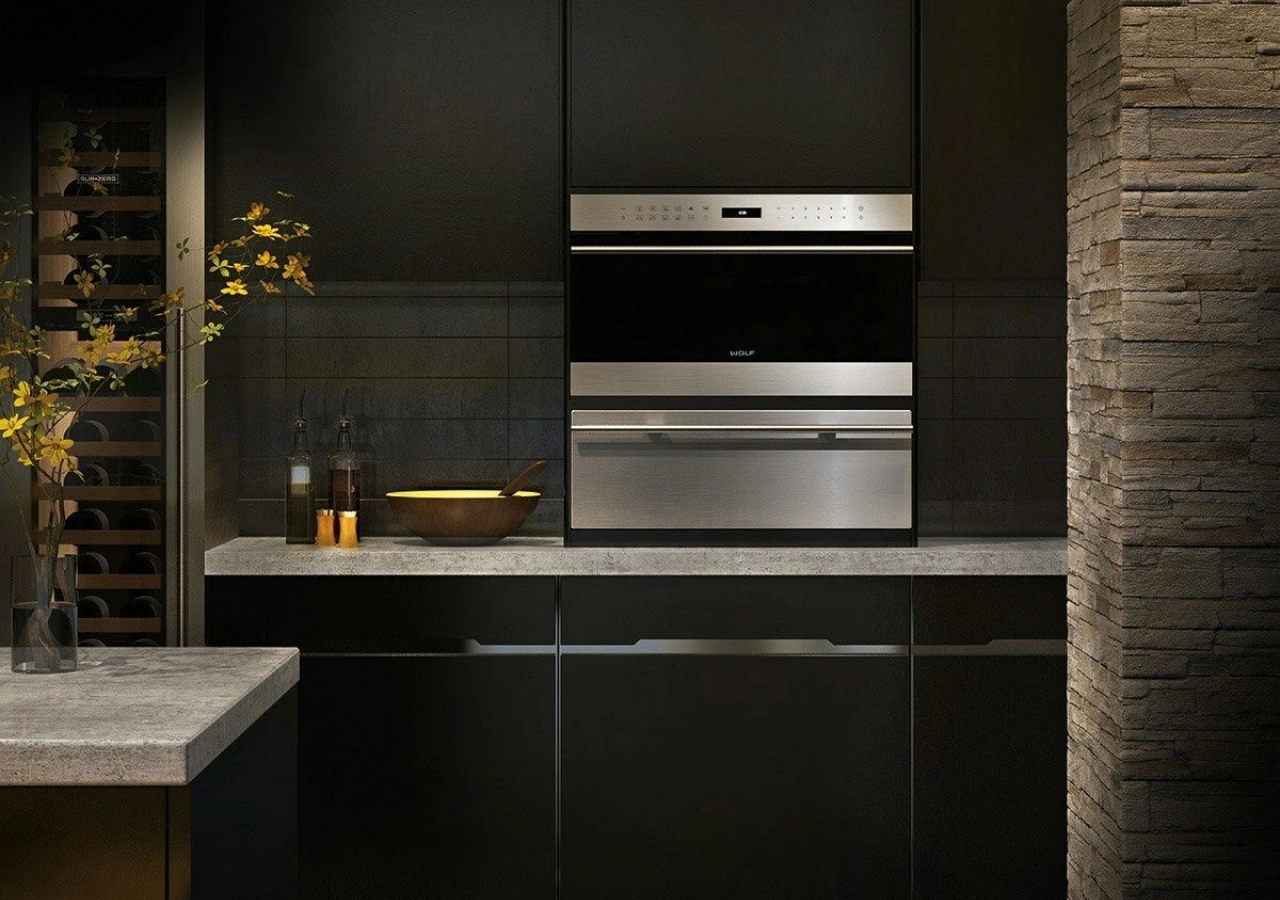
A wall cabinet or tall appliance wall works well when the microwave belongs inside a larger appliance zone. This can include a built-in microwave, oven stack, pantry wall, or tall storage run.
Best use case
The microwave comes off the countertop and becomes part of the cabinet layout. Instead of looking like a loose appliance, it sits with ovens, pantry storage, panel-ready refrigeration, or tall cabinets.
This can look very finished when the microwave aligns with other elements in the wall, such as oven height, shelf lines, cabinet reveals, or pantry divisions.
Height and trim details
Height is the main issue. The microwave should sit at a comfortable reach height for the people using it most, especially when removing hot bowls or plates.
If it is too high, it can feel uncomfortable and less safe. If it is too low, it can feel awkward for daily use. The exact appliance specs should be confirmed before cabinet drawings so the opening, trim, and surrounding panels are planned correctly.
Pantry Shelf or Under-Counter Placement
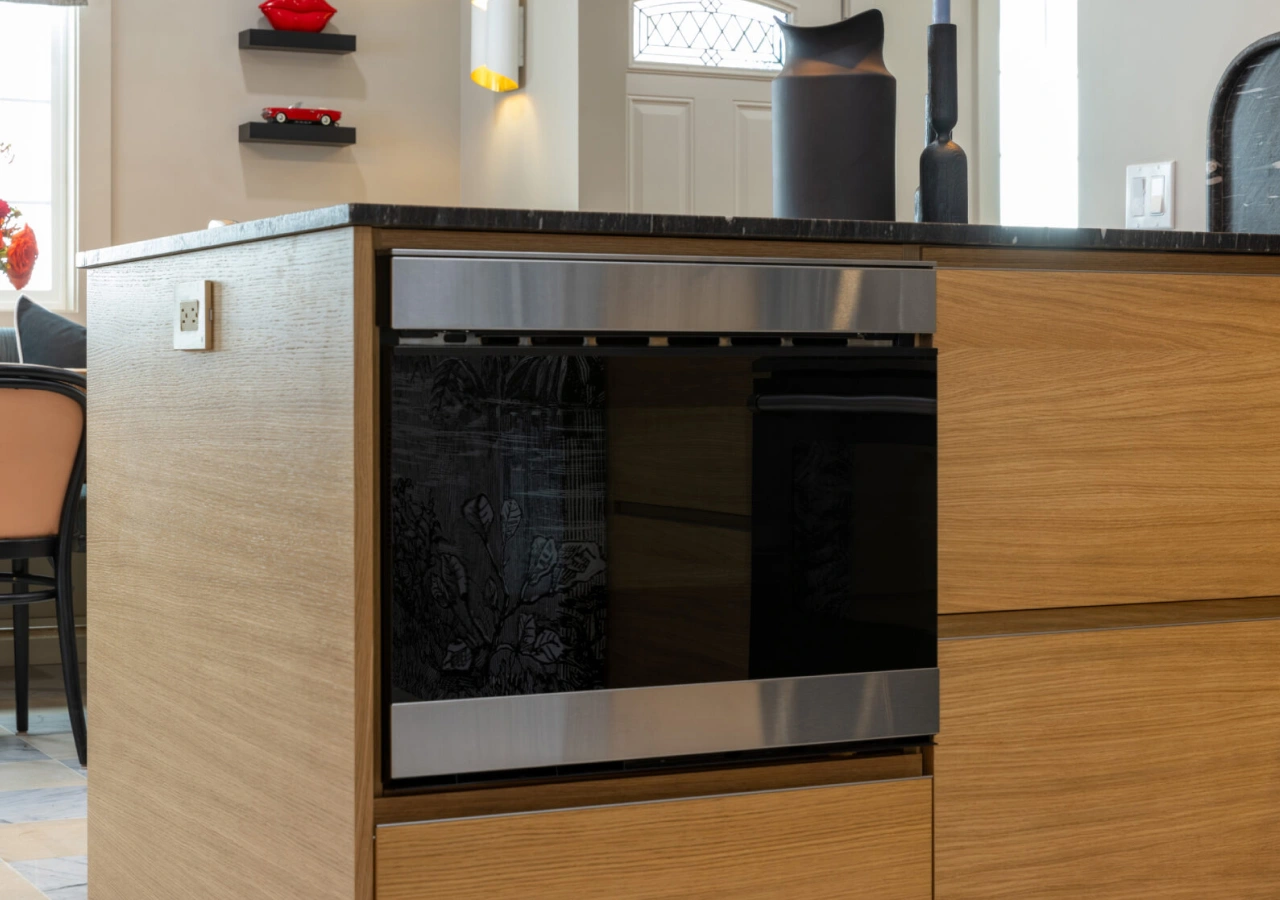
A pantry shelf or under-counter microwave can work when the microwave is not the main appliance in the kitchen. These options are simpler, but they usually feel less integrated than a drawer or built-in wall location.
Under-counter microwave
Under-counter placement keeps the microwave below the main sightline. It can work for a secondary microwave, kids’ snack zone, or island-adjacent prep area.
The downside is ergonomics. Bending down to use a standard microwave can get annoying if it is part of the daily routine. If the microwave is used often, a drawer, appliance garage, or built-in wall location usually feels better planned.
Pantry shelf
A pantry shelf can work for occasional microwave use. The microwave can sit behind pantry doors, inside a tall cabinet, or on a hidden shelf within a storage wall.
This keeps it out of view, but the basics still matter: ventilation, outlet access, shelf depth, door clearance, and user height. A hidden shelf should not look fine in drawings but feel awkward in daily use.
What to Decide Before Cabinet Drawings
Microwave placement should be decided before technical drawings because it affects cabinet openings, electrical planning, storage layout, door clearances, and appliance safety. Late decisions often lead to awkward fillers, lost storage, or cabinet revisions.
Before drawings are finalized, decide:
1. Microwave type: Drawer, built-in, countertop, or compact model.
2. Exact model number: Cabinet openings and clearances should be based on real specs, not a standard assumption.
3. Primary location: Island, appliance garage, wall cabinet, pantry wall, or under-counter area.
4. User height and reach: The microwave should be comfortable for the people using it most.
5. Outlet location: Power should be planned cleanly and safely, not added later.
6. Ventilation and trim requirements: Follow the appliance manual and required installation kit.
7. Door movement: Check pocket, lift-up, swing, or pantry doors against walkways and nearby cabinets.
8. Relationship to other zones: A microwave often works best near the fridge, coffee station, pantry, oven, or prep area.
Common Microwave Placement Mistakes

The most common mistake is choosing the microwave location after the cabinet layout already feels finished. At that point, the microwave becomes something to squeeze in instead of a detail that supports the kitchen.
Other common mistakes include:
- hiding a countertop microwave without checking ventilation;
- placing the microwave too high;
- forgetting the outlet location;
- making an appliance garage too shallow;
- putting the microwave where the door blocks a walkway;
- choosing only for looks, not daily use.
A hidden microwave is not automatically better. If it is awkward to reach, poorly ventilated, or annoying to open, the kitchen will not feel easier to use.
Conclusion
A microwave can work in a minimalist kitchen, but it needs a clear place in the layout. A microwave drawer is often the most discreet option for a calm kitchen. An appliance garage works well when the microwave belongs to a breakfast, coffee, or pantry zone. A wall cabinet or tall appliance wall can also look finished when the height, appliance type, and cabinet details are planned carefully.
The main tradeoffs are cost, cabinet complexity, ventilation, and possible storage loss. The best solution is not always the one that hides the microwave the most. It is the one you can use comfortably without letting the appliance dominate the kitchen.
Explore Corner Renovation kitchens for more ideas on appliance storage, pantry walls, and integrated cabinet systems that keep the kitchen practical and visually calm.


