
.webp)
A kitchen coffee station is a dedicated area for making coffee and storing the things that go with it, all within the kitchen itself. When it is planned well, it keeps mugs, beans, pods, and small appliances from spreading across the countertop and gives the routine a clear place in the layout. Instead of letting the coffee machine sit wherever there is room, the kitchen gives it a proper home.
This matters even more in kitchens shaped by Scandinavian and Japandi ideas, where calm surfaces and controlled storage do a lot of the visual work. In that kind of space, a coffee station usually works best when it is built into the cabinetry from the beginning, whether as a pantry coffee station, a hidden coffee cabinet, or part of an island. Done well, it keeps the kitchen quieter, cleaner, and easier to use every day.
Coffee Station Types: Layout Comparison
| Coffee Station Type | Best For | Main Advantage | What to Watch |
|---|---|---|---|
| Pantry coffee station | Larger kitchens, open layouts | Keeps the setup separate from the main prep area | Needs enough cabinet depth and internal planning |
| Hidden coffee cabinet | Minimalist, Japandi, and Scandinavian-style kitchens | Conceals appliances and reduces visual clutter | Requires precise outlet, clearance, and storage planning |
| Island coffee station | Large open-plan kitchens | Makes coffee prep central and easy to access | Needs integrated power and careful zoning |
| Open countertop setup | Small kitchens or simple routines | Easiest to access and simplest to create | Can quickly feel cluttered |
What Makes a Coffee Station Work
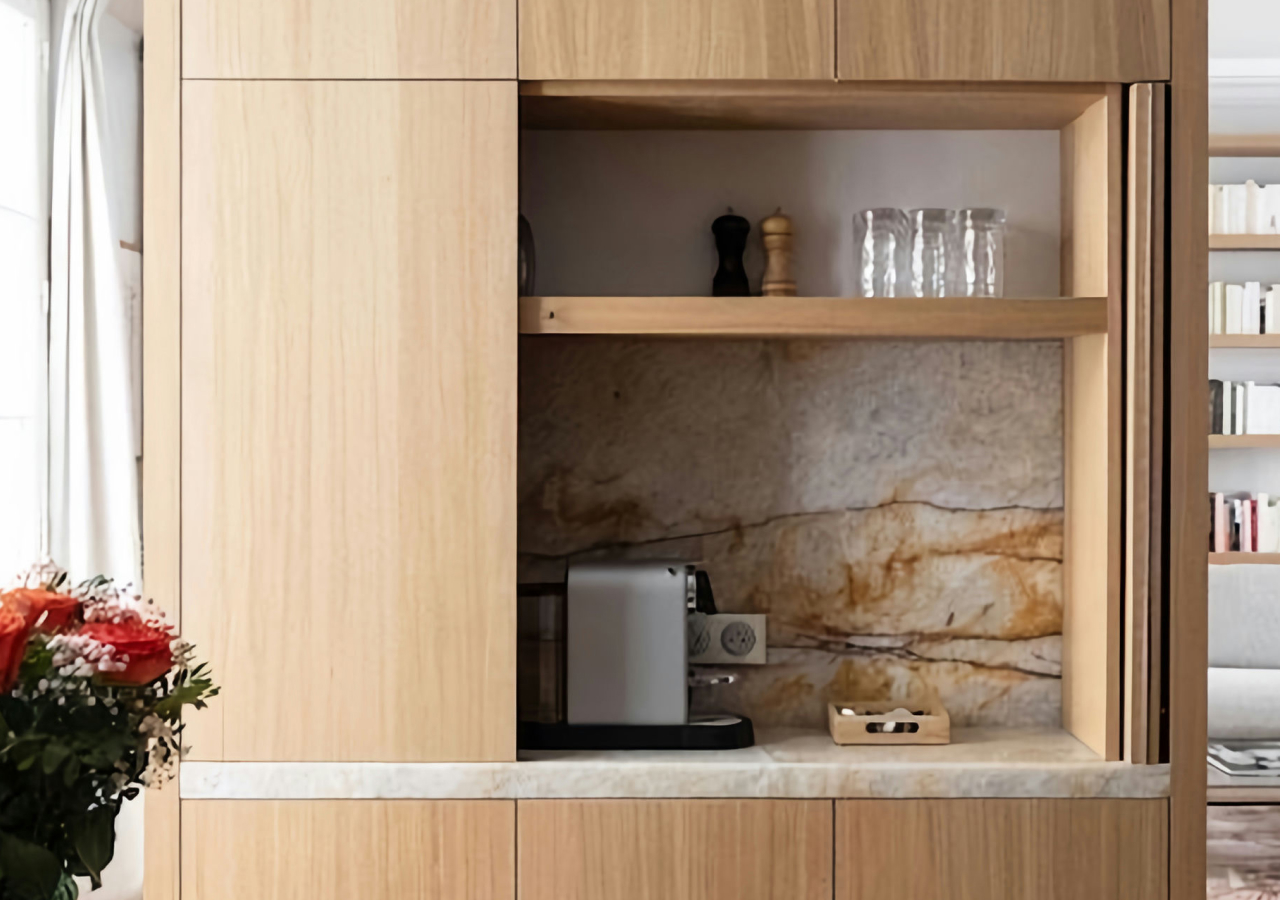
A coffee station works when it feels built into the kitchen rather than dropped onto a leftover patch of counter. The setup should have a clear zone, the everyday items should be close at hand, and the cabinetry should make the routine easier rather than awkward.
That means the machine, mugs, beans, spoons, filters, and other everyday items stay close together and are easy to reach in one movement. You are not crossing the kitchen to get cups from one cabinet, coffee from another, and the machine from a third surface. The whole routine stays contained.
That changes the way the kitchen works. The station stops competing with prep space, and the room feels more settled because cords, packets, and small accessories are no longer scattered around the worktop. In kitchens with a warmer minimalist, Scandinavian, or Japandi direction, that difference is especially noticeable.
Core Design Principles for Coffee Stations
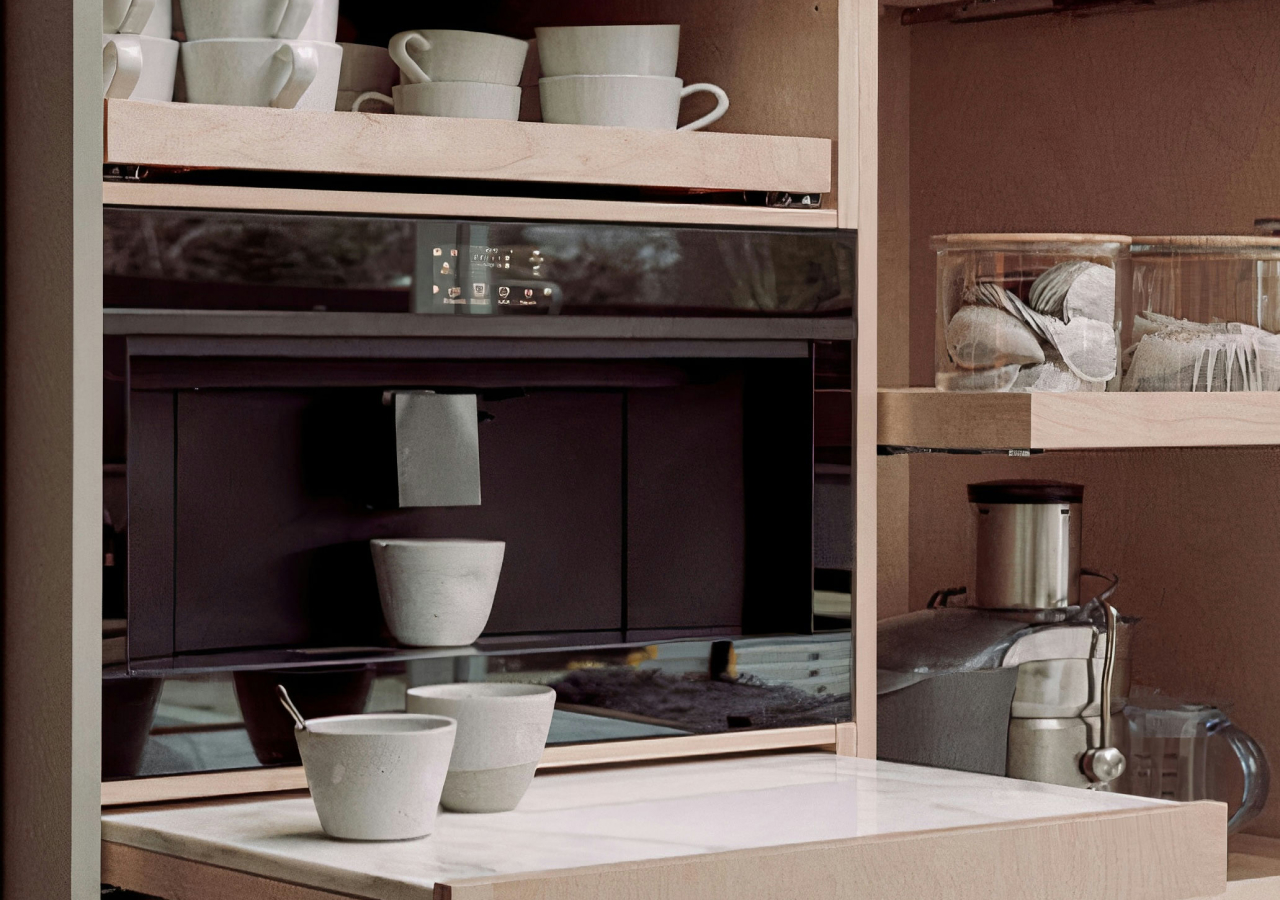
A coffee station should be planned as part of the kitchen from the start, not added once the layout is already fixed. It usually works best just outside the main cooking zone, where it stays easy to reach without interfering with prep around the sink or cooktop.
The materials should feel consistent with the rest of the kitchen. In Scandinavian white kitchens, that often means soft whites, warm wood tones, and matte finishes. In Japandi kitchens, the same idea applies: low contrast, restrained surfaces, and a quieter overall look. The coffee station should follow that language so it feels built in rather than separate.
It is also worth deciding early how much of the setup you want to keep visible. Some homeowners do not mind seeing the machine and accessories throughout the day, while others prefer to hide everything behind a door. A hidden coffee cabinet or appliance garage usually gives the kitchen a calmer look over time.
Ease of use matters just as much. The working surface should sit at a comfortable height, and the storage should reflect what gets used most often. Everyday items should stay close at hand, while less-used pieces can go higher up or farther back.
Coffee Station Layouts (Pantry, Hidden & Island)
Pantry Coffee Station
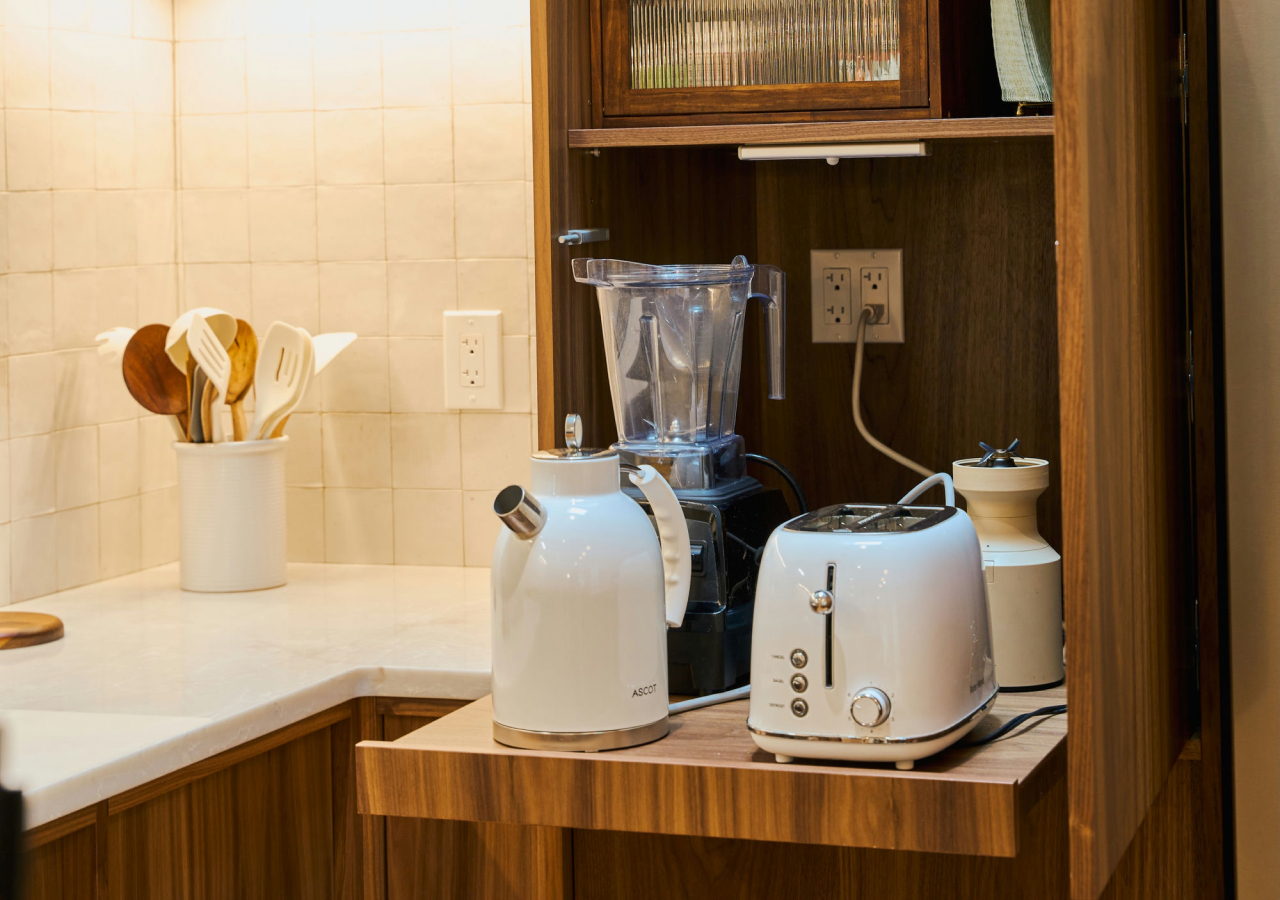
A pantry coffee station is one of the most practical options in a larger kitchen. Built into a tall cabinet run or pantry wall, it creates a separate zone for coffee that does not interfere with cooking or cleanup. That makes it useful in busy households, especially when more than one person uses the kitchen at the same time.
It also changes the look of the kitchen. By shifting the coffee setup into a pantry niche or behind cabinet doors, the main kitchen stays visually calmer. In practice, this often means a dedicated countertop section, internal shelving for mugs and supplies, integrated lighting, and doors that open fully or slide clear of the working area.
This type of station suits open-plan homes particularly well because it helps keep the kitchen organized without losing easy access.
Hidden Coffee Cabinet
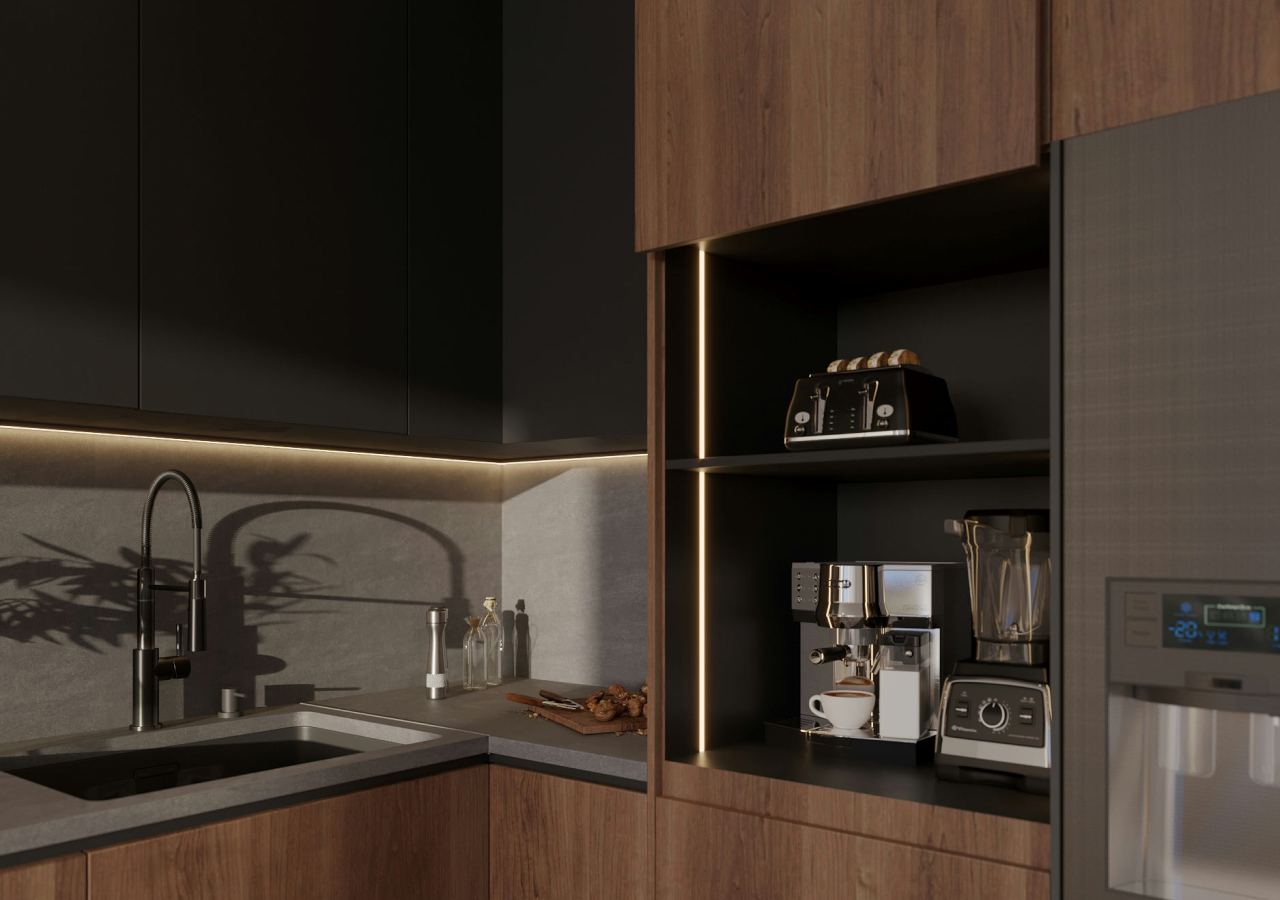
A hidden coffee cabinet is often the strongest option for homeowners who want the kitchen to stay visually clean. In this setup, the machine and accessories sit inside cabinetry, usually behind an appliance garage, lift-up door, or pocket-door system. When the station is closed, it disappears into the cabinet run. When opened, everything is ready to use.
That is why this layout works so well. It keeps the station practical without leaving appliances on display all the time. In a Scandinavian or Japandi-inspired kitchen, that can make a real difference because the cabinetry does so much to keep the room looking calm and organized.
A hidden coffee cabinet works best when the cabinet has enough depth for the machine, a dedicated outlet, proper clearance, and storage arranged around daily use. It is one of the cleanest ways to make the coffee setup useful without breaking up the look of the kitchen.
Island Coffee Station
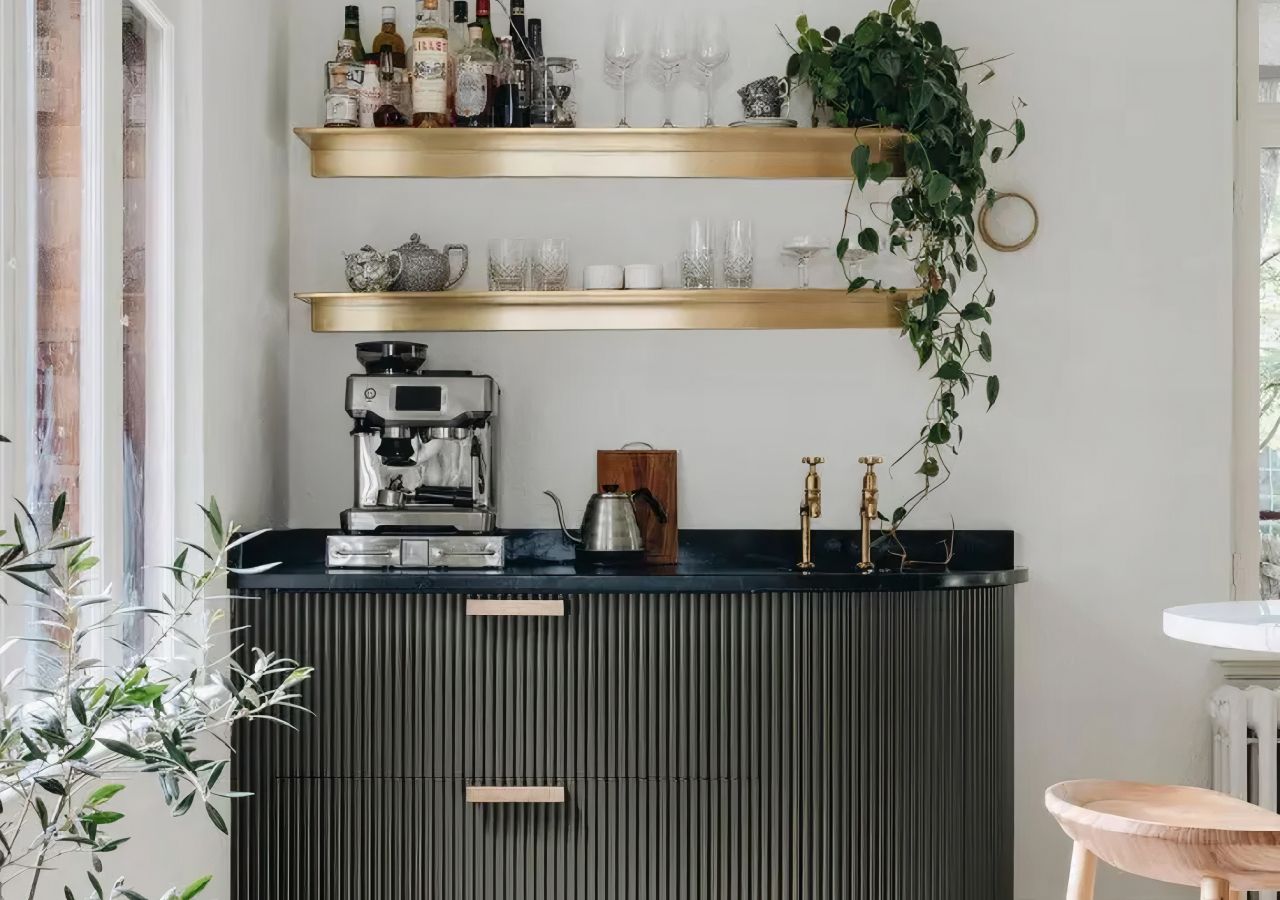
An island coffee station can work well in the right kitchen, though it takes more planning than the other options. Instead of placing the setup in a tall cabinet run, it becomes part of the island, often along the side or on a secondary face.
Its main advantage is access. In a large open-plan kitchen, the island often acts as the center of the room, so placing the coffee station there can make the setup easier to reach and more connected to the dining or living space.
That said, the island already has a lot to do. If it also handles prep, seating, and storage, the coffee station cannot get in the way. This option usually makes sense only when the island is large enough to absorb another function without feeling overloaded.
Outlet & Storage Planning (Critical Section)
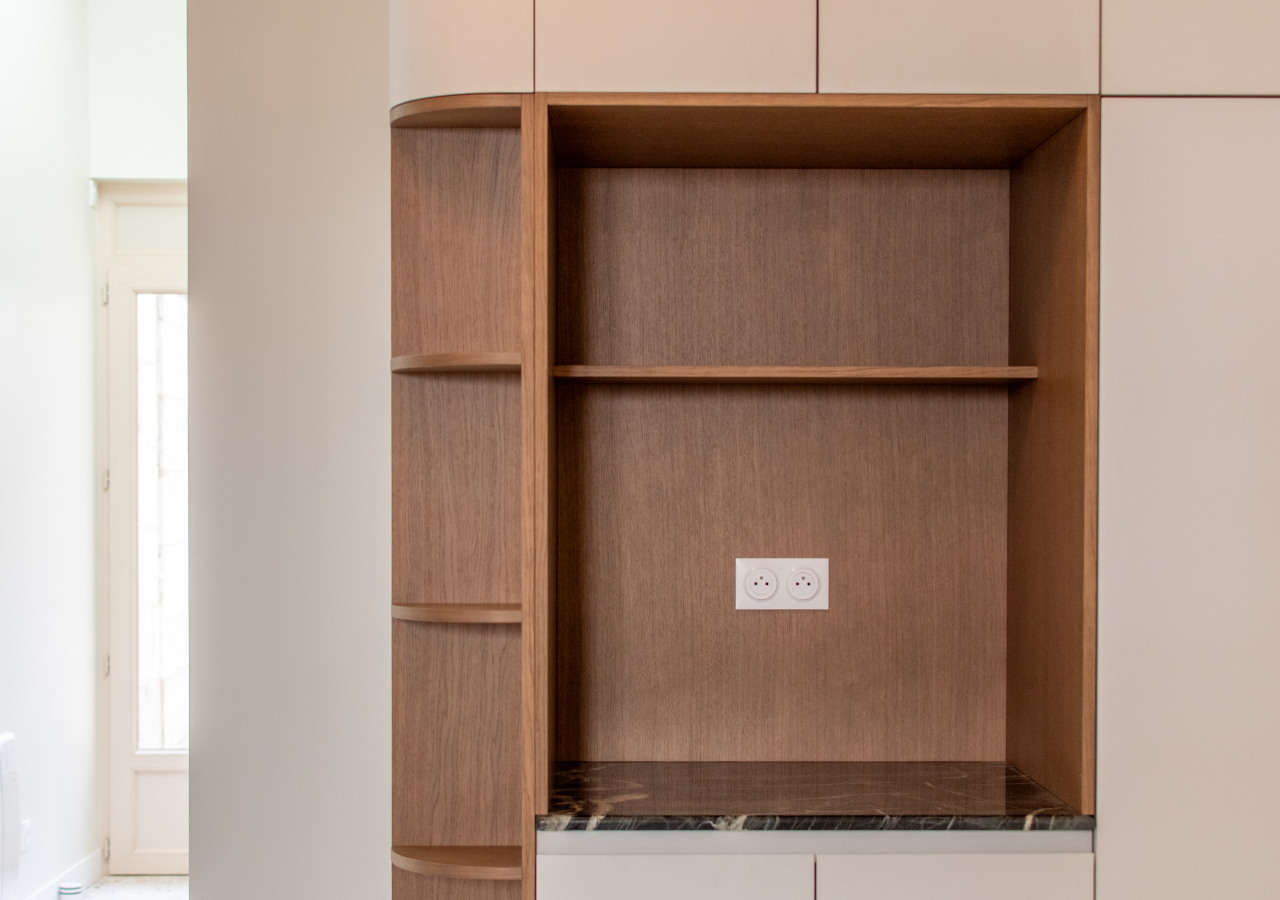
A coffee station needs technical planning from the start. At minimum, it should have a dedicated outlet inside the cabinet or directly behind the machine so cords do not trail across the work surface. It sounds minor, but it affects both the look of the station and how well it works.
Storage needs just as much thought. The best coffee stations keep the routine in one place. Mugs, beans, pods, filters, spoons, and other small accessories should all sit within easy reach of the machine. When those items are spread across several cabinets, the station loses the convenience it was meant to create.
Clearance matters just as much. A coffee machine may fit inside a cabinet on paper, but that does not mean it will be comfortable to use if there is no room to open the lid, refill the water tank, or reach the controls properly. This is why the setup needs to be resolved early. A station that looks neat but feels awkward will not stay organized for long.
Best Places to Put a Coffee Station in the Kitchen
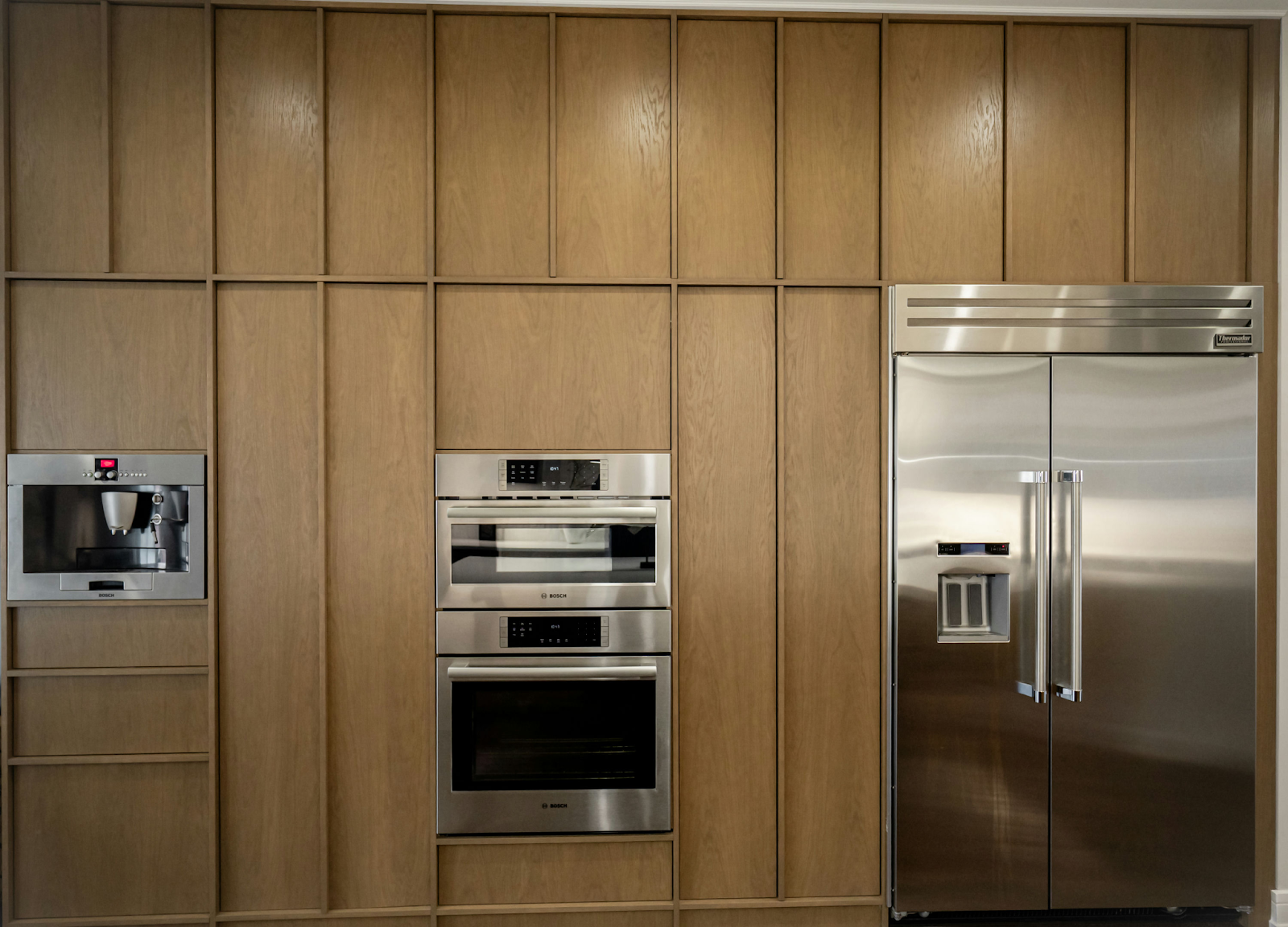
The best place for a coffee station is usually near the edge of the working kitchen, not in its busiest center. A position just outside the main prep zone tends to work best because it supports the routine without interrupting cooking.
In many kitchens, that means placing the station in a tall cabinet run, at the end of a pantry wall, or near the transition between the kitchen and dining area. These locations keep it connected to the kitchen without putting it in the busiest part of the room.
In smaller kitchens, a compact hidden coffee cabinet often gives the best result because it keeps the room visually cleaner while still giving the machine a dedicated place. In larger kitchens, pantry coffee stations and island setups make more sense because there is enough space to give the station a proper footprint.
Common Coffee Station Design Mistakes
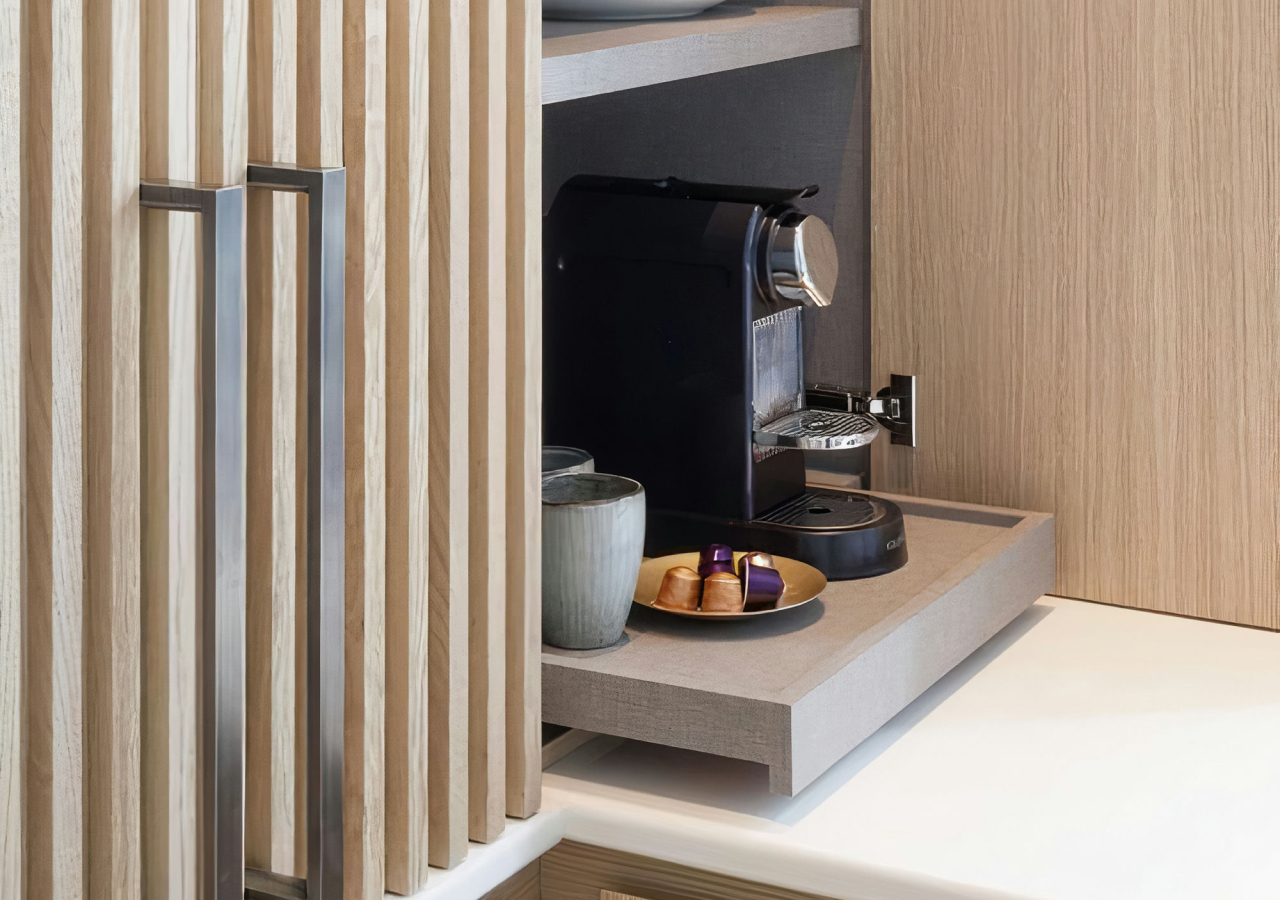
One of the most common mistakes is treating the coffee station as an afterthought. When it is added too late, cabinet depth, outlet placement, and storage often fail to support the machine properly. The result may still look tidy, but it tends to be inconvenient in daily use.
Another issue is leaving too much of the setup exposed without enough control. Open shelves and visible accessories can look appealing at first, but they often become messy quickly. In many kitchens, a hidden coffee cabinet or appliance garage holds up better over time.
Placement can also go wrong. If the station sits too close to the cooktop or sink, it ends up competing with the main working zones of the kitchen. And if cable management is not planned early, the final setup can weaken the clean look of an otherwise well-resolved space.
How to Design a Kitchen Coffee Station (Step-by-Step)
How to Design a Kitchen Coffee Station (7 steps)
- Choose the type of station first. Decide whether your layout calls for a pantry coffee station, a hidden coffee cabinet, or an island coffee station.
- Pick the location early. Place it just outside the main cooking zone so it stays convenient without competing with prep space.
- Measure the appliances properly. Check width, depth, and height clearance, including enough space to lift lids, refill water, and access controls comfortably.
- Plan outlets before cabinetry is finalized. Add dedicated power inside the cabinet or directly behind the machine so visible cables do not become a problem later.
- Organize storage around daily use. Keep mugs, beans, pods, and spoons close to the machine, with drawers or shelves sized to what you actually use.
- Check lighting and visibility. If the station sits inside a cabinet or appliance garage, add lighting so the space is easy to use in the morning and evening.
- Match the materials to the rest of the kitchen. Use the same finishes, tones, and cabinetry language so the coffee station feels built in rather than separate.
Conclusion
A kitchen coffee station may be a small part of the layout, but it changes how the kitchen works day to day. When it is built into the cabinetry from the start, it improves the routine, clears the counters, and helps the room feel more ordered.
Whether the right answer is a pantry coffee station, a hidden coffee cabinet, or an island setup, the same things matter every time: clear zoning, proper outlet planning, enough storage, and materials that match the rest of the kitchen. When those pieces are resolved early, the station feels natural rather than added on later.
If you are planning a remodel, this is one of those details worth thinking through at the beginning. Explore Corner Renovation’s collections, look through our Scandinavian white kitchens, or book a consultation to design a coffee station that suits your space and the way you actually use the kitchen.


