
Japandi Kitchen Design Gallery
Japandi kitchens are known for natural materials, warm wood tones, and uncluttered layouts. But the style can look very different from one home to another. The projects below show how Japandi design works with light and dark oak, walnut, curved forms, and different kitchen layouts.
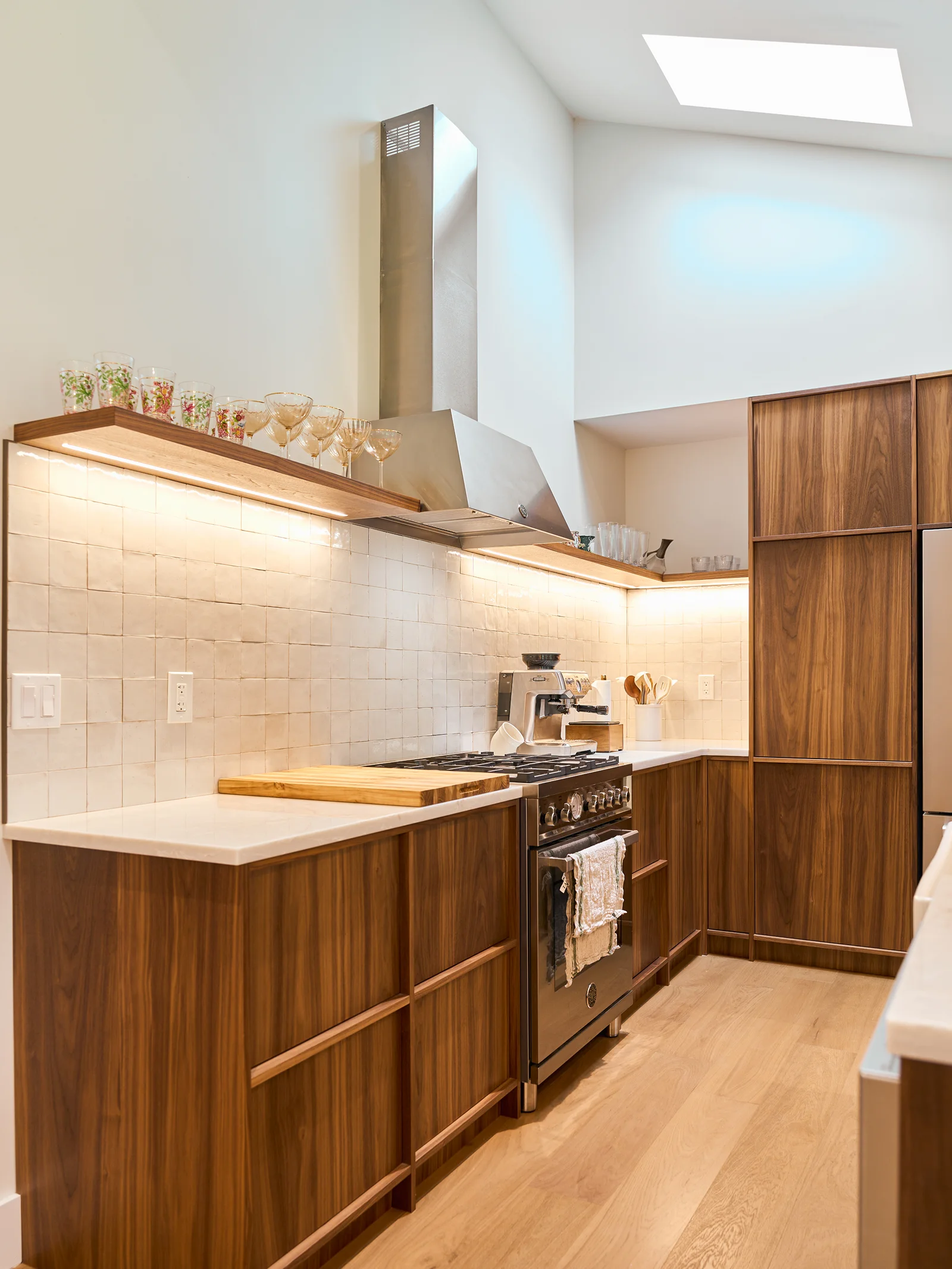
Natural wood cabinetry is one of the easiest ways to introduce Japandi style into a kitchen.
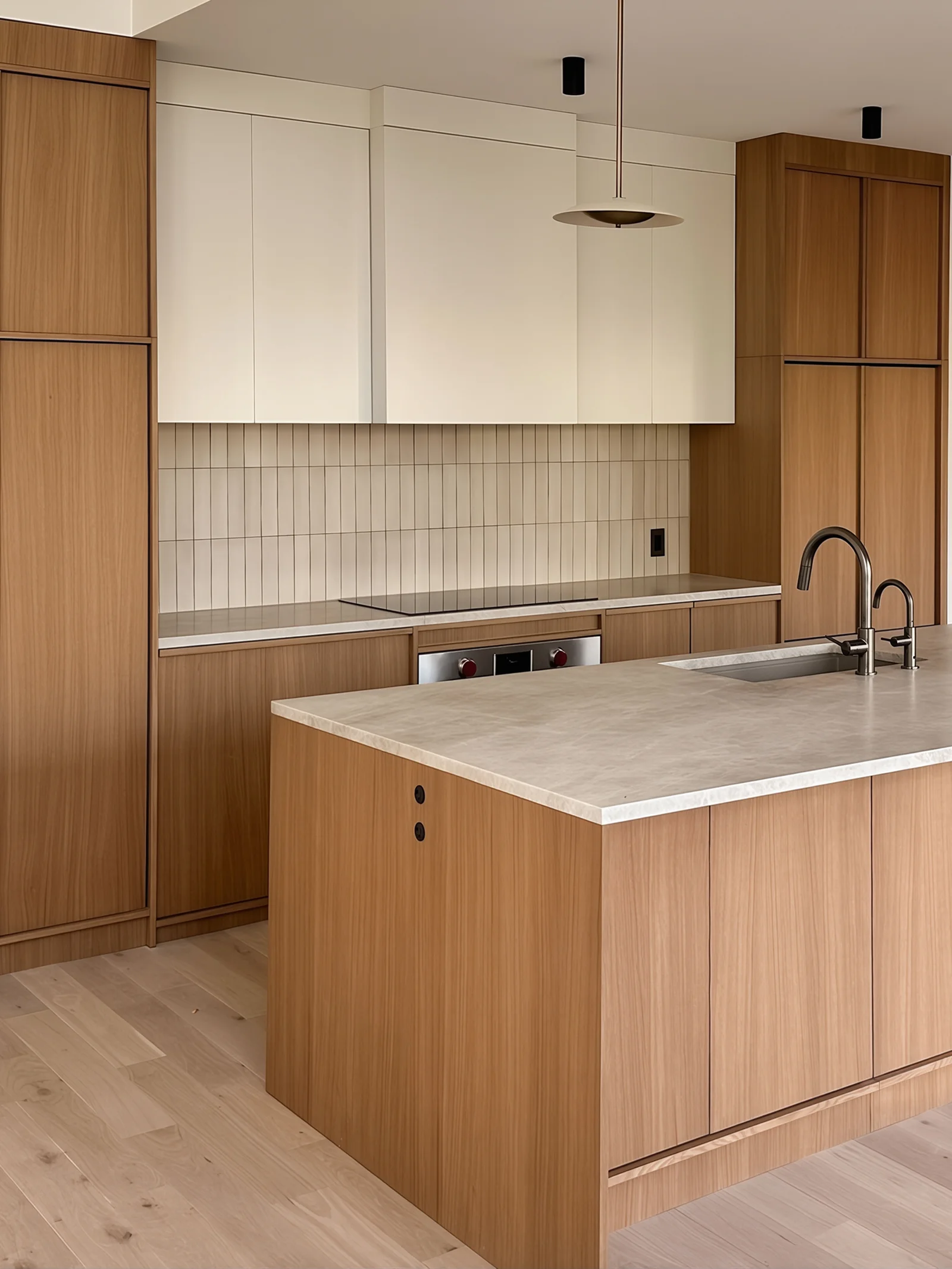
Light oak can be paired with white cabinetry and pale stone for a softer Japandi palette.
Upstate New York Japandi Kitchen Design
American walnut brings warmth and depth to this Japandi kitchen in Upstate New York. Push-to-open fronts keep the cabinetry simple, while open shelving and warm lighting make the darker wood feel lighter. A large island and concealed storage support the minimalist look without sacrificing everyday functionality.
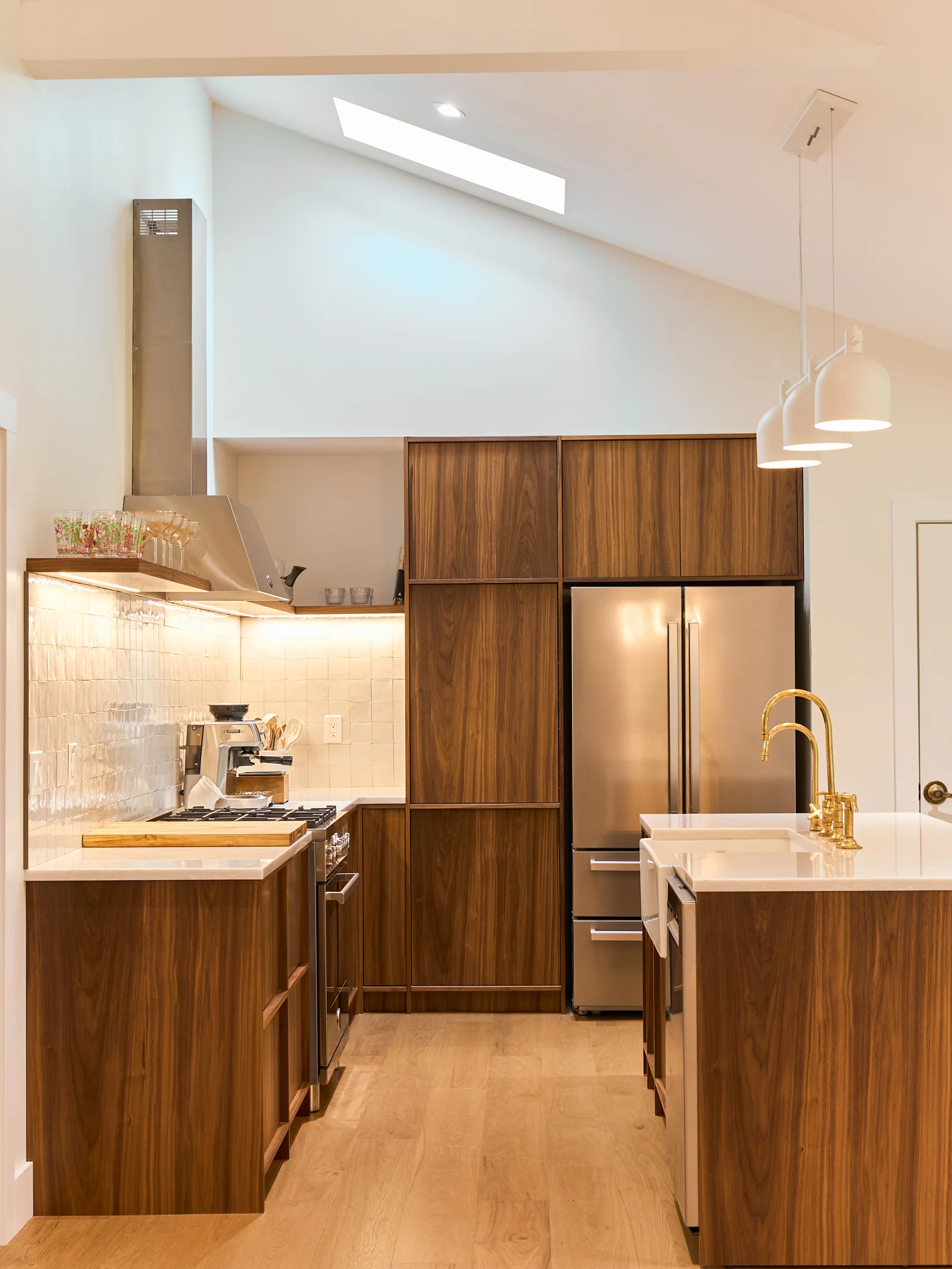
American walnut gives Japandi cabinetry a deeper tone while preserving the natural wood grain.
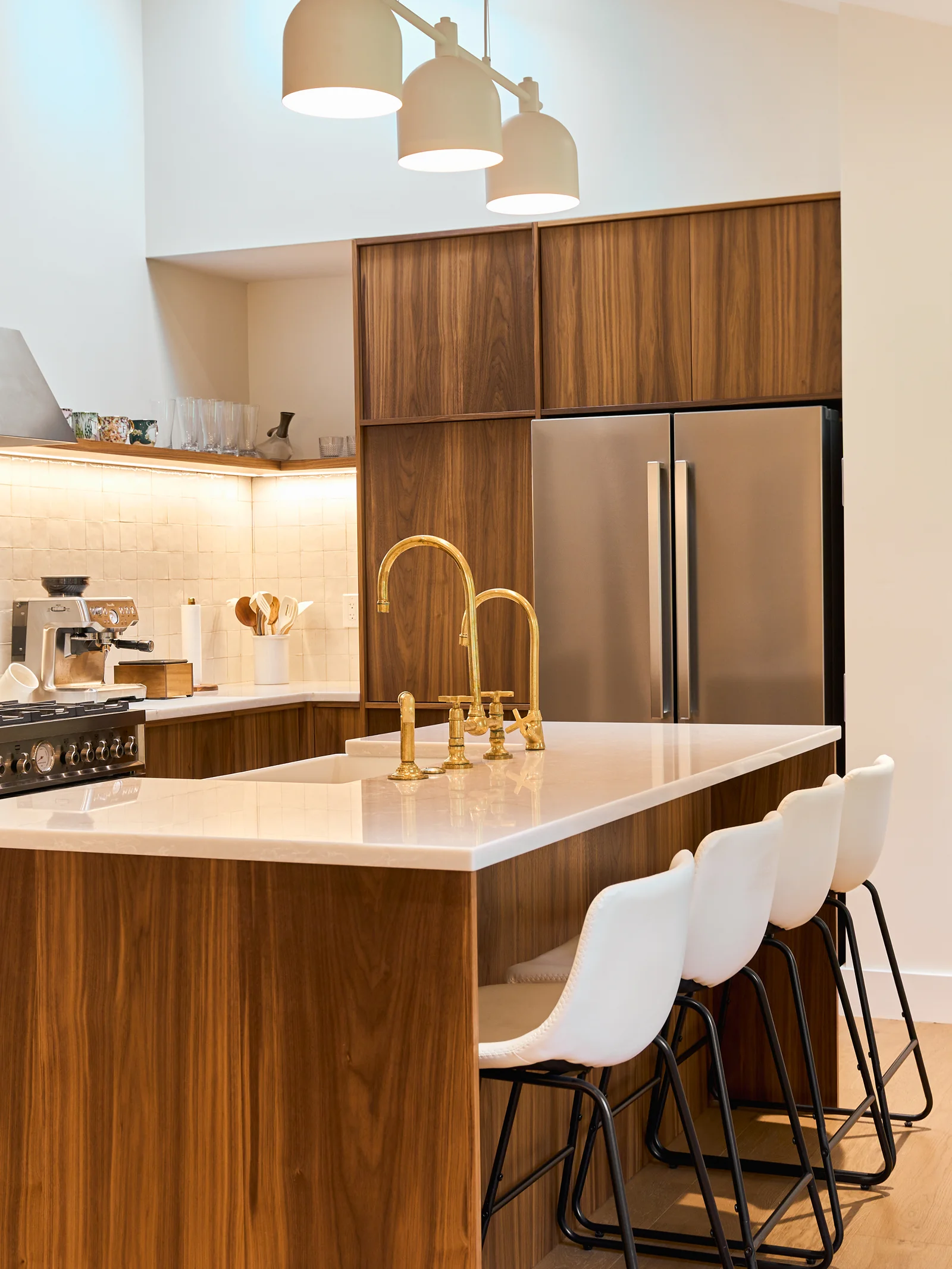
White countertops and warm lighting work well with the richer color of walnut cabinetry.
Oak Japandi Kitchen in Dallas
Natural oak is the main material in this Dallas Japandi kitchen. The oak base and tall cabinets are paired with soft off-white upper cabinets, pale stone, and a textured backsplash. Integrated appliances and restrained hardware keep the composition simple, while the natural wood grain adds warmth and texture.
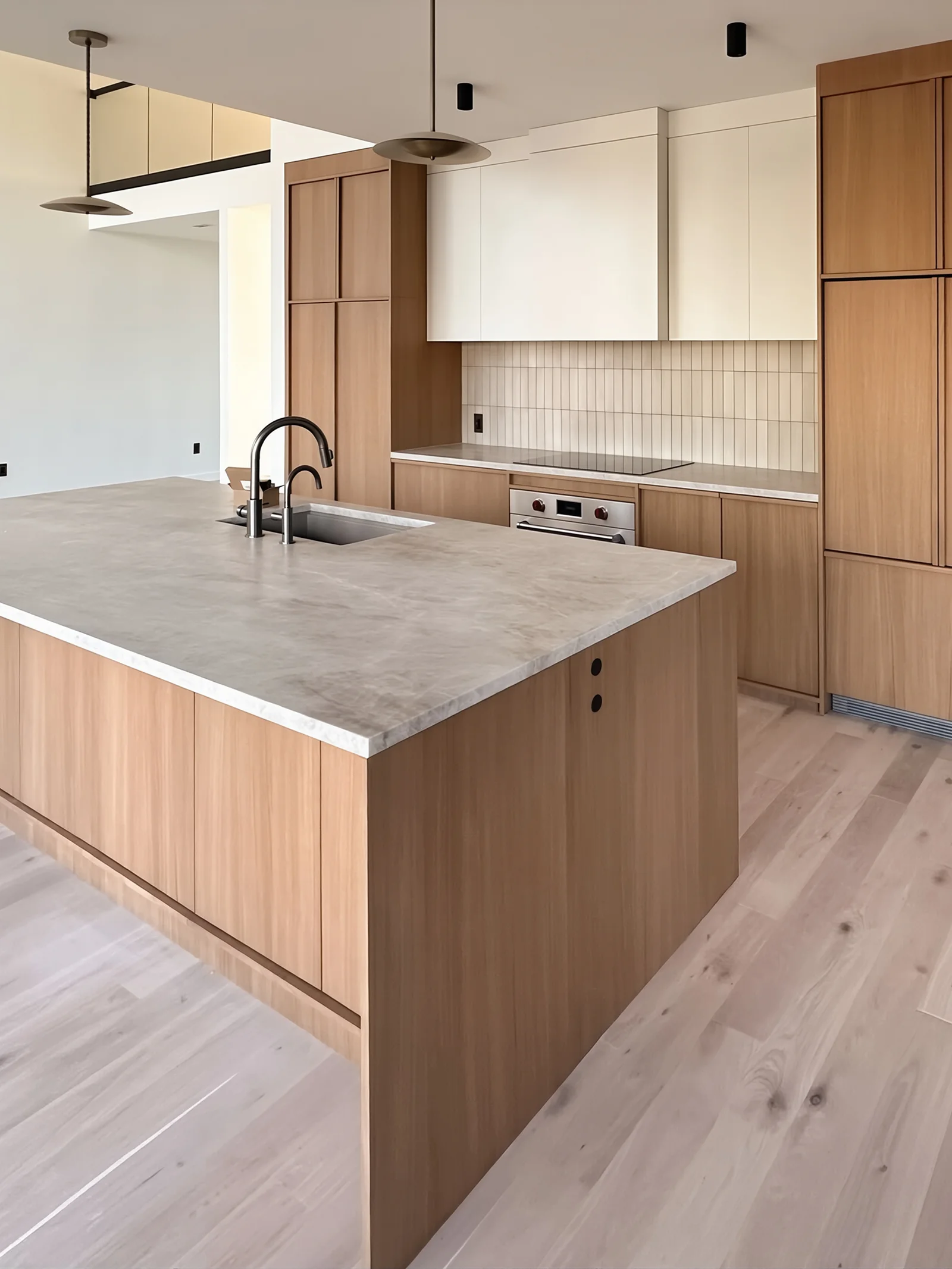
Off-white upper cabinets with built-in range hood make a natural pairing with oak base and tall cabinetry.
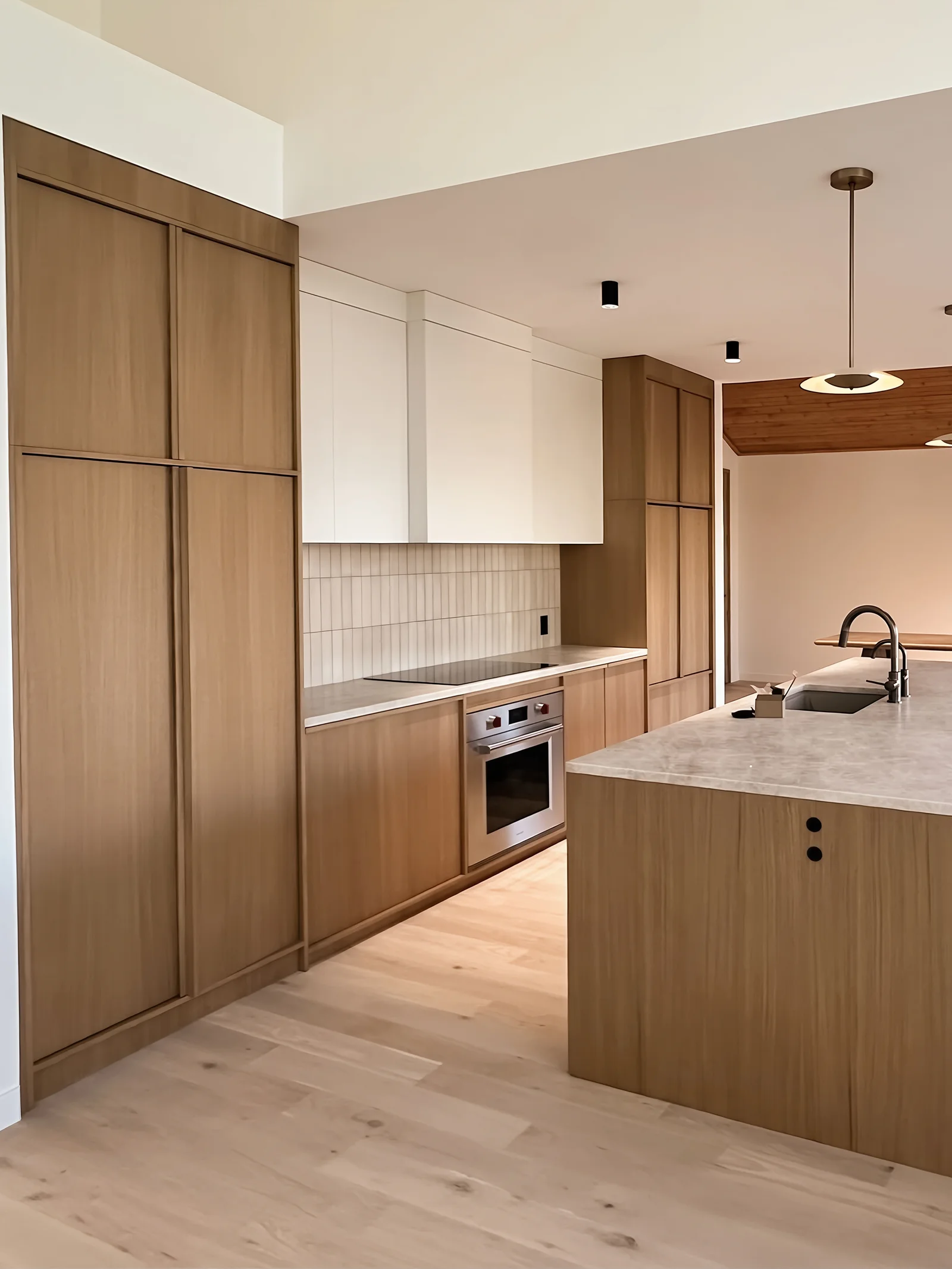
Slim wood rails give simple oak fronts more definition without adding conventional hardware.
Dark Oak Japandi Kitchen in Bulgaria
Dark oak creates a deeper, more architectural look in this Japandi kitchen. A long cabinet run brings the sink, cooktop, and storage into one continuous workspace, while a gray stone island creates a strong contrast with the wood. Light wood accents and garden views help balance the darker palette.
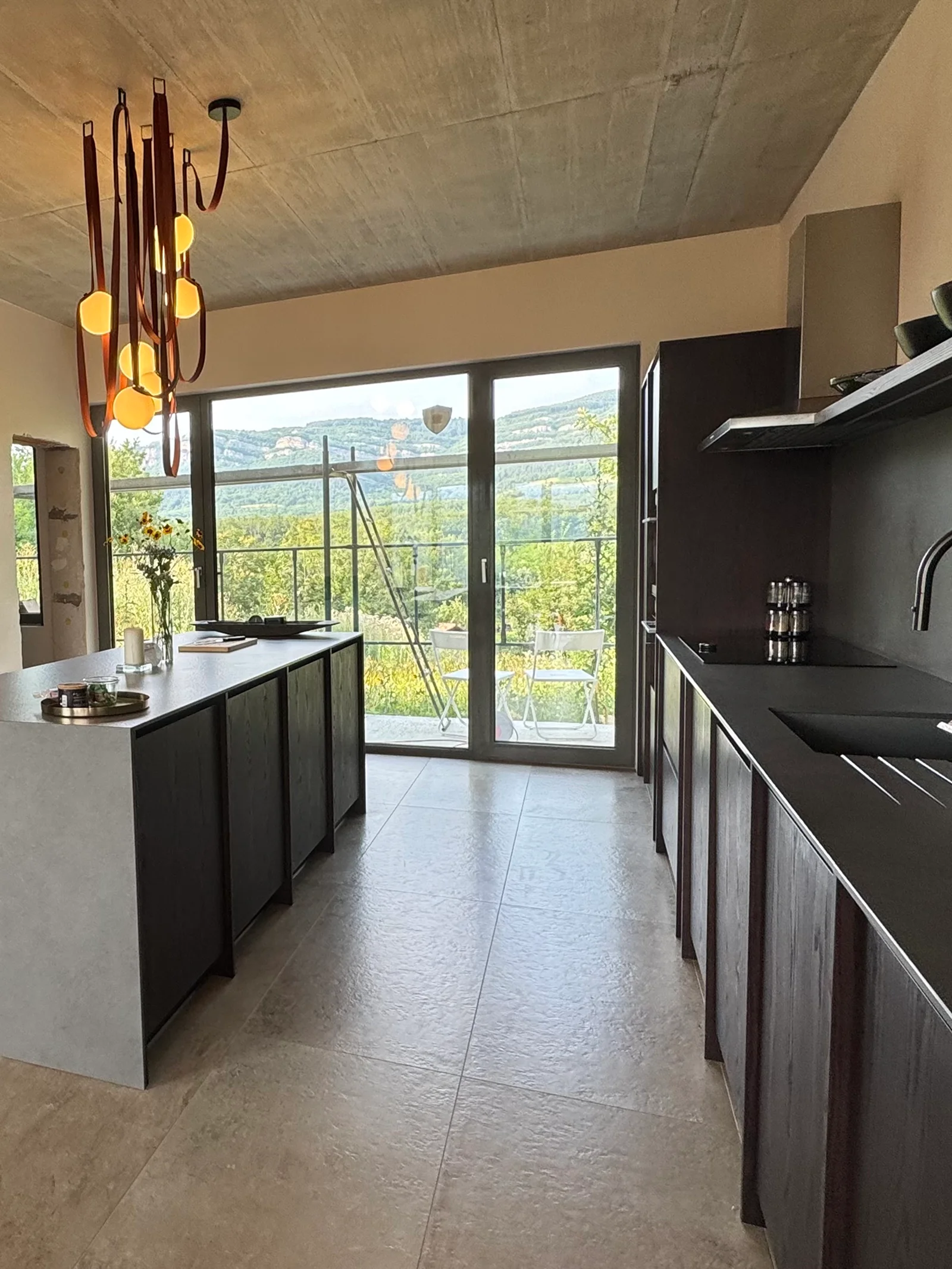
Dark oak works especially well with concrete and stone in a more architectural Japandi interior.
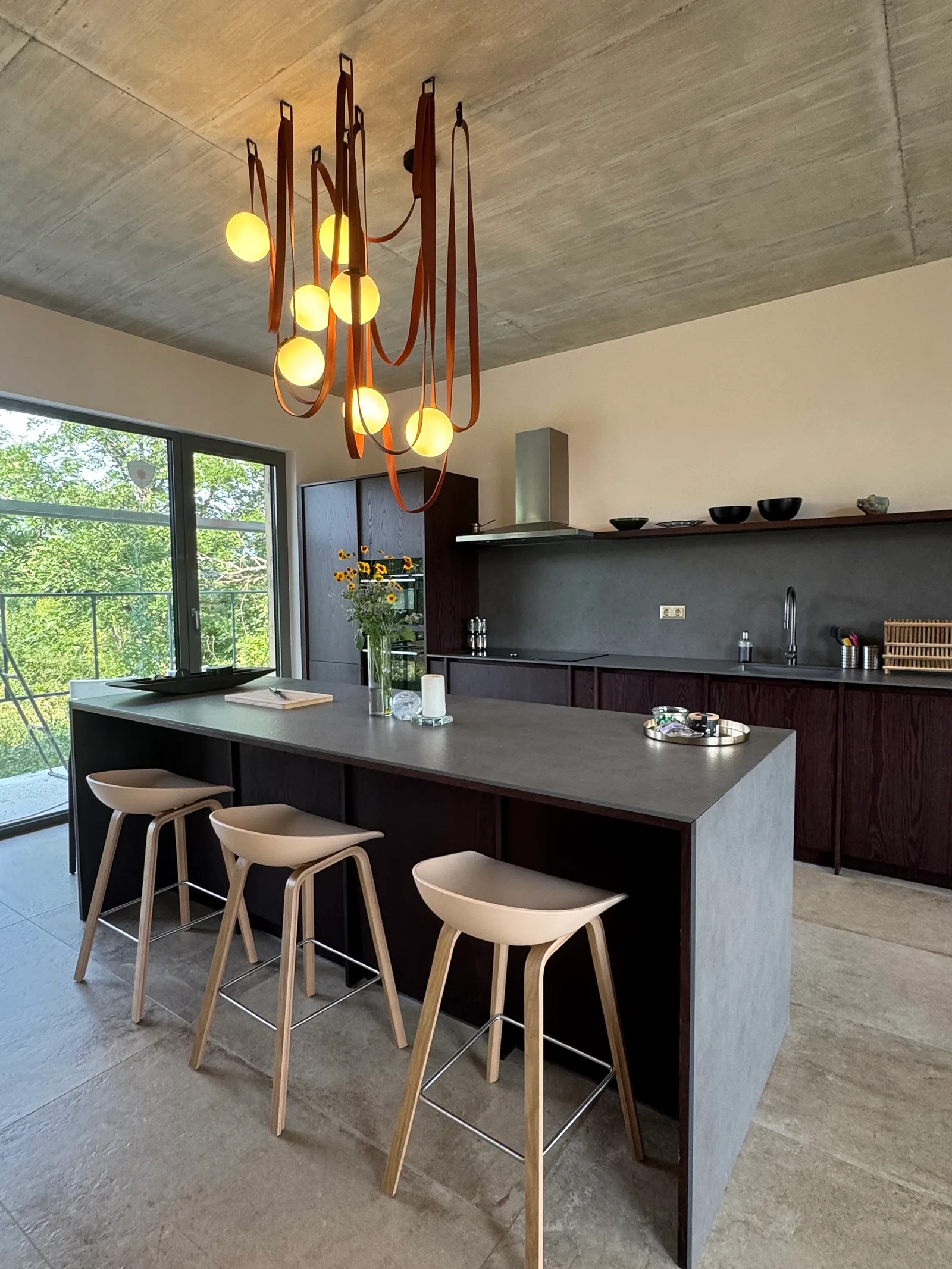
Pairing dark wood with gray surfaces keeps the palette neutral without making it uniform.
Pacific Palisades Japandi Kitchen
Oak cabinetry is combined with deep blue accents in this Pacific Palisades kitchen. Fluted glass fronts and a white Dekton countertop add contrast, while vertical oak detailing wraps the curved island. The mix of natural wood, color, and rounded forms gives the Japandi design a more expressive character.
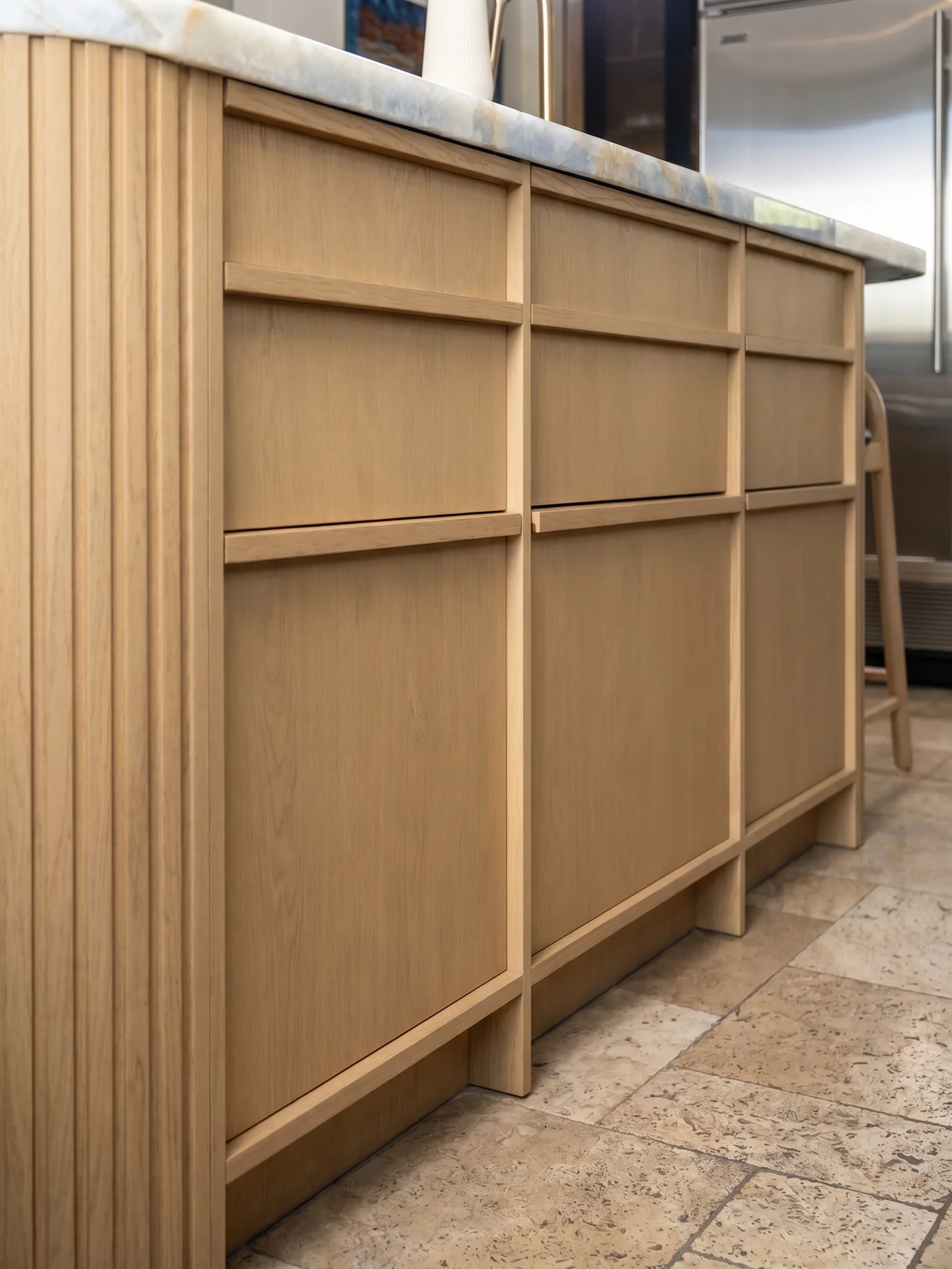
Slim wood rails give the oak cabinet fronts more definition without using conventional handles.
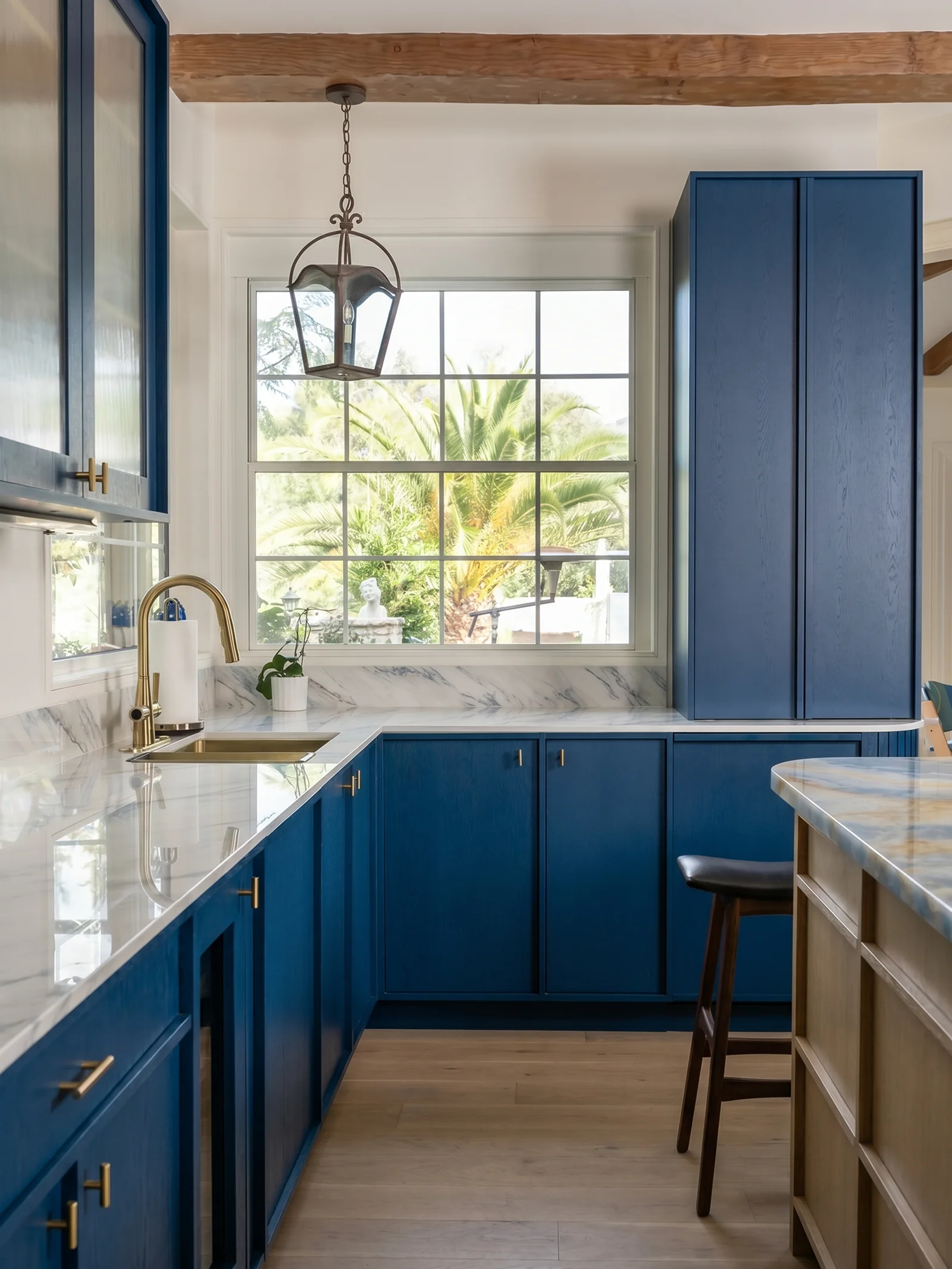
Deep blue cabinetry shows how color can be added to Japandi design without relying only on neutrals.
Curved Japandi Kitchen in San Mateo
Stained oak and sage green cabinetry define this Japandi kitchen. The rounded island is finished with reeded oak panels and paired with a quartzite countertop, adding both texture and movement. Tall oak cabinetry keeps appliances and pantry storage together, while the curved forms soften the overall layout.
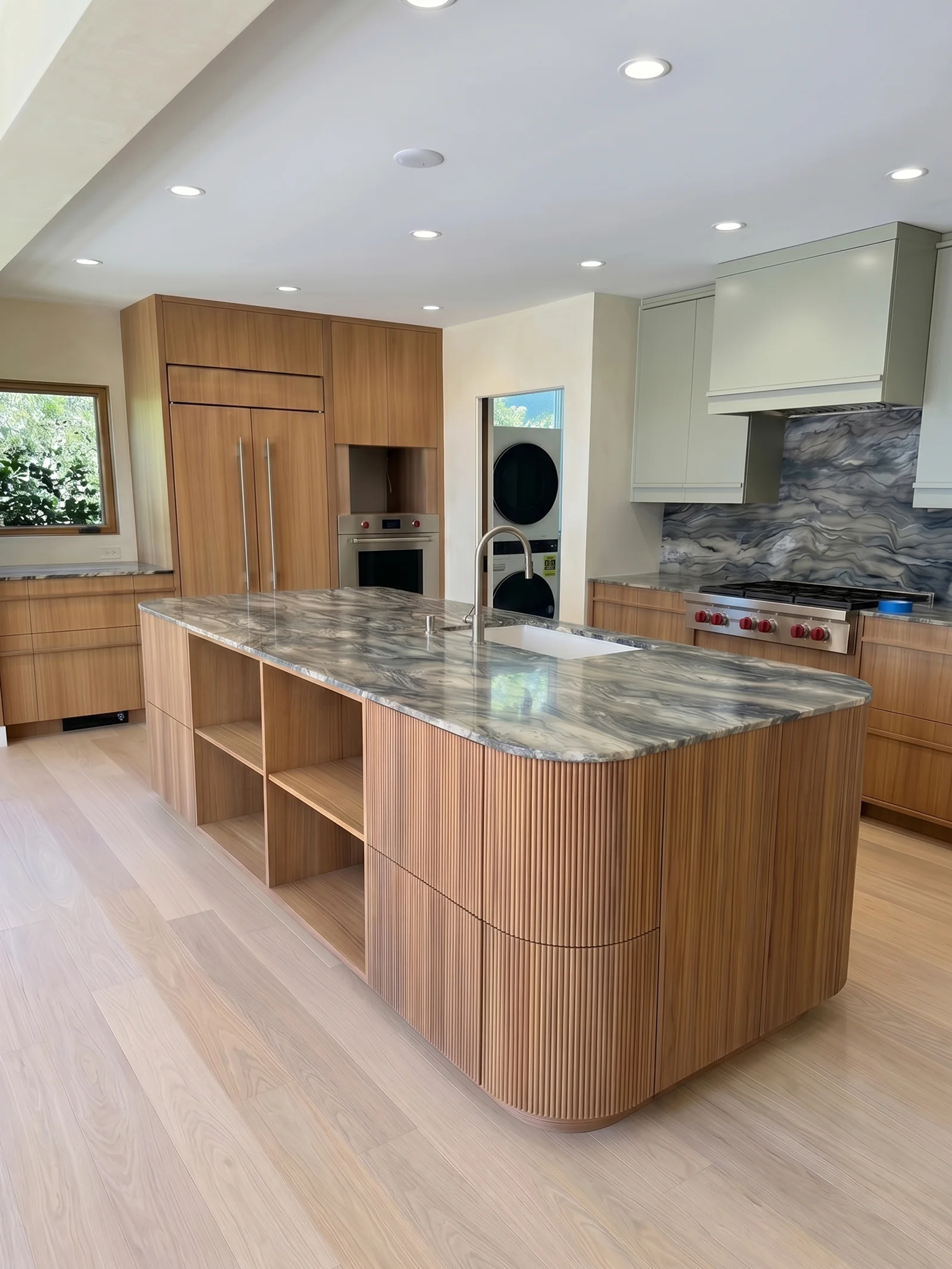
Reeded oak emphasizes the rounded corners of the island and gives its surface more depth.
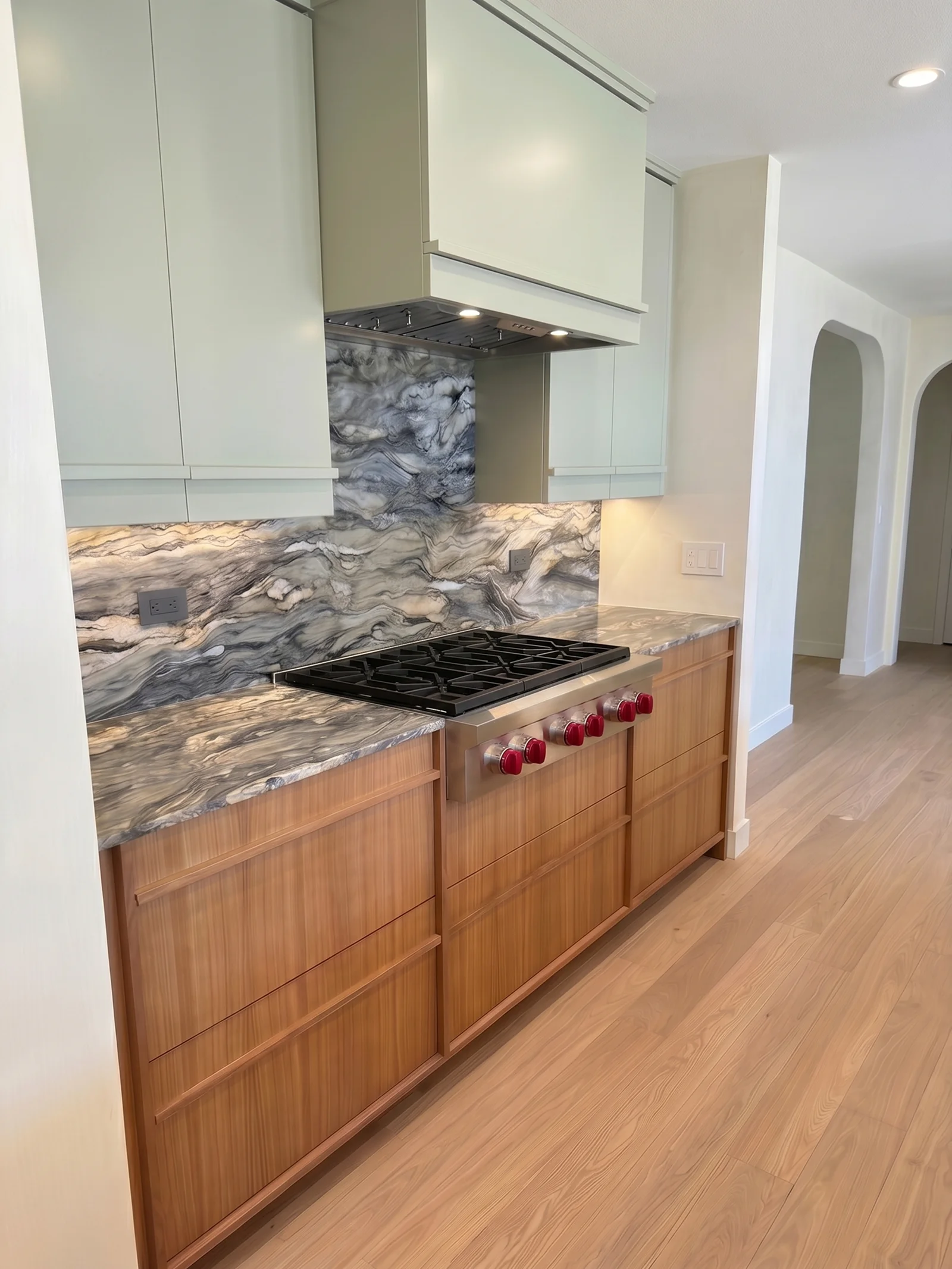
A strongly veined stone backsplash can add pattern to an otherwise restrained Japandi kitchen.
Chicago Japandi Kitchen Design
Light oak veneer gives this Japandi kitchen a warm, natural look while keeping the space bright. Framed wood fronts are paired with black upper cabinets, fluted glass, and metallic appliances. The contrast adds depth without making the kitchen feel heavy, while the island and integrated storage keep the overall design clean and functional.
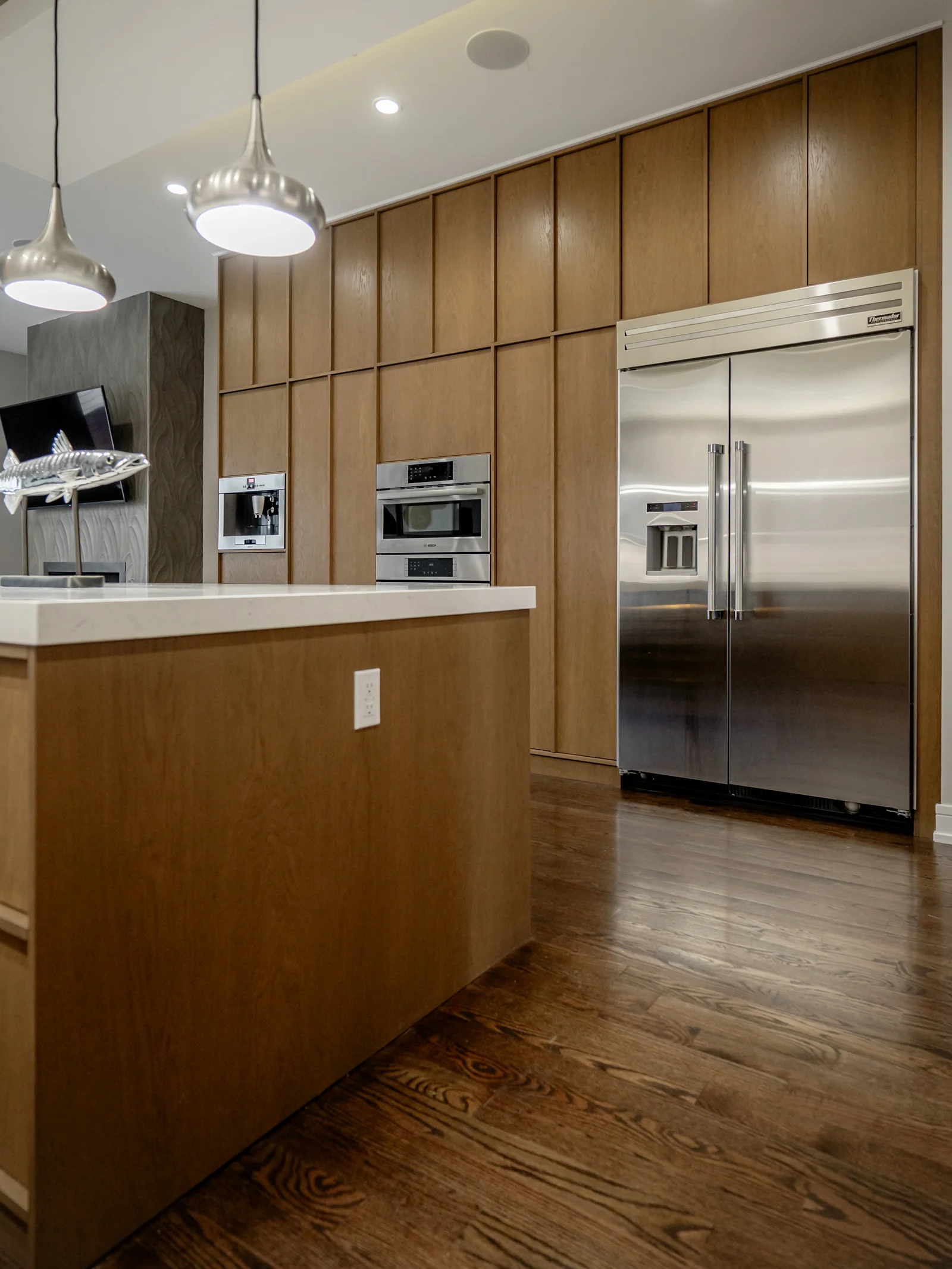
Tall wood cabinets keep the appliances together on one wall.
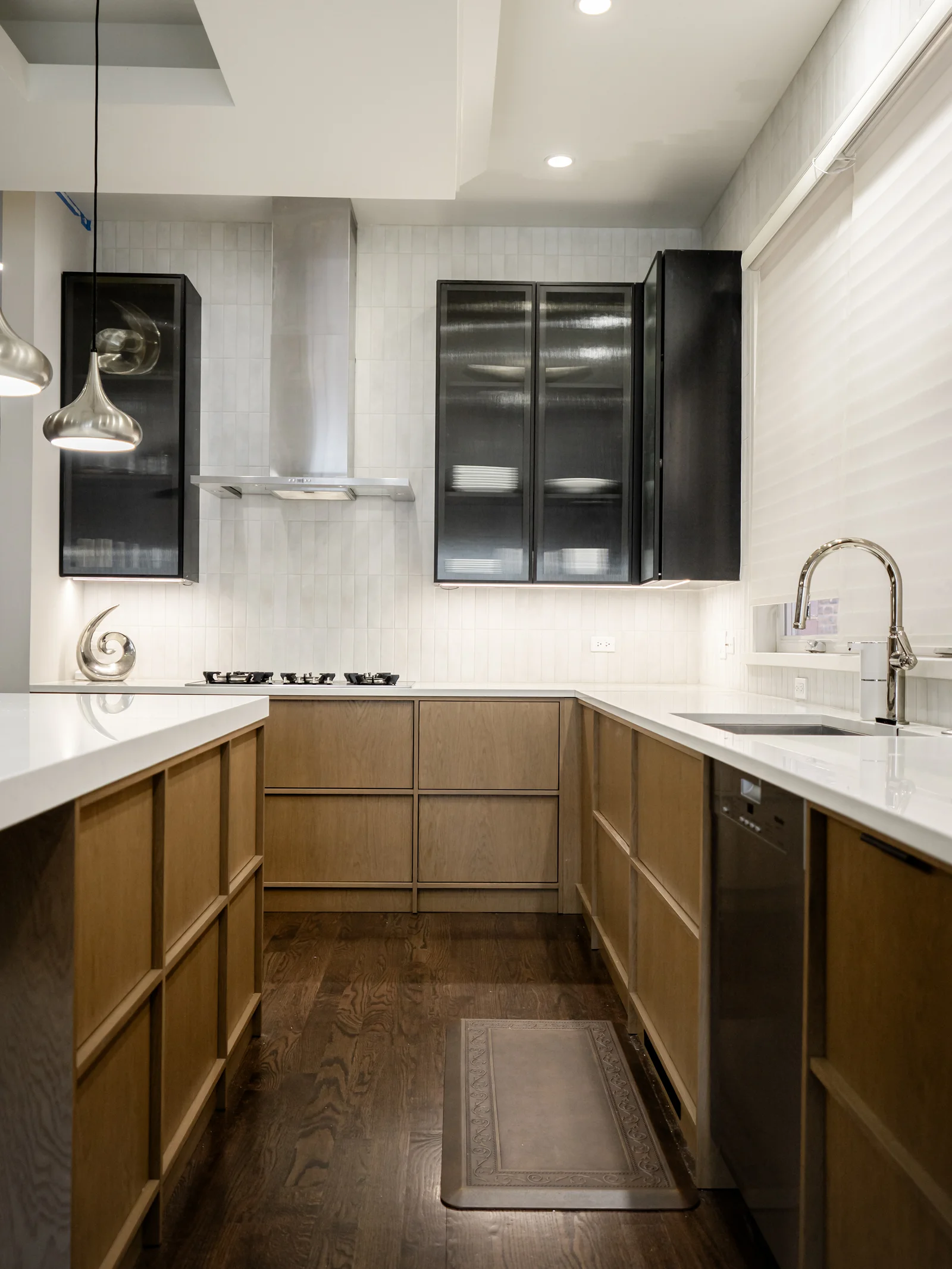
Black glass cabinets add a darker accent above the wood cabinetry.
Light Oak Japandi Kitchen in Santa Monica
Light oak veneer and matte beige cabinetry give this Japandi kitchen a soft, warm palette. Handleless fronts keep the cabinetry visually simple, while open shelving breaks up the tall cabinet run and creates space for everyday appliances. A parallel island with light oak fronts, integrated cooking appliances, and generous storage completes the calm, functional layout.
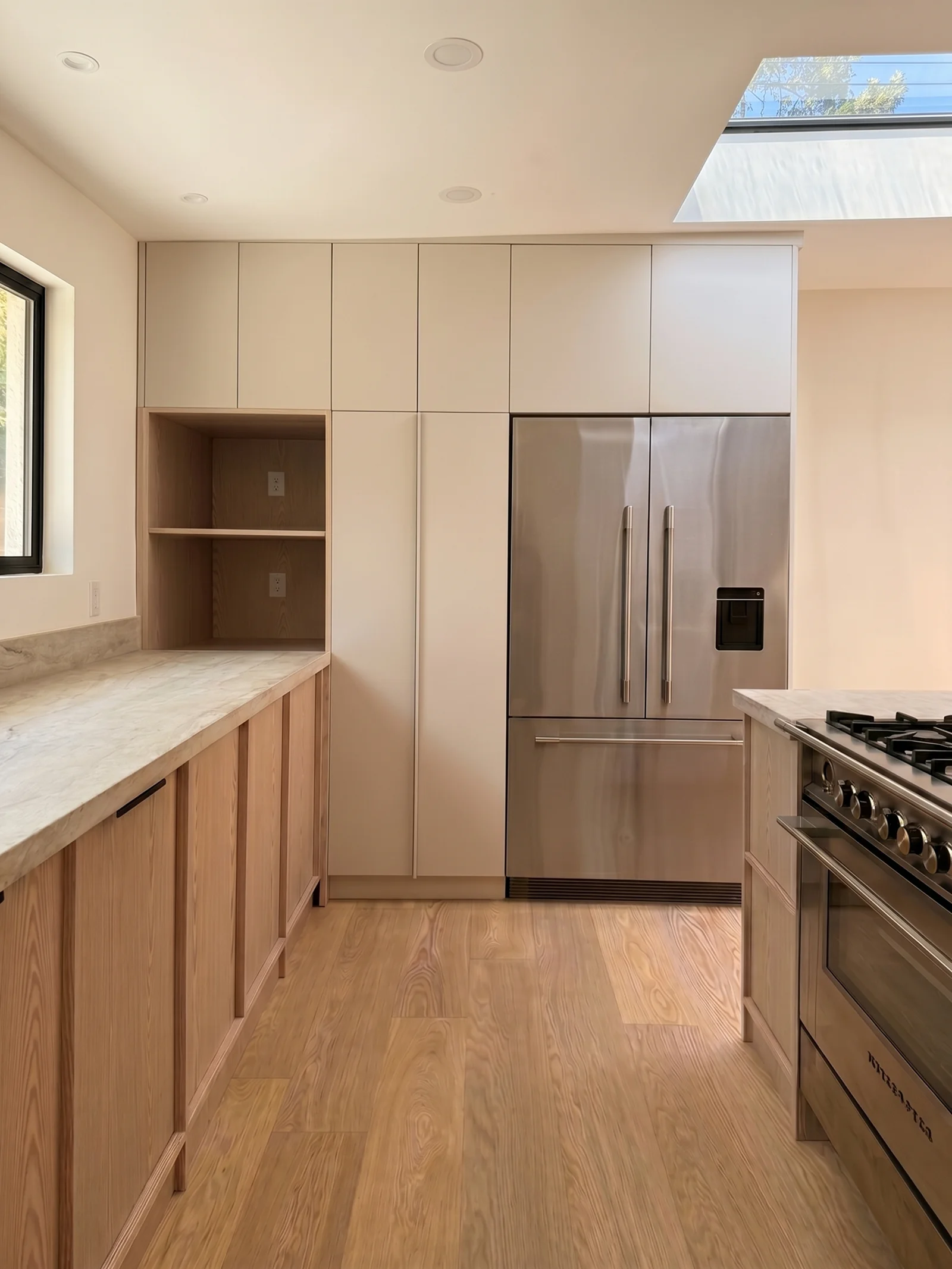
Tall wood cabinets keep the appliances together on one wall.
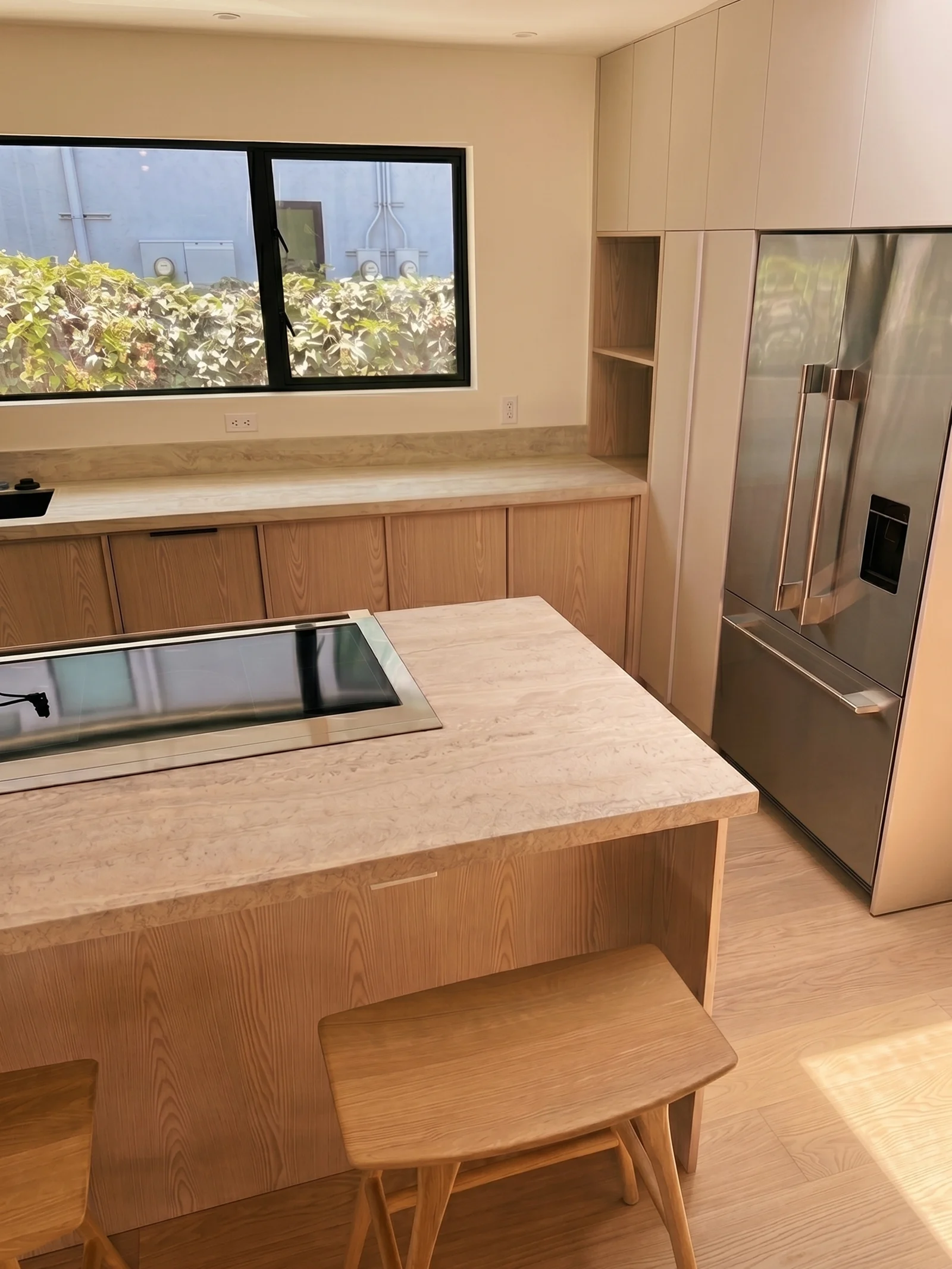
Black glass cabinets add a darker accent above the wood cabinetry.


