
.webp)
Spices are easier to use when every jar is visible, labeled, and stored close to the area where food is prepared. The right organizer can also prevent duplicate purchases and keep half-open packets from spreading across several cabinets.
The best setup depends on the size of your collection, the available cabinet space, and how often you use each spice. A drawer insert may work well for everyday seasonings, while a pantry rack may be better for larger collections and refill packages.
Why Proper Spice Storage Matters
.webp)
A good spice storage system makes it easier to find what you need without searching through crowded cabinets. It also helps you see which spices are running low and which jars may have been sitting unused for too long.
Storage location matters too. Spices keep their flavor and color longer when they are sealed and protected from heat, direct sunlight, steam, and moisture.
Quick Comparison of Spice Storage Options
| Storage Option | Best For | Main Benefit | Watch Out For |
|---|---|---|---|
| Drawer insert | Small to medium collections | Keeps labels visible and jars easy to reach | Works best when jar sizes are similar |
| Cabinet-door rack | Kitchens with limited cabinet space | Uses an otherwise empty surface | Check clearance between the rack and cabinet shelves |
| Narrow pull-out | Everyday spices near the prep area | Provides easy access in a slim cabinet | Avoid locations exposed to strong heat |
| Pantry shelf or door rack | Large collections and refill packages | Holds more jars and backup supplies | Frequently used spices may be too far from the cooking area |
| Open shelf | Small, carefully selected collections | Keeps everyday spices within reach | Exposes jars to dust, sunlight, and moisture |
Where Should Spices Go in a Kitchen?
.webp)
Everyday spices should be close to the main prep or cooking zone, but they should not be exposed to constant heat or steam. A nearby drawer, pull-out, or upper cabinet is usually more suitable than a shelf directly above the cooktop.
Avoid storing spices beside a hot oven, next to a radiator, above a sink, or near a sunny window. These locations can expose jars to temperature changes, moisture, or direct light.
Less frequently used spices, refill packages, and specialty blends can be stored farther away in a pantry. Keeping everyday and occasional spices in separate zones can prevent the main organizer from becoming overcrowded.
Drawer Spice Organizers
.webp)
A dedicated spice drawer is one of the easiest ways to keep jars visible. Angled inserts allow front labels to be read without lifting each container, while flat organizers can display labels placed on the jar lids.
Full-extension drawers are especially useful because they provide access to jars at the back. They also keep spices off the countertop and out of upper cabinets that may be difficult to reach.
Before choosing an insert, measure the drawer’s internal width, depth, and height. Make sure the jars will not hit the cabinet frame or countertop when the drawer opens.
Cabinet-Door Spice Racks
.webp)
A slim rack attached to the inside of a cabinet door can make use of space that would otherwise remain empty. It works best for small jars and frequently used seasonings.
The rack must be shallow enough to clear the cabinet shelves when the door closes. Check the position of hinges, adjustable shelves, and any items stored inside the cabinet before installation.
Door racks are usually better for lightweight jars than for large bottles or refill bags. Overloading the door may affect how smoothly it opens and closes.
Narrow Pull-Out Spice Storage
.webp)
A narrow pull-out can fit into a small space beside a base cabinet, tall cabinet, or preparation area. The jars remain visible from both sides, and the full unit can be pulled forward for easier access.
These cabinets are often placed near the cooking zone, but they should not sit directly beside a heat-producing appliance without proper separation. Constant heat from an oven or cooktop can reduce the quality of stored spices over time.
A pull-out can also be divided into sections for spices, oils, and small condiments. Taller bottles should have rails or dividers to keep them stable when the cabinet moves.
Pantry Spice Storage
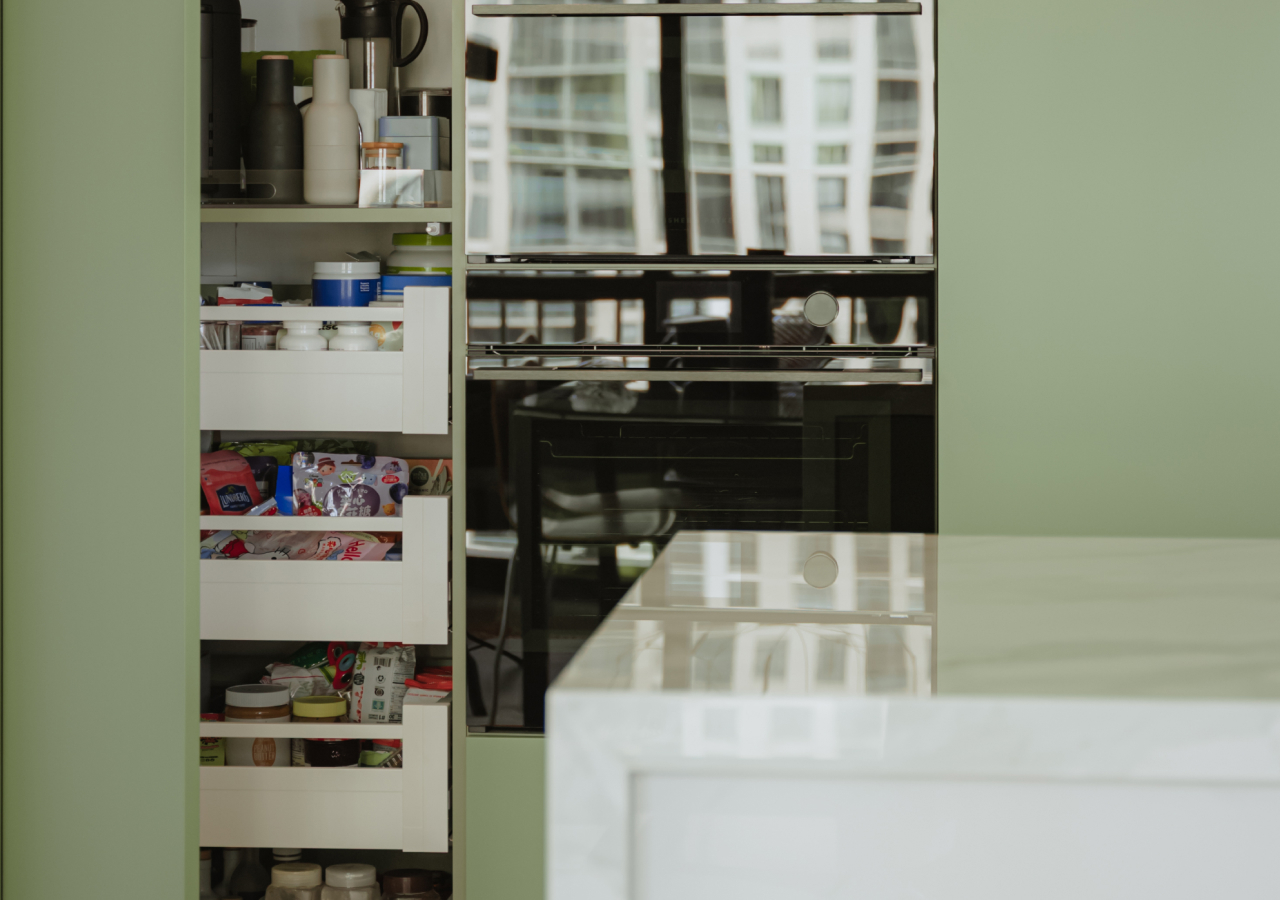
A pantry is useful for large spice collections, refill packages, and seasonings that are not used every day. Shallow shelves help prevent small jars from becoming hidden behind larger containers.
Tiered organizers can raise the jars in the back, while pantry-door racks provide another visible storage area. Grouping spices by type or frequency of use can make a larger collection easier to manage.
Keep everyday seasonings together in one accessible section. Bulk packages and backups can be stored higher or farther back until they are needed.
Custom Shelves and Built-In Spice Racks
.webp)
Built-in spice storage can be planned as part of the cabinet layout rather than added after installation. Options include fitted drawer inserts, shallow interior shelves, door-mounted racks, and narrow pull-out cabinets.
The best solution should match the number and size of the containers you actually use. A custom organizer does not need to hold every spice in the pantry. It may work better as a compact station for the seasonings used most often.
Planning the storage early also helps confirm drawer heights, pull-out widths, shelf clearance, and nearby cabinet functions before the drawings are finalized.
Open Spice Shelves
.webp)
Open shelves offer quick access and can work for a small collection of frequently used spices. They are most practical when the jars are stored away from the cooktop, sink, and direct sunlight.
Because open shelves collect dust and expose containers to light, they require more regular cleaning. They can also begin to look cluttered when too many jar sizes, labels, and packages are mixed together.
For a cleaner setup, limit the shelf to a small group of everyday spices and keep refills in a closed cabinet or pantry.
How to Label and Group Spices
A simple labeling system can make almost any spice organizer easier to use. The right label position and grouping method depend on how the jars are stored and how often each spice is used.
-
Place labels where they are easy to see. Use front labels for jars stored upright and lid labels for jars stored flat inside a drawer.
-
Group spices by frequency of use. Keep everyday spices closest to the main prep area. Less frequently used spices can be placed farther back or in a pantry.
-
Group spices by type. Separate baking spices, herbs, peppers, seasoning blends, and other categories so similar ingredients stay together.
-
Use alphabetical or cuisine-based grouping when helpful. Alphabetical organization works well for larger collections. Grouping by cuisine can be useful when certain spices are often used together.
-
Add a purchase or refill date. A simple date label can help identify older spices and make it easier to decide what needs to be replaced.
-
Keep ingredient and allergen information. When decanting seasoning blends, keep the original packaging or label until the contents have been used.
Use one primary grouping system throughout the organizer so spices remain easy to return to the correct place.
Choosing Spice Containers
.webp)
Airtight containers are generally the most practical choice because they help protect spices from air and moisture. Glass jars make the contents and remaining quantity easy to see, but sealed metal or food-safe plastic containers can also work.
Uniform jars can make an organizer easier to plan, especially in fitted drawers. However, replacing every container is not necessary if the existing packaging closes securely and fits the available space.
Avoid storing loose packets without a divider or container. They tend to fall over, become difficult to identify, and allow small amounts of seasoning to collect in the drawer.
Common Spice Storage Mistakes
One of the most common mistakes is choosing a convenient location without considering heat, light, or steam. A rack directly beside the cooktop may provide easy access but may not be the best place for long-term freshness.
Other common problems include overfilling the organizer, using shelves that are too deep, and combining jars, packets, and large refill containers in the same small space.
The organizer should leave enough room to remove and replace each jar without disturbing the rest of the collection. When the storage becomes crowded, move occasional spices and backups to a separate pantry zone.
Conclusion
The best spice storage system keeps everyday jars visible, easy to reach, and protected from heat and moisture. Drawer inserts, cabinet-door racks, narrow pull-outs, and pantry organizers can all work well when the location matches the way you cook.
Before choosing an organizer, review the size of your collection and the space available near the prep area. For a larger kitchen update, Corner can help plan built-in storage around your cabinet layout and daily routines.


