
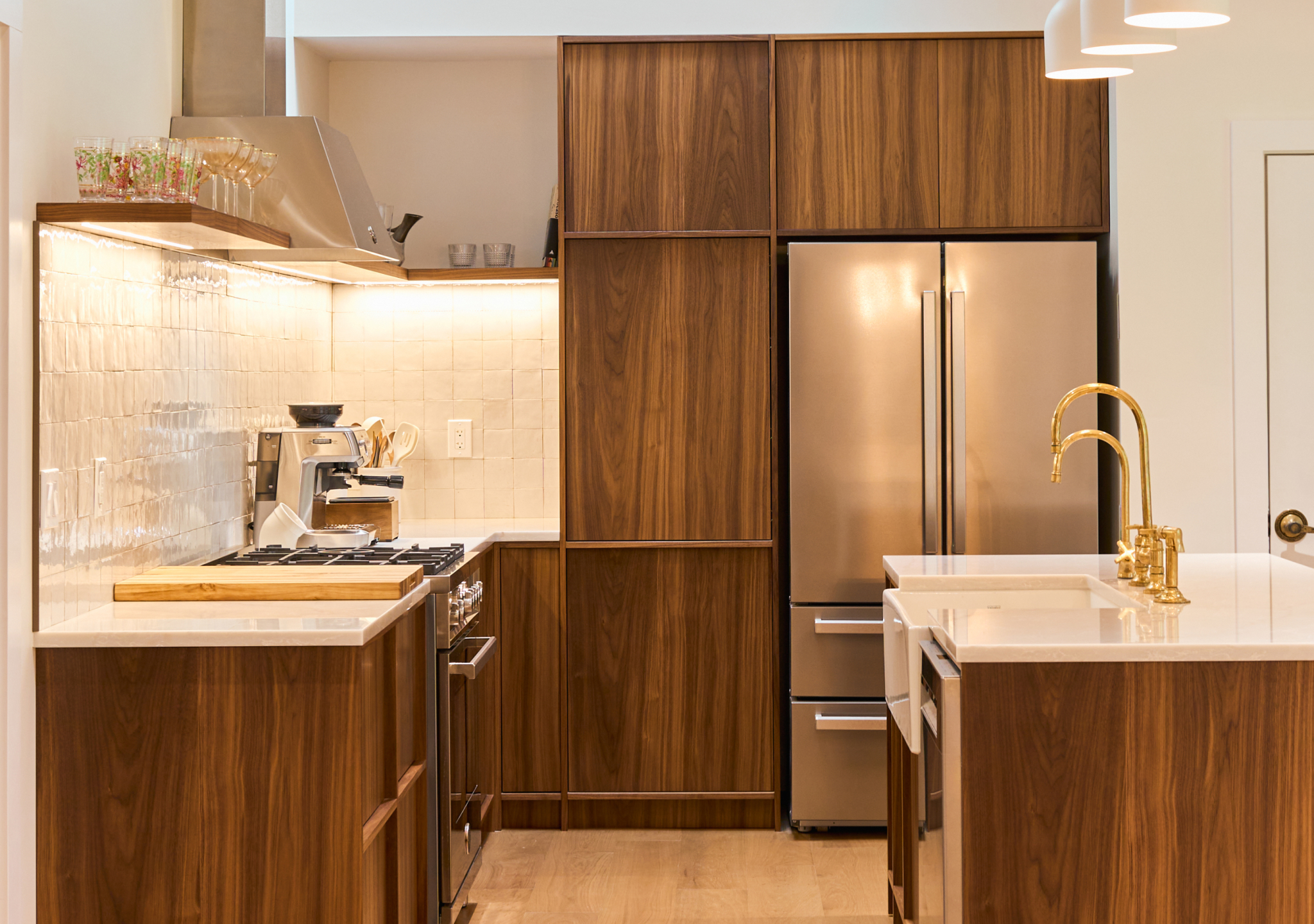
A small Japandi kitchen is where the style makes the most sense. Japanese planning is built around efficiency and clear zones, and Japandi design is built around calm surfaces and restrained materials. Put those together, and you get a kitchen that feels lighter than its square footage, even when it works hard every day.
In custom Japandi kitchens, visual calm comes from keeping fewer items in sight. In compact kitchens, that means layout decisions that reduce steps, storage decisions that prevent countertop pile-ups, and details like inner drawers, toe-kick drawers, and appliance garages that quietly add capacity without adding visual noise. Below are small Japandi kitchen ideas that focus on layout and storage first, so the space feels calm even when it’s busy.
Start with the layout: calm comes from fewer decisions
A good layout in a small Japandi kitchen creates a predictable workflow and protects one clean prep surface that stays usable even when the kitchen is “in motion.” Most small-kitchen stress comes from constant micro-decisions: where to put groceries, where to prep, where to drop dishes, where to hide appliances. The right layout removes those decisions because everything has a stable home.
Best small Japandi layouts by constraint
One-wall kitchens: the composed “system wall” for small spaces
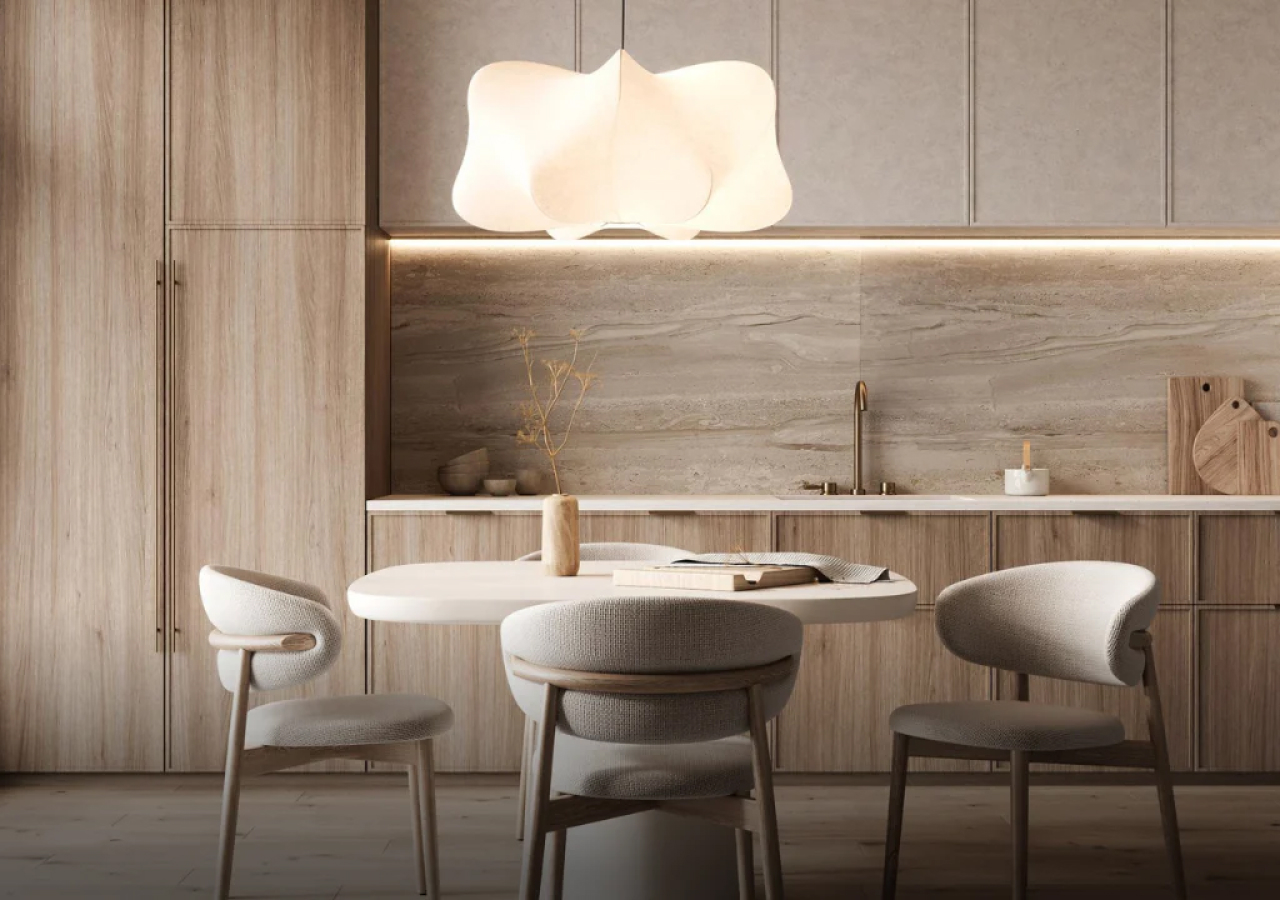
A one-wall layout can be the cleanest answer for open-plan apartments and small homes, especially when you treat it as a composed wall rather than a row of cabinets. The goal is to make the kitchen read like one calm elevation, so the space feels bigger and less busy. That only works when the run is doing enough storage work on its own, because a one-wall kitchen with weak storage turns the countertop into the pantry.
Build the one-wall plan around drawer-first bases, then add one tall zone to absorb what would otherwise float around the kitchen. Keep the workflow simplified: sink, cooktop, and primary prep zone should land close enough that you’re not crossing the room, but not so tight that the counter becomes a bottleneck. Visually, unify the fronts and keep transitions minimal so the cabinetry reads as a calm plane instead of a collage.
Galley kitchens: the most efficient footprint when it stays visually quiet

If you’re searching for Japanese kitchen design for a small space, a galley is often the closest real-world match to that efficient, tool-like feel. Two parallel runs give you strong storage density, clear zones, and a short workflow. The risk is that a galley can feel like a corridor if the tall elements are scattered or the room is visually chopped up.
To keep a galley feeling calm, consolidate tall units at one end when possible, and let the base runs stay consistent. Prioritize drawers over doors so you’re not constantly opening wide swing doors into the aisle. The more your storage pulls out in a controlled way, the less chaotic the room feels. If your galley opens into a living space, that quiet, continuous look is what makes it feel like part of the home instead of a busy utility hallway.
L-shape kitchens: flexible, open, and naturally Japandi
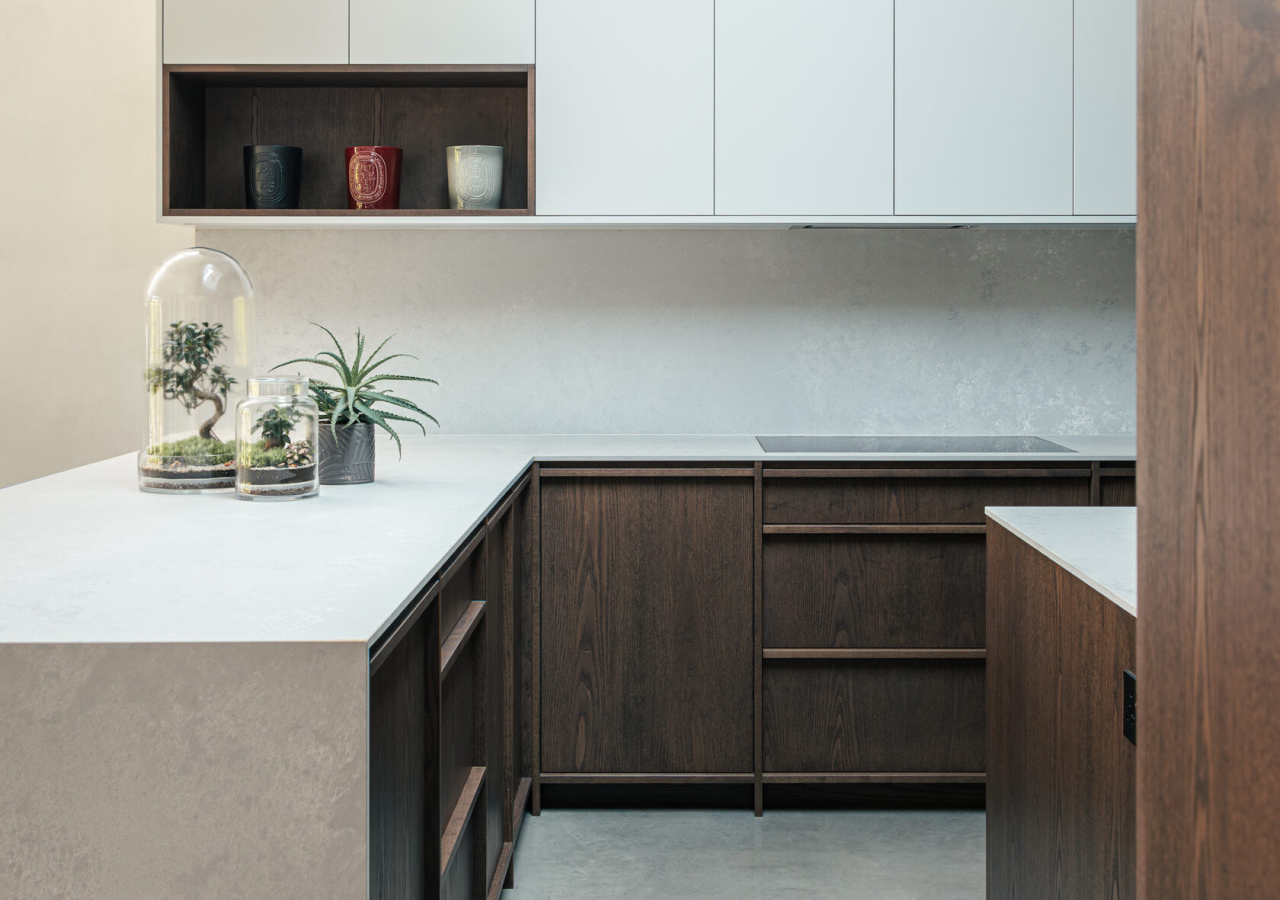
An L-shape is a strong layout for a small kitchen, Japanese style, because it balances efficiency with openness. It gives you a corner you can use for capacity, and it naturally creates a protected prep zone without forcing a full galley. The key is to treat the L as a system, not two separate walls. If one side becomes random storage and the other side becomes random prep, the calm disappears.
The best L-shape plans keep the sink and main prep zone near the inside corner, where movement is shortest, while the cook zone and pantry storage stay on the legs of the L. This layout also makes it easier to control sightlines in open-plan homes, because the kitchen can read as a calm, contained volume rather than a set of scattered functions.
Peninsula or small island: choose circulation over the fantasy
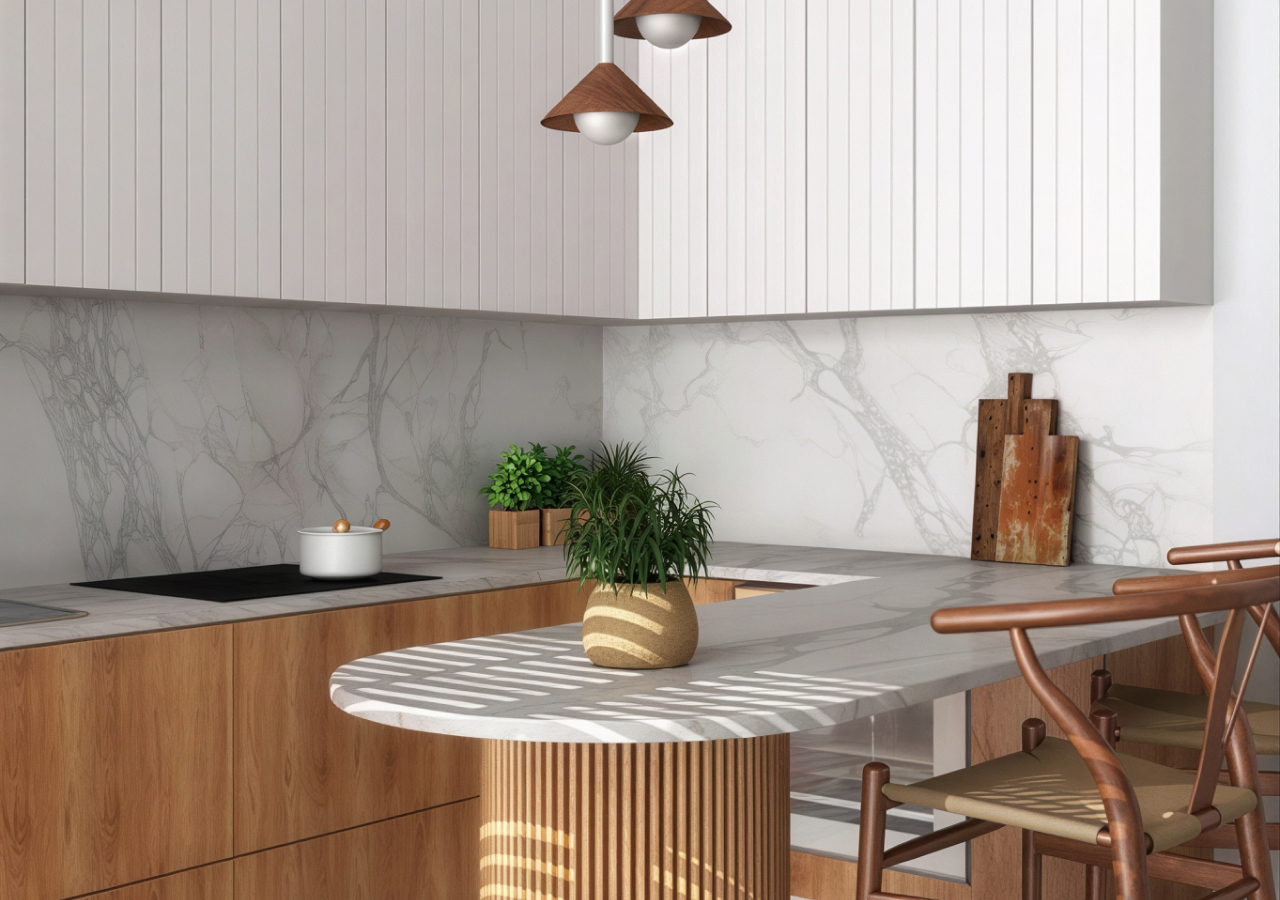
A small island can be great, but in compact kitchens, it can also be the thing that makes everything feel tight. Japandi planning favors ease. If the island forces awkward sidestepping, makes the dishwasher unusable when open, or turns cooking into constant traffic management, the kitchen will never feel calm.
A peninsula often delivers the same benefits in a smaller footprint: additional prep space, extra storage, and a casual seating edge, while keeping circulation more predictable because one side is anchored. In many small Japandi kitchen layouts, a peninsula is the more elegant choice because it adds function without breaking the room into fussy pathways.
Go drawer-first: the storage choice that changes daily life
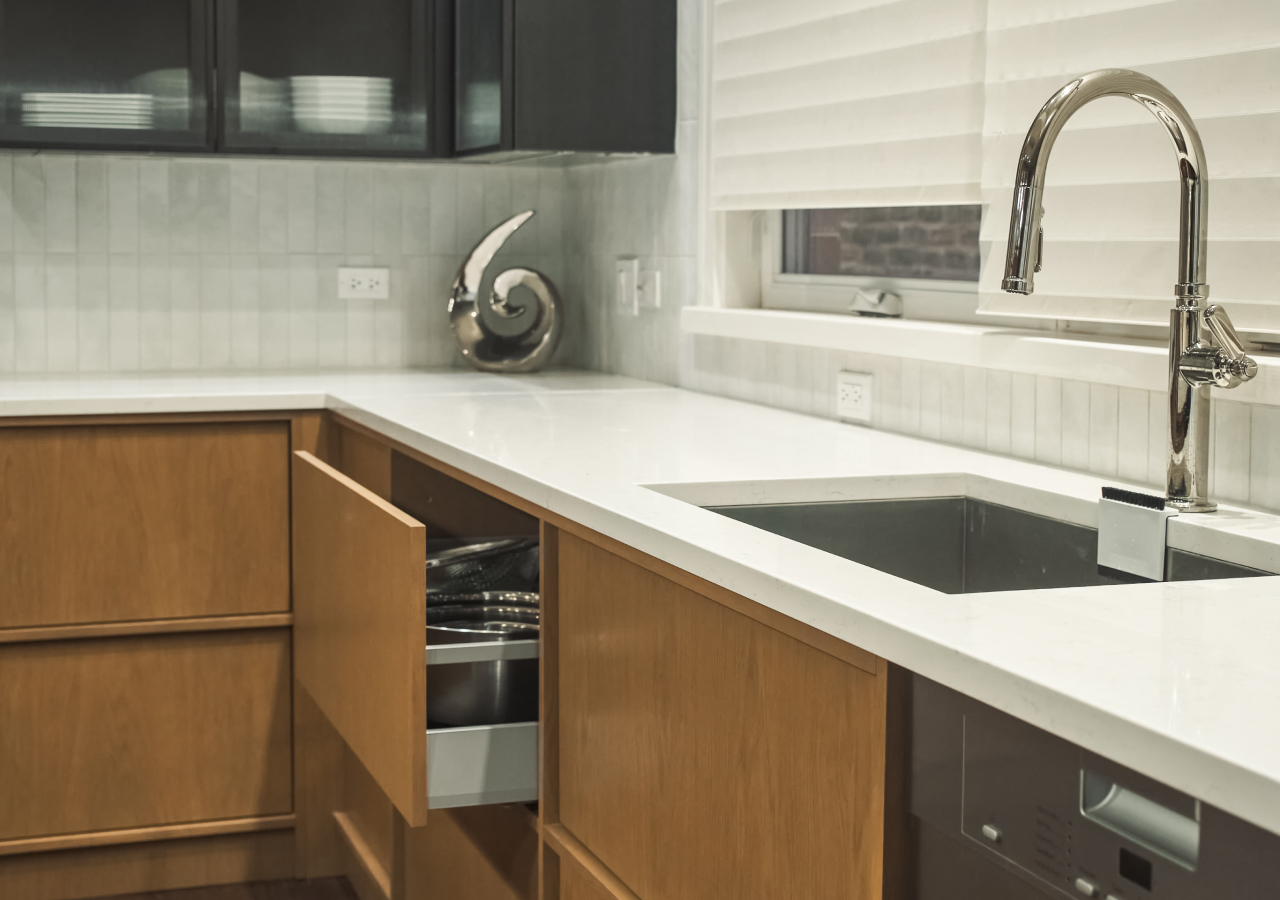
Drawer-first storage is the most important move you can make in a small Japandi kitchen. Doors create deep, dark voids that you forget about, and forgotten items always end up on the counter. Drawers pull everything into view in one motion, reducing search time and making it easier to keep categories stable.
Deep drawers handle the heavy daily load: pots, pans, plates, pantry items, and small appliances that you don’t want on display. Shallow drawers keep prep tools close to where you use them, so the countertop stays clear and the kitchen feels faster. This is also where Japandi works aesthetically: when storage does its job, the visible surfaces can stay quiet, and the materials become the feature.
Inner drawers: more storage without more clutter
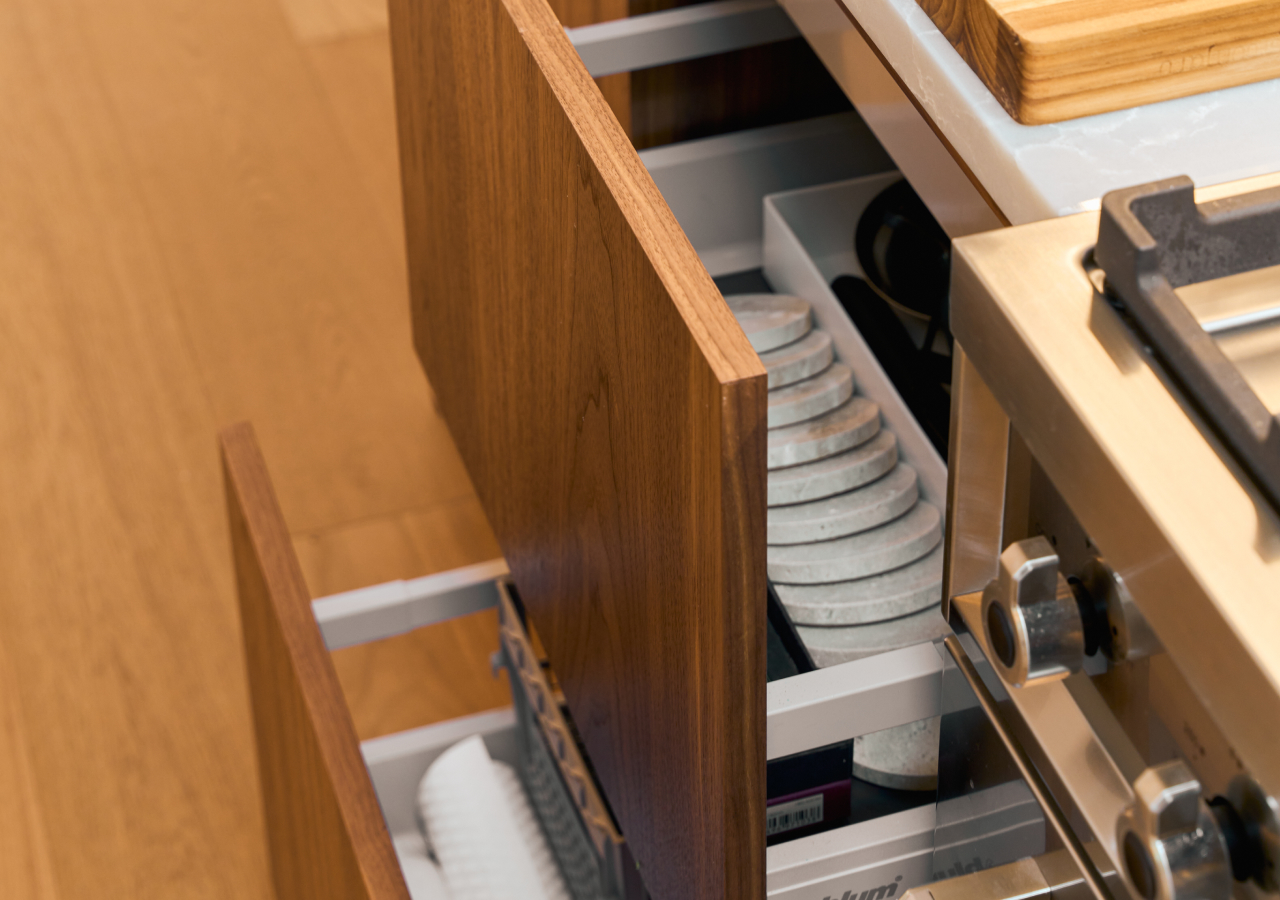
Inner drawers are a very Japandi-friendly upgrade because they add structure without adding visual noise. They live inside a larger drawer, creating layers that cleanly separate categories. Instead of one deep drawer turning into a catch-all, you get a calm, repeatable system.
Inner drawers are especially useful near the primary prep zone. They keep small items controlled, so you’re not spreading tools across the counter just to find what you need. The result is functional and visual at the same time: the kitchen works smoothly, and it looks composed even when you’re using it.
Fix the sink zone: under-sink drawers and a real waste plan
In small kitchens, the sink zone is the most common source of visible clutter because daily tools pile up fast. A Japandi sink run stays calm when cleaning tools are contained and trash and recycling are handled inside the cabinetry, not on the floor.
In a small Japanese kitchen, the sink zone can decide whether the kitchen feels calm or constantly messy. Soap, sponges, bags, cleaners, dish tools, and recycling all want to live near the sink, and if you don’t give them a real home, they end up on the counter or piled under the sink in a way that’s hard to manage.
Under-sink drawers: usable storage around real plumbing

Under-sink drawers solve a problem that small kitchens feel more than any other: wasted space. Traditional under-sink cabinets often become a messy void because plumbing blocks access, and the contents disappear into the back. A drawer-based approach can be designed around the pipes, so you keep access and organization instead of sacrificing the whole cabinet.
Functionally, under-sink drawers make cleaning supplies easy to grab and easy to put away. Visually, they reduce countertop clutter because sink tools have a contained home.
Pull-out waste bins: the everyday reset button
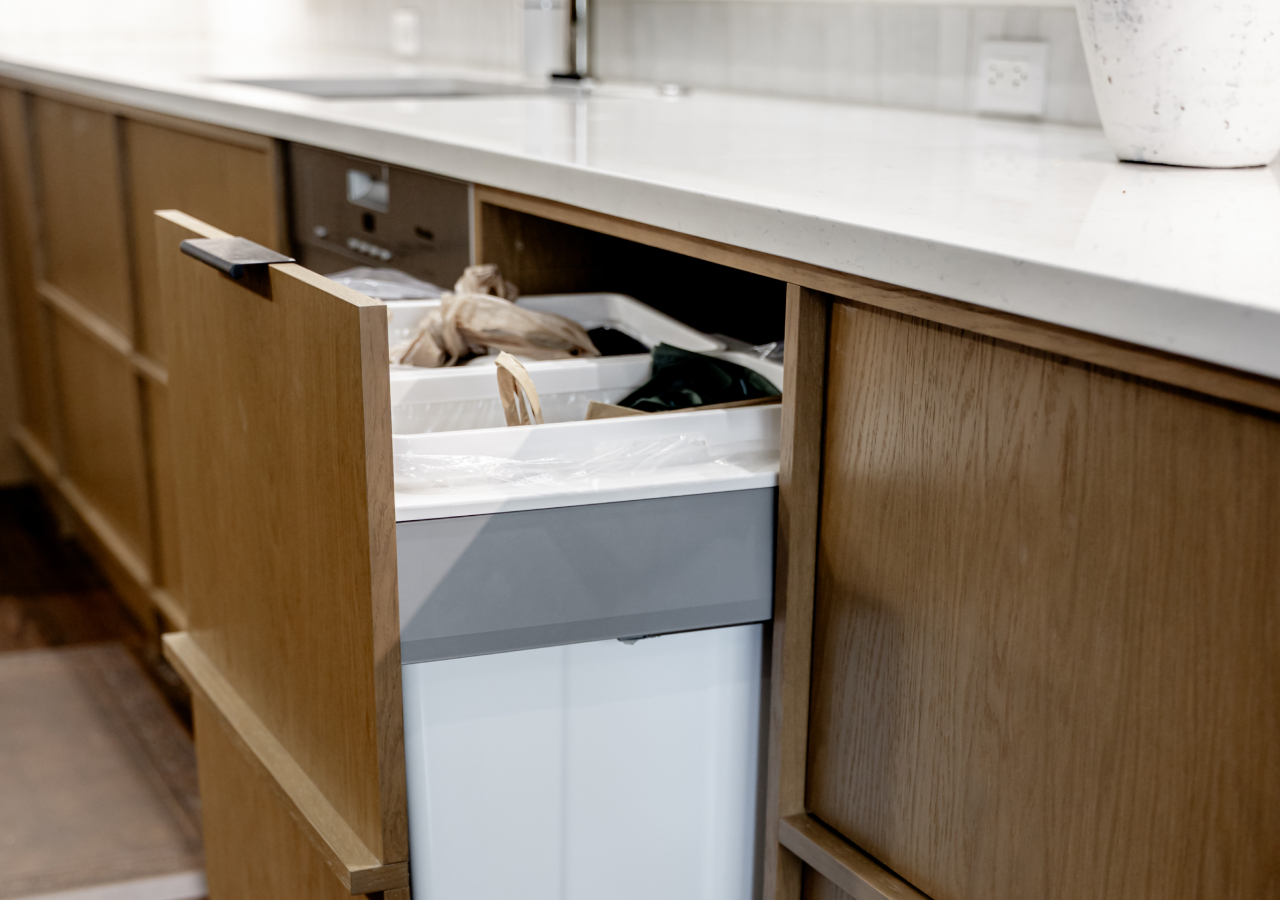
A pull-out waste setup near the prep area is a small detail that changes daily life. It keeps trash and recycling controlled, avoids floor-standing bins in tight aisles, and supports the wipe-down and reset rhythm that makes compact kitchens feel calm. Pair it with under-sink organization, and your sink run stops being the clutter hotspot of the room.
Use the hidden inches: toe-kick drawers for flat, awkward items
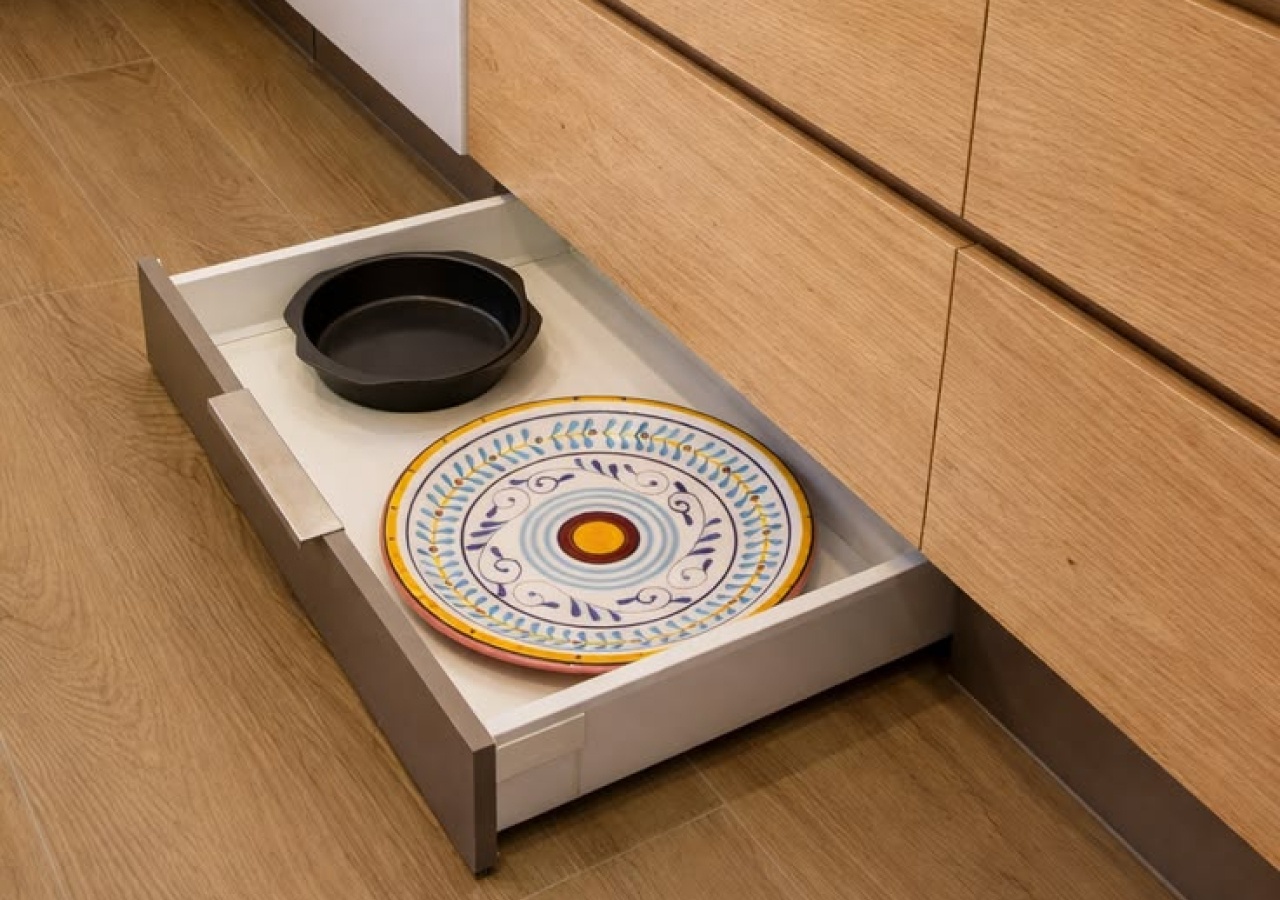
Toe-kick drawers are Japandi efficiency logic applied to a modern kitchen. They use space that normally does nothing, and because they’re visually quiet, they suit a small Japandi kitchen perfectly. The value is practical: toe-kick drawers store the flat, awkward things that always steal prime drawer space.
When baking sheets, trays, placemats, spare towels, or thin cutting boards stop living in your main drawers, your everyday storage stays stable.
Make corners work: corner pull-outs keep storage organized
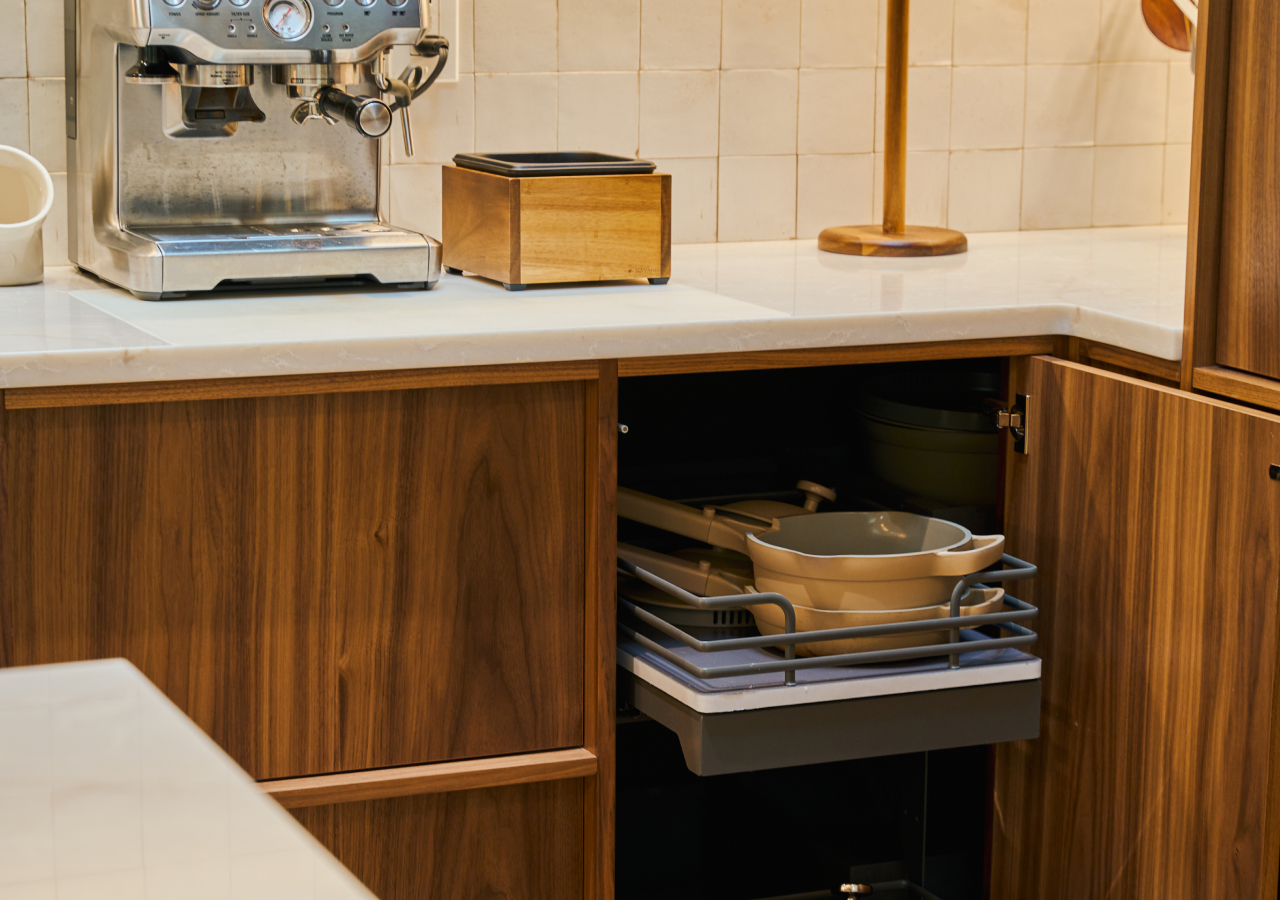
Corner cabinets are where small kitchens lose capacity, and lost capacity becomes countertop clutter later. In a small kitchen Japanese-style layout, every cabinet needs to earn its place. A dead corner becomes the place you avoid, which becomes the place you overfill, which pushes everything else out into the kitchen.
Corner pull-outs turn the corner into usable storage by bringing items toward you rather than letting them disappear into the back. That means the corner can hold real volume, not just forgotten clutter. Functionally, you get access without crawling. Visually, you get less overflow elsewhere because the corner is doing its share.
If you’re planning an L-shape or a kitchen with a corner near the sink run, a corner pull-out is one of the cleanest ways to make the layout feel designed rather than compromised.
Hide countertop chaos: appliance garages for a calmer everyday look
An appliance garage is the fastest way to keep a small kitchen feeling composed in real life. It protects the backsplash line from cords and “always-out” appliances while keeping your daily routine intact.
Modern kitchens collect small appliances. In compact kitchens, that collection becomes visual noise fast. Japandi interiors feel good when the countertop reads as a calm surface, but that’s hard to maintain if the backsplash line is a wall of cords.
Appliance garages: daily convenience without daily clutter
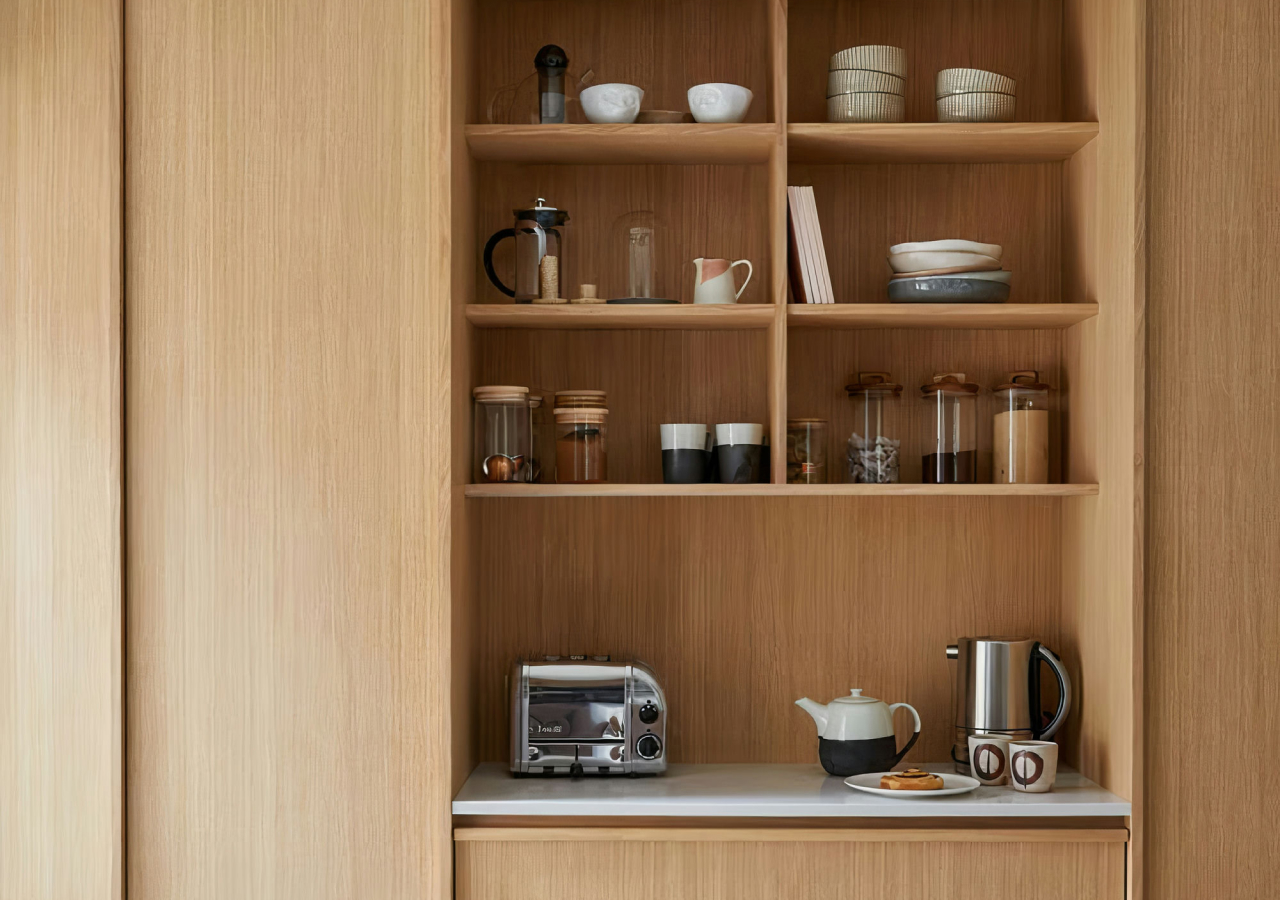
An appliance garage gives your coffee gear, toaster, and blender a dedicated home. The best part is that it’s not just storage; it’s workflow. You can keep appliances plugged in and ready, then close the front, and the kitchen resets instantly. In open-plan homes, that instant reset is the difference between a kitchen that always looks mid-task and a kitchen that always looks intentional.
This is also a very Japandi move because it hides complexity. The kitchen still does everything you need, but visually, it stays quiet.
Appliance garage vs open shelves in a small Japandi kitchen
Keep the palette quiet so the space feels bigger
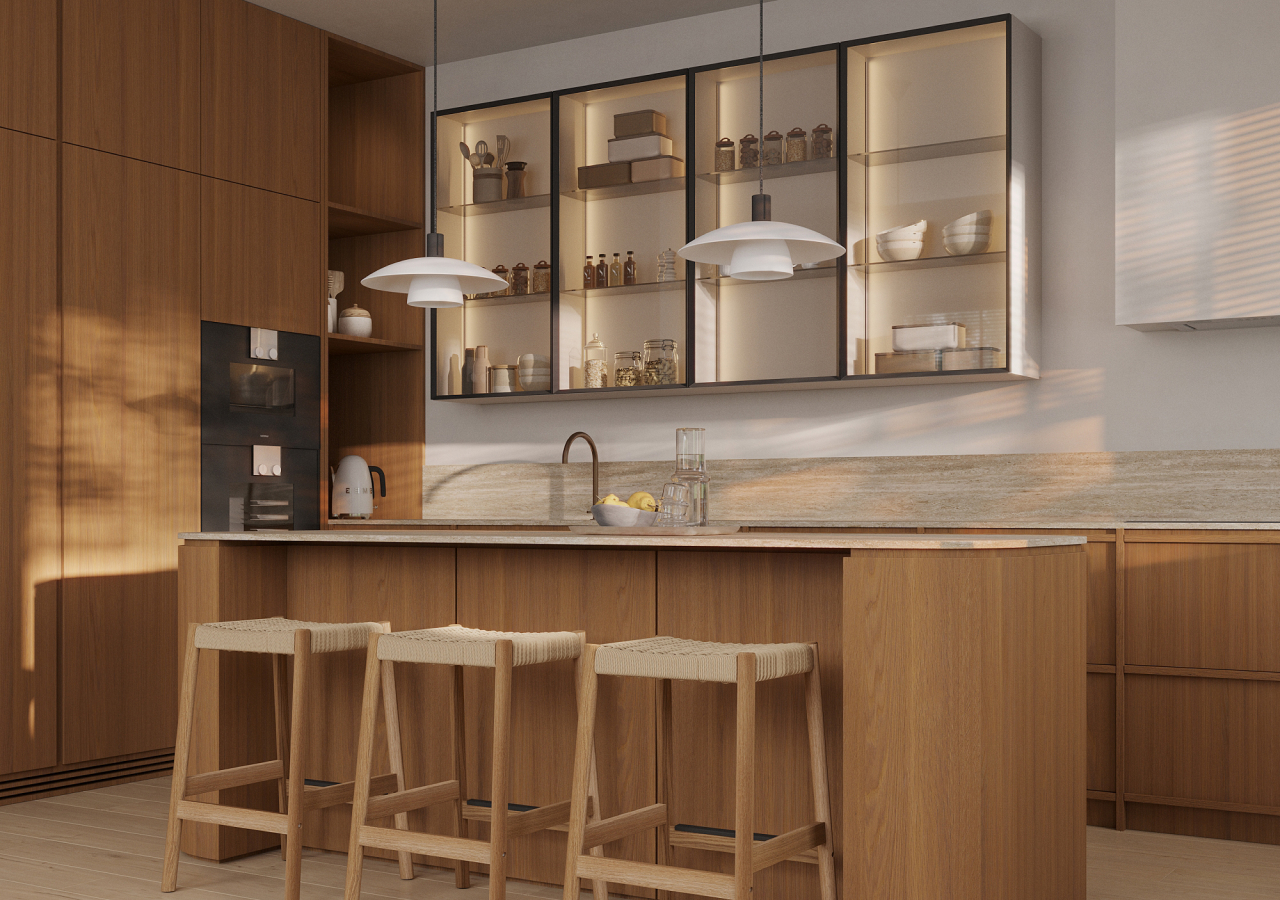
A compact kitchen benefits from a restrained palette because visual breaks make small rooms feel smaller. In a small Japandi kitchen, calm comes from continuity: one wood tone, one cabinet color, and a countertop that supports the overall mood without shouting for attention.
Japandi doesn’t mean sterile. Warm wood, soft matte finishes, and subtle texture keep the room welcoming. When storage is doing its job, styling can stay minimal, and the material choices can carry the atmosphere. That’s what makes the kitchen feel like a calm part of the home rather than a busy workspace.
Conclusion
A small Japandi kitchen works when calm is built into the layout and storage, not maintained through constant tidying. Start with a plan that keeps circulation easy and protects one clear prep surface. Then make storage do the heavy lifting with pull-out access, inner drawers to keep categories stable, and a clean sink and waste setup so daily tools do not end up on the counter.
Add hidden capacity where it matters most with toe-kick drawers for flat items and corner pull-outs so you do not lose a cabinet to dead space. If cords and small appliances are the main visual noise, an appliance garage makes the fastest difference.
Want to see these ideas in real kitchens? Explore Corner Renovation’s collections, or book a consultation to plan a calm, compact kitchen around how you actually live.


