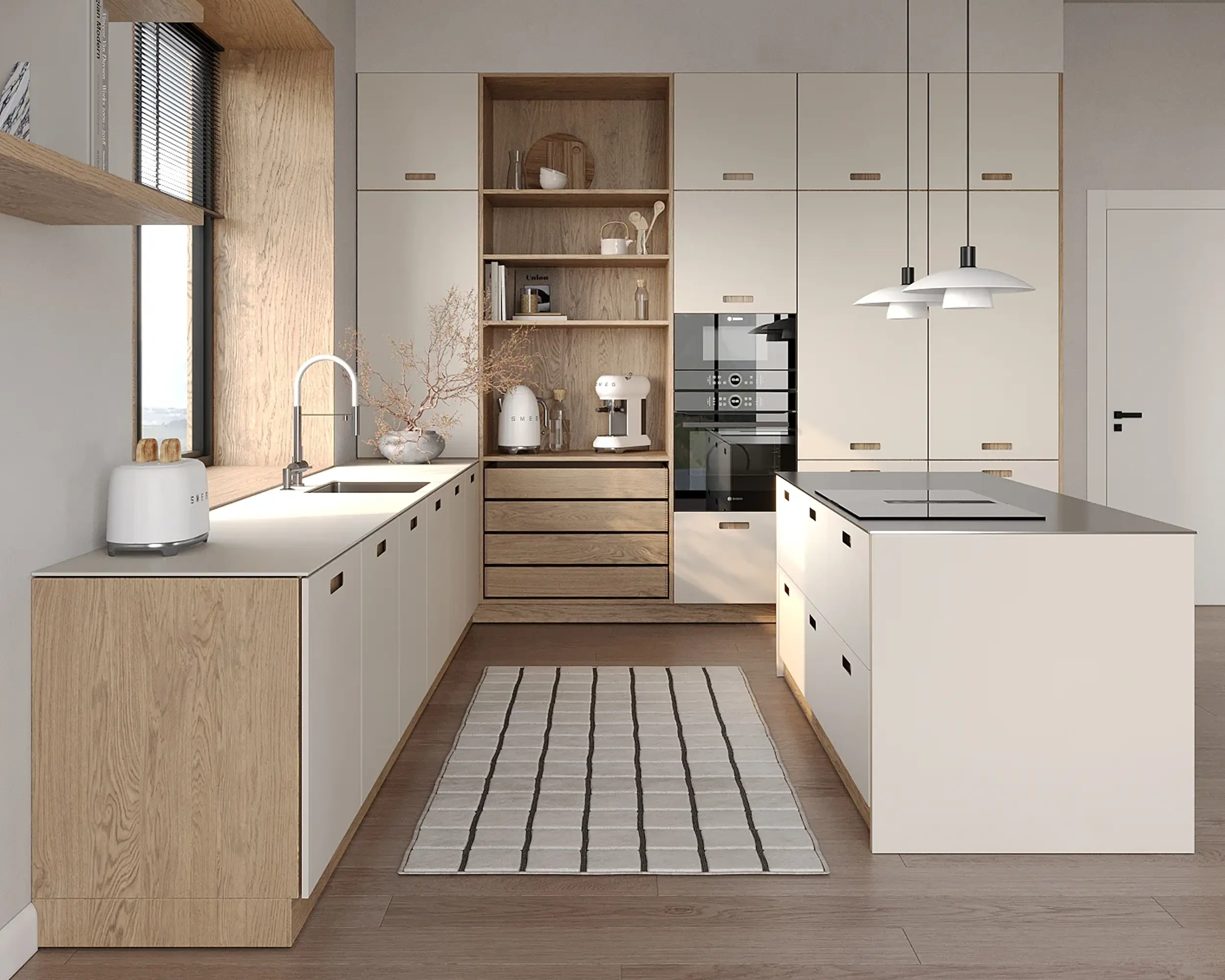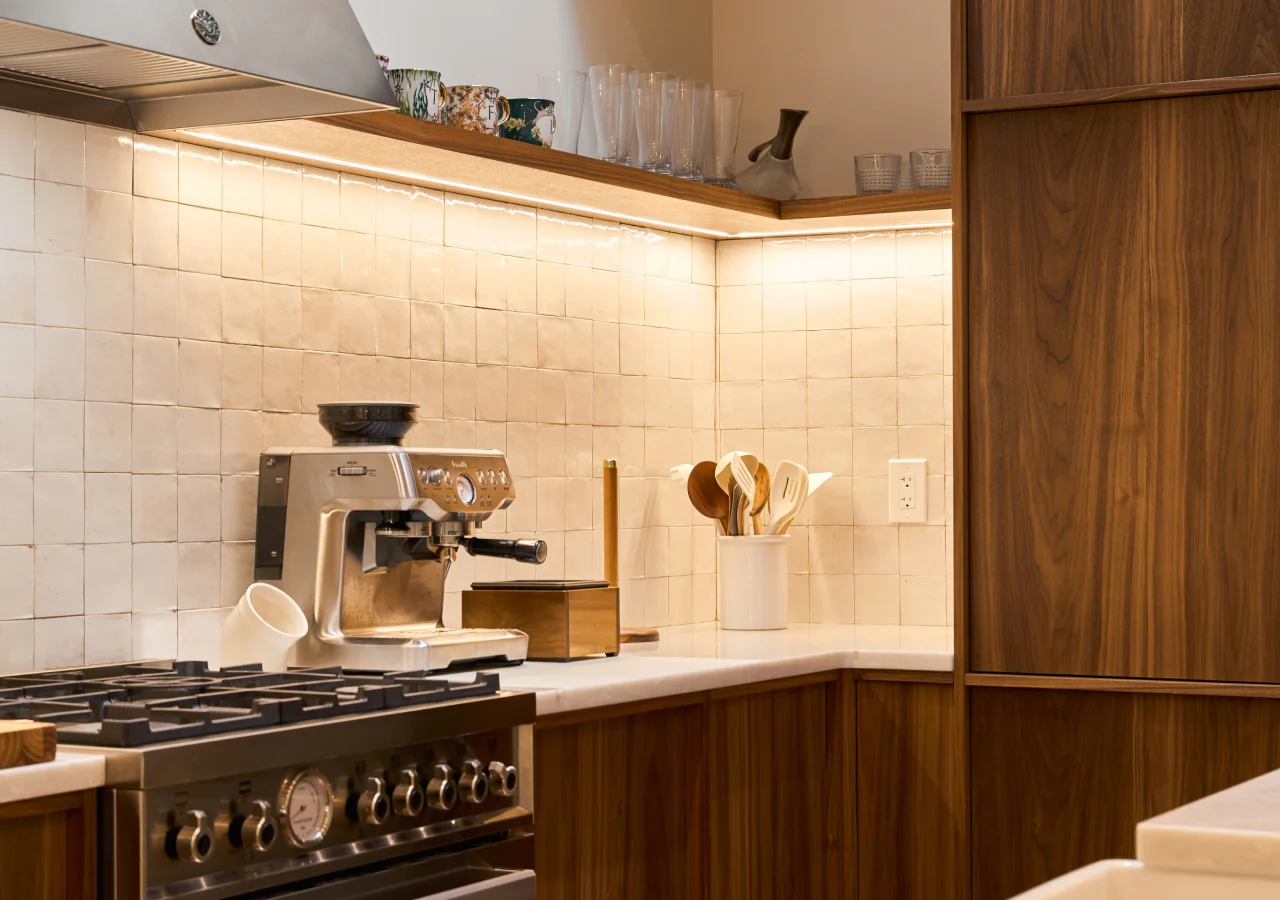
A wood shelf may look right on its own but feel misplaced once it sits beside a window or a row of upper cabinets. In a Scandinavian kitchen, choosing a beautiful shelf is only half the decision. Its position, length, and visible thickness need to relate to the cabinetry around it.
Start with the entire kitchen wall, not an isolated shelf photo. Window frames, cabinet divisions, and the backsplash establish lines that shelving can follow or deliberately interrupt. Once those relationships are clear, choosing a wood tone becomes easier too. The aim is an arrangement that looks planned with the kitchen, even when it isn't perfectly symmetrical.
Choose the Wall Before Choosing the Shelf
Start with a kitchen elevation showing windows, cabinetry, countertops, and backsplash together. It reveals gaps and competing lines that a perspective rendering can hide. Choose a location that does not crowd an already busy wall.
Beside a Window
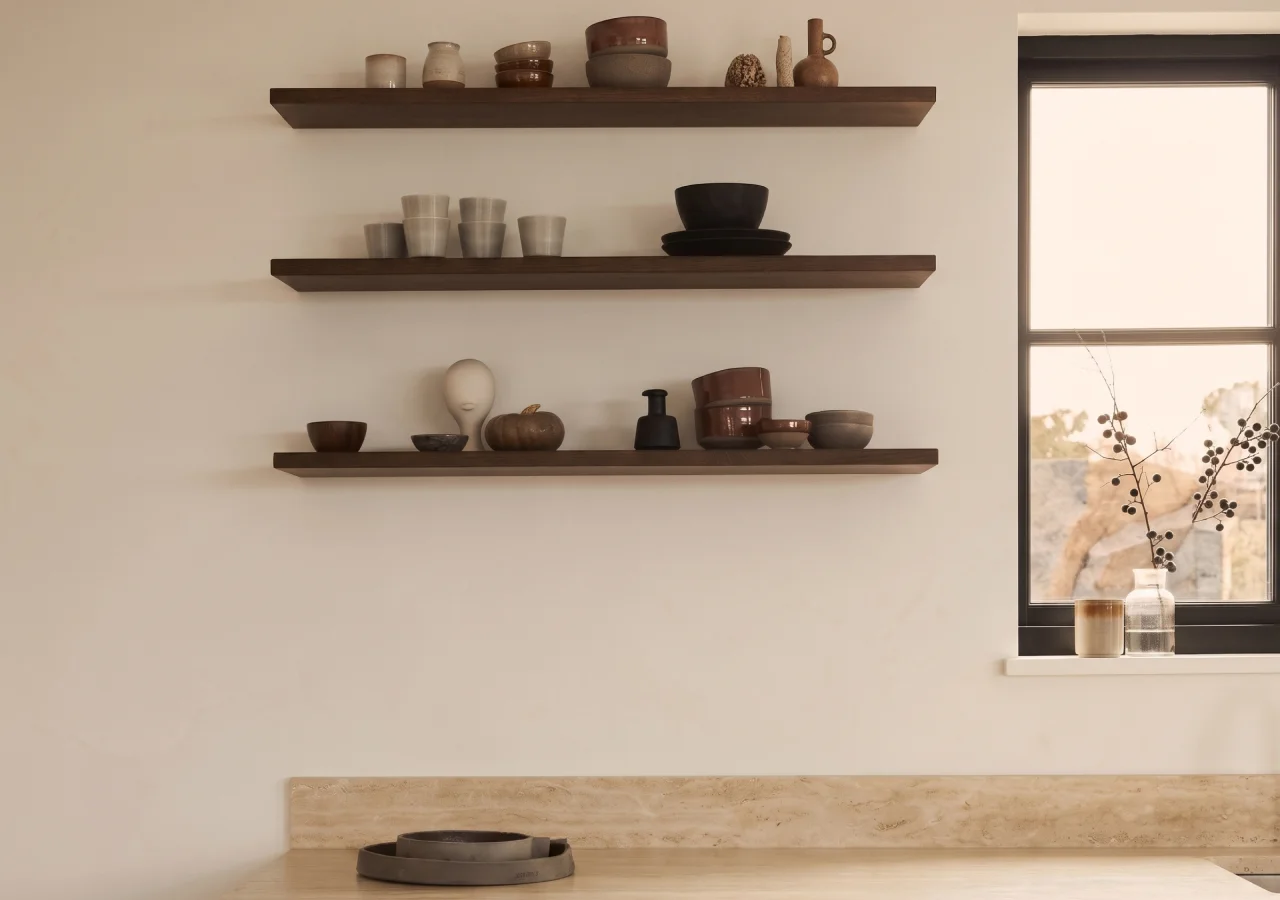
Beside a window, compare shelf edges with the sill and the lower edge of nearby upper cabinets. Aligning one important line may be enough to create a connection.
Leave some wall visible around the frame. A shelf pushed too close can make the opening feel cramped or interfere with window operation. Review it from across the room too.
Between Upper Cabinets
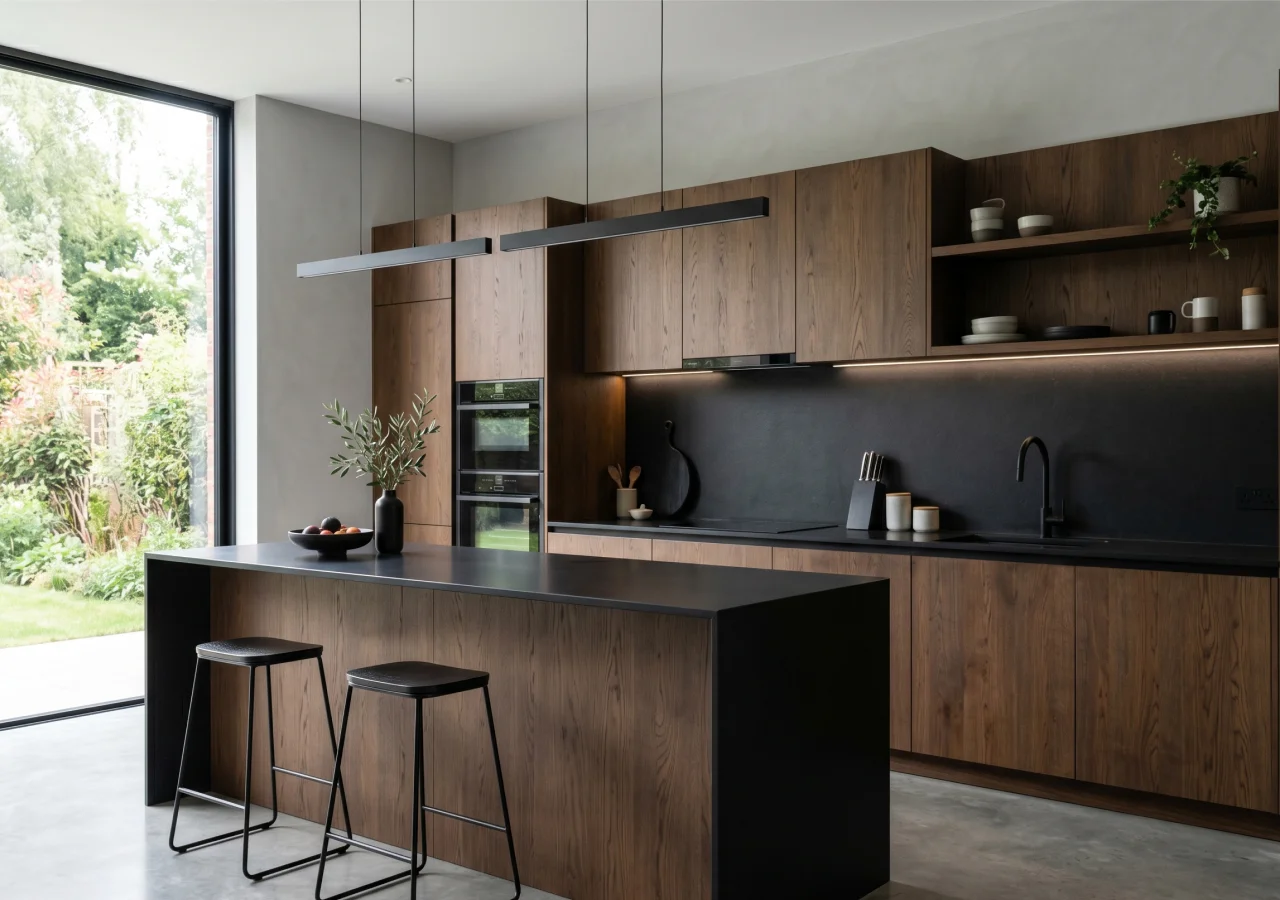
Between upper cabinets, shelf width can follow the gap, with one edge aligned to the lower cabinet line. A deliberate offset may also work if the proportions support it.
Check how the shelves meet the exposed cabinet sides. They should read as part of the planned elevation, not as a solution for a leftover gap.
On a Separate Wall
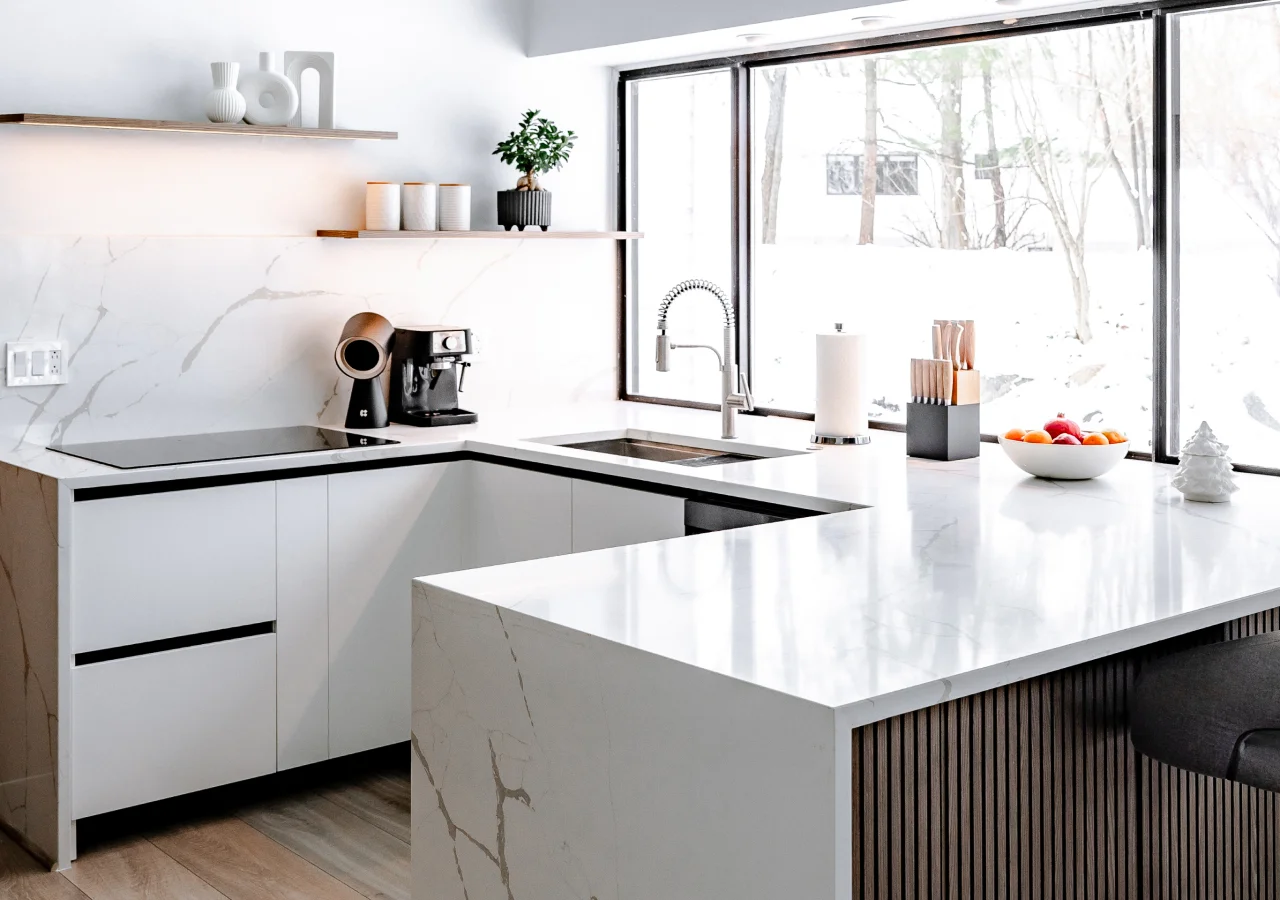
On a side wall near a coffee station or dining area, use the counter edge, backsplash height, or an adjacent cabinet line as a reference. One shelf can connect to the kitchen more clearly than several pieces arranged at unrelated heights.
Resist filling every empty section. Where a wall already contains a window, tall cabinet, or distinctive stone backsplash, leaving space clear may give the composition better balance.
Get the Length, Thickness, and Spacing Right
A shelf adds a horizontal line among cabinet divisions and countertop edges. Judge its dimensions against those elements, not an isolated reference image.
One Long Shelf or Several Shorter Ones?
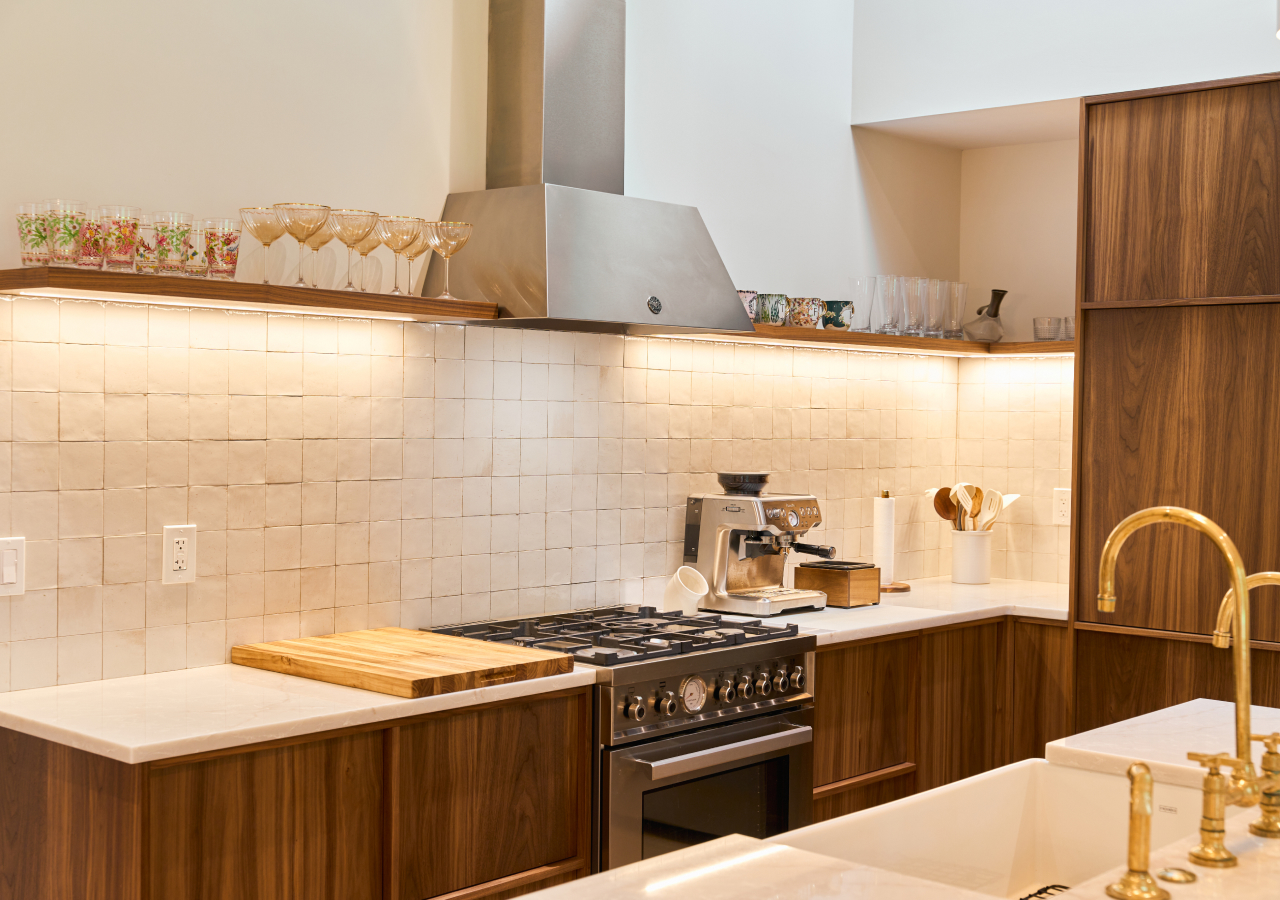
One long shelf can reinforce a countertop or base cabinet run. Ending at a cabinet edge or change of backsplash material gives the line a clear boundary.
Shorter shelves can suit a narrow section beside a window or tall unit. But repeated small pieces may create visual clutter when the cabinetry already has many divisions.
Ask for both options in the same elevation. Compare shelf ends with cabinet widths and vertical joints. A perfectly symmetrical arrangement is not necessarily the most balanced one.
Thickness and the Space Between Shelves
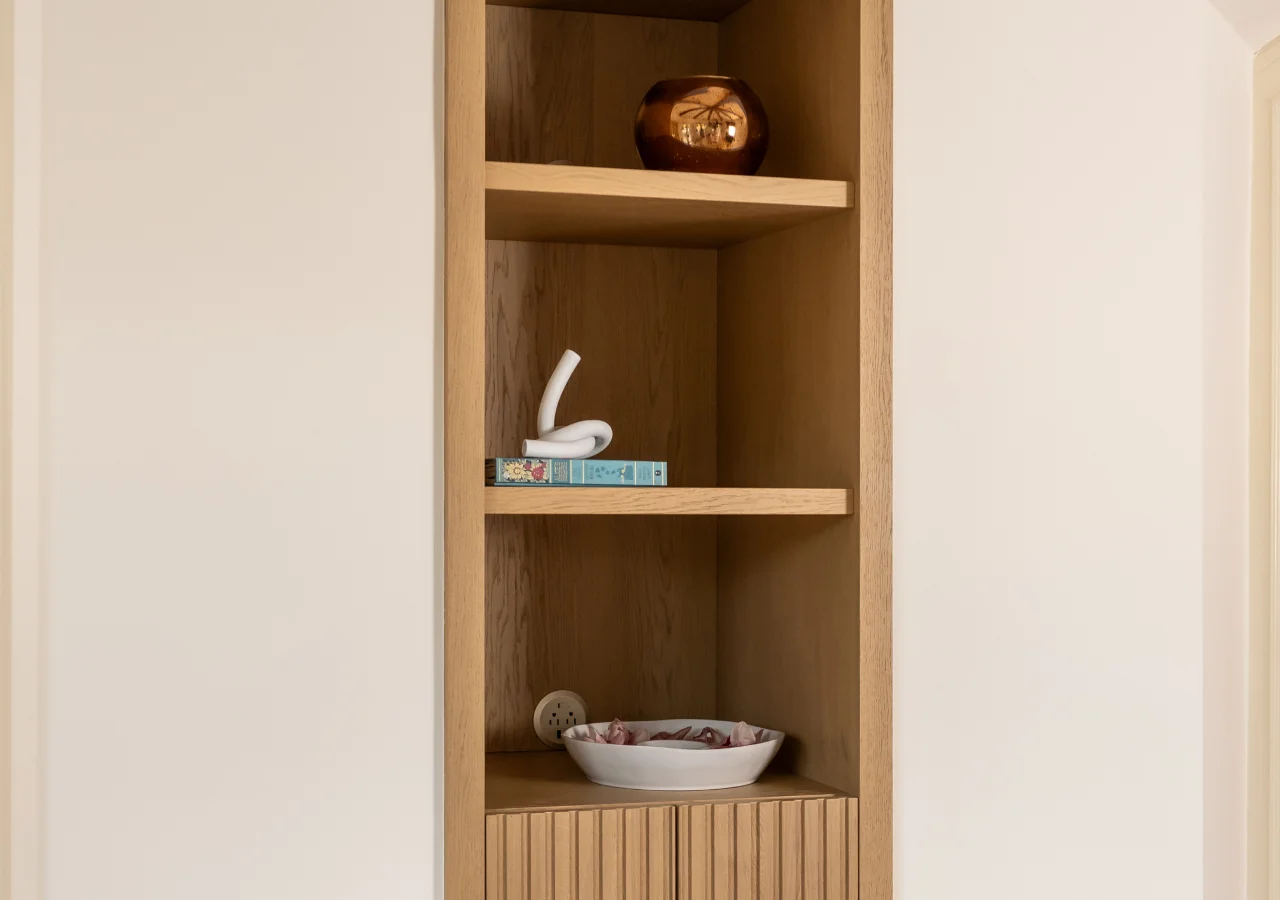
Visible thickness determines whether shelving sits quietly beside flat fronts or becomes a stronger feature. Compare it with countertop edges, door proportions, and nearby cabinets. A substantial shelf should not overpower finer details.
Actual thickness also depends on span, supports, and expected load. For technical depth and installation planning, see Corner's Open Kitchen Shelves: Sizing, Placement, and Styling Guide.
With two shelves, judge the gap between them alongside their distance from the counter and upper cabinet lines. Leave sufficient room for the intended contents without making the two levels appear disconnected.
Pair the Shelf With Cabinets and Backsplash
At eye level, wood tone and grain are noticeable. Decide whether the shelf repeats an existing finish or adds contrast, then judge it against the backsplash.
Match the Cabinet Wood or Introduce Contrast?
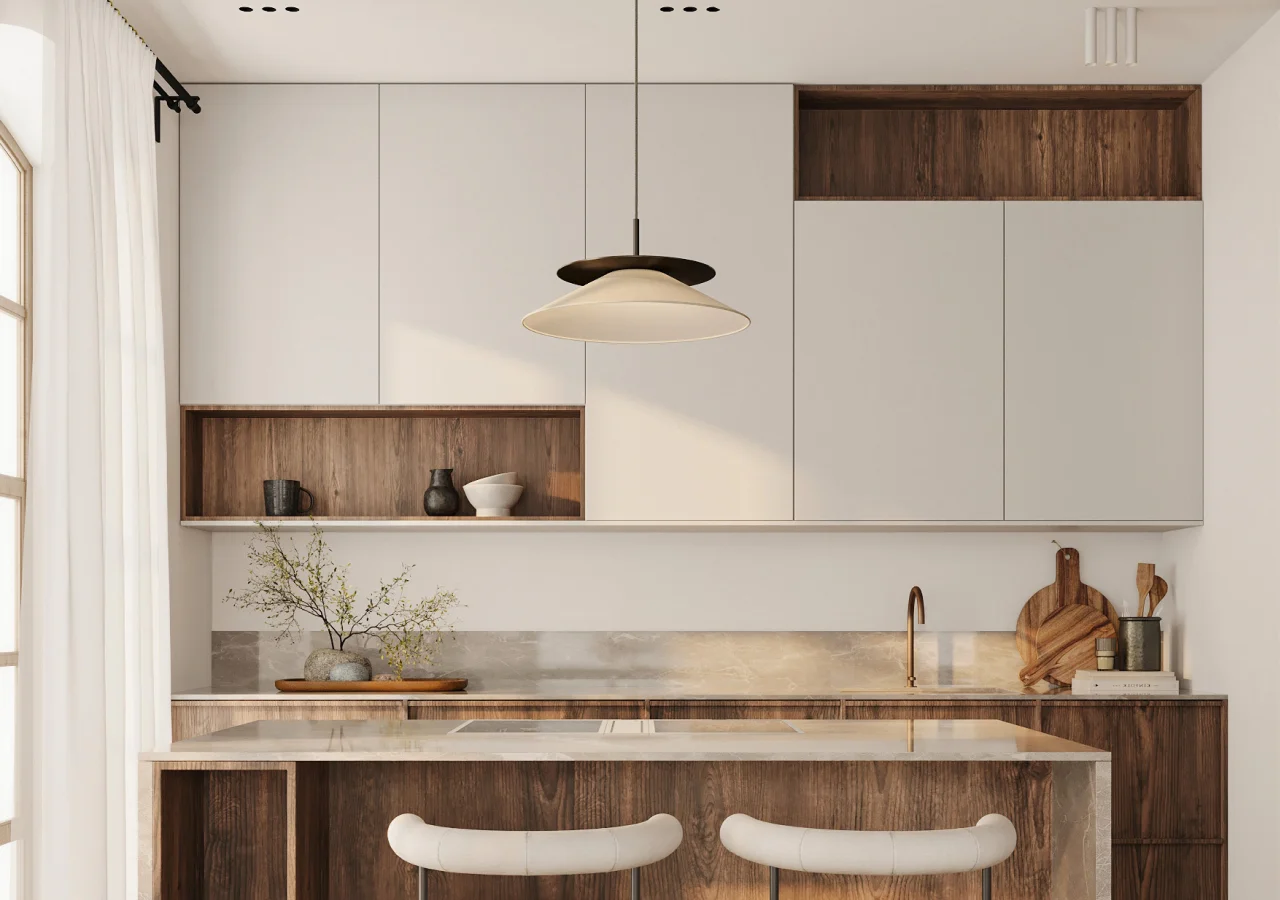
Repeating the wood used for the base cabinets or island creates an immediate connection. The finish need not be identical, but samples should have compatible undertones when viewed together in the kitchen's natural and artificial light.
With white or soft gray fronts, oak shelves can add a restrained warm detail; walnut or stained wood can create more definition. If the room already contains several wood tones, repeat one instead of adding another unrelated finish.
Corner's Nordic collection pairs white upper cabinets and American walnut base cabinets with bespoke shelving, demonstrating a coordinated material palette.
Read the Shelf Against the Backsplash

Pale tile or a quiet painted wall lets the shelf grain stand out. A highly veined stone backsplash already contributes visual movement, so a simpler shelf profile may be more appropriate.
Decide whether the backsplash stops below the shelf or continues behind it. Either approach can work, but the boundary affects how the wall is divided. Coordinate shelf ends with tile joints, slab seams, and the backsplash's upper edge before installation.
Make the Arrangement Work for Everyday Use
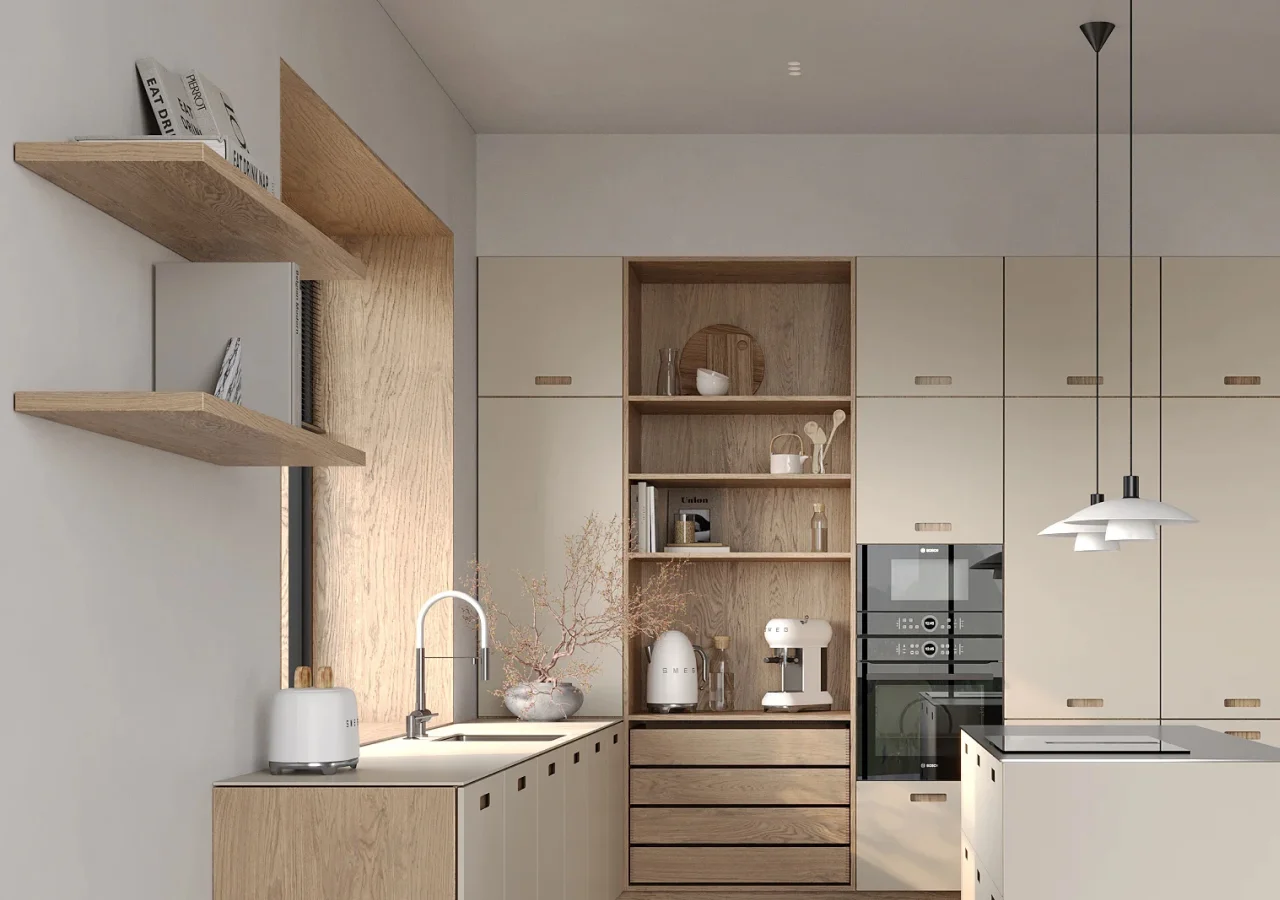
Choose the objects the shelves will hold before fixing their positions. Cups, bowls, or cookbooks occupy different heights and create different visual rhythms. Show a few intended items at their approximate actual sizes in the elevation.
Check access from the work area. A shelf may align beautifully with an upper cabinet yet sit inconveniently behind a faucet or across a deep countertop. Adjust its position without losing the main compositional relationship.
Allow for cleaning, particularly near cooking, and retain enough closed cabinetry for everything that does not suit an open shelf. For a broader look at storage decisions, see Minimalist Scandinavian Kitchen Design guide.
Conclusion
Before approving Scandinavian kitchen shelving, review the full cabinet elevation with its window, backsplash, and adjacent fronts. Does the shelf align with, or deliberately offset, a visible cabinet line? Is its edge proportionate to nearby fronts and countertop thickness? Does its wood repeat an existing tone or introduce a controlled contrast?
These questions help determine whether a shelf belongs in the overall kitchen composition. Review the arrangement alongside the cabinetry, materials, and intended contents before finalizing the design.