.webp)
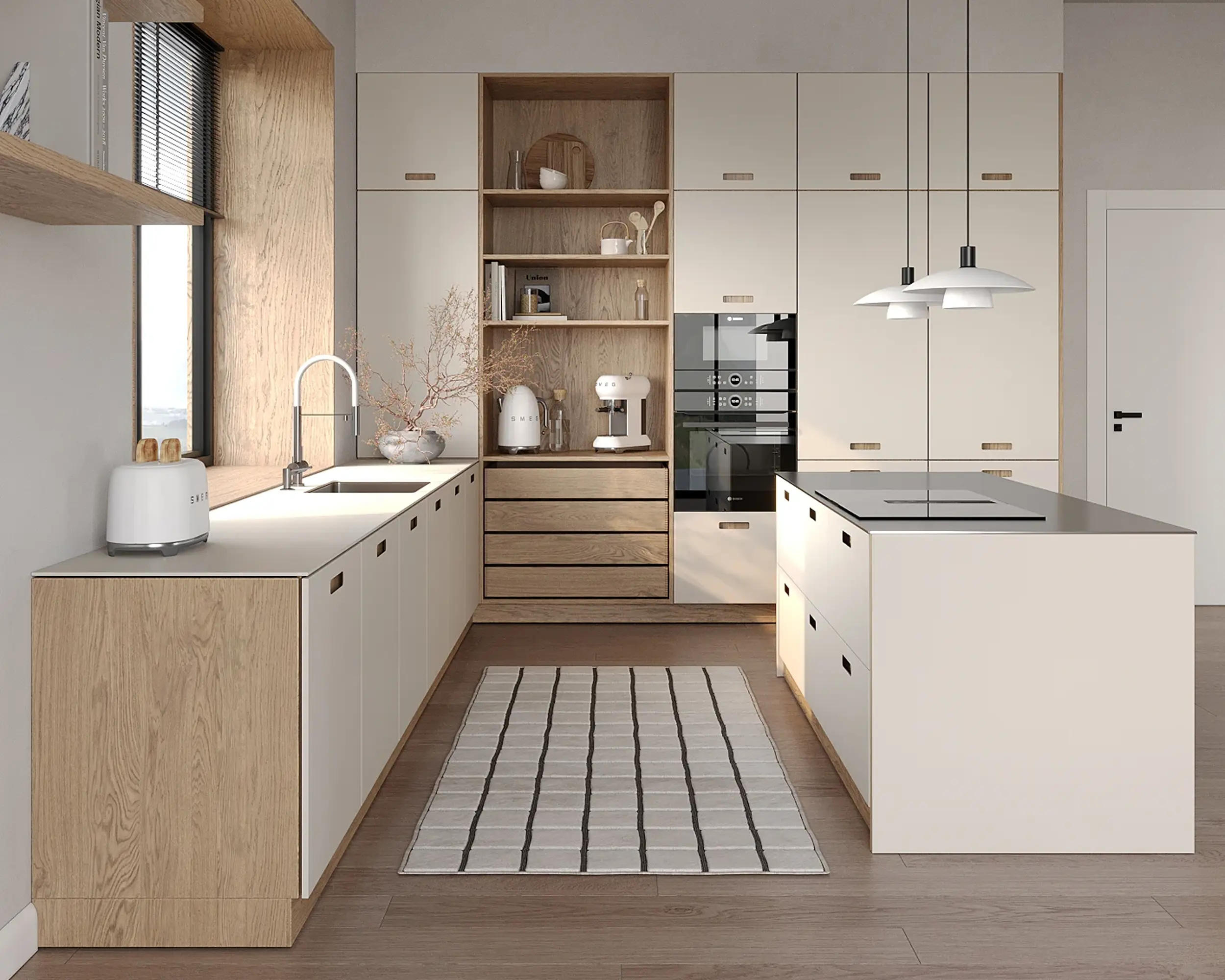
Behind a continuous run of Scandinavian-style cabinet fronts, pantry storage can work in several ways. Shelves suit some items; internal drawers make others easier to reach. Start with your usual groceries, then plan separate space for open packages, unopened extras, and bulky supplies.
Plan Pantry Space Around Your Groceries
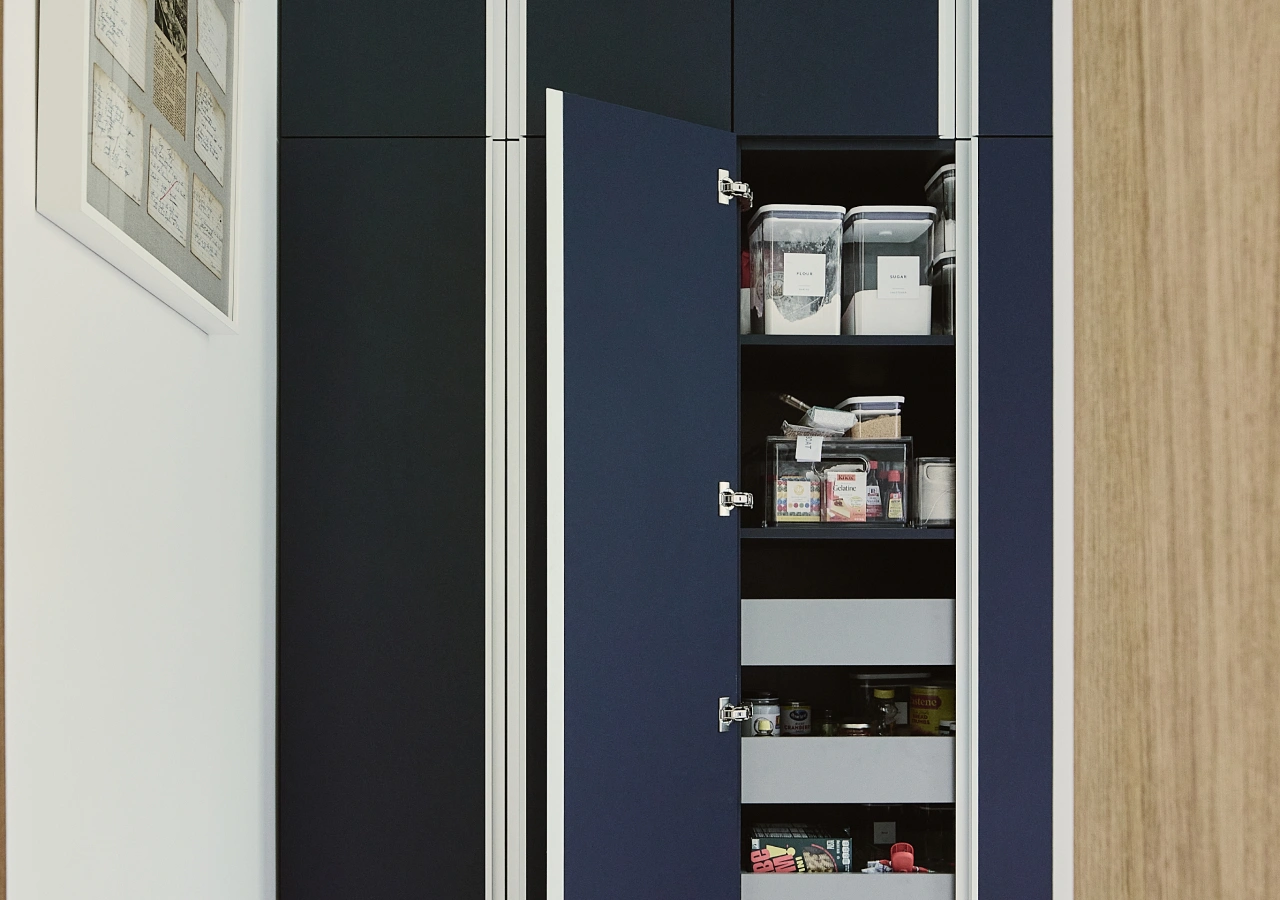
Start with your usual groceries, including original packaging, unopened replacements, bulk packs, and any small appliances stored in the pantry. Measure cereal boxes, oil bottles, and flour bags against usable internal width, depth, and clear height. Drawer sides, runners, and hinges reduce the space available.
Allocate the storage by how often you need it:
- Everyday food: keep frequently used ingredients within comfortable reach.
- Heavy supplies: place bottles and bulk packs where they can be lifted comfortably.
- Occasional items: reserve high shelves for lightweight products used less often.
- Backstock: give unopened replacements a designated shelf or drawer. An open rice bag can stay in the everyday section while its spare waits here; coffee in use may stay near the coffee maker.
Size the backstock area around your shopping habits. One spare package needs less room than regular multipacks. Move older supplies forward when unpacking groceries, keep labels and dates visible, and add an item to the shopping list when the last backup moves into use.
Leave some flexibility for changing purchases. Adjustable shelf positions can accommodate a taller cereal box or a different bottle size without replacing the interior. If you use baskets, measure their handles and the space needed to lift them out. A basket that fits tightly on the shelf may still be awkward to remove when full.
Choose Shelves, Internal Drawers or a Full-Height Pull-Out
.webp)
Choose the pantry interior around the size of your groceries and how you want to reach them.
Internal drawers usually require two actions: open the door, then pull out the drawer. A full-height pull-out moves several levels even when you only need one item. Check usable space and load capacity for either option; the hardware occupies part of the cabinet interior.
A mixed interior often works well: adjustable shelves for cereal boxes and occasional appliances, with shallow drawers or removable trays for packets, spices, and cans. This keeps small items visible without committing every level to the same mechanism.
Try the opening sequence on a display cabinet if one is available. Imagine taking out a single jar, putting away several grocery bags, and reaching the lowest level. Notice whether you can see labels from above or from the side. This helps you choose between mechanisms that look similar in a drawing but feel different in use.
Check Fit, Access and What Is Included
.webp)
Confirm the interior fittings before approving the order. If the design shows four internal drawers, all four should appear in the specification. Review these details with the cabinet designer:
- Contents: the number of drawers, fixed and adjustable shelves, dividers, and pull-out mechanisms.
- Usable space: internal width and depth, clear height for packages, and shelf spacing.
- Load capacity: the limits for the selected drawers, shelves, and pull-out hardware.
- Door access: room for drawers to extend past the door and hinges, especially beside a wall, refrigerator panel, or perpendicular cabinet run. Hinge and filler requirements depend on the selected system.
Before signing off, ask for an interior elevation showing shelf and drawer positions. A closed-front rendering cannot show whether a tall bottle clears the shelf above or whether a drawer opens beside the wall. If a fitting is optional, have its price listed separately so you can compare the same pantry contents across quotes.
For cabinet placement and appliance zones, see our Japandi Tall Cabinets and Pantry Planning guide.
Conclusion
Plan the pantry around your groceries, reserve space for unopened extras, and confirm the fittings before ordering. Usable dimensions and access will determine how well the finished cabinet works each day.
To explore more practical storage ideas, browse Corner Renovation’s kitchen organization articles and completed kitchen projects.