

Nordic and Scandinavian kitchen design are closely connected, but the terms do not always mean exactly the same thing. In most cases, Scandinavian kitchen design refers to the familiar minimalist look associated with Sweden, Denmark, and Norway. Nordic kitchen design is often used more broadly for interiors shaped by the wider Nordic region, including Finland and Iceland.
In practice, the two overlap heavily. Both favour simplicity, natural materials, and function-first planning. The difference is usually in range: Scandinavian kitchens tend to feel lighter and more clearly defined, while Nordic kitchens can stretch further into darker woods, deeper colours, and a slightly more rugged natural look.
Nordic vs Scandinavian Kitchen Design at a Glance
Are Nordic and Scandinavian Kitchen Design Actually Different?

Most of the time, these terms are used loosely, which is why many so-called Nordic kitchens look almost the same as Scandinavian ones. Both come from northern European design traditions and rely on clean lines, practical layouts, natural materials, and restraint.
The clearest way to separate them is this: Scandinavian is usually the narrower and more familiar label, while Nordic works as a wider category. That wider category can include kitchens that use darker timber, rougher textures, or a heavier natural palette.
So this is not really a case of two completely different styles. It is more a question of how tightly the look is defined.
What Scandinavian and Nordic Kitchens Have in Common
Before getting into the differences, it helps to look at the shared base. Both styles work well in kitchens because they are built around a few clear principles.
1. Natural Materials Matter

Both Scandinavian and Nordic kitchens lean heavily on natural-looking materials. Wood is usually the main one, whether it appears on cabinetry, flooring, shelving, or smaller details. Oak, ash, and walnut are all common, depending on whether the scheme is meant to feel lighter or warmer.
Stone, quartz, ceramic, and matte composite surfaces also fit well, especially when the pattern is quiet. The aim is not to make the kitchen feel rustic. It is to keep the materials natural and controlled.
2. Function Comes First

These styles are not just about appearance. A Scandinavian or Nordic kitchen should work well in daily use, with storage planned around real habits, circulation kept open, and surfaces kept as clear as possible.
That is why these kitchens often pair well with deep drawers, integrated appliances, tall pantry storage, and handleless or low-detail cabinetry. The room feels calm because it works properly, not because it has been over-styled.
3. Simplicity Is Built Into the Design
.webp)
Simplicity here does not mean the kitchen should feel empty or cold. It means removing clutter, limiting unnecessary detail, and making the room easier to read.
Cabinet fronts are usually flat or lightly detailed. Material changes are kept under control. Decorative objects are limited. The result is a kitchen that looks calmer and less busy, even when it is used hard every day.
The Main Differences Between Nordic and Scandinavian Kitchens
The differences are subtle, but they are still useful when you want to describe the look more accurately.
Scandinavian Kitchens Usually Feel Lighter and More Defined
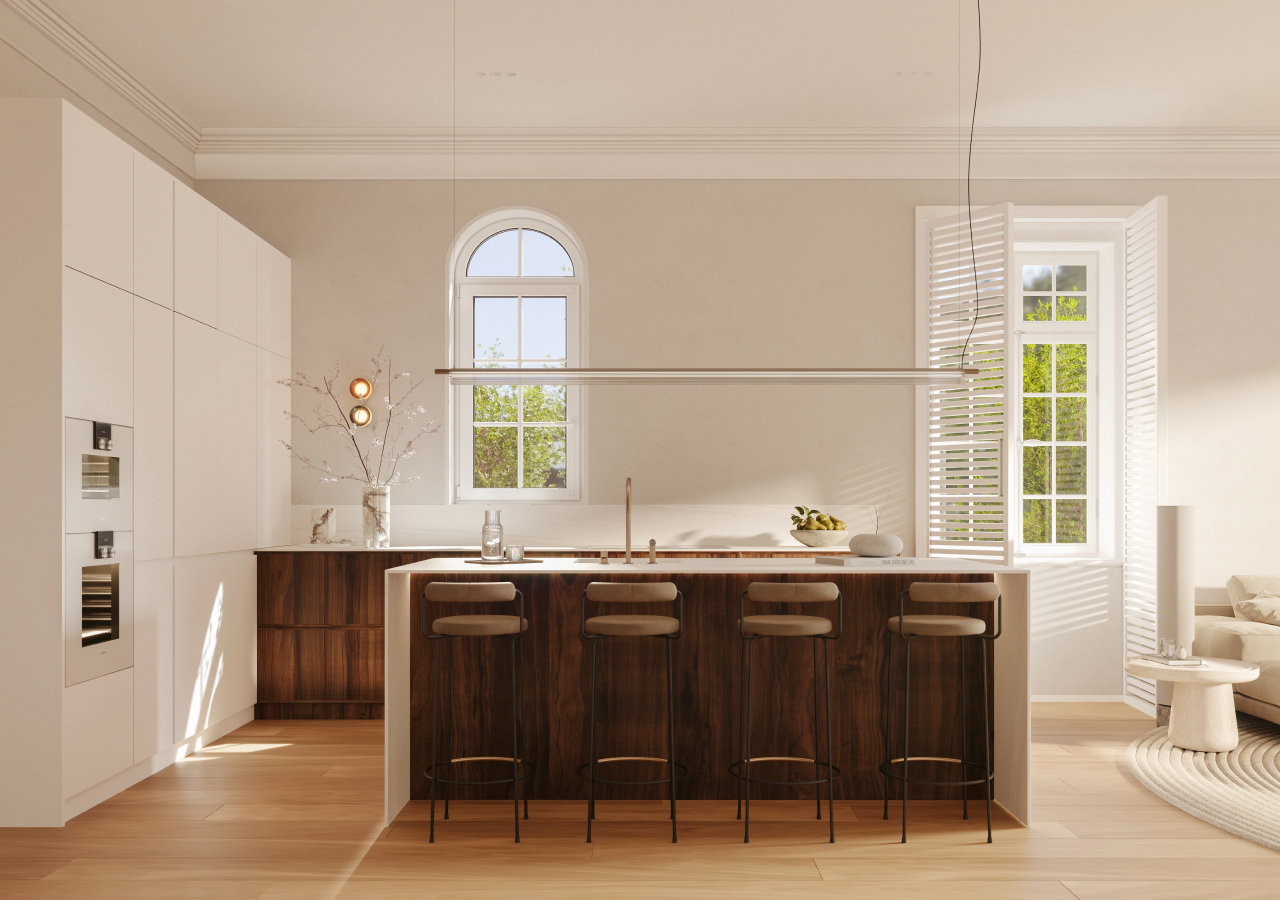
Scandinavian kitchen design is the more established label, and it usually points to a fairly specific look: light wood or painted cabinetry, a restrained palette, minimal detailing, and a bright overall feel.
White, warm white, greige, pale grey, and soft oak are common choices. Even when darker accents are introduced, they are usually kept in check. The result is simple, clear, and balanced.
This is also the version most people mean when they say “Scandinavian kitchen.”
Nordic Kitchens Can Have a Wider Palette
.webp)
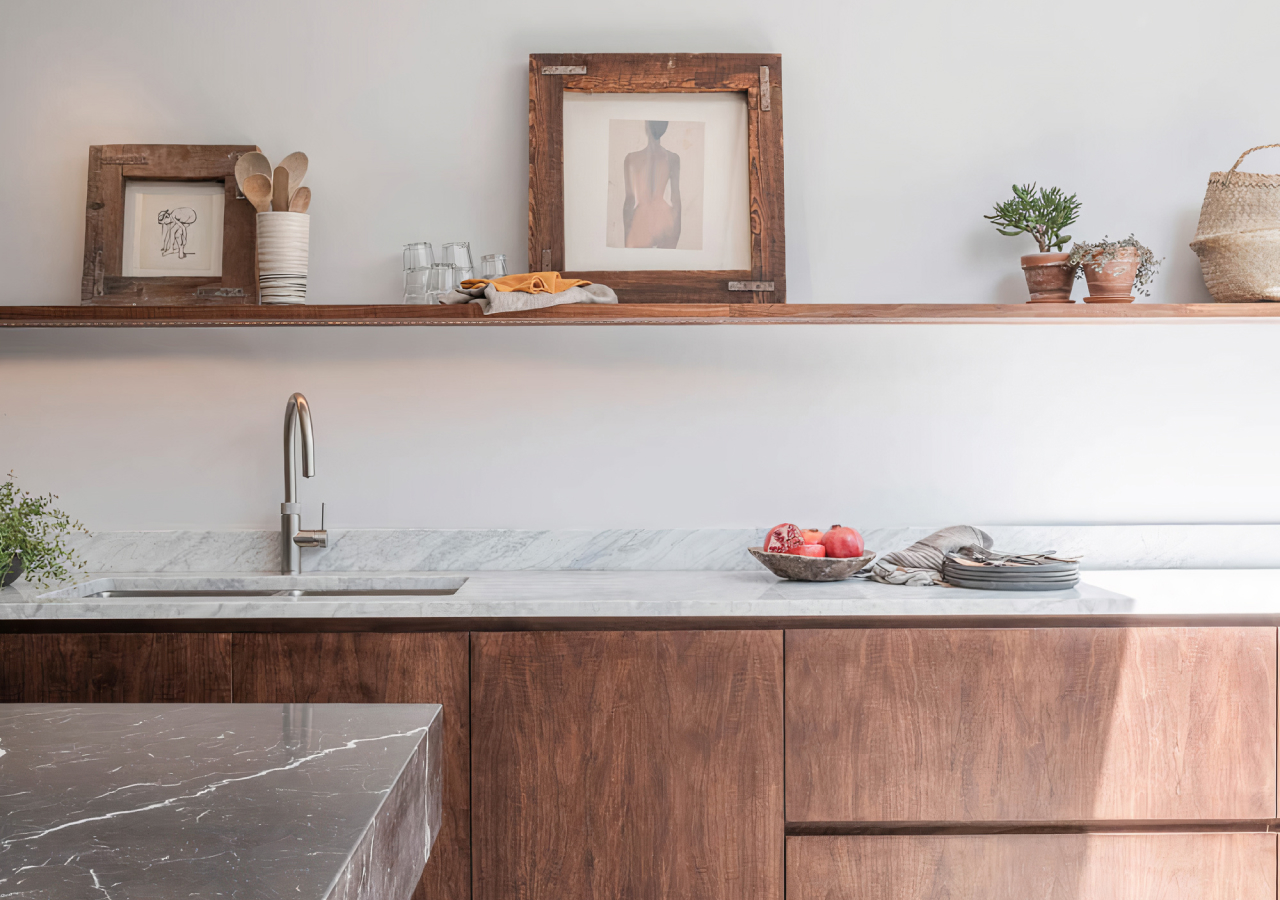
Nordic kitchen design can include that same light and restrained look, but it is often broad enough to cover darker or heavier interpretations too. A Nordic kitchen may still be minimal, but it can also include walnut tones, charcoal, deeper greens, rougher textures, or a slightly more rugged feel.
That does not make it less refined. It simply allows more variation than the classic Scandinavian version.
Put another way, many Scandinavian kitchens fit comfortably within the Nordic category, but not every Nordic kitchen fits the lightest Scandinavian template.
Scandinavian Decor Is Usually More Edited
.webp)
Scandinavian kitchens tend to keep visible decor to a minimum. When accessories are used, they are usually sparse and deliberate: a ceramic vase, a pendant light, a few everyday items, or a small piece of art.
Nordic kitchens can be styled in much the same way, but they are sometimes more open to practical, handmade, or textural objects. Wooden bowls, woven baskets, clay planters, or open storage with everyday tools can all fit naturally here. The room still feels controlled, but slightly less polished.
The Atmosphere Is Not Quite the Same

If there is one simple way to describe the difference, it comes down to atmosphere.
A Scandinavian kitchen usually feels lighter, softer, and more pared back.
A Nordic kitchen can still feel calm and minimal, but often carries more weight through darker tones, stronger material contrast, or a more rugged natural character.
It is not a dramatic difference, but it is often the reason one label feels more accurate than the other.
Which Term Should You Use?
If your kitchen is bright, minimal, and built around light wood or soft neutrals, Scandinavian kitchen design is usually the clearer term. It is better known, more specific, and easier for most readers to understand straight away.
If the kitchen follows the same simple, functional logic but uses darker woods, deeper colours, or a broader northern European feel, Nordic kitchen design can make sense as the wider descriptor.
From an SEO perspective, Scandinavian is usually the stronger primary term. Nordic works best when the page is explaining the difference or describing a broader version of the same design family.
A Nordic-Inspired Kitchen from Corner

Corner’s Nordic kitchen collection sits right in this overlap between Nordic and Scandinavian design. It follows the same clean planning and restrained approach found in Scandinavian kitchens, but the material choices push it in a slightly warmer and darker direction.
The cabinetry is finished in American walnut veneer, which gives the kitchen more depth than a typical light-oak Scandinavian scheme. The wood keeps the design natural and minimal, but adds a richer tone.
The kitchen also uses a Dekton Arga countertop, which brings in a stone surface without making the room feel busy. Together, the walnut and stone create a natural palette that leans more Nordic than classic light Scandinavian.
From a planning point of view, the kitchen still follows the same principles that make Scandinavian kitchens work well: integrated appliances, clean storage, visual order, and a layout designed for everyday use. That is what makes it a strong Nordic reference. It keeps the discipline of Scandinavian design, but does not stay within the palest version of it.
Conclusion
Nordic and Scandinavian kitchen design are closely linked, and in many cases the difference is more about language than hard rules. Both styles value simplicity, natural materials, and practical planning. Both aim to create kitchens that feel clear, calm, and easy to use.
The main difference is that Scandinavian kitchen design is the more specific and familiar term, while Nordic kitchen design is broader and can include darker materials, deeper tones, and a wider range of northern influences.
So the choice is usually not between two opposing styles. It is more about deciding how narrow or how broad the reference should be.


