.webp)
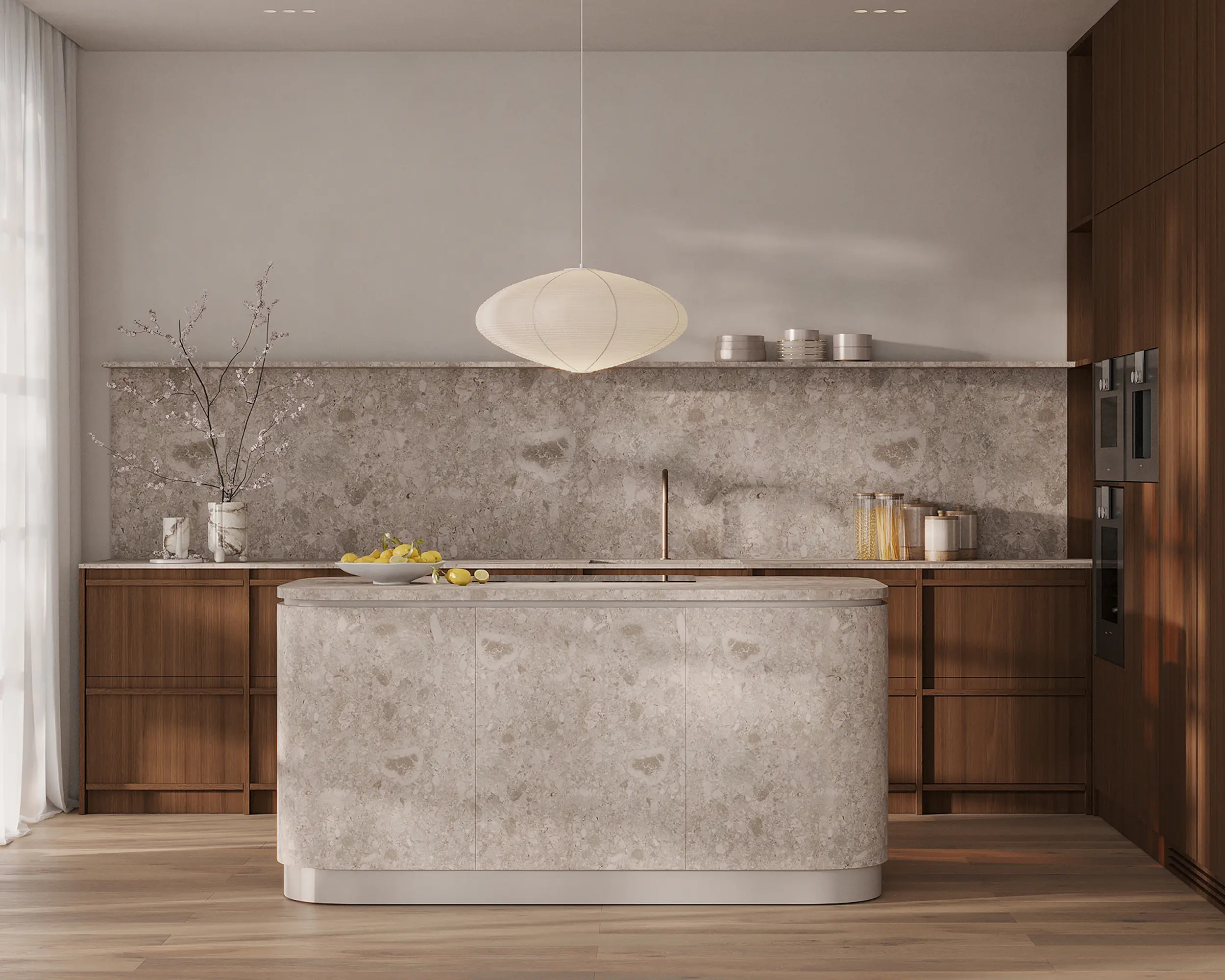
Modern Japanese kitchens suit homeowners who want strong order, natural materials, and a kitchen that stays visually controlled in daily use. Instead of depending on decoration, they rely on layout, storage, and a disciplined material palette. The result is a space that works hard without feeling busy.
This style is often mentioned alongside Japandi, but the mood is different. Japandi kitchens usually feel lighter, softer, and more open. Modern Japanese kitchens tend to use darker woods, quieter contrast, and more contained compositions. They often feel more architectural and more inward-looking.
Key Characteristics of a Modern Japanese Kitchen
What Defines a Modern Japanese Kitchen
A modern Japanese kitchen is shaped by restraint, practicality, and careful editing. The design usually starts with simple forms, natural materials, and a palette that feels balanced rather than decorative.
In practical terms, that often means flat cabinet fronts, matte finishes, quieter stone surfaces, and wood tones with more depth, such as walnut, smoked oak, or darker brown stains. Instead of adding more visible features, the design depends on proportion, texture, and clean planning.
This is also what separates modern Japanese kitchens from more traditional Japanese interiors. Traditional spaces may show heritage more directly through visible timber structure, older forms, or historically rooted materials. A modern Japanese kitchen keeps the emphasis on balance and natural materials, but translates it into a cleaner language that suits current renovation standards.
There is some overlap with Japandi, but the effect is different. Japandi usually feels brighter and softer. A modern Japanese kitchen usually feels darker, more enclosed, and more structured.
Why Layout Matters More Than Decoration
.webp)
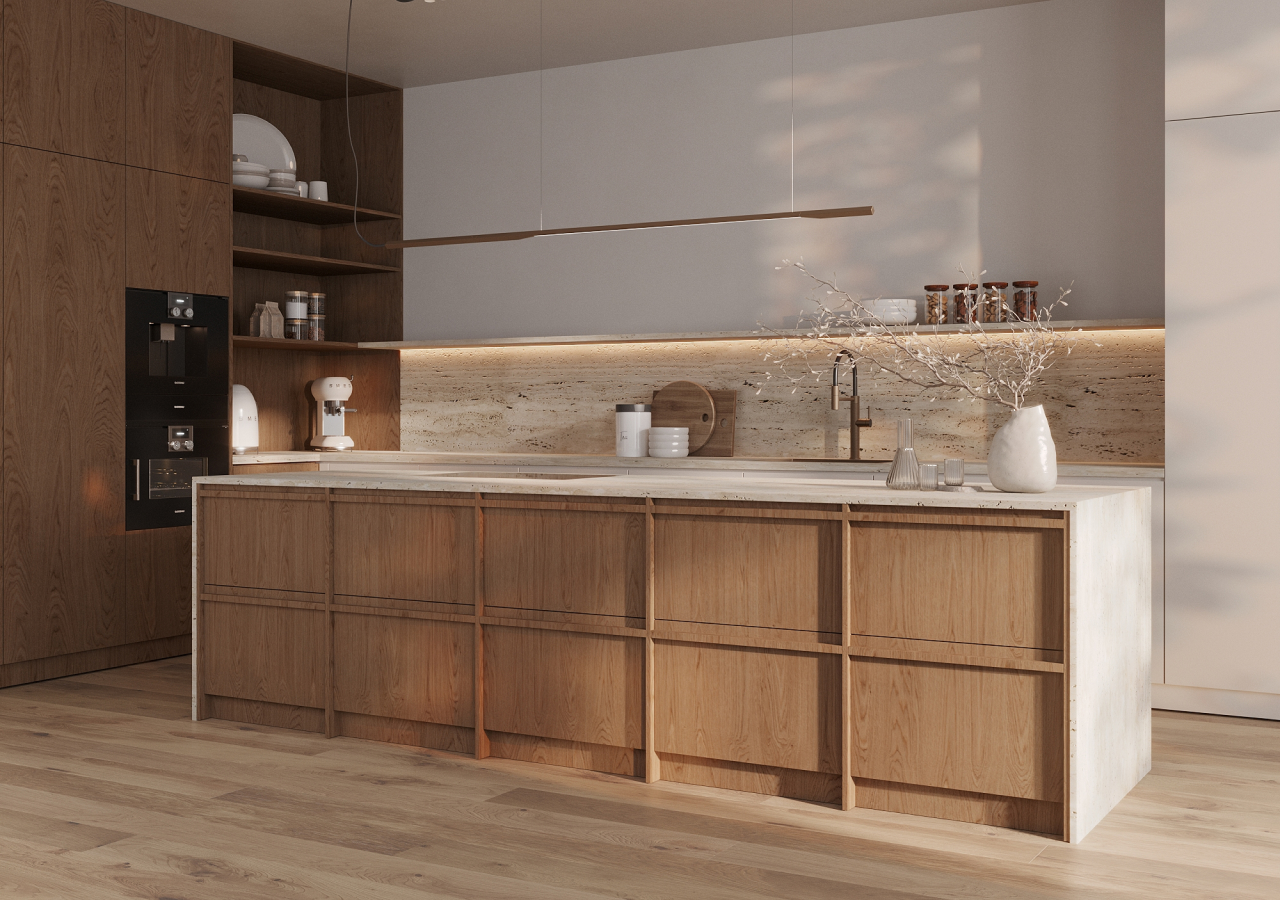
The sense of order in a modern Japanese kitchen comes first from layout. More than styling, it is the arrangement of storage, work zones, and surfaces that shapes the room.
These kitchens work well because daily tasks are planned properly. Prep, cooking, and cleaning zones are kept compact and efficient. Tall storage is built in instead of added in pieces. Countertops stay clearer because more of the everyday mess has already been given a place.
That is one of the main strengths of the style. A kitchen with a strong layout does not need much decoration to feel complete. Long cabinet runs, full-height pantry walls, built-in appliances, and limited open shelving do much more for the room than decorative styling can.
For homeowners, the benefit is simple: the kitchen is easier to use and easier to keep in order. That matters even more in smaller homes or in kitchens that get heavy daily use.
Materials and Finishes: Wood, Stone, and Control

Modern Japanese kitchens use a tight material palette, but that does not mean they look flat. Their depth comes from tone, surface texture, and the relationship between materials.
Wood is one of the most important elements, especially in darker tones. Walnut and dark-stained oak work especially well because they add warmth without making the kitchen feel light or casual. Lighter wood can still work, but once the palette becomes too pale, the result often starts to read as Japandi or Scandinavian instead.
Stone or stone-look surfaces help balance the wood. In most cases, quieter materials with softer movement and matte or honed finishes work better than highly expressive patterns. The aim is not to make the countertop the main event. It is to give the kitchen a stable surface that supports the rest of the design.
Matte finishes also matter. They reduce glare, soften the overall look, and help the kitchen feel more settled. In a style like this, too much reflection can make the room feel sharper than intended.
For most homeowners, the safest approach is to keep the palette tight: one main wood tone, one countertop and backsplash direction, and only a small number of supporting finishes.
Cabinets and Storage: Simple Outside, Hard-Working Inside
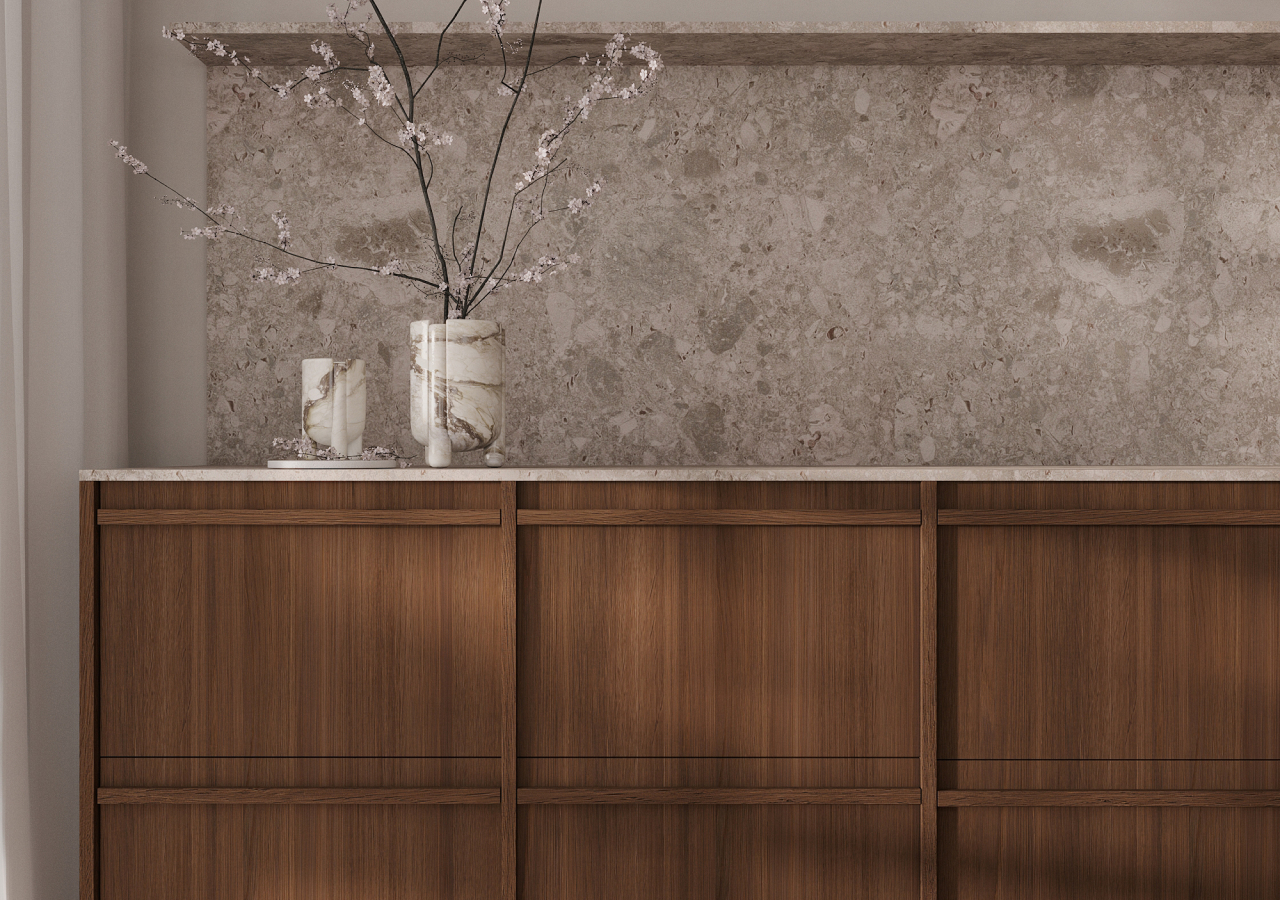
Cabinetry in a modern Japanese kitchen should look simple on the outside and perform well on the inside. That balance is what keeps the room minimal without making it frustrating to use.
Flat fronts, integrated pulls, or subtle low-profile handles usually work best. But the real value comes from what happens behind those fronts. Good internal planning is what allows the exterior to stay clean over time.
This is where drawer-based storage becomes especially important. Deep drawers usually make better use of base cabinets than standard shelf cabinets because they improve access and visibility. Inner drawers help manage smaller items without turning the whole kitchen into a set of shallow compartments. Under-sink storage, integrated waste solutions, and full-height pantry storage all help keep work surfaces clearer.
Appliance integration matters too. When larger appliances sit flush within a cabinet wall and smaller everyday machines can be stored in an appliance garage or coffee station, the kitchen looks cleaner and functions better.
This is one of the clearest overlaps with Japandi kitchens. Both styles depend on hidden functionality. In a modern Japanese kitchen, though, the exterior is usually edited a bit further, so the room reads as more contained and more controlled.
Modern Japanese vs Japandi Kitchens

Modern Japanese kitchens and Japandi kitchens share natural materials, simple forms, and a preference for uncluttered spaces, but they create different atmospheres.
For homeowners choosing between them, the main question is atmosphere. If you want a kitchen that feels richer, darker, and more architectural, modern Japanese is usually the better fit. If you want the same sense of simplicity in a lighter and softer form, Japandi usually makes more sense.
Modern Japanese vs Wabi-Sabi Kitchens

Modern Japanese kitchens are also often confused with wabi-sabi interiors, but they are not the same. A modern Japanese kitchen is usually more precise, more integrated, and more controlled. Wabi-sabi interiors allow more roughness, more irregularity, and more visible imperfection.
That difference affects renovation choices. If you want clean cabinetry, integrated appliances, and a highly ordered layout, modern Japanese is the closer reference. Wabi-sabi is a better fit when you want more raw texture, more organic irregularity, and a less exact finish.
Conclusion
Modern Japanese kitchens offer a strong alternative to lighter forms of minimalism. Their character comes from disciplined layout planning, restrained materials, and storage that supports daily use without putting everything on display.
For homeowners who like the simplicity of Japandi but want something darker, more structured, and more architectural, this direction often makes more sense. It keeps the warmth of natural materials, but gives them a firmer and more controlled setting. Done well, it produces a kitchen that looks clear, works hard, and stays easier to maintain over time.