
.webp)
If you’ve been searching “Japanese kitchen design,” you’ve probably noticed the results don’t always match what you meant. Sometimes you get ultra-minimal, gallery-like spaces. Sometimes you get compact, highly practical kitchens. Sometimes you get what most people would call a Japandi kitchen.
That mismatch happens because the real goal behind those searches is usually the same: a kitchen that feels calm because it’s organized, not because it’s empty. When the layout supports your routine and storage is planned properly, counters stay clear, the room feels lighter, and “minimal” becomes realistic.
What Is a Japandi Kitchen?
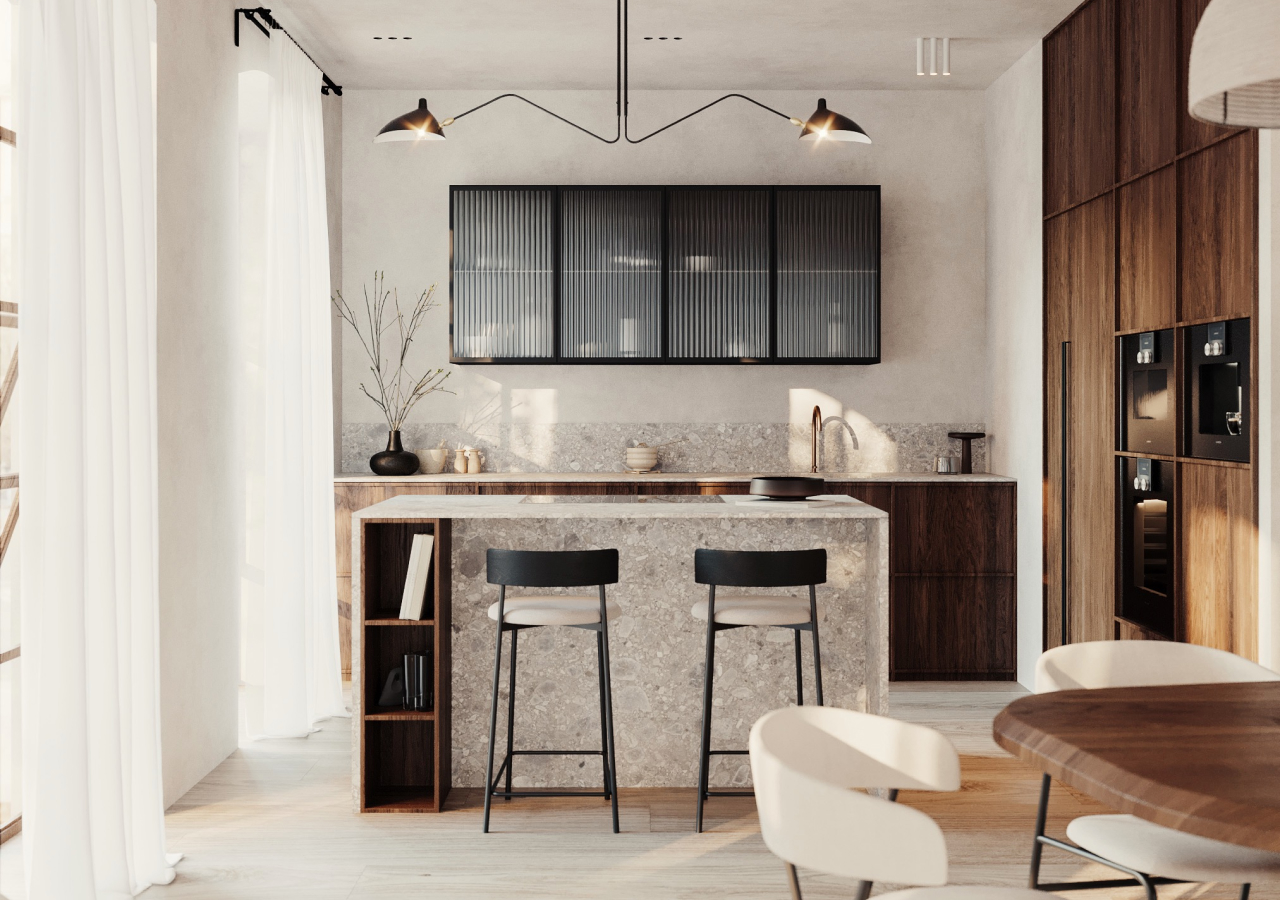
A Japandi kitchen is a Japanese–Scandinavian blend: Japanese minimalism and restraint paired with Scandinavian comfort and warmth. The result is streamlined and quiet,it includes natural textures, soft tones, and thoughtful lighting keep it livable.
In real kitchens, Japandi design only works when function protects the calm look. Wood is usually the foundation, while matte surfaces and organic textures add depth without visual noise. Storage is designed to disappear into the architecture (integrated fronts, concealed organizers, and “everything has a home” planning), so your counters don’t become permanent staging areas.
Japandi is also strict about coherence. A controlled palette keeps the room visually quiet and timeless. Lighting matters more than people expect: soft, layered lighting helps wood read warm and matte finishes read rich, instead of flat or harsh.
What Is a Japanese-Style Kitchen?
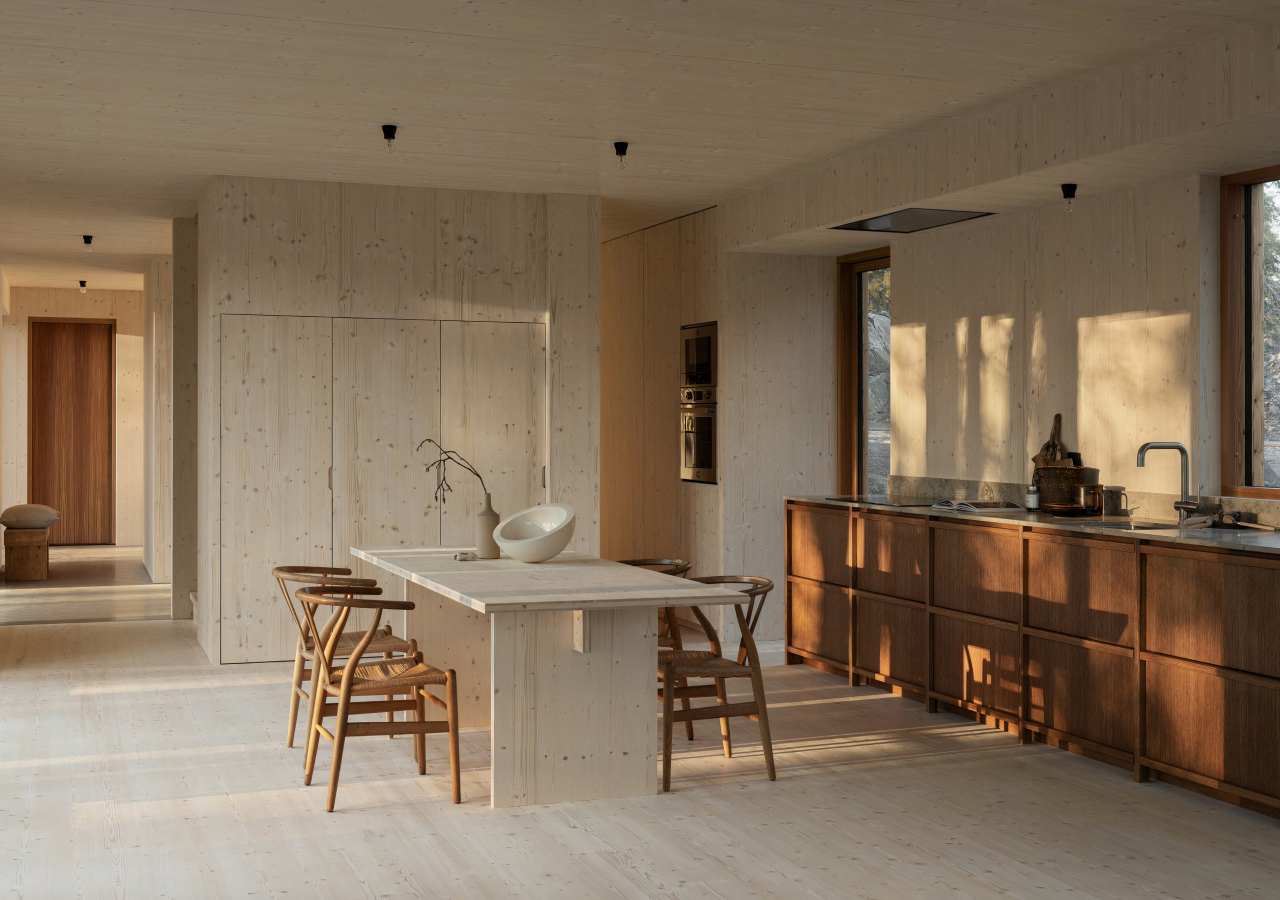
Japanese-style kitchen design is less about a trendy look and more about a set of priorities: harmony, simplicity, and respect for nature. The goal is a space that feels open and uncluttered, with a clear “less is more” attitude, made practical through disciplined storage and intentional routines.
Japanese-style kitchens put real weight on movement and flow. Functional zones are arranged to reduce unnecessary steps, and the kitchen should feel easy to move through. Practical details, like handleless doors, built-in storage, pull-out drawers, and hidden organizers, support that clean look while keeping the space comfortable to use every day.
The palette is typically muted and warm: sand, beige, white, cream, ivory, and earthy shades, with darker tones (like black) used sparingly as structure and contrast. Natural materials do most of the expressive work. Light woods are common, and deeper woods (like American walnut) also work well when you want warmth and richness without losing calm.
Similarities Between Japandi and Japanese Kitchens
Both Japandi and Japanese styles share a foundation that’s easy to recognize in real projects: visual quiet, natural materials, and discipline around clutter. The difference is how they feel when you live with them.
Calmness Comes from Organization
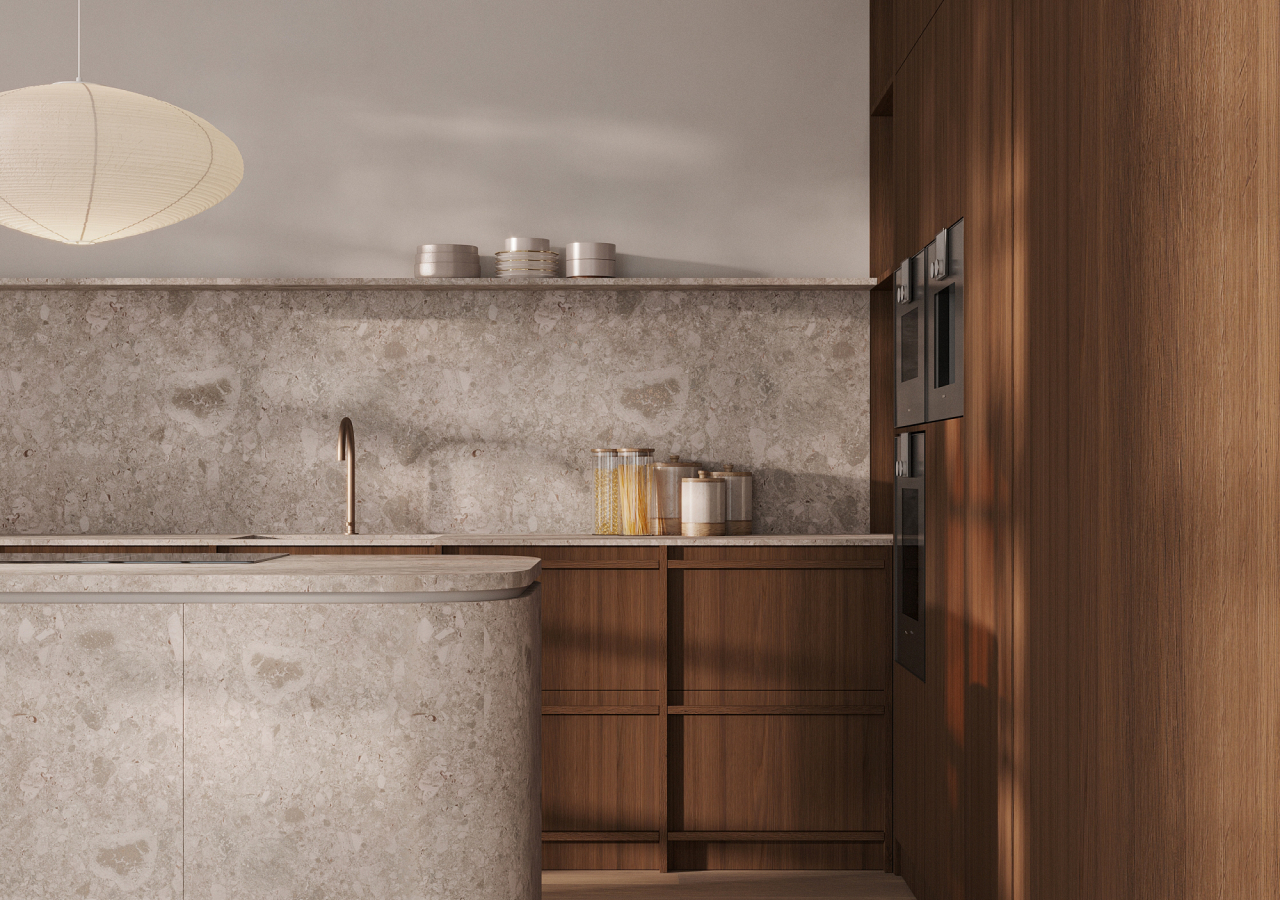
In both styles, the “minimal” look is created by planning storage so counters stay clear during normal life. That means fewer small items left out and more intentional solutions inside the cabinetry: drawer organizers, pull-outs, dedicated zones, and closed storage that protects the visual calm.
Natural Materials Are the Main Visual Language

Japanese and Japandi kitchens rely on wood and stone to create mood without decoration. Instead of busy patterns and strong color contrasts, the character comes from texture: grain, matte surfaces, subtle tonal shifts, and materials that feel grounded and honest.
A Restrained Palette Supports Light And Spaciousness
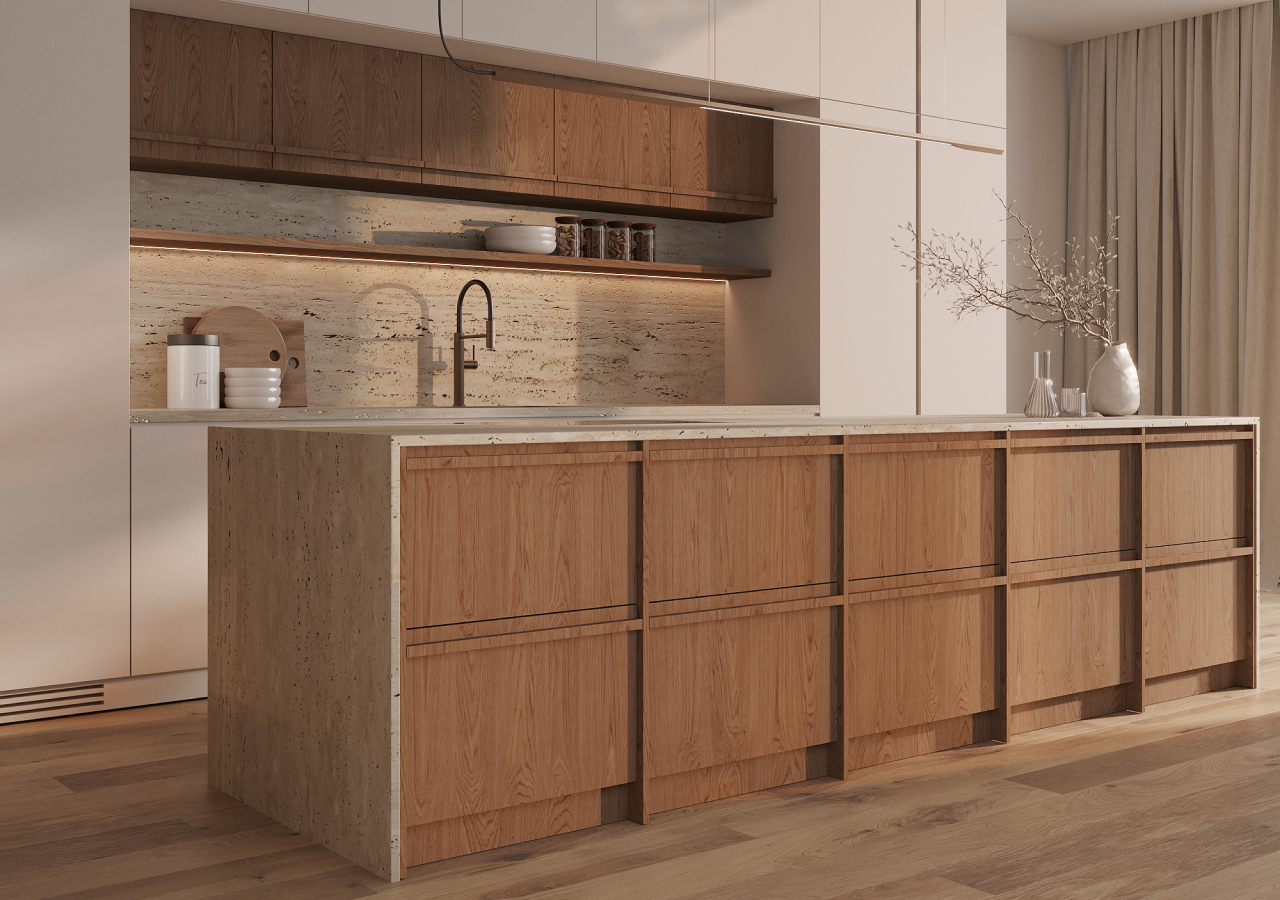
Soft neutrals and nature-led tones reflect light gently and keep the room feeling spacious. Both styles use contrast carefully—often through a few dark accents—to add structure without turning the kitchen into a collection of competing focal points.
Key Differences Between Japandi and Japanese Kitchens
These styles othen overlap, but the differences are real, and they matter when you’re choosing cabinets, finishes, and layout decisions that you’ll live with daily.
The Overall Feel: Open Restraint vs Warm Composition
.webp)
When homeowners say “Japanese kitchen,” they usually mean a space that feels open, uncluttered, and intentionally calm. The vibe is clean, spacious, and disciplined—less visual softness, more clarity.
Japandi keeps that clarity but adds warmth and comfort through a more composed, Scandinavian-leaning finish. It’s still minimal, but it’s intentionally cozy: wood tones feel more present, matte finishes diffuse light, and display moments (like open shelves) are edited carefully so they feel serene rather than decorative.
Cabinetry Decisions: Japanese Simplicity vs Japandi’s “Designed-In” Systems
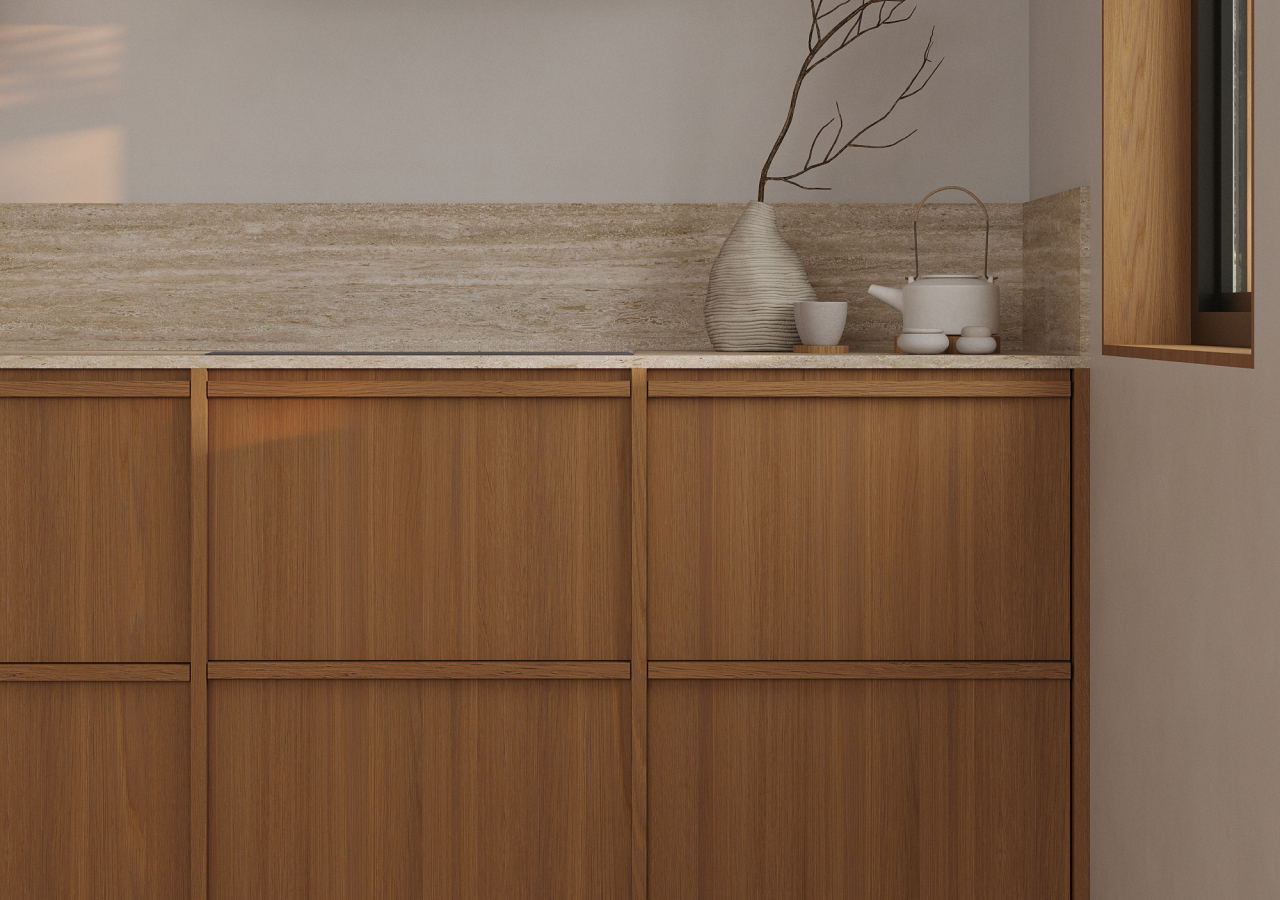
Japanese-style kitchens often lean toward simple, practical choices that keep the room quiet: handleless fronts, built-in storage, pull-out drawers, and organizers that remove clutter. The focus is “make it disappear.”
Japandi usually pushes the cabinetry conversation further into system-level coherence. The cabinetry is composed. Integrated fronts, concealed storage, and hidden inner organization are designed to support both the look and the daily function. This is why Japandi kitchens often feel more architectural: the cabinetry is doing aesthetic work (clean lines) and functional work (concealment) at the same time.
Surfaces and Accents: Japanese Restraint vs Japandi’s Intentional Contrast
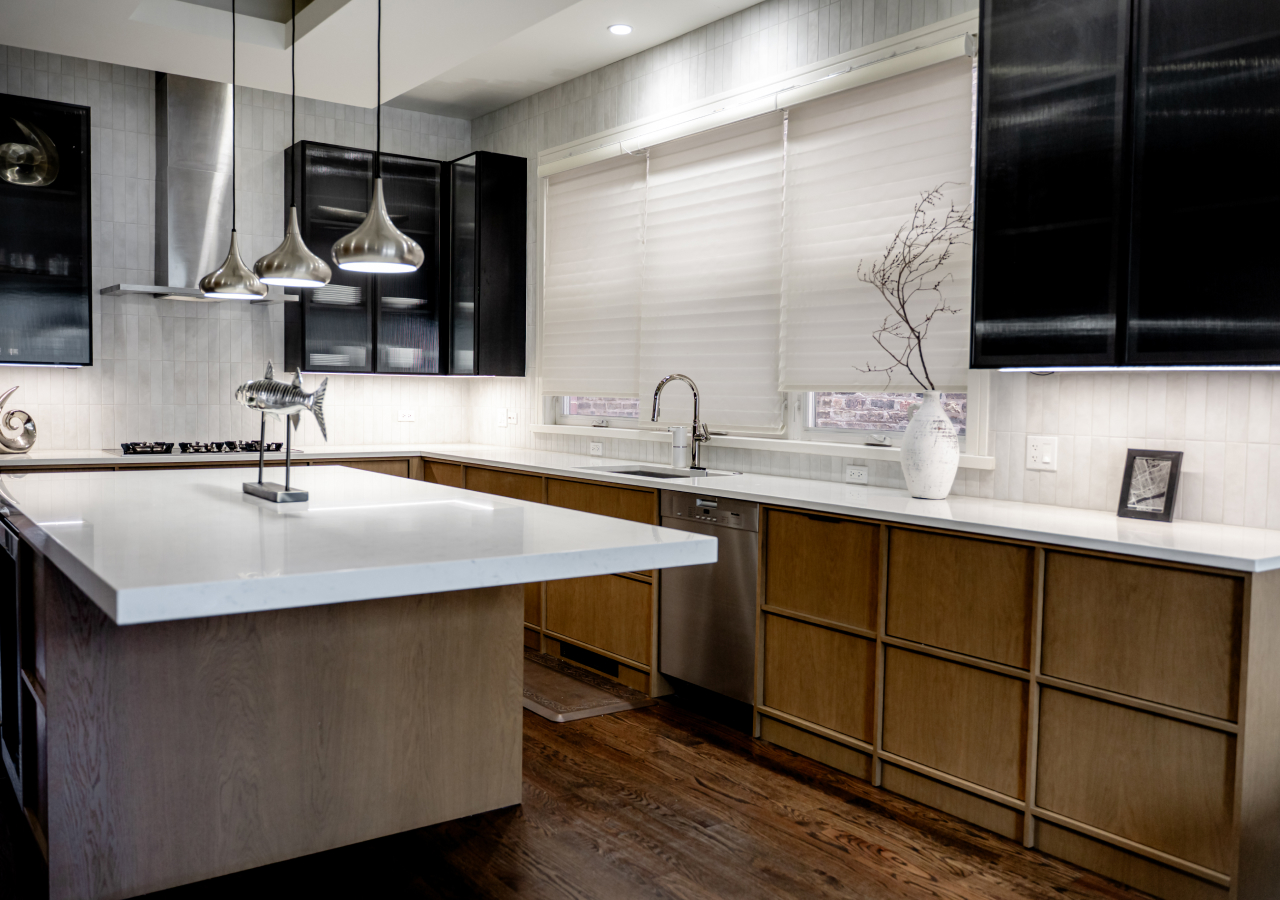
Japanese-style design uses dark accents sparingly, and contrast appears as structure. You’ll often see a restrained use of black or charcoal to define lines, frames, or key functional elements.
Japandi follows a similar rule, but tends to use contrast more deliberately as part of the composition. Matte black or charcoal details can add structure, while neutral tones and natural textures keep the kitchen balanced. This comes up when you’re choosing finishes like faucets, pendants, or hardware strategy—and especially when you’re balancing warm wood with a cool stone surface.
Islands and Layout: Both Can Work, but Japandi Often Integrates More
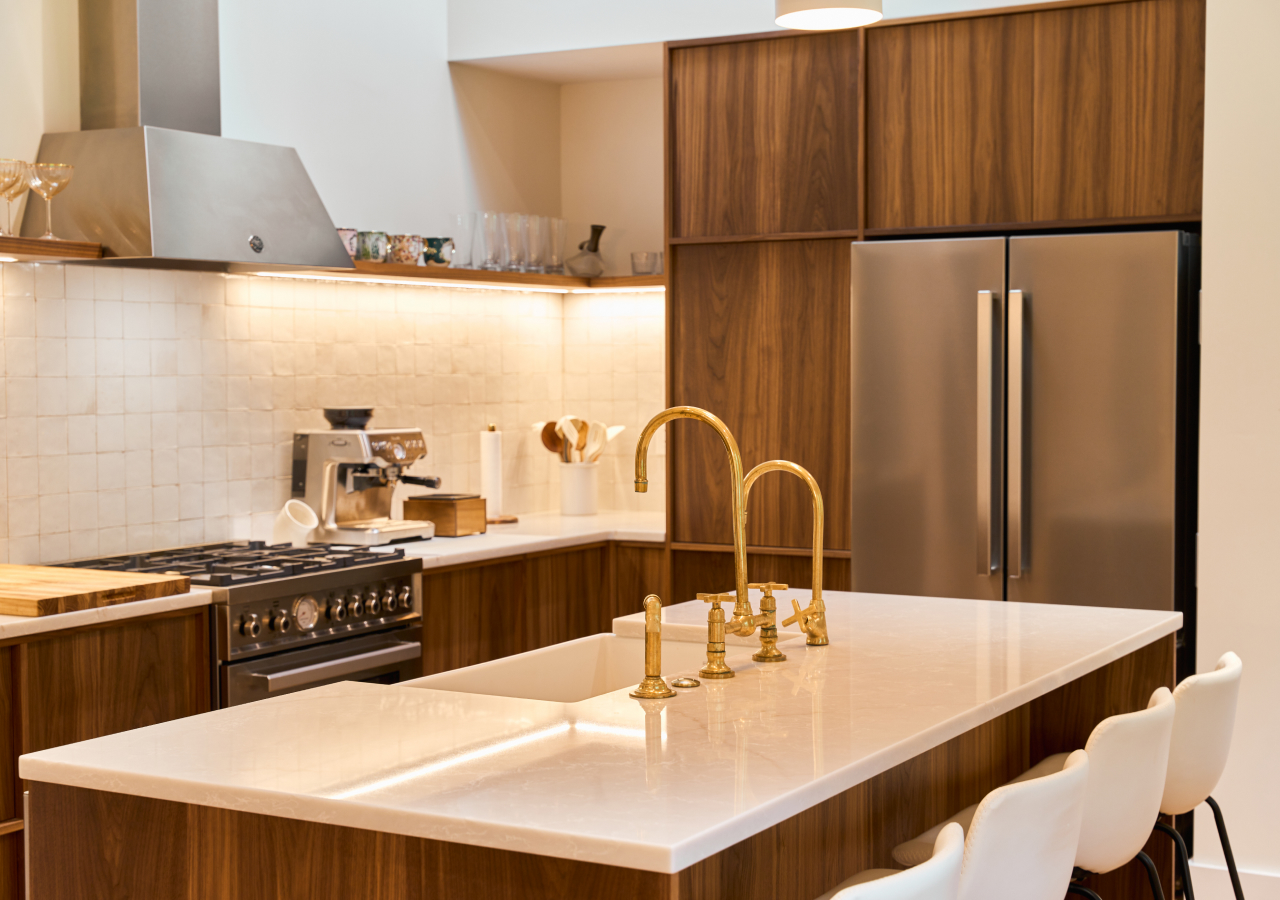
Neither style really equires an island, but both can support one if it improves workflow.
Japandi kitchens often use the island as an integrated centerpiece built from the same material story—wood base, stone top, clean geometry—so it feels like part of the architecture rather than a separate furniture object.
Japanese-style kitchens put more emphasis on unobstructed movement and step-reduction. Whether you have an island or not, the priority is that the path through the kitchen feels logical and easy, with clear zoning and minimal friction.
Which Kitchen Style Is Better for Your Home?
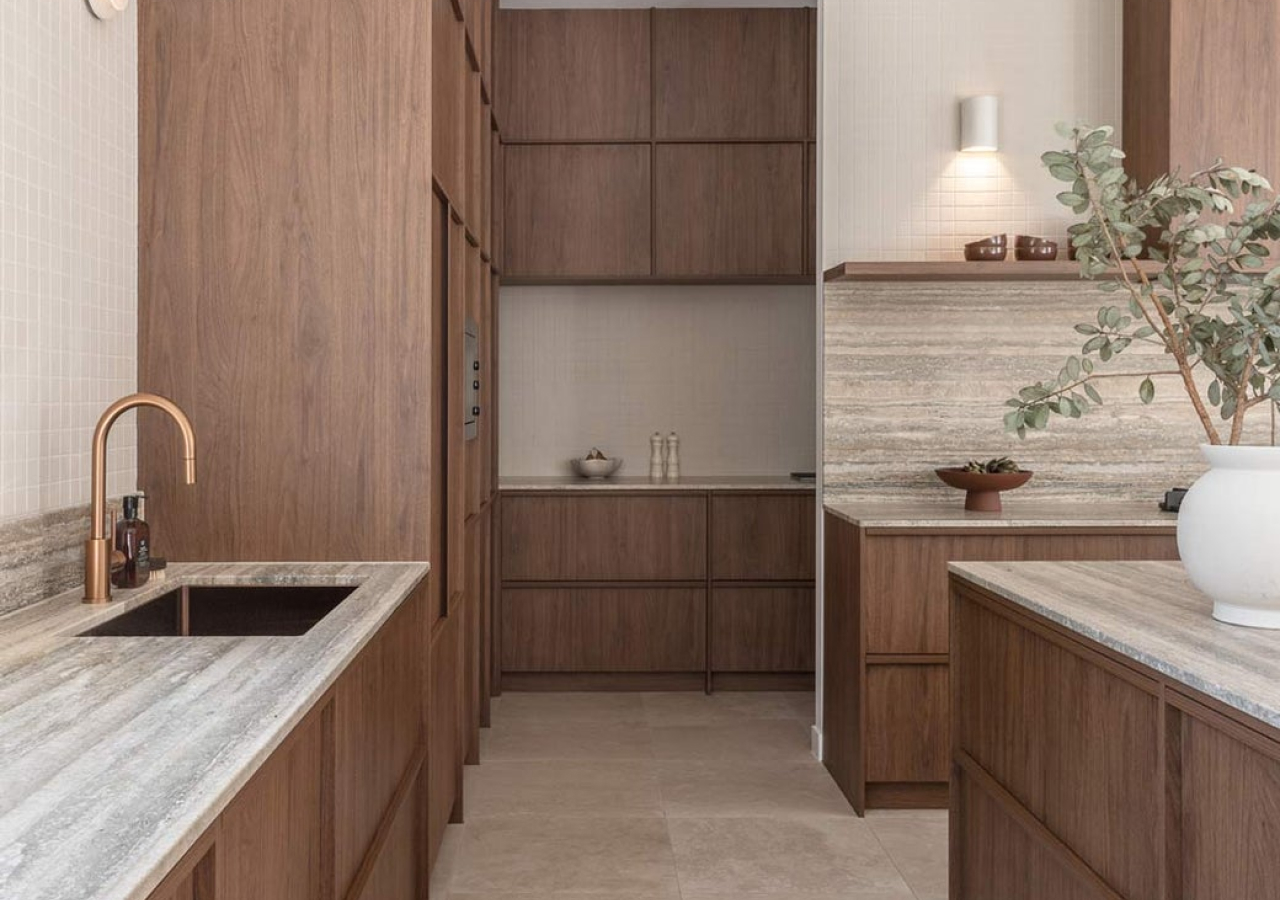
The right choice usually comes down to how you want the kitchen to feel on an average Tuesday—not how you want it to photograph.
If your main goal is pure clarity—an open-feeling room, fewer visual elements, and a strong discipline around keeping surfaces clean—Japanese-style kitchen design is a great direction. It naturally steers you toward handleless cabinetry, concealed storage, warm neutrals, and materials that feel grounded. It’s also a strong fit for smaller kitchens because the “keep it behind doors, keep counters free” mindset makes even tight spaces feel less chaotic.
If you want Japanese-inspired calm but with a warmer, more “finished” composition—where materials, lighting, and cabinetry feel intentionally coordinated—Japandi is usually the better match. Japandi works especially well for modern homeowners who want minimalism without the room feeling strict. Wood warmth, matte surfaces, and carefully edited details create comfort while staying streamlined.
A simple rule that holds up in real projects: if you want a Japanese-inspired kitchen but with more warmth and a more coordinated, architectural feel, you’re describing Japandi.
Conclusion
Japanese-style and Japandi kitchens share the same foundation: minimal visual noise, natural materials, and a real commitment to organization. Japanese-style design gets you there through simplicity, warm neutrals, and a flow-first layout that keeps movement easy and counters clear.
Japandi keeps that discipline and adds a Scandinavian layer of warmth and cohesion—wood tones that feel comforting, matte surfaces that soften light, and storage that’s designed to disappear into the architecture.
If you’re planning a renovation and want a Japanese-inspired direction that stays calm in everyday life, the smartest first step is to map your layout, storage zones, and material palette before you lock decisions in.


