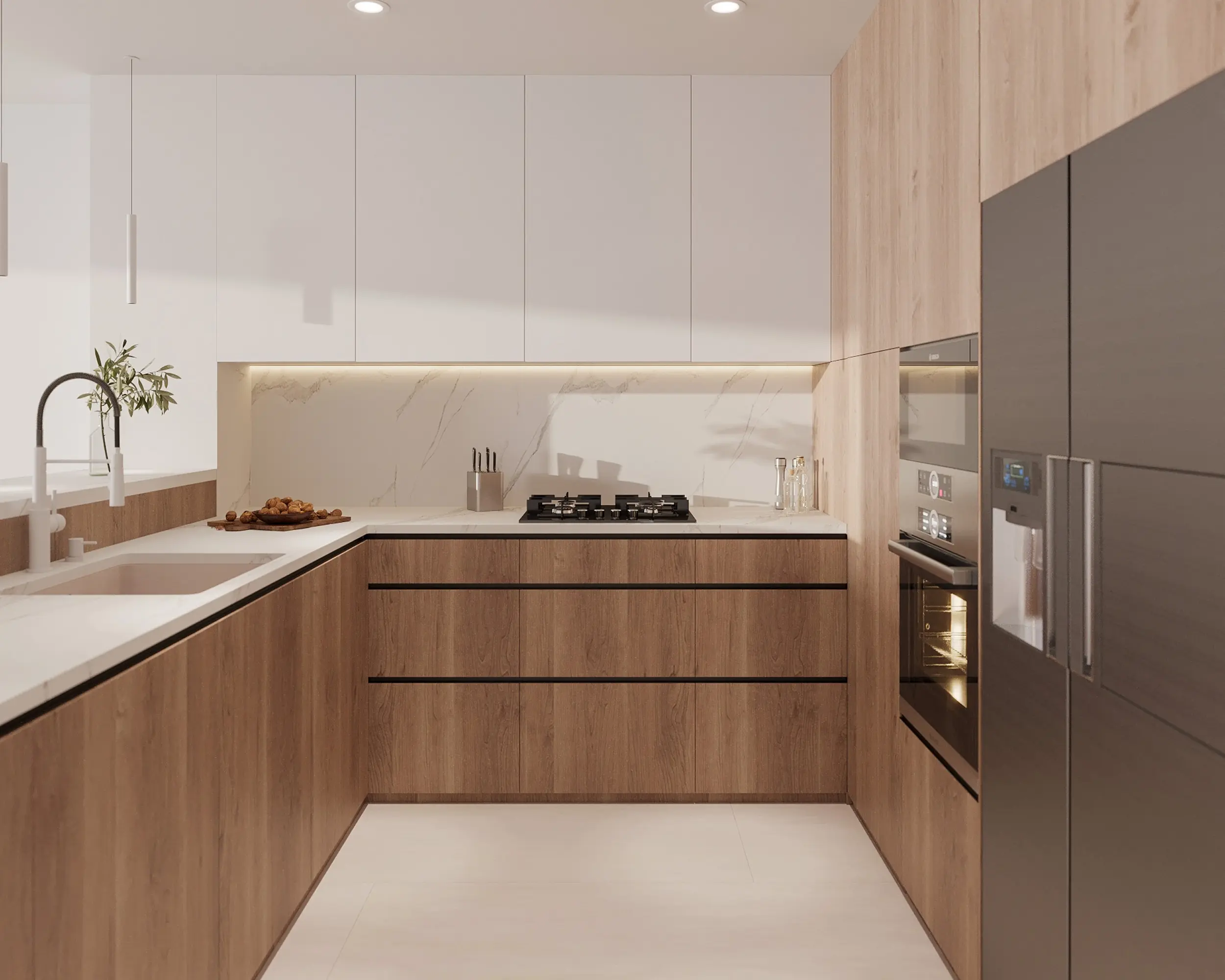
Minimalist kitchens look effortless when they are done well. Clean lines, calm surfaces, and a restrained palette can make a kitchen feel larger, clearer, and easier to live with. But that result usually comes from good planning, not from simply removing things.
This is where many minimalist kitchens go wrong. The problem is rarely minimalism itself. It is poor storage planning, overly rigid styling, bad material choices, or layouts that look clean in photos but do not work well in daily life.
A successful minimalist kitchen should feel calm, but also practical, warm, and easy to maintain. Here are the most common minimalist kitchen mistakes and how to avoid them.
- Treating Minimalism as a Visual Style Instead of a Functional Plan
- Confusing Minimalism with Emptiness
- Not Planning Enough Closed Storage
- Leaving Small Appliances Out by Default
- Choosing Materials That Look Good but Are Hard to Live With
- Using a Palette That Is Too Cold
- Overdecorating to “Fix” the Simplicity
- Ignoring Lighting Until the End
- Designing for the Photo Instead of Daily Use
- Assuming Minimalism Means Fewer Decisions
- How to Avoid Minimalist Kitchen Mistakes
- Conclusion
- FAQ: Minimalist Kitchen Mistakes
Minimalist Kitchen Mistakes at a Glance
| Mistake | What Happens | Better Approach |
|---|---|---|
| Treating minimalism as only a look | The kitchen becomes hard to maintain | Start with layout, zones, and storage |
| Removing too much warmth | The room feels cold or flat | Add wood, soft stone, or warm neutrals |
| Not planning closed storage | Countertops become cluttered | Use drawers, pull-outs, and appliance garages |
| Choosing hard-to-live-with materials | Fingerprints and marks show quickly | Choose durable matte or low-maintenance finishes |
| Ignoring lighting | The kitchen feels flat or harsh | Plan layered lighting early |
1. Treating Minimalism as a Visual Style Instead of a Functional Plan
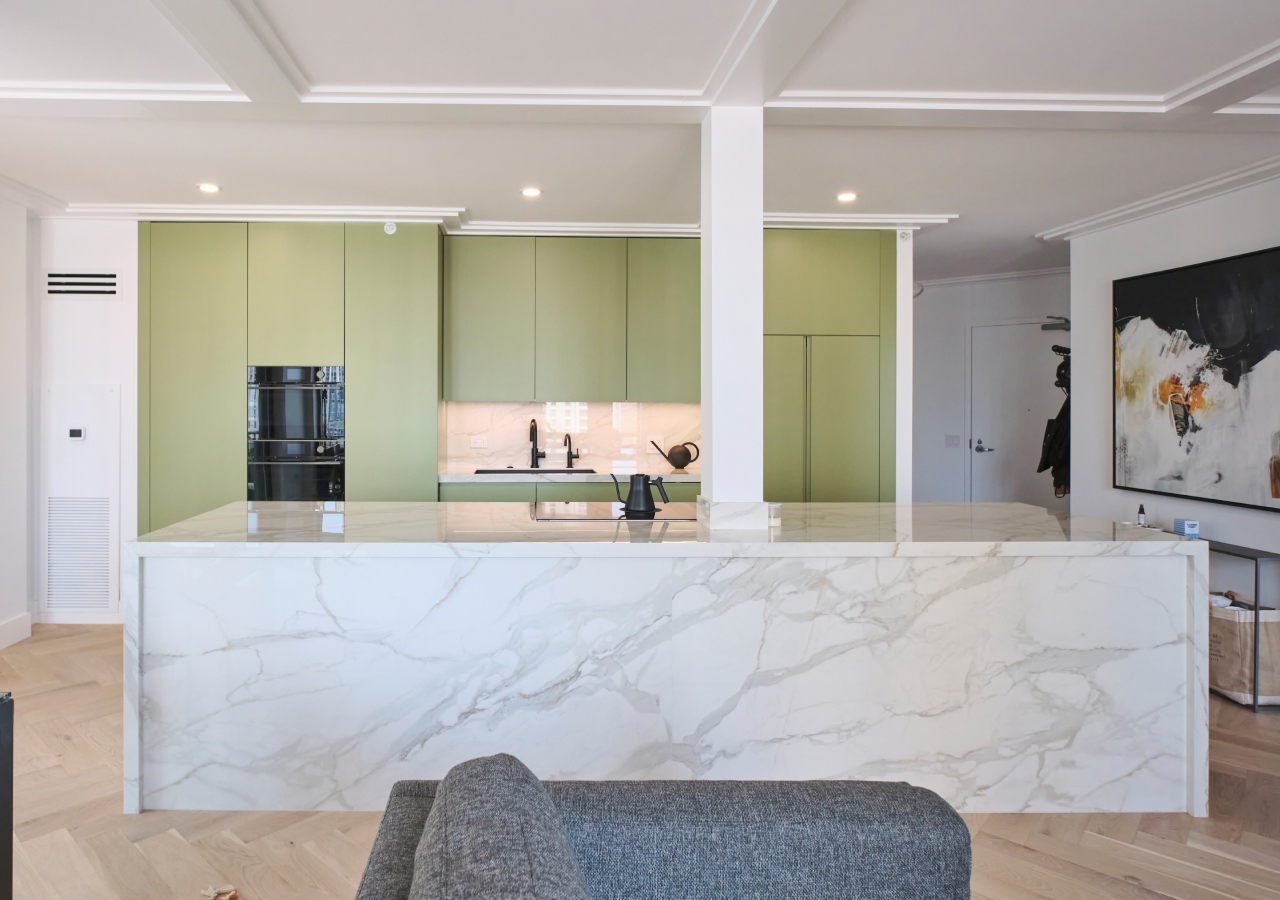
One of the biggest mistakes is approaching minimalism as a look rather than a way of organizing the kitchen. Clean cabinet fronts and neutral colors help, but they do not create a successful minimalist kitchen on their own.
If the layout is awkward, storage is insufficient, or daily-use items have nowhere sensible to go, the kitchen will not stay minimal for long. Clutter returns quickly when the design does not support real routines.
A minimalist kitchen works best when it is planned around how you actually use the space. That means thinking first about prep flow, cooking zones, storage access, and appliance placement, then shaping the visual simplicity around those needs.
2. Confusing Minimalism with Emptiness
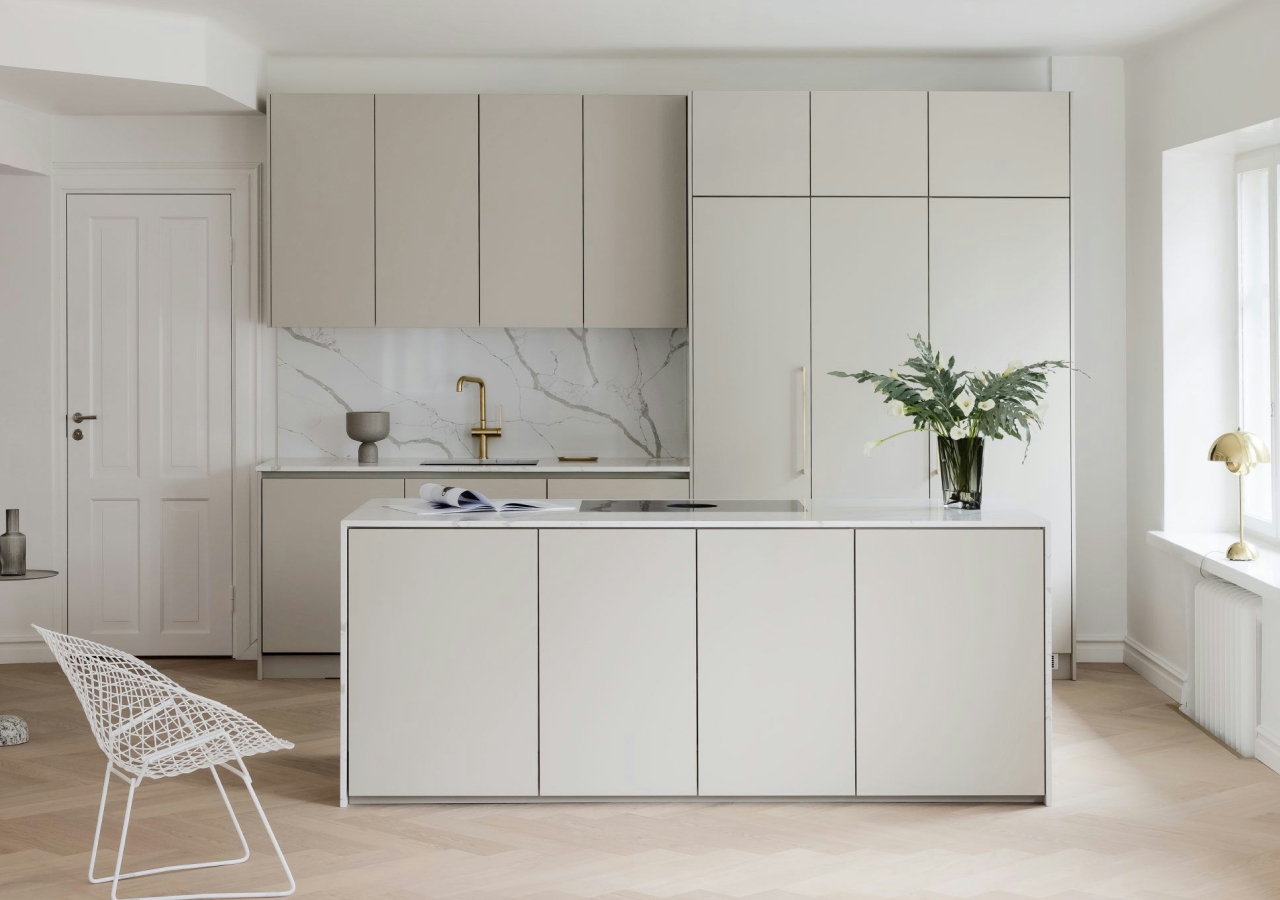
A minimalist kitchen should feel edited, not stripped of all character. When homeowners remove too much warmth, texture, or variation, the room can start to feel flat and impersonal.
This often happens when everything is white, smooth, and visually similar. The space may look clean, but it can also feel cold.
A better approach is to keep the design restrained while adding depth through materials. Wood veneer, softly patterned stone, warm neutrals, and subtle tonal contrast can make a minimalist kitchen feel more complete without making it feel busy.
3. Not Planning Enough Closed Storage

Minimalist kitchens depend on storage more than many other styles. Without enough concealed storage, everyday items end up on the countertops, around the sink, or on open shelves, and the whole concept starts to break down.
This is one of the most common planning failures. The kitchen may look beautifully minimal when empty, but daily life quickly exposes a lack of internal organization.
A strong minimalist kitchen usually needs more than standard cabinets. Appliance garages, pull-out pantry storage, corner solutions, under-sink organizers, and well-planned drawers can all make a major difference. The cleaner you want the kitchen to look externally, the better its internal storage needs to be.
4. Leaving Small Appliances Out by Default
.webp)
Small appliances are often the first things to disrupt a minimalist kitchen. Coffee machines, kettles, toasters, blenders, and chargers can quickly turn a calm surface into a cluttered one.
This does not mean every appliance has to disappear completely, but the kitchen should include a clear plan for where these items will live when they are not in use. Without one, countertops become permanent storage.
Appliance garages, dedicated breakfast or coffee stations, and deep drawers with power access can all help. In minimalist kitchens, the difference between styled and functional often comes down to whether everyday appliances have a proper home.
5. Choosing Materials That Look Good but Are Hard to Live With
.webp)
Minimalist kitchens often rely on large, uninterrupted surfaces, which makes material selection especially important. Some finishes look beautiful at first but become frustrating in daily use.
High-gloss surfaces can show fingerprints and reflections easily. Some matte finishes mark too quickly. Delicate countertops may look refined but require more maintenance than many homeowners want.
The best minimalist kitchens use materials that combine visual restraint with everyday durability. Matte laminates, Fenix-style ultra-matte surfaces, quartz, and well-chosen wood veneers tend to work well because they support a clean appearance without creating unnecessary upkeep.
6. Using a Palette That Is Too Cold
.webp)
A minimalist kitchen does not need a lot of color, but it still needs balance. One common mistake is relying too heavily on cold whites, hard grays, and sharp contrasts without bringing in anything to soften the room.
That can make the kitchen feel more severe than calm.
Warm wood, beige-toned stone, softer whites, and layered lighting usually help. Even in a very minimal palette, a small amount of warmth goes a long way. It is often what separates a minimalist kitchen that feels inviting from one that feels sterile.
7. Overdecorating to “Fix” the Simplicity

Another mistake happens in the opposite direction. After designing a highly restrained kitchen, some homeowners begin adding trendy accessories, styling pieces, and decorative clutter to make the room feel more alive.
Usually, this weakens the design rather than improving it.
Minimalist kitchens work best when the architecture, materials, and proportions do most of the visual work. A few carefully chosen objects can help, but they should not become a substitute for good design. One cutting board, one vessel, or a simple organic element is usually enough.
8. Ignoring Lighting Until the End

Lighting is often treated as a finishing touch, but it plays a central role in minimalist kitchens. When the palette is restrained and the detailing is quiet, lighting gives the room depth and atmosphere.
Poor lighting can make even a well-designed kitchen feel flat. Overly cool lighting can make pale kitchens feel harsh, while insufficient task lighting can undermine functionality, especially in prep zones.
A better approach is to plan layered lighting from the start. Combine general lighting for the room, task lighting under cabinets or around work surfaces, and softer accent lighting wherever you want to emphasize warmth or texture.
9. Designing for the Photo Instead of Daily Use
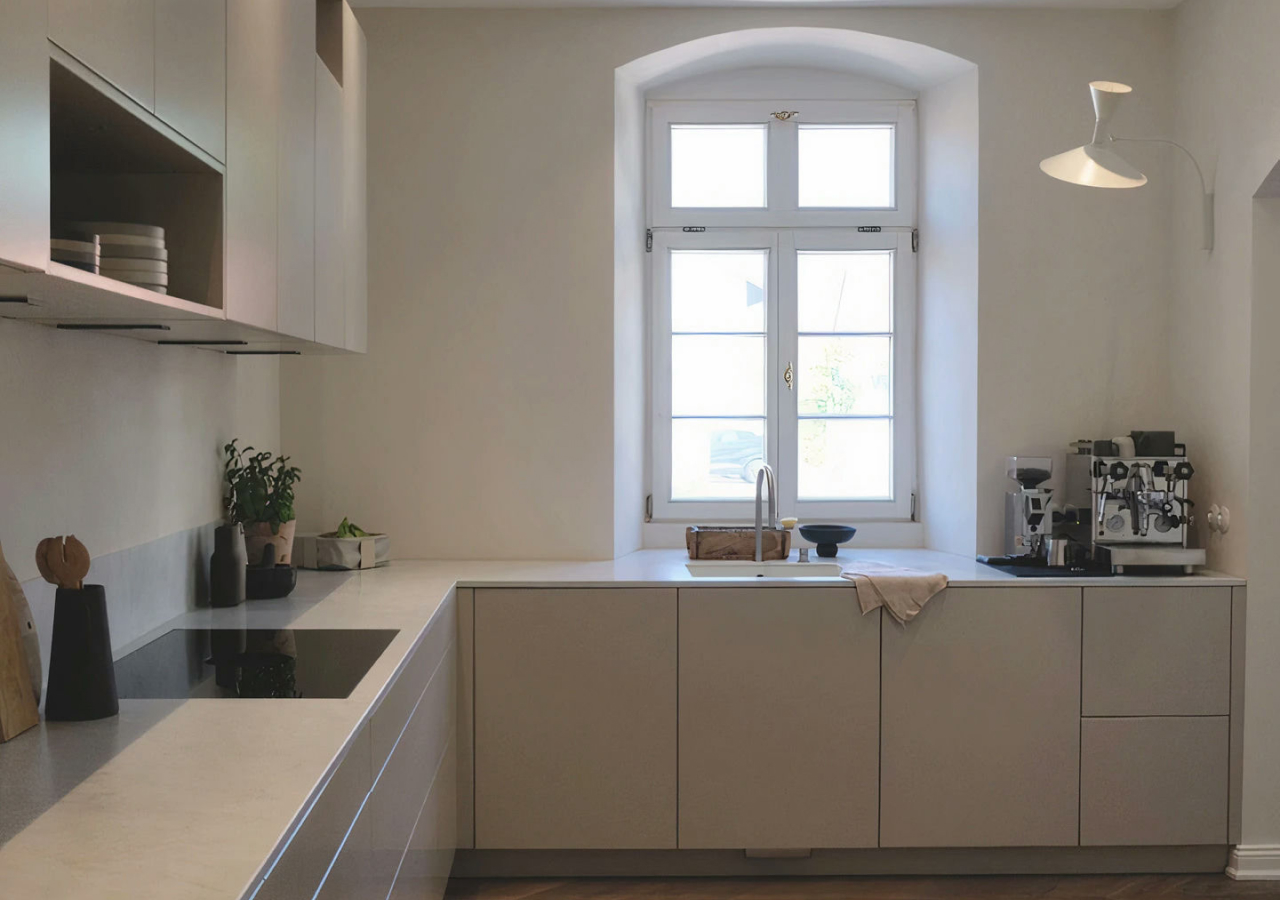
Some minimalist kitchens are designed to look beautiful in photos but not to function comfortably in real life. This usually shows up as missing storage, inaccessible everyday items, impractical appliance placement, or layouts that prioritize symmetry over workflow.
A kitchen should not require constant discipline just to remain usable.
The most successful minimalist kitchens reduce friction. Frequently used items should be easy to reach and easy to put away. Prep areas should be practical, waste bins should be integrated, and cleaning supplies should not become an afterthought. When the kitchen works well, the minimalist appearance becomes much easier to maintain.
10. Assuming Minimalism Means Fewer Decisions
.webp)
Minimalism can look simple, but it usually requires more planning, not less. Because the design is visually restrained, every decision carries more weight. Cabinet detailing, finish selection, undertones, lighting, storage, and proportions all become more noticeable.
That is why minimalist kitchens can go wrong so easily when choices are made too casually. Simplicity is not the absence of decisions. It is the result of making the right decisions early.
How to Avoid Minimalist Kitchen Mistakes
A minimalist kitchen works best when it is planned around daily use, not just appearance. Follow these steps to create a kitchen that stays calm, practical, and easy to live with.
-
Start with function, not style. Plan the kitchen around prep, cooking, cleaning, and storage before focusing on its visual appearance.
-
Build in enough closed storage. Use deep drawers, pantry pull-outs, corner solutions, and under-sink organizers so everyday items do not end up on display.
-
Create a proper place for small appliances. Appliance garages, breakfast cabinets, and dedicated storage zones help keep countertops clear.
-
Choose materials that are easy to live with. Prioritize durable, low-maintenance finishes that support a clean appearance without requiring constant upkeep.
-
Balance the palette with warmth. Add wood, soft neutrals, or warm-toned stone so the kitchen does not feel cold or flat.
-
Keep decoration restrained. Let the cabinetry, materials, and proportions do most of the work instead of relying on accessories.
-
Plan lighting early. Use a layered combination of general, task, and accent lighting to make the kitchen functional and visually balanced.
-
Design for everyday routines. Make frequently used items easy to reach and easy to put away so the minimalist look can be maintained without extra effort.
Minimalism works best when the quiet look is supported by storage, lighting, materials, and a practical daily workflow.
Conclusion
The best minimalist kitchens are not empty, rigid, or purely aesthetic. They are carefully planned spaces that feel calm because they work well.
Most minimalist kitchen failures come from the same issue: focusing too much on appearance and not enough on function, storage, warmth, and daily use. Avoid those mistakes, and a minimalist kitchen can feel timeless, practical, and genuinely easy to live with.