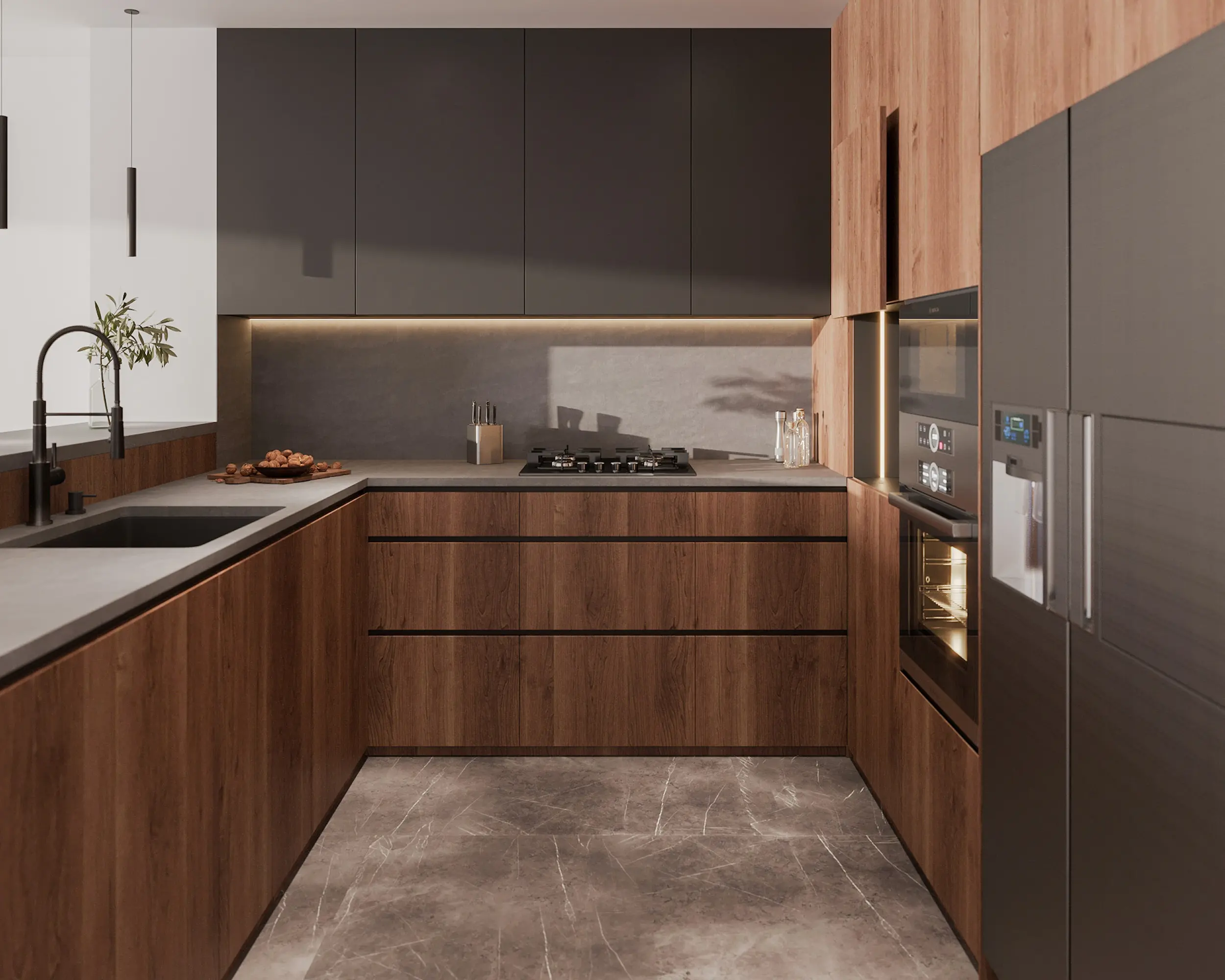
Gray kitchens remain a strong choice in modern design because they are flexible, understated, and easy to build around. While white and beige kitchens often feel lighter at first glance, gray offers something different: more depth, more contrast, and more room to shape the mood of the space.
What makes gray especially useful is its range. It can read soft and warm, crisp and architectural, or dark and dramatic depending on the shade, finish, and materials around it. In minimalist kitchens, that matters. A good gray does not overwhelm the room, but it gives the design more character than plain white.
Gray also works across very different directions. It can feel calm and Scandinavian with wood and soft stone, sharper and more contemporary with white and clean lines, or more expressive in darker matte finishes. That versatility is the main reason gray continues to work so well in kitchen design. It gives you a neutral base without making the kitchen feel flat.
How Different Gray Tones Work in a Kitchen
| Gray tone | Works well with | Avoid |
|---|---|---|
| Light warm gray | Oak, walnut, beige, off-white, soft stone | Very cold blue lighting, overly stark black-and-white contrast |
| Light cool gray | White, concrete tones, stainless steel, pale stone | Too many warm yellow undertones that make the palette feel disconnected |
| Mid-tone gray | Wood veneers, white surfaces, muted greens, warm metallic details | Too many competing gray shades with different undertones |
| Dark gray / anthracite | Walnut, lighter wood flooring, white or light stone, integrated appliances | Pairing it only with dark finishes, which can make the kitchen feel heavy |
| Blue-gray | Crisp white, brushed metal, cooler stone surfaces | Warm beige and orange-heavy woods unless carefully balanced |
Why Gray Works So Well in Kitchen Design

Gray is often described as neutral, but that can make it sound more limited than it really is. In practice, gray is one of the easiest kitchen colors to work with because it sits comfortably between warm and cool palettes.
That means it can support very different looks. A warm gray kitchen can feel soft, quiet, and inviting. A cooler gray kitchen can feel sleek, clean, and more architectural. The result depends less on the color alone and more on what you pair it with: wood, stone, white surfaces, metal accents, and the type of lighting in the room.
Gray also ages well. It does not lock the kitchen into one strong color statement, so it is easier to update the look over time through bar stools, lighting, wall color, hardware, or decorative accents. That makes it a practical choice for homeowners who want a kitchen that feels current now without feeling dated too quickly.
Warm Gray vs Cool Gray
.webp)
This is one of the most important decisions in a gray kitchen.
Warm gray usually has taupe, beige, or slightly earthy undertones. It tends to work especially well in Scandinavian, Japandi, and other minimalist kitchens where the goal is to create a soft, natural atmosphere. Paired with wood veneer, warm whites, and textured stone, it makes the kitchen feel relaxed rather than severe.
Cool gray has blue or steel-like undertones. It creates a cleaner, sharper impression and often feels more urban or architectural. This can work very well in modern kitchens, but it needs more care. If every surrounding element is also cold, the room can start to feel too hard. That is why cool gray often benefits from something that softens it, such as wood flooring, warm lighting, or subtle texture in the backsplash.
In most homes, warm gray is easier to live with. Cool gray can look striking, but warm gray tends to feel more balanced over time.
Matte vs Glossy Gray Kitchens
.webp)
Finish changes the effect of gray almost as much as tone does.
A matte gray kitchen usually feels quieter and more refined. It softens the cabinetry and helps the color sit more naturally within the room. This is why matte gray is such a strong fit for minimalist kitchens. It supports clean lines without drawing too much attention to itself.
Glossy gray reflects more light and can make the kitchen feel sharper and more polished. In some layouts, especially smaller or darker ones, that reflective quality can help brighten the room. But glossy gray also feels more formal and can show reflections and marks more easily, so it does not always suit the softer, calmer direction many homeowners want now.
In most modern kitchens, matte gray is the more versatile option. Gloss can still work well, but usually as a more specific stylistic choice rather than the default.
Gray and Wood Kitchen Ideas

One of the most reliable ways to make a gray kitchen feel warmer is to pair it with wood. This is where gray becomes especially effective, because it gives natural materials a cleaner and more contemporary frame.
A light or mid-tone gray kitchen with wood shelving or wood veneer cabinetry creates a balanced look that feels modern but still grounded. Oak keeps the palette lighter and softer. Walnut adds more contrast and richness.
This combination works especially well in Scandinavian-inspired kitchens. The gray keeps the design from feeling too rustic, while the wood stops it from feeling too cold. The result is a kitchen that feels calm, practical, and visually warm without relying on decorative excess.
A good example is a gray kitchen with natural wood shelving and white worktops. The gray gives the cabinetry definition, while the wood adds warmth and texture. This kind of composition feels simple, but it is often more layered than an all-white kitchen.
Gray and White Kitchen Ideas
.webp)
Gray and white is one of the cleanest combinations for a modern kitchen. White helps lighten the palette, while gray adds more depth and makes the design feel less generic.
This works particularly well when the gray is soft rather than very dark. Light gray cabinets with white countertops and a white backsplash create a bright kitchen, but one with more character than a fully white scheme. It still feels minimal, but less stark.
The key is not to let the kitchen become too flat. If the cabinetry, walls, counters, and backsplash all sit too close together in tone, the room can lose definition. That is why texture matters here. A matte gray cabinet finish, subtle veining in the worktop, or wood accents can help the kitchen feel more complete.
Gray and white kitchens are often a strong choice for smaller spaces because they keep the room feeling open while still giving it some visual structure.
Gray and Stone Kitchen Ideas
.jpg)
Gray works especially well with stone because both materials tend to have a natural visual weight. Together, they can create a kitchen that feels solid, calm, and architectural.
This pairing can go in different directions. A light gray kitchen with pale stone feels soft and understated. A dark gray kitchen with a dramatic stone backsplash or countertop feels more expressive and more contemporary. In both cases, stone helps give the gray cabinetry more depth.
The finish matters here too. Matte gray cabinets paired with polished stone create contrast between soft and reflective surfaces. That contrast can make the whole kitchen feel more considered. If both surfaces are too visually flat, the design may need another layer, such as wood, ribbed glass, or warmer lighting, to keep it from feeling lifeless.
For many modern kitchens, gray and stone is one of the strongest combinations because it feels both practical and elevated.
Light Gray Kitchen Ideas

A light gray kitchen is one of the easiest ways to introduce gray without making the room feel darker or heavier. It keeps the space bright, but adds more nuance than white.
This approach works well in minimalist kitchens with clean cabinet fronts, quiet detailing, and a restrained palette. Light gray cabinetry can feel soft and almost pastel in the right finish, especially when paired with white surfaces and natural materials.
It also works well with open shelving, where wood tones can bring warmth into the design. In that kind of composition, gray acts as the stabilizing element. It keeps the palette calm while letting the wood and stone do more of the expressive work.
A light gray kitchen usually feels most successful when the materials around it are simple and intentional rather than overly decorative.
Dark Gray Kitchen Ideas
.webp)
Dark gray kitchens bring more drama and contrast. They can feel especially sophisticated in modern and loft-style interiors, where the goal is a stronger visual statement without moving into black.
Dark gray cabinetry works particularly well with integrated appliances and uninterrupted cabinet runs because it reinforces the clean, built-in look. It gives the kitchen more presence and makes the design feel sharper.
That said, dark gray needs balance. Pairing it with walnut veneer, lighter flooring, or pale stone helps prevent the room from feeling too heavy. This is often where dark gray works best: not on its own, but as part of a palette that includes something warmer and something lighter.
In that sense, dark gray is less forgiving than light gray, but often more striking when used well.
How to Make a Gray Kitchen Feel Stylish Rather Than Flat (8 steps)
- Add at least one warmer material. Pair gray with oak, walnut, or beige-toned stone so the space does not feel cold or overly neutral.
- Pay attention to undertones. Make sure the gray works with the rest of the palette instead of fighting it, especially when combining paints, veneers, and stone.
- Avoid matching every surface too closely. If everything sits in the same tone, the kitchen can quickly feel flat and lack depth.
- Introduce contrast where it matters. Use lighter countertops, darker accents, or natural wood details to create separation between elements.
- Bring in texture to add depth. Use matte cabinetry, wood veneer, subtle stone movement, or fluted glass to keep the kitchen visually interesting without adding clutter.
- Use lighting to control the mood. Warm lighting softens gray, while cooler lighting can make it feel sharper and more clinical.
- Keep the palette restrained, but not one-note. Limit the number of materials, but make sure there is enough variation to feel layered and intentional.
- Decide on the overall direction early. Choose whether the kitchen should feel warm and natural, bright and minimal, or dark and architectural, then build the materials around that intent.
Conclusion
Gray kitchens continue to work because they are adaptable, modern, and easy to shape around different materials and moods. They can feel soft or bold, warm or crisp, understated or more expressive depending on the tone and combinations you choose.
For a minimalist kitchen, gray is especially effective because it adds depth without adding noise. Paired with wood, white, or stone, it creates a kitchen that feels balanced, stylish, and practical to live with over time.