
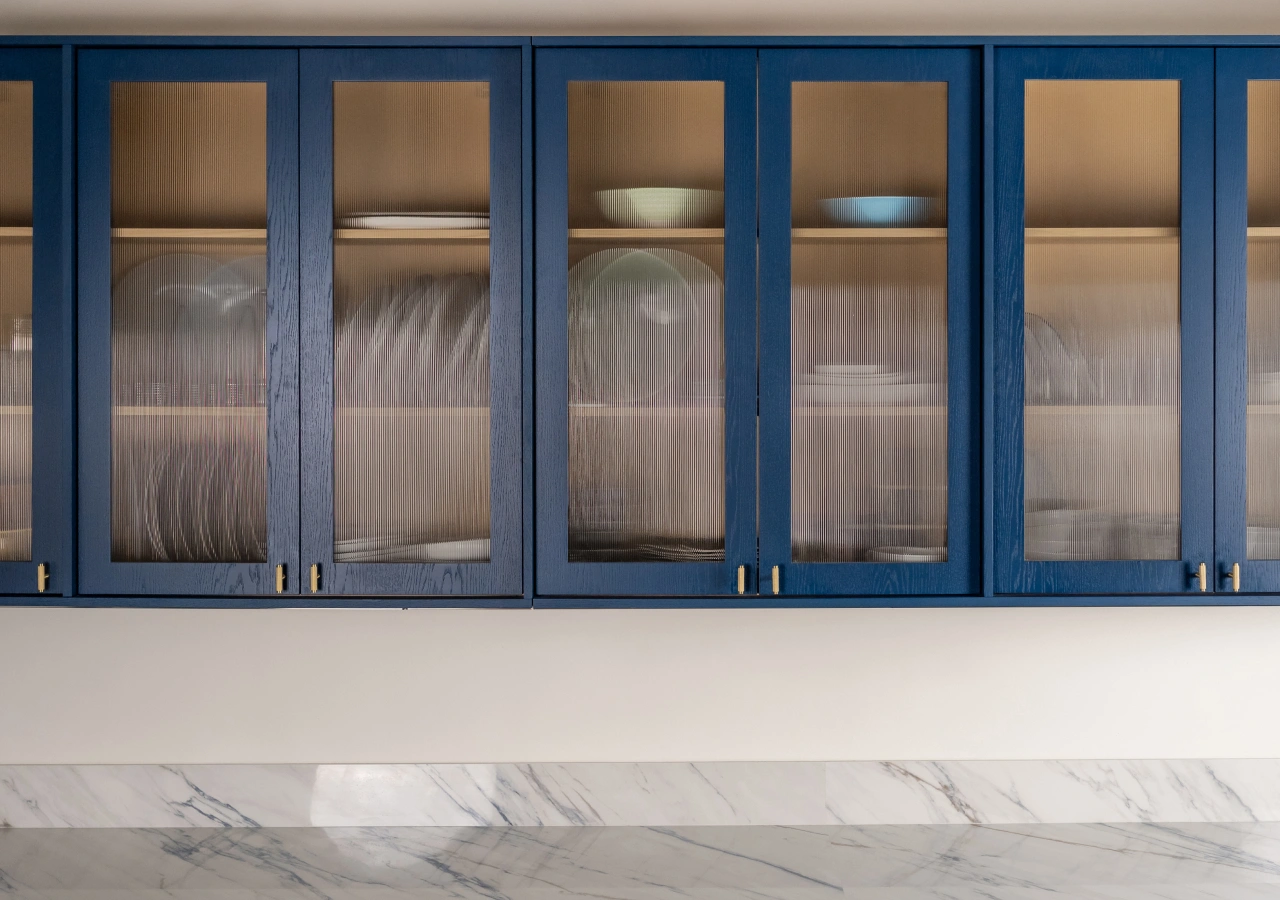
Glass kitchen cabinets can make a wall of cabinetry feel lighter, create space for display, and add texture without giving up the protection of closed storage. But the type of glass changes how the cabinet functions. Clear, fluted, smoked, bronze, and aluminum-framed glass differ not only in appearance, but also in visibility, practicality, and where they are best used.
For homeowners who want display storage without making the kitchen feel cluttered, fluted glass is often the most forgiving choice. Clear glass is better for carefully organized shelves, while smoked and bronze glass create more depth and privacy. Aluminum-framed glass is a separate category, combining the glass with a visible metal frame for a sharper, more architectural cabinet front.
When Glass Kitchen Cabinets Make Sense
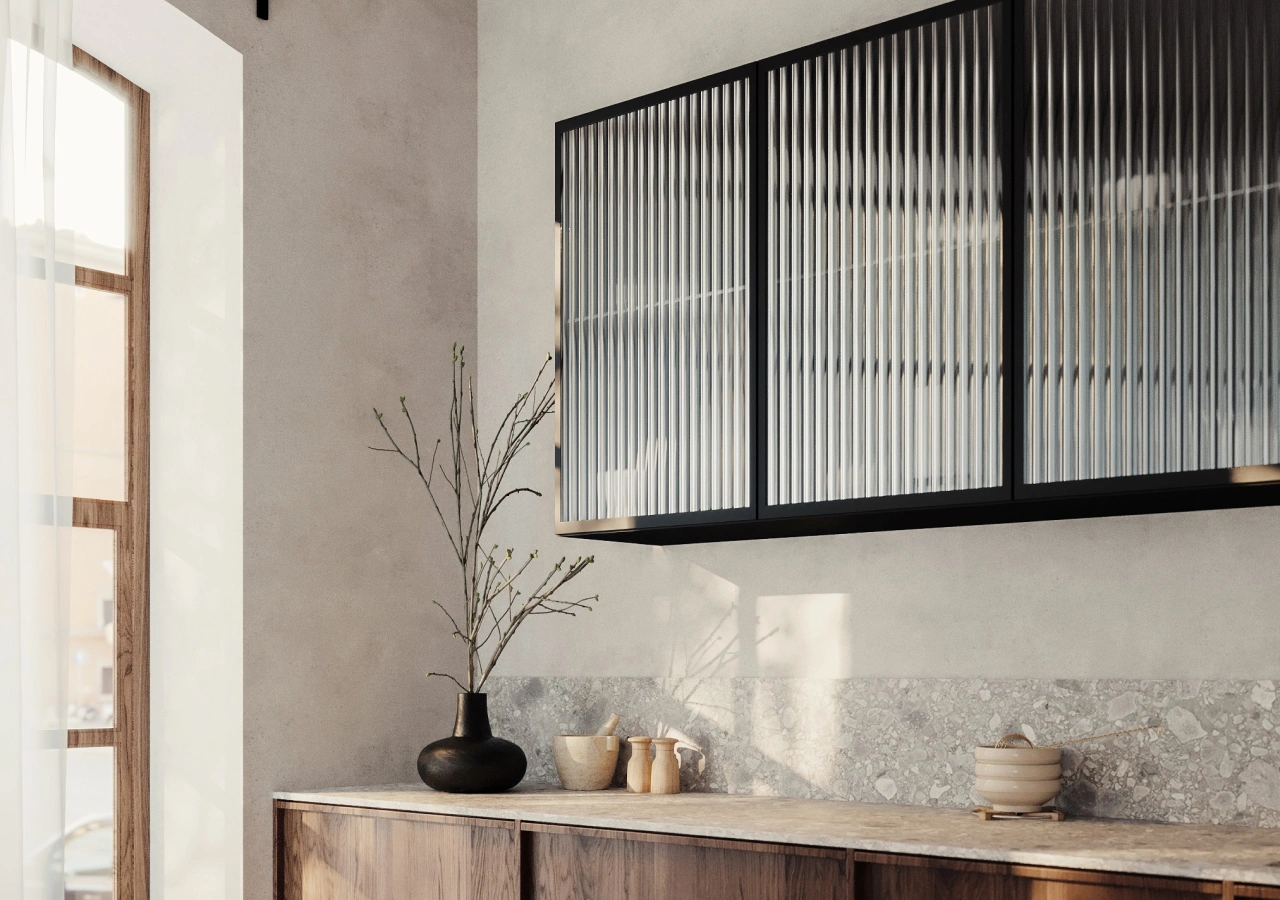
Glass kitchen cabinets are strongest where storage and display overlap: upper cabinets, coffee stations, dry bars, wine storage, pantry accents, and tall display units. In most kitchens, they are easier to manage as a selective feature than across an entire wall.
Upper cabinets are a natural location because replacing a few solid fronts with glass can reduce visual weight at eye level. Tall glass cabinets can serve a similar role in pantry walls, dining areas, or transitions between the kitchen and living space, keeping glassware, ceramics, bottles, or books enclosed but visible.
This selective approach suits Scandinavian and Japandi kitchens especially well because both rely on visual restraint. In Corner Renovation's Pacific Palisades Japandi kitchen, fluted-glass upper cabinets add texture and lightness alongside deep blue cabinetry, warm wood details, an appliance garage, and closed storage.
Clear Glass for Organized Display Storage
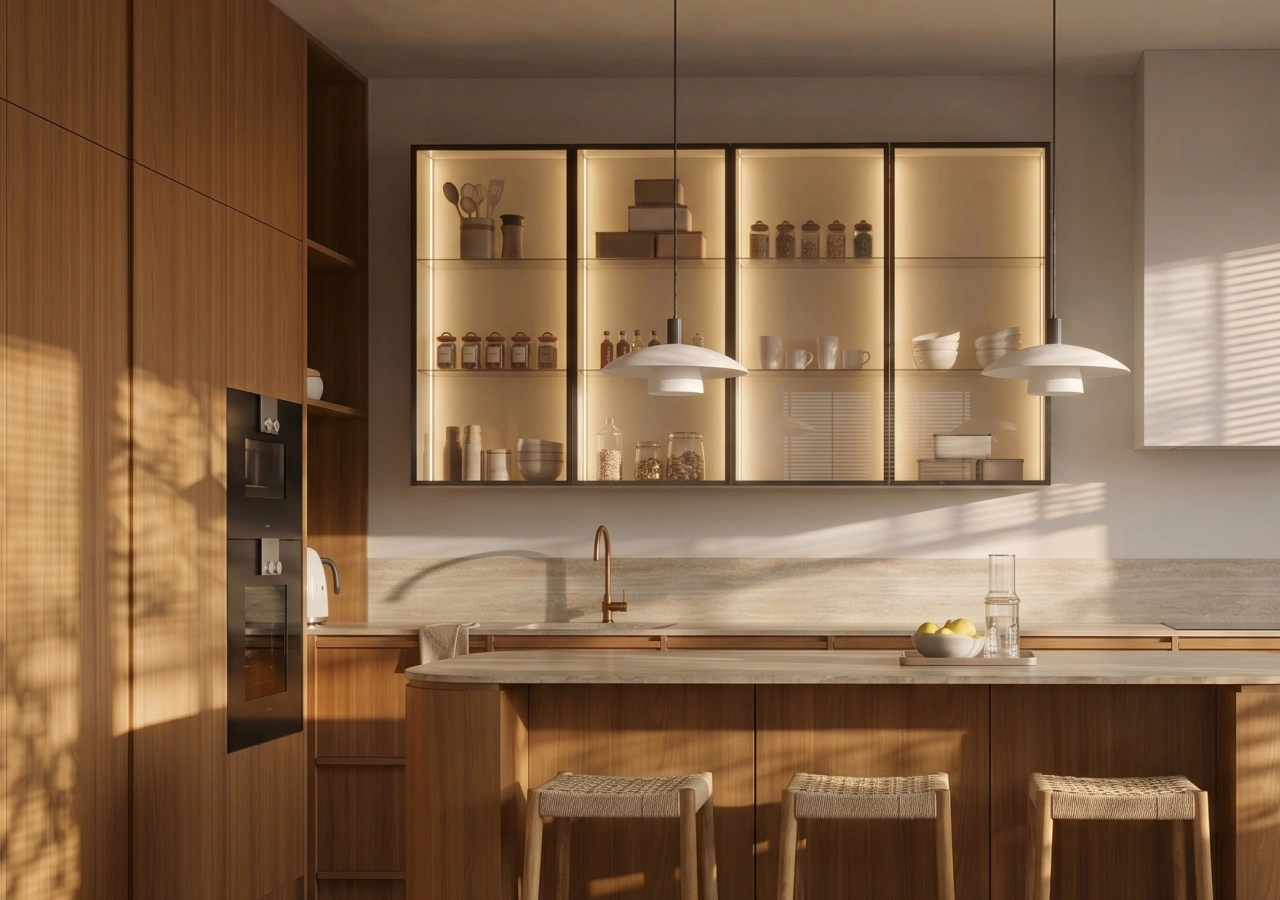
Clear glass gives the strongest visual connection between the room and the cabinet interior. It is best for shelves holding objects that are meant to be seen, such as coordinated glassware, ceramics, serving pieces, cookbooks, or decorative objects.
The tradeoff is that clear glass hides almost nothing. Everyday packages, appliances, mismatched mugs, and crowded shelves remain visible, so it is less forgiving than textured or tinted glass. For most kitchens, clear glass is easiest to manage in a dedicated display cabinet or a short run of uppers rather than across frequently used storage.
Fluted Glass for Softer Visibility
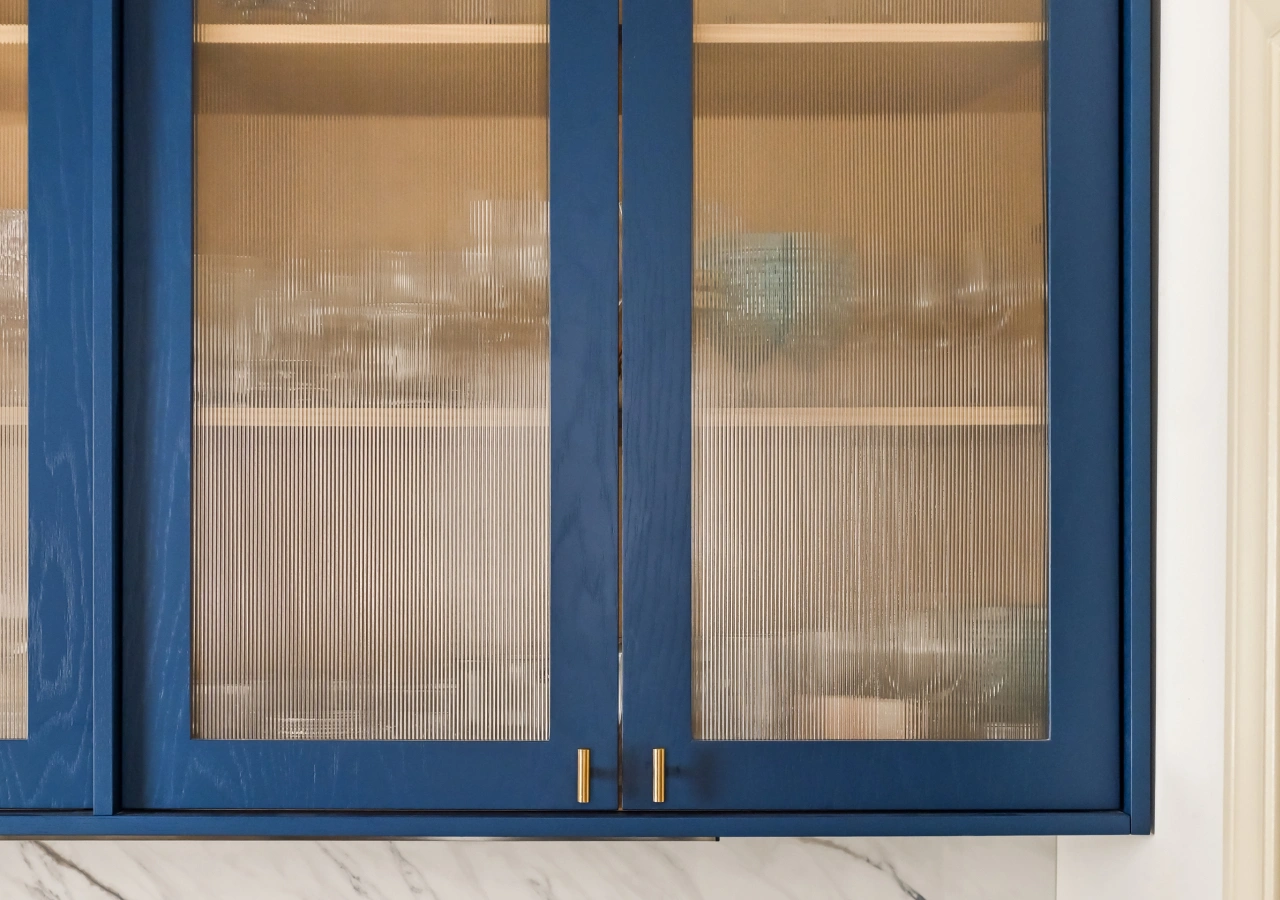
Fluted glass partially obscures what is behind the door while still allowing light, color, and general shapes to show through. It creates a middle ground between transparent display storage and a solid cabinet front.
Its vertical texture adds depth without introducing a strong pattern, making it a natural fit for oak, walnut, Scandinavian, and Japandi kitchens. Use it above a bar, across a short run of uppers, or as an accent within a pantry wall when you want display storage to feel softer and less exposed.
Smoked Glass for a Darker, More Architectural Look
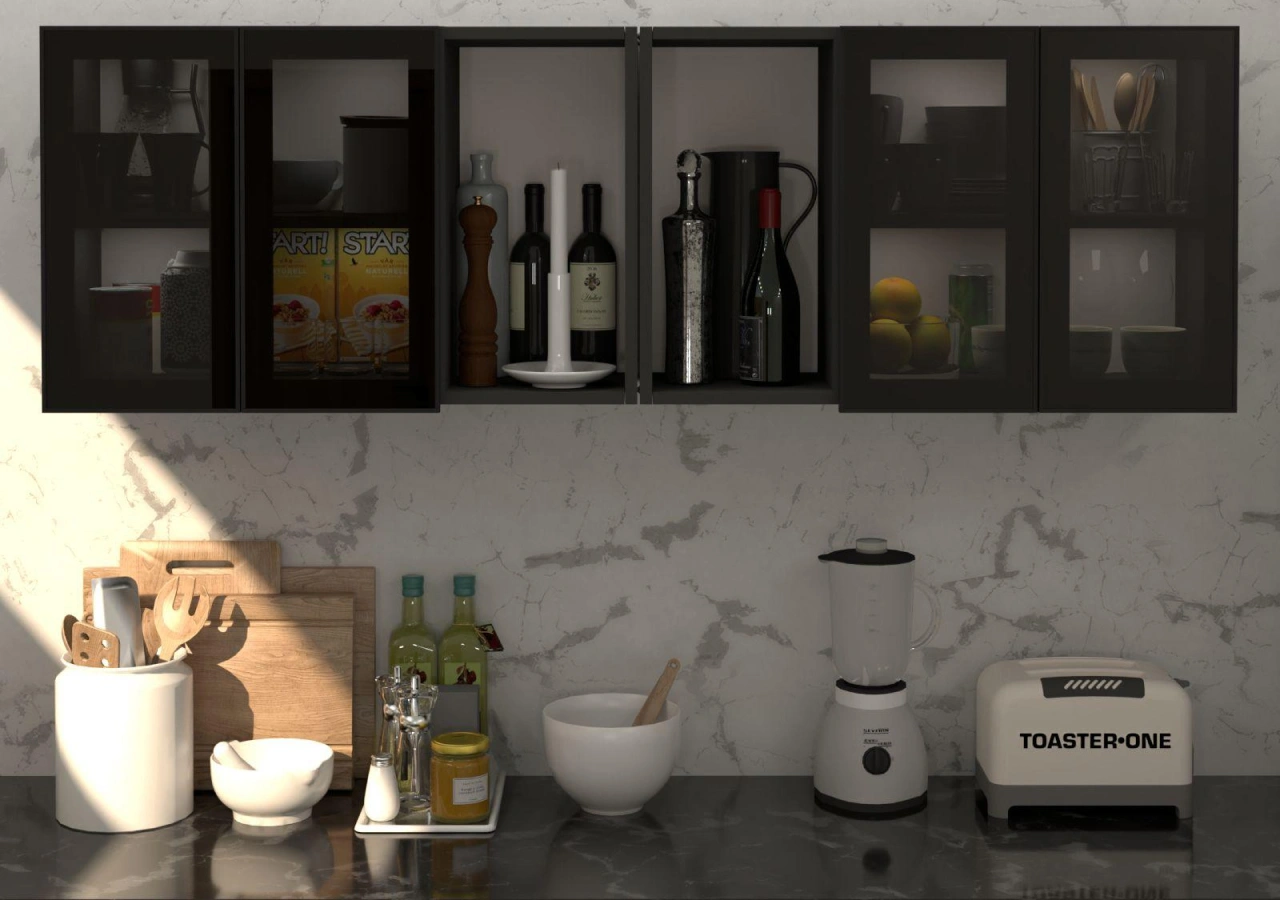
Smoked glass reduces visibility and gives cabinet fronts a deeper, more neutral appearance. Glassware, bottles, shelves, and lighting remain visible as softened shapes rather than clearly defined objects.
It is strongest in walnut kitchens, wine storage, dry bars, or tall cabinet walls where the glass should feel architectural rather than decorative. Natural light still matters: large areas of smoked glass can feel heavy in a low-light kitchen, while interior lighting can add depth behind the glass.
Bronze Glass for a Warmer Effect
.webp)
Bronze glass offers similar privacy to smoked glass but introduces a warmer tint. It pairs naturally with American walnut, warm oak, creamy countertops, and brass or bronze details, making it a good match for Japandi and warm minimalist interiors.
Review the actual sample beside the cabinet finish, countertop, flooring, and metal details. A subtle warm tint can read differently next to cool white cabinetry or blue-gray flooring, so the surrounding undertones should be considered together before the final material selection.
When to Use Aluminum-Framed Glass Cabinet Doors
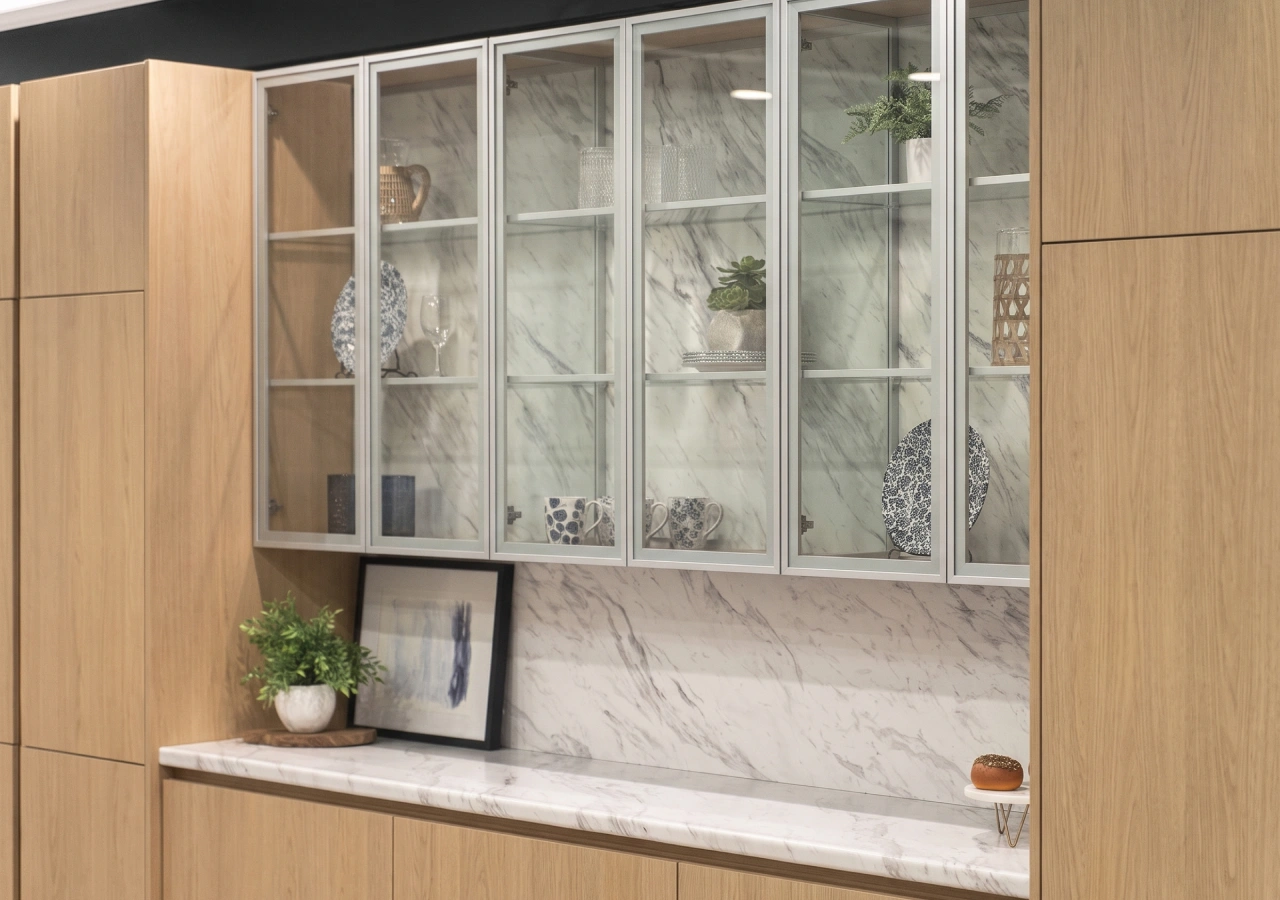
Aluminum-framed glass cabinet doors combine a glass panel with a visible metal frame, so they should be considered as a complete door system rather than simply another glass finish. The frame creates a sharper outline and can give the cabinetry a more architectural character.
They are a good fit for modern bars, wine storage, tall display cabinets, and European-style kitchens with slab fronts or integrated appliances. Coordinate the frame finish, profile thickness, hinges, glass type, shelf finish, and cabinet interior. If lighting is included, establish its position before the doors and interiors are finalized.
Plan Glass Cabinet Lighting and Interior Finishes Early
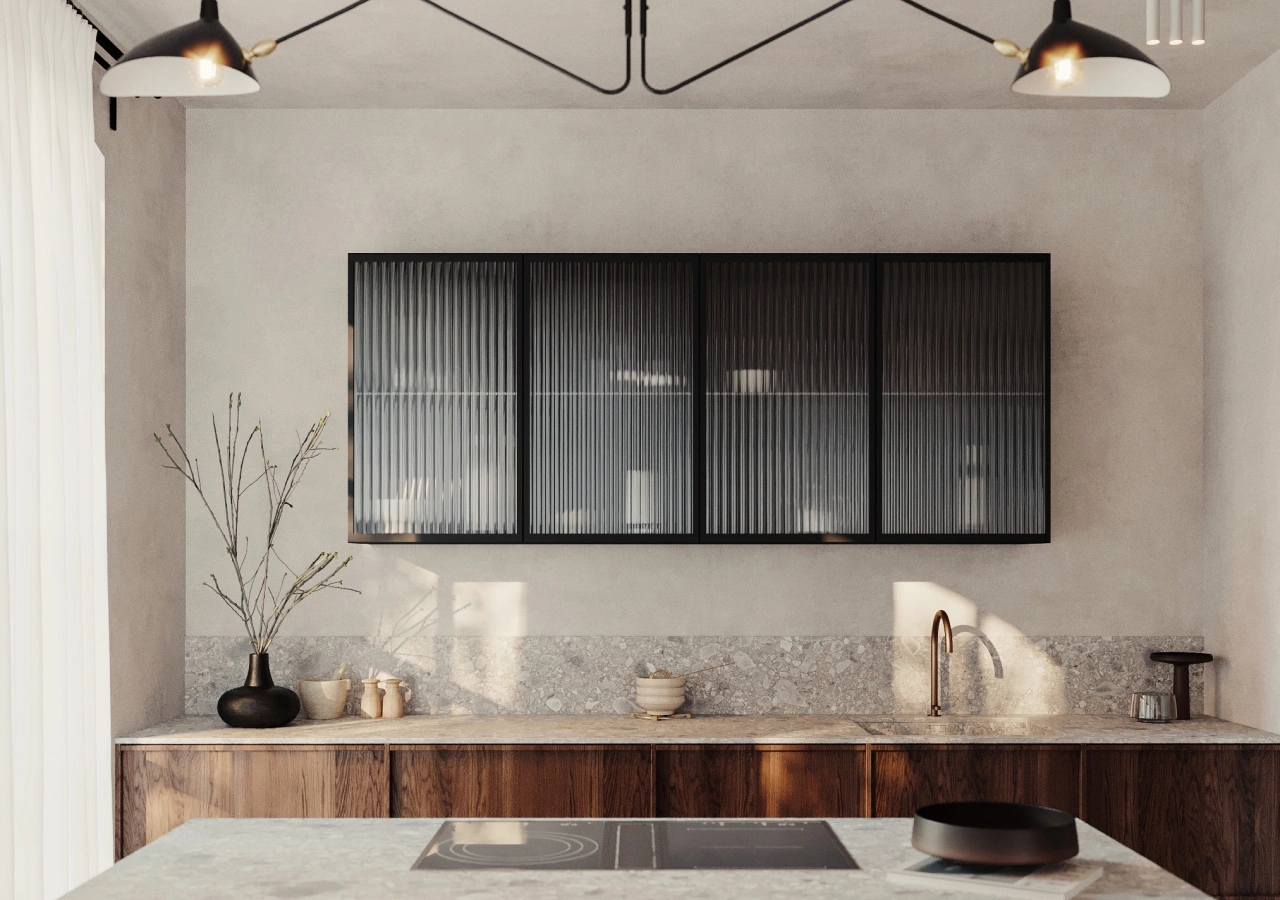
Glass-front cabinets expose more than the objects stored inside. Shelf edges, cabinet backs, hardware, and lighting can all become visible, so the interior finish needs more attention than it would behind a standard solid door.
A finished back panel, coordinated shelf material, or intentional interior color can make the cabinet feel complete even when the shelves are not fully styled. Integrated LEDs can also give a bar or display cabinet more depth and make glassware easier to see.
If lighting is planned, cabinet construction and electrical work need to be coordinated before production. Channels, wire routes, drivers, power locations, and switching should not be improvised after installation. Corner's guide to integrated cabinet lighting covers these details in more depth.
Not every glass cabinet needs lighting. Add it where it improves visibility or gives a dedicated display area a clearer role.
Glass Cabinet Choices by Kitchen Zone
After comparing the main glass types, the next question is where each one is easiest to use. Different kitchen zones have different storage needs, so the most appropriate glass depends on what sits behind the door and how visible you want it to remain.
Conclusion
Glass kitchen cabinets are most successful when the amount of visibility matches what will actually be stored behind the doors. Clear glass emphasizes collections, fluted glass softens everyday objects, and smoked or bronze glass creates more privacy and depth. Aluminum-framed doors add another layer by turning the frame itself into part of the design.
In most kitchens, selective use gives the strongest result. A short upper run, dry bar, pantry section, or tall display cabinet can introduce texture and visual lightness without requiring every shelf to stay perfectly styled.
Plan the glass together with the cabinet interior, lighting, wood, stone, and metal finishes rather than treating it as a final decorative choice. To see how these materials come together across complete layouts, explore Corner Renovation's kitchen collections and completed projects.


