
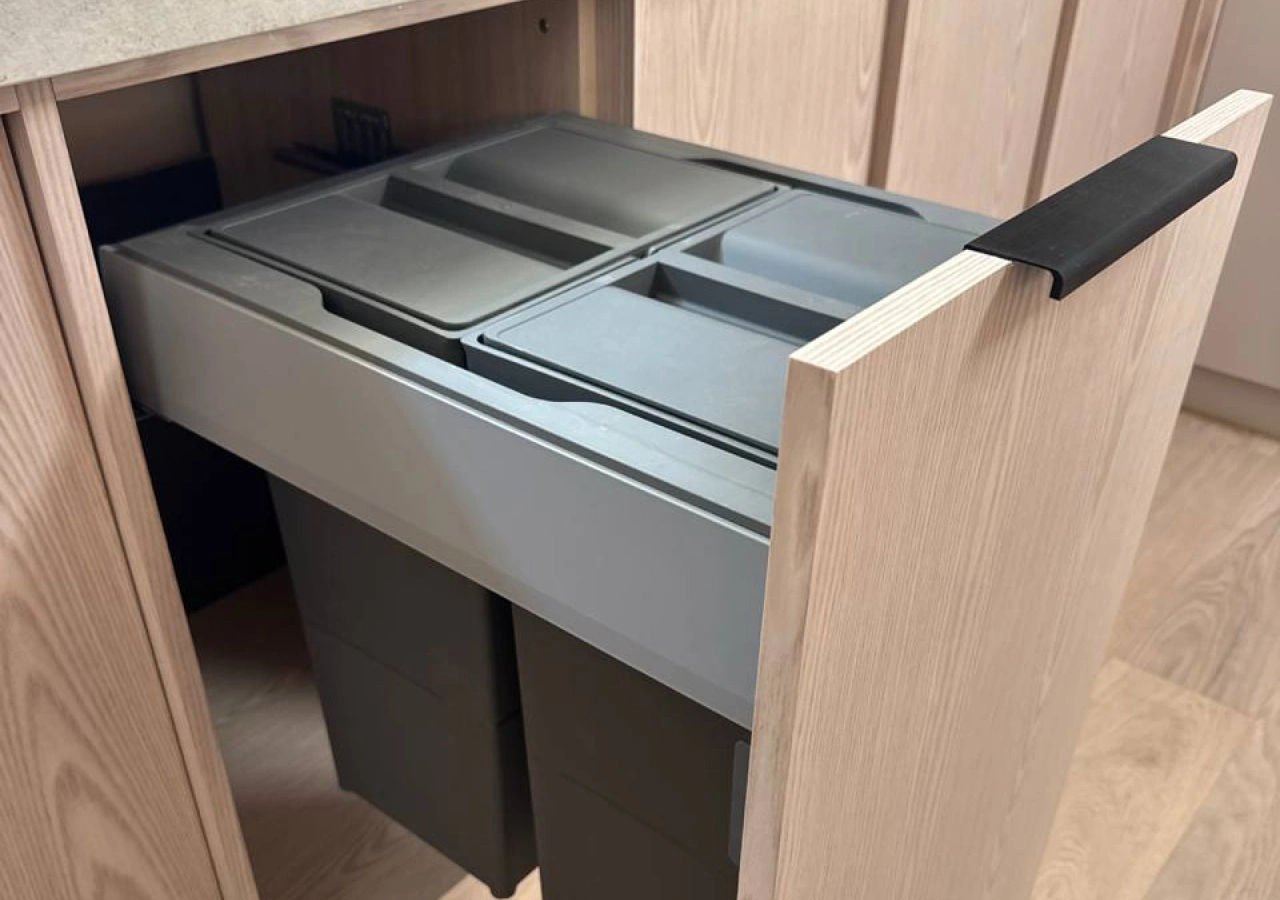
Trash, recycling, and compost are easy to overlook during a kitchen renovation, but they affect how the kitchen works every day. A well-placed waste pull-out keeps counters clearer, makes cooking and cleanup easier, and helps the room stay visually organized.
The main planning question is simple: where should the bin go? The answer depends on the sink, dishwasher, prep area, island, and storage plan.
A hidden kitchen trash pull-out should be easy to reach, large enough for real use, and placed where waste actually happens.
Where Should the Trash Pull-Out Go?
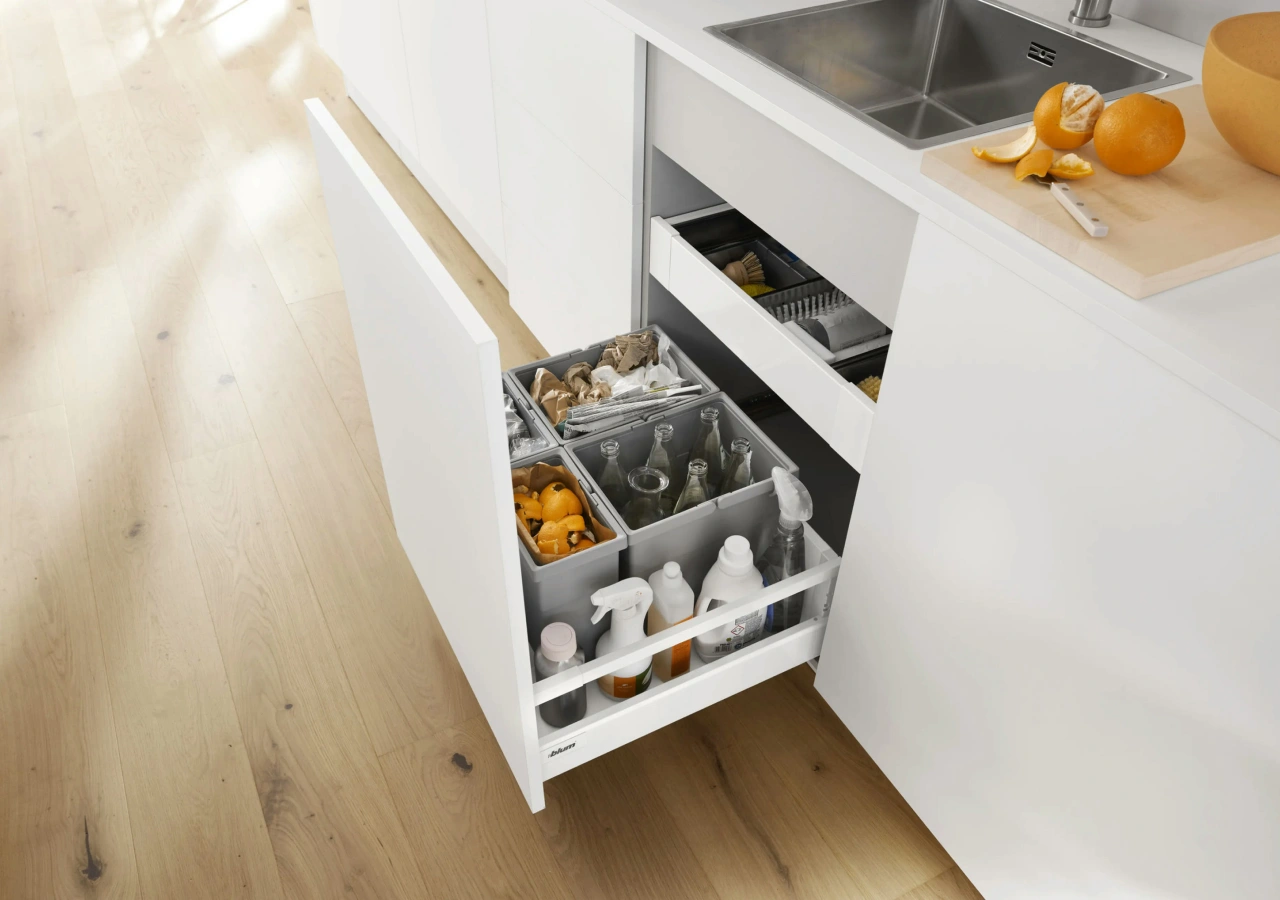
The best place for a kitchen trash pull-out is usually near the sink, dishwasher, or main prep zone. These are the areas where food scraps, packaging, rinsing, and plate scraping happen most often.
Every kitchen handles waste differently. In some layouts, trash belongs beside the sink. In others, it works better near the island, prep counter, or end of a cabinet run so guests and kids can use it without stepping into the main cooking zone.
Start With How the Kitchen Is Used
.webp)
Before choosing the cabinet size, look at how the kitchen actually works. Where do you prep food? Where do you unpack groceries? Where do plates get scraped before going into the dishwasher? Where do guests naturally stand during casual meals or entertaining?
If most mess happens during cleanup, place the pull-out near the sink and dishwasher. If most waste happens during prep, the island or main prep run may be better. If the kitchen is social, access for guests and kids may matter too.
Kitchen Trash Pull-Out Placement Guide
Near the Sink: Best for Cleanup
.webp)
A sink-adjacent trash pull-out is the most common choice because it fits the cleanup routine. You can scrape, rinse, load the dishwasher, and reset the counter without crossing the kitchen.
This placement also keeps waste hidden behind the same cabinet fronts as the rest of the kitchen. In a minimalist, Japandi, or handleless kitchen, that can make the cabinet wall feel more continuous.
The main thing to watch is clearance. If the dishwasher and trash pull-out open into the same standing area, cleanup can become awkward. The layout should allow one person to load dishes while another can still move through the kitchen.
Near the Prep Zone or Island: Best for Cooking
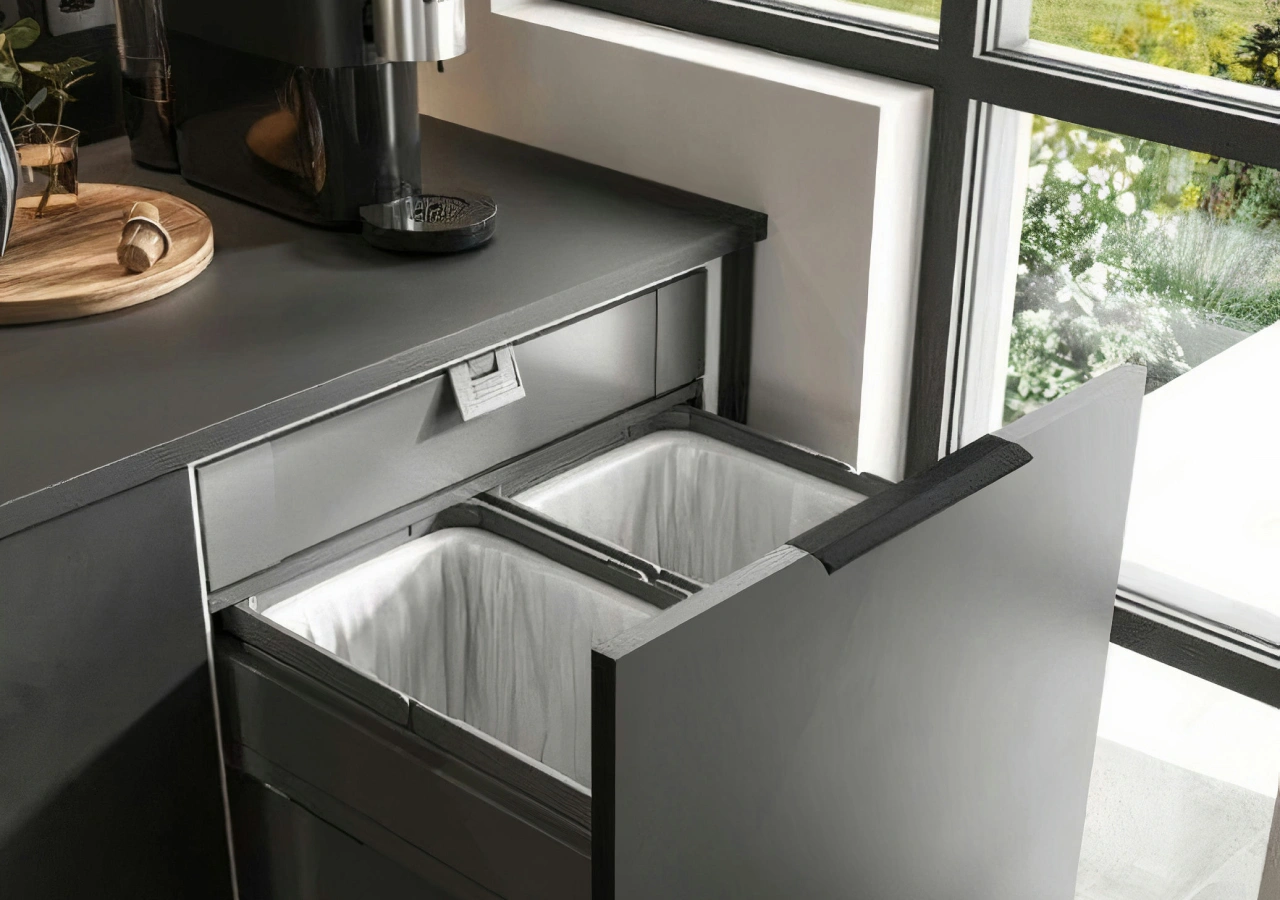
If you cook often, the trash may be more useful near the prep surface than directly beside the sink. This is where vegetable peels, food packaging, paper towels, and wrappers tend to collect.
A prep-zone pull-out gives scraps an immediate place to go, which helps keep the counter clearer while you cook. This works especially well in island kitchens, where the waste cabinet can stay close to the main work surface without interrupting the design.
The tradeoff is storage. Islands often need deep drawers, serving storage, power, and seating. Give up a prime island drawer only when the pull-out will make the kitchen easier to use.
At the End of the Run: Best for Guests and Kids
Sometimes the right trash location sits outside the main work zone. If guests, kids, or family members often need the bin, placing it near the end of a cabinet run can make the kitchen easier to share.
This works well near a coffee station, breakfast area, pantry wall, or dining edge. Someone can throw away a napkin, snack wrapper, or coffee filter without stepping between the sink, stove, and island.
The tradeoff is distance from cleanup and prep. In a larger kitchen, you may want a primary trash and recycling pull-out near the sink or prep zone, plus a smaller secondary bin near the kitchen edge.
Trash Only, Two-Bin, or Three-Bin?
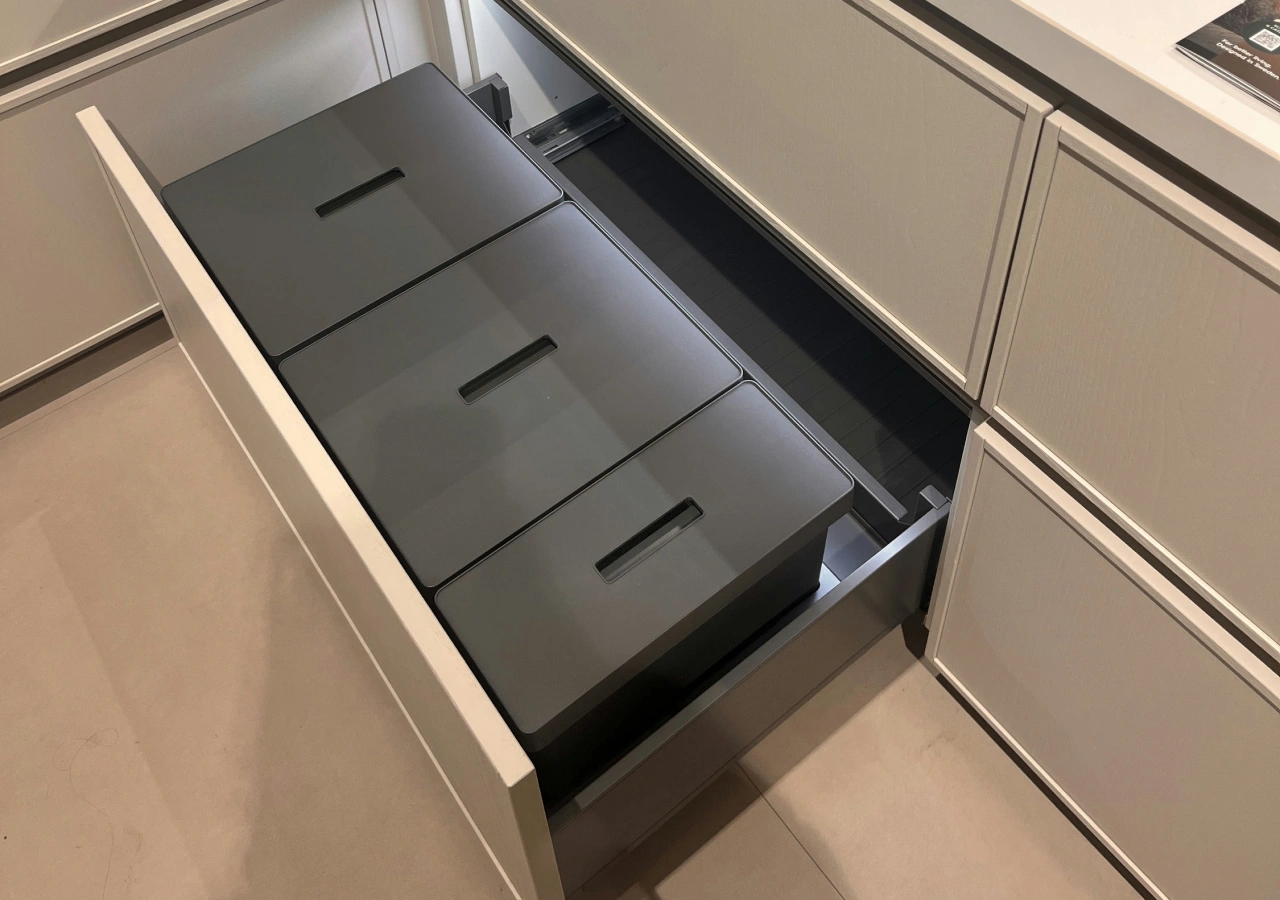
Most kitchen layouts come down to one of three options: one large trash bin, a two-bin trash and recycling pull-out, or a three-bin system for trash, recycling, and compost.
A two-bin setup is usually the most practical choice for many homes. It keeps trash and recycling together without taking over too much cabinet space. A three-bin setup can make sense for households that sort waste every day, but it needs to be planned early.
Capacity is the main risk with triple bins. If each bin becomes too small, the system may look organized but feel frustrating. In many kitchens, a larger trash-and-recycling setup plus a smaller compost solution works better than three undersized bins in one cabinet.
Two-Bin vs Three-Bin Pull-Outs
Side-by-Side vs Front/Back Bins
Side-by-side bins are easier to see and sort. When the cabinet opens, both bins are visible, which makes the system simple for guests, kids, and busy cleanup moments.
Front/back bins can work better in narrower cabinets because the bins sit one behind the other. The front bin is easy to reach, while the back bin is usually less convenient.
Choose side-by-side if trash and recycling are used equally. Choose front/back if the cabinet is narrow or one bin is used less often.
What Cabinet Width Works Best?
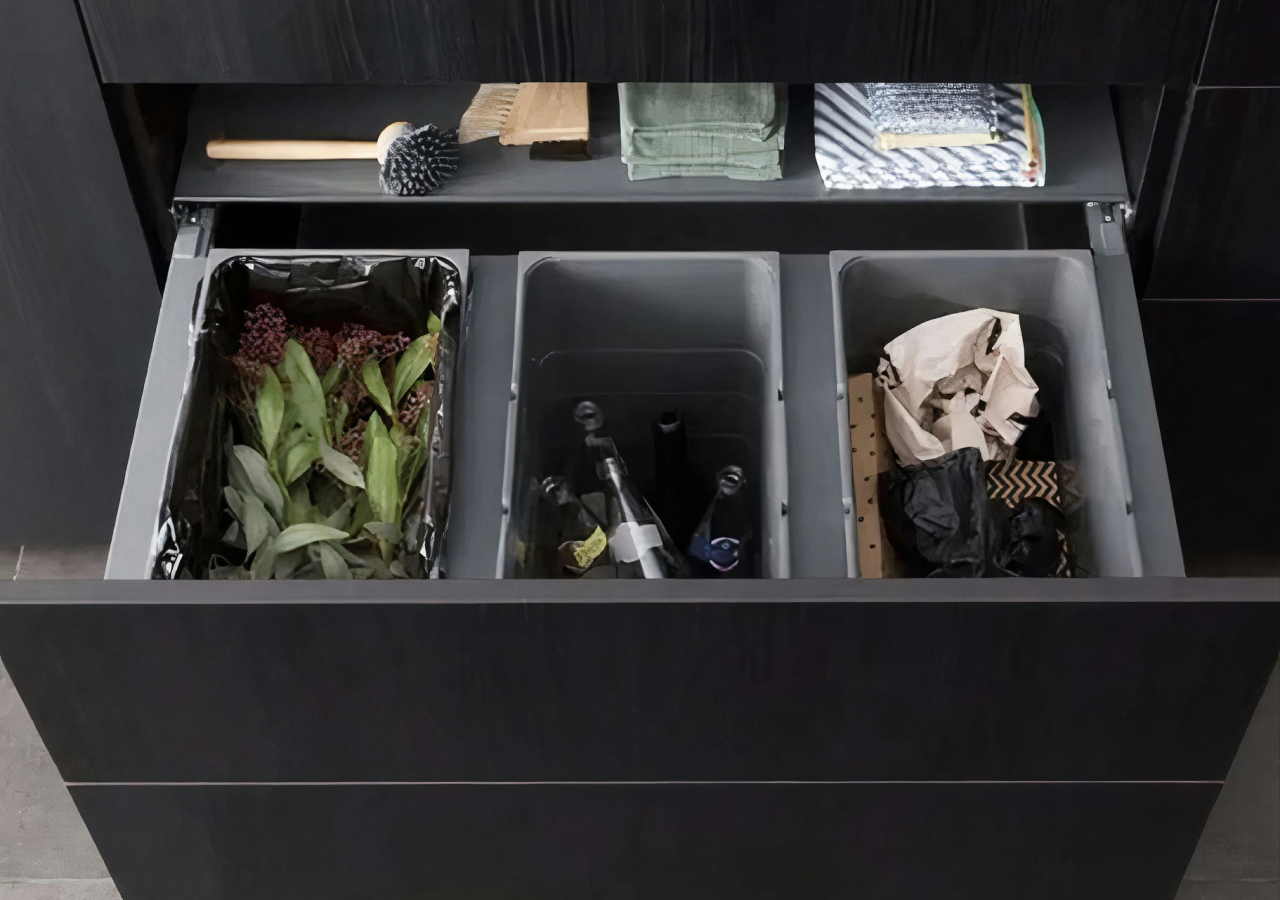
Cabinet width determines what kind of waste system is realistic. An 18-inch trash pull-out often works well for a compact two-bin setup. A 24-inch cabinet may allow larger bins or easier sorting, but it also takes space away from drawers. A 30-inch cabinet can create a generous sorting zone, usually in larger kitchens.
Wider cabinets are useful only when the layout can afford the storage tradeoff. In a small or medium kitchen, a 24-inch trash cabinet may feel excessive if it replaces deep drawers for cookware, food storage, or prep tools. The real question is what matters more in that specific layout: a larger waste zone or better drawer storage.
Pull-Out Cabinet Width Benchmarks
These are planning benchmarks, not fixed product specifications. Final dimensions depend on the cabinet system, pull-out hardware, bin size, and layout priorities.
Compost Does Not Need a Large Bin in Every Kitchen
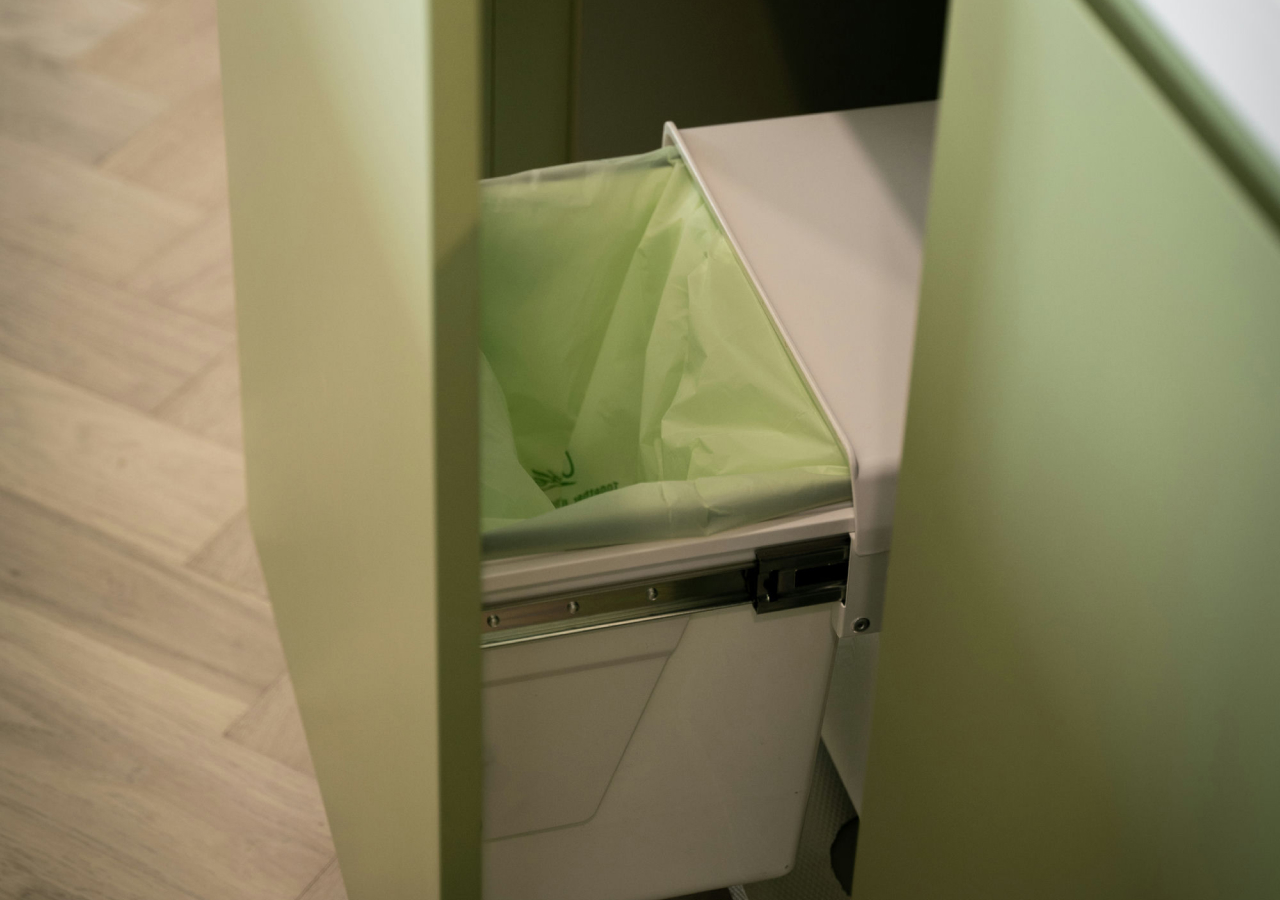
Compost should match the household’s real habits. If you cook daily and compost often, a third bin inside the pull-out may be worth it. If composting is occasional, a smaller solution may be more practical.
Compost can work as a third pull-out bin, a small insert, an under-sink container, a countertop vessel, or a freezer container. The goal is to make composting easy without weakening the main storage plan.
Common Mistakes to Avoid
The biggest mistake is placing the trash pull-out wherever there happens to be leftover cabinet space. Waste storage should be part of the kitchen’s working layout, instead of a way to fill an unused cabinet.
Another mistake is choosing a three-bin system when each bin ends up too small. A triple-bin pull-out only works when the cabinet width supports real daily use.
Homeowners should also avoid sacrificing the best drawer storage for an oversized trash cabinet. This matters most in compact kitchens, where every base cabinet needs to earn its place.
Finally, settle the trash location before technical drawings are complete. Waste pull-outs affect cabinet sizing, hardware, dishwasher access, and daily movement.
Conclusion
The best trash, recycling, and compost pull-out is the one that fits how the kitchen is actually used. Near the sink works well for cleanup. Near the prep zone or island helps while cooking. At the end of a run, it can make the kitchen easier for guests and kids.
A waste pull-out needs more planning than a tidy cabinet front. Cabinet width, bin capacity, hardware, and possible drawer loss all matter.
In many kitchens, the strongest result is selective: a well-placed two-bin pull-out, a small compost insert, or a secondary bin only where it improves the flow. Explore Corner kitchen projects to see how waste pull-outs, drawers, islands, and pantry zones can be planned together.


