
.webp)
A handleless kitchen is not just a “no-hardware” look. It is a cabinet-opening system that changes how the kitchen feels every day: how drawers open when fully loaded, how often you wipe down fronts, and how clean the cabinetry reads in an open-plan space.
In Japandi and Scandinavian interiors, handleless cabinets work because they reduce visual noise. Fronts read as one calm plane, and materials like oak, walnut, and matte finishes become the feature, not shiny pulls.
But “handleless” can mean different things in practice: push-to-open, integrated finger pulls like J-pull, or a true rail system like Gola. This guide defines each option, breaks down the trade-offs, and ends with design ideas pulled from Corner-style kitchens so you can choose a system that fits your layout and routines.
What Is a True Handleless Kitchen?
.webp)
A true handleless kitchen is typically defined by a rail system mounted behind the cabinet and drawer fronts. The rail creates a recessed channel so you can hook your fingers and open doors and drawers without external hardware. In many European-style kitchens, these rails become a deliberate design feature. They create consistent horizontal lines across drawer runs and, in some layouts, a vertical rhythm across tall cabinet zones.
It’s worth being precise about terminology because many kitchens described as “handleless” are handleless in appearance but not in system. A slab door with push-to-open is visually handleless, but it doesn’t have a grip. A J-pull door has an integrated grip edge, so it looks minimal but still gives you something to hold. A true handleless rail is different: it’s a permanent interface between your hand and the cabinetry, and it becomes part of the architecture of the kitchen.
How Do Handleless Kitchen Doors Work?
Most handleless kitchens use one or a combination of three approaches: push-to-open, integrated pulls (like J-pull or edge pulls), and Gola rails. The best choice usually depends less on “style” and more on cabinet type and usage. A kitchen that is drawer-heavy, with wide pan drawers and a frequently used trash pull-out, benefits from a grip that feels predictable. Meanwhile, uppers and certain tall panels can be great candidates for push-to-open because they’re lighter and you typically open them with a different body posture and cadence.
Push-to-Open
.webp)
Push-to-open systems work by releasing a latch when you press the front. The look is extremely clean because there is no profile, groove, or rail line. In the right places, it can feel almost invisible. The trade-off is that it increases touch points on the front, which makes fingerprints more noticeable, especially on darker colors or dead-matte finishes. It can also need occasional adjustment over time so the opening feel stays consistent.
Integrated Pulls (J-pull, Edge Pulls)
.webp)
Integrated pulls like J-pull use a shaped edge to create a finger grip. The advantage is that you get most of the handleless look while keeping a direct, reliable opening motion. It’s also simpler and tends to have fewer “tuning” moments than push-to-open, especially on base cabinets that see heavy daily use. The feel varies depending on the profile: some are comfortable and rounded, while others can feel sharp if the edge is too crisp or the door thickness is too thin.
.webp)
Gola rails (true handleless) create a recessed channel behind the fronts. This gives you a confident grip, which is why rails often feel best on wide drawers that carry weight. Visually, rails create a very architectural line across long runs, and that can look incredible in minimalist kitchens where the cabinetry needs to read like millwork. The downside is that rails require precise detailing and alignment, and the channel can collect crumbs and dust near prep zones. It’s not difficult to clean, but it is something you choose knowingly.
| System | How it opens | Best for | Daily feel | Maintenance | Main trade-off |
|---|---|---|---|---|---|
| True handleless (Gola rails) | Finger hooks into a recessed rail behind the front | Drawer-heavy layouts, long runs, architectural linework | Confident, consistent grip | Occasional rail cleaning | More detailing and cost; rails can collect crumbs |
| Integrated pulls (J-pull / edge pull) | Grip is built into the door edge | Most homes; simpler “handleless look” | Reliable and direct | Easy | Grip edge is slightly more visible; comfort depends on profile |
| Push-to-open | Press to release a latch | Uppers and selective tall panels | Cleanest slab look, but more touch points | May need periodic adjustment | Fingerprints; can feel less satisfying on heavy drawers |
Pros of a Handleless Kitchen
%20(1).webp)
The biggest advantage of handleless design is visual calm. When you remove protruding hardware, the cabinets read as a single composed surface. In open-plan homes this matters because the kitchen is not a separate utility room. It is part of the living space, and cabinetry that looks quiet and continuous tends to feel more architectural and less “busy.”
Handleless kitchens can also be more comfortable in tight circulation paths because there are fewer snag points. In narrow galleys, walk-through kitchens, or areas where multiple people move around, the absence of knobs and pulls makes the space feel a touch cleaner and less cluttered.
Finally, handleless systems are material-forward. If you’re investing in natural wood veneer, a refined matte lacquer, Fenix-style super-matte finishes, or a stone look, handleless fronts help those surfaces read as the hero. The room becomes about texture, proportion, and light, rather than hardware as decoration.
Cons of a Handleless Kitchen
.webp)
Handleless kitchens can cost more, especially with true rail systems, because the detailing and alignment have to be precise for the lines to stay clean across long runs. They’re also higher-touch by nature: push-to-open zones and slab fronts get pressed constantly, so fingerprints and smudges show up faster, particularly on dark matte finishes.
Daily feel can vary too. Heavy base drawers usually feel better with a confident grip (rails or integrated pulls), while full push-to-open can feel less satisfying when drawers are loaded and may need occasional adjustment over time. If you use Gola rails, the recessed channel can collect crumbs and dust near prep areas, so a quick clean now and then is part of the deal.
Best Handleless System by Cabinet Type (What Works in Real Life)
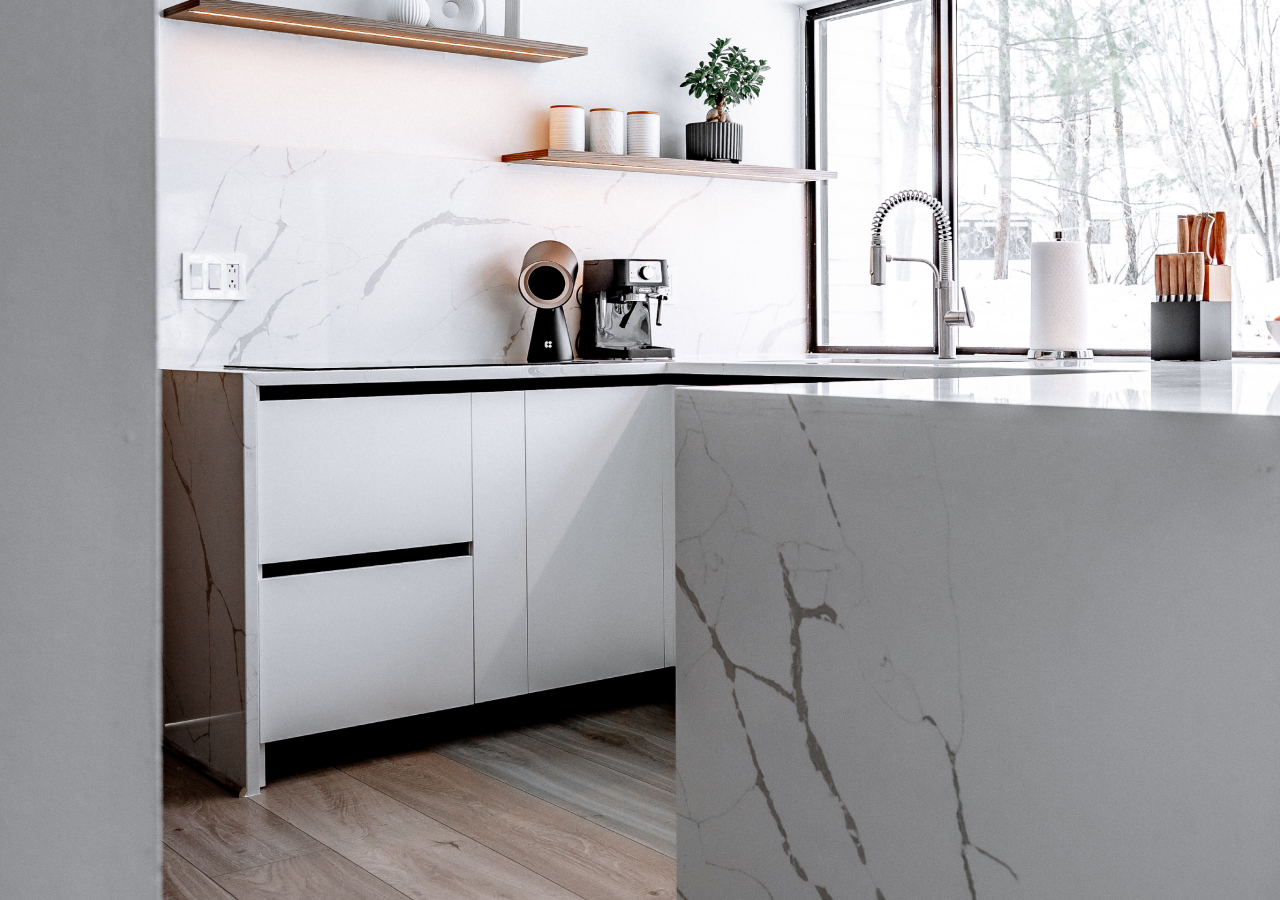
If you want a handleless kitchen that stays satisfying over time, the biggest mistake is choosing one opening system for everything. The best results usually come from assigning systems by cabinet type.
Wide pan drawers, trash pull-outs, and high-use base drawers typically feel best with a confident grip. Rails are excellent here because the opening motion stays consistent even when the drawer is loaded. Integrated pulls can also work very well, especially if you want fewer components and simpler detailing while keeping a dependable daily feel.
Uppers are one of the best places to use push-to-open. They are lighter, you tend to open them with less force, and the clean slab look reads beautifully in a minimalist kitchen. Push-to-open can also work on certain tall panels, but it becomes more sensitive to alignment and adjustment over time. If you want to reduce “tuning” moments, integrated pulls on tall pantry doors are often the more forgiving choice.
Integrated appliance panels sit in a slightly different category. Panel-ready appliances already involve tight tolerances, and you want access that feels predictable. Many homeowners prefer rails or integrated pulls for those zones because they create fewer “misfire” moments than full push-to-open, but it depends on the appliance and how the panel is engineered.
Is a True Handleless Kitchen Worth It?
.webp)
True handleless is worth it when you care about architectural linework and want the cabinetry to read like millwork across long runs. It is especially strong in drawer-heavy layouts because rails give you a consistent grip where you actually need it.
If you want most of the minimalist look with less complexity, integrated pulls are often the sweet spot. They keep the kitchen clean and modern, but daily use remains simple and reliable.
Push-to-open is best used selectively. When it’s used in the right places, it feels like the cleanest version of the handleless idea. When it’s used everywhere, the fingerprints and adjustment needs can become noticeable.
True Handleless Kitchen Design Ideas (Corner-Style Approaches)
The most convincing handleless kitchens usually do four things well. They choose one hero material and let it dominate. They assign the opening system by cabinet type instead of forcing a single solution. They keep the appliance story clean so the room reads like one composition. And they use lighting that adds depth, so the fronts feel calm rather than flat.
.webp)
A light oak handleless kitchen becomes warmer when the geometry is softened. Rounded corners and a curved island profile keep minimalism from feeling sharp, especially when paired with a quiet stone-like surface. This is a strong direction when you want a clean look that still feels friendly.
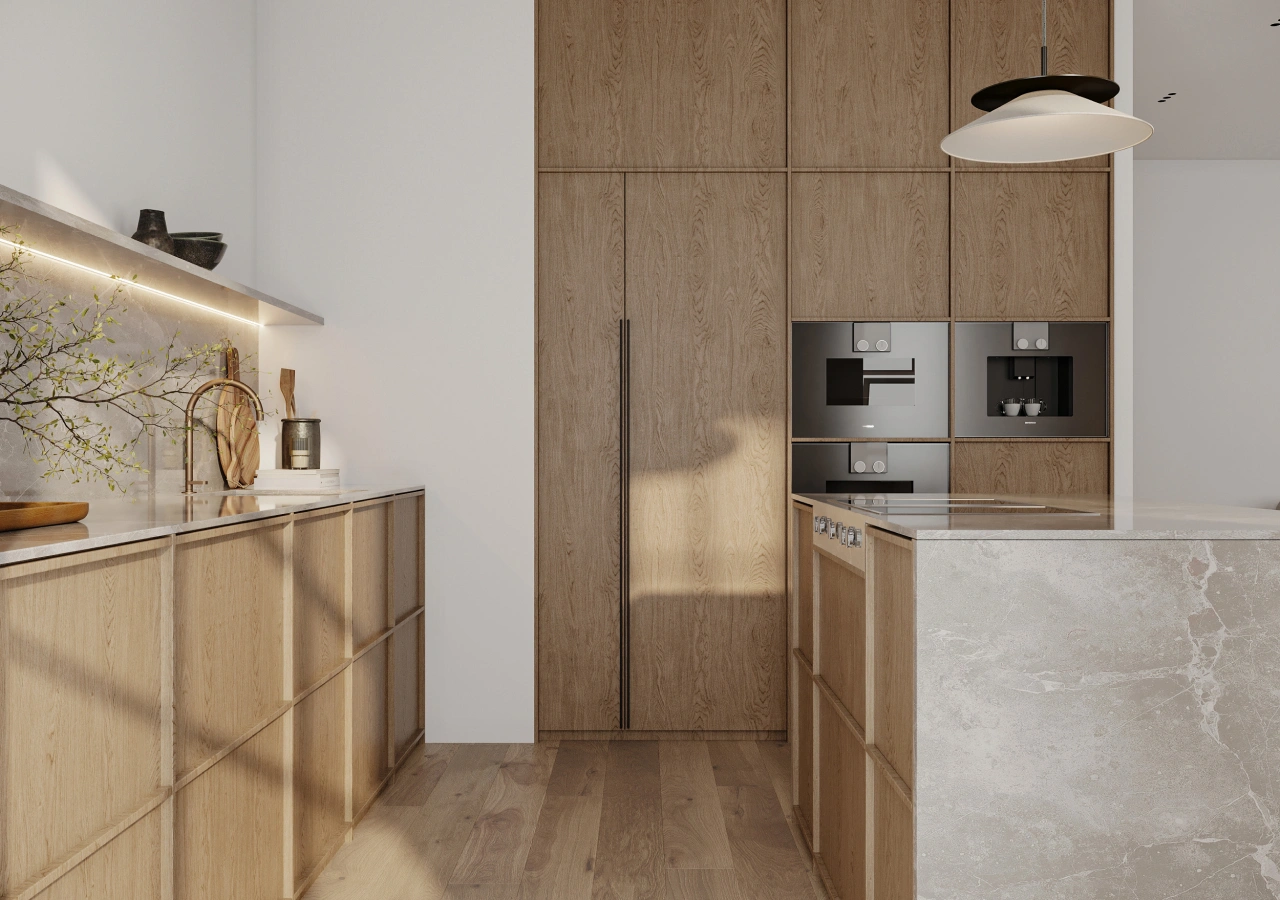
Natural oak paired with a light palette is one of the most “Scandinavian without going cold” combinations. A pale countertop and restrained wall color keep the space bright, while the wood brings warmth. Handleless fronts make this look feel calm and continuous.
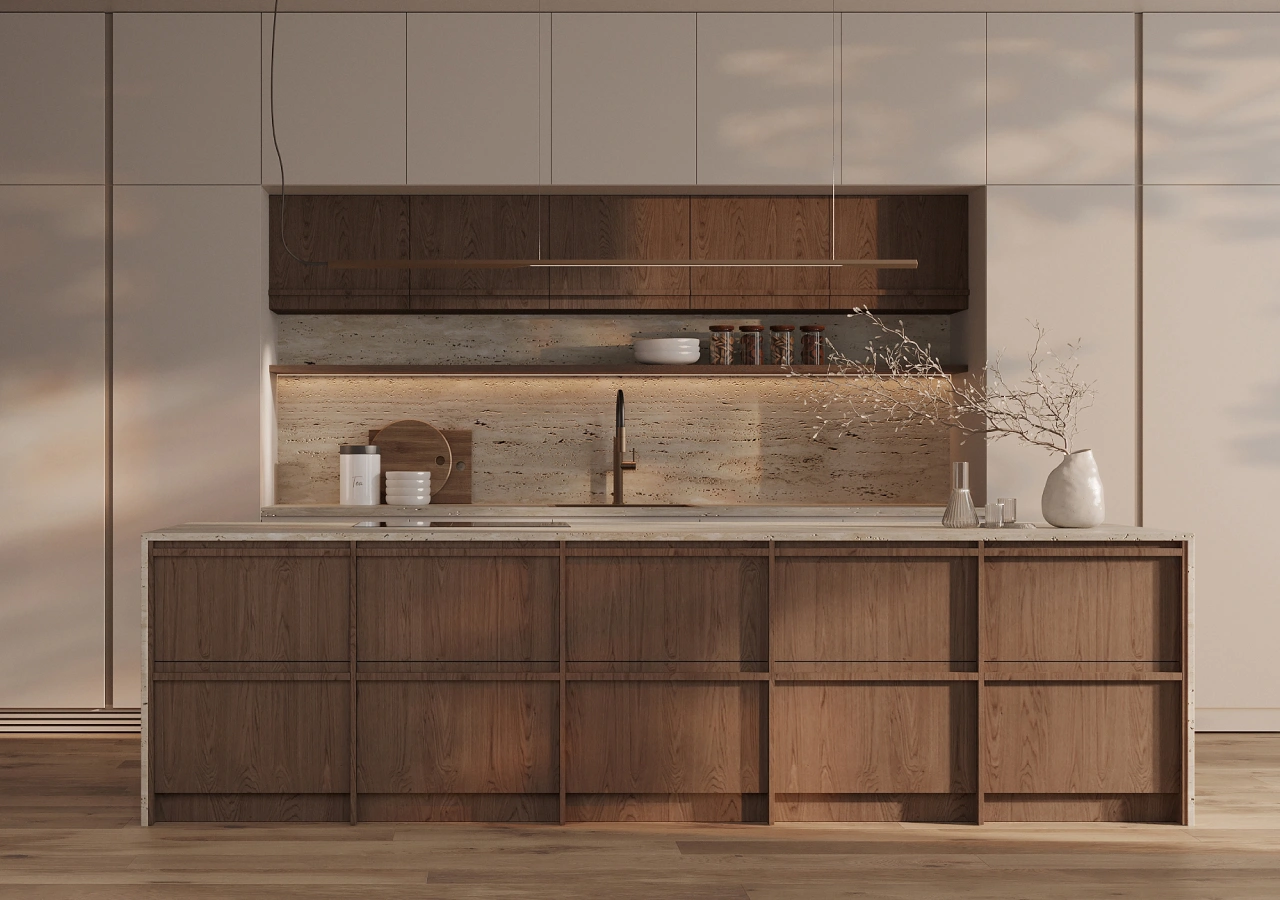
If you want a deeper, more architectural mood, dark oak and stone-like surfaces can be stunning. In those kitchens, push-to-open can work well on the island because it helps the island read like a single volume. The key is keeping zoning disciplined so the island stays visually quiet, not constantly cluttered.
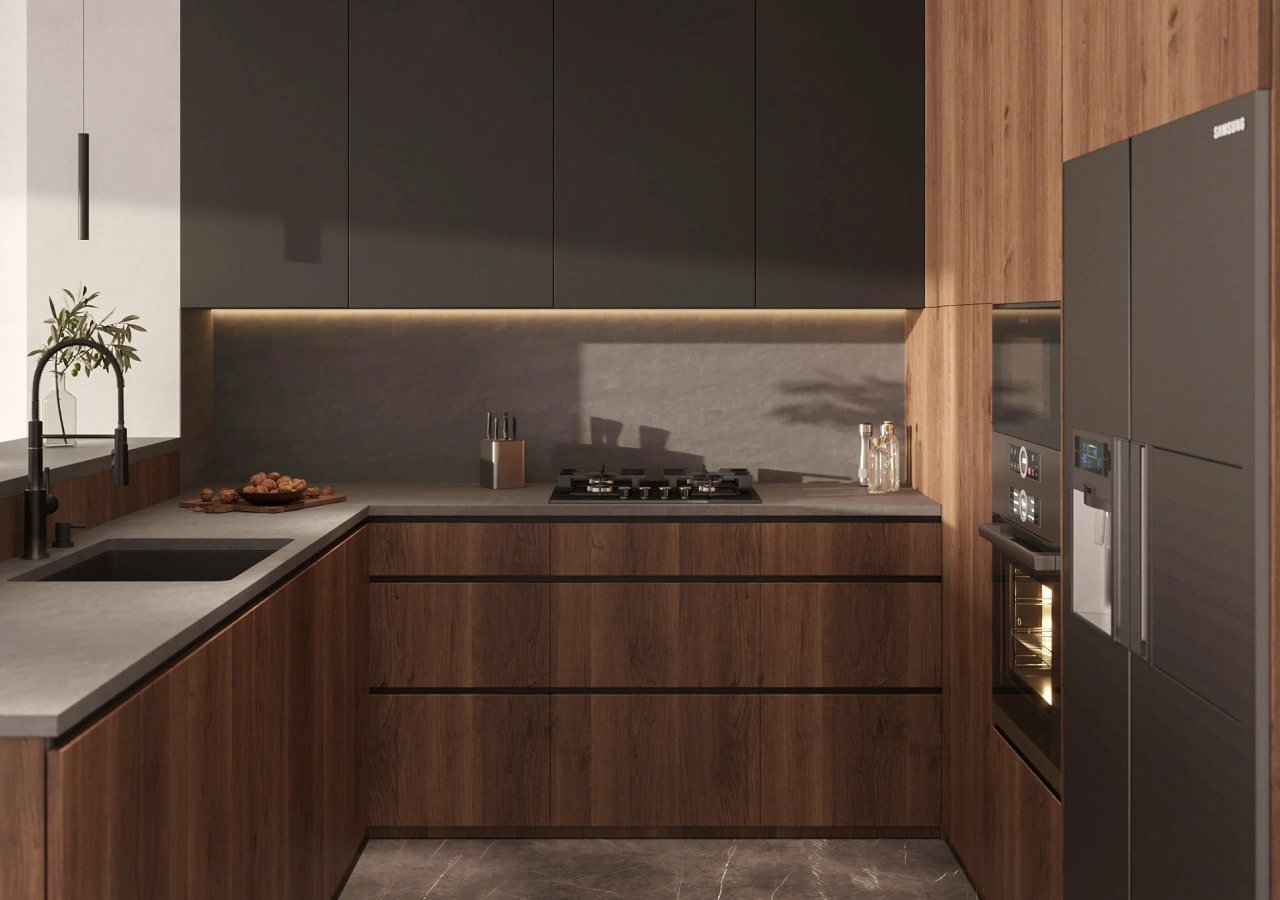
For stronger contrast, matte dark cabinetry with American walnut accents is a classic warm-minimalist pairing. In this direction, integrated pulls often make daily use easier while keeping the handleless look. You get a confident “grab and go” feel without introducing protruding hardware.
.webp)
If you want one intentional focal point while keeping the rest quiet, move the detail to the island. A fluted island front or stepped island concept can carry the personality while long cabinet runs stay minimal and clean.
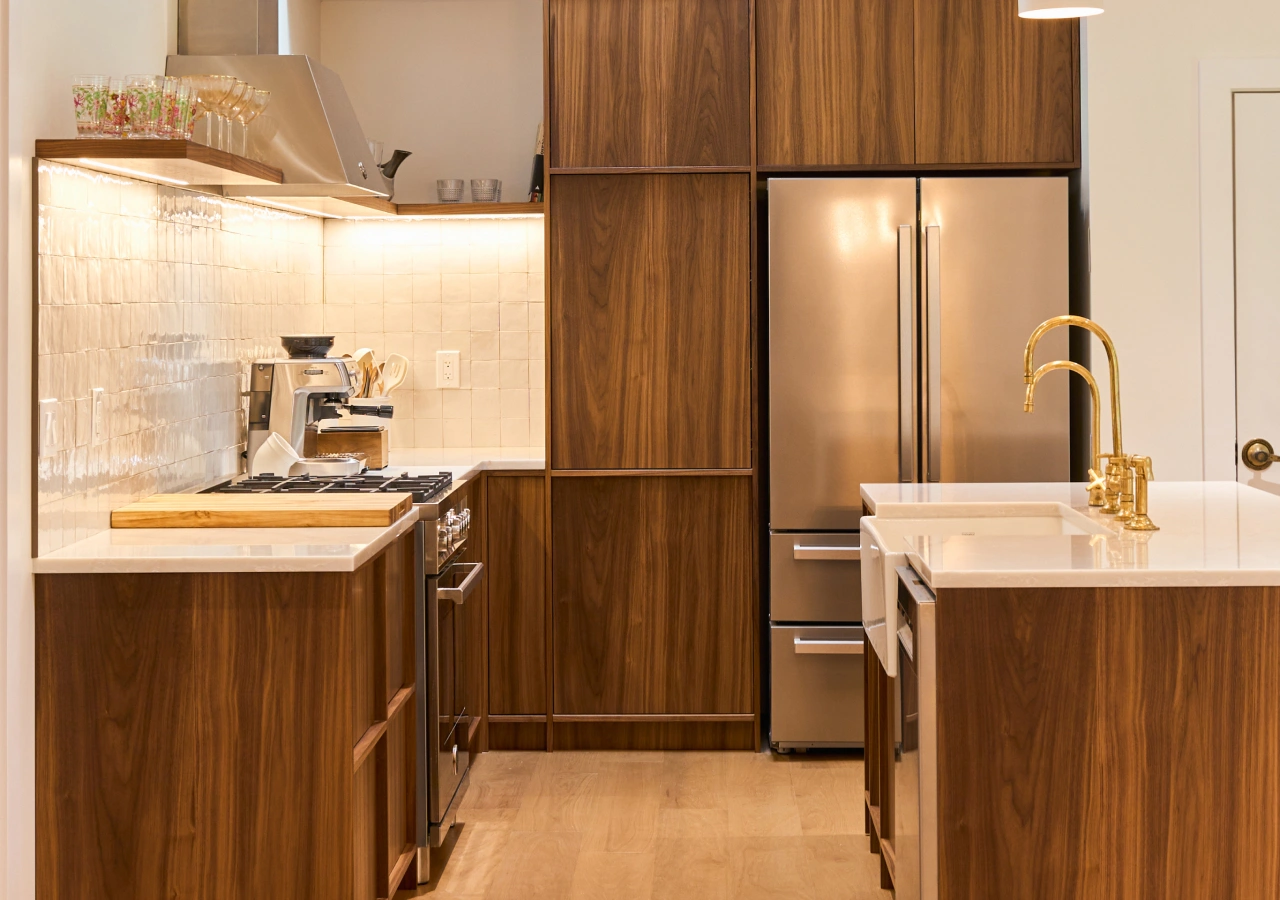
A fully push-to-open approach can feel amazing when the material is doing the heavy lifting, like walnut. It’s the closest you can get to cabinetry reading as a continuous plane. Just go into it knowing you will touch fronts more often, so the finish choice and the cleaning habit matter.
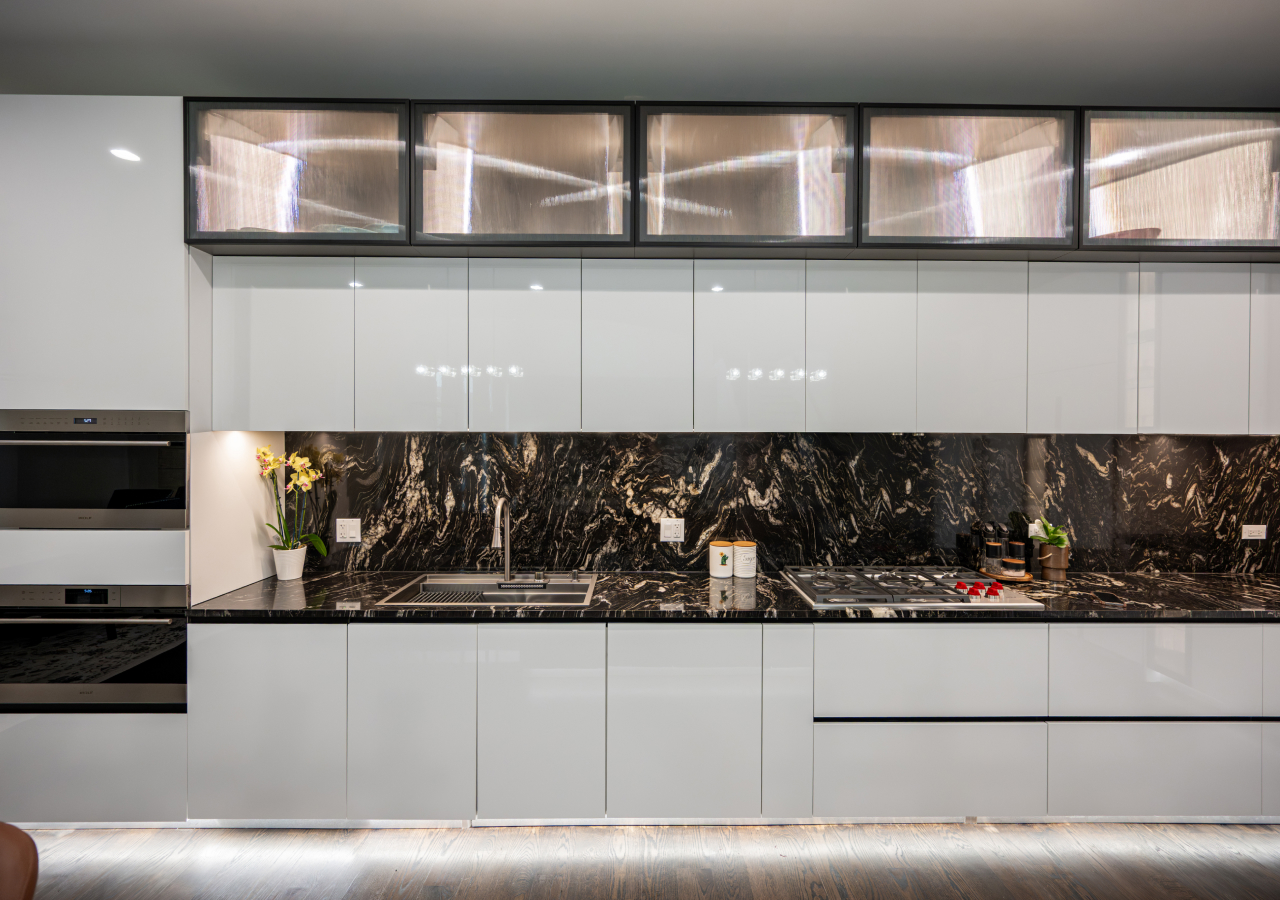
Finally, if your goal is airy and minimal, glossy white handleless fronts can work beautifully when paired with fluted-glass uppers and integrated lighting. The glass adds depth without clutter, while a wood island keeps the room grounded.
Maintenance: Keep a Handleless Kitchen Looking Sharp
.webp)
Handleless kitchens stay crisp when you treat fronts and opening systems like high-touch surfaces. Wipe around the prep zone and trash pull-out regularly using a finish-safe, non-abrasive cleaner. Matte finishes and veneers do best with gentle products.
If your kitchen uses Gola rails, vacuum or brush the channels occasionally so crumbs and dust do not build up in the recess. If you use push-to-open, recheck alignment when a door starts to feel inconsistent. Small adjustments usually bring back that clean, responsive feel.
How to Choose the Right Handleless System (7-Step Method)
Choose handleless like you choose a layout: start with daily habits, then assign the opening method by cabinet type. Most high-function handleless kitchens end up hybrid—rails or integrated pulls where you need grip, push-to-open where you want uninterrupted faces.
- List your highest-touch zones. Identify where you open cabinets and drawers most often: trash, dishes, pans, and pantry. These are the places where grip and ease of use matter most.
- Prioritize deep drawers for heavy storage. Move your most “loaded” storage—pots, pans, plates, pantry staples—into deep drawers and assign these drawers a reliable physical grip such as rails or integrated pulls.
- Use push-to-open selectively. Reserve push-to-open for areas where an extra tap won’t annoy you, like many upper cabinets and some tall, low-use panels, rather than heavy everyday drawers.
- Decide on horizontal lines early. If you want the strong, continuous line of true handleless rails along base runs, commit to that decision before final drawings so the whole elevation is coordinated.
- Choose finishes for real-life handling. Consider how each surface will feel and look with frequent touching: think about smudges, fingerprints, and texture when pairing handleless systems with matte or gloss fronts.
- Plan a “cleaning path” for rails. Where you use Gola rails near prep zones, make sure channels are easy to wipe and not placed where crumbs and oils will constantly collect without access.
- Test a full routine before you build. Walk through one daily sequence—unload dishwasher → prep → cook → clean up—and mentally “open” each cabinet. If any opening action feels even slightly annoying, adjust the handleless strategy before production.
Conclusion
A true handleless kitchen is a daily-use choice, not just an aesthetic. The clean, calm look comes from the cabinetry reading as one continuous surface, but the success comes from matching the opening system to real routines. Heavy drawers usually need a confident grip, while uppers and selected tall panels can be the perfect place for push-to-open minimalism.
If you love the architectural line of rails, commit to it with aligned runs and a finish palette that holds up to touch. If you want most of the look with less complexity, integrated pulls are often the sweet spot.
FAQ: Handleless Kitchens


