
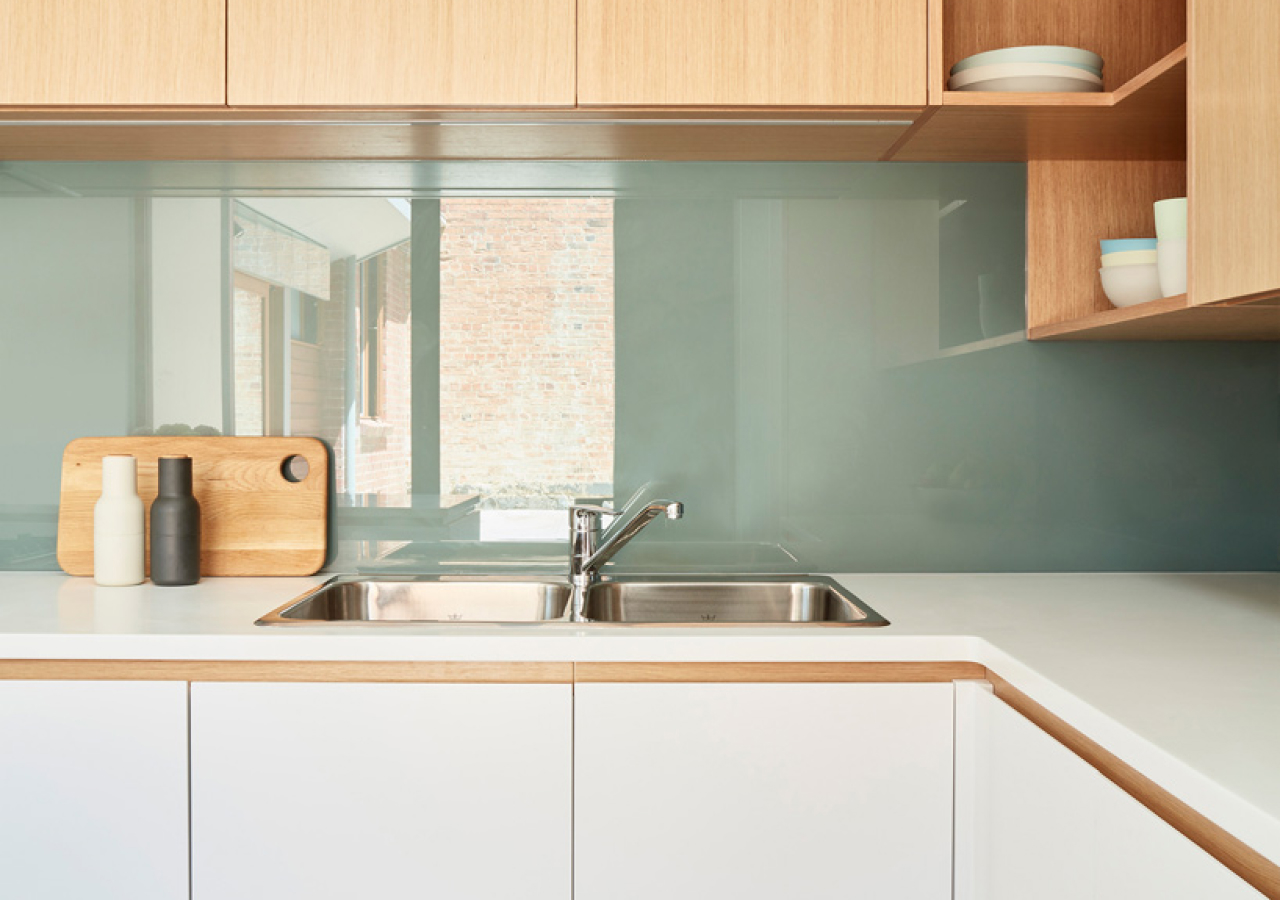
A backsplash should make the kitchen easier to live with, not harder to maintain. If you like clean surfaces and a calm, modern look, a glass sheet backsplash is one of the simplest upgrades you can make. Instead of tile and grout lines, you get one continuous panel that can be color-matched to your cabinetry, walls, or overall palette. The result is a smooth, bright backdrop that keeps the focus on the materials and the lines of the kitchen.
Discovering Glass Sheet Kitchen Backsplash
.webp)
A glass sheet kitchen backsplash is a single panel of glass installed behind the countertop. In most cases it is back-painted, meaning the color is applied to the rear side so the front face stays smooth and uniform. Unlike tile, there are no grout joints. Unlike stone or quartz slabs, the look is more controlled and consistent, with less pattern variation.
This is why glass is often chosen for kitchens that aim to feel visually quiet. It reads as one clean plane, so it supports minimalist cabinetry and simple material palettes without adding extra texture or busy detail.
Advantages of Glass Sheet Backsplashes
.webp)
The main advantage is the seamless appearance. One continuous surface keeps the backsplash from becoming a patchwork of lines and joints, which helps the whole kitchen look more intentional. Glass also reflects light, so it can make the space feel brighter, which is helpful in kitchens with limited natural light.
It is also flexible in how you use it. You can run it as a low splash, take it to the underside of upper cabinets, or go full height for a more architectural look. Since it can be painted in many colors, you can match the wall for a clean blend or choose a contrasting tone to frame the countertop and cabinetry.
Cost Considerations
.webp)
The cost of a glass sheet backsplash depends on more than the square footage. Fabrication and complexity are usually the biggest drivers. Outlet and switch cutouts, corners and returns, windows, and seams all add time and precision work. Custom color matching and specialty finishes can also increase cost.
When comparing quotes, make sure the scope is clear. Ask whether measurement and templating are included, what edge finishing is specified, how many cutouts are assumed, and whether delivery and installation are included. A low number can change quickly once the real wall conditions and cutouts are counted.
Installation Guidelines
.webp)
Professional installation is strongly recommended. Glass requires accurate measurements and a wall that is properly prepared. If the wall is not flat or the outlet locations are not verified, the panel can sit unevenly or require visible caulk that breaks the clean look.
The wall should be smooth, clean, and ready before installation. The panel is typically adhered to the drywall, then sealed with neat silicone or caulk at the edges and where it meets the countertop. Outlets and switches need careful planning so spacing and alignment look intentional.
If the backsplash runs behind a cooktop, confirm the correct glass specification and clearances with the installer so heat exposure is handled properly.
Tempered vs Laminated Glass
| Feature | Tempered glass | Laminated glass |
|---|---|---|
| What it is | Single sheet that’s heat-treated to increase strength | Two (or more) sheets bonded with an inner interlayer |
| Impact behavior | Can break into small, blunt pieces | Tends to stay together when broken because the interlayer holds fragments |
| Common reason to choose | Strength and heat performance in standard kitchen backsplash use | Added safety performance and fragment retention |
| Best fit in kitchens | Straightforward backsplash runs, including behind cooktops when properly specified | Areas where staying intact matters more, or where added safety is a priority |
| Thickness options | Varies by fabricator and application | Varies by fabricator and application |
| Cost tendency | Often lower than laminated for similar size and finish | Often higher due to multi-layer construction |
| Key note | Must be fabricated before tempering, so measurements and cutouts need to be final | Still requires precise fabrication; edge finishing and mounting matter for long-term durability |
Cleaning and Scratch Visibility
Glass is easy to wipe clean, but glossy surfaces can show fingerprints and smudges more than textured materials. This is more noticeable on darker colors and in strong side lighting. The upside is that maintenance is simple, since most marks come off with a soft cloth and the right cleaner.
Avoid abrasive pads and gritty cleaners. Glass holds up well in normal use, but it is still possible to create fine scratches if you use the wrong tools.
Benefits of Glass Sheet Backsplashes
.webp)
A glass sheet backsplash is a strong choice if you want a clean, modern surface that is quick to maintain and easy to color match. It works well with slab-front cabinetry, integrated appliances, and calm palettes where the backsplash should stay quiet in the background.
It may be a weaker fit if your wall has many interruptions that force multiple seams and cutouts into prominent areas, or if you prefer natural movement and texture in the backsplash. It can also be less forgiving in busy households if you dislike seeing smudges between wipe-downs, mainly on darker glossy colors.
Conclusion
Glass sheet backsplashes offer a crisp, seamless look with minimal maintenance and strong color control. The key is planning for precision. Good templating, correct glass selection, and professional installation are what make the surface feel built-in and refined. If you want a backsplash that keeps the kitchen visually calm and easy to clean, glass is one of the most straightforward ways to get there.


