

Recess started with a simple idea: instead of hiding the cabinet opening mechanism, make it part of the design. Each front uses a rounded rectangular cut-out that provides a direct grip while adding a recognizable detail to the kitchen.
The result sits between conventional hardware and completely handleless cabinetry. Nothing projects from the front, but there is still something physical to hold.
Why Corner Developed Recess

Many minimalist kitchens rely on push-to-open mechanisms, recessed rails, or discreet edge pulls. Corner wanted a different balance between clean cabinet lines and the tactile action of opening a door or drawer.
“We noticed a growing interest in this style of cabinetry and wanted to develop a concept where recessed handles weren’t just a functional feature but a defining design element,” says Konstantin, co-founder of Corner.
With Recess, the grip is deliberately visible. Repeating the same rectangular opening across drawers, base cabinets, and tall storage creates a subtle rhythm without adding separate knobs or pulls.
How the Recess Design Works

Each Recess front incorporates a rounded rectangular opening that functions as the cabinet grip. The cut-out reveals the plywood edge beneath the matte FENIX surface, creating contrast in both color and texture.
Instead of adding hardware after the cabinet front is made, the opening is treated as part of the front's composition. Across an island or drawer run, the repeated openings connect individual fronts visually. On pantry and tall cabinet doors, they provide a tactile way to open storage while maintaining the simple geometry of the cabinetry.
The design can be understood through four details:
- The grip is incorporated directly into the cabinet front.
- The rounded opening provides space for the fingers.
- The exposed plywood introduces a warmer material detail.
- Repetition connects drawers, base cabinets, and tall fronts visually.
“We wanted to create a tactile contrast while maintaining the kitchen’s warm, natural aesthetic,” says Yuliia, co-founder of Corner. “That’s why we highlighted the exposed edges of the plywood. They add an organic, handmade feel that complements the minimalism.”
Recess vs Other Minimalist Opening Systems

Recess is not simply another term for handleless cabinetry. It retains a visible physical grip while avoiding hardware mounted on top of the cabinet front.
Neither approach is automatically better. Push-to-open may suit a kitchen where uninterrupted slab fronts are the priority, while Recess suits layouts where a direct physical grip is preferred.
For a broader comparison of cut-outs, J-pulls, Gola profiles, beveled edges, and other systems, see our guide to recessed cabinet handles.
Where Recess Works in a Kitchen
.jpg)
The Recess detail was designed to repeat across different parts of the same kitchen rather than function as an isolated accent.
On an island, the repetition is particularly visible because several drawer fronts may be viewed together from across the room. On a pantry or appliance wall, the same opening can connect doors of different sizes without introducing another style of hardware.
Grip position, reach, and door size still need to be considered during planning, particularly on taller or heavier fronts.
Materials Make the Detail Visible
.webp)
The current Recess kitchen combines Beige Luxor FENIX fronts, light oak veneer, exposed plywood details, and a stainless steel countertop.
The matte FENIX gives the cabinetry a quiet surface, while the exposed plywood edge adds warmth inside the cut-out itself. Light oak extends that warmer material language through the kitchen, and stainless steel introduces a more precise, functional contrast around the work surface.
The material change inside the opening is important. The handle is not only defined by its shape. Its depth, exposed edge, and contrast against the matte front are what make it noticeable when viewed up close.
A More Tactile Alternative to Push-to-Open
.webp)
Push-to-open removes the visible grip almost completely. Recess takes a different approach: the cabinet still looks minimal, but opening it remains a direct physical action.
Instead of pressing the cabinet face to release a latch, you place your fingers into the cut-out and pull. That makes the opening point obvious and gives the front a tactile detail that is both functional and visual.
For homeowners comparing the two systems, the choice often comes down to interaction as much as appearance. Push-to-open prioritizes an uninterrupted surface. Recess keeps the front clean while retaining a defined grip.
Scandinavian Roots, With Room for Other Styles
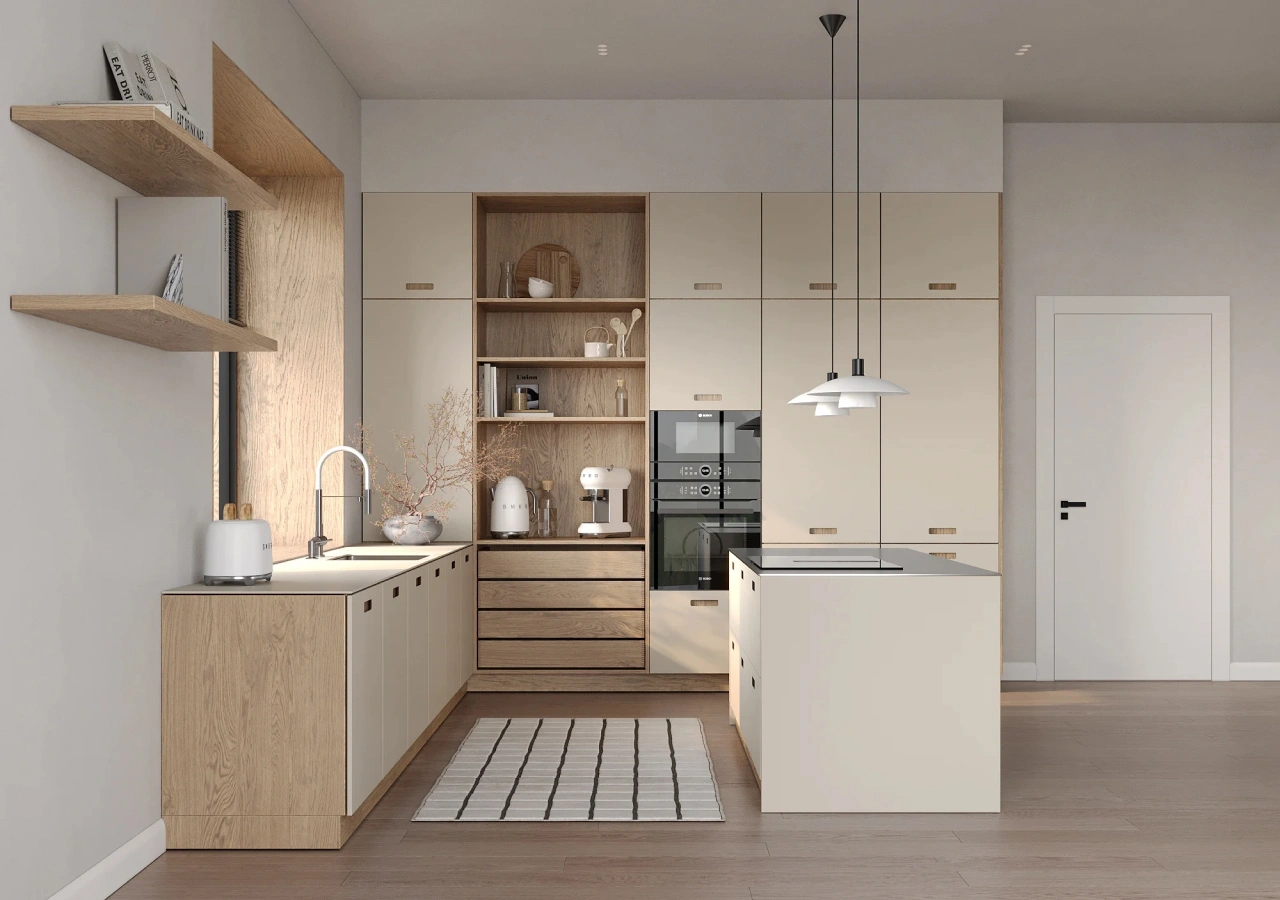
Recess is rooted most clearly in Scandinavian kitchen design, where straightforward forms, useful storage, restrained materials, and functional details tend to work together.
“Scandinavian kitchens prioritize comfort and ease of use,” says Konstantin. “We’ve seen a growing demand for these qualities in the U.S., Europe, and beyond, and we're excited to bring them to a wider audience.”
The same detail can also fit a Japandi kitchen when paired with oak, muted colors, and quiet stone surfaces. In a modern European interior, the cut-out can provide a more tactile alternative to Gola rails or completely handleless slab fronts.
The surrounding finishes change the character of the kitchen, but the central idea stays the same: a simple cabinet front with the grip incorporated into its design.
Conclusion
Recess is less about removing handles than reconsidering what a handle can be. The cut-out provides a clear grip, but its shape, exposed edge, and repetition also give the cabinetry its identity.
For islands, drawer runs, pantry walls, and tall storage, that single detail helps connect the kitchen visually while keeping the fronts simple and practical. Explore the Recess kitchen to see how the integrated cut-outs, FENIX surfaces, oak, plywood, and stainless steel work together across the complete design.


