
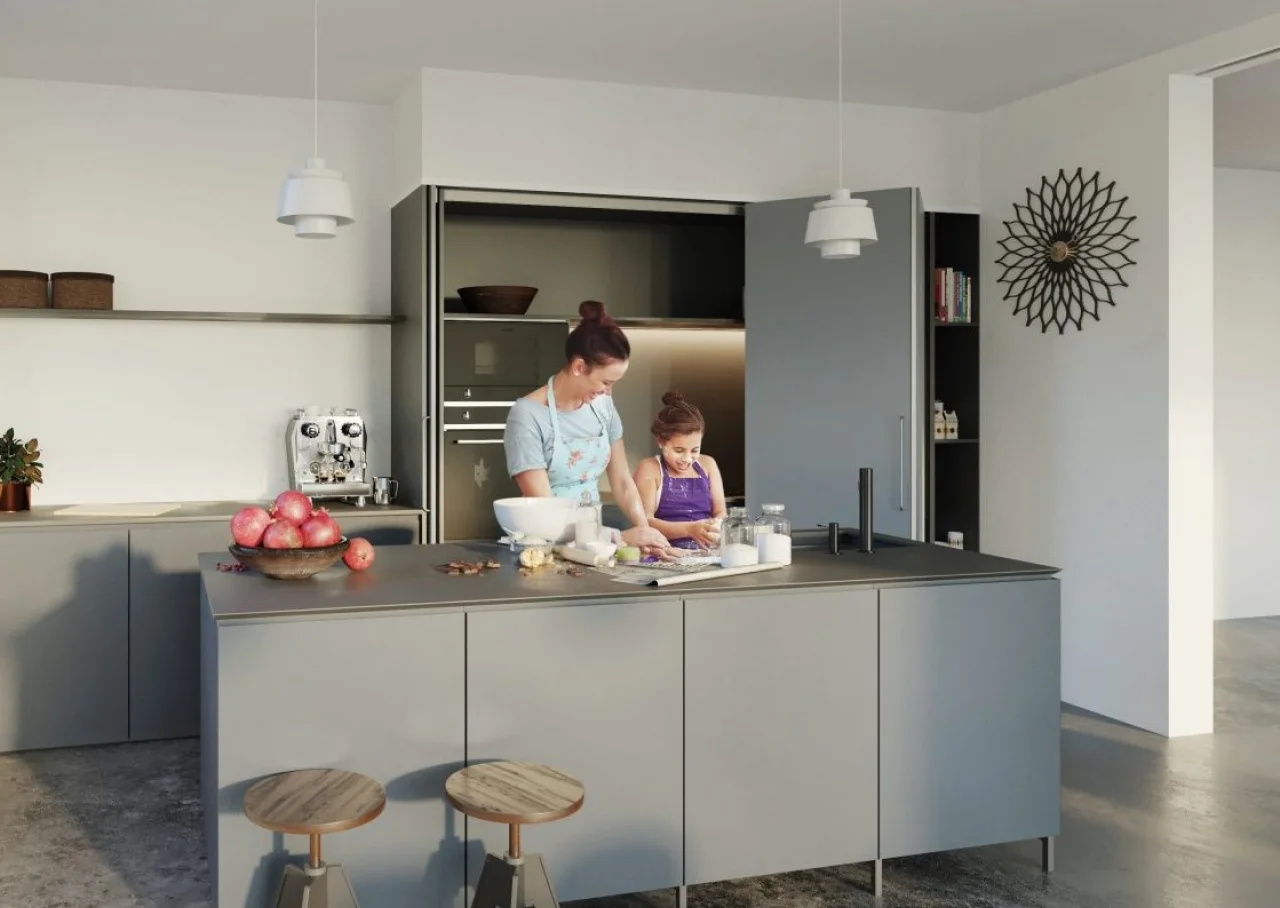
Pocket doors are a “hide function without losing access” move. They let you close off a busy zone (appliances, pantry storage, laundry spillover) while keeping the opening fully usable when you need it. In kitchens, that usually means a pantry wall, an appliance garage or coffee station, or a tall cabinet zone where a swinging door would fight the aisle, island stools, or nearby drawers.
The trade-off is simple: pocket doors look effortless only when the hardware and layout are planned properly. You need the right opening width, space for door pockets, and a way to adjust or service the system later. Done well, they make a kitchen feel calmer day to day because you can reset the elevation in seconds.
Why Pocket Doors are Popular in Kitchens

Pocket doors solve two practical problems at once: they eliminate door swing and they reduce visual noise.
In tight layouts, especially galley kitchens or islands with seating, a swinging tall cabinet door can block circulation. A pocket system avoids that entirely. The opening stays clear, and nothing projects into the aisle.
In open-plan homes, the benefit is visual. A coffee station or appliance wall may function beautifully, but it can look busy. Pocket doors allow you to close the zone and bring the kitchen back to a clean architectural plane in seconds.
Pocket doors are all about friction. If a door constantly gets in the way, or if a work zone constantly looks cluttered, pocket doors remove that tension.
Where pocket doors make the most sense
| Use case | Why pocket doors win | What to plan |
|---|---|---|
| Pantry wall | Full access with no door swing into the aisle | Clear opening width, interior lighting, shelf depth |
| Coffee / appliance station | Hide clutter fast, keep counters visually calm | Outlets, ventilation, landing space, shelf spacing |
If you want visual examples, check out “10 creative pocket door ideas” article.
Benefits of Pocket Doors in Kitchen Renovations
Functional Design

Pocket doors are most effective when placed on cabinets that are used daily and located near traffic lanes. A tall coffee cabinet beside an island, for example, works better when the doors retract instead of swinging into stools or drawers.
The most common planning mistake is forgetting that the doors themselves need space. In some systems, parked doors slightly reduce the usable opening. If interior drawers or pull-outs are not planned carefully, they can collide with the door pockets.
A simple rule helps: design the inside first. Make sure trays, drawers, and appliances can function fully with the doors open. If that is not achievable without compromise, a simpler solution may be better.
Minimalist Aesthetic

Pocket doors support a minimalist elevation because they remove interruptions. When closed, a tall run reads as one continuous surface. This works especially well in warm minimal or Japandi-inspired kitchens, where visual calm is part of the architecture.
But the door alone does not create minimalism. The interior must be organized enough that closing the doors genuinely resets the space. If cords, oversized appliances, and random storage spill outward, the benefit disappears.
How Pocket Doors Operate and Their Practicality

In kitchen design, “pocket door” can refer to two different systems. Cabinet pocket systems allow the doors to retract into side compartments within the cabinet itself. This is common for appliance garages and tall pantry zones. Architectural pocket doors slide into a wall cavity. These are typically used to separate the kitchen from another room, such as a pantry room or utility space.
In both cases, the mechanism relies on guided tracks and rollers. The quality of that hardware determines how smooth, quiet, and durable the system feels over time.
What matters most is not just soft-close. It’s adjustability and service access. Can the system be tuned after installation? Can it be accessed later without dismantling cabinetry? These questions matter more long-term than the brand name alone.
For a deeper breakdown of hinges, load limits, and door size considerations, this is where “Inside the hardware” could help you.
Advantages and Disadvantages of Embracing Pocket Doors
.webp)
Pocket doors are worth the investment when the cabinet is used frequently and located where door swing would create friction. They also make sense when the kitchen is highly visible from adjacent living areas and you want the ability to close visual noise quickly.
They are less compelling when the cabinet is rarely opened, when the opening is narrow, or when a simpler solution achieves the same goal. In some cases, an open appliance garage or well-designed niche performs just as effectively without added mechanical complexity.
If you’re weighing that exact decision, see “Pocket doors vs open appliance garage” comparison.
The key question is not whether pocket doors are “better.” It’s whether they solve a real constraint in your specific layout.
Where to Find High-Quality Pocket Doors
.webp)
Several established hardware brands manufacture reliable pocket door systems, each suited to different applications.
Blum’s REVEGO system is often chosen for tall cabinet walls where the entire front disappears cleanly. Häfele’s Slido range accommodates a wide range of sliding configurations. Hettich’s InLine systems are known for clean cabinet integration and space efficiency. Eclisse specializes more in architectural wall-pocket systems for interior partitions.
The right choice depends less on brand and more on door size, weight, frequency of use, and access for adjustment.
How to Plan Pocket Doors for a Kitchen Tall Cabinet Zone
- Define the use case. Decide what the cabinet needs to hide: pantry storage, a coffee station, small appliances, or a utility zone. Let function drive the interior layout and clear opening width.
- Confirm the clear opening. Measure the usable width and height required for appliances, trays, or pull-outs. Note that some pocket systems reduce the effective opening when doors are parked in side pockets.
- Check interior clearances. Ensure drawers, shelves, and pull-outs can extend fully while doors are open. Flag conflicts early so daily-use storage isn’t blocked.
- Plan power, lighting, and ventilation. Coffee stations and appliance zones need outlets and sometimes ventilation. Coordinate before production to avoid visible cords or retrofits.
- Prioritize hardware quality and adjustability. Choose a system that allows post-installation adjustment and service access. Pocket doors need precise alignment to stay smooth over time.
- Coordinate installation conditions. Confirm cabinets are level and walls are plumb before final alignment. Small deviations can affect sliding performance long-term.
Conclusion
Pocket doors work best when they remove friction from daily life. A pantry that opens fully without blocking the aisle. A coffee station that disappears after breakfast. A tall wall that reads calm instead of busy. They are not necessary in every kitchen, but in the right layout, they create a cleaner elevation and smoother circulation without sacrificing access.
At Corner, we design storage from the inside out. If pocket doors are part of your plan, we’ll map the clearances, hardware, and daily workflow so the result feels intentional, not complicated.


