
.webp)
Soft-close drawers can still feel noisy. Plates slide forward, utensils drift, and organizers creep until the drawer looks messy again. A non-slip drawer liner fixes that friction with almost no effort. It adds grip under dishes, trays, and bins, so movement and clinking drop immediately. It also protects the drawer bottom from scuffs and makes cleanup easier after spills.
In this guide, you'll see where non-slip liners make the biggest difference, which materials suit dry versus wet zones, and how to keep drawer interiors minimalist but practical. You'll also get a quick install method and a simple coverage estimate before buying.
What are Non-Slip Liner?
.webp)
A non-slip drawer liner is a thin, grippy layer cut to the base of a drawer or cabinet shelf. It prevents items from sliding and reduces noise when drawers close. These liners are usually made from EVA, rubber, silicone, cork, or fabric: materials chosen for their ability to stay in place, protect the surface, and add subtle cushioning.
In a modern handleless kitchen, where visual calm is part of the design language, drawer liners help maintain that order. When everything inside stays aligned, the space feels quieter and more refined. It’s a small detail that contributes to an overall sense of precision.
Non-slip liners create friction between the drawer base and stored items, stopping movement and noise while protecting surfaces from scratches and wear.
Why Non-Slip Liners Make Storage Feel More Premium
.webp)
A non-slip liner adds traction, quiet, and precision. It's one of the simplest ways to make everyday storage feel engineered rather than improvised.
In daily use, drawers rarely stay static. Even with high-quality soft-close runners, there’s a brief moment of motion after you let go. This is when trays shift and plates slide. Over time, these small movements create visible wear and a constant sense of minor disorder.
A non-slip liner reduces that micro-movement. It makes drawers quieter, prevents the slow drift of organizers, and protects the cabinet finish. The effect is subtle but immediate: drawers close with a more solid sound, and open to reveal a clean, undisturbed layout.
How To Choose The Right Liner Material
.webp)
The right liner depends on what the drawer holds, how often it’s cleaned, and whether moisture is involved. Most modern kitchens do best with removable, non-adhesive liners because they can be taken out and wiped clean.
Quick Сomparison Table
Where To Use Non-Slip Liners In Your Kitchen
Small placement changes can transform how drawers feel and sound. Below are the zones where a liner adds the most noticeable benefit, plus notes on keeping the interior look clean and minimalist.
Cutlery Drawers
.webp)
A cutlery drawer liner reduces vibration and drift, keeping the tray stable and the interior looking crisp.
Cutlery trays tend to migrate slightly over time, creating tiny gaps that look messy. A thin matte liner under the tray prevents movement and cuts down on metallic clinking. Clear or light-gray EVA liners work best here because they’re wipeable and visually quiet.
If you use drawer dividers, a liner underneath helps each zone stay aligned longer.
Utensil And Cooking Tool Drawers
.webp)
Cooking tools are heavier and more irregular than cutlery, so they slide more dramatically. A grippy liner helps tools stay in their intended zones and softens the sound of metal pieces. It also protects the drawer base from scratches caused by fast, repeated daily use.
Rubber or lightly textured EVA usually performs best in these high-traffic drawers.
Glassware And Dish Drawers
.jpg)
Soft liners turn deep dish drawers into quiet, stable storage with a noticeably more refined feel.
Dish drawers feel more premium when they open quietly. Cork and felt-top liners work well because they combine grip with subtle cushioning, reducing clinking between plates and bowls. They can also add a tactile warmth that pairs nicely with oak or walnut interiors.
Keep the look neutral: patterns tend to break the minimalist effect when the drawer opens.
Inner Drawers
.webp)
Inner drawers are built for layered organization. A thin neutral liner gives them a uniform, intentional base, whether you store pantry items, tea, spices, or small accessories. Because inner drawers often include inserts and containers, an easy-clean liner helps the system stay consistent.
Choose EVA for dry inner drawers, and silicone for anything that might drip.
Trash Pull-Outs And Under-Sink Drawers
.jpg)
In wet zones, like under-sink drawers, waterproof liners reduce cleanup time and protect the cabinet base from drips and residue.
Trash pull-outs are also exposed to moisture, spills, and the occasional leak. A waterproof liner creates a cleanable buffer between bins and the cabinet base, helping prevent staining and odor buildup. Silicone is typically the best choice because it washes easily and resists curling.
Avoid fabric or cork liners here because they can trap moisture.
Minimalist Design Friction Points To Avoid
.webp)
The best liners disappear visually: matte, neutral, thin, and easy to remove for cleaning.
The liner should support calm storage, not become a decorative distraction. Strong colors and busy patterns break the clean look inside drawers, especially in handleless kitchens where every detail is visible when opened. High-gloss liners can also look cheap under lighting.
Very thick liners can lift organizers slightly, making trays wobble and reducing the sense of precision. Perforated or mesh-style liners can let spills pass through, creating more cleaning work instead of less.
How Much Non-Slip Liner To Buy (Coverage And Cost)
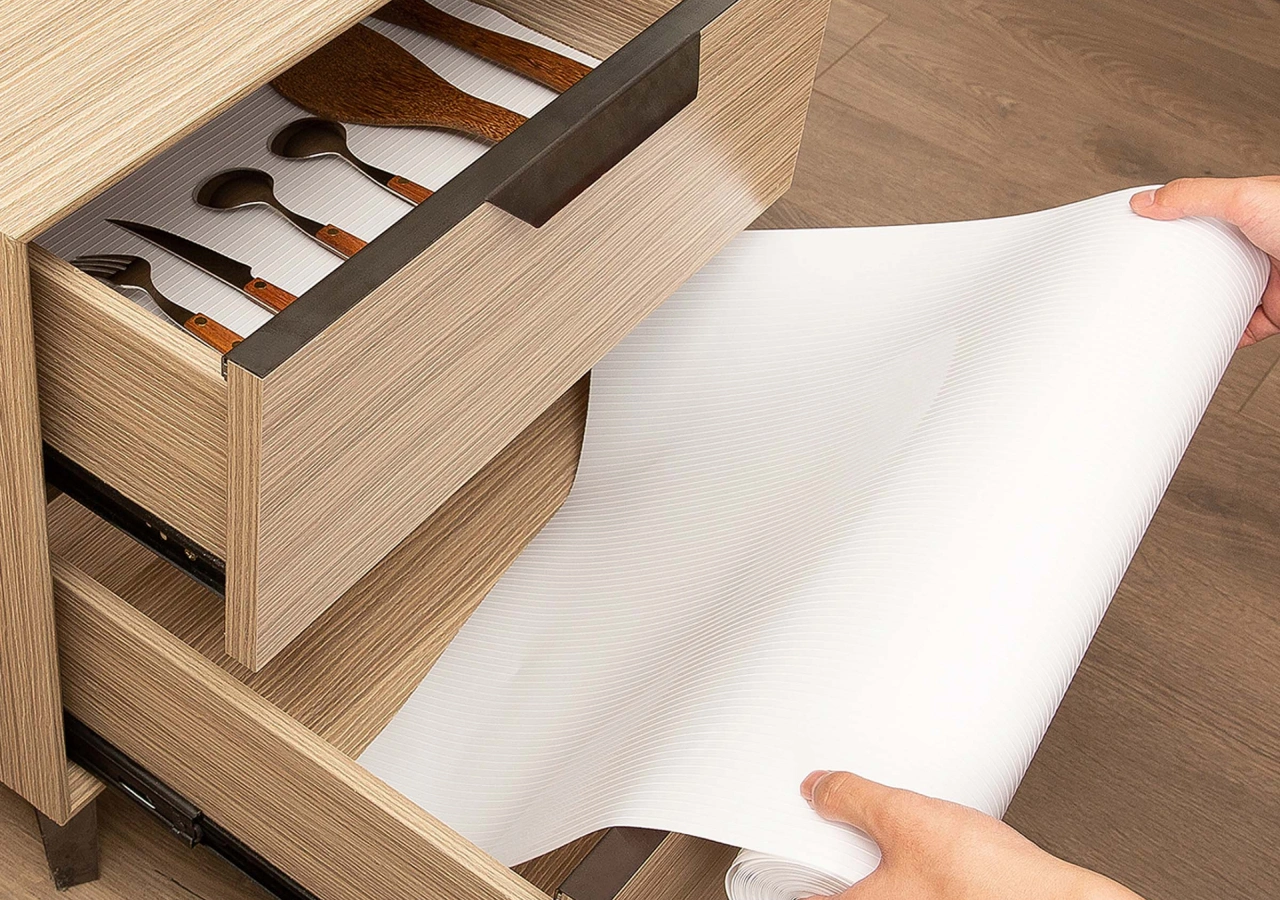
Most kitchens need one to two rolls for the key drawers; add a small extra roll if you want easy replacements with a consistent look.
To estimate coverage, multiply each drawer’s width by depth (in inches), divide by 144 to get square feet, then compare your total to the roll’s stated coverage. A 12-inch-by-20-foot roll covers about 20 square feet, which usually lines several cutlery and utensil drawers.
Conclusion
Non-slip drawer liners are not a decorative add-on; they’re a function upgrade that makes storage feel quieter, steadier, and easier to maintain. Choose a thin, neutral liner for most dry drawers, switch to waterproof materials in under-sink and trash pull-out zones, and avoid busy patterns that create visual noise.
When liners are paired with good zoning, drawer dividers, inner drawers, and a trash pull-out, your kitchen stays calmer because items stop drifting and surfaces stay cleaner. It’s a five-minute install that reinforces the "everything has a place" feeling every day. If you’re planning an upgrade, start with your main drawer.


