

When planning a kitchen, it is easy to focus on cabinet fronts, colors, materials, and the overall look of the space. But the interior matters just as much. If drawer design is treated as an afterthought, the kitchen may look good while still feeling frustrating to use every day.
That is why it helps to think not only about the outside of the cabinetry, but also about how the inside will function. Drawers are one of the most important parts of a modern kitchen because they affect access, storage capacity, and day-to-day ease of use. In most kitchens, the main choice comes down to two options: metal drawers and wood drawers.
Both can work well, but they serve different priorities. Metal drawers usually win on load capacity, precision, and low maintenance. Wood drawers bring warmth, character, and a more crafted look. The right choice depends on how you use the kitchen, what you want it to feel like, and where the drawers are being used.
Quick Comparison: Metal vs Wood Drawers
| Factor | Metal Drawers | Wood Drawers |
|---|---|---|
| Durability | Very high | High with proper care |
| Load capacity | Excellent for heavy items | Good, depends on construction |
| Precision | Very consistent | Depends on build quality |
| Moisture resistance | Strong | More moisture-sensitive |
| Maintenance | Easy to wipe clean | Needs gentler care |
| Aesthetic | Minimal, modern, technical | Warm, natural, crafted |
| Best fit | Modern, frameless, heavy-use kitchens | Design-led, traditional, or warmer kitchens |
Which Should You Choose?
.webp)
If your priority is a modern or handleless kitchen, heavy everyday use, precise drawer movement, and easy cleaning, metal drawers are usually the stronger choice. They suit kitchens where performance comes first and where the cabinetry depends on clean alignment and consistency.
If your priority is warmth, visible natural texture, and a more crafted interior feel, wood drawers may be the better fit. They make more sense when the tactile and visual effect of the material matters just as much as function.
In many kitchens, a mixed approach works well. Metal systems are often the practical choice for hard-working lower cabinets, while wood can make sense where the visual effect matters more.
Why Metal Drawers Are Common in Modern European Kitchens
.webp)
In modern European kitchens, drawer systems are expected to do a lot. They often carry more weight, open more often, and need to stay aligned within tighter tolerances. This is especially true in frameless cabinetry, where the clean look depends on precision.
That is one reason metal drawer systems are so common in European kitchen design. They offer reliable dimensions, high load ratings, and smooth operation, which helps support drawer-first layouts and larger storage drawers. They also work especially well in minimalist kitchens, where clean interior organization matters as much as the exterior design.
What Are Metal Drawers?

Metal drawers are typically built from powder-coated steel or stainless steel and are designed for strength, dimensional stability, and smooth operation. They are widely used in modern kitchens because they handle heavy loads well, resist wear, and are easy to maintain.
Two of the best-known brands in this category are Blum and Hettich, both of which offer advanced drawer systems for different types of kitchen storage.
Common Metal Drawer Systems
| System | Wall Type | Notable Traits | Typical Use |
|---|---|---|---|
| Blum LEGRABOX | Slim double-wall | Clean look, high load capacity, smooth action | Premium kitchens, pan drawers |
| Blum MERIVOBOX | Double-wall, L-profile | Strong platform concept, adaptable heights | Versatile everyday use |
| Blum TANDEMBOX | Classic double-wall | Proven system, practical and durable | General kitchen storage |
| Hettich AvanTech | Double-wall | Minimal look, concealed technology | Design-led kitchens |
| Hettich InnoTech | Double-wall | Configurable, broad application range | Standard kitchen use |
| Hettich ArciTech | Double-wall | Strong platform, high stability | Heavy-duty drawers |
Performance varies by configuration, runner type, and installation quality.
Pros of Metal Drawers

Metal drawers are strong and dependable. They are well suited to kitchens where drawers are opened constantly and expected to hold heavy items without sagging or losing alignment.
They also handle environmental stress well. Heat, steam, and daily wear are less likely to affect a quality metal drawer system than a wood-based one. This makes them especially useful near cooktops, sinks, and high-use prep zones.
Another advantage is maintenance. Metal drawer interiors are easy to wipe clean, and their smooth surfaces do not absorb moisture the way wood can. For households that cook often, this can make a real difference over time.
Visually, metal drawers suit modern kitchens very well. Their sharper lines and engineered appearance fit naturally in frameless, minimalist, and loft-style interiors.
Cons of Metal Drawers

The main drawback of metal drawers is aesthetic. While they look clean and efficient, they can also feel colder or more technical than wood. In kitchens where warmth and natural texture are central to the design, that look may feel slightly out of place.
Cost can also be a factor. Premium metal drawer systems usually come at a higher price than simpler alternatives, especially when paired with upgraded runners, higher load ratings, and internal accessories.
Some people also have strong preferences between brands and how they feel in use. One system may feel smoother, another more rigid laterally, but the difference often comes down to the specific configuration and how well the drawer is installed and adjusted.
What Are Wood Drawers?

Wood drawers bring a more natural and crafted character to a kitchen. They are often made from solid wood, plywood, or veneered construction, and may use joints such as dovetail or finger joints for strength.
They are commonly associated with traditional or classic cabinetry, but that does not mean they only belong in traditional kitchens. Depending on the wood species, finish, and detailing, wood drawers can also work beautifully in contemporary spaces.
The main appeal of wood is not only function, but feel. Wood adds warmth, grain, and tactile richness in a way that metal cannot.
Pros of Wood Drawers

The biggest strength of wood drawers is their appearance. They feel warmer, more natural, and more crafted than metal drawers, which can give the kitchen a softer and more character-driven feel.
They also offer flexibility in finish. Wood can be stained, lacquered, oiled, or otherwise finished to suit different styles, from rustic to minimal. This gives designers and homeowners more control over the final look.
With proper construction and care, wood drawers can last for many years. High-quality solid wood or well-made veneered drawers can age beautifully and remain attractive long after installation.
Cons of Wood Drawers
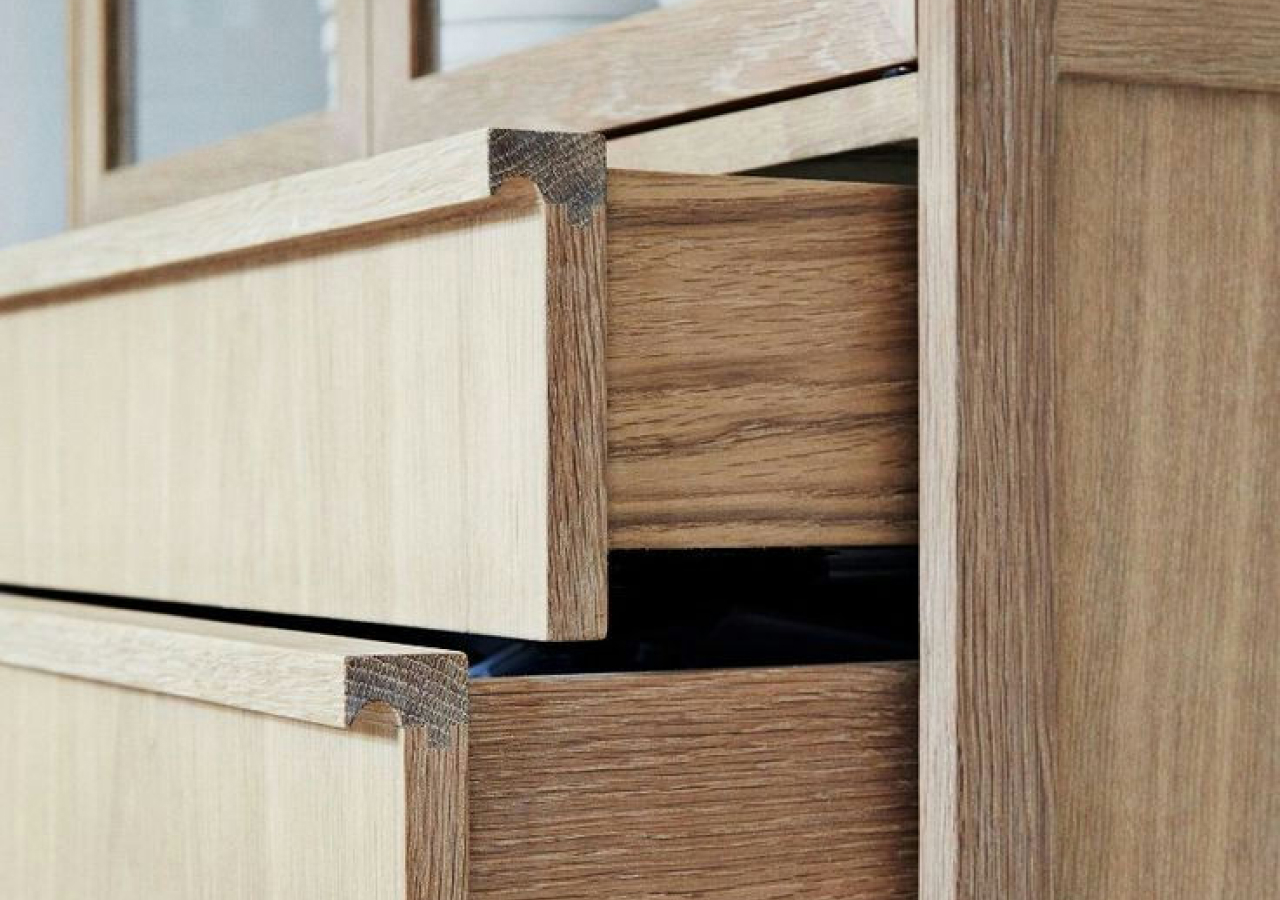
The main weakness of wood is moisture sensitivity. In humid conditions, or when exposed to standing water over time, wood can expand, move, or warp. Protective finishes help, but wood still requires more care than metal.
Maintenance is also more delicate. Wooden surfaces should be cleaned gently, and harsh or abrasive cleaners should be avoided. Over time, the finish may also show wear more visibly than powder-coated metal.
Performance varies more with build quality as well. A well-made wood drawer can be excellent, but poor construction or weaker joinery can affect strength and longevity.
When the Choice Really Matters

The difference between metal and wood matters more in some parts of the kitchen than in others. It matters more when drawers are expected to carry heavy cookware or small appliances, when the kitchen is used intensively every day, when precise reveals and alignment are important to the design, and when the area is exposed to more heat, steam, or moisture.
It matters less in lower-use areas, in drawers meant for lighter items, or in places where the visual effect is more important than maximum performance. That is why not every drawer in a kitchen has to follow the same logic. The best choice often depends on location, use, and what you want that part of the kitchen to do.
Metal vs Wood Drawers: Which One Makes More Sense?
.webp)
| Priority | Better Choice | Why |
|---|---|---|
| Heavy everyday use | Metal drawers | Better load capacity, dimensional stability, and lower maintenance |
| Modern or handleless kitchens | Metal drawers | Cleaner fit with frameless and minimalist cabinetry |
| Easy cleaning | Metal drawers | Smooth surfaces and better moisture resistance |
| Warm, natural look | Wood drawers | Adds texture, character, and a more crafted feel |
| Visible drawer interiors | Wood drawers | Feels richer and more decorative |
| Mixed priorities | Both can work | Metal suits hard-working areas, while wood can work where appearance matters more |
There is no universal winner. Metal drawers are usually the better choice when durability, load capacity, precision, and easy maintenance matter most. Wood drawers make more sense when warmth, natural texture, and a more crafted feel are the priority. In many kitchens, the best solution is to use each where it makes the most sense.
How to Choose Kitchen Drawers (5 steps)
- Start with what the drawers need to hold. Pots, pans, dishes, utensils, and small appliances all place different demands on a drawer, and heavier everyday items usually need stronger runners and better load capacity.
- Match the drawer type to the kitchen style. In minimal, handleless, or more architectural kitchens, metal drawers usually feel more natural. In warmer, more tactile, or more classic spaces, wood drawers may suit the design better.
- Think about maintenance early. Metal drawers are easier to wipe clean and less sensitive to moisture, while wood drawers usually need gentler care and more attention over time.
- Consider how often each drawer will be used. High-use drawers need more stability, smoother operation, and better long-term durability, while lower-use drawers allow more flexibility.
- Look beyond the material itself. Runner quality, drawer construction, and installation standards matter just as much as whether the drawer is metal or wood.
Conclusion
The choice between metal and wood drawers is not just about appearance. It is about how the kitchen works, how much weight the drawers need to carry, how much maintenance you want to deal with, and what kind of atmosphere you want the kitchen to have.
If you want maximum practicality, precision, and durability, metal drawers are usually the stronger choice. If you want warmth, character, and a more natural interior feel, wood drawers can be the better fit.
In many kitchens, the smartest solution is not strictly one or the other, but using each where it makes the most sense.


