
.webp)
A cabinet’s visible finish does not tell you what is underneath. A walnut-veneered door may have an MDF core, while the cabinet box, shelves, and end panels use different materials. Those hidden choices affect how the cabinetry is built, finished, supported, and protected from moisture.
MDF, plywood, and particle board are all common in modern kitchens, but they serve different purposes. MDF is valued for its smooth surface and precise machining, plywood for strength and stiffness, and particle board for stable, efficient cabinet construction. The right choice depends on where the panel is used, what finish sits over it, and the conditions it needs to handle. Understanding those differences makes it easier to compare cabinet quotes and know what to check before ordering.
Cabinet Core vs Cabinet Finish: What Is the Difference?
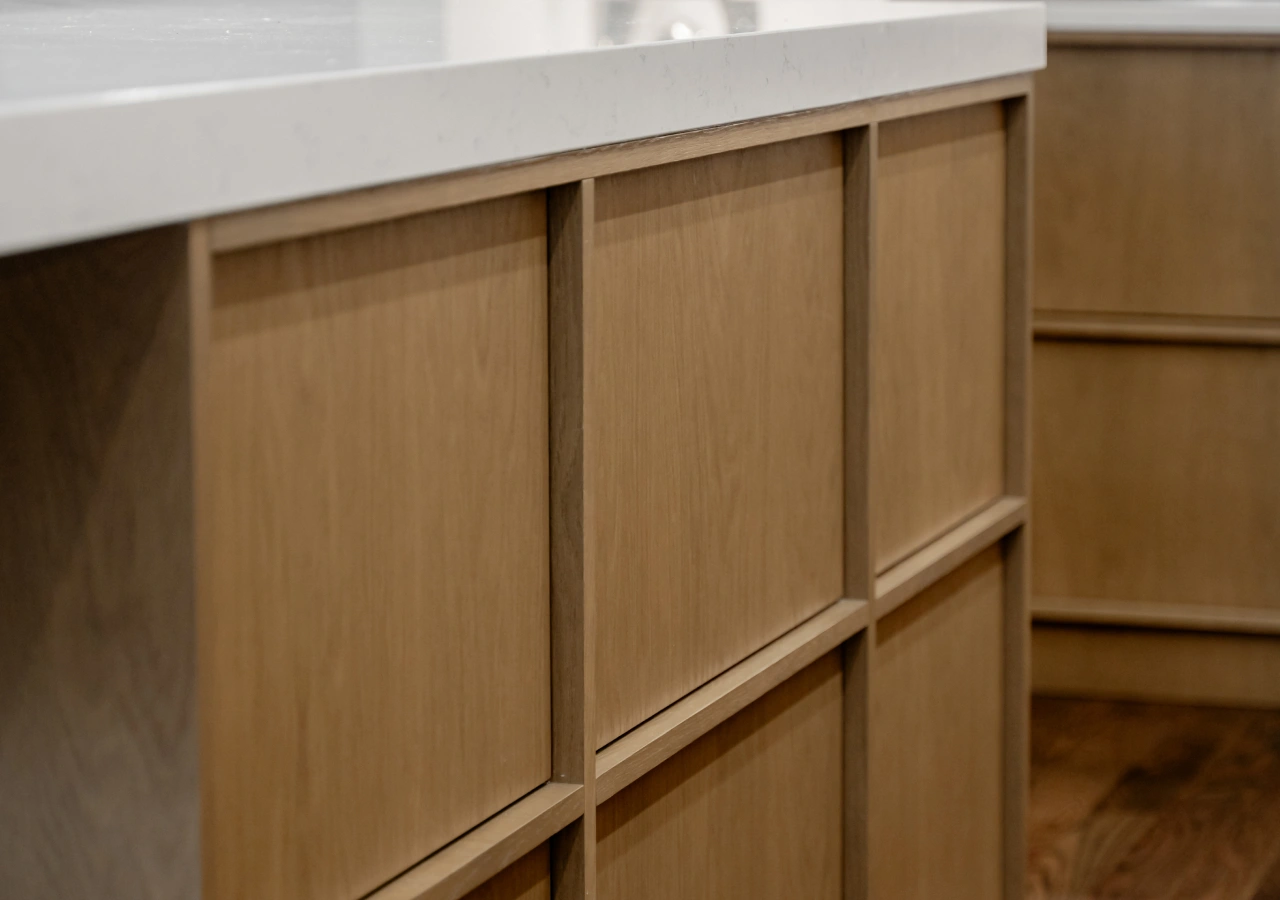
The finish is the surface you see and touch. Wood veneer, laminate, melamine, paint, lacquer, and other decorative surfaces can define the color, texture, and character of a kitchen. The core is the structural panel beneath that finish.
This distinction matters because a cabinet described as “walnut,” “painted,” or “laminate” does not tell you the full construction. A walnut door may use real walnut veneer over MDF. A painted slab front may also use MDF because its smooth, uniform surface works well for paint and precise machining. Cabinet boxes, shelves, finished end panels, and appliance panels can use different materials again.
When comparing cabinet quotes, consider two separate questions: what is the visible surface, and what is the core underneath it?
MDF vs Plywood vs Particle Board
All three can be appropriate cabinet materials. Grade, thickness, coating, edge treatment, hardware fixing, and location affect how a panel performs, so the material name alone should not decide the specification.
MDF: Smooth and Precise for Modern Cabinet Fronts
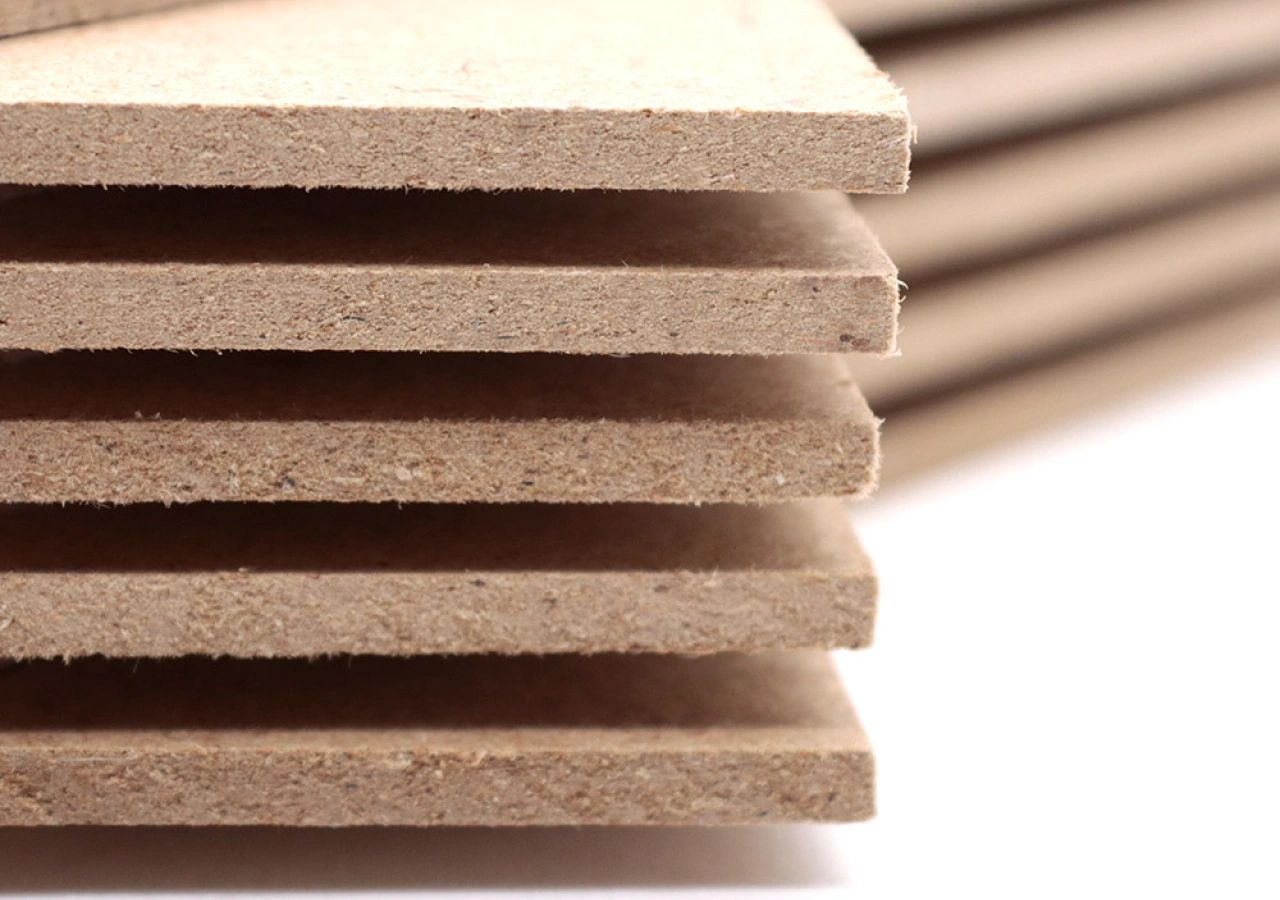
MDF, or medium-density fiberboard, is made from fine wood fibers bonded with resin under heat and pressure. Its uniform structure suits painted slab doors, routed details, and integrated grip profiles. It can also serve as a core beneath wood veneer.
Check whether the MDF panel is suitable for the moisture conditions where it will be installed. MDF should not be treated as waterproof, and different boards can have different moisture-resistance properties. Around sinks, dishwashers, toe kicks, and exposed cut edges, check how the surface and edges are protected. A finished face and an exposed cut edge do not have the same level of protection.
MDF also tends to be relatively heavy. For large doors or specialty panels, panel thickness, hinge selection, and intended hardware should be considered as part of the cabinet specification.
Plywood: Layered Strength and a Distinct Edge
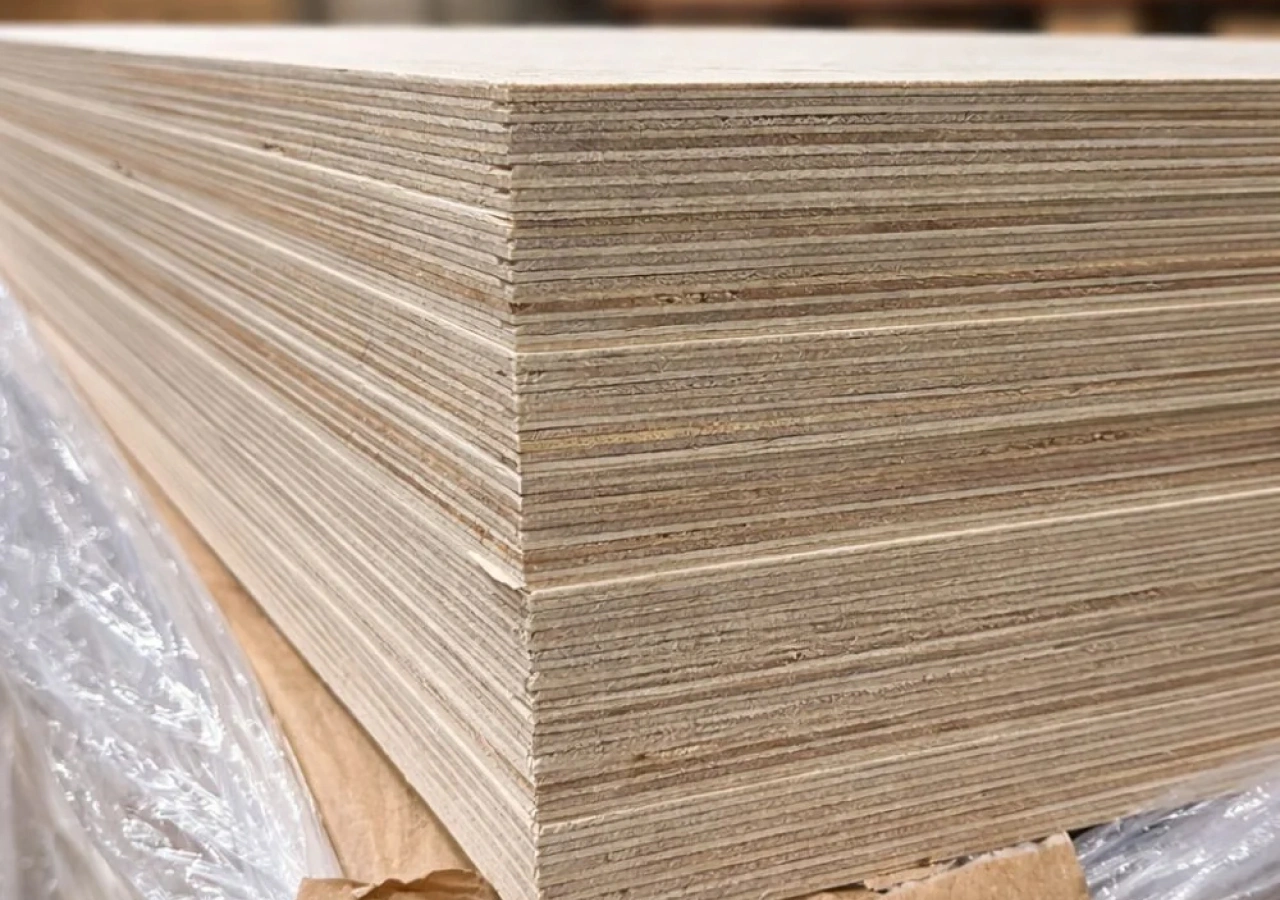
Plywood is made from thin layers of wood veneer bonded together, usually with the grain direction alternating between layers. This layered construction gives the panel strength and stiffness.
In cabinetry, plywood can be used for boxes, shelves, or fronts when the construction calls for those properties or when the layered edge is part of the design. An exposed plywood edge can become a deliberate furniture-like detail, while a finished plywood panel can sit beneath veneer, laminate, or another decorative surface.
Not all plywood is identical. Species, veneer quality, number of plies, thickness, adhesives, and surface grade can vary, so “plywood construction” on its own is not a complete specification. If plywood is offered as an upgrade, ask what changes in the cabinet specification and how much the upgrade costs. Compare panel thickness, construction, and hardware alongside the core material.
That comparison is especially useful for shelves and wide spans. A shelf carrying dishes, small appliances, or pantry goods may need a different thickness or support arrangement than a short upper-cabinet shelf. Check how the span and expected load were considered rather than relying only on the panel name.
Particle Board: A Practical Cabinet Box Material
.webp)
Particle board is made from wood particles bonded with resin and pressed into flat panels. It is widely used for cabinet boxes, shelves, and interior structures and can be covered with melamine, laminate, veneer, or another decorative surface.
Quality varies. Density, thickness, screw-holding strength, edge banding, and moisture classification can all affect how the board should be used. Ask for the panel specification as well as a finished sample; neat edge banding alone does not establish the board’s performance.
Around sinks and utility areas, confirm that the specified grade suits the expected moisture exposure and that edges and plumbing cutouts are protected.
For shelves, hinges, and drawer hardware, also look at how the fittings are supported by the panel. This becomes more important with wide shelves, heavily loaded drawers, or large doors.
Moisture Resistance Depends on More Than the Core
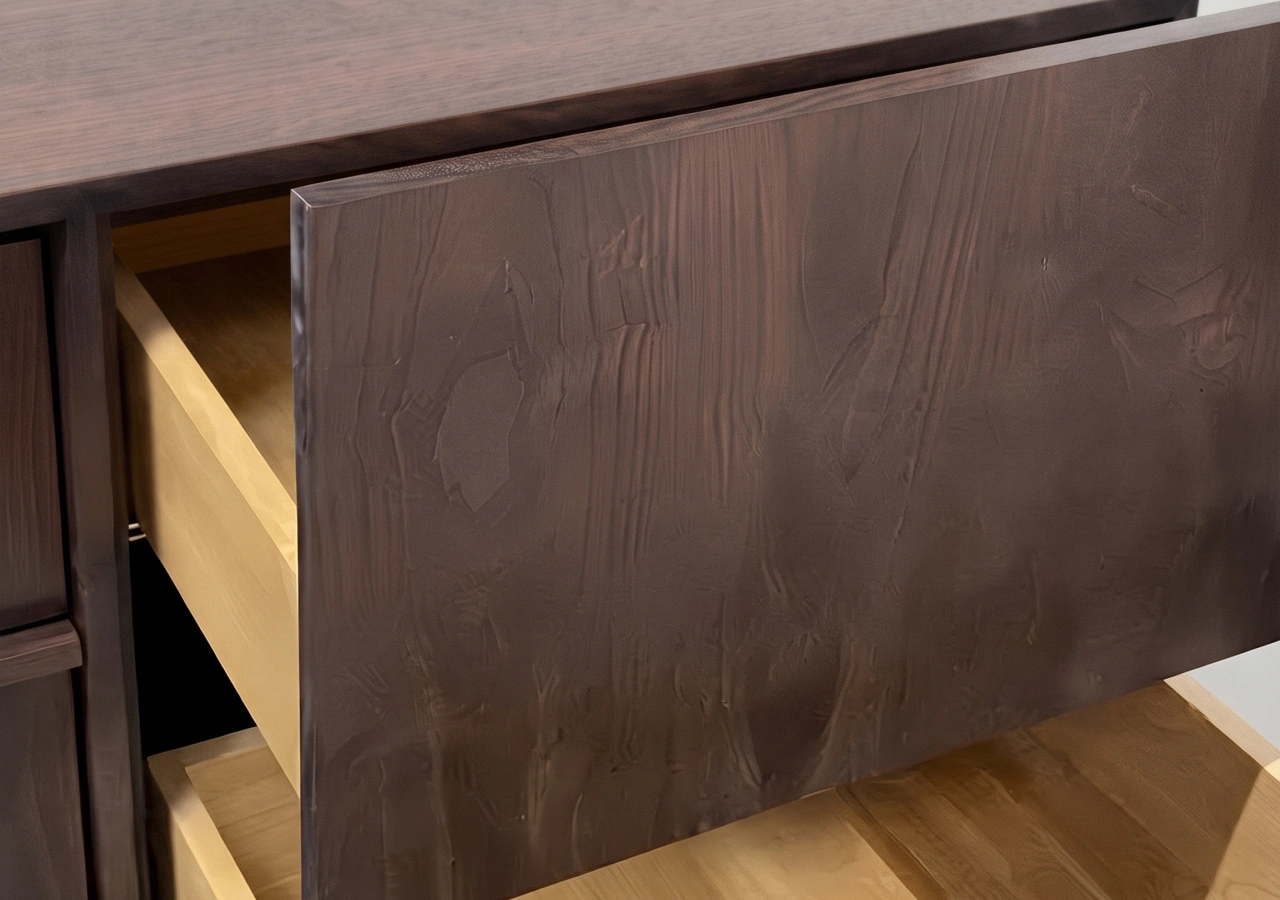
Cut edges, seams, and plumbing cutouts are vulnerable points where water can reach the core. The way these areas are finished therefore matters alongside the board itself.
MDF and particle board need appropriate surface coatings and edge protection. Plywood also needs suitable finishing if it is used near water. Around sinks and dishwashers, review exposed edges, cabinet bottoms, plumbing penetrations, and nearby panels rather than relying only on a general “water-resistant” description.
Moisture-resistant materials can offer additional protection, but they are not designed for persistent leaks or standing water. Plumbing problems should be addressed quickly regardless of the cabinet core.
Which Cabinet Core Material Should You Choose?
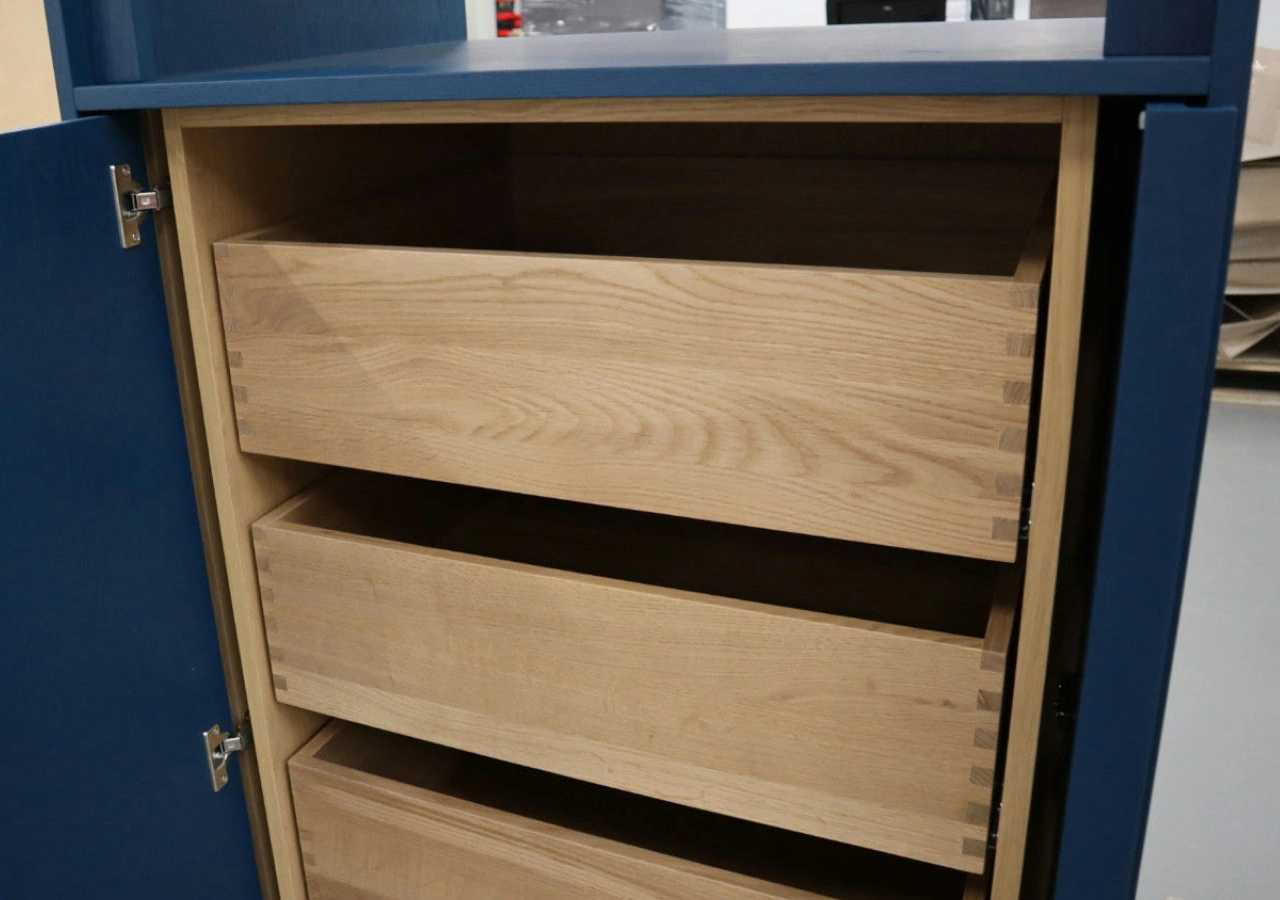
Choose the material according to the component and finish. MDF suits painted or precisely machined fronts. Plywood can make sense when strength, shelf span, construction, or an exposed layered edge is part of the specification. Particle board is a practical option for cabinet boxes and shelves when the density, thickness, edge treatment, and moisture rating suit the location.
The doors and cabinet boxes can use different core materials. A kitchen may pair veneered MDF fronts with particle-board boxes, or use plywood selectively where the construction calls for it. Ask the cabinet supplier to explain why each material was chosen for that component.
Conclusion
MDF, plywood, and particle board can all work well in kitchen cabinetry when the material, thickness, finish, edge treatment, and location are specified clearly. Before ordering, review the panel specification, edge protection, shelf spans, and hardware for the areas that will see the most moisture or load.
Explore Corner Renovation’s kitchen collections and completed projects to see how cabinet materials and finishes come together in finished kitchens.


