.webp)
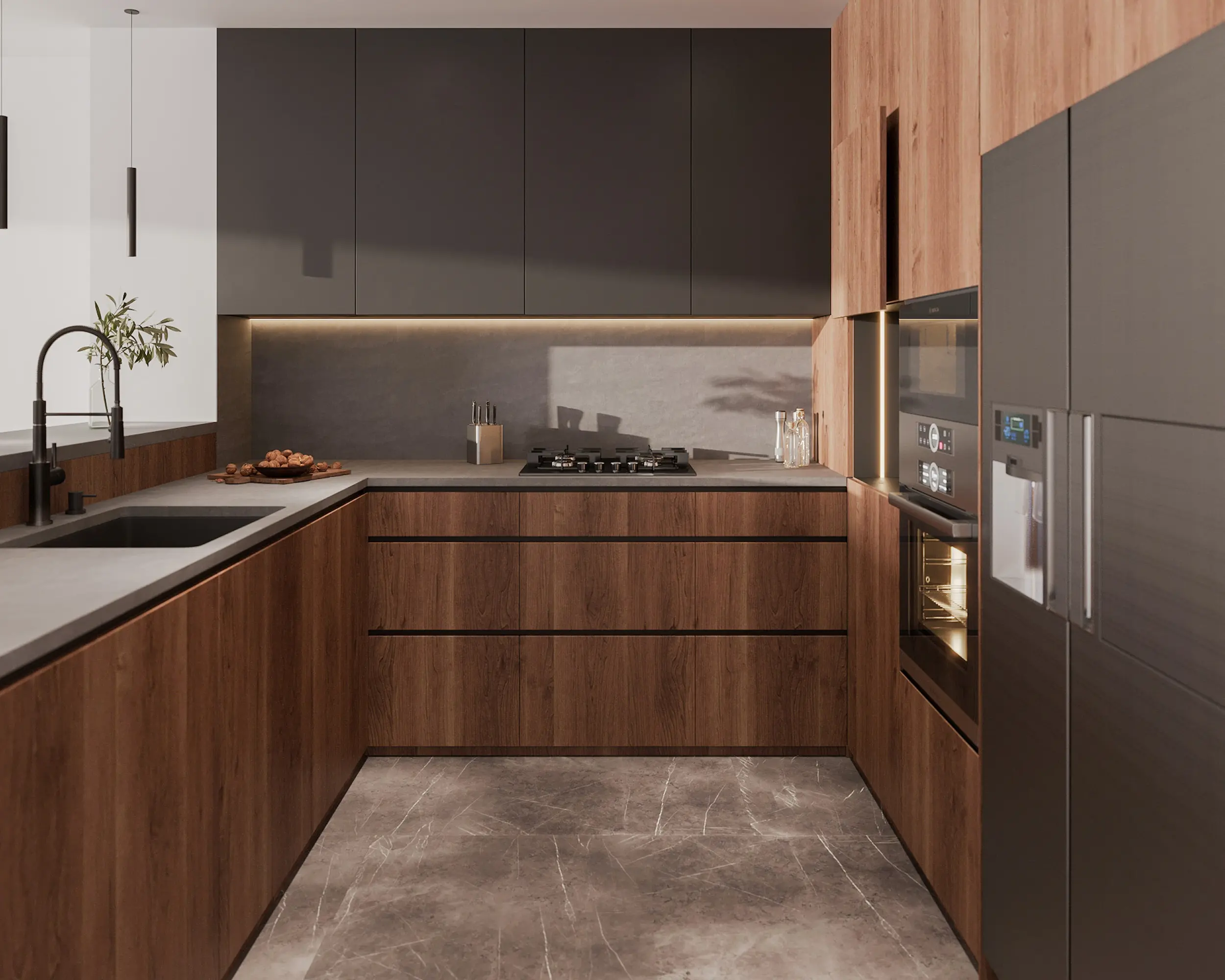
Industrial kitchens often get reduced to a familiar formula: dark colors, exposed materials, metal details, and a slightly hard-edged loft look. But for modern homeowners, that version can feel too cold for everyday life. A better direction is a more refined industrial minimalist kitchen, one that keeps the honesty of stainless steel, concrete-look finishes, stone, and metal accents, but balances them with warm wood, integrated storage, and calmer proportions.
That balance matters because kitchens are not just visual spaces. They need to support real routines, from prep and cleanup to storage and circulation. When the layout is clear and the cabinetry is organized from the start, the kitchen feels more open, more functional, and easier to live with. That is what makes minimalist industrial kitchen design so appealing: it delivers loft-style character without sacrificing warmth or usability.
What an Industrial Minimalist Kitchen Usually Includes

An industrial minimalist kitchen design combines raw-looking, durable materials with clean forms and a restrained visual language. Instead of trying to recreate a warehouse aesthetic, it simplifies the industrial look and makes it more livable.
This style works best when each element has a purpose. Instead of piling on industrial references, it chooses a few strong ones and lets them define the room. That is what gives the space a quieter, more mature feel.
What Defines an Industrial Minimalist Kitchen
.webp)
An industrial minimalist kitchen is defined less by decoration and more by discipline. The industrial side comes from honest materials and an architectural mood. The minimalist side comes from editing everything down to what is useful, visually calm, and clearly resolved.
In practice, that often means flat-front cabinets, handleless openings, controlled material transitions, and surfaces that read as large uninterrupted planes rather than a collection of smaller parts. Stainless steel, dark stone, concrete-look porcelain, smoked glass, or blackened metal can all support the industrial side. But without balance, those materials can quickly become too severe. That is why softer neutrals and wood tones are so important.
The real benefit of this approach is that it creates a kitchen with character but not chaos. It feels grounded and distinctive without becoming busy. It also tends to age well because it depends more on proportion and material quality than on trend-based styling. For homeowners who want something modern but lasting, that is a strong advantage.
Layout First: Open, Functional, and Effortless
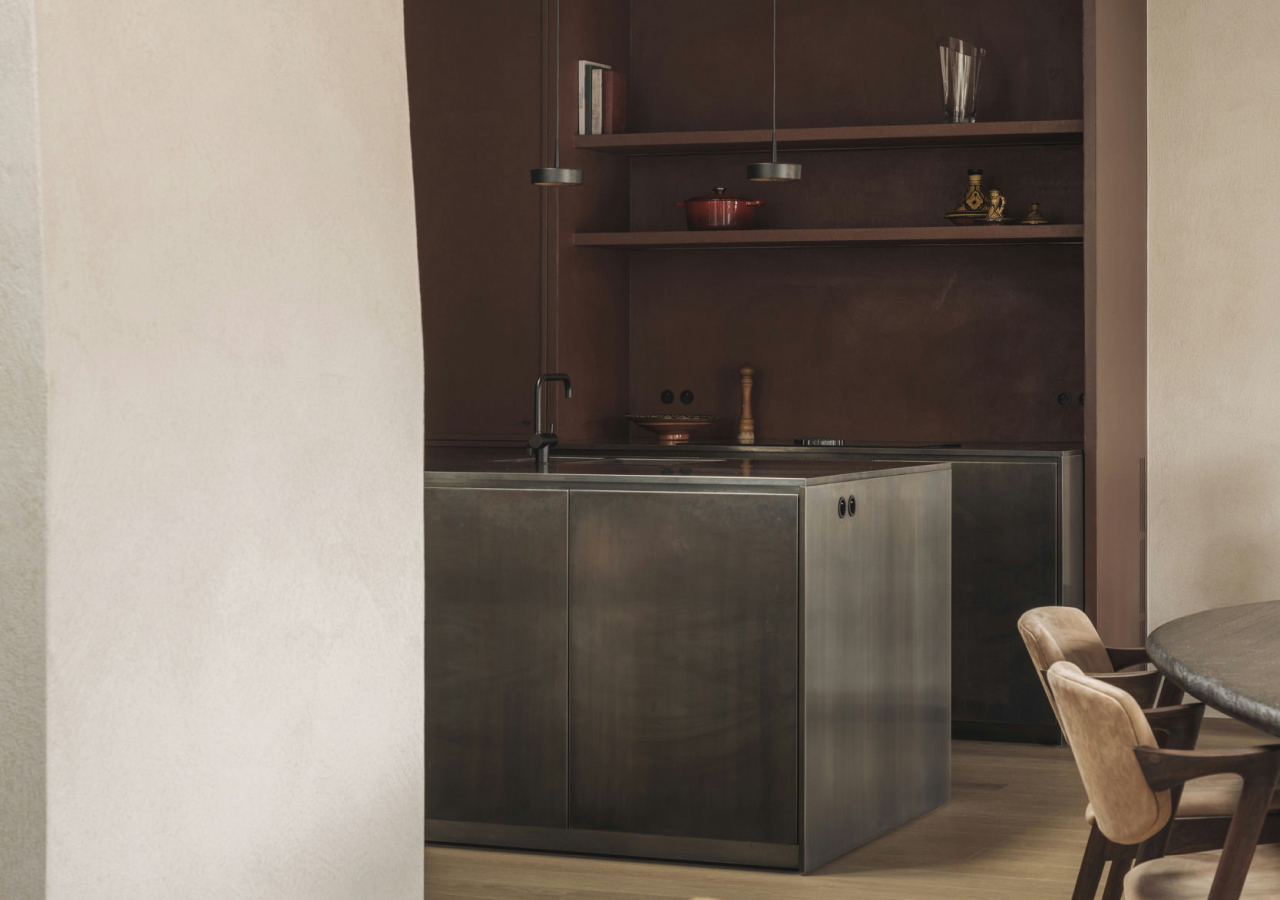
The layout does more to make a kitchen feel calm than any finish ever will. In minimalist industrial kitchen design, a good layout is what allows heavier materials to feel clean and composed rather than visually dense.
This matters especially in lofts and open-plan homes, where the kitchen is visible from living and dining areas. If tall units are scattered, work zones are unclear, or appliances interrupt the main lines of the room, the kitchen immediately feels more cluttered. But when storage, prep, cooking, and cleanup are arranged in a clear sequence, the entire space feels easier.
That principle is just as important in a modern minimalist compact kitchen. In a smaller footprint, grouping tall cabinetry together often helps the room feel more ordered. Keeping the active work surfaces continuous makes the layout feel wider. An island can work well too, but only when it improves movement and prep space rather than filling the room for visual effect alone.
A practical industrial minimalist kitchen usually feels effortless because the planning is restrained. Appliances are integrated where possible. Everyday items are stored close to where they are used. The room does not rely on visual drama to feel designed. It relies on logic.
Materials: Raw Meets Warm
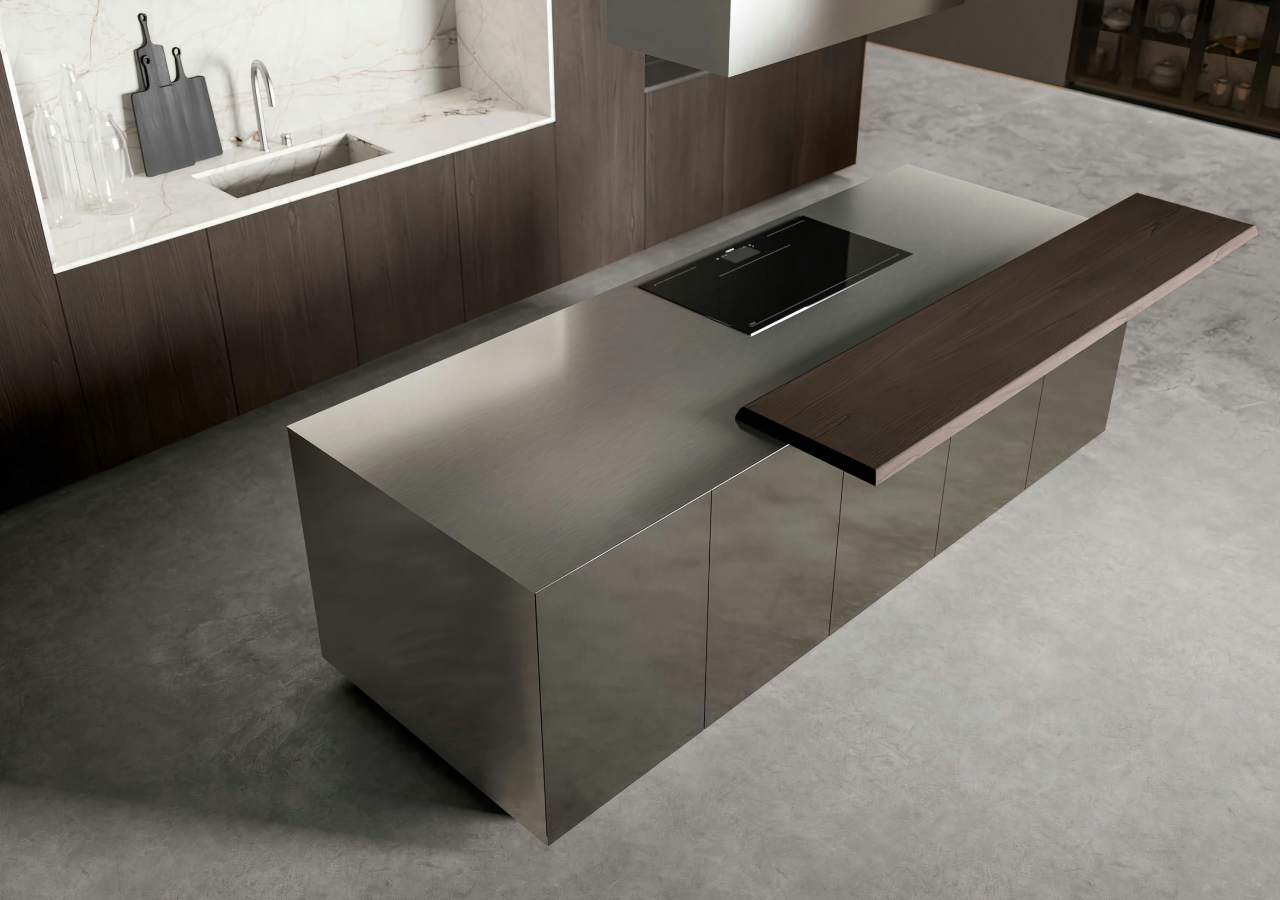
Industrial minimalist kitchens are built on contrast, but not harsh contrast. The best versions use materials that feel durable and architectural, then soften them just enough to make the room welcoming.
Stainless steel is one of the clearest industrial references. It feels crisp, precise, and highly functional, which is why it works especially well for accent zones, backsplashes, or select cabinet surfaces. Concrete-look porcelain and similar stone-inspired materials also suit this style because they bring texture and visual weight without introducing decorative pattern.
Natural stone can work beautifully too, especially in a granite kitchen minimalist direction. The key is choosing finishes that stay quiet. Honed or matte granite usually works better than polished granite here because it feels more understated and less reflective. It gives the kitchen depth and durability without turning the countertop into the loudest feature in the room.
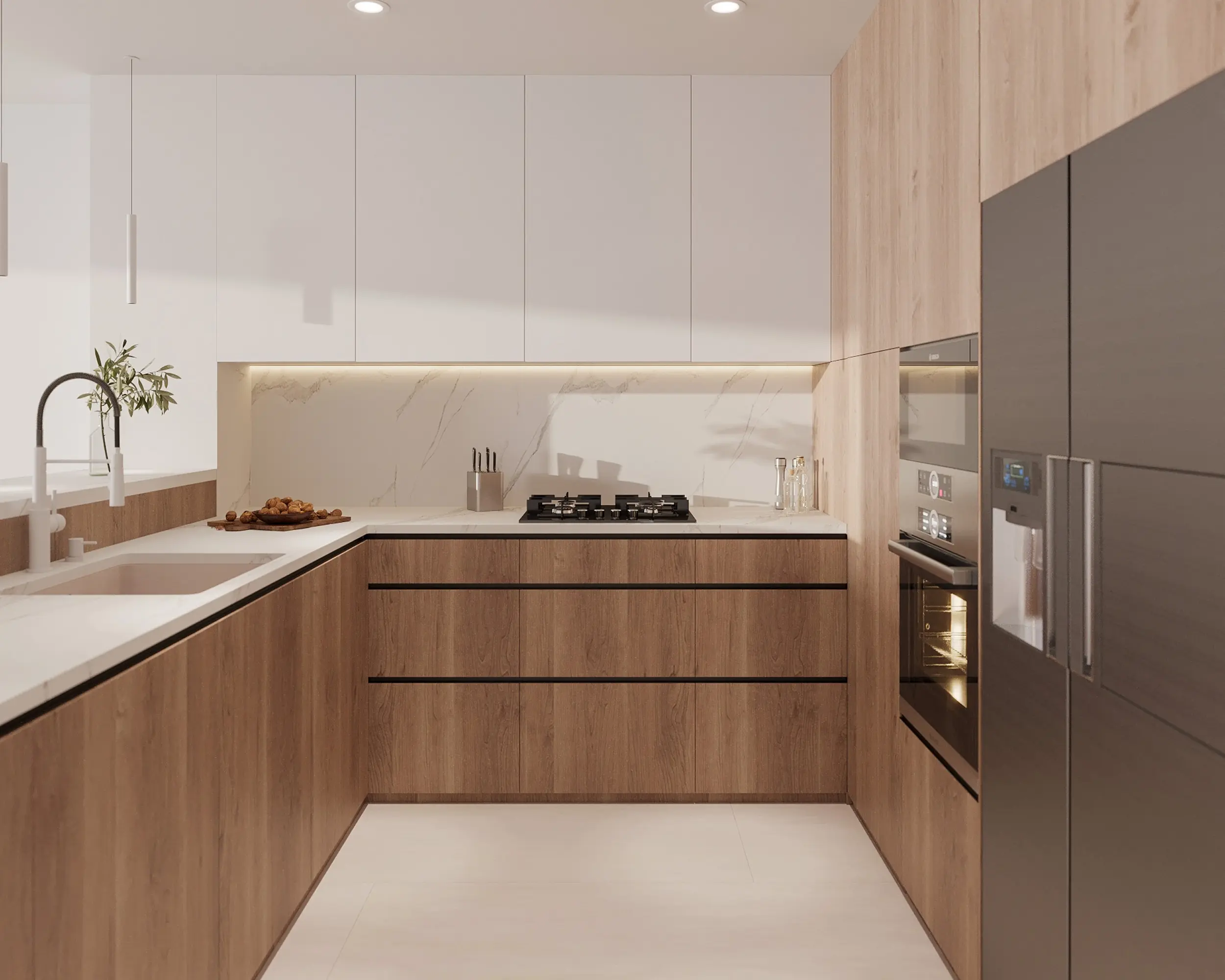
What keeps these materials from feeling too hard is warmth. Oak, walnut veneer, and other wood finishes introduce grain, softness, and variation that make metal and stone feel more livable. This is often the turning point in the design. A kitchen with stainless steel and concrete alone may feel sharp, but once warm wood is introduced, the room becomes more balanced.
The most successful kitchens usually keep the palette tight. Instead of mixing many statement materials, they choose one harder industrial material, one warmer balancing material, and one quiet supporting finish.
Color Palette: Calm, Layered, and Intentional
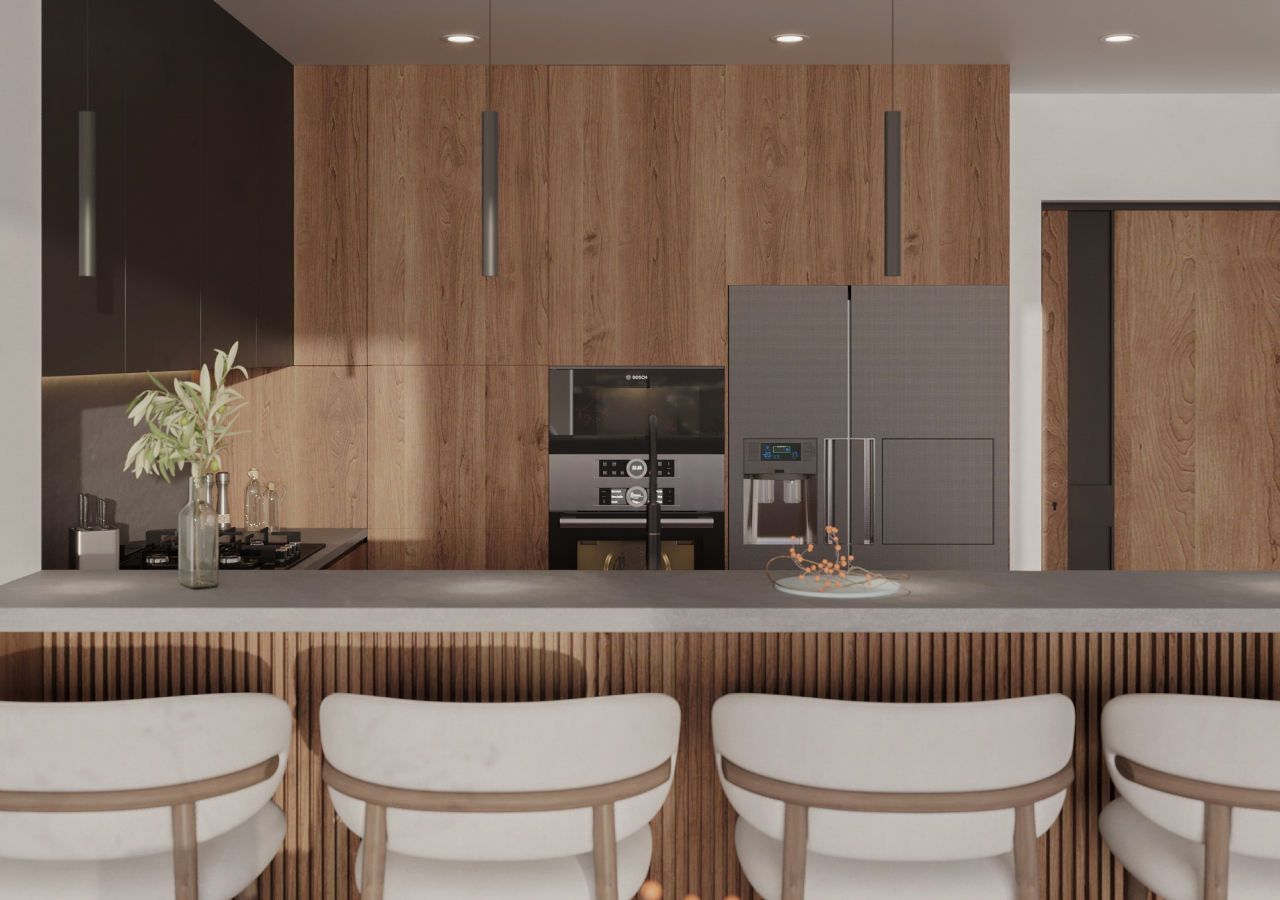
A strong industrial minimalist kitchen does not depend on dramatic black-and-white contrast. In most homes, that approach feels too sharp and can make the kitchen look colder than intended. A better direction is a layered neutral palette built around soft variation rather than strong opposition.
Warm grays, charcoal tones, off-whites, greige, muted taupe, and natural wood are all useful here. These shades allow stainless steel and stone to feel integrated into the room rather than isolated from it. The overall effect is more architectural and less graphic.
This tonal approach also helps larger surfaces work better together. Cabinets, worktops, wall finishes, and integrated appliances all feel more unified when they sit within the same visual family. That matters in open-plan homes, where the kitchen needs to connect naturally to the rest of the space rather than stand apart from it too aggressively.
Matte finishes usually support this direction better than glossy ones. They reduce glare, help textures read more clearly, and make the room feel softer overall. That is especially useful when the design already includes industrial materials, which can otherwise come across as too stark.
Cabinets and Storage: Minimal but Honest
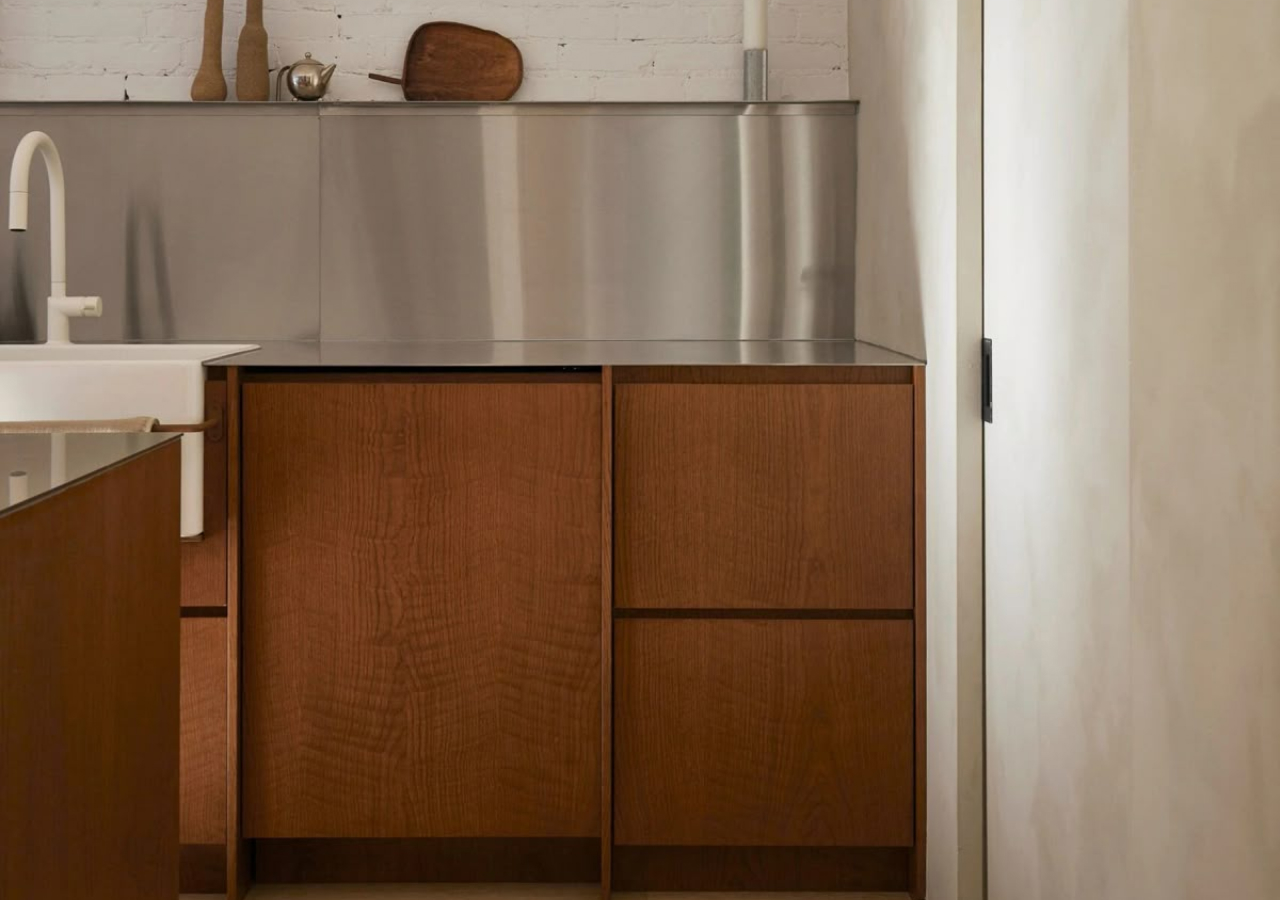
Minimalism only works when storage works. If the kitchen looks clean but cannot handle everyday clutter, the effect disappears quickly. That is why storage is one of the most important parts of an industrial minimalist kitchen.
Flat-front cabinetry is a natural fit here because it keeps the outer surfaces calm and uninterrupted. Handleless systems reinforce that effect by reducing visual breaks. But the real success comes from what happens behind the fronts. Deep drawers, pull-outs, corner solutions, and well-planned internal accessories make it possible to keep countertops clear and the room organized.
This is where a design-forward kitchen becomes genuinely practical. The industrial side of the room may come from stone, metal, or concrete-look materials, but the lived experience of the kitchen depends on whether everything has a logical place. A cleaner exterior only works when the inside is doing more.
That is also why integrated appliances matter so much in this style. They help preserve the long, clean lines that make the room feel restful. Open shelving can still have a role, but it works best in limited amounts. A small open section in wood or metal can add rhythm and display space, but too much open storage makes the kitchen feel unfinished rather than minimal.
How to Apply This Style in a Real Renovation
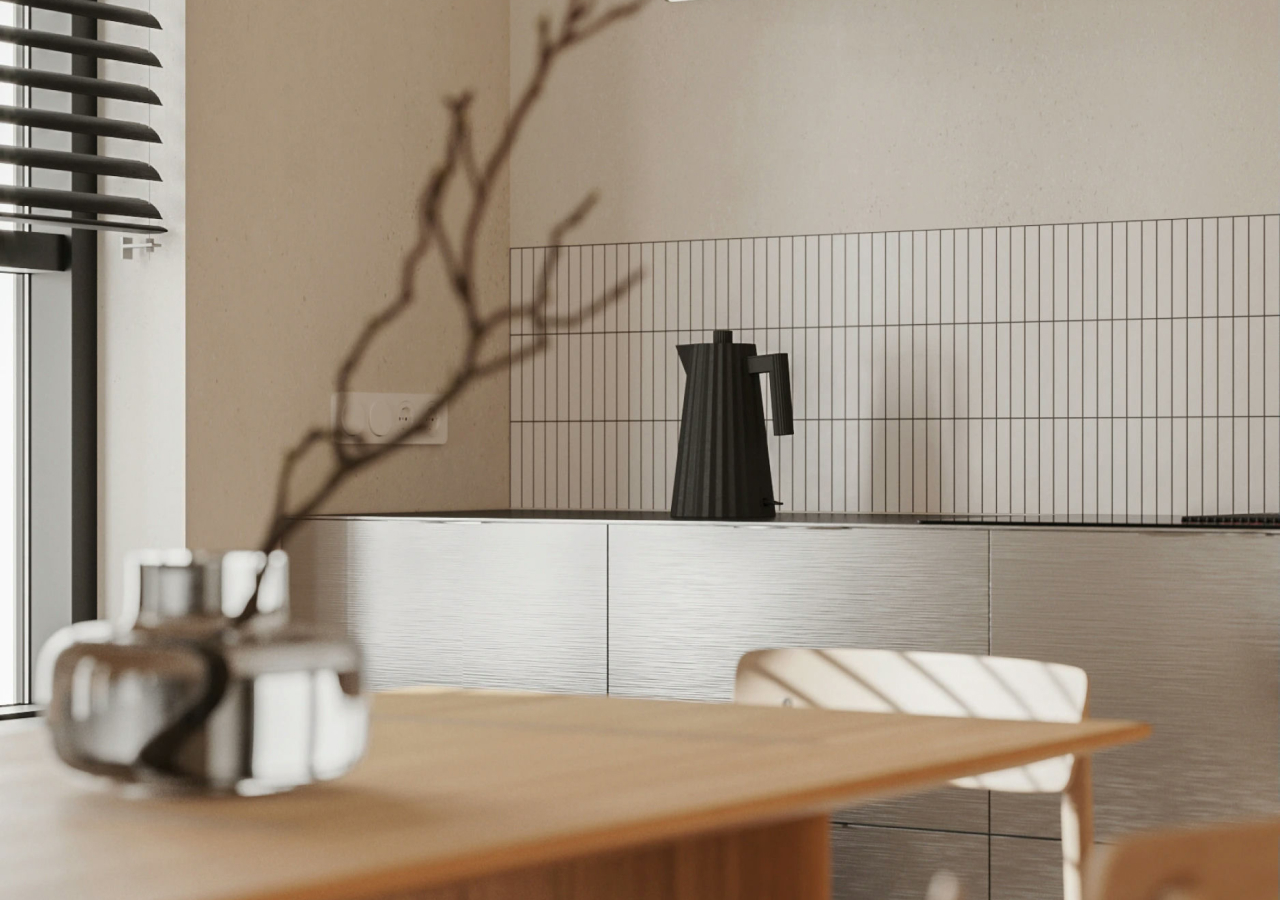
The most successful industrial minimalist kitchens are built through a sequence of practical decisions, not by collecting aesthetic references. First, the layout needs to work clearly. Then the main material language can be defined. After that, the palette, storage planning, and lighting can be refined to support the overall direction.
That order matters because it keeps the kitchen grounded in real use. Start by solving circulation, prep space, and tall storage placement. Then decide which material will carry the industrial character of the room: stainless steel, concrete-look porcelain, dark stone, or metal detailing. After that, choose the warmer balancing finish, usually wood or a softer cabinet color. Finally, make sure storage and appliance integration support the clean exterior lines.
This is what turns the style from an aesthetic idea into something livable. The kitchen does not just look calm. It behaves calmly too.
Conclusion
An industrial minimalist kitchen design works best when it balances loft-style materials with warmth, clarity, and restraint. Stainless steel, stone, concrete-look surfaces, and metal accents give the room structure and character, while wood veneer, handleless cabinetry, and integrated storage keep it calm and useful.
That balance is what makes the style so appealing for modern homeowners. It feels architectural and distinctive, but still easy to live with every day. Good layout planning, smart storage, and a controlled palette do most of the work. The industrial elements then become part of a more refined whole rather than the entire story.
If you are exploring this direction for your renovation, look at how materials, layout, and storage work together, not separately. Explore Corner Renovation’s kitchen collections or book a consultation to see how an industrial minimalist kitchen can be shaped around the way you actually live.