
.webp)
A kitchen renovation is a serious investment, but it doesn’t have to spiral out of control. With the right strategy, you can save money on a kitchen remodel (often up to 40%) without ending up with a space that feels “budget.”
The key is to be intentional: decide where to save money on kitchen cabinets, countertops, and finishes, and where you should absolutely not cut costs. In other words, make smart trade-offs instead of trying to make everything premium.
Most full kitchen remodels fall somewhere between $40,000 and $80,000, depending on the size, materials, and level of customization. Within that range, your choices determine whether the project feels wasteful or efficient.
Smart Ways to Save on a Kitchen Remodel
If you’re wondering how to save on a kitchen renovation without sacrificing quality, start with the big levers: layout, cabinets, finishes, and appliances. These are the areas where a few thoughtful choices can unlock real savings.
Keep the Layout Stable
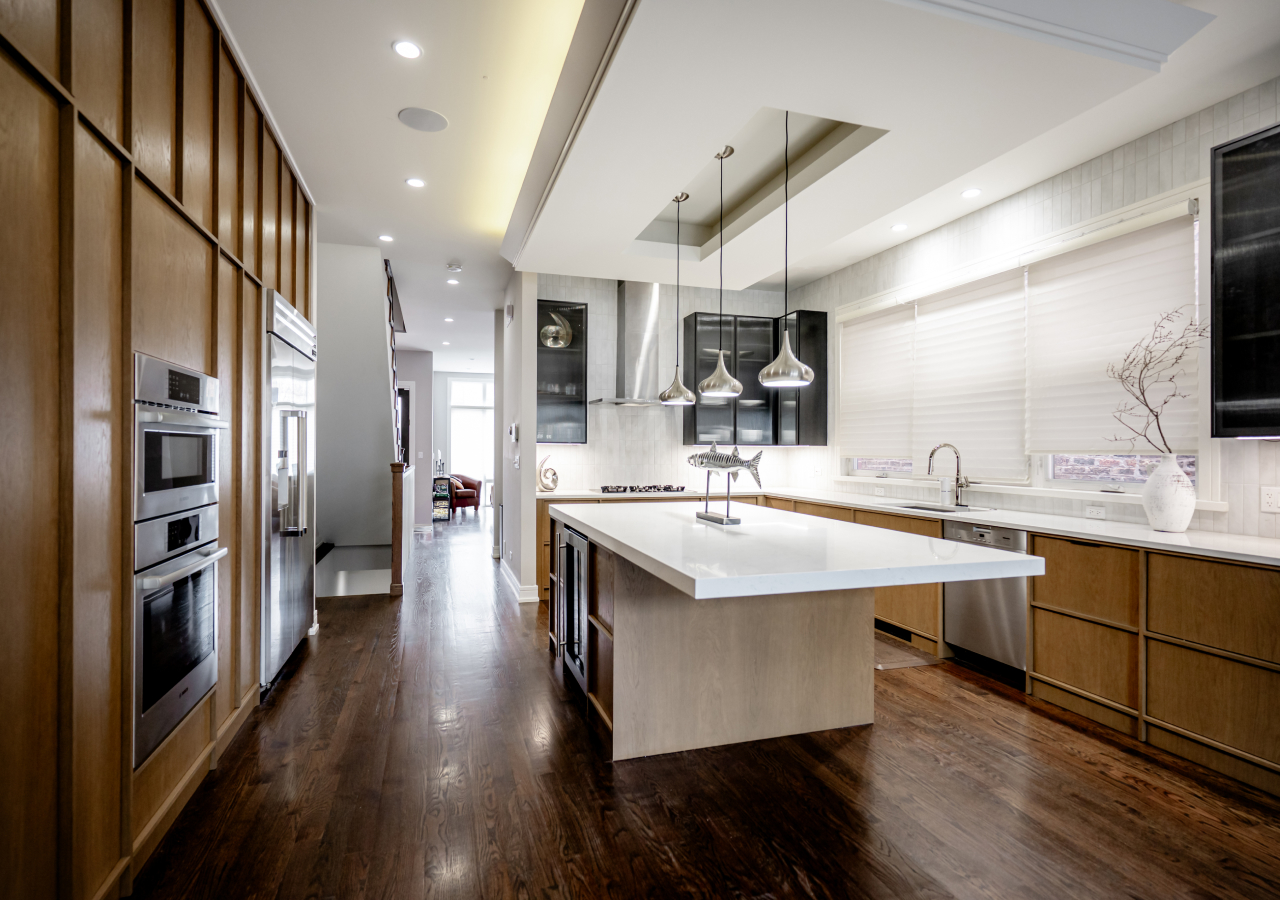
Moving walls, plumbing, and gas lines is one of the fastest ways to burn through budget. Sometimes it’s worth it; for example, opening a cramped kitchen into an adjacent roo, but many spaces don’t need a full reconfiguration.
If the current layout is reasonably functional, you can keep the sink, range, and major appliances in similar zones and put your money into better cabinets, drawers, and surfaces instead. You’ll still get a fresh, modern kitchen, but you won’t pay for rerouting every utility in the room.
How to Save Money on Kitchen Cabinets
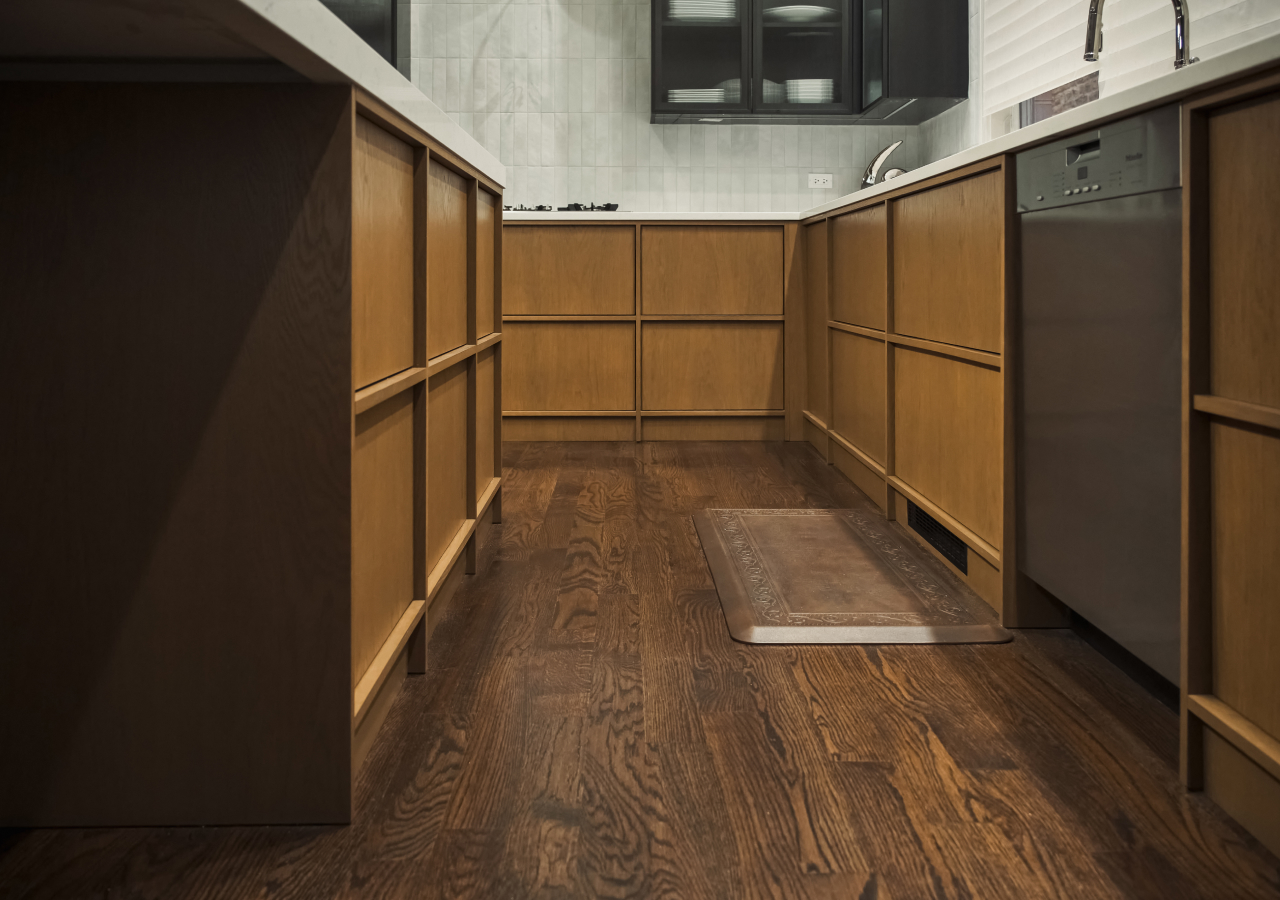
Cabinetry is often the single largest line item in a kitchen budget, which makes it the best place to save smartly rather than randomly. You don’t have to choose the cheapest boxes to reduce cost; you can save money on kitchen cabinets by simplifying the design and using materials strategically.
Straightforward door styles, such as slabs or clean Shaker panels, are usually more economical than ornate profiles. A restrained palette—one main cabinet color, or a calm two-tone scheme—keeps production and installation more efficient than a mix of three or four finishes. In many kitchens, it also looks more modern and composed.
Then comes the material mix. Real wood can be used where it has the most impact, such as on an island or a feature wall, and paired with high-quality laminate or melamine on the remaining runs. That approach keeps the room feeling warm and elevated while reducing the overall cost per cabinet.
Here’s a quick reference for cabinet materials:
A design-led approach uses these materials deliberately so the kitchen still reads as cohesive and considered, not like a patchwork of cost decisions.
How to Save Money on Kitchen Countertops
.webp)
You can also save money on kitchen countertops without giving up performance. Instead of defaulting to the most dramatic natural stone, consider a mid-range Dekton or quartz color with a quieter pattern, or large-format porcelain that mimics stone but can be more economical to fabricate.
Mixing surfaces can work well too. Many homeowners choose a “hero” island in a more expressive material, like quartz or quartzite, and keep the wall runs in a simpler, cost-savvy surface. If the colors are coordinated, the result still feels high-end, but the budget is easier to control.
Between different kitchen countertop ideas what matters most is how the surface behaves: how it handles heat, stains, and daily use, and how easy it is to live with over time.
Be Strategic with Appliances
.webp)
Appliances can quietly take a large share of the budget, especially when every piece is treated as a showpiece. A more efficient strategy is to decide which appliance genuinely deserves a splurge and which ones can be chosen from a solid, mid-range lineup.
Often, one great range or cooktop and a reliable fridge matter more than a long list of extras. A built-in coffee machine, a second oven, or a warming drawer may be nice to have, but if the goal is to save on a kitchen remodel, they’re the first places to pause and ask whether that money could be better spent on cabinets, lighting, or ventilation.
Plan Once, Build Once
.webp)
A final, often invisible way to save: avoid redesigning the project in the middle of construction. When layouts, appliance models, or finishes change after work has started, you pay for rework, additional labor, and often rush charges on materials.
Front-loading the planning—locking in drawings, appliance lists, and finish choices before orders are placed—allows the renovation to run with far fewer surprises. It’s not just calmer; it’s usually cheaper.
Places You Should Not Cut Costs
On the other side of the equation are the quiet fundamentals—the parts you don’t notice at first glance but feel every single day. These are the areas where cutting too hard can undermine even the most beautiful design. This is also where it helps to separate quick visual wins from upgrades that actually add value in daily use and over the long term.
A simple way to think about the tension is this:
Hardware Quality
.webp)
Hardware is one of the easiest places to see the difference between a short-term and a long-term decision. Hinges and drawer slides are used dozens of times a day. When they’re flimsy, doors sag, drawers feel rough, and the kitchen ages quickly.
Good, soft-close, full-extension slides and solid, adjustable hinges are worth prioritizing, even on a tight budget. They help drawers stay aligned, carry weight properly, and keep the cabinets feeling smooth and solid years down the line.
Ventilation
.webp)
Ventilation is another area that can feel invisible until it isn’t. A hood that’s too weak, badly ducted, or poorly sized will struggle with steam and cooking odors, leaving grease on cabinets and ceilings and making the room feel stuffy.
You don’t need the largest or most decorative hood on the market, but you do need a system that’s correctly sized for the cooktop and vented properly. That protects both the finishes and the comfort of the room.
Lighting and Electrical
.webp)
Lighting is where function and mood meet. A kitchen with beautiful cabinets and surfaces but weak task lighting will always feel a little off.
It’s fine to start with simpler fixtures or fewer decorative pendants, but the underlying electrical plan (where the lights are, how they are switched, and whether there is under-cabinet lighting for prep) should not be an afterthought. Changing wiring and adding circuits after walls are closed is disruptive and expensive.
Installation and Labor
.webp)
Finally, the quality of installation quietly decides how all the other choices look. Even the best cabinets and stone surfaces can look uneven or misaligned if they’re installed without the right skill or attention.
Working with installers and contractors who understand your cabinet system and materials, and who can show similar completed projects, is essential. This is also where a clear vendor plan helps. Instead of collecting disconnected quotes, you build a team that knows how to coordinate the renovation from layout through installation.
If you’re unsure how to evaluate partners, this is where a step-by-step vendor guide is helpful. It walks through how to select credible professionals and get a realistic renovation estimate instead of a rough guess.
What Does a Kitchen Remodel Really Cost?

As a baseline, many full kitchen renovations fall between $40,000 and $80,000. The same space, planned three different ways, might break down roughly like this:
These numbers shift by region and scope, but the pattern is consistent: cabinets, labor, and surfaces carry the most weight, which is why they’re at the heart of both the “save” and “don’t cut” decisions.
Conclusion
If you want to save on a kitchen remodel, the point is to be precise about where you save and where you hold the line. Simplified layouts, calmer cabinet fronts, and thoughtful material choices are where you can save money on kitchen cabinets and countertops without the kitchen feeling compromised. Hardware quality, ventilation, lighting, and installation are the parts that are harder to fix later, so they’re usually worth protecting.
You don’t need the most expensive option in every category. You need a plan that matches your space, your habits, your budget, and a team that can help you balance smart savings with a result that still feels considered and long-term.


