
.webp)
Appliances are not a finishing touch. They set your kitchen’s geometry and determine whether your cabinetry drawings stay stable. Refrigerator depth and door swing affect cabinet runs and fillers. Your cooking setup influences rough-ins, landing zones, and tall-unit planning. Venting can force soffits or change upper cabinet height. If you make these decisions late, you risk redesigning sections of the kitchen or compromising storage.
This guide is a layout-first planning system: it shows what to decide first, what decisions lock your cabinetry, and what specs your cabinet maker needs before final drawings. Use it to keep the process clean, reduce redraws, and end up with a kitchen that fits the first time.
Appliance Decisions That Lock Your Layout
| Decision | Why it matters | What it affects | Common mistake |
|---|---|---|---|
| Refrigerator type (panel-ready vs freestanding) | Sets depth, ventilation, door swing, and tall wall geometry | Cabinet runs, end panels, fillers/reveals, tall wall layout | Choosing the fridge late and reworking tall-unit widths and fillers |
| Cooking setup (range vs cooktop + wall ovens) | Determines cabinet architecture and landing zones | Base layout, tall units, drawers, countertop landings | Designing storage first, then realizing the appliance spec changes the plan |
| Hood + vent path | Duct route must physically fit and meet requirements | Uppers, soffits, ceiling details, exterior exit point | Picking a hood style before confirming a workable duct route |
| Dishwasher location | Ties directly to sink plumbing and daily workflow | Sink base configuration, trash pull-out placement, landing zones | Placing the dishwasher where it blocks the main walkway when open |
| Lock exact model numbers | Cutouts and clearances must match real specs | Final cutouts, panels, toe-kick details, collision checks | Starting drawings with “standard sizes” and discovering mismatches later |
Understand Your Kitchen Needs First
.webp)
Your appliance plan should match how you live, not a showroom checklist. Start by thinking about your normal week: how often you cook, what you cook, and what feels annoying in your current kitchen. A household that cooks daily and cleans as they go needs a different workflow than someone who hosts on weekends. If you bake often, oven capacity and placement matter more than a pro-style range. If you do high-heat cooking, ventilation becomes non-negotiable. If mornings revolve around coffee and breakfast, a tight, efficient prep zone can matter more than an extra appliance.
The point is not to add more appliances. It is to choose the right few, place them correctly, and design cabinetry around real use patterns so the kitchen stays easy to live with.
Prioritize the Essential Appliances

Start with the appliances that set cabinet geometry and rough-ins: refrigerator, cooking setup, ventilation, dishwasher, and sink (because it drives plumbing and the dishwasher relationship). These choices define the kitchen’s main “runs,” the width and depth of tall walls, and the clearance needs that determine whether the space feels open or pinched. Once these essentials are locked, you can layer in secondary appliances like beverage fridges, warming drawers, coffee systems, or wine storage without destabilizing the whole plan.
A simple reality check at this stage is movement. You want doors and drawers to open without collisions, and you want the main lane through the kitchen to stay clear even when someone is loading the dishwasher or pulling items from the refrigerator.
Refrigerator Choice Comes First
.webp)
The refrigerator is usually the first decision because it dictates depth, ventilation requirements, and door swing clearance. It also sets the tone for your tall wall: whether it reads as a clean cabinet composition or a mix of cabinet boxes and appliance faces. A fridge that is even slightly deeper than expected can change side panels, fillers, and how the run meets a wall or doorway.
Panel-ready refrigerators integrate into cabinetry, so the kitchen reads calmer and more continuous. Freestanding refrigerators are often easier to replace and can be more cost-effective, but they tend to interrupt cabinet lines and may require additional fillers to handle door swing and side clearance. Either can work well. The key is committing early, because the fridge is one of the most common sources of “late changes” that ripple through the entire cabinet plan.
Cooking Setup Decisions
Range vs cooktop and wall ovens
.webp)
This decision shapes cabinet architecture. A range is typically the simplest path: one appliance footprint, straightforward cabinetry below, and a clear cooking focal point. A cooktop with wall ovens can improve ergonomics and allow more flexible storage below the cooktop, but it pushes planning into tall units and changes where you need landing space. It can also affect how your pantry wall is composed and whether you have enough uninterrupted counter run near the cooktop for daily use.
Think in terms of workflow: where hot items land, how close prep is to cooking, and whether opening oven doors blocks traffic. These are small details that add up in everyday life.
Gas vs induction (a rough-in decision, not a finish choice)
.webp)
Gas vs induction is more than a simple preference. It affects rough-ins and constraints. Induction can require higher electrical capacity and specific circuits; gas requires a gas line and considerations for ventilation and combustion. Both can perform at a high level, but the kitchen has to be built for the choice. Decide this early, before rough-ins are finalized, so the plan supports the appliance instead of forcing compromises later.
Ventilation Planning

Ventilation is a building constraint first and a style choice second. The duct route has to physically fit through framing and exit the home in a realistic location. That route can affect upper cabinet height, whether you need a soffit, and how clean your cabinet lines can remain. If the ducting path is difficult, it can also influence where the cooktop should go.
A common misconception is choosing a hood based on looks before confirming a workable duct route. Plan the vent path early, then choose the hood style that fits the constraints without forcing awkward cabinetry or last-minute bulkheads.
Dishwasher Placement and Workflow
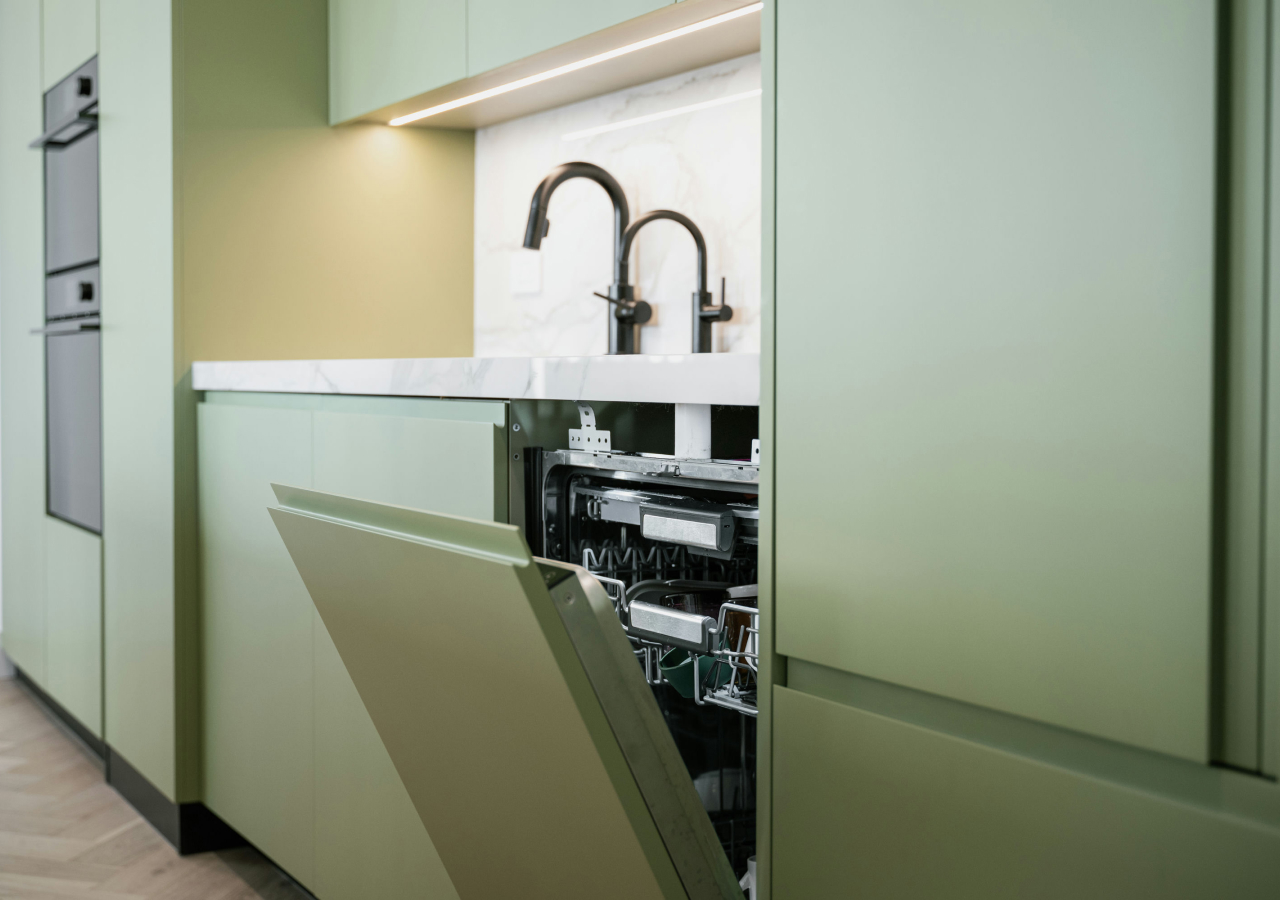
The dishwasher decision is about workflow. It must work with sink plumbing, and it should not block the main lane when open. Your goal is a clean loop: scrape, rinse, load, and unload without crossing the kitchen. Landing zones matter here. You want a nearby spot for dishes coming out of the dishwasher, and you want trash/recycling within easy reach of the sink for everyday cleanup.
When this is planned well, the kitchen feels effortless. When it is planned poorly, it becomes the daily friction point even in a beautiful space.
Panel-Ready Appliances
.webp)
Panel-ready appliances integrate behind cabinet fronts so the kitchen reads as a continuous composition. This can make an open-plan space feel calmer because the visual rhythm is cabinetry, not appliance faces. The biggest impact is usually the refrigerator and dishwasher. The tradeoff is that panel-ready planning is spec-driven: panel thickness requirements, maximum panel weight, hinge behavior, and required accessory kits all matter.
If you choose panel-ready, treat it as a coordination decision. Your cabinet maker should have the appliance installation guides early so reveals, fillers, and panel details are designed correctly from the start.
Built-In vs Freestanding Appliances
.jpg)
Built-in appliances are the best fit when you want a streamlined look, consistent cabinet lines, and predictable geometry, especially in compact kitchens or design-forward layouts. They reward early planning and tend to support a clean, intentional composition. Freestanding appliances are the best fit when flexibility, easier replacement, and cost control are priorities. They can still look excellent, but they usually require more attention to transitions: depth differences, side panels, and how the appliance terminates at the ends of cabinet runs.
Many great kitchens mix the two. The most important thing is that the choice supports the layout and does not introduce late changes that force cabinetry compromises.
Appliance Spec Checklist for Your Cabinet Maker
- Exact model numbers for every appliance. Provide the full model ID for each item, not just brand and “36-inch” labels.
- Cutout dimensions and installation guides. Share the manufacturer cutout and install docs for every appliance.
- Ventilation requirements. Include duct size, airflow targets, and any constraints that affect routing and cabinet design.
- Hinge side, door swing, and required side clearances. Confirm handing and the clearance needs so doors and drawers don’t conflict.
- Panel kit requirements if panel-ready. Provide panel thickness, max panel weight, and any handle limitations.
- Utility requirements and service access. Include electrical, gas, and water needs, plus access panels and service clearances.
Conclusion
Appliance planning is the fastest way to keep a custom kitchen project clean and predictable. If you decide refrigerator type first, choose your cooking setup with rough-ins in mind, and confirm the vent path before finalizing uppers, your cabinetry drawings stay stable and the kitchen works better day to day.
The biggest mistake is treating appliances like interchangeable rectangles. They are not. Real models have real cutouts, clearances, and ventilation requirements that change cabinet widths, fillers, and door collisions. Lock model numbers early, share spec sheets with your cabinet maker, and finalize cabinetry drawings only after those specs are confirmed. That is how you avoid redraws and get a kitchen that fits the first time.


