
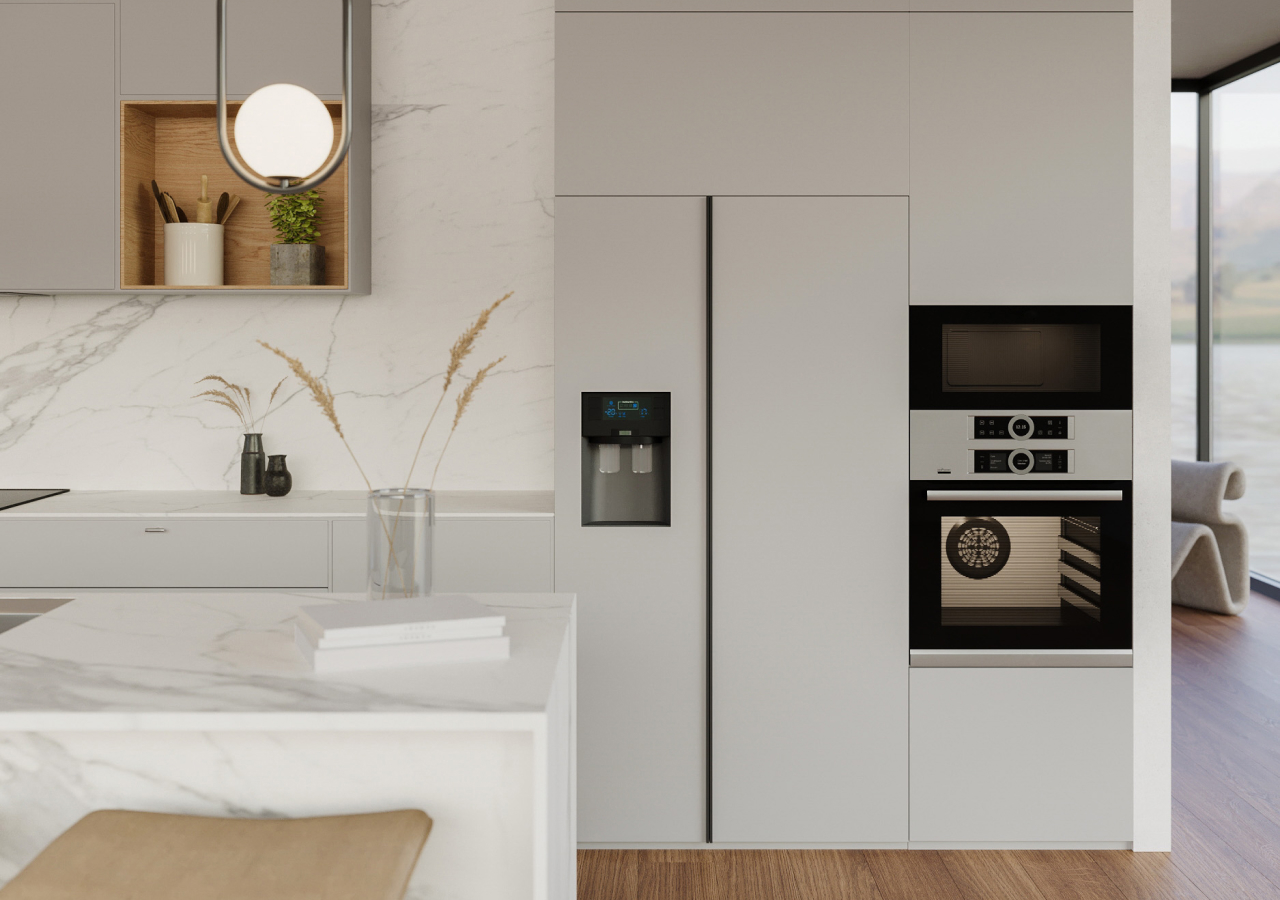
Handleless kitchen fronts can make a kitchen feel cleaner, calmer, and more architectural. Without visible knobs or pulls, the cabinet fronts become part of the overall design instead of a collection of separate doors, drawers, and hardware pieces.
But handleless fronts are not only a style choice. The opening system, cabinet material, finish, and daily use all matter. Push-to-open mechanisms, Gola profiles, J-pull fronts, and slim profile handles can all create a minimal look, but they feel different when you use the kitchen every day.
This guide explains what to consider before choosing handleless kitchen fronts, including design, materials, cleaning, fingerprints, and where this style works best.
- What Are Handleless Kitchen Fronts?
- Why Handleless Fronts Work in Modern Kitchens
- Main Handleless Opening Systems
- Materials Matter More With Handleless Fronts
- Cleaning and Fingerprints
- Best Rooms and Cabinet Types for Handleless Fronts
- When Handleless Fronts Are Not the Best Choice
- Are Handleless Kitchen Fronts Worth It?
- Conclusion
- FAQ: Handleless Kitchen Fronts
What Are Handleless Kitchen Fronts?
.webp)
Handleless kitchen fronts are cabinet doors and drawer fronts designed without traditional visible knobs or pulls. Instead, the opening method is either built into the front, hidden behind the front, placed along the edge, or controlled by a push mechanism.
The goal is a cleaner cabinet face. This works especially well in modern, minimalist, Scandinavian, Japandi, and European-style kitchens, where simple lines and uninterrupted surfaces are part of the design.
A handleless kitchen can still have a physical grip. “Handleless” does not always mean there is nothing to pull. In many kitchens, the grip is simply integrated, recessed, or hidden from the main front view.
Why Handleless Fronts Work in Modern Kitchens
.webp)
Handleless fronts are popular because they simplify the visual language of the kitchen. Instead of seeing a pattern of handles across every cabinet, the eye reads larger surfaces, cleaner lines, and more continuous materials.
This can make a kitchen feel:
- More spacious
- More modern
- More architectural
- Less visually busy
- Easier to pair with open-plan interiors
Handleless fronts can also be useful in tight layouts. Without protruding handles, there is less hardware sticking out into narrow walkways, corners, or compact kitchen zones.
The tradeoff is that the cabinet front becomes more important. Since there is less decorative hardware to distract the eye, the material, finish, alignment, and reveal lines need to be chosen carefully.
Main Handleless Opening Systems
There are several ways to create a handleless kitchen front. This article is not meant to replace a full comparison of every system, but it helps to understand the main options before choosing materials and finishes.
| System | Best For | Watch Out For |
|---|---|---|
| Push-to-open | Clean slab fronts | Fingerprints and hardware quality |
| Gola profile | True European handleless kitchens | Needs early cabinet planning |
| J-pull | Integrated grip | Groove can collect dust or show wear |
| Profile handle | Minimal hardware look | Still uses visible or semi-visible hardware |
For a full breakdown of these options, see Corner’s guide to [Handleless Kitchen Cabinets: 4 Ways to Get the Look].
Materials Matter More With Handleless Fronts
With handleless fronts, the surface is used more directly. In many systems, especially push-to-open, people touch the cabinet face instead of a separate handle. That makes material choice more important than it is in a standard kitchen with knobs or pulls.
The best material depends on how the kitchen will be used, how often the fronts are touched, and how much maintenance you are comfortable with.
Matte Laminate
.webp)
Matte laminate can be a practical choice for handleless fronts because it is durable, relatively easy to clean, and available in many colors. It works well for modern slab-front kitchens where the goal is a simple, consistent surface.
Darker matte laminates can look very refined, but they may show oils, smudges, or cleaning marks more than lighter finishes. If choosing a dark matte cabinet, it is worth paying close attention to fingerprint resistance.
FENIX-Style Fronts
.webp)
FENIX-style materials are often used in modern kitchens because they have a soft matte look and are designed to reduce the appearance of fingerprints. They can be a strong option for handleless kitchens, especially in darker colors.
These surfaces are not maintenance-free, but they usually suit the handleless look well because they support a clean, low-reflection design.
Wood Veneer

Wood veneer adds warmth to handleless fronts and can keep a minimalist kitchen from feeling too cold. It works especially well in Japandi, Scandinavian, and modern organic interiors.
Because handleless kitchens often have large uninterrupted cabinet faces, the direction and matching of the veneer matter. Vertical or horizontal grain can change the whole feel of the kitchen.
Painted MDF
.webp)
Painted MDF offers flexibility in color and finish. It can create a smooth, custom look, especially for slab fronts, J-pull fronts, or integrated profiles.
The main thing to consider is durability at high-touch areas. Edges, grooves, and frequently opened drawers should be finished well, because wear is more noticeable when there is no separate handle taking the daily contact.
Acrylic and Glossy Finishes
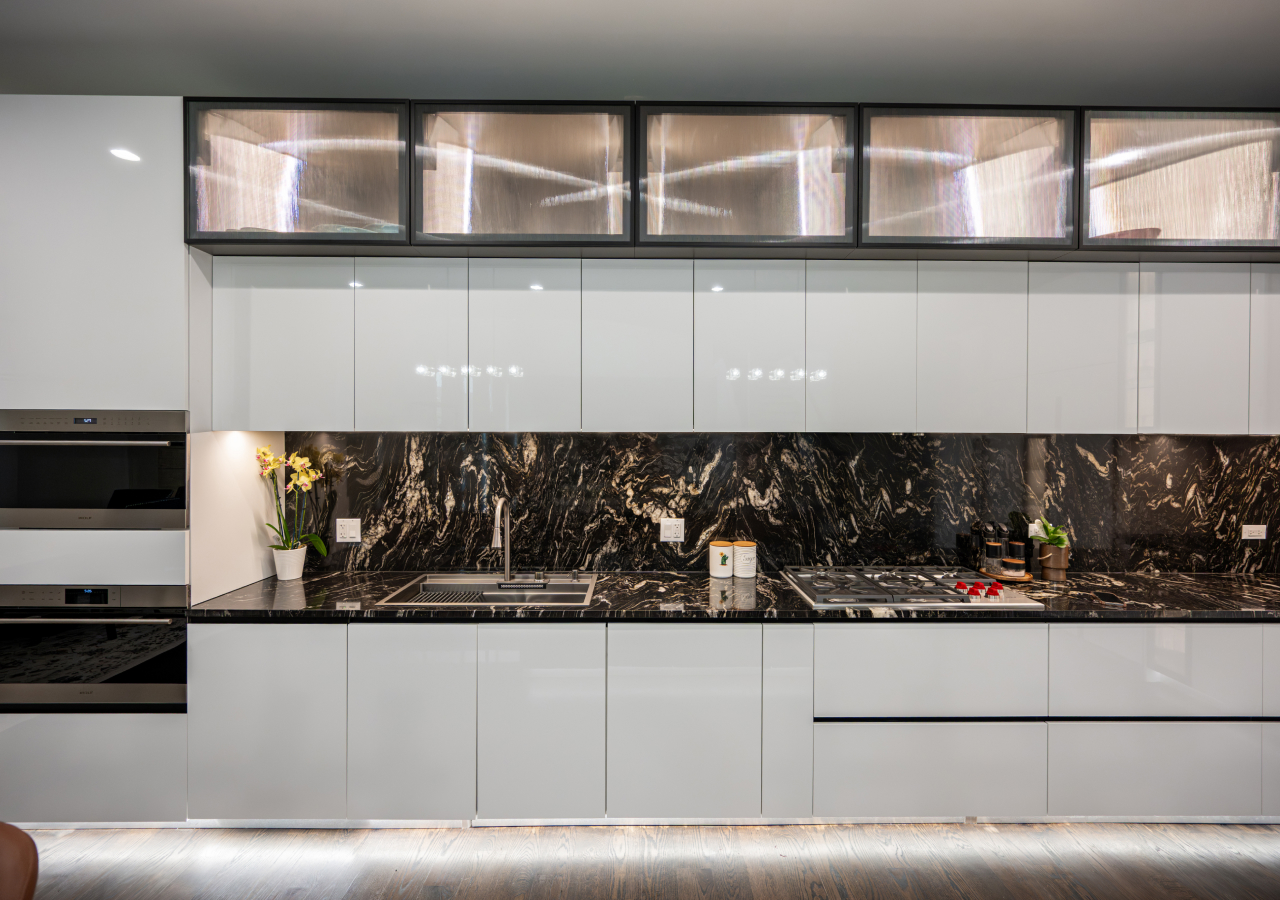
Glossy fronts can make a kitchen feel brighter and more reflective, but they are usually less forgiving with fingerprints. This matters most with push-to-open cabinets, where the front is touched directly.
Gloss can still work in a handleless kitchen, but it may be better paired with Gola profiles, J-pulls, or profile handles instead of a full push-to-open system in high-use areas.
Cleaning and Fingerprints
Handleless fronts reduce visual clutter, but they are not always lower-maintenance. Push-to-open fronts are touched directly, so fingerprints can show faster, especially on dark, glossy, or very matte finishes.
Gola profiles and J-pull fronts keep more contact inside the recessed grip area, while profile handles shift contact to the hardware instead of the cabinet face. For busy kitchens, choose lighter, textured, or fingerprint-resistant finishes when possible, especially in high-touch areas.
Best Rooms and Cabinet Types for Handleless Fronts
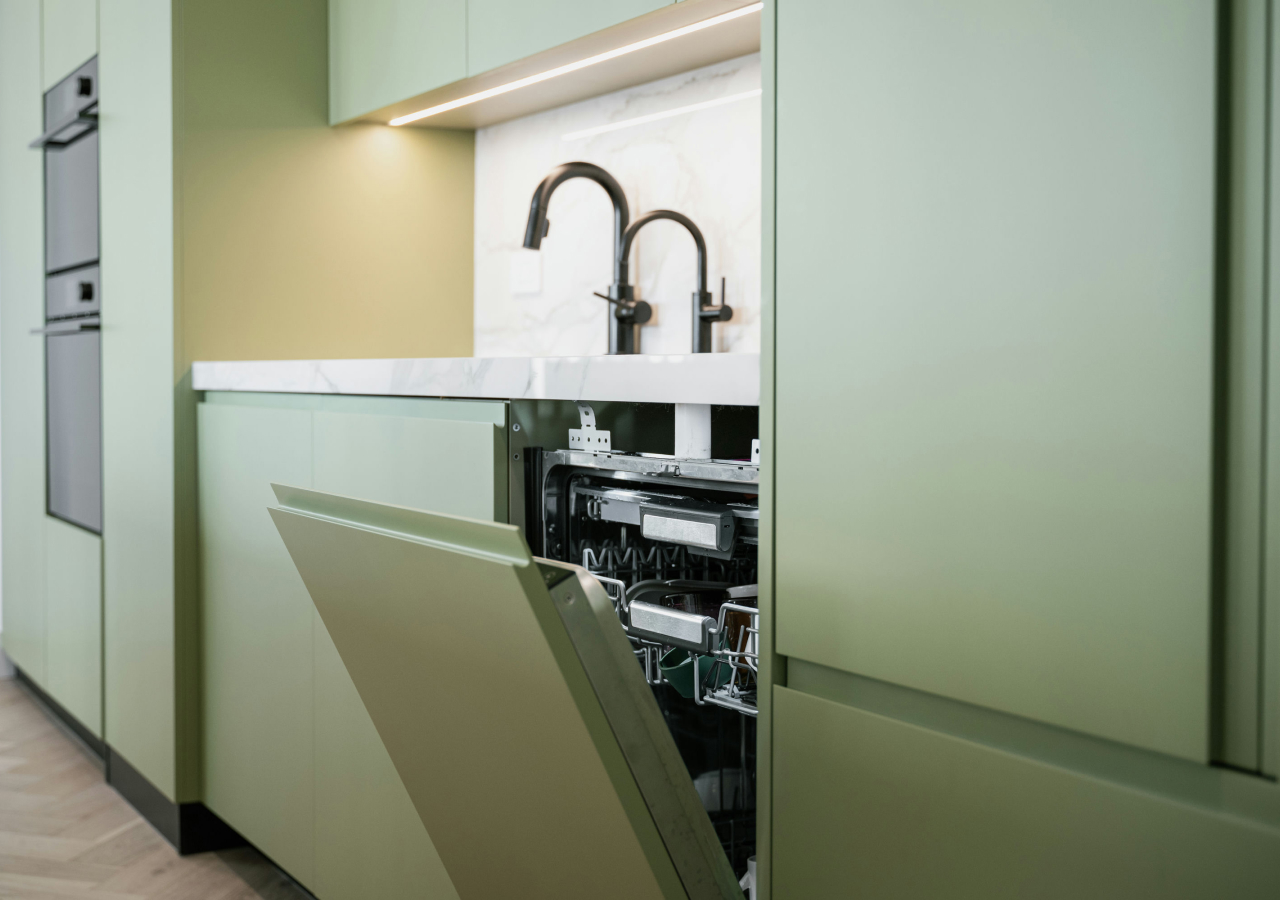
Handleless fronts are most common in kitchens, but they can work well in other parts of the home too.
- Kitchen base cabinets: Handleless fronts can make base cabinets look clean and continuous. For heavy drawers, choose an opening system that feels comfortable and strong enough for daily use.
- Tall pantry walls: Tall pantry walls are one of the best places to use handleless fronts. The clean vertical surfaces can make storage feel built-in and architectural instead of busy.
- Appliance garages: Handleless doors work well for appliance garages because they help small appliances disappear when not in use. This supports a cleaner countertop and a more organized kitchen.
- Bathroom vanities: In bathrooms, handleless fronts can create a spa-like, minimal look. Moisture-resistant materials and easy-clean finishes are especially important here.
- Wardrobes and closets: Handleless wardrobe fronts can make a bedroom, hallway, or dressing area feel calmer and more built-in. Since wardrobe doors are often large, the front material and alignment need to be carefully planned.
- Laundry rooms and utility spaces: Handleless fronts can help small utility areas feel more finished. For laundry rooms, choose durable materials that can handle moisture, cleaning products, and frequent use.
- Media units: For living rooms and media walls, handleless fronts keep storage quiet and unobtrusive. Push-to-open can work well here because the cabinets are usually used less often than kitchen drawers.
When Handleless Fronts Are Not the Best Choice
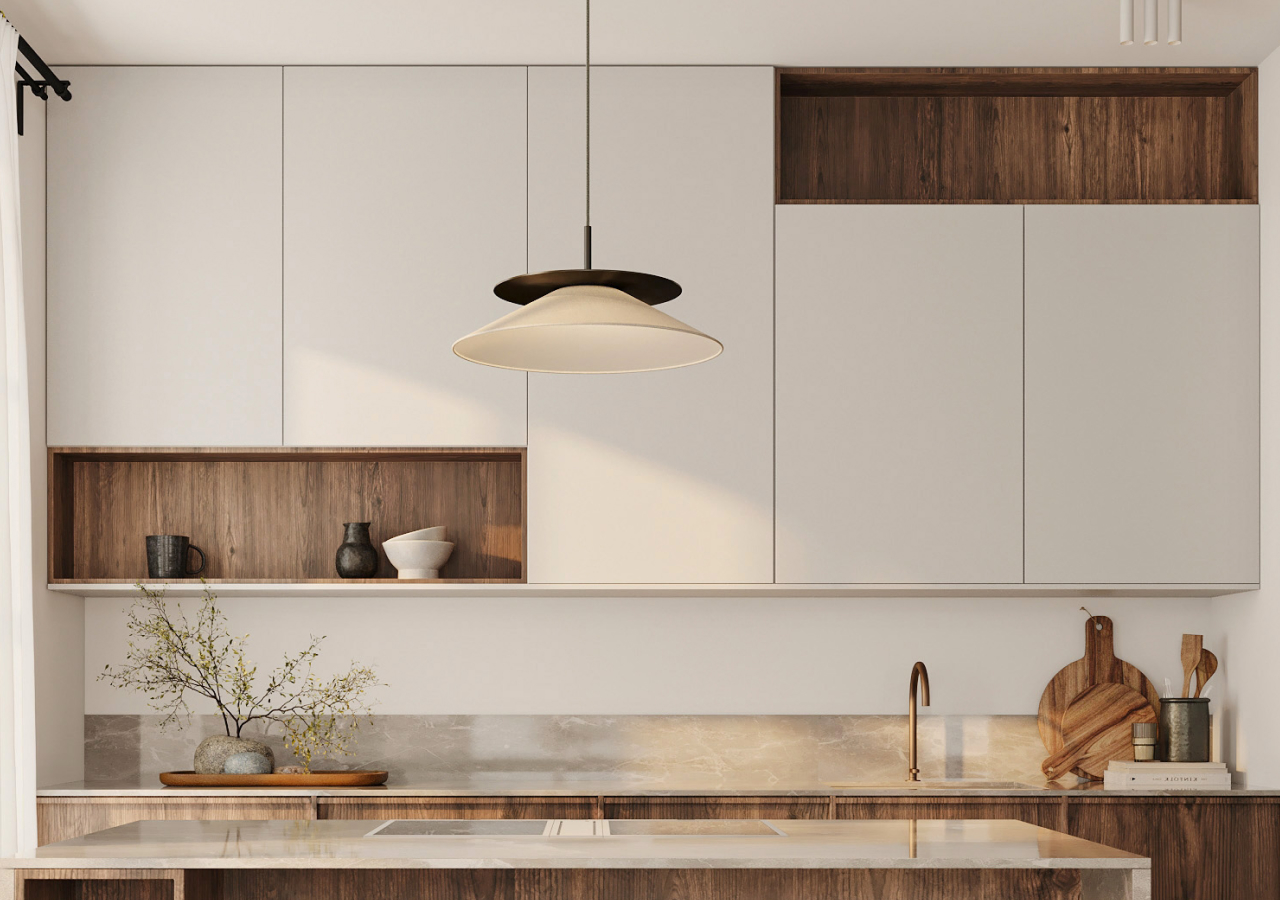
Handleless fronts work best when the opening system, material, and layout are planned together. They may not be ideal for traditional kitchens, households that prefer a clear grip, or heavy drawers with weak push-to-open hardware.
Glossy fronts also need caution, especially with push-to-open systems, because fingerprints can show quickly when the cabinet face is touched directly.
Retrofitting can be limited too. Finger pulls or slim profile handles may work on some existing cabinets, but Gola rails and integrated front profiles usually need to be planned before production.
That does not mean handleless fronts are impractical. It just means they need to be planned carefully.
Are Handleless Kitchen Fronts Worth It?
.webp)
Handleless kitchen fronts are worth considering if you want a clean, modern kitchen and are willing to plan the opening system carefully.
They are especially strong for slab-front kitchens, tall storage walls, minimalist interiors, and open-plan spaces where the kitchen needs to blend with the rest of the home.
For daily use, the best approach is often a mix. You might use Gola profiles or J-pull fronts for heavy drawers, push-to-open for upper cabinets or low-use storage, and profile handles where a practical grip matters most.
The right solution is not the one that looks cleanest in a photo. It is the one that still feels good after years of cooking, cleaning, opening drawers, and moving through the kitchen every day.
Conclusion
Handleless kitchen fronts can create a cleaner and more contemporary interior, but they should be chosen with real use in mind.
The opening system affects how the kitchen feels. The material affects fingerprints and cleaning. The layout affects whether the cabinets are comfortable to open. Push-to-open, Gola profiles, J-pull fronts, and profile handles can all work, but each one has a different purpose.
If you are planning a modern kitchen, handleless fronts are a strong option when the design, materials, and hardware are considered together from the start.
Explore Corner’s handleless kitchens to see how clean cabinet fronts, integrated opening systems, and modern materials come together in real kitchen designs.


