
.webp)
Gas vs. Induction Cooktops: Best Choice for Open-Plan, Minimalist Kitchens
Designing an open-plan minimalist kitchen means thinking carefully about what you see, feel, and smell from the surrounding living space. The cooktop affects all three. It influences whether an island feels like a piece of furniture or a cooking station, whether the ceiling needs a prominent hood, and how much heat and odor move through the room.
Gas offers a visible flame and a more traditional cooking experience, but it also introduces grates, burners, and more demanding ventilation requirements. Induction creates a quieter countertop, produces less ambient heat, and is usually easier to clean.
The right choice depends on more than appearance. Cooking habits, ventilation, appliance specifications, available utilities, electrical capacity, safety, and the location of the cooktop should all be reviewed before the kitchen layout is finalized.
Gas and Induction: How Each Works
What an Induction Cooktop Is
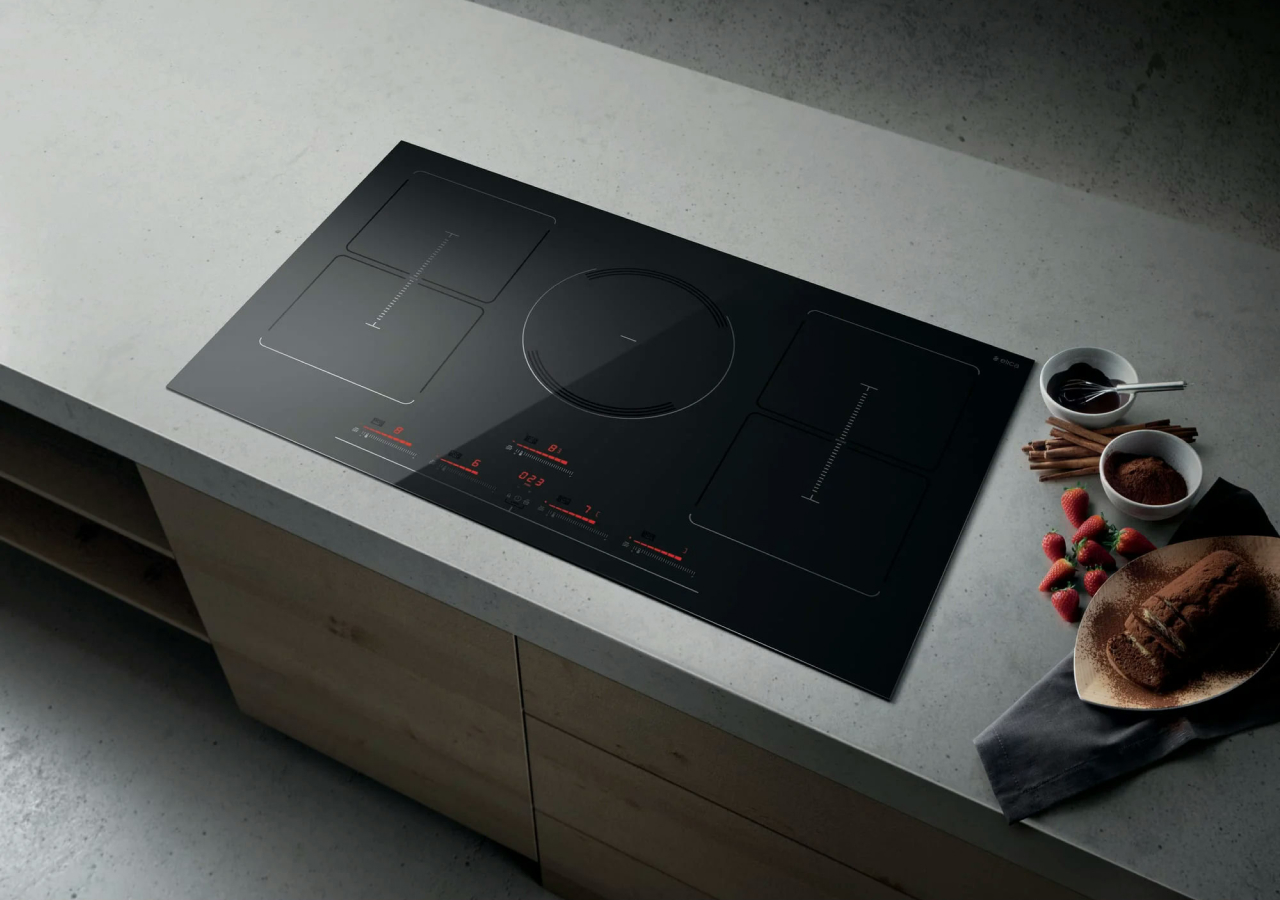
Induction uses electromagnetic energy to heat compatible cookware directly rather than heating the glass first. It responds quickly, transfers less heat into the room, and leaves behind a flat surface when the pan is removed.
That flat surface is one of its main advantages in a minimalist kitchen. When the cooktop is off, the dark glass can sit quietly within the countertop instead of reading as a separate piece of equipment.
What a Gas Cooktop Is
.webp)
A gas cooktop uses an open flame and provides immediate visual feedback. Many cooks value the ability to see and adjust the flame, as well as the flexibility to use a wide range of cookware.
Gas remains visible even when it is not being used. Burners, caps, and grates become part of the countertop design. With gas, ventilation becomes both a technical requirement and a major part of the kitchen design.
Ventilation in an Open-Plan Kitchen
.webp)
In an open-plan kitchen, ventilation is not a secondary detail. It affects odors, grease, heat, ceiling lines, upper-cabinet planning, and the experience of the adjacent living and dining areas.
The ventilation decision should be made early, especially when the cooktop is placed on an island. Waiting until the cabinetry is finalized can limit duct routes, hood dimensions, ceiling details, and internal cabinet storage.
Induction and Ventilation in Open-Plan Kitchens
Induction does not create combustion inside the kitchen and generally releases less ambient heat than gas. Ventilation is still important for steam, grease, smoke, and cooking odors, but the design may have more flexibility.
A slim hood, concealed insert, ceiling-mounted system, or suitable downdraft may be easier to coordinate with a quiet interior. The correct solution still depends on the appliance, cooking habits, room size, and ducting options.
Gas and Ventilation in Open-Plan Kitchens
Gas requires a more deliberate ventilation plan because the kitchen needs to manage heat, grease, cooking fumes, and combustion byproducts.
This often leads to a larger or more prominent hood. That hood can become an intentional architectural feature, but it should be included in the design from the beginning rather than added after the cabinets and ceiling have already been planned.
Design implication: Induction usually makes it easier to preserve a quiet ceiling line. Gas can work well when a statement hood is already intended to be part of the room.
How the Cooktop Affects the Countertop and Island
Modern minimalist kitchens depend on how cleanly the cooktop fits into the countertop and how much usable space remains around it. This becomes especially important on an island, where the cooking surface is visible from several directions.
The cooktop position also affects seating, prep space, landing areas, ventilation, electrical or gas connections, and the cabinet storage below.
Induction Creates a Quieter Countertop
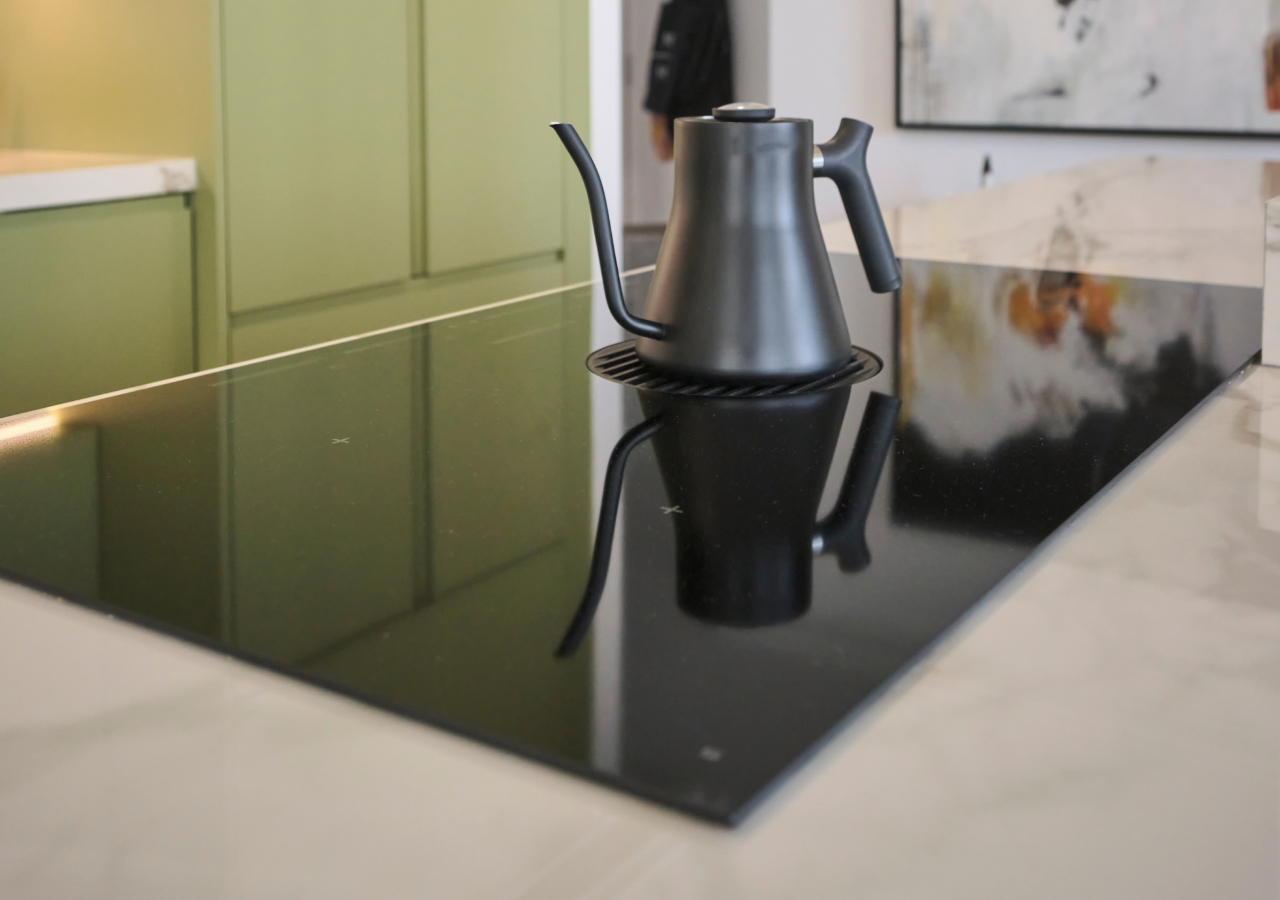
A flat induction surface can sit almost flush with the surrounding countertop, depending on the appliance and installation method. Its dark glass reads as a simple geometric element rather than a group of individual burners.
This works particularly well when the countertop material is meant to remain visually dominant. It can also make an island easier to wipe down because there are no grates or burner caps to remove.
Gas Adds More Visible Equipment
.webp)
Gas cooktops remain visually present because of their burners, control knobs, and grates. That presence can add character, especially in kitchens designed around a more professional or traditional cooking setup.
The tradeoff is additional clearance planning and more visual activity. Heat and flame must also be considered around nearby panels, seating areas, wall finishes, and countertop edges.
Which Cooktop Fits Your Kitchen Design?
Plaster Hood and Taj Mahal Quartzite
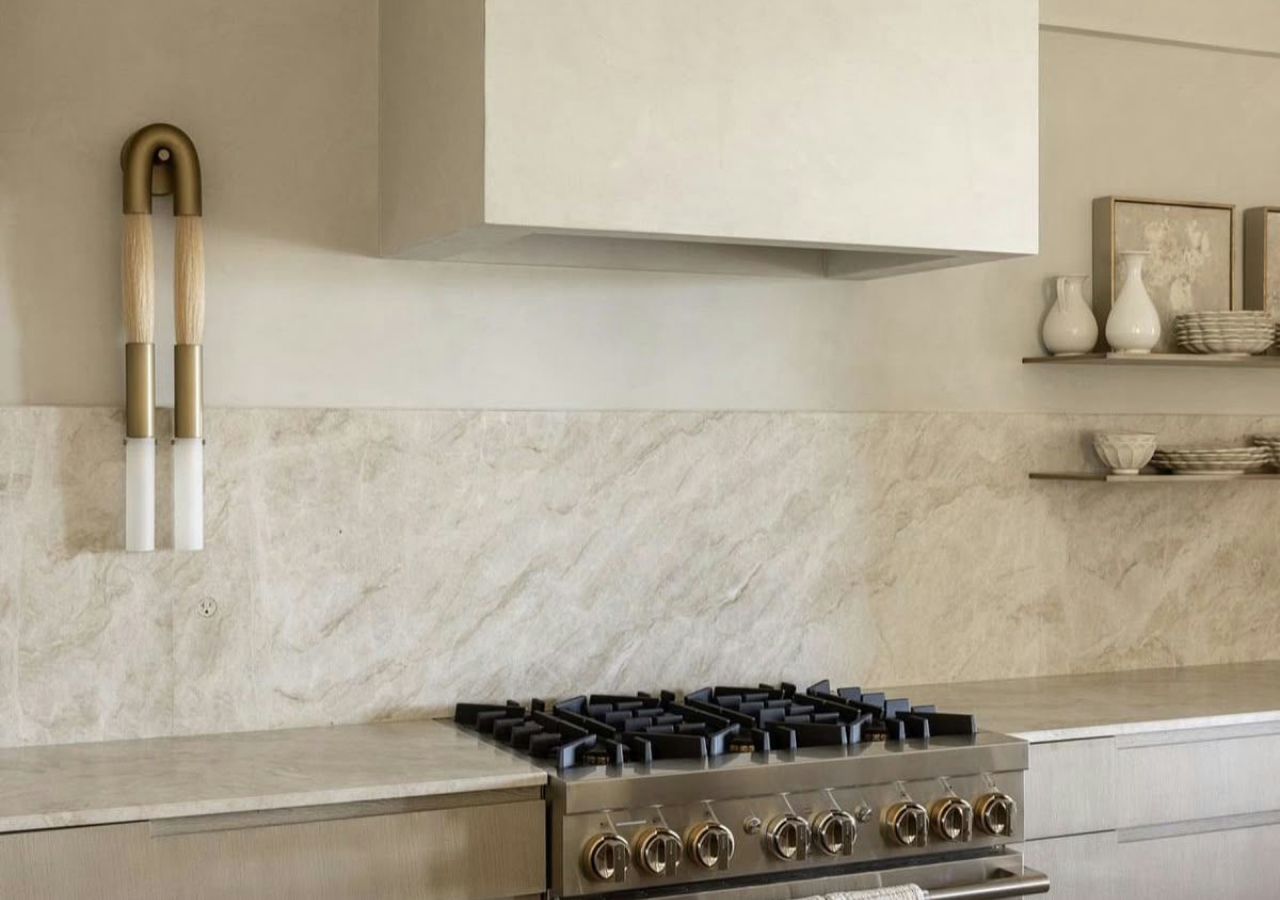
When a plaster hood is already part of the architecture, gas can make sense because the ventilation feature is not being hidden. It becomes an intentional focal point above the cooking zone.
Pairing a substantial hood with Taj Mahal quartzite can create a warm and material-focused composition. Induction can still work in this setting, but gas may better support the visible cooking character of the design.
Likely fit: Gas, particularly when the hood is intended to lead the room.
Minimalist Island With Few Upper Cabinets
.webp)
When the island should read more like furniture, induction is usually the easier option to integrate. The flat glass keeps the countertop quieter, while reduced heat and more flexible ventilation planning may help preserve open sightlines.
The island can remain focused on its cabinetry, stone, seating, and proportions rather than on visible cooking equipment.
Likely fit: Induction, especially in an open-plan layout.
Downdraft Ventilation and a Clean Ceiling
.webp)
A downdraft system requires space for the appliance, motor, ducting, and any necessary clearances inside or below the island. These components can reduce drawer depth or change the cabinet configuration.
Induction often supports the same low-visual design goal, but the feasibility of downdraft ventilation should be confirmed before the island cabinets are finalized.
Likely fit: Induction, provided the selected appliance and duct route work with the island.
Frequent Cooking and a Professional Feel
.webp)
Gas provides visible flame control and makes the cooktop feel like active equipment. It can suit homeowners who enjoy that cooking experience and are comfortable making the cooktop a visible part of the design.
Gas can still work in a minimalist kitchen, but it remains a feature rather than disappearing into the countertop. The ventilation and cleaning requirements should be accepted as part of that choice.
Likely fit: Gas, when flame cooking and visible equipment are priorities.
Safety, Indoor Air, and Cleaning
.webp)
Induction does not use an open flame, and the surrounding surface generally stays cooler than the grates and burners of a gas cooktop. The glass can still become hot from contact with cookware. Gas requires more caution around flames, hot grates, loose clothing, and children, especially when the cooktop is placed on an island near seating or a main walkway.
Induction does not produce combustion byproducts inside the kitchen, although ventilation is still needed for steam, grease, smoke, moisture, and cooking odors. Gas adds combustion emissions, making a properly designed ventilation system especially important in an open-plan room where air moves directly into nearby living areas.
Induction is also easier to clean because the flat surface can usually be wiped down once it has cooled. Gas cooktops require cleaning around grates, burners, caps, and recessed areas, and these parts remain visible between uses. Before choosing either option, compare model-specific safety features such as control locks, pan detection, automatic shutoff, flame-failure protection, and control placement.
Gas vs. Induction: Quick Comparison
| Decision Factor | Induction Cooktop | Gas Cooktop |
|---|---|---|
| Visual minimalism | Flat surface that becomes less noticeable when switched off | Burners and grates remain visible |
| Heat in the room | Generally releases less ambient heat | Produces more surrounding heat from the flame |
| Ventilation planning | May allow a subtler visual solution, depending on cooking needs | Usually requires more substantial ventilation planning |
| Cleaning | Smooth surface with fewer removable parts | Grates, caps, and burners require additional cleaning |
| Cooking experience | Fast response and precise control without a flame | Visible flame and familiar manual feedback |
| Cookware | Requires induction-compatible cookware | Works with a broad range of cookware |
| Utility requirements | Requires sufficient electrical capacity | Requires an available gas supply |
| Main installation concern | Electrical service, circuit capacity, and appliance clearances | Gas connection, ventilation, clearances, and combustion requirements |
Installation and Cost Considerations
.webp)
Installation cost depends on the existing home, appliance location, ventilation route, countertop work, and available utilities. The cooktop price alone does not show the full difference between gas and induction.
Moving either option to an island can add complexity. Connections may need to pass through the floor, and ventilation equipment may affect the island structure and cabinet storage.
Electrical and Power Planning for Induction
Induction cooktops often require a dedicated high-capacity electrical circuit. In an older home, an electrician may need to confirm the electrical panel capacity, wiring route, and available breaker space.
Island installations also need early electrical planning because cooktop power, required receptacles, lighting, and other island functions may all need to be coordinated within the same structure.
Gas Line and Ventilation Planning
A gas cooktop needs an appropriate gas connection as well as a ventilation system suited to the selected appliance and cooking style.
The design question is not only whether a gas line can reach the cooktop. The hood size, capture area, duct route, makeup-air requirements where applicable, and effect on the kitchen elevation also need to be reviewed.
Before finalizing the cooktop, confirm local code requirements, available utilities, electrical capacity, ventilation specifications, and the exact installation instructions for the selected appliance. Downdraft and island cooktops also need early coordination with the cabinetmaker, countertop fabricator, electrician, plumber or gas contractor, and HVAC contractor.
How to Choose Between Gas and Induction
The right cooktop depends on more than cooking preference. Review the kitchen layout, ventilation plan, utilities, maintenance, and exact appliance requirements before approving the cabinetry.
-
Start with your cooking habits. Consider the cookware you use, the type of cooking you do, and whether the visible feedback of a flame is important to you.
-
Define the ceiling plan. Decide whether the kitchen should feature a statement hood or maintain a quieter, less interrupted ceiling line.
-
Review the island design. Consider whether the cooktop should become a visible focal point or sit quietly within the countertop.
-
Plan ventilation early. Confirm the hood type, duct route, or downdraft feasibility before approving cabinetry and countertop details.
-
Confirm the available utilities. Check the electrical service and circuit capacity required for induction. For gas, confirm that an appropriate gas supply is available.
-
Review cleaning and safety. Consider children, seating positions, traffic paths, daily maintenance, and how visible the cooktop will be from the adjoining living area.
-
Check the exact appliance specifications. Validate the preferred option against installation clearances, ventilation requirements, countertop cutouts, cabinet space, utility connections, and applicable local codes.
Confirm the cooktop model before final cabinet drawings. Appliance dimensions alone may not show all ventilation, clearance, utility, and installation requirements.
Conclusion
In an open-plan minimalist kitchen, the cooktop is both a cooking decision and a major design decision. Induction usually supports cleaner sightlines, easier daily cleaning, and a quieter countertop. Gas provides visible flame and a more equipment-focused cooking experience, but it requires more deliberate ventilation and remains part of the visual composition.
Choose the option that best supports your cooking habits first. Then coordinate the ventilation, utilities, cabinetry, countertop fabrication, and island layout around the selected appliance.


