

Choosing a kitchen supplier is not just about finding cabinets you like. It is about choosing the company that can turn your taste, layout, budget, and renovation constraints into a kitchen that is beautiful, functional, and buildable.
This becomes harder when you are comparing very different options: cabinet companies, local cabinet makers, contractors, IKEA-style systems, European kitchens, online suppliers, and custom renovation partners. Every company may define its role differently. One supplier may include drawings, panels, fillers, hardware, samples, and delivery. Another may price only the cabinet basics. One may support your contractor through installation. Another may leave those technical details for you to manage.
That is why the best way to choose a kitchen supplier is to compare scope, process, materials, and support before you commit. If you’re still early in your search, start with our simpler guide to choosing a kitchen renovation vendor. This article is the deeper vetting companion for when you’re comparing a shortlist.
What Does a Kitchen Supplier Actually Do?

A kitchen supplier usually provides the cabinetry system for your remodel. Depending on the company, that can include cabinet boxes, fronts, panels, hardware, finishes, drawings, samples, delivery, and installation guidance.
The important part is that not every kitchen supplier includes the same level of service. Some companies mainly sell cabinet components. Others provide design support, technical drawings, appliance coordination, finish samples, and communication with your installer or contractor.
Before comparing prices, make sure you understand what each supplier is actually responsible for. A quote is only useful when you know what is behind it.
Kitchen Supplier vs Cabinet Maker vs Contractor
Many homeowners use these terms interchangeably, but they are not the same.
For many remodels, the best result comes from clear collaboration. The kitchen supplier handles the cabinet system and technical cabinet details, while the contractor or installer handles site work and installation. What matters most is that everyone knows where one responsibility ends and another begins.
Start With Style Fit

Style fit is the first filter, but it should go deeper than “their kitchens look nice.” When you review a supplier’s portfolio, look for projects that resemble the kitchen you actually want. Pay attention to full cabinet runs, tall units, appliance panels, islands, corners, and transitions between materials.
A strong portfolio should show more than one flattering angle. It should give you a sense of how the kitchen works in real light, with real proportions, not just how it photographs from the best corner.
If you want a calm, design-led kitchen with refined materials and clean details, look for evidence that the supplier naturally works in that direction. If every example feels too traditional, too generic, or too far from your taste, you may be asking the company to deliver something outside its natural strengths.
Compare Quotes by Scope, Not Just Price

A lower quote is not always a better quote. It may simply include less. Two kitchen suppliers can give you numbers that look similar while assuming very different scopes. One quote may include finished side panels, fillers, toe kicks, drawer systems, appliance panels, samples, and delivery. Another may leave many of those items out or treat them as upgrades.
This is where many renovation budgets become confusing. Homeowners think they are comparing the same kitchen, but they are really comparing different versions of the project. The most useful question is not only “How much does it cost?” but “What exactly is included in this number?”
Ask whether the quote includes the cabinet boxes, fronts, panels, fillers, toe kicks, drawer systems, hinges, handles or handleless profiles, appliance panels, drawings, samples, delivery, installation guidance, and warranty. If anything is listed as an allowance, ask what that allowance realistically covers.
A transparent supplier should be able to explain what they assumed, what they excluded, and what could change the price later. That clarity helps you avoid one of the most common renovation frustrations: agreeing to one kitchen in theory and paying for another in practice.
Check the Design and Technical Process
.webp)
A good kitchen supplier should have a clear process from early design through final approval. Ask how measurements are handled, when drawings are created, how revisions work, and when decisions become final. You should know what you will review before production starts and who is responsible for confirming appliance specifications, cabinet dimensions, clearances, and site conditions.
This matters because small technical decisions can have a large impact later. Appliance dimensions can change. Walls may not be perfectly square. A filler may be needed. A panel may need to align with a tall unit. These details should be resolved before production, not discovered during installation.
A smooth renovation usually comes from a repeatable process, not just a friendly sales call. When the process is vague, you end up managing the project yourself by chasing answers and making rushed decisions late in the timeline. When it is clear, the next step is obvious and the project stays more predictable.
Ask for Drawings, Renders, and Real Samples
.webp)
You should not approve a major kitchen investment based only on inspiration images or pretty renders.
Good visuals help you understand proportion, spacing, cabinet lines, and how major elements meet. Drawings should make the layout and cabinet details clear enough to review before production. Renders can help you judge the overall look, but they should be paired with real material samples.
Samples matter because finishes change depending on the room. A cabinet front can look different in natural light, under overhead lighting, beside your flooring, or against your wall color. Real samples help you confirm tone, texture, sheen, and feel before making a final decision.
If a supplier cannot provide decision-grade drawings, visuals, or samples, you are being asked to approve the kitchen on trust alone. That is where avoidable regret often starts.
Review Materials, Hardware, and Warranty

Material quality is not just about whether something is described as “premium.” It comes down to the specific choices that affect how the kitchen performs over time.
Ask what the cabinet boxes are made from, how edges are finished, what finish system is used on the fronts, and which hardware brands or grades are included. Pay close attention to high-use areas such as drawers, hinges, sink cabinets, tall doors, and appliance panels. These are the places where quality shows up after the kitchen has been lived in for a while.
Warranty matters too, but only when it is specific. A useful warranty should explain what is covered, for how long, and under what conditions. Vague promises are less helpful than clear documentation.
Understand Delivery and Installation Support
.webp)
Installation support is one of the biggest differences between kitchen suppliers. Some companies only sell cabinets. Some coordinate delivery and provide detailed drawings for your installer. Some work with installer networks. Others expect your contractor to manage all technical installation details.
Before committing, ask who receives the delivery, who checks the order, whether installation drawings are provided, whether the supplier communicates with your installer, and what happens if a part is damaged or missing. You should also understand who is responsible for final measurements and appliance panel requirements.
This is especially important if you are working with a remote or design-led kitchen supplier. Remote does not have to mean unsupported, but the responsibilities need to be clear. At Corner, this is why we pair cabinet design with technical drawings, delivery coordination, and installation support, rather than treating the cabinet order as a standalone product.
Local Cabinet Maker or Remote Kitchen Supplier?
.webp)
A local cabinet maker can be a good fit if you want highly specific custom fabrication and prefer someone nearby for site visits. A remote or specialized kitchen supplier can be a strong option if you want a more defined cabinet system, curated materials, technical drawings, and a design-led process.
The better choice depends on your project. If your priority is unusual custom dimensions or site-built flexibility, a local cabinet maker may make sense. If your priority is refined design, consistent materials, clear cabinet specifications, and a more structured selection process, a specialized kitchen supplier may be a better fit.
In either case, the deciding factor is accountability. You should know who owns the design decisions, technical drawings, measurements, delivery, installation guidance, and warranty support.
Questions to Ask a Kitchen Supplier
Once you have narrowed your options, use a short set of questions to compare suppliers more directly:
- What exactly is included in the quote?
- What is excluded?
- Will I receive drawings before production?
- Can I see real finish samples?
- Who confirms measurements and appliance specifications?
- What support do you provide during installation?
- What warranty is included?
The answers should feel specific. If the supplier cannot explain the process clearly before you pay, the process is unlikely to become clearer later.
Red Flags Before You Commit
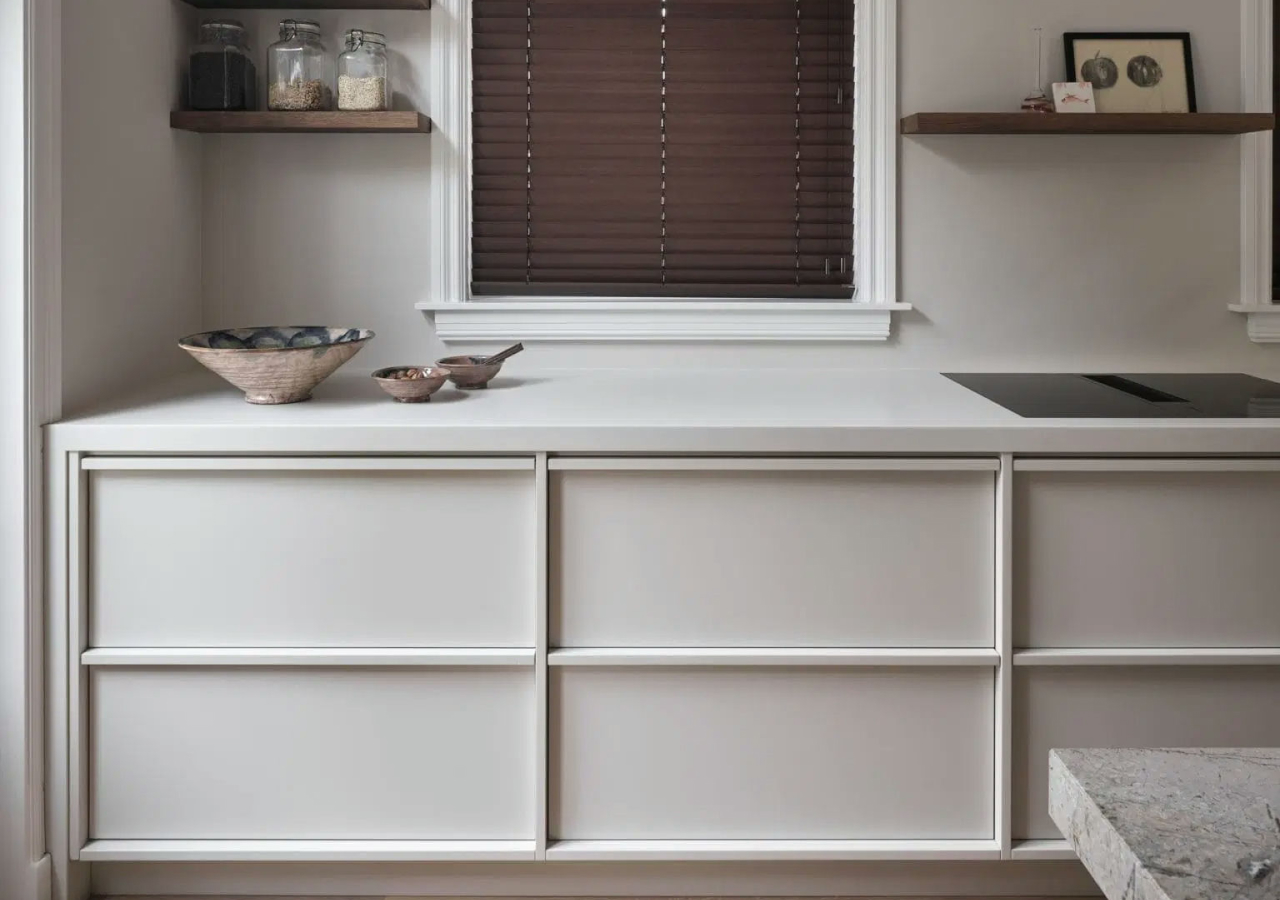
The warning signs are usually practical. Be cautious if the quote is vague, the scope is unclear, drawings are not provided before approval, material specifications are missing, or installation responsibilities are not explained. Slow communication during the sales process is also worth noticing, because that pattern often continues later.
You should also be careful if you are pushed to commit before reviewing drawings, samples, appliance requirements, delivery details, and warranty terms. A reliable kitchen supplier does not just ask you to trust them. They give you the information and documentation that make trust reasonable.
Kitchen Supplier Comparison Checklist
Use this checklist when comparing kitchen suppliers. The goal is to make sure you are comparing the same project, not three different versions of a kitchen.
Check each supplier for:
- Style fit with the kind of kitchen you actually want
- Clear cabinet box material
- Clear front material and finish
- Hardware quality and brand
- Panels, fillers, and toe kicks included
- Appliance panels included, if needed
- Drawings and renders included before approval
- Real finish samples available
- Clear revision process
- Delivery or shipping details
- Installation support or installer communication
- Warranty terms
- Realistic timeline
- Clear total estimated cost
- Clear explanation of what could change the price later
A comparison like this helps you see whether one supplier is truly more expensive, or simply more complete.
Conclusion
Choosing the right kitchen supplier comes down to more than style. Style helps you build a shortlist, but clarity should decide who you trust with the project.
Before you commit, compare each supplier’s scope, process, materials, drawings, delivery, installation support, and warranty. Look beyond the headline price and ask what is actually included. The more clearly you compare your options now, the more confident you will feel when your kitchen moves from idea to installation.
If you are comparing suppliers and want to understand how Corner’s process, materials, delivery, and installation support work, you can review our price examples or book a short consultation.


