
.webp)
Small kitchens do not need clever tricks as much as they need better planning. In a compact layout, every cabinet, drawer, corner, and wall surface has to do a clear job.
The best small kitchen storage ideas use the space that is already there: ceiling height, lower drawers, corner cabinets, toe kicks, under-sink areas, rails, shelves, and narrow pull-outs. The goal is not to fill every surface. It is to make the kitchen easier to use without making it feel crowded.
Here are practical cabinet storage ideas that can help a small kitchen work harder and feel calmer.
Small Kitchen Storage Ideas at a Glance
Start With the Layout, Not the Accessories

A small kitchen works best when the layout is simple and easy to move through. Before adding shelves, hooks, or organizers, decide where cooking, prep, cleaning, and storage will happen.
Too many accessories can make a small kitchen feel busy. A better starting point is a clear cabinet plan: drawers near the prep area, trash close to the sink or island, pantry storage grouped together, and enough open counter space for daily use.
In compact kitchens, the layout should reduce extra steps. The less you have to cross the kitchen for basic tasks, the more functional the space feels.
Use Ceiling Height for Storage

Tall cabinets are one of the most useful storage tools in a small kitchen. They use vertical space instead of taking up more floor area.
Ceiling-height cabinets can store pantry items, dishes, small appliances, cleaning supplies, or less-used pieces on the upper shelves. They also help the room feel more intentional because the cabinetry has a clear end point.
For a lighter look, keep the fronts simple. Flat doors, warm wood, soft white, or muted matte finishes usually work better than busy door styles in a compact space.
Choose Drawers Over Lower Cabinet Doors
.webp)
Lower drawers are often more useful than standard lower cabinet doors. They bring the storage out toward you, so you do not have to bend down and reach into the back of a deep cabinet.
Deep drawers work well for pots, pans, plates, bowls, containers, and pantry items. Smaller top drawers can hold utensils, knives, towels, wraps, or prep tools.
This is especially helpful in small kitchens because every cabinet needs to be easy to access. Storage that is hard to reach usually becomes wasted space.
Make the Corner Work Harder

Corners are often the most awkward part of a small kitchen. Without the right hardware, deep corner cabinets can become difficult to use.
Corner pull-outs, magic corner systems, carousel shelves, and swing-out trays can make this space more practical. They bring stored items forward instead of forcing you to reach into the back of the cabinet.
Not every small kitchen needs an expensive corner system, but the corner should have a plan. If it is part of the main storage area, it should be easy to use.
Add Pull-Out Trash and Under-Sink Storage
.webp)
A pull-out trash cabinet can make a small kitchen feel much more organized. It hides waste and recycling while keeping them close to prep and cleanup zones.
The under-sink cabinet also deserves attention. This area often becomes messy because plumbing takes up space, but it can still hold cleaning supplies, small bins, dish tablets, sponges, or a compact trash system.
Under-sink drawers or shaped pull-outs can be especially useful when the plumbing layout allows it. Even a simple organizer can make this cabinet easier to maintain.
Use Toe-Kick Drawers for Flat Items
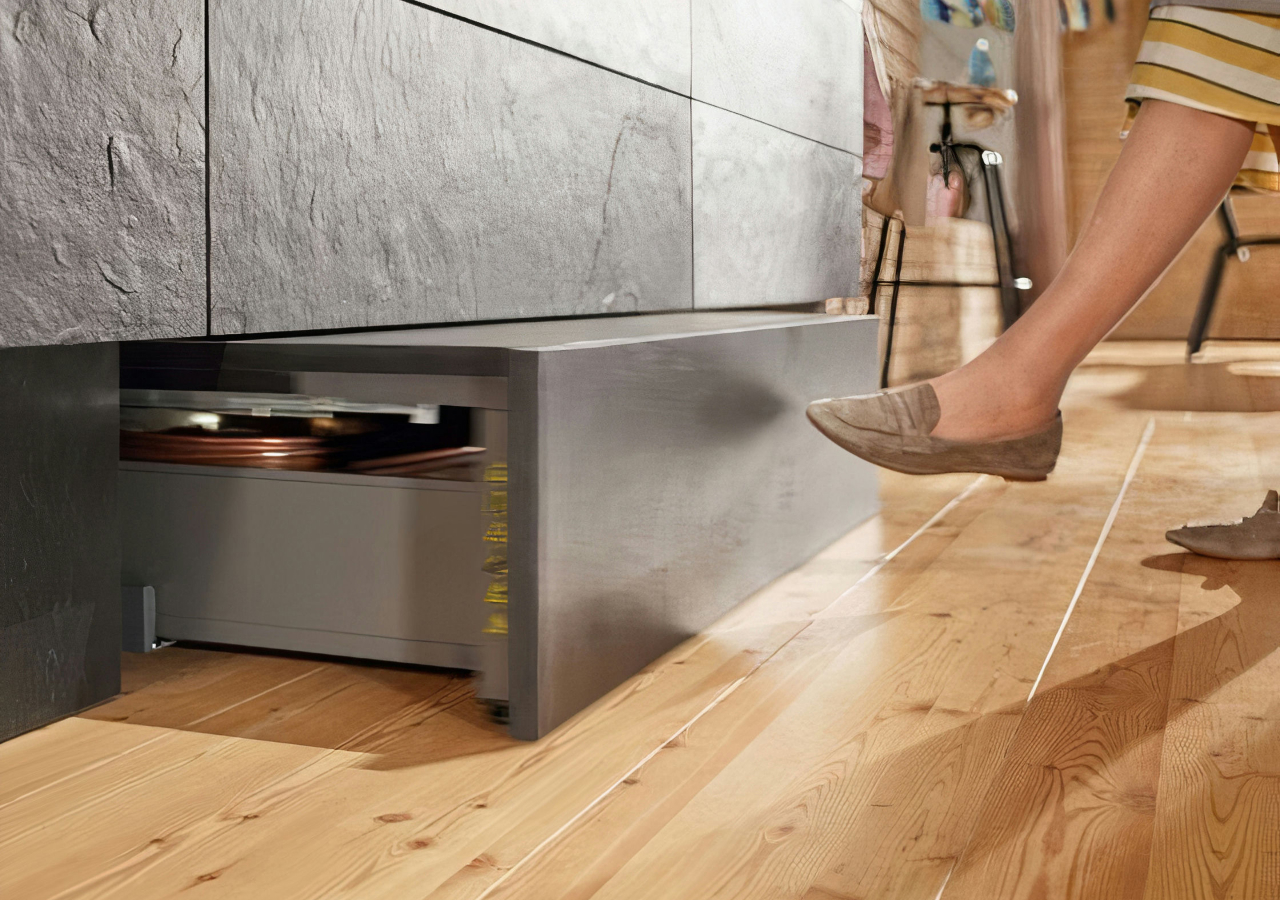
Toe-kick drawers use the space below base cabinets. This area is usually empty, but it can hold flat or low-use items.
They work well for baking sheets, trays, placemats, cutting boards, extra linens, or shallow storage. In a very small kitchen, this can free up more valuable drawer and cabinet space.
Toe-kick drawers are not for everything. They are low to the floor, so they work best for items you do not need constantly. But when planned well, they make use of space that would otherwise be wasted.
Keep Handleless Fronts Visually Quiet

Handleless or minimal-hardware cabinets can help a small kitchen feel less crowded. Without rows of knobs or pulls, the cabinet fronts look cleaner and the room feels calmer.
This can be done with recessed pulls, Gola profiles, slim edge pulls, or push-to-open systems. The best choice depends on the cabinet finish, drawer weight, and how often each cabinet is used.
Handleless fronts are especially useful in modern, Scandinavian, and Japandi-style kitchens, where the goal is to keep the space simple without making it feel empty.
Add Rails and Shelves Carefully

Rails and open shelves can be useful in a small kitchen, but they should be used with restraint. They work best for items you use often, not as a place to store everything that does not fit in the cabinets.
A short rail can hold utensils, towels, small tools, or spice containers. A narrow shelf can work for cups, cookbooks, jars, or a small coffee area.
The key is to avoid covering every wall. Too many open items can make a small kitchen feel cluttered, even when the storage is technically useful.
Don’t Overfill the Walls
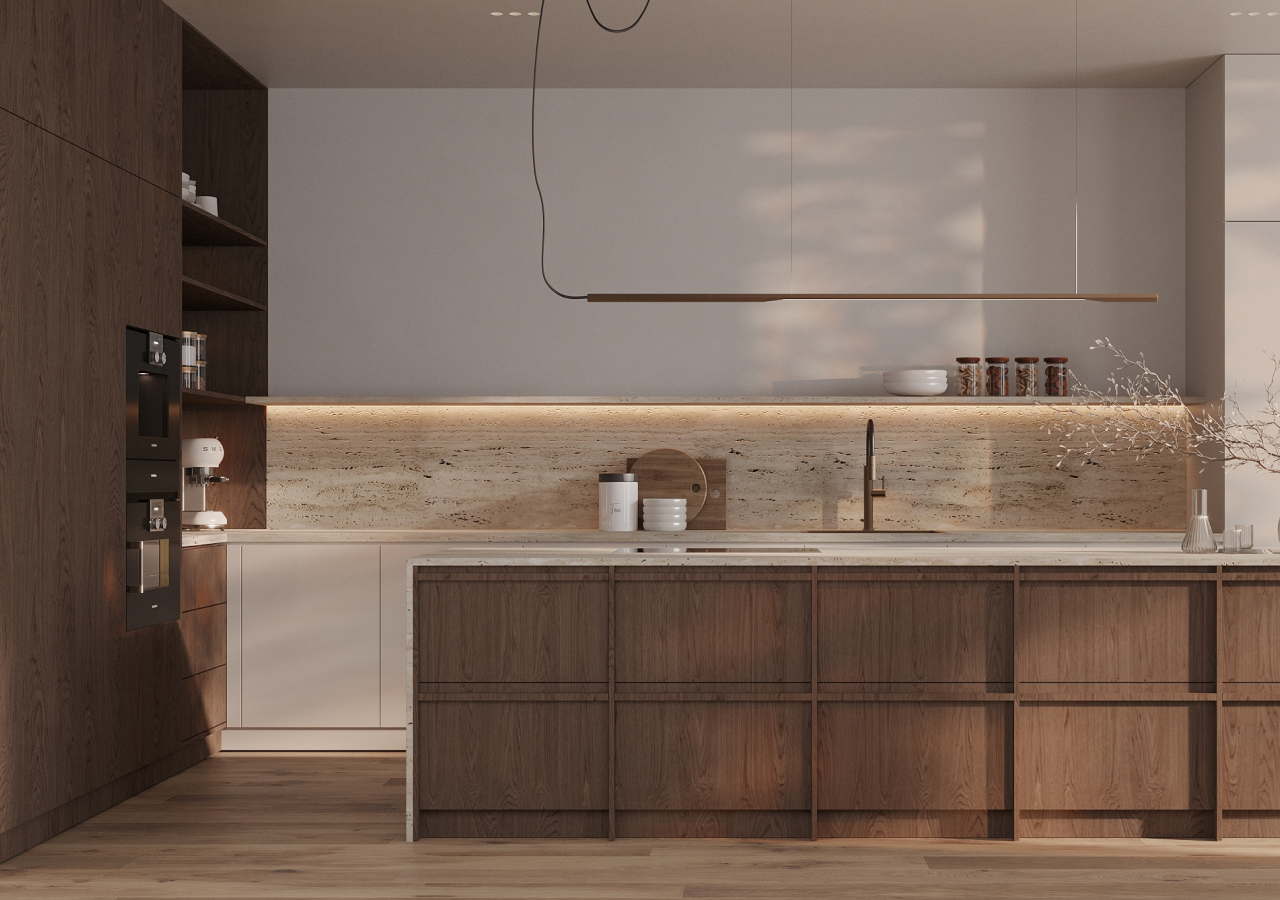
In a small kitchen, it is tempting to add cabinets, rails, shelves, and hooks everywhere. But more storage is not always better if it makes the room feel tight.
Sometimes the better choice is to use one tall storage wall, one strong drawer run, and a few carefully placed open elements. This keeps the kitchen functional without making every surface feel heavy.
A small kitchen needs storage, but it also needs breathing room. Clear counters, simple cabinet fronts, and fewer exposed items can make the space feel larger and easier to use.
Conclusion
Small kitchen storage works best when every cabinet has a clear purpose. Tall cabinets, drawer storage, corner pull-outs, under-sink organization, toe-kick drawers, and carefully placed rails can all help a compact kitchen feel more useful.
The goal is not to add storage everywhere. It is to use the right storage in the right places, so the kitchen feels easier to cook in, easier to clean, and calmer to live with.
Explore Corner’s kitchen collections to see how custom cabinetry can make even a small kitchen feel organized, modern, and thoughtfully planned.


