
.webp)
A minimalist kitchen only feels calm when the storage works. Clean fronts and simple lines help, but daily life still needs space for trash, recycling, appliances, spices, pans, cutting boards, cleaning supplies, and pantry items.
That is why storage features should be planned early. Pull-outs, appliance garages, lighting, toe-kick drawers, and specialty mechanisms can affect cabinet width, hardware, electrical planning, and installation. When they are decided before technical drawings, they feel built into the kitchen instead of added later.
Kitchen Storage Features at a Glance
Use this table as a quick planning guide before choosing which storage features should be included in your cabinet scope.
1. Trash, Recycling, and Compost Pull-Outs
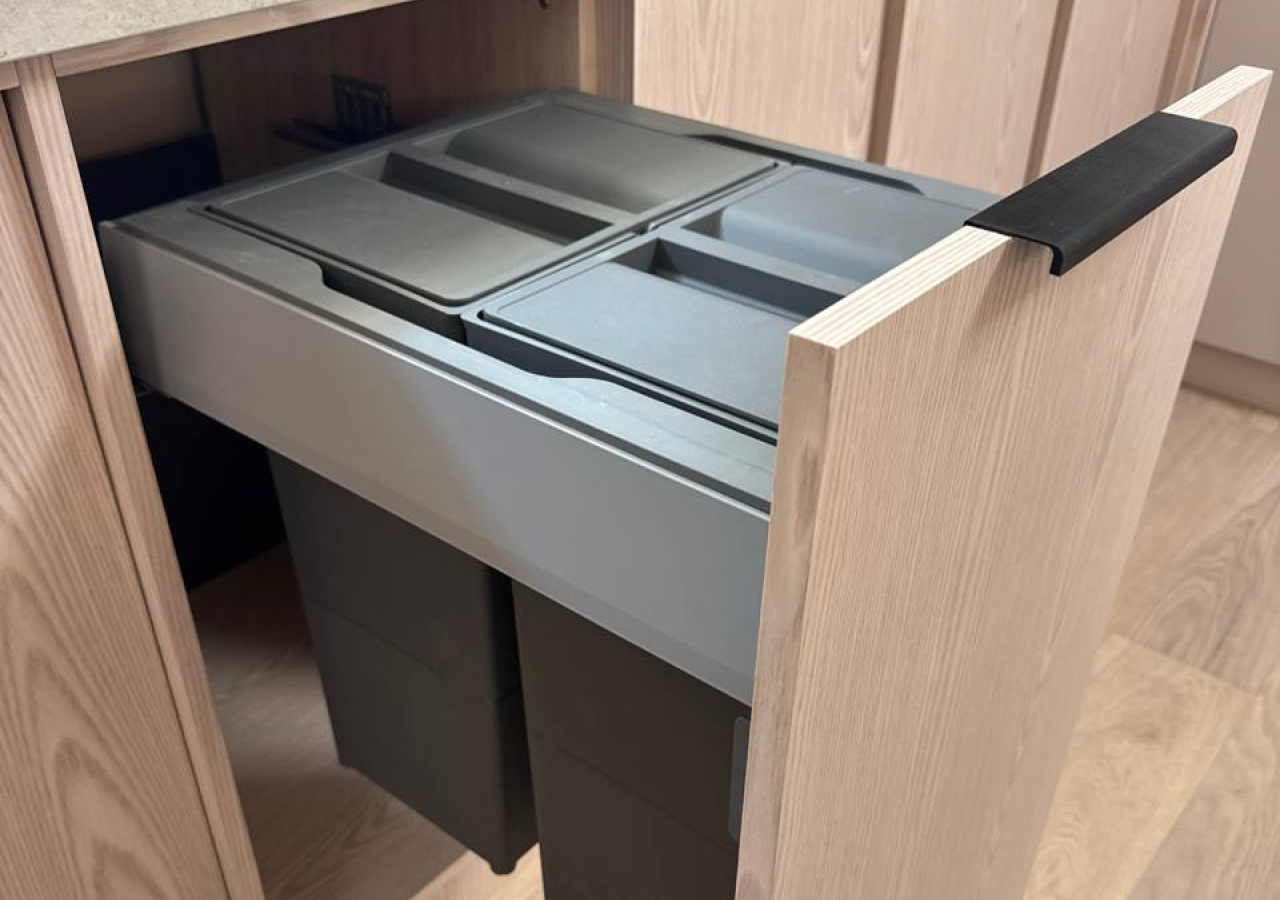
The real question is: can we hide trash, recycling, and compost, and where should the pull-out go?
This needs to be planned early. A two-bin pull-out usually works for trash and recycling, while a three-bin system can handle trash, recycling, and compost. The cabinet width, bin size, mechanism, and location all matter.
The main waste pull-out usually works best near the sink, dishwasher, or prep zone. In larger kitchens, a secondary pull-out can work near the island, coffee area, or kitchen edge. Skip a three-bin layout if it makes each bin too small for daily use.
2. Pantry Pull-Outs

What homeowners usually want to know is: can pantry storage be easier to reach?
Pantry pull-outs make tall or deep pantry cabinets easier to use because the contents come out toward you instead of disappearing at the back of a shelf. They work well for dry goods, snacks, oils, jars, breakfast items, and overflow storage.
Plan the width, weight capacity, and drawer height before drawings are finalized. Skip full-height pull-outs if adjustable inner drawers or shelves would give you more flexibility.
3. Inner Drawers

The real question is: can we add hidden drawers inside larger cabinets?
Inner drawers keep the outside of the kitchen calmer while making the inside easier to organize. They work well in pantry cabinets, deep base cabinets, islands, and tall storage. Use them for lids, wraps, utensils, spices, or smaller pantry items.
Skip them when the cabinet needs full vertical height for large appliances, tall pots, or oversized storage.
4. Spice Pull-Outs
.webp)
The practical question is: can we add a narrow pull-out for spices and oils?
If the location makes sense. Spice pull-outs work best near the range, cooktop, or prep zone. They can turn a narrow cabinet or filler space into useful storage for spices, oils, condiments, or small cooking essentials.
Skip this feature if the location is too close to direct heat or if a shallow drawer insert would be easier to use.
5. Appliance Garage
.webp)
The real question is: can small appliances disappear from the counter?
An appliance garage can hide a coffee maker, toaster, blender, mixer, microwave, or kettle while keeping it easy to reach. It works well in pantry walls, coffee stations, breakfast zones, and open-plan kitchens.
Plan outlets, ventilation, door type, and countertop depth early. Skip it if the cabinet has no clear purpose and may become a cluttered catch-all.
6. Sink Base Storage and Under-Sink Drawers
.webp)
The real question is: can the under-sink area be more useful?
The design can work, but it needs to be planned around the plumbing. Sink base storage can hold cleaning supplies, dishwasher tabs, towels, sponges, water filters, and trash bags. A U-shaped drawer, pull-out organizer, or planned under-sink insert can make the space easier to use.
Skip a drawer if plumbing leaves too little usable depth; a simple cabinet with inserts may work better.
7. Tray and Cutting Board Dividers

The real question is: where do trays, cutting boards, and baking sheets go?
Vertical dividers keep flat items upright instead of stacked. They work well for cutting boards, sheet pans, cooling racks, serving boards, trays, and baking accessories. Place them near the prep zone, oven, or island depending on how you cook.
Skip fixed dividers if your storage needs may change; adjustable dividers are usually more flexible.
8. Integrated Drawer Lighting

The practical question is: can drawers light up when opened?
Integrated drawer lighting is useful in deep drawers, pantry drawers, bar storage, and darker cabinet zones where small items can get lost. It needs planning for power, sensors or switches, cable routing, and installer coordination.
Skip it in shallow drawers or everyday utensil drawers where visibility is already good. It should solve a real use problem, not just add a feature.
9. Toe-Kick Drawers
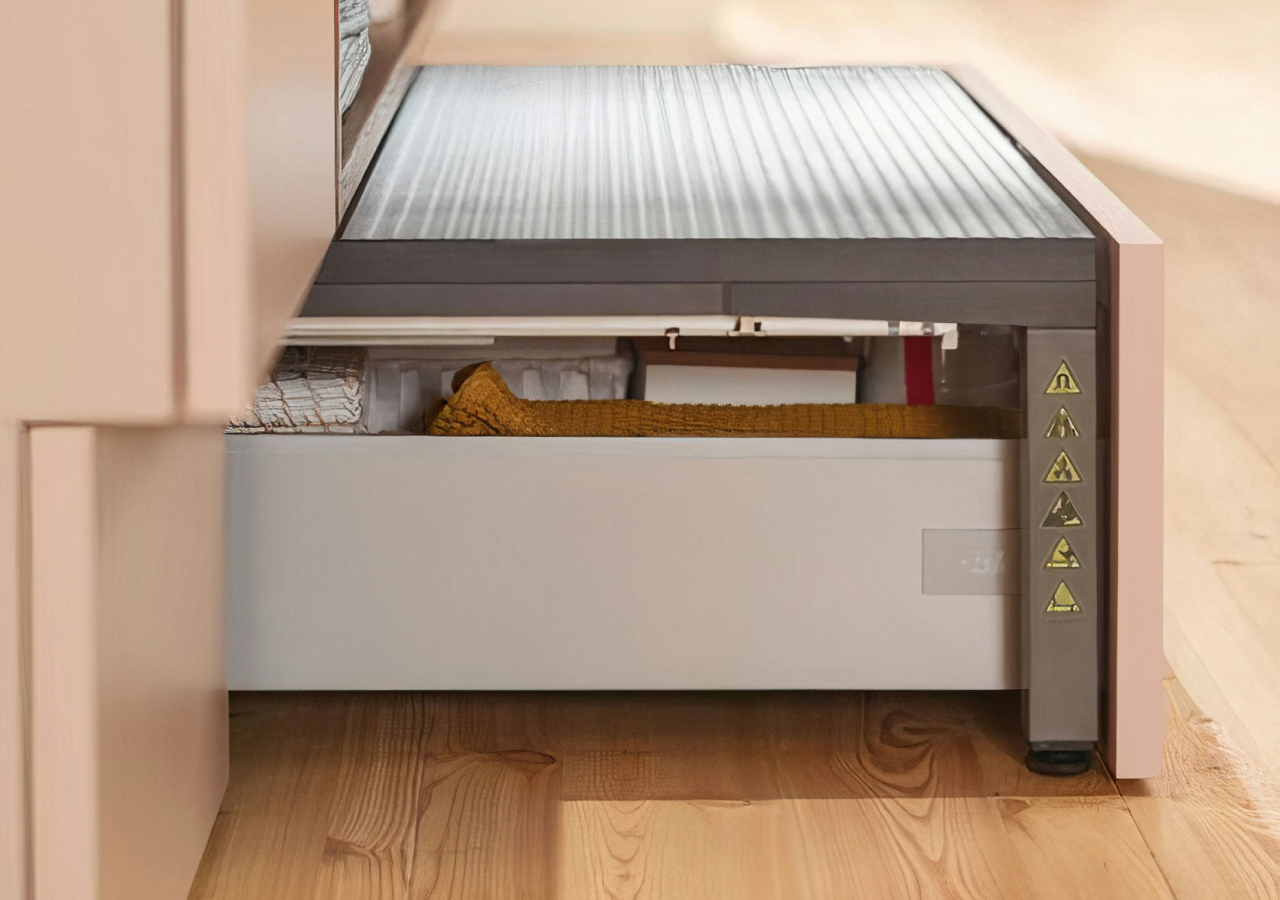
The real question is: can we use the space under the cabinets?
A toe-kick drawer turns the recessed space below the cabinets into hidden storage. It works best for flat or occasional-use items such as trays, placemats, pet bowls, extra linens, baking sheets, or cleaning cloths.
Skip it for heavy daily-use items because it sits low. It also depends on toe-kick height, floor clearance, leveling, and installation details.
10. Pull-Down Shelves
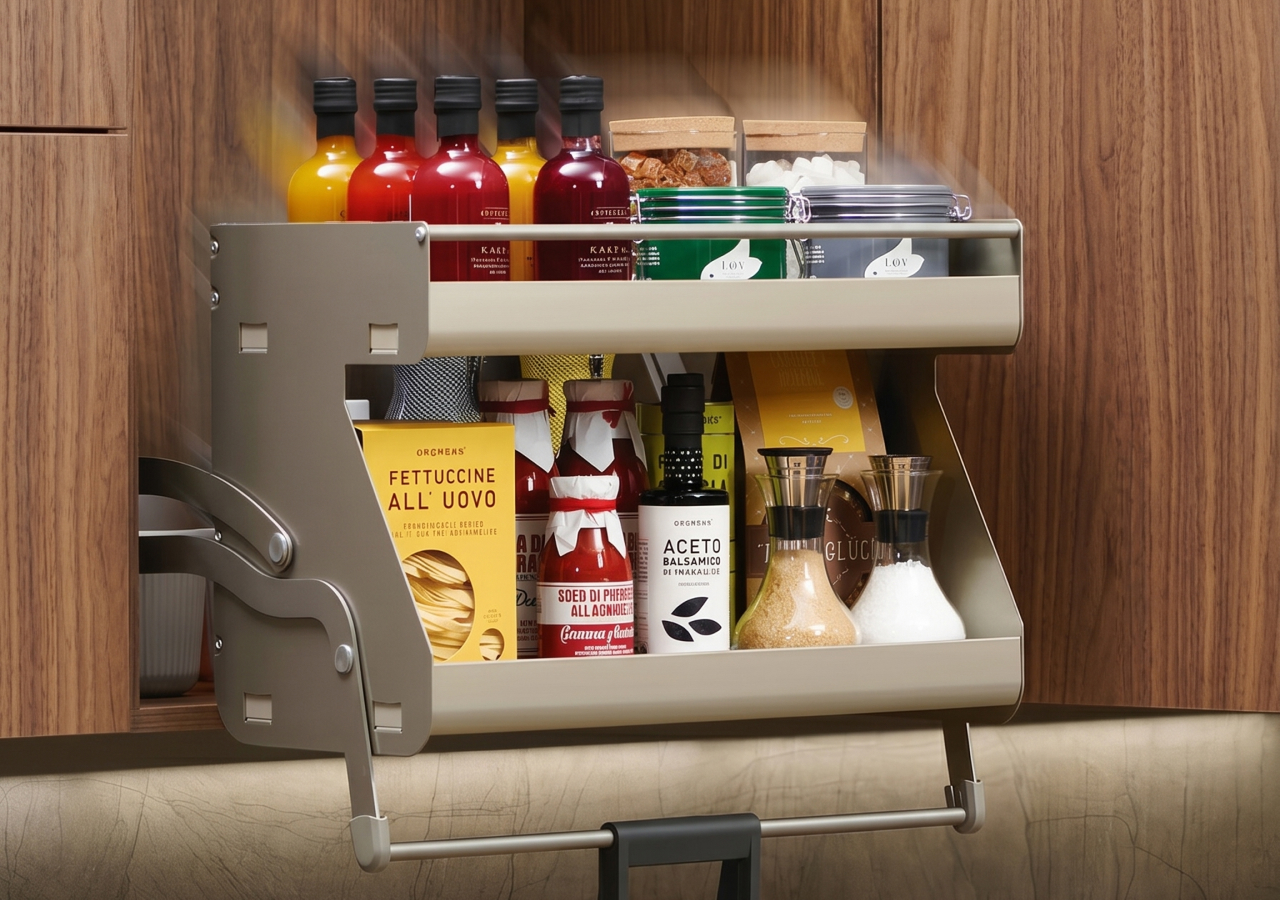
The key question is: can upper cabinets be easier to reach?
Pull-down shelves bring upper cabinet contents down toward the user, making tall wall cabinets more practical. They are helpful for hard-to-reach storage, shorter users, or kitchens with taller upper cabinets.
Check mechanism clearance, cabinet depth, door type, and weight capacity. Skip them if the mechanism takes too much storage space or the items are too heavy to move comfortably.
11. LED Shelves
.webp)
The practical question is: can lighting be built into open shelves?
LED shelves can be designed with an integrated channel or recessed profile so the lighting feels built in. They work especially well in bar areas, coffee zones, open shelving, and display storage.
Use warm light for a softer look with wood, stone, and matte finishes. Skip LED shelves if the shelf is purely practical and the wiring adds complexity without much daily benefit.
12. Rounded Island Storage
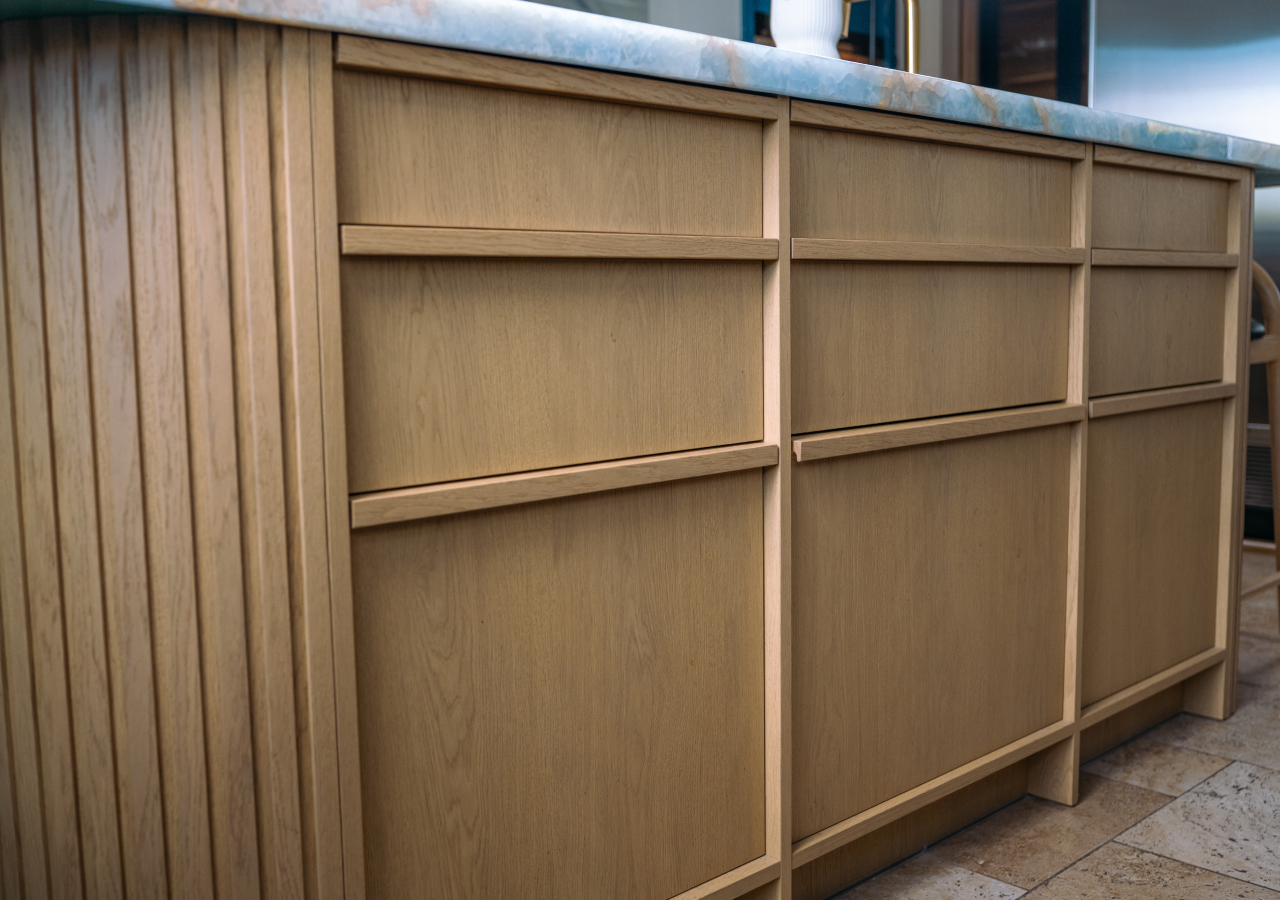
The key question is: does a rounded island still have usable storage?
The storage can work, but it needs to be planned around the curve. A rounded island can soften circulation and make the kitchen feel less visually heavy, but curves affect cabinet construction, drawer placement, countertop fabrication, and panel layout.
In most cases, drawers work better on straight runs, while the rounded end works better as seating, a finished panel, or a transition into the walkway. Skip rounded island storage if maximum cabinet capacity is the priority.
Kitchen Storage Features: Planning Impact
Conclusion
Good kitchen storage means choosing the details that solve real daily problems, not adding every clever feature.
Pull-out bins, pantry pull-outs, inner drawers, appliance garages, sink storage, toe-kick drawers, pull-down shelves, and integrated lighting can make a kitchen easier to use and easier to keep clear. The key is choosing them before technical drawings begin, so the cabinet layout, hardware, wiring, and installation details all work together.


